




Top 20 Most Common Mushrooms in Mesa
Welcome to our guide on the top 20 most abundant mushrooms in the United States, particularly in the region we'll refer to as Mesa. Renowned for its desert climate and breathtaking landscapes, Mesa surprisingly also boasts an impressive diversity of mushrooms due to its unique landscaped ecosystems. From its arid plains to its lush groves, Mesa offers an unexpected fungal paradise. Join us as we explore and identify these common mushroom species thriving in areas you'd least expect.

Most Common Mushrooms
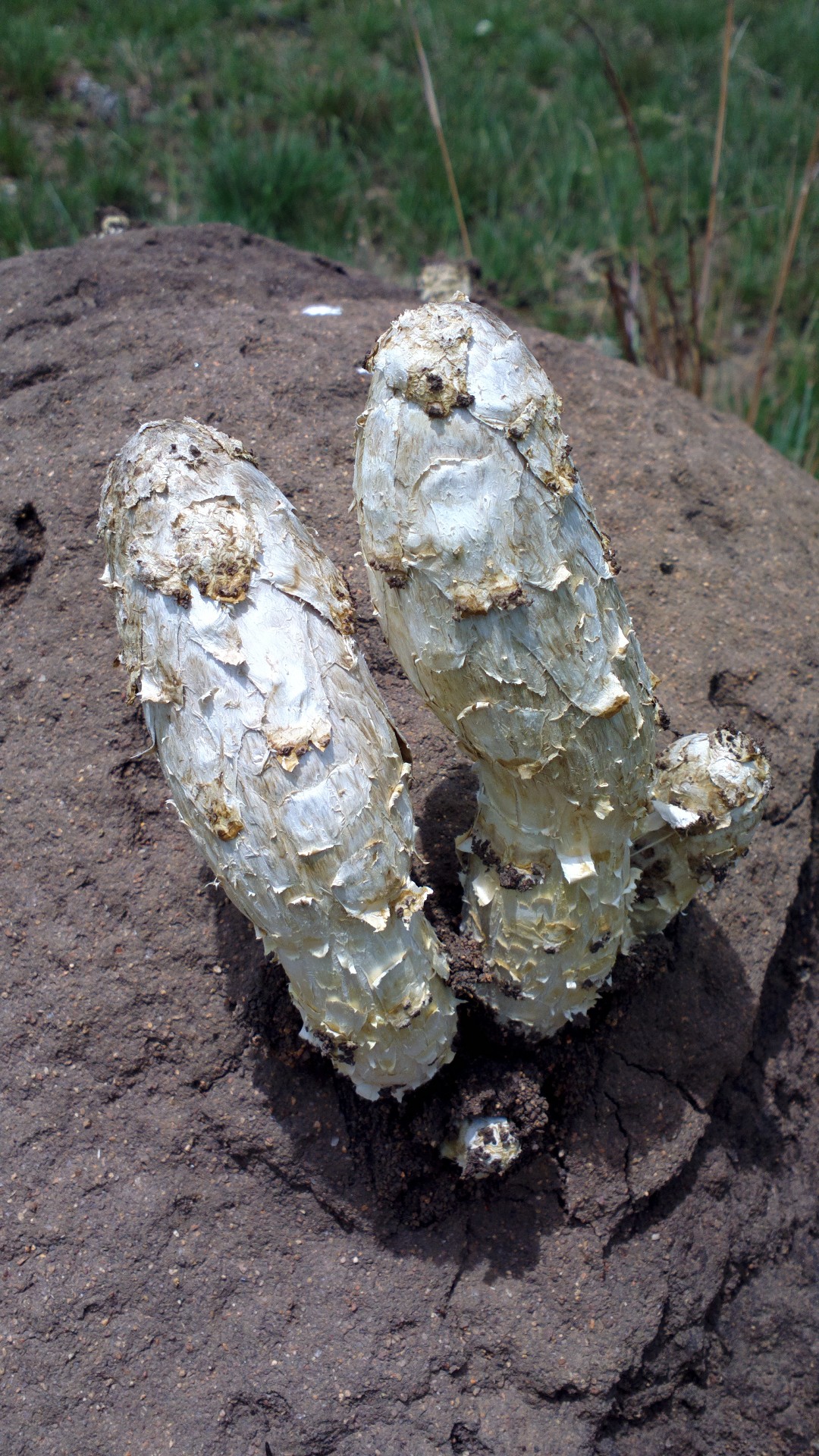
1. Desert shaggy mane
As its name suggests, the desert shaggy mane (Podaxis pistillaris) erupts from seemingly improbably conditions, out of the hot and arid ground in North American deserts. They are commonly found living harmoniously with colonies of termites in termite mounds. The desert shaggy mane is toxic and not safe to consume.
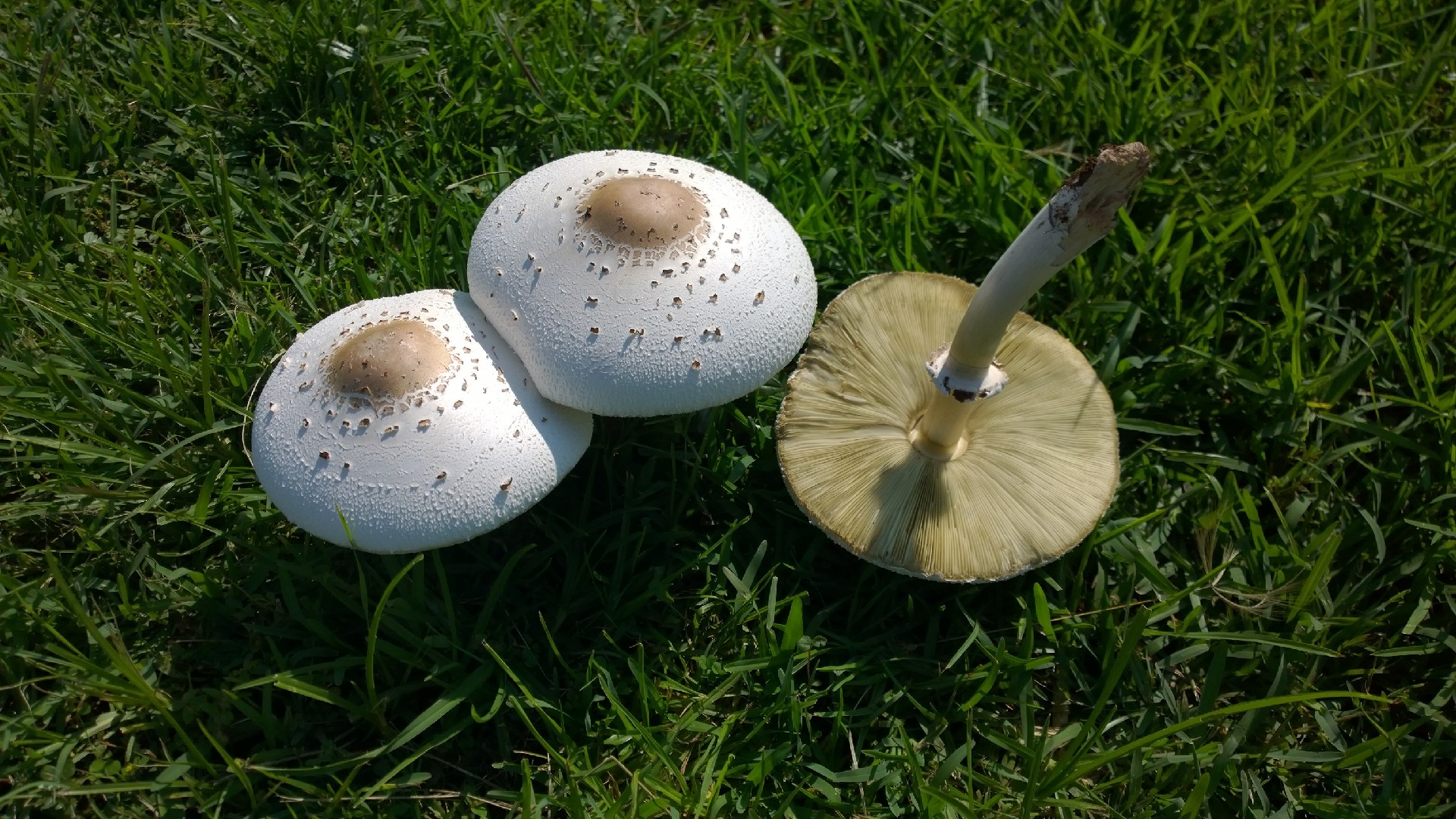
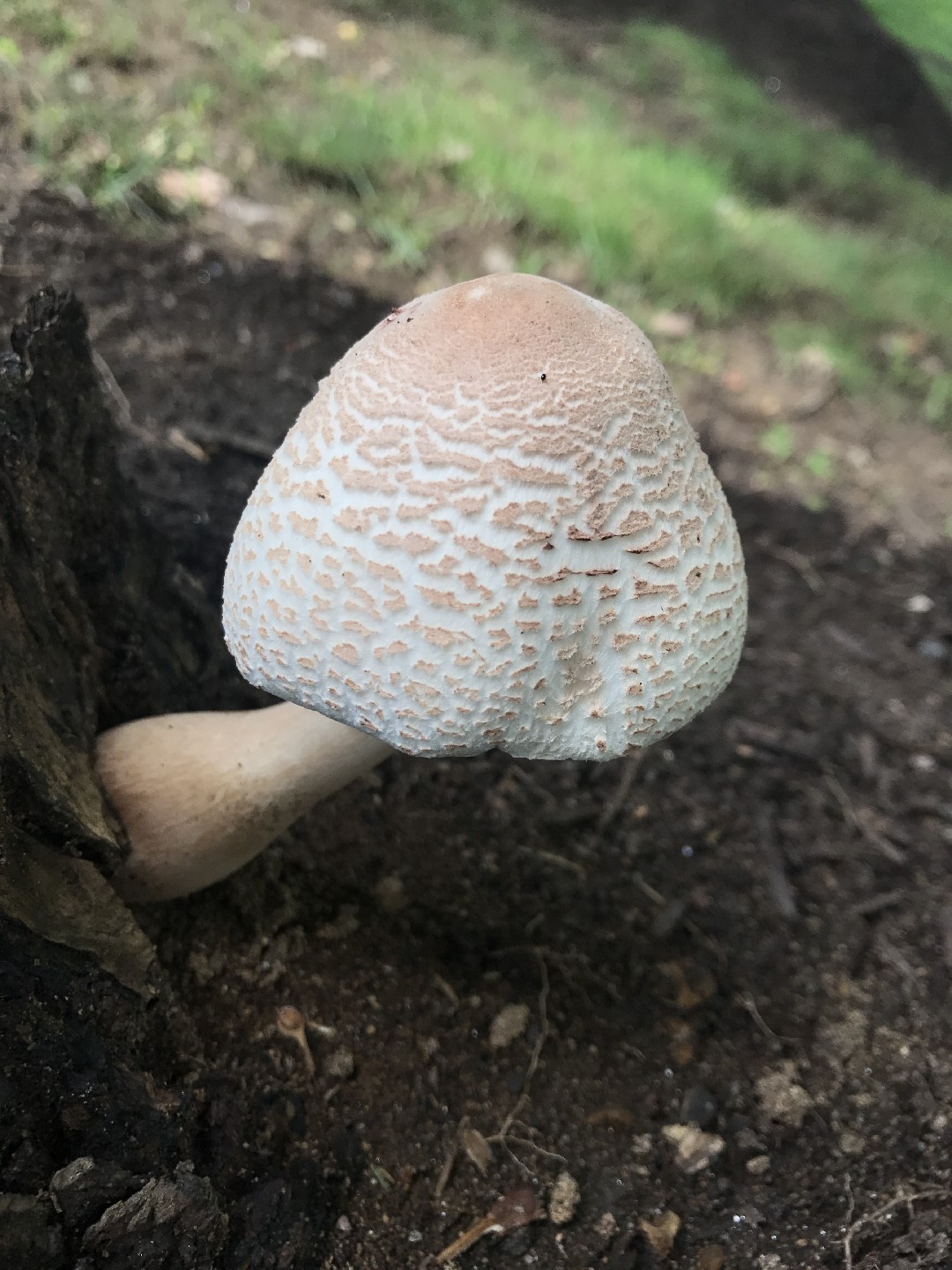
2. False parasol
Though the false parasol appears unassuming, the species is famous—or, infamous—for its toxicity. It looks unfortunately similar to Agericus campestrus, a commonly eaten mushroom, but the false parasol can be distinguished by its highly unusual green spore print. Although they are no good to eat, they can be pretty to look at. The species may grow in ring-shaped groups in meadows and on forest floors in what are sometimes called "fairy circles."
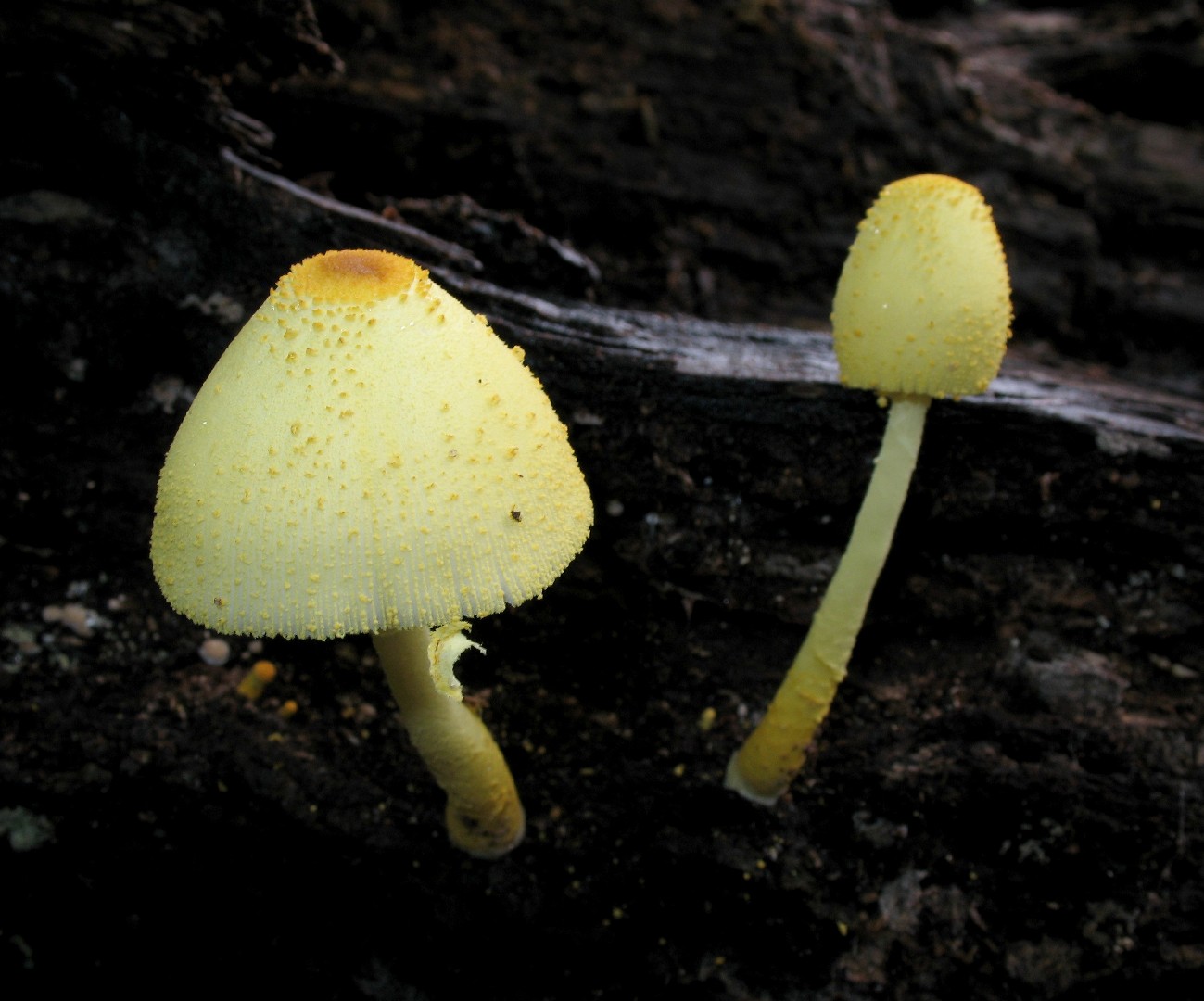
3. Flowerpot parasol
This tropical/subtropical mushroom is known to be toxic. If eaten it causes a very unpleasant stomachache with the risk of fatal complications. In temperate zones, flowerpot parasol is only found in hothouses and greenhouses, so the risk of accidental foraging is low, but it may occur with potted plants and indoor landscaping and pose a risk to curious children.
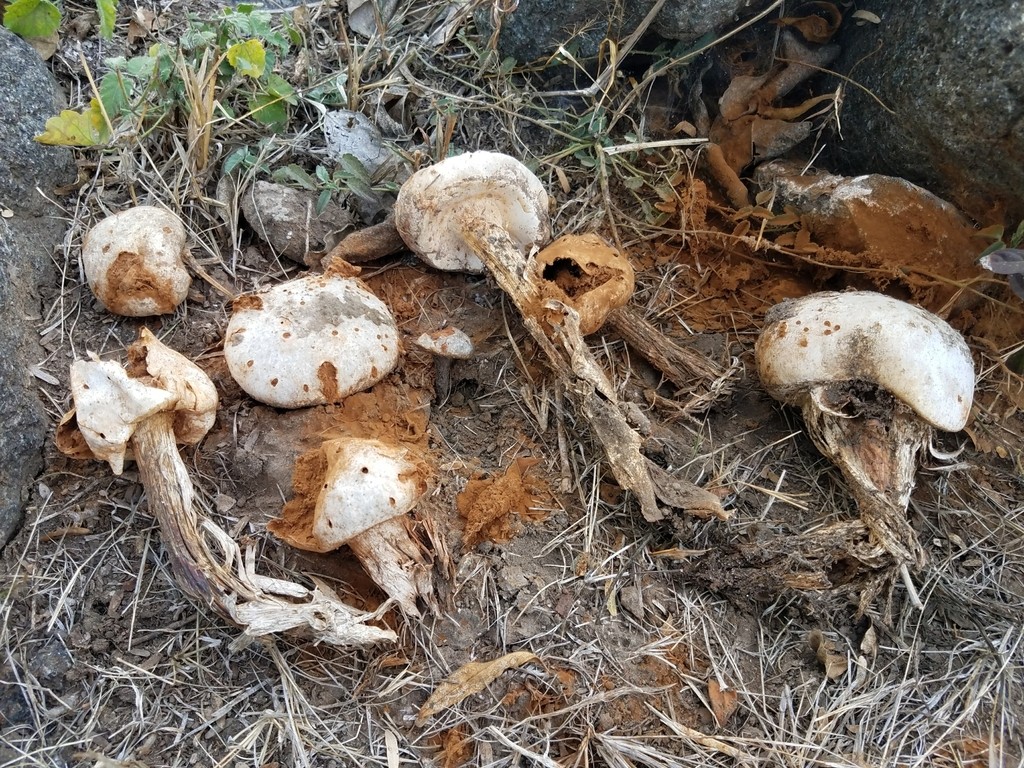
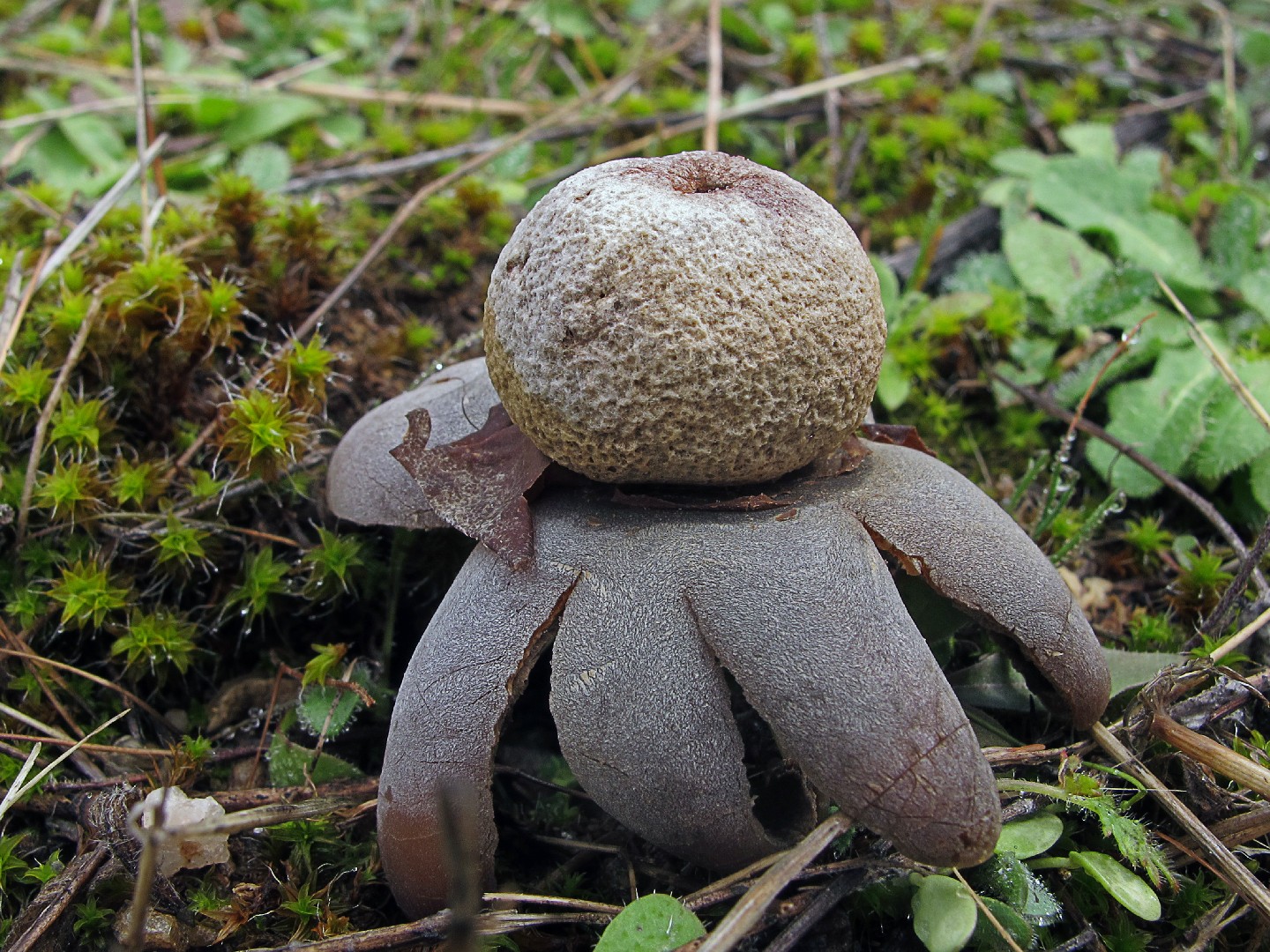
4. Battarreoides diguetii
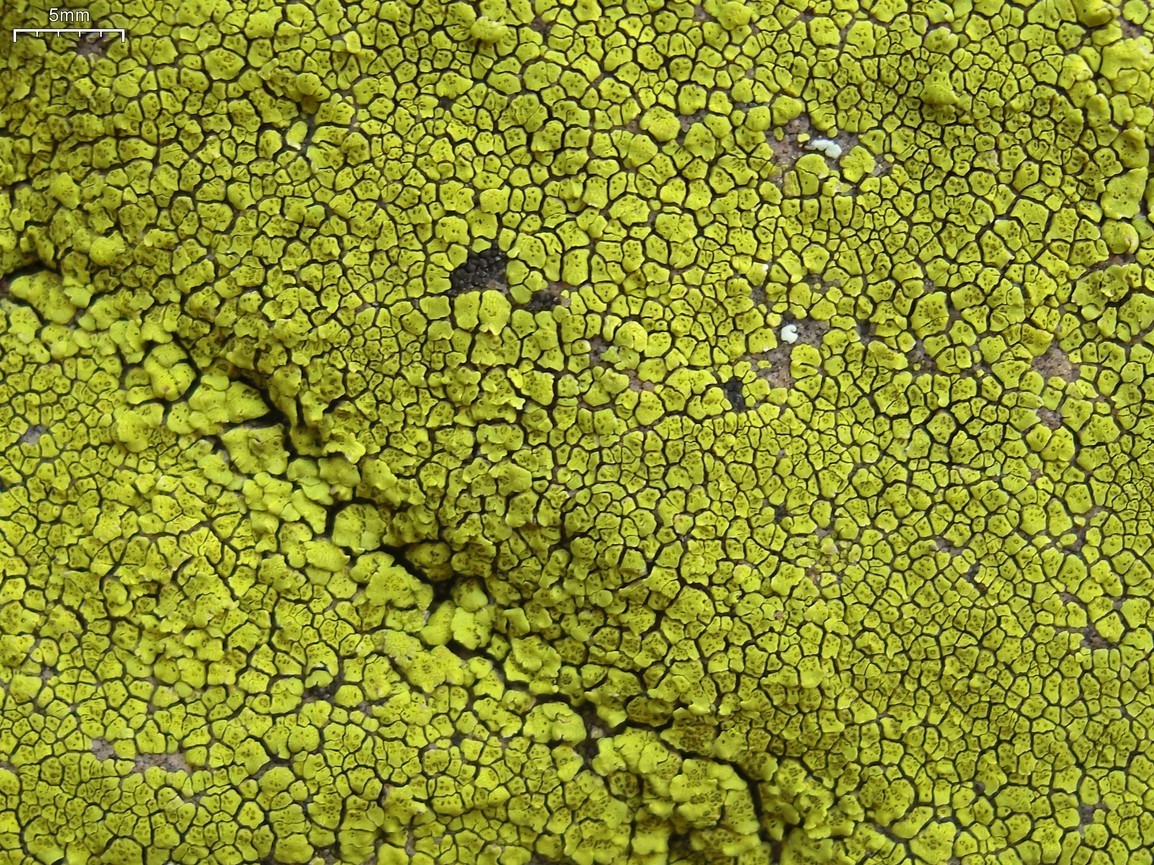
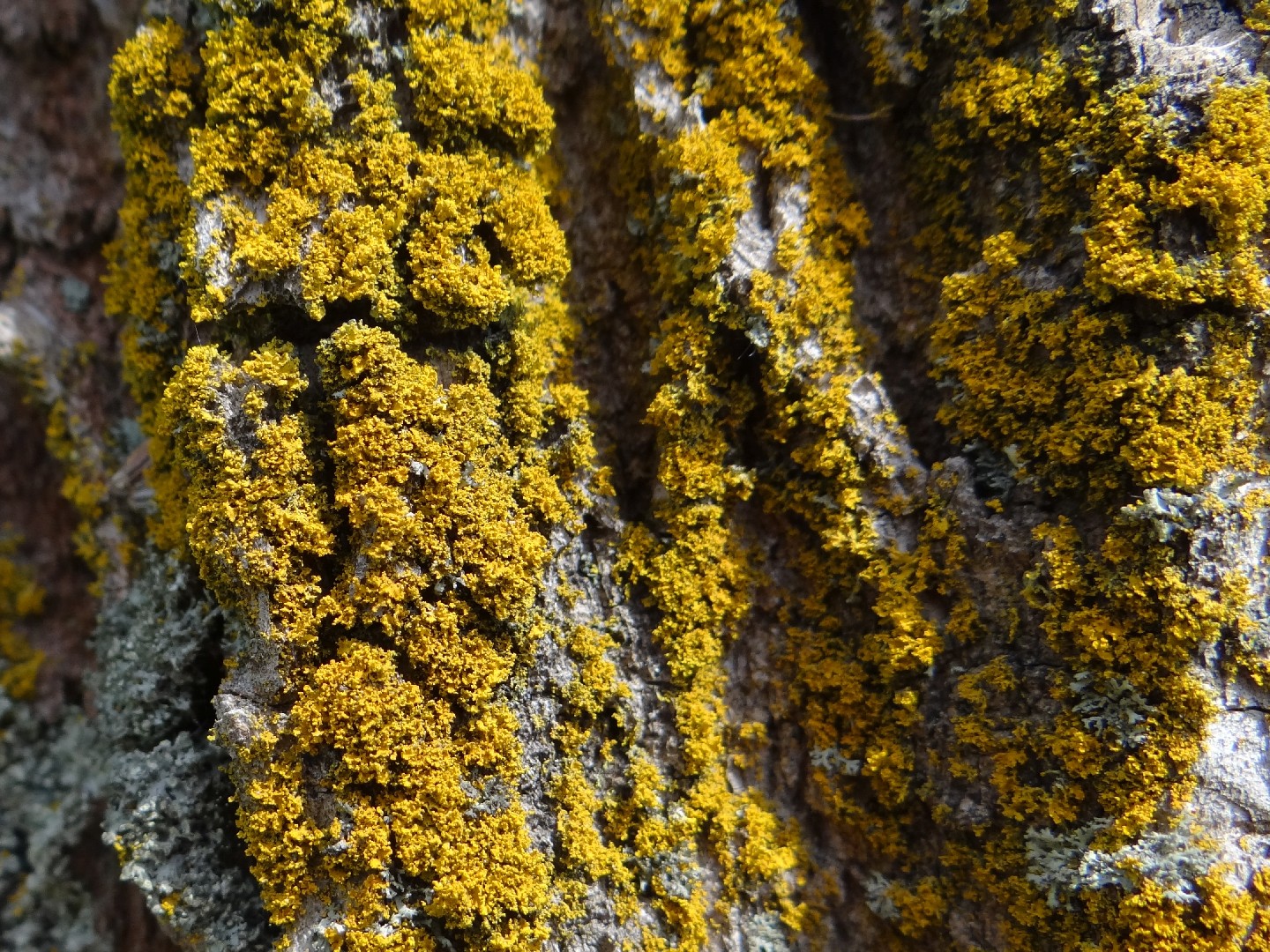
5. Bright cobblestone lichen

6. Shaggy mane
The shaggy mane mushroom is commonly found in North American and European grasslands. Some peoples foraged for its young egg-shaped caps, but it has more recently been found to be a bioaccumulator of heavy metals, meaning it pulls toxic metals up from the soil where it grows. As a result, shaggy manes should not be eaten. The mushrooms usually appear in clusters or “fairy rings.”
7. Fishscale lichens
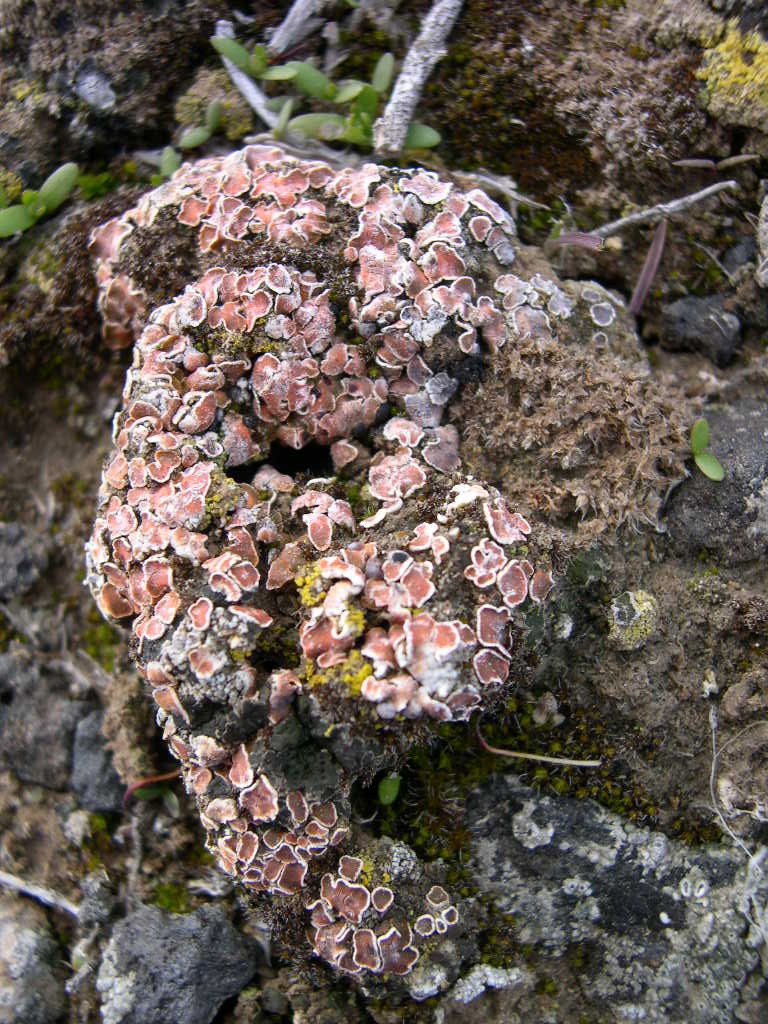
The Thallus of Psora decipiens consists of up to 4 mm wide, brownish, brownish red or pinkish scales with whitish edges. These overlap only rarely, are roundish to be booked or slightly notched and whitish below. Apothecaries are rather rare, marginal, black and untouched.
8. Split gill
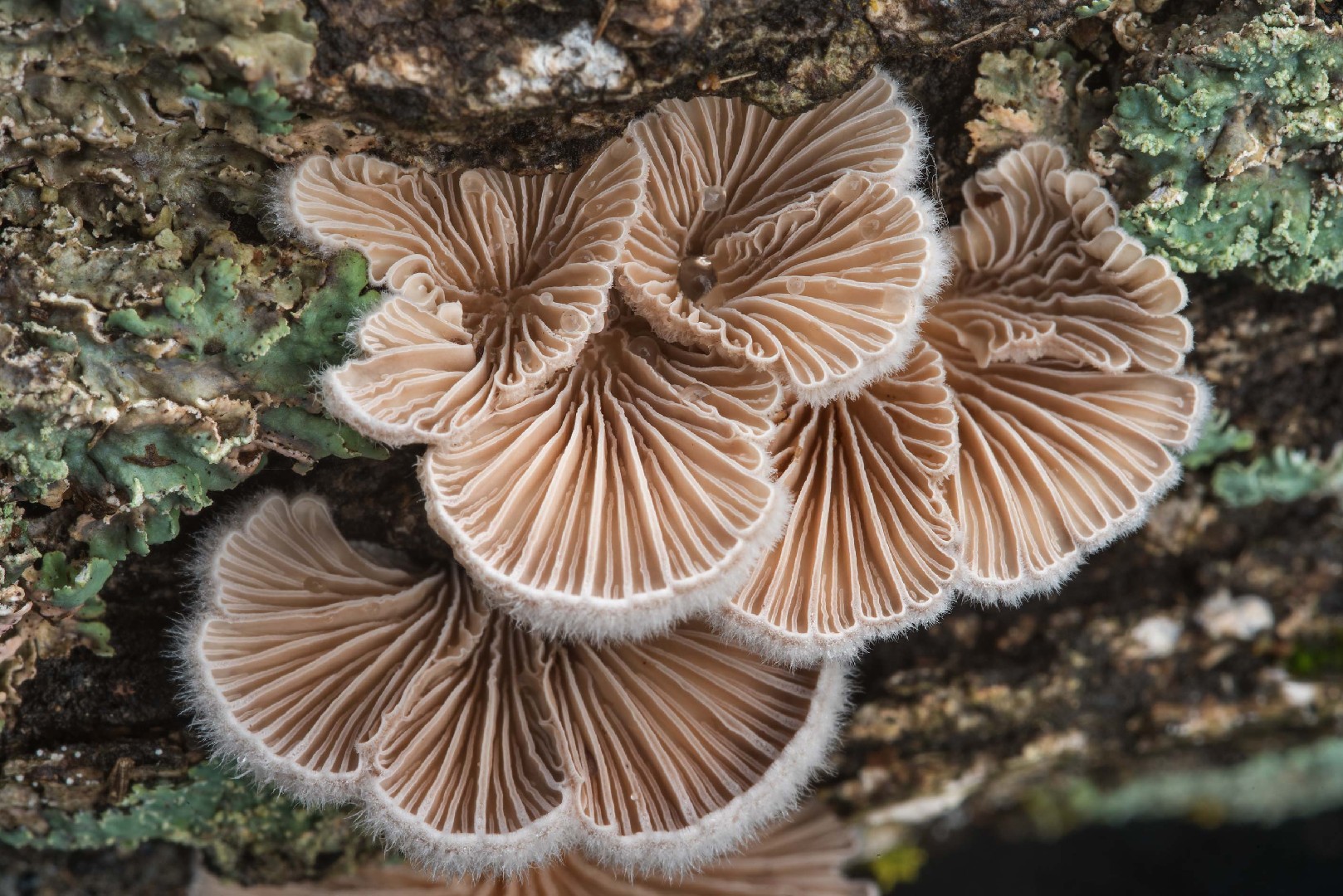
Split gill(Schizophyllum commune) can be found across the globe. Uniquely, it is the only mushroom species known to display the capability to retract by movement. It is considered inedible, although not necessarily toxic. Furthermore, it is not recommended to smell this species, as the spores are capable of sprouting and growing in nasal passages.
9. Fly agaric
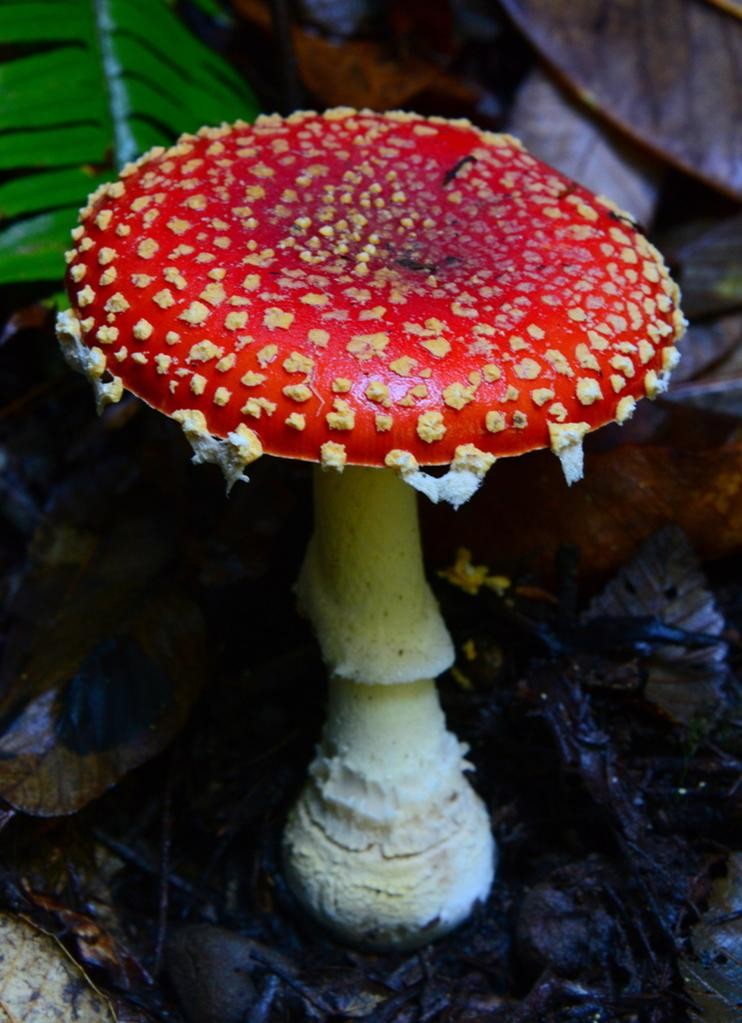
In Northern Asia and Europe, fly agaric grows under trees near the winter solstice and is collected for ritual use tied to the season. Its characteristic shape and coloring are still ubiquitous in many European fairy tale illustrations and Christmas traditions. It is highly toxic.
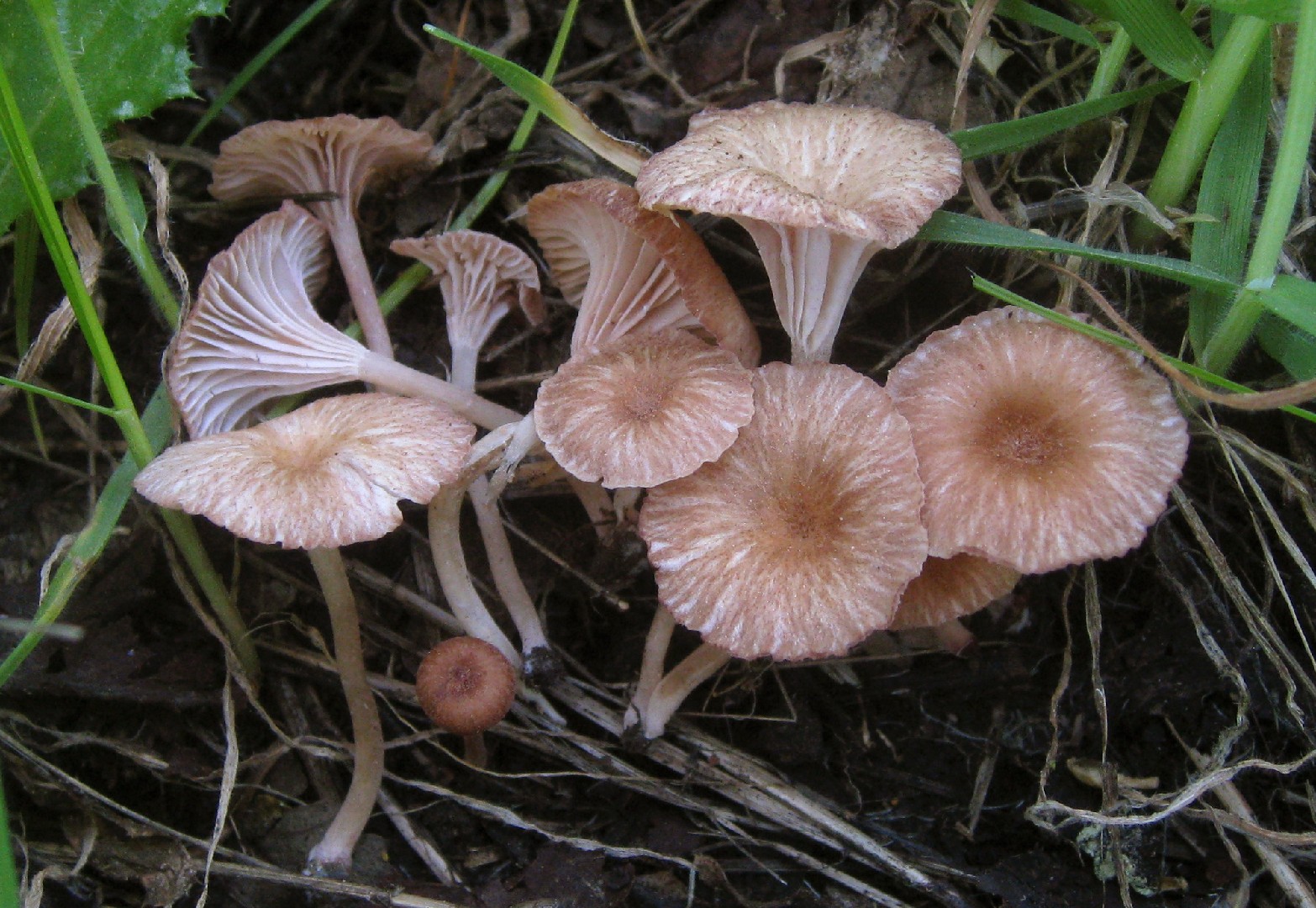
10. Rosy navel
The rosy navel (Contumyces rosellus) is a small, just barely noticeable mushroom that pops up uniquely from sandy soils or silt. The small tan cap is more of a vase shape than a conventional mushroom cap, appearing more like a flower. It is also unique because instead of feasting on already rotting wood, it initiates the rotting process.

More







