




Top 20 Most Common Mushrooms in Pozoblanco
In the heartland of Spain, graced by sunny skies and fertile soil, lies the city of Pozoblanco. Blessed with untouched natural beauty, Pozoblanco forms an idyllic setting conducive to a vast array of mushroom species. With over 20 types recognized, the city is a veritable tapestry of edible fungi. Each species has a unique tale to tell, offering an intriguing blend of flavors, textures, and nutritional benefits. Step into Pozoblanco's mycological paradise and uncover its rich mushroom biodiversity.

Most Common Mushrooms
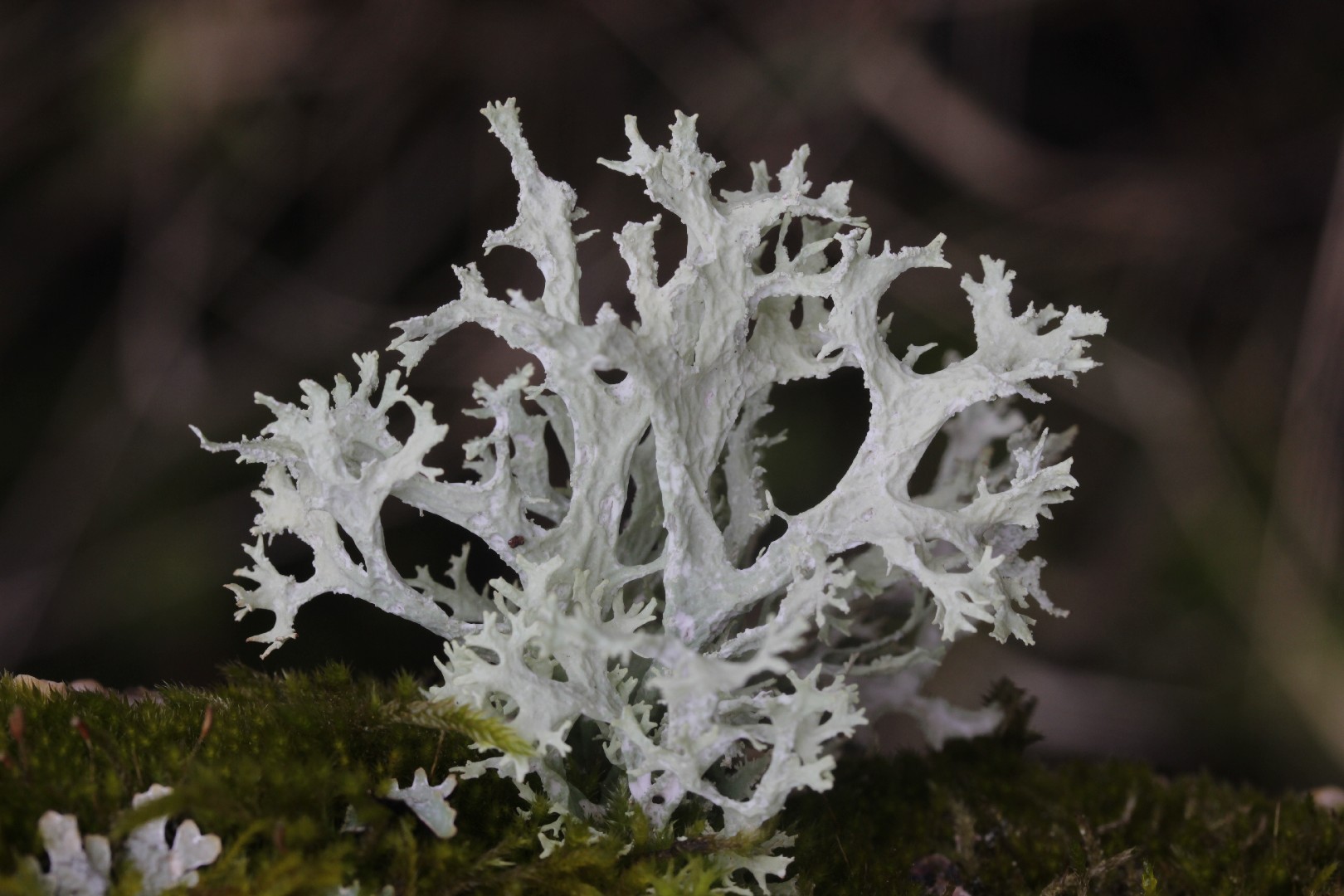
1. Oakmoss
Evernia prunastri grows shrubby on trees. The yellow-green lichen grows up to 10 cm. It consists of up to five millimeters wide shrubby branched bands with a light underside. At the edges of these open dusty (Sorale). Apothecias (with shiny brown disc) are rarely formed.
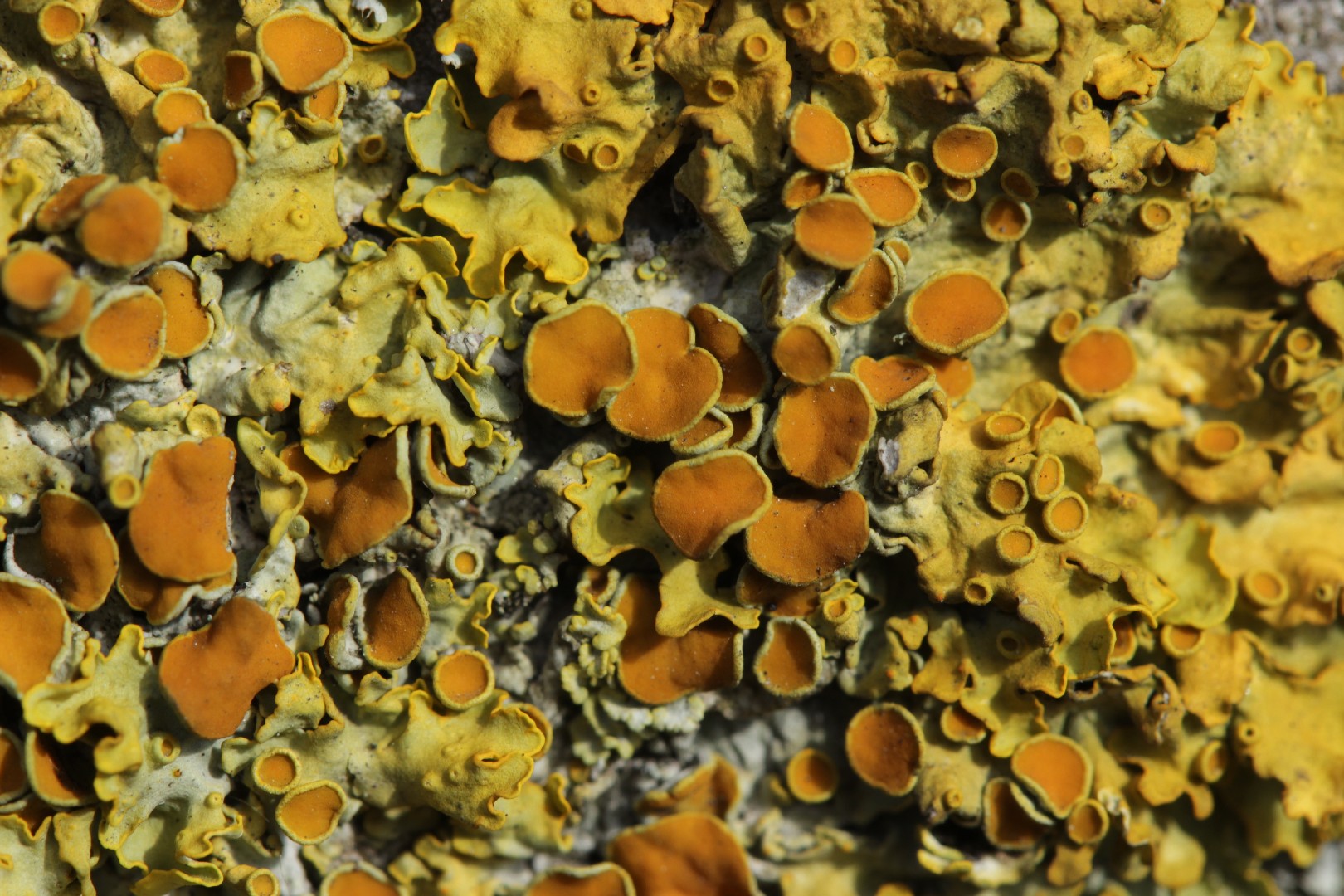
2. Common orange lichen
Common orange lichen was selected in 2006 by the United States Department of Energy as a model for genomic sequencing. Its widespread dispersal and bright yellow-orange color give the lichen its common name. It is primarily found growing on rocks, walls, and tree bark.
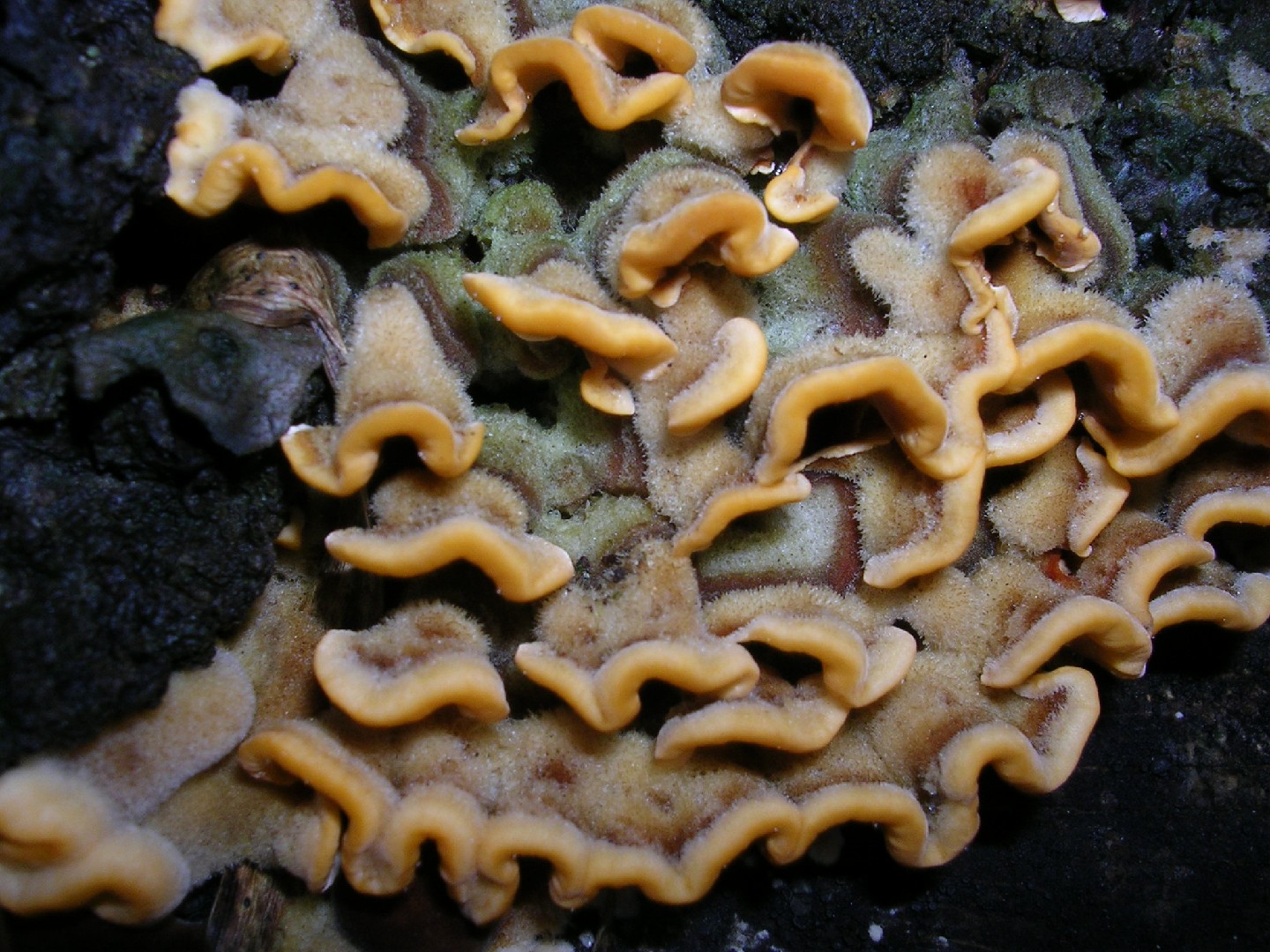
3. Hairy curtain crust
This clustered, overlapping fungus is found all over the world, and is considered native across both the northern and southern hemispheres. Both its common name, hairy curtain crust, and its scientific name, Stereum hirsutum, aptly describe its most obvious features: it is quite tough (stereum) and the younger fruitbodies are notably hairy (hirsutum).
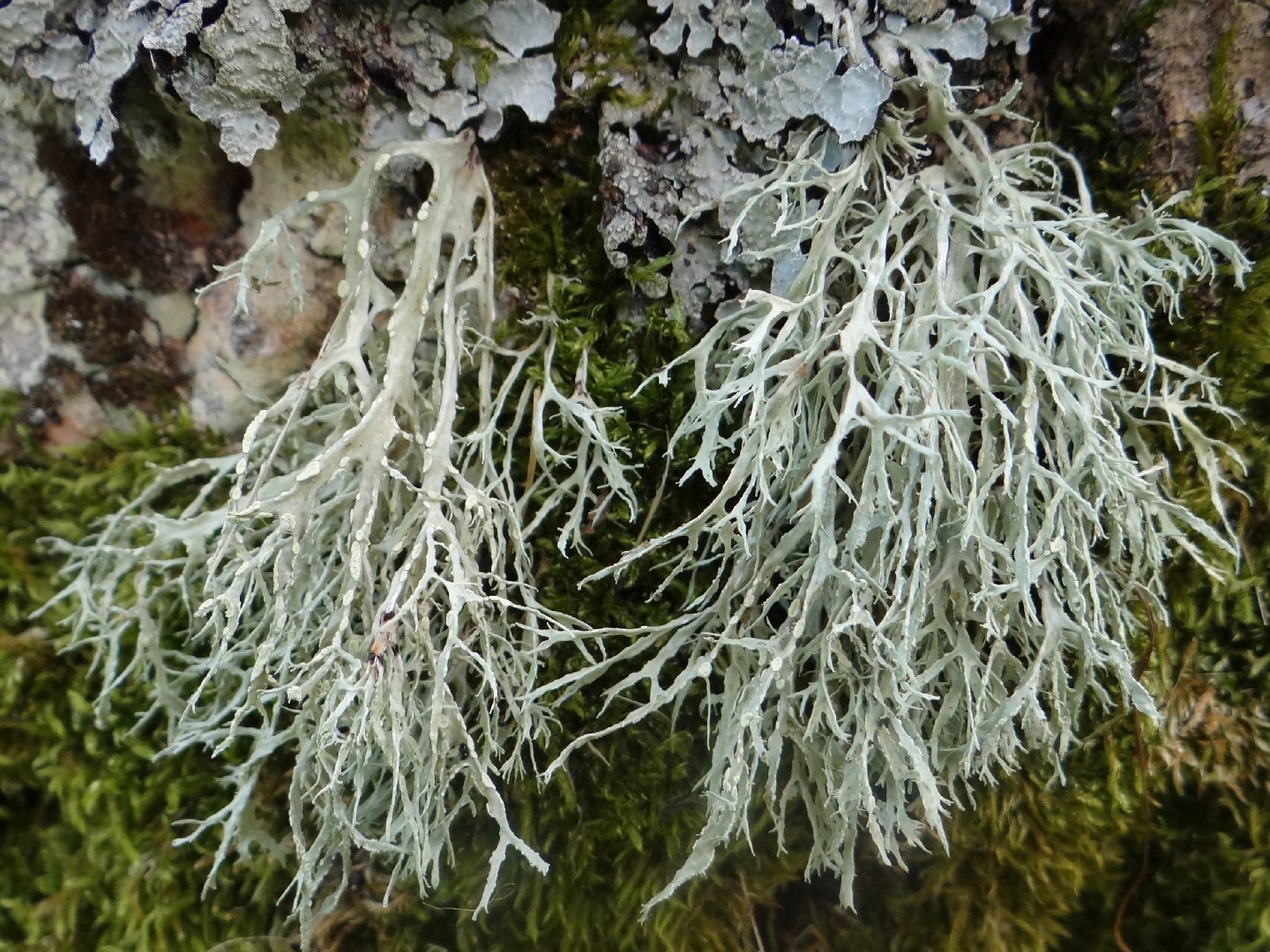
4. Farinose cartilage lichen
Farinose cartilage lichen has a bushy appearance and is easy to identify by its long, slender branches. The reproductive structures are often scattered on the fungi. The lichen thrives in warm moist, mixed forests, forming on second-growth trees and shrubs.
5. Oak crust
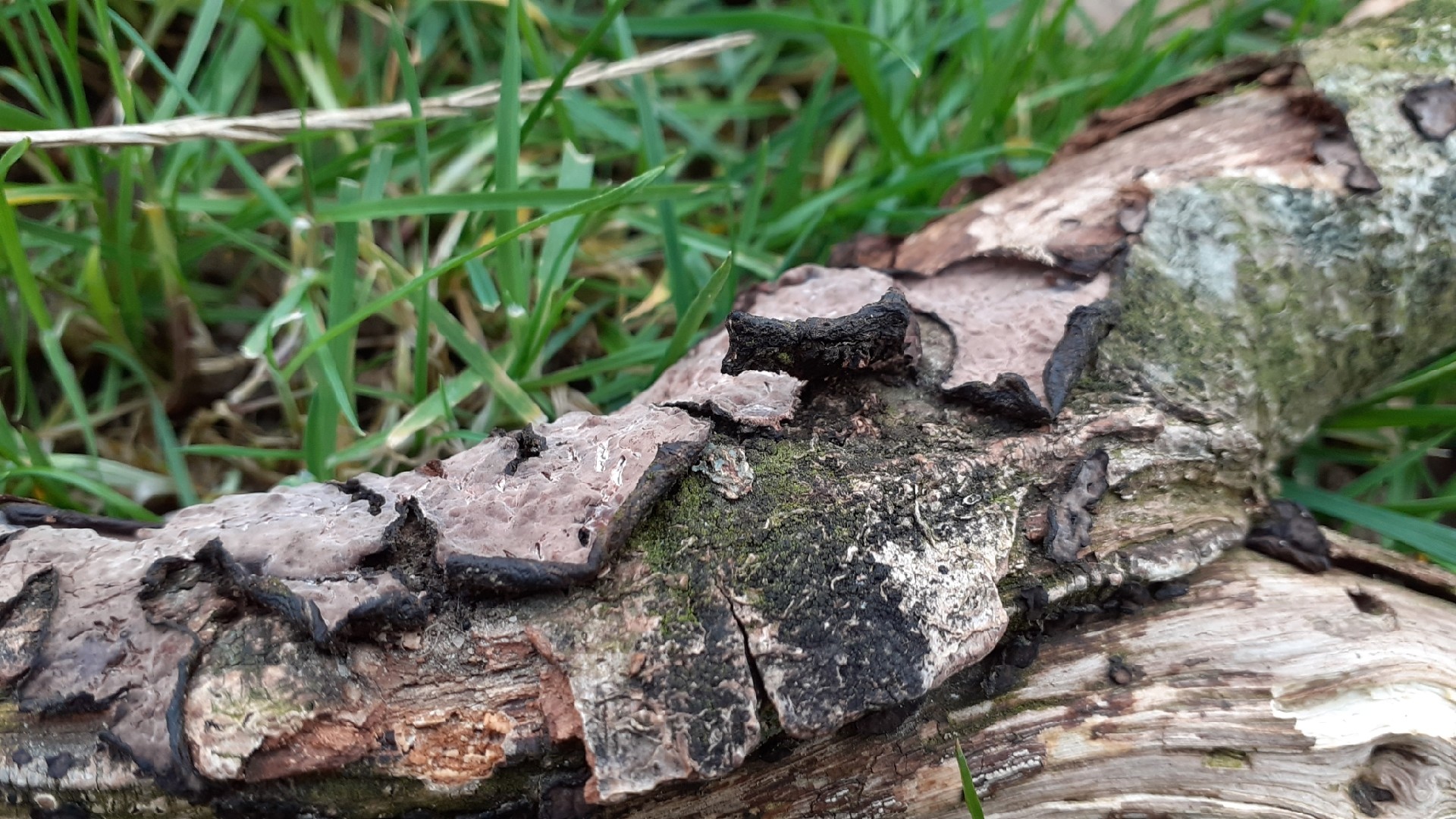
Peniophora quercina produces resupinate fruit bodies which vary in appearance depending on whether they are wet or dry. They are up to 0.5 mm (0.020 in) thick, and form irregular patches that sometimes measure several centimetres across. Initially, the species forms small, disc-shaped fruit bodies through holes in bark, but these expand and merge to form the irregular patches. When fresh, the surface is reminiscent of jelly or wax, and can be smooth or warty, varying in colour from a dull blue to lilac. Initially, they are firmly attached to the wood on which they are growing, but as they dry, the edges roll inwards and reveal the dark brown or black underside. The dry specimens have a crusty and slightly fissured surface, and, in colour, are a bright pink or grey, tinted with lilac. There is a relatively thick layer of gelatinous flesh. Apart from a brown layer close to the wood, the flesh is hyaline. The species has no distinctive odour or taste, and is inedible. 
6. Aleurodiscus disciformis
7. Yellowdrop milkcap
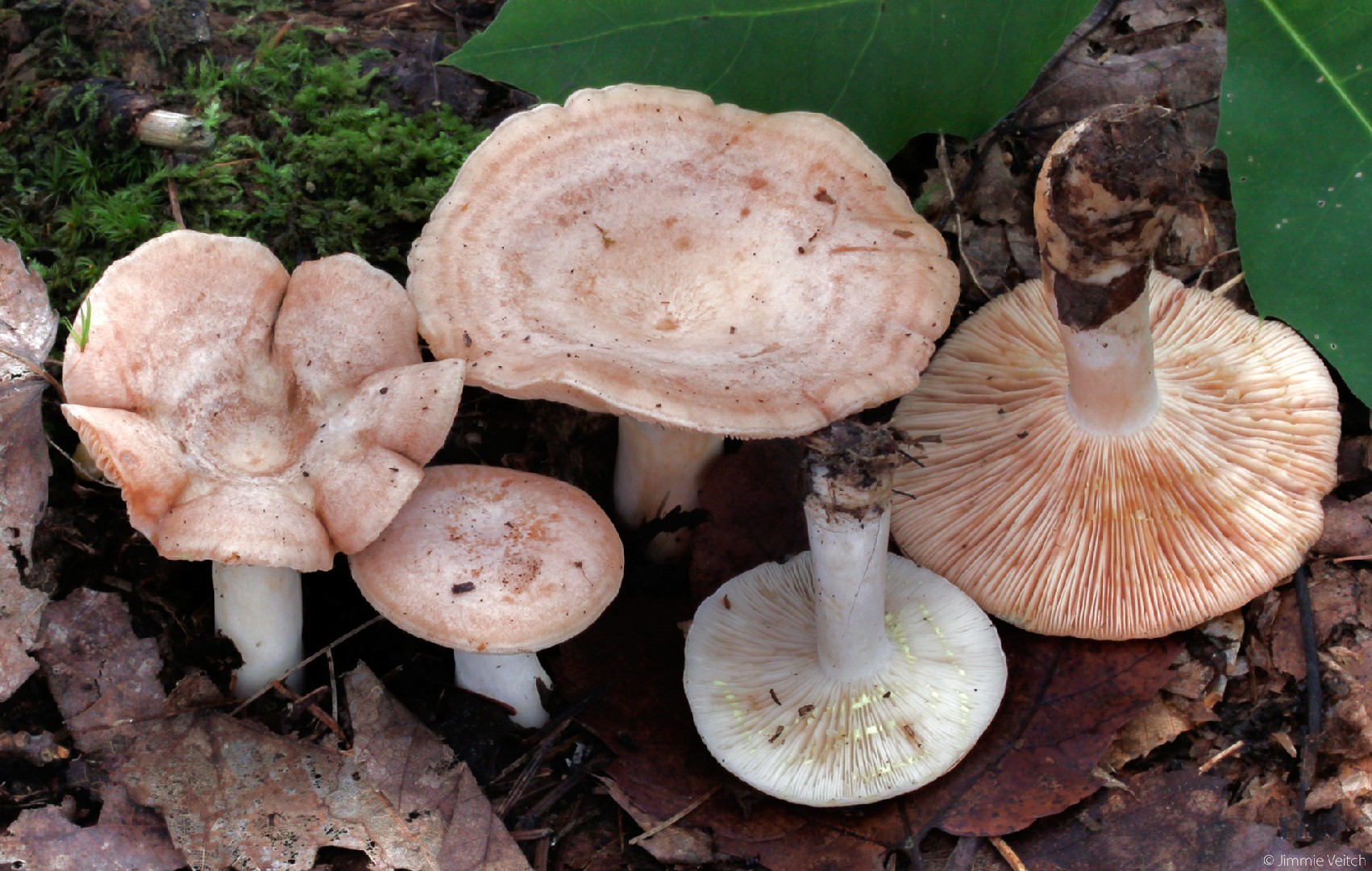
The yellowdrop milkcap is a severely toxic mushroom that causes gastrointestinal disturbances. When cut or bruised, it produces the white milky latex that dries yellow on damaged places just in a few seconds. These bright yellow spots are the best way to distinguish the species.
8. California camouflage lichen
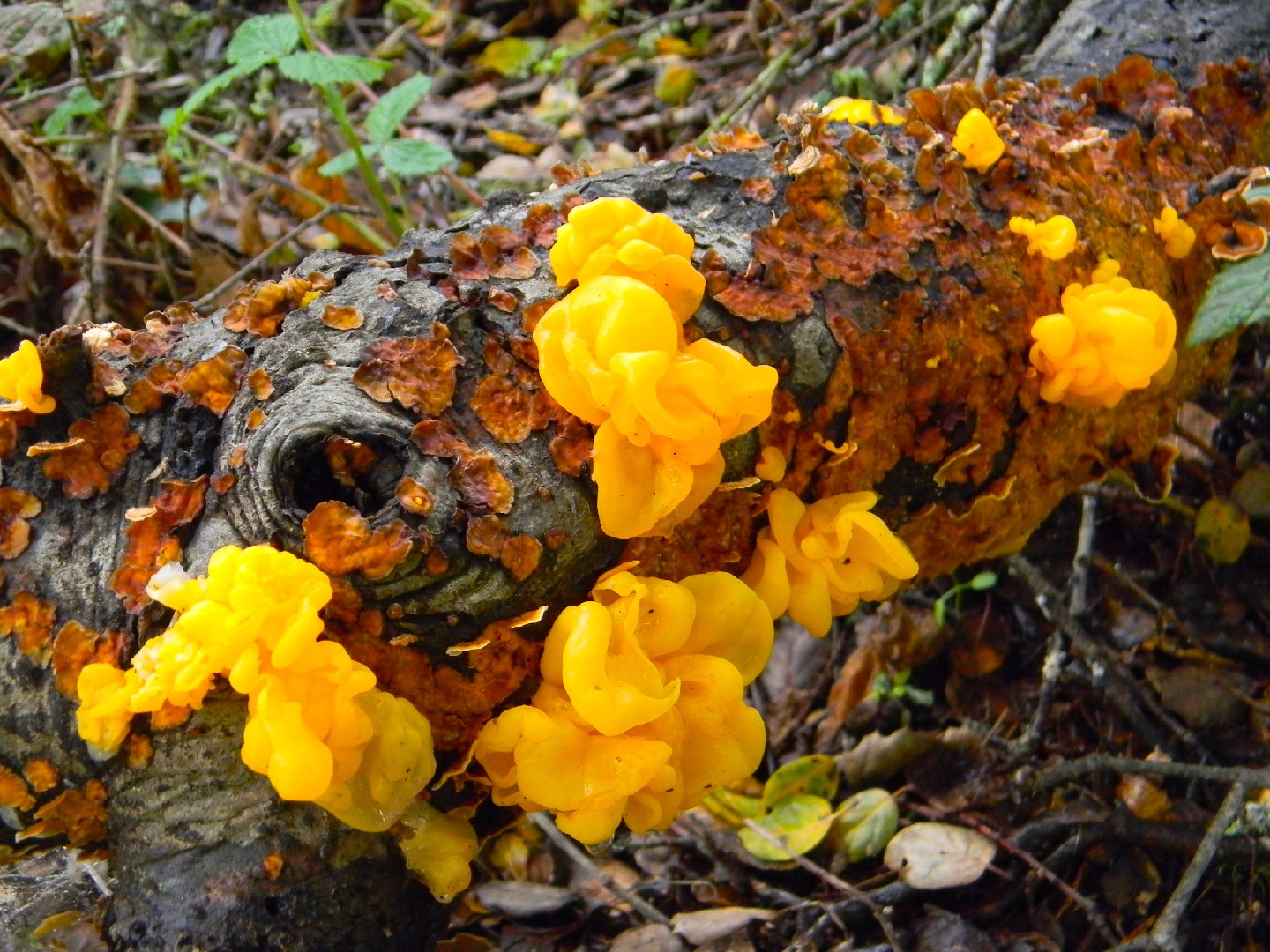
9. Golden ear
The golden ear can be encountered in an unusual time of the year – winter. It is considered a parasitic fungus, as it tends to grow on the fruiting body of other fungi, particularly the Hairy Curtain Crust (Stereum hirsutum). When wet, the golden ear has a gelatinous structure, but in dry weather, it becomes tougher and crust-like.
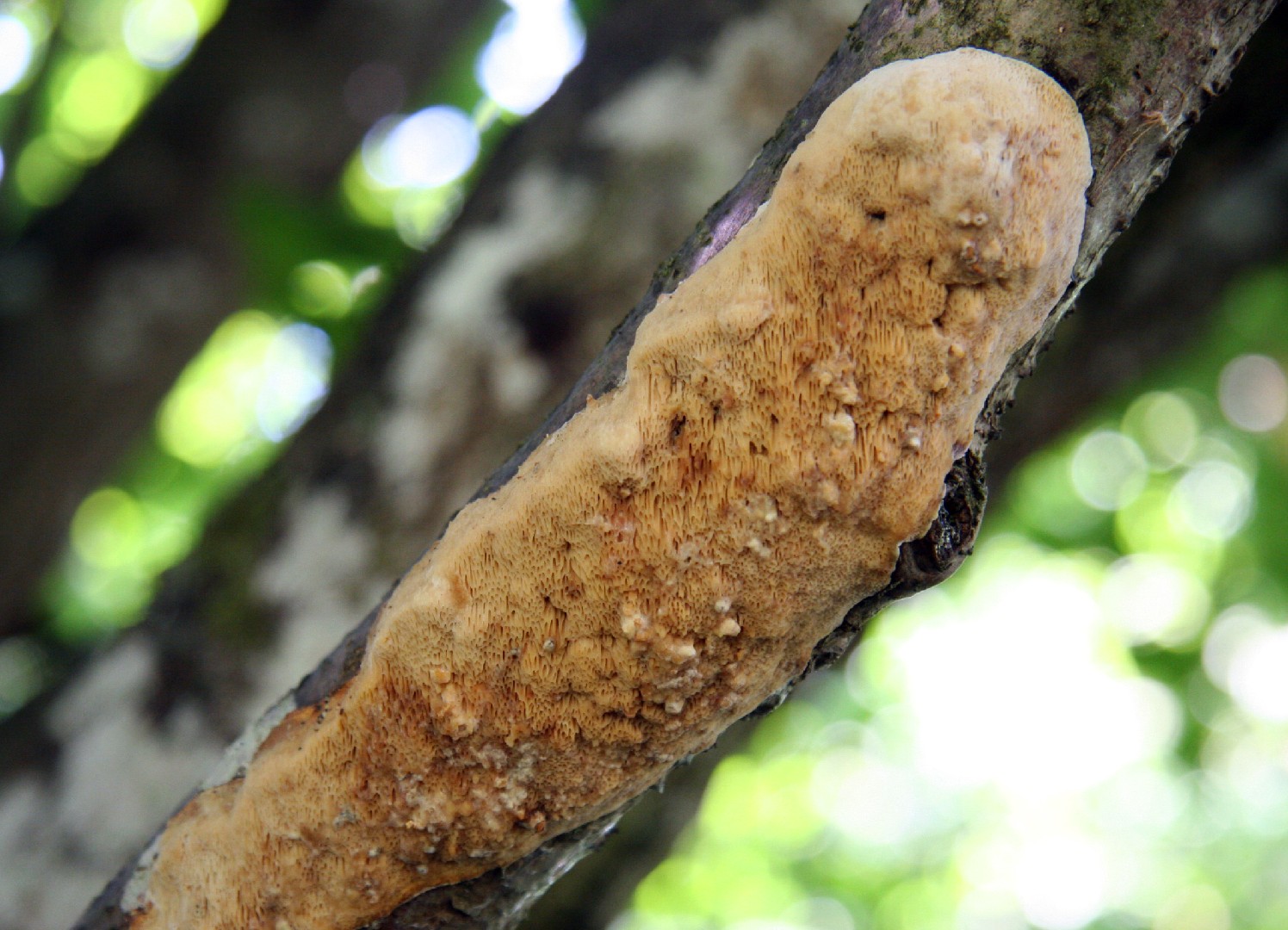
10. Dichomitus campestris
More







