




Top 15 Most Common Mushrooms in Hunan

Most Common Mushrooms
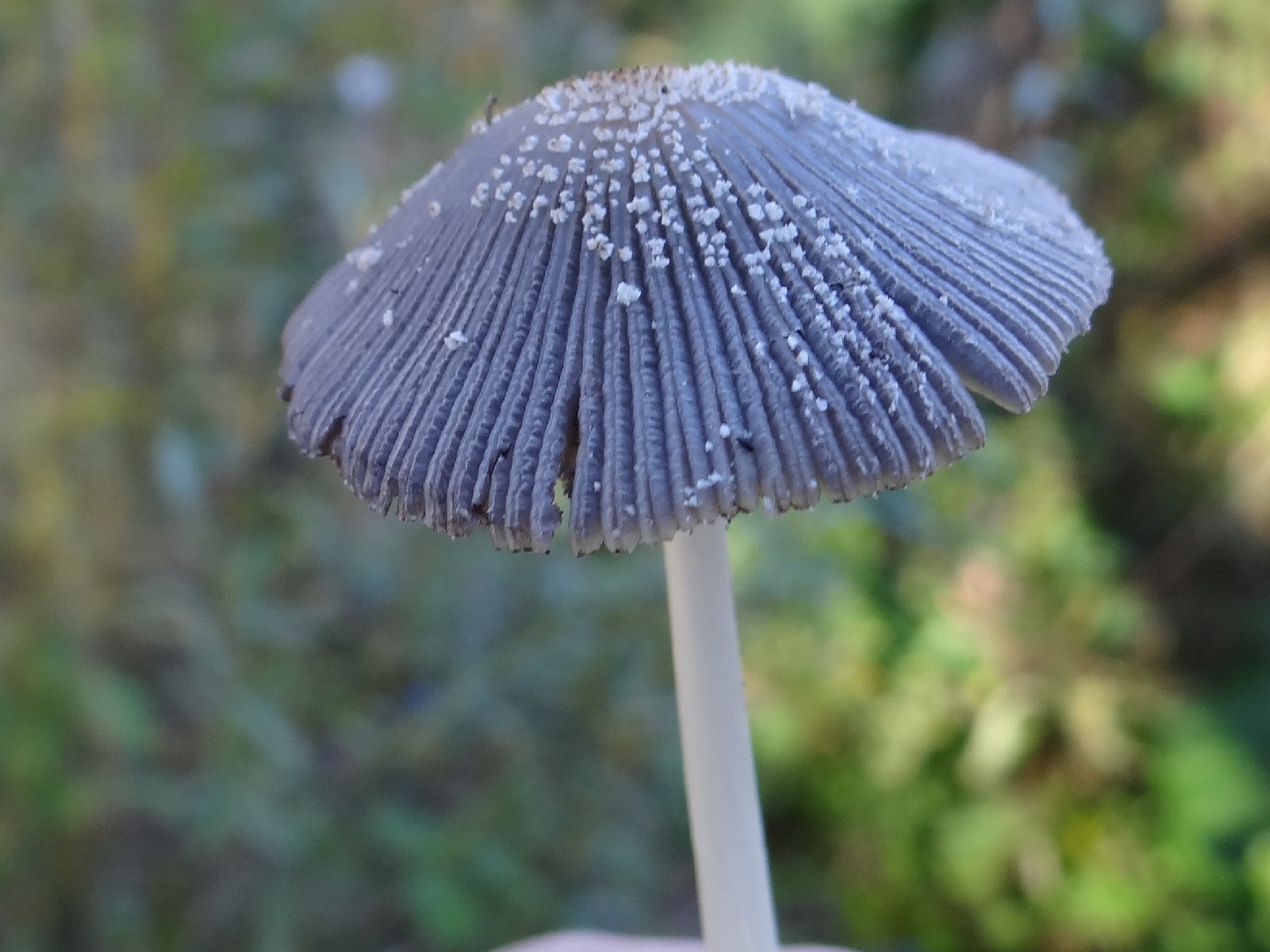
1. Hare's foot ink cap
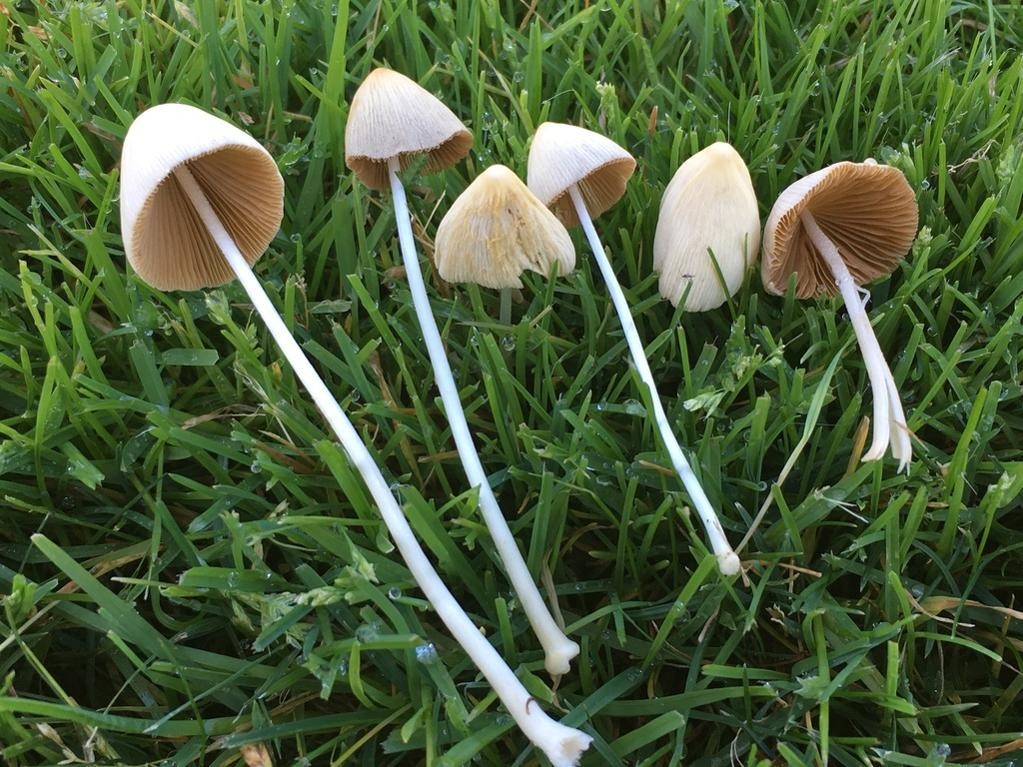
The entire visible lifespan of the delicate hare's foot ink cap occurs within twenty-four hours. Growing in leaf litter and woodchip mulch, they spring up in hairy egg shapes before flattening out into smooth, black-ribbed bowls. Their scientific name Coprinopsis lagopus comes from Greek words meaning “hare’s foot living on dung.”
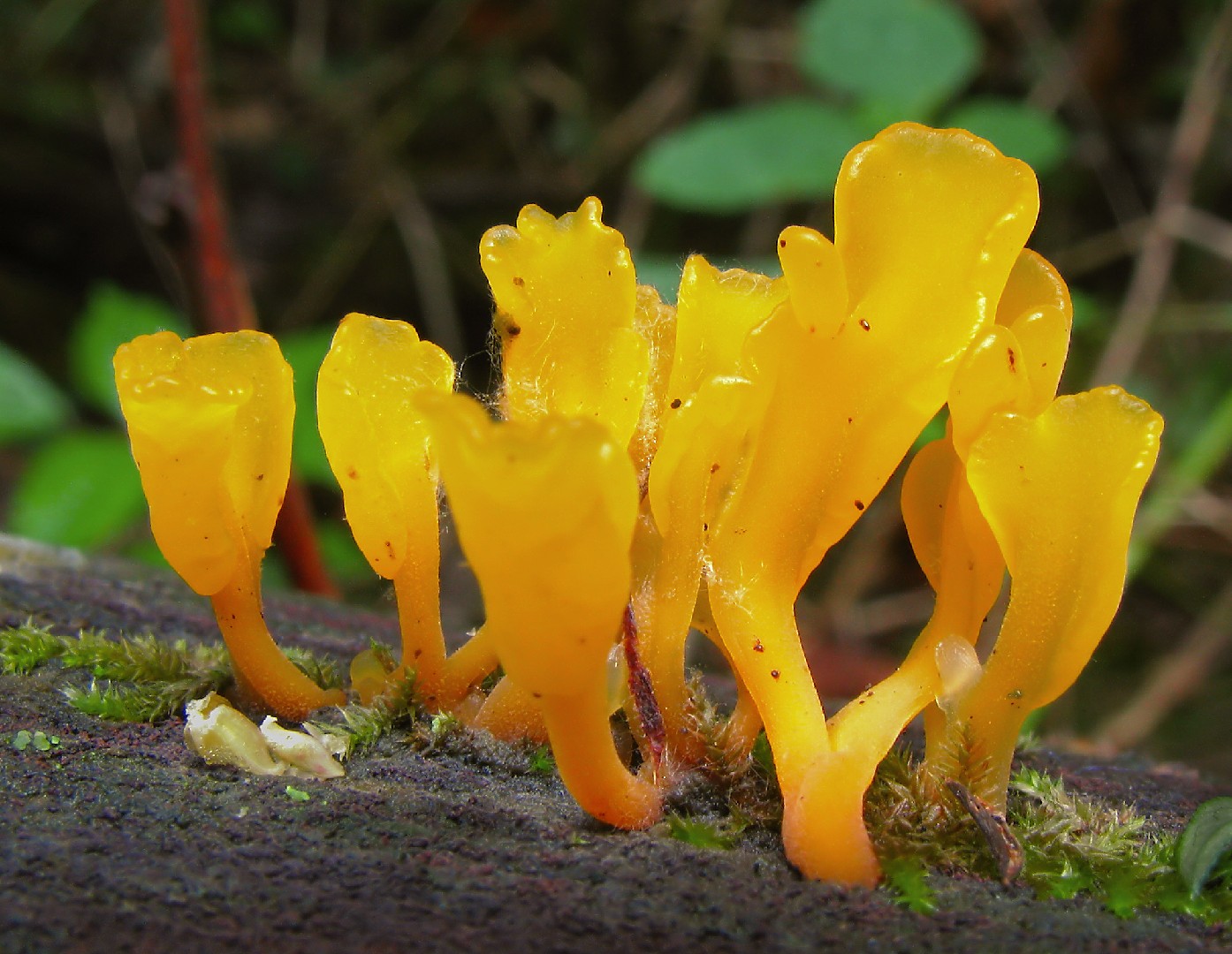
2. Fan-shaped jelly-fungus
Just as its Latin and the common English names suggest, the fan-shaped jelly-fungus (Dacryopinax spathularia) is a fan-shaped or spatula-shaped jelly-like mushroom. It commonly grows in wood cracks and it sometimes even appears in the cracks of the processed wood and lumber. Despite the word "jelly" in its name, the fan-shaped jelly-fungus is not considered edible.
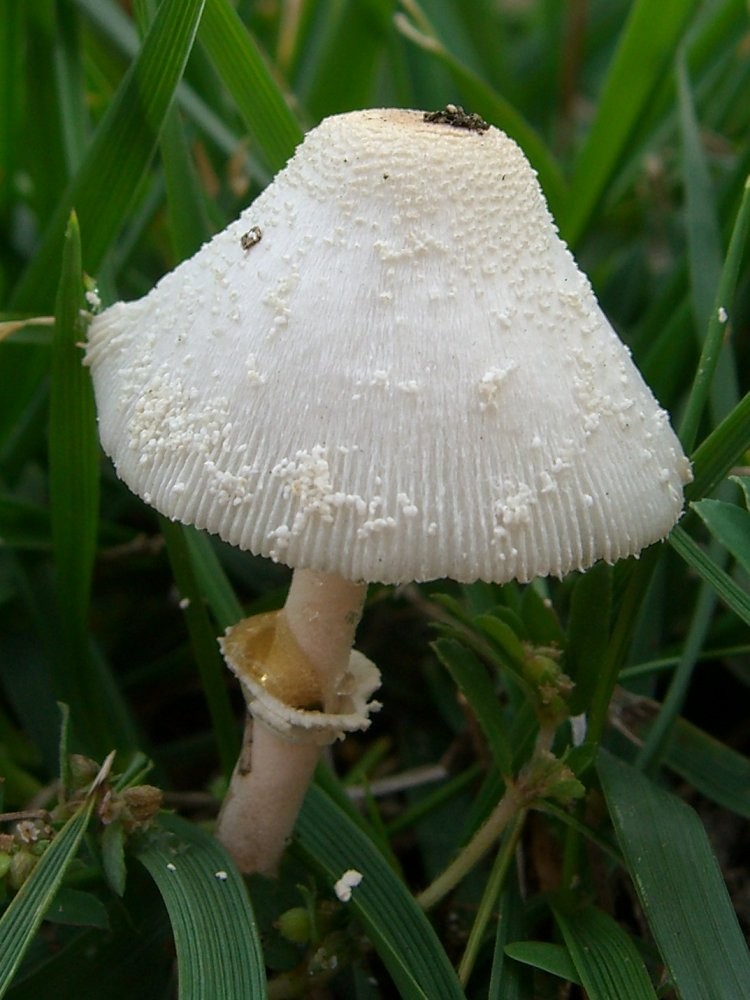
3. Onion-stalk parasol mushroom
This generalist mushroom, found across North America, can be found in all sorts of moist woodland settings. The species appears to be particularly fond of wood chips or mulch, and so it is often found in garden or park settings. The onion-stalk parasol mushroom, despite the word "onion" in its name, is inedible.
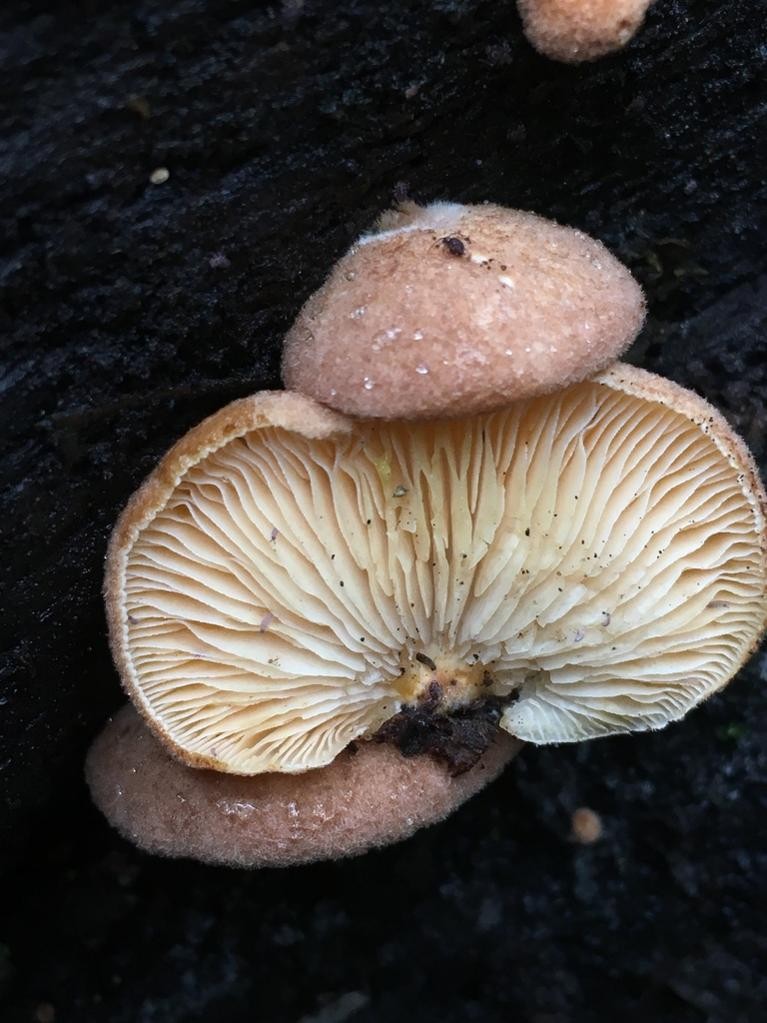
4. Saffron oysterling
Saffron oysterling is regarded as a mushroom with a very charming appearance. It features saffron-orange gills which give the species both its Latin name Crepidotus crocophyllus and common English name Saffron oysterling. It is also regarded as the most common among all North American Crepidotus species. The saffron oysterling can produce a somewhat unpleasant smell.
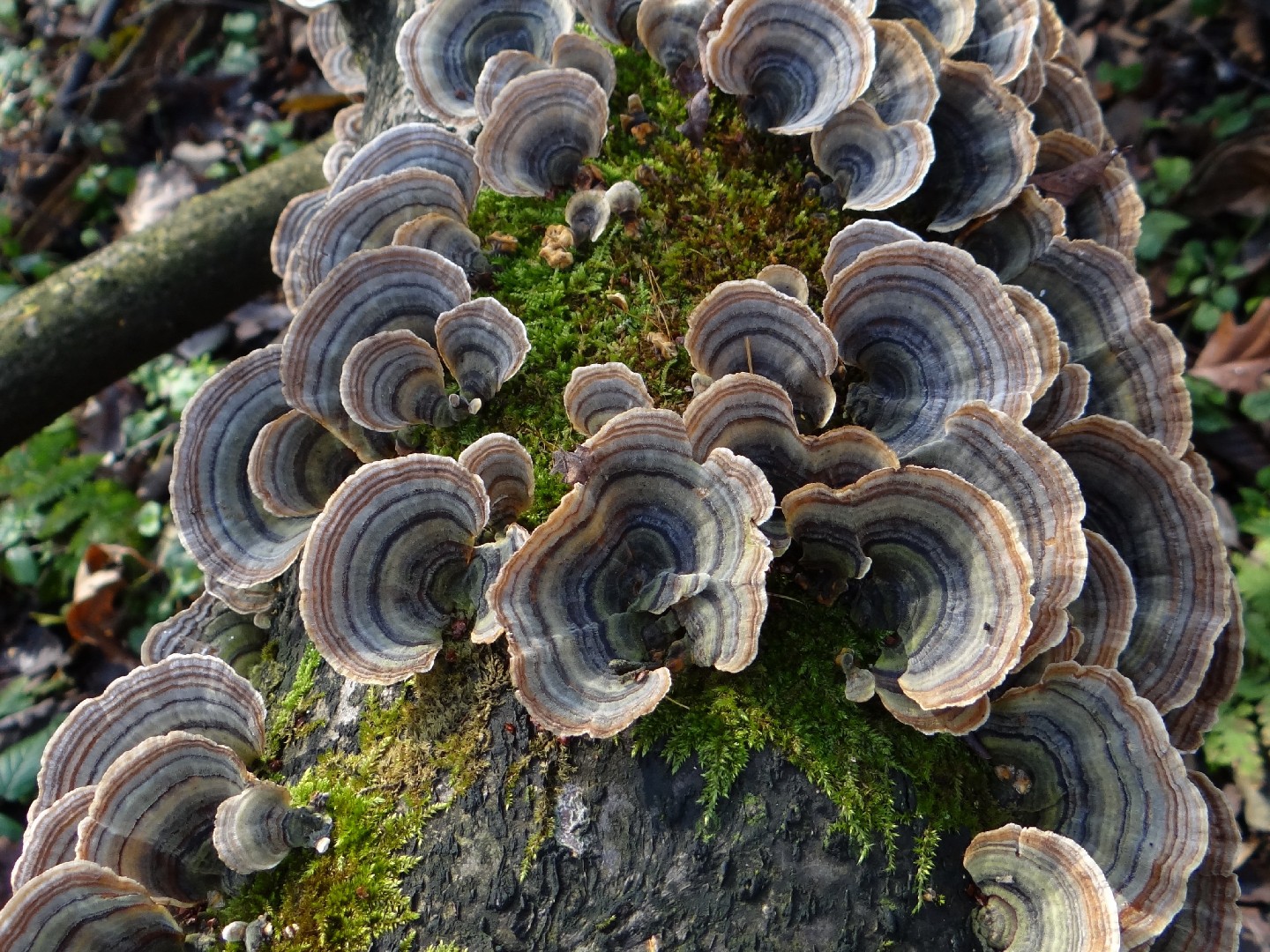
5. Turkey tail
The distinctively-striped turkey tail fungus grows on stumps and logs all over the forests of the northern hemisphere. It is, in fact, probably the most common species you will find. That doesn't mean this mushroom is plain, however; each cap is uniquely patterned. Look for bands of alternating textures as well as color.
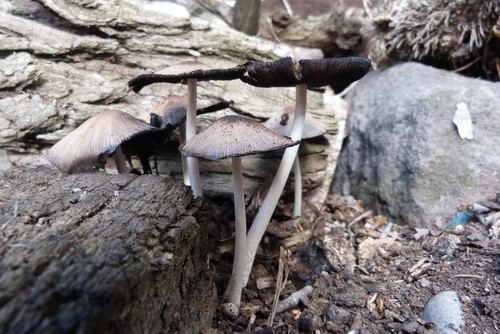
6. Mica cap
The bell-shaped mica cap mushrooms grow in clusters on wood debris and stumps, from spring to autumn. The caps appear wet and inky once they mature and begin to release spores. At that point, they can be boiled with cloves to create a useful black ink.
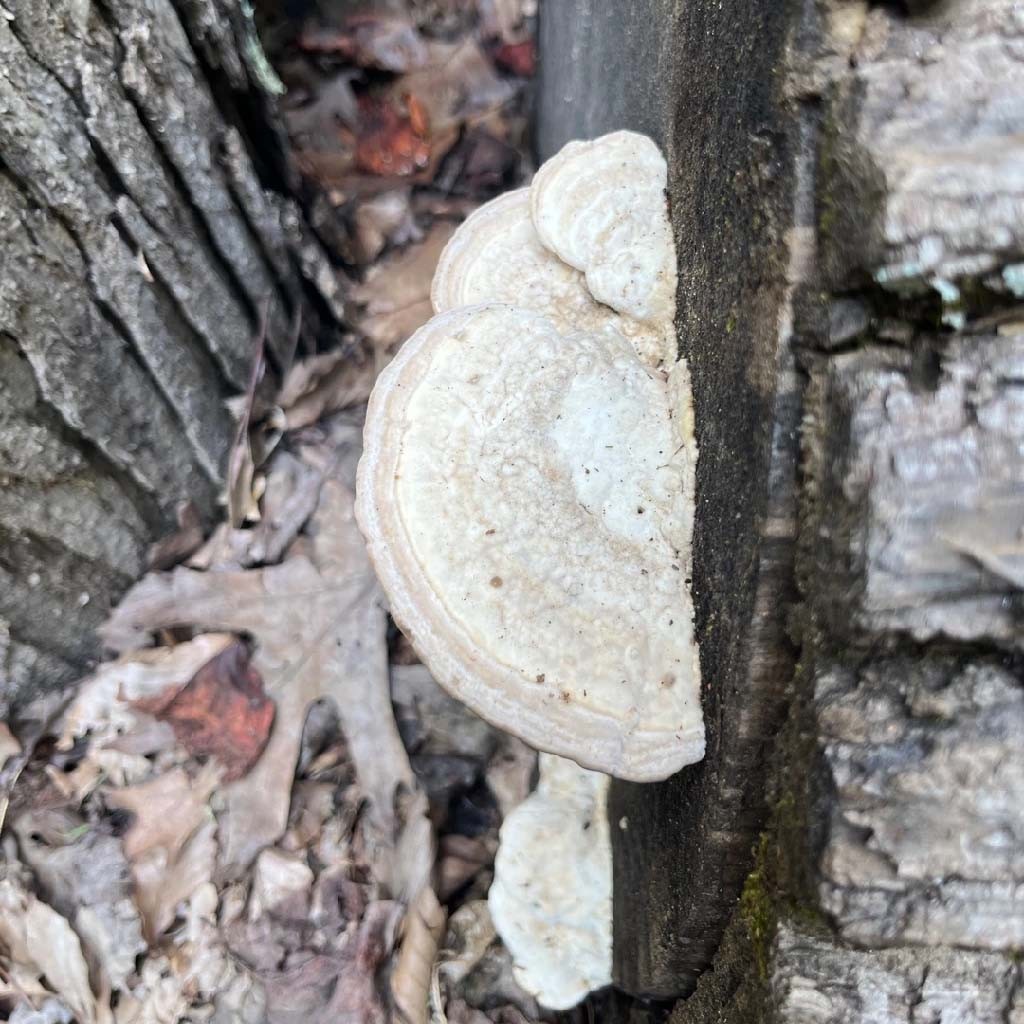
7. Leiotrametes lactinea
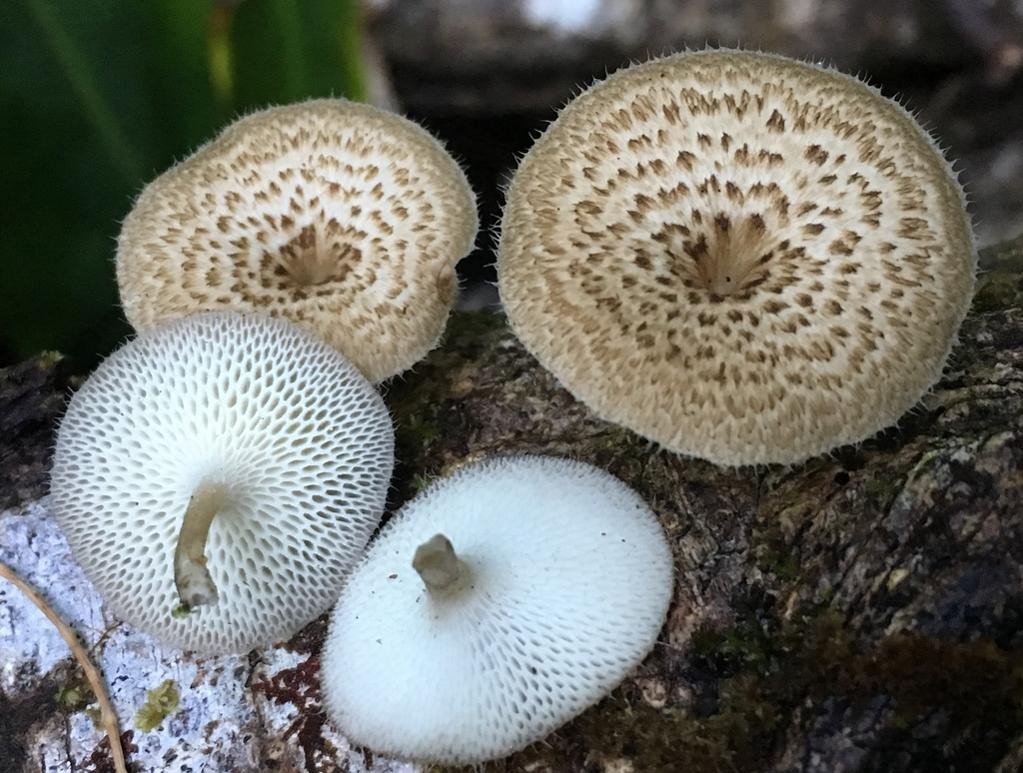
Leiotrametes lactinea thrives in warmer climates growing on decaying and dead trees, stumps, and branches. The white-rot fungus provides an important ecological service by aiding in the decay of dead wood by removing lignin, which is the organic material in the tree’s cell walls that prevent it from decaying.
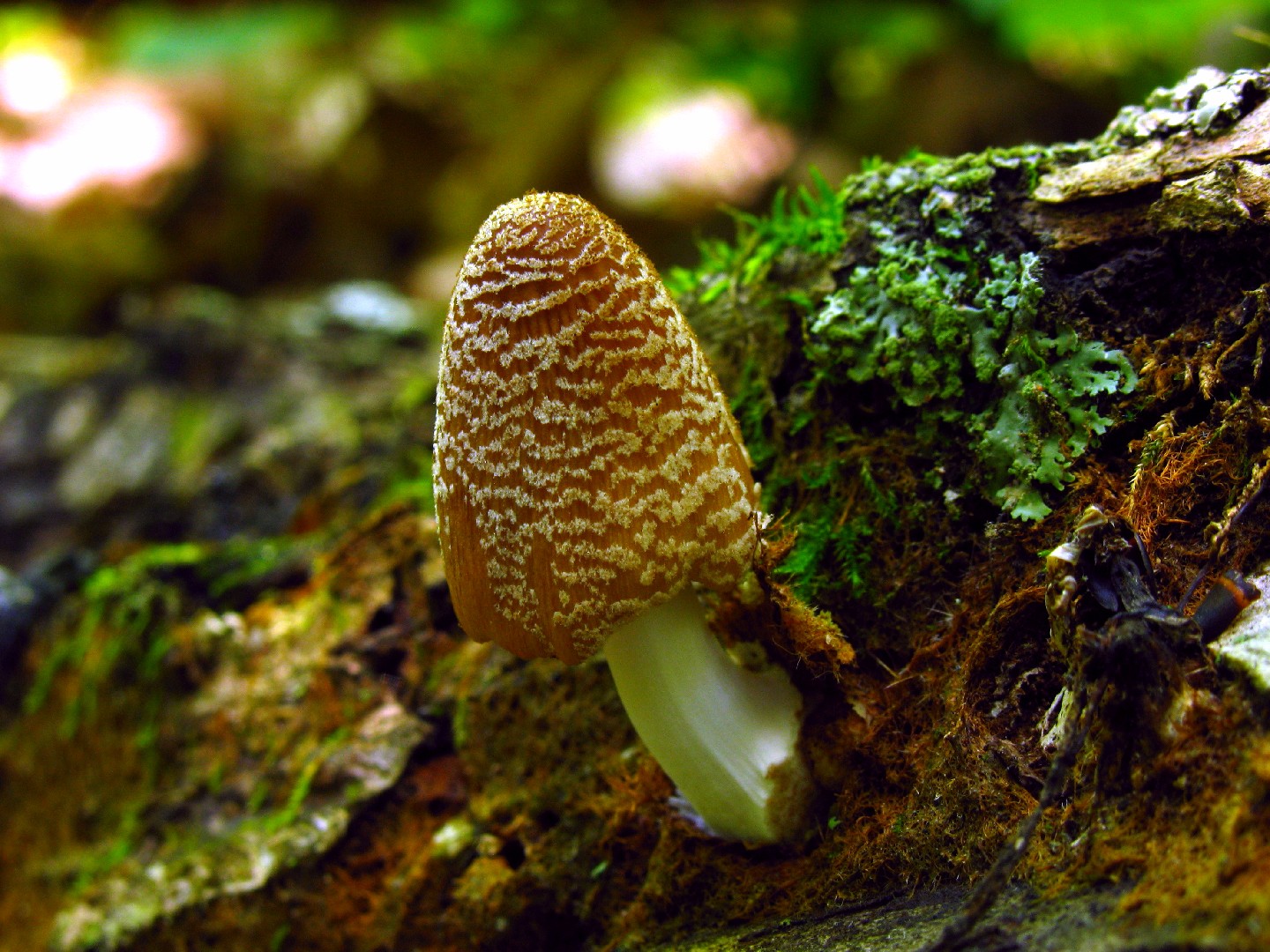
8. Firerug inkcap
The whimsically-titled firerug inkcap is named for one of its more distinctive features. This species usually grows alongside an above-ground, mycelial mat called an "ozonium". With Coprinellus domesticus, the ozonium takes on a fuzzy, orange appearance - thus, "firerug". The species can be found in temperate habitats across much of Europe and parts of North America.

9. Mauve parachute
The tiny mauve parachute (Marasmius haematocephalus) is a miniature delight. A broad, delicate, brightly-hued cap sits like an open umbrella atop a slender, delicate, darkly-colored stalk. In dry conditions, the caps shrivel and become near-invisible beneath the detritus of the forest floor, but the next rain will open these hardy little mushrooms right back up again.
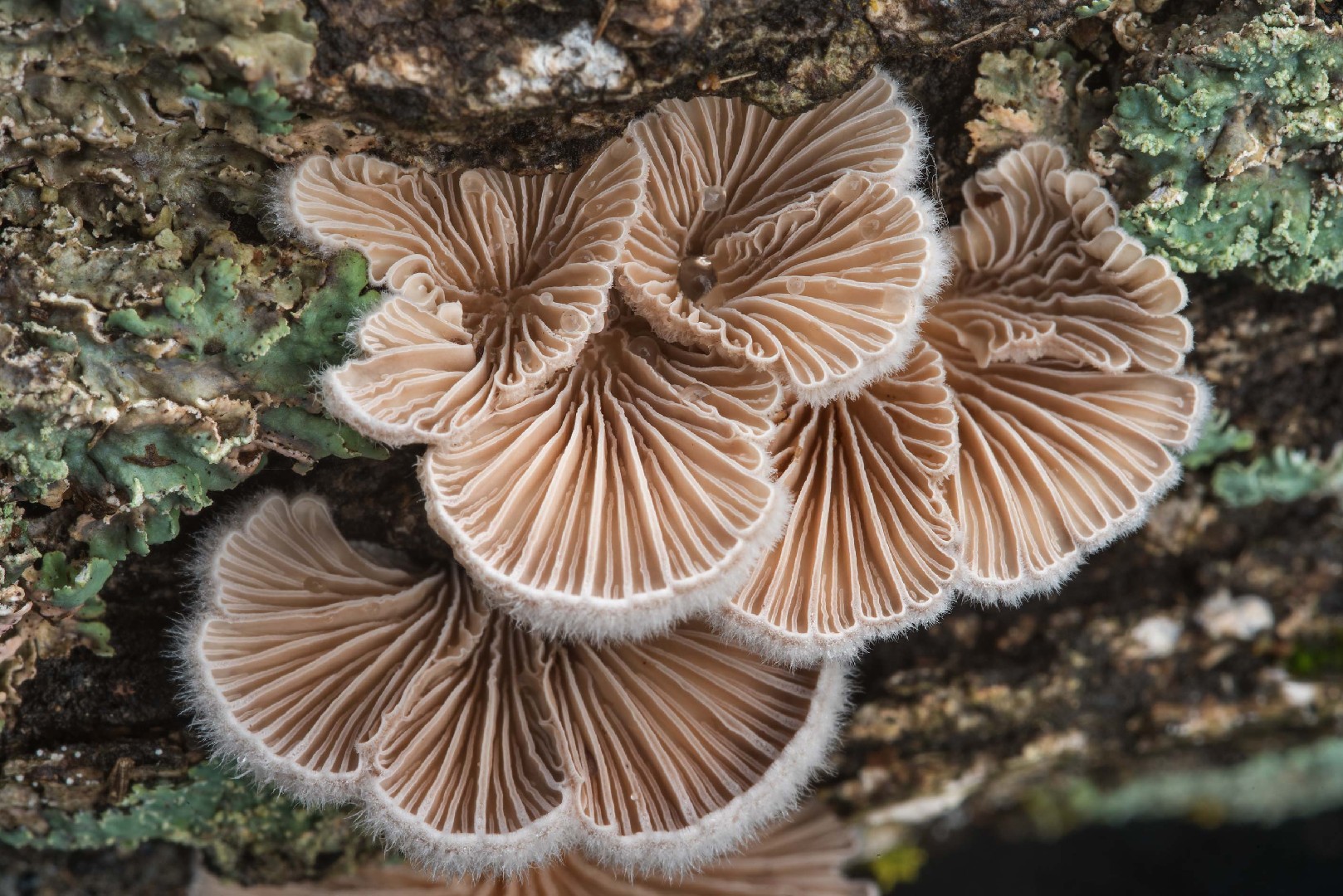
10. Split gill
Split gill(Schizophyllum commune) can be found across the globe. Uniquely, it is the only mushroom species known to display the capability to retract by movement. It is considered inedible, although not necessarily toxic. Furthermore, it is not recommended to smell this species, as the spores are capable of sprouting and growing in nasal passages.

More







