




Top 11 Most Common Mushrooms in Cambodia
Surrounded by verdant foliage and a moist tropical climate, Cambodia offers the perfect environment for a multitude of mushroom species. Existing amidst a unique blend of flora and fauna, various mushroom variations have made their home in Cambodia . Delving into the richness of this biodiverse landscape, we showcase the top 11 most common luscious and bountiful fungi native to this region. Explore the intriguing world of these often-overlooked natural treasures with us.

Most Common Mushrooms
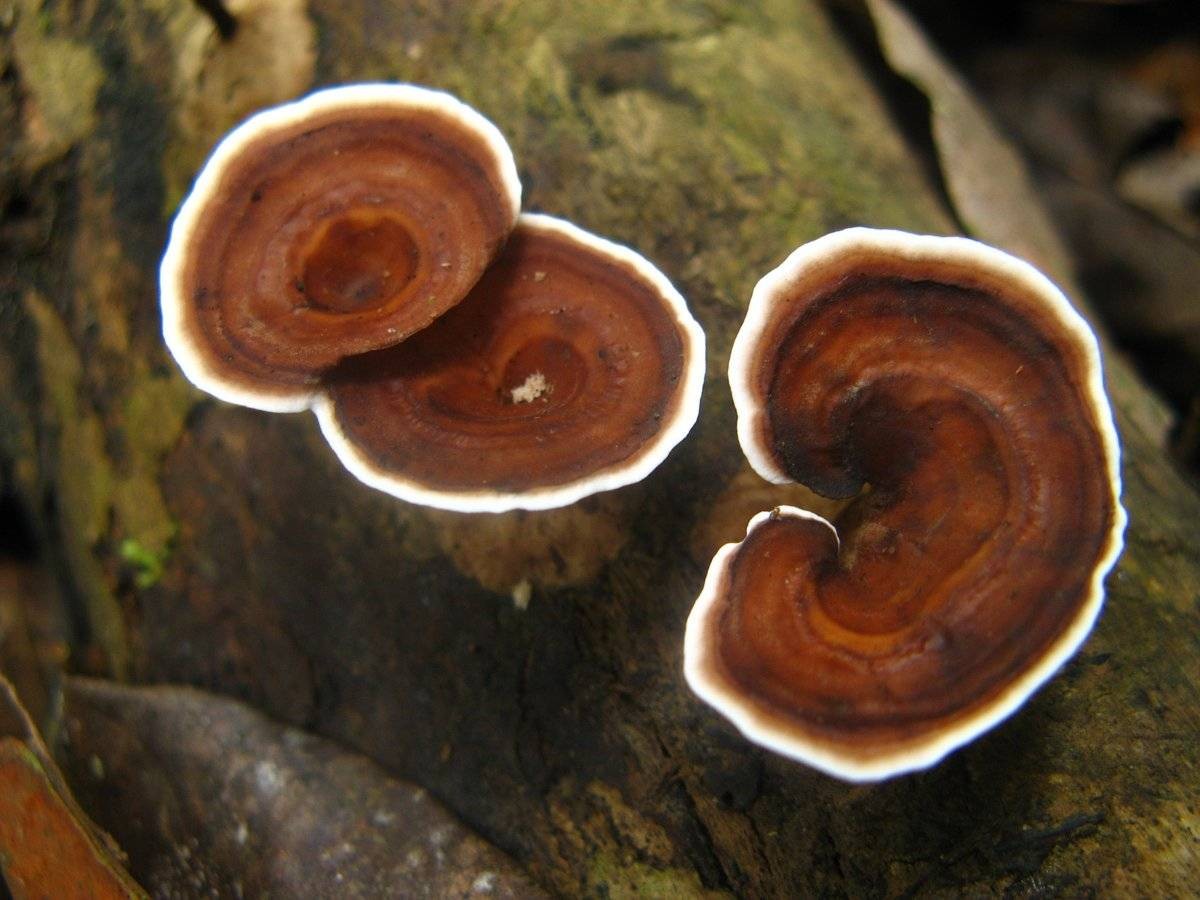
1. Yellow-footed micropore
The scientific name of the yellow-footed micropore (Microporus xanthopus) translates to “tiny-pored yellow foot.” Its short stem is usually yellow, leading up to a concave, funnel-like cap. The species is common in all the tropics of the world outside of the Americas. The striated, multi-hued caps grow largest in wet, darkly-shaded locations.
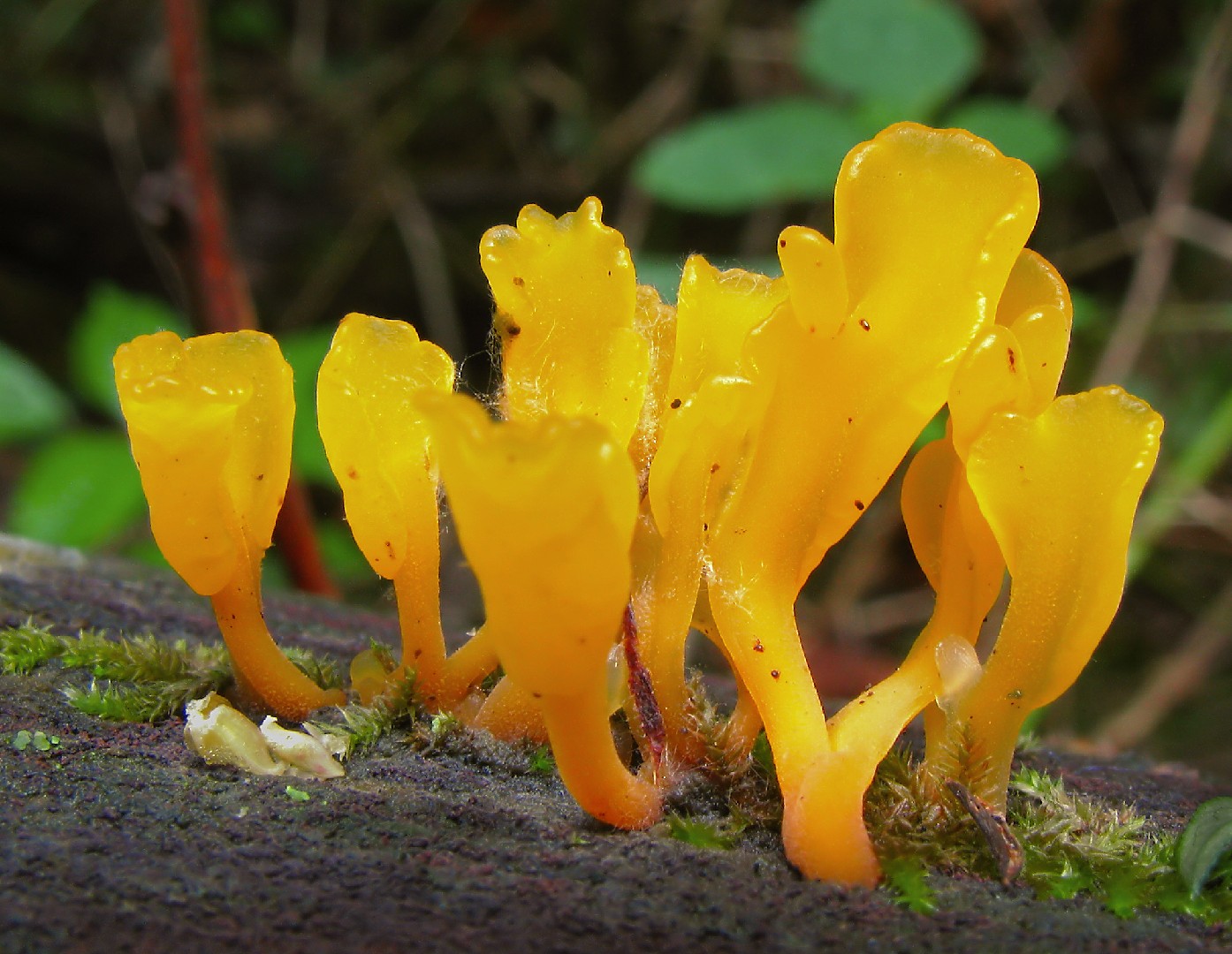
2. Fan-shaped jelly-fungus
Just as its Latin and the common English names suggest, the fan-shaped jelly-fungus (Dacryopinax spathularia) is a fan-shaped or spatula-shaped jelly-like mushroom. It commonly grows in wood cracks and it sometimes even appears in the cracks of the processed wood and lumber. Despite the word "jelly" in its name, the fan-shaped jelly-fungus is not considered edible.
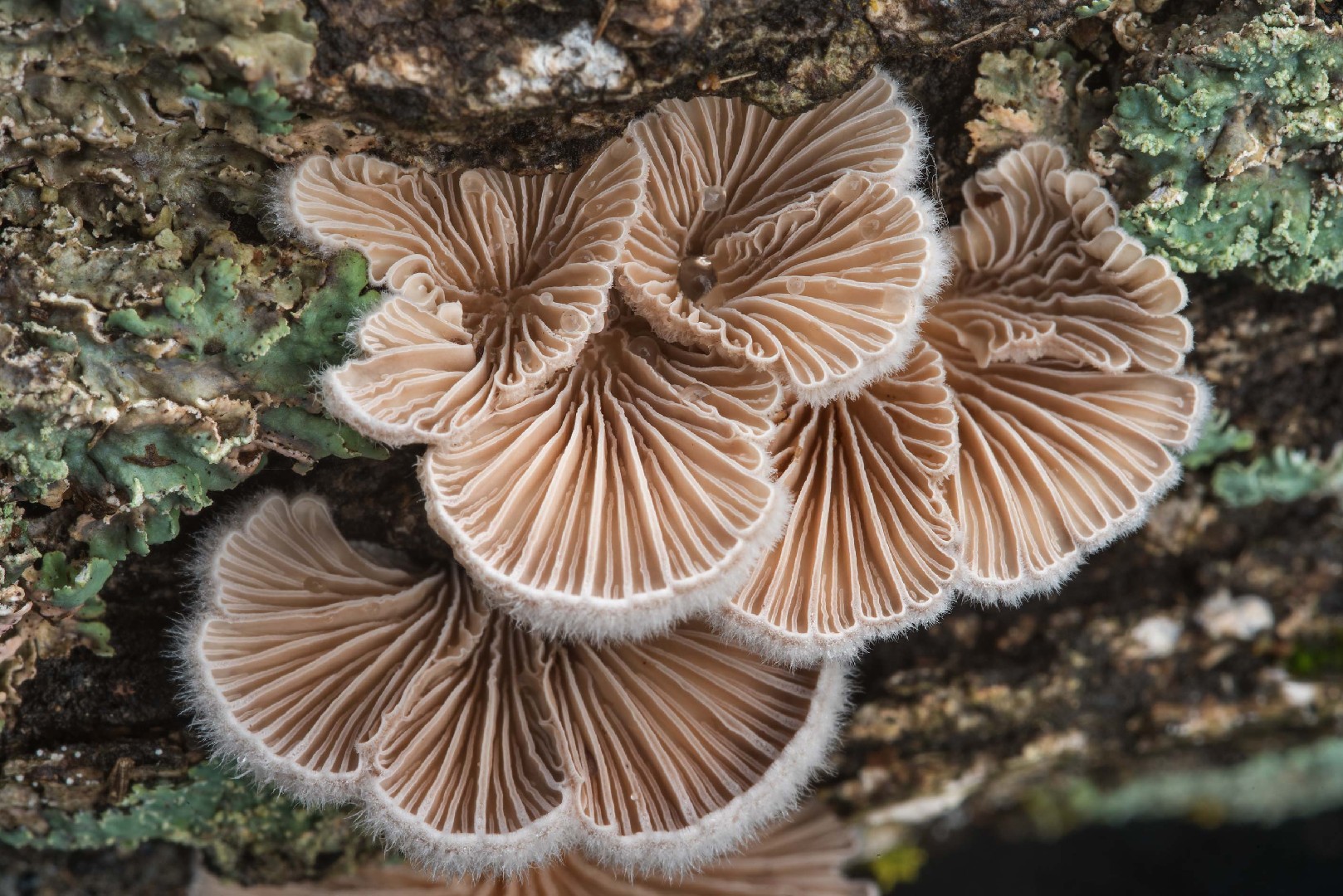
3. Split gill
Split gill(Schizophyllum commune) can be found across the globe. Uniquely, it is the only mushroom species known to display the capability to retract by movement. It is considered inedible, although not necessarily toxic. Furthermore, it is not recommended to smell this species, as the spores are capable of sprouting and growing in nasal passages.
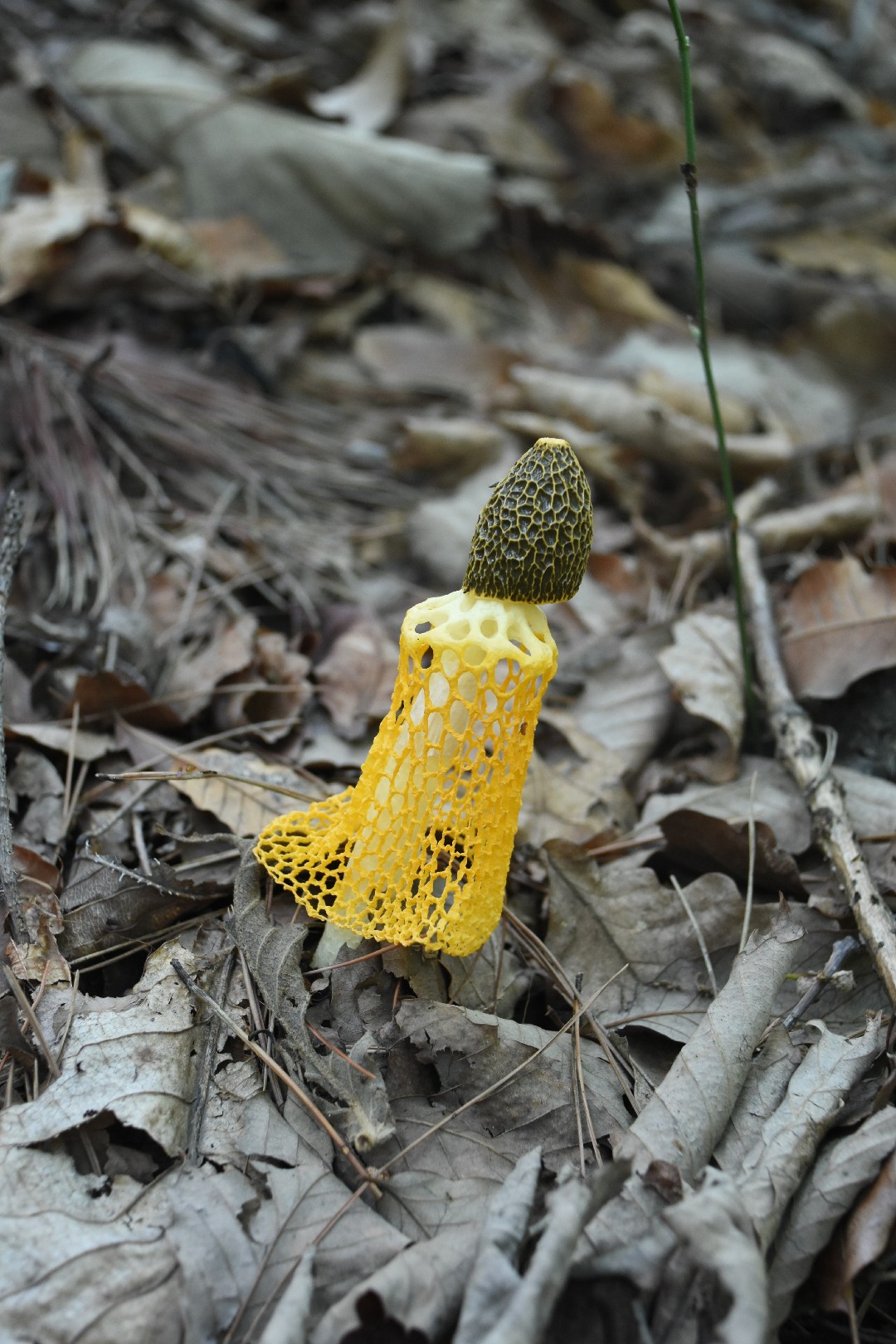
4. Phallus luteus
Phallus luteus's unique appearance makes it easy to recognize in forests. The multi-colored mushroom has yellow webbing hanging off the cap closely resembling a skirt. Like other species in the genus, phallus luteus is also recognizable by its pungent odor.
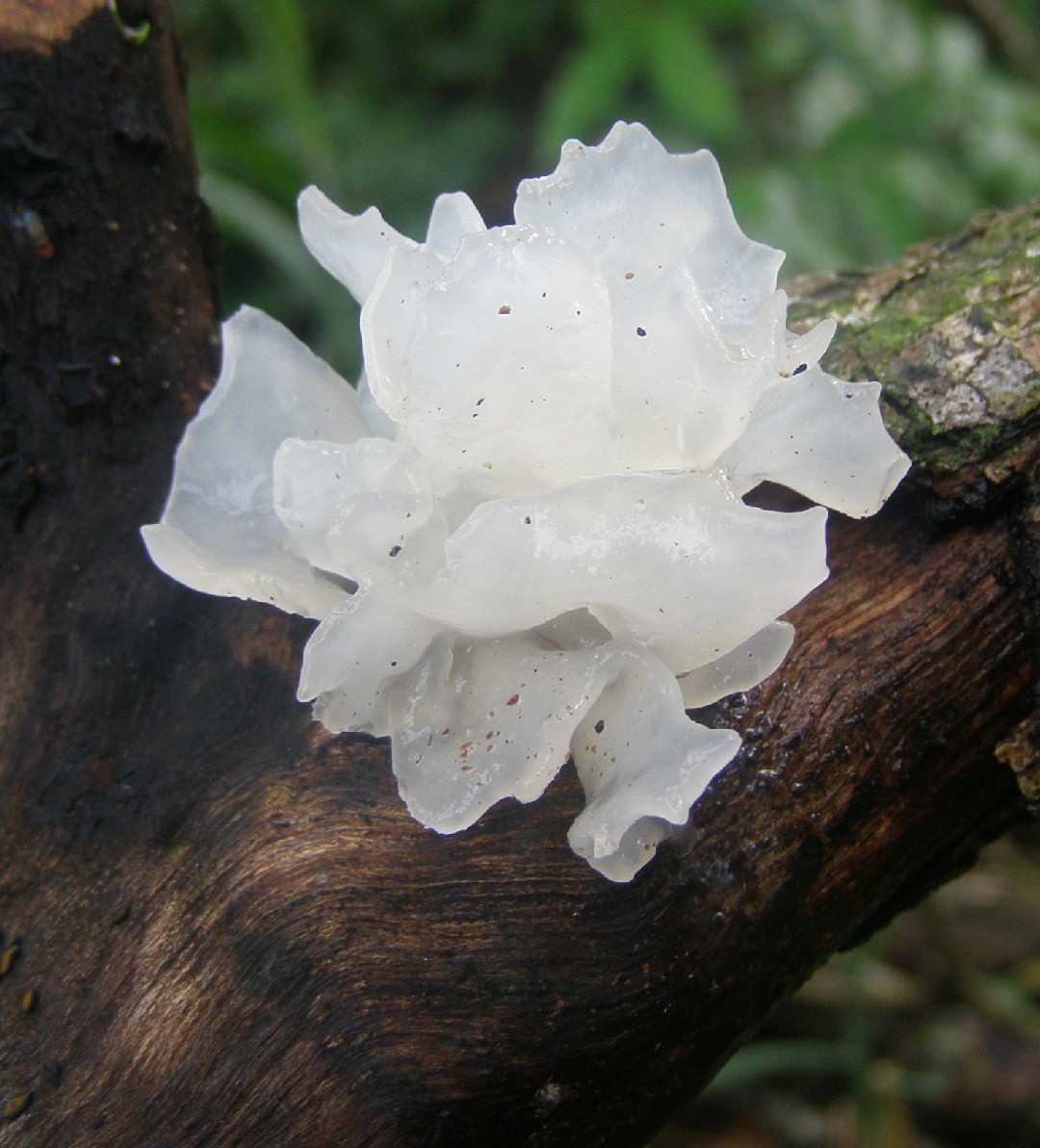
5. Snow fungus
Snow fungus (Tremella fuciformis) is so-named not because it is associated with winter, but, rather, because its fruitbodies look like little piles of snow fungus on the ground. This fungus actually inhabits very warm - tropical and subtropical - locations around the globe. Snow fungus does not have much taste, but it is cultivated for culinary use across East Asia, where it is often added to thicken soups and desserts.
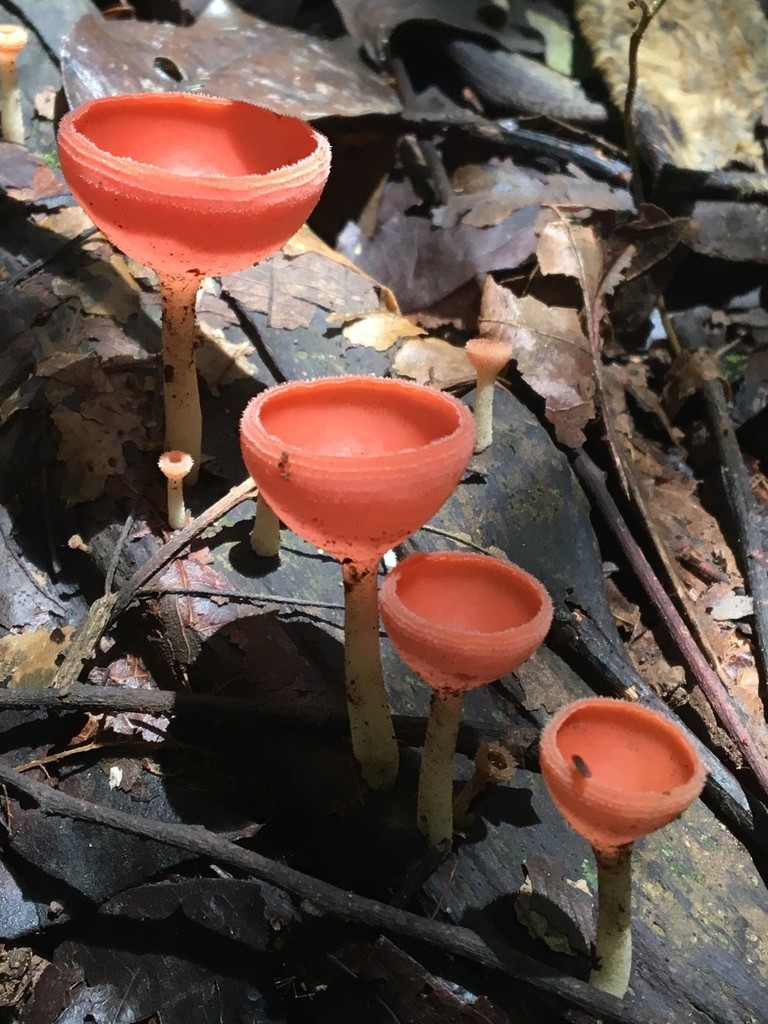
6. Cookeina speciosa
Cookeina speciosa is a hose mushroom from the family of the cupbearer relatives.
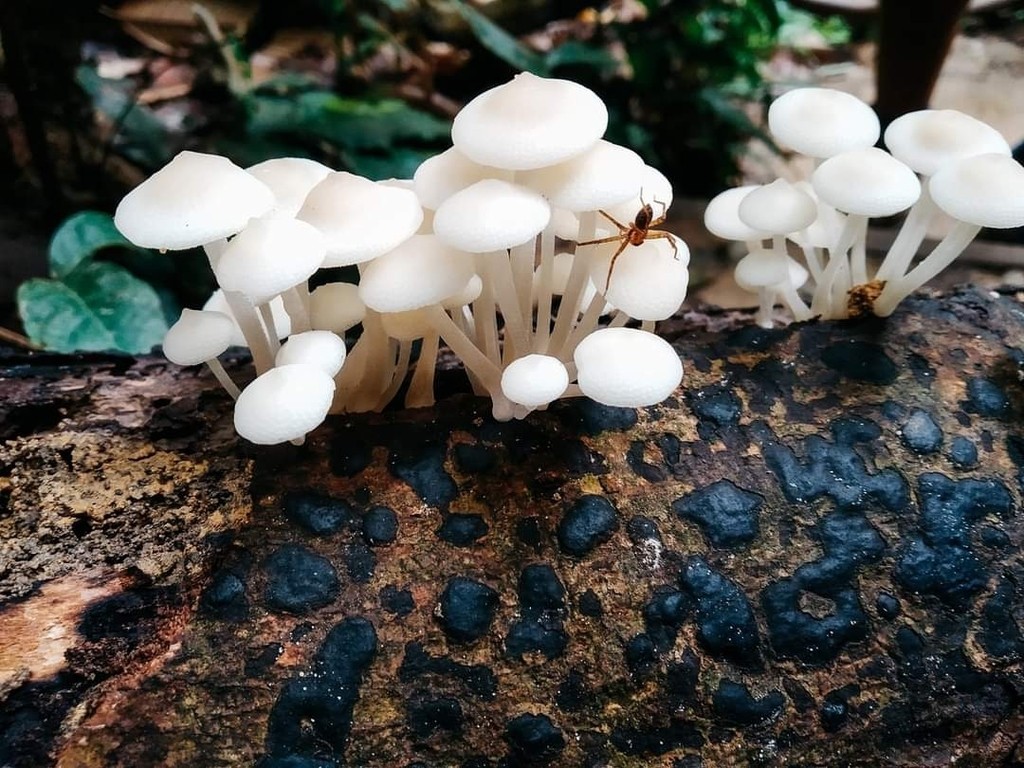
7. Favolaschia manipularis
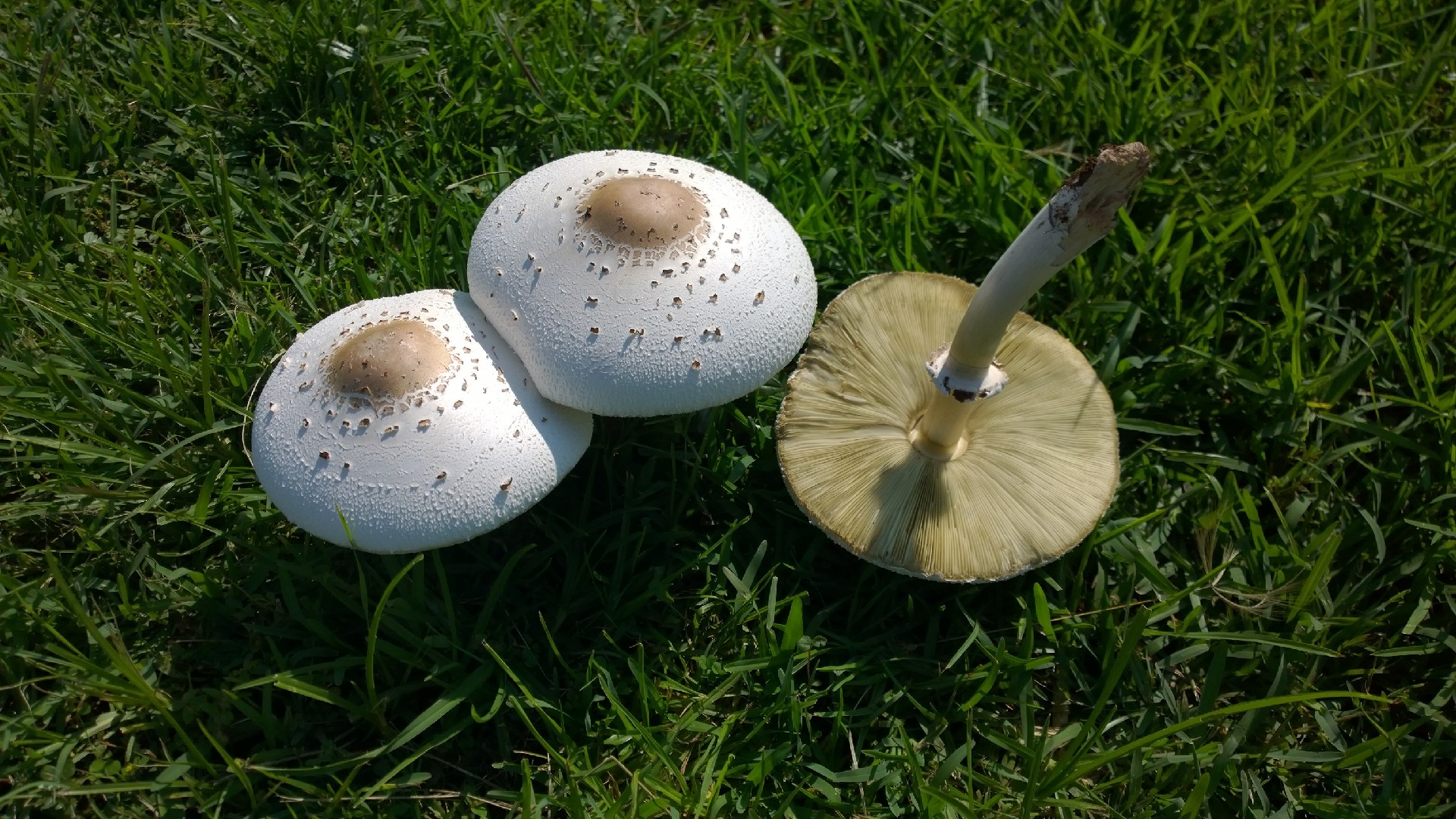
8. False parasol
Though the false parasol appears unassuming, the species is famous—or, infamous—for its toxicity. It looks unfortunately similar to Agericus campestrus, a commonly eaten mushroom, but the false parasol can be distinguished by its highly unusual green spore print. Although they are no good to eat, they can be pretty to look at. The species may grow in ring-shaped groups in meadows and on forest floors in what are sometimes called "fairy circles."
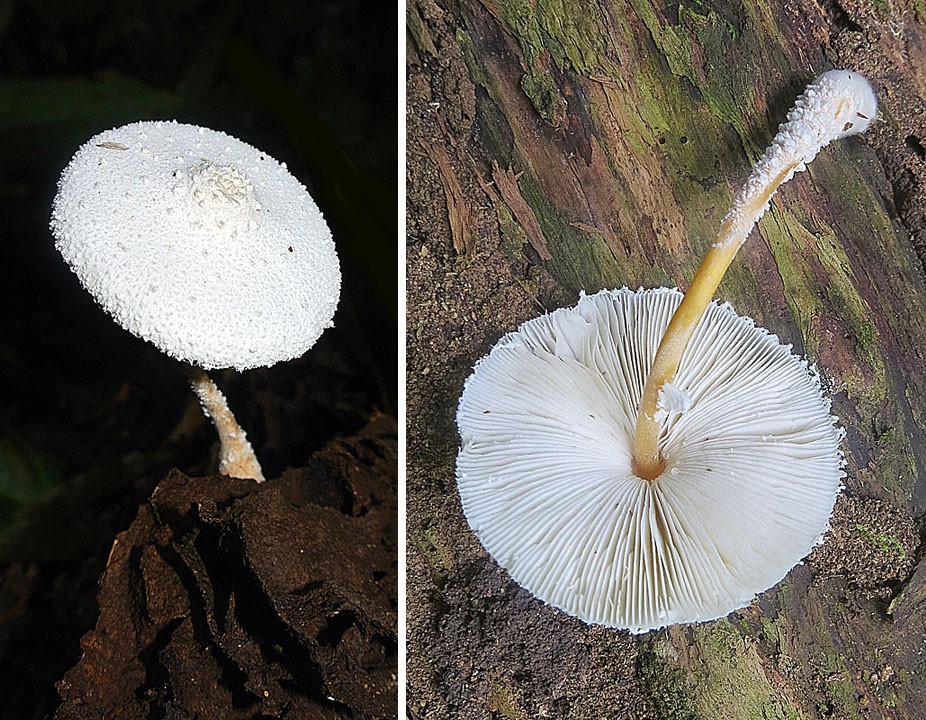
9. Leucocoprinus cretaceus
Leucocoprinus cretaceus is a common mushroom of tropical and subtropical climates. Leucocoprinus cretaceus usually grows on manure, wood chips, and sawdust but it often pops out in planters and greenhouses.
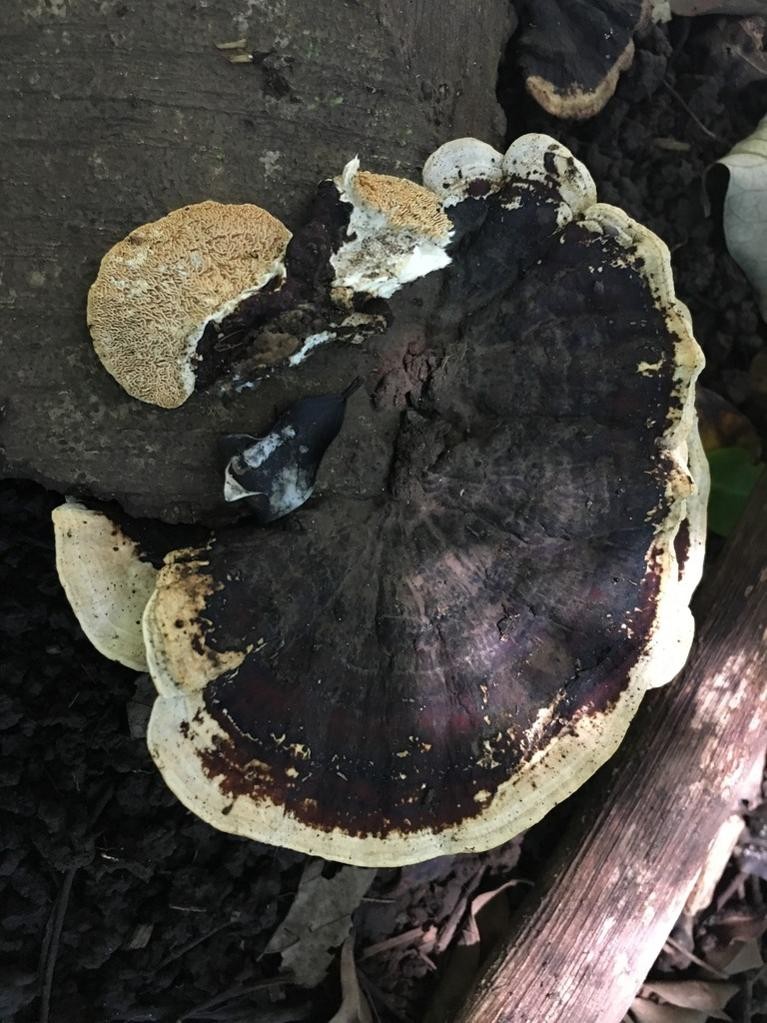
10. Earliella scabrosa
Earliella scabrosa is distinguishable by its sinuous or elongated pores that set it apart from similar species. It prefers tropical climates growing on broadleaf and decaying tree trunks and branches. On living trees, the spores enter wounds on the wood further weakening the tree.
More







