




Top 20 Most Common Mushrooms in Sydney

Most Common Mushrooms
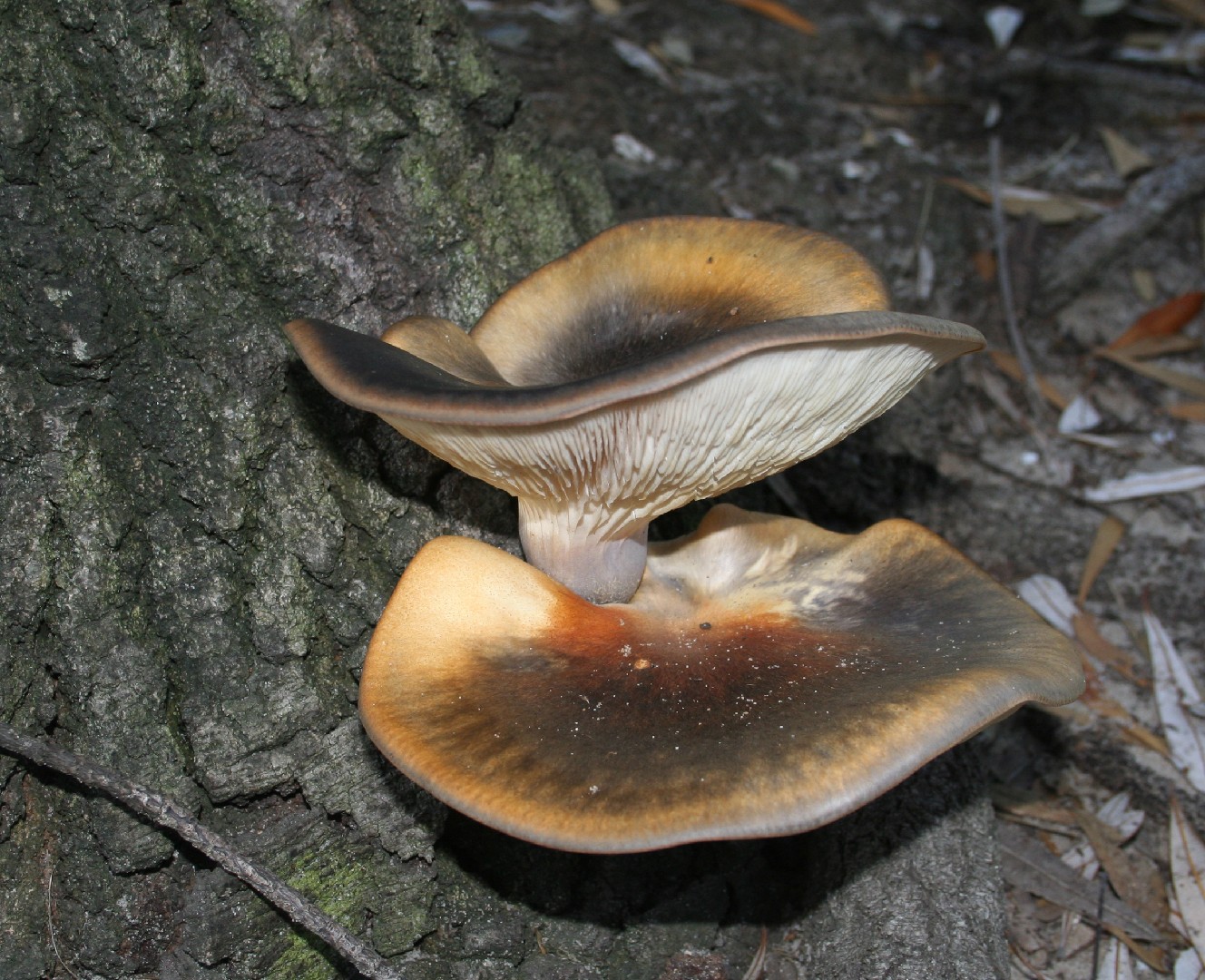
1. Ghost fungus
The ghost fungus is an Australian mushroom, similar in appearance to the well-known Pleurotus ostreatus (the Oyster mushroom). So similar, in fact, that it was even once considered a member of the same genus. But unlike the oyster mushroom, the ghost fungus is not edible, but mildly poisonous instead.
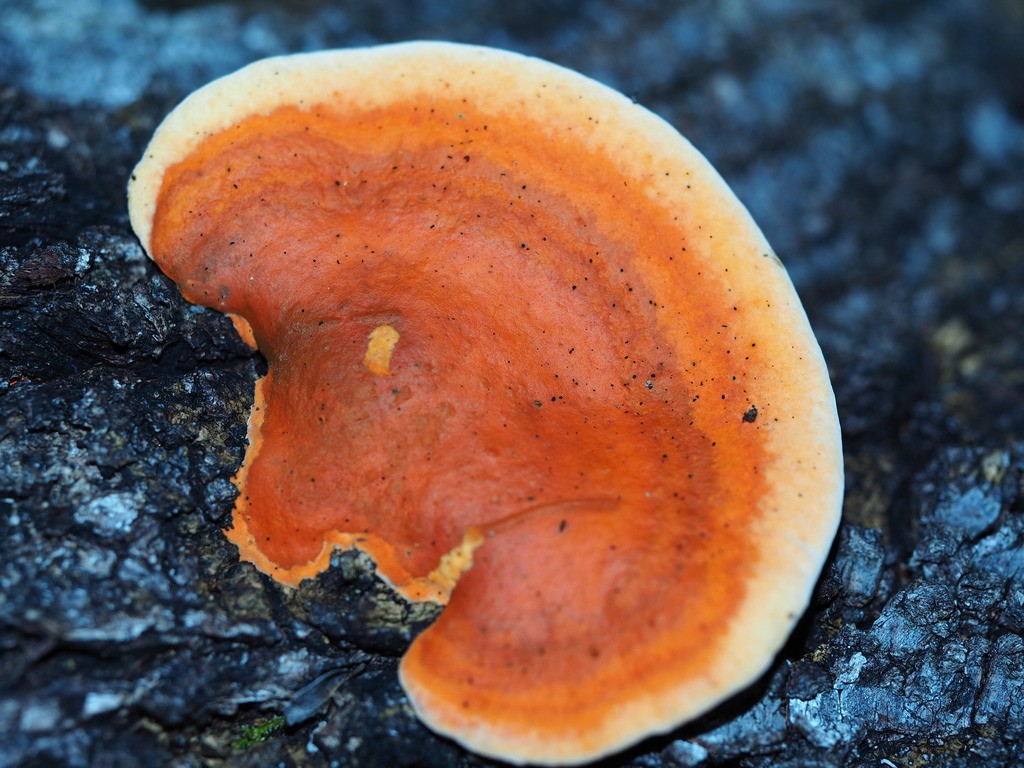
2. Southern cinnabar polypore
Southern cinnabar polypore grows in a variety of contexts, though it prefers to grow on deadwood near open water sources. This mushroom fruits from the late summer to early winter. True to its name, young southern cinnabar polypore has a bright orange color that's similar to cinnabar but may fade in older age.
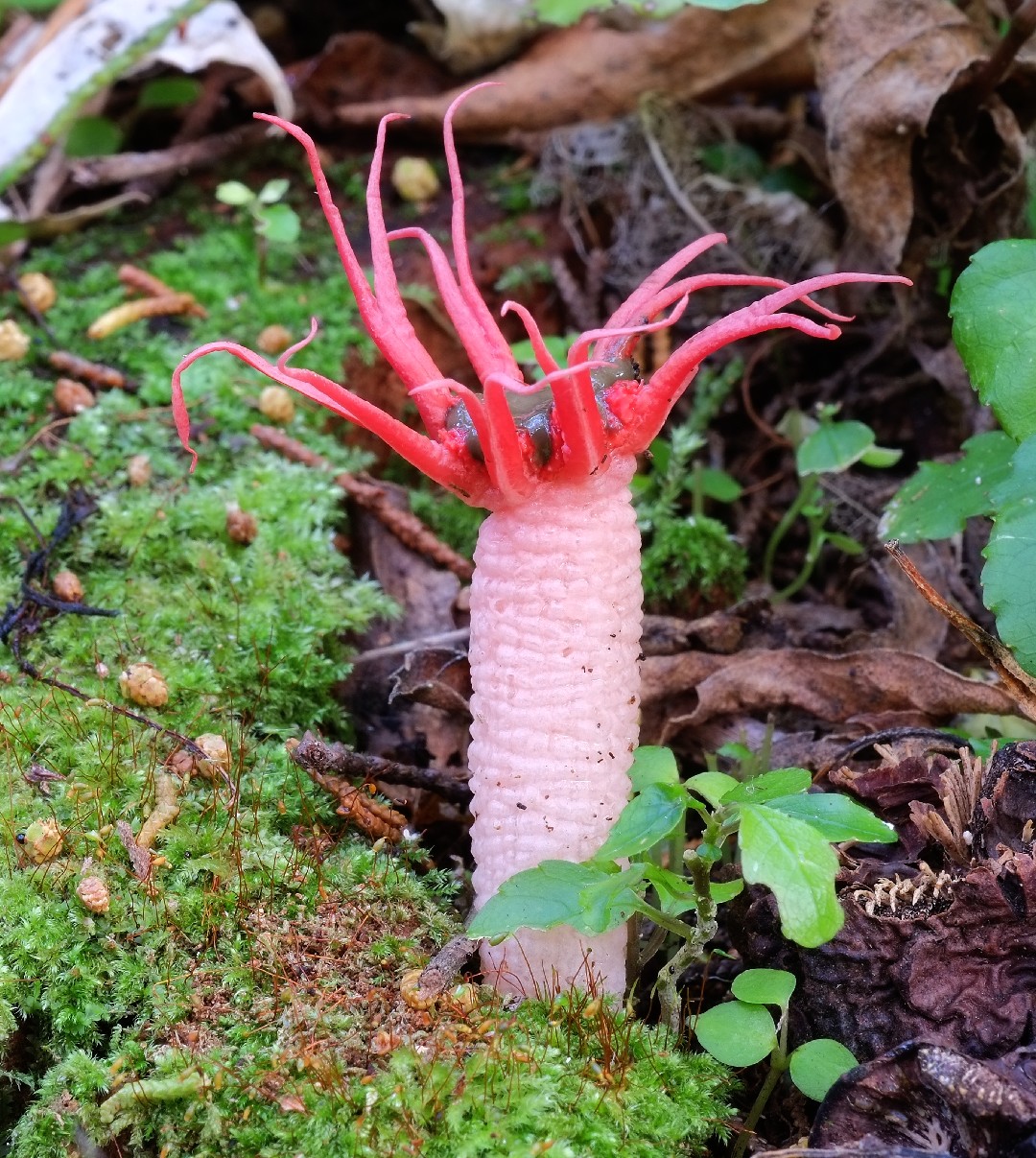
3. Anemone stinkhorn
The anemone stinkhorn (Aseroe rubra) looks like a creature straight from the depths of the ocean…or perhaps a horror movie! This Australian native starts fruiting with a white, egg-like ball that breaks open to reveal bright red tentacle-like fingers that spread toward the sky with radial symmetry and the odor of rotting meat. It has spread to tropical and sub-tropical areas around the world and is potentially poisonous.
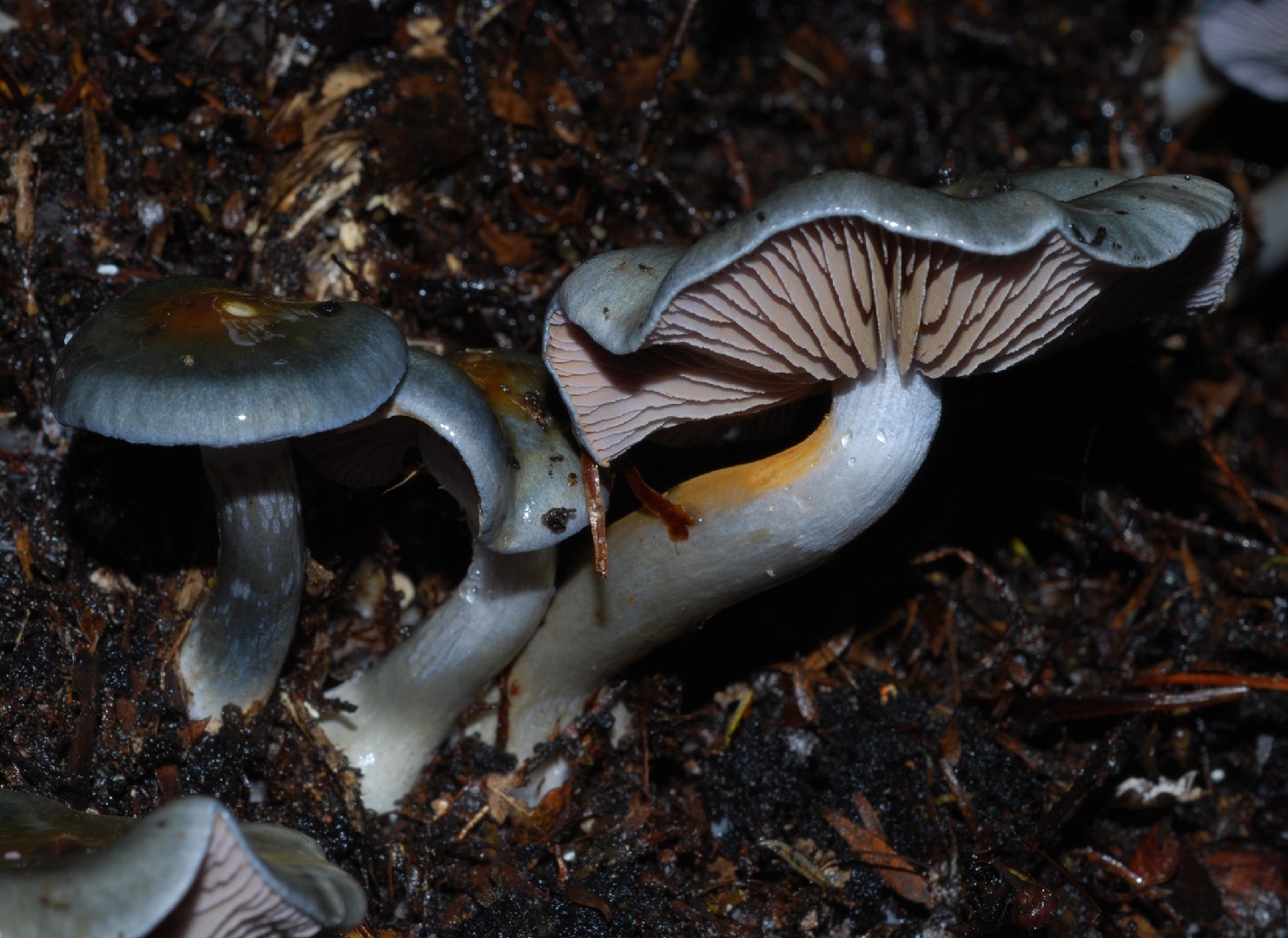
4. Elegant blue webcap
The cap ranges from 2.5 to 7 cm (1–3 in) in diameter, and is initially convex before flattening. It has a slight boss that is mustard-, honey- or cream-yellow tinged and steely blue elsewhere. The adnate gills are creamy or lilac-tinged early, and darken with the spores. The slender 5–7.5 cm (2–3 in) stipe lacks a ring; it is pale yellow or white with a tinge of the cap colour. The flesh is yellowish and may have a lilac or pale blue tinge. The spore print is reddish brown and the oval to round spores measure 8.5 × 6.5 µm. There is no particular taste or smell. Potassium hydroxide will produce a pink-purple reaction in the stipe or cap. The mycelium is white. 
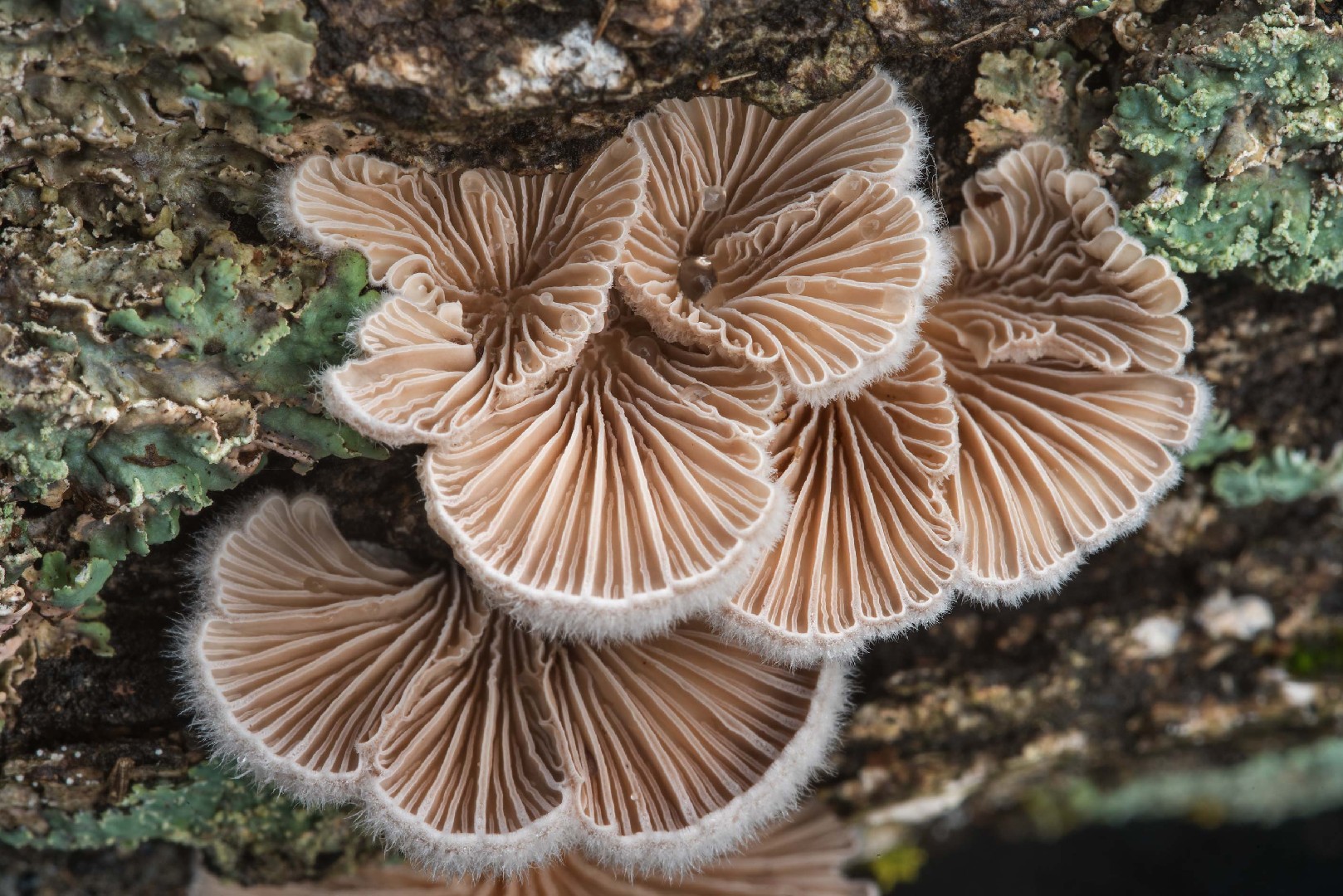
5. Split gill
Split gill(Schizophyllum commune) can be found across the globe. Uniquely, it is the only mushroom species known to display the capability to retract by movement. It is considered inedible, although not necessarily toxic. Furthermore, it is not recommended to smell this species, as the spores are capable of sprouting and growing in nasal passages.
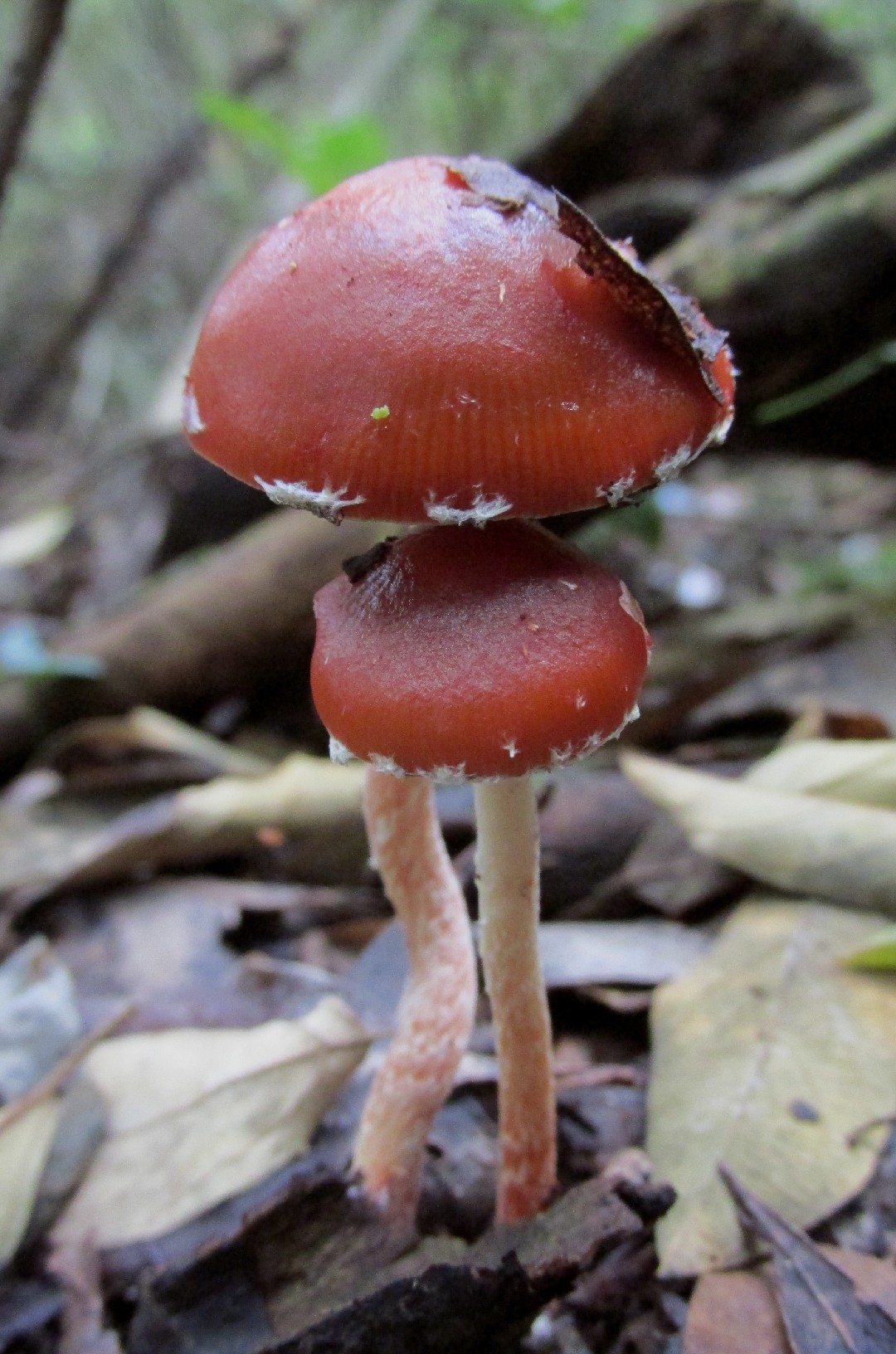
6. Redlead roundhead
This colorful mushroom grows most commonly on woodchip mulch and in sandy pine forests of coastal areas around the world. The redlead roundhead is believed to have originated in Australia. It may look pretty enough to eat, but don’t; it is bitter, toxic, non-digestible, and likely to cause an upset stomach.
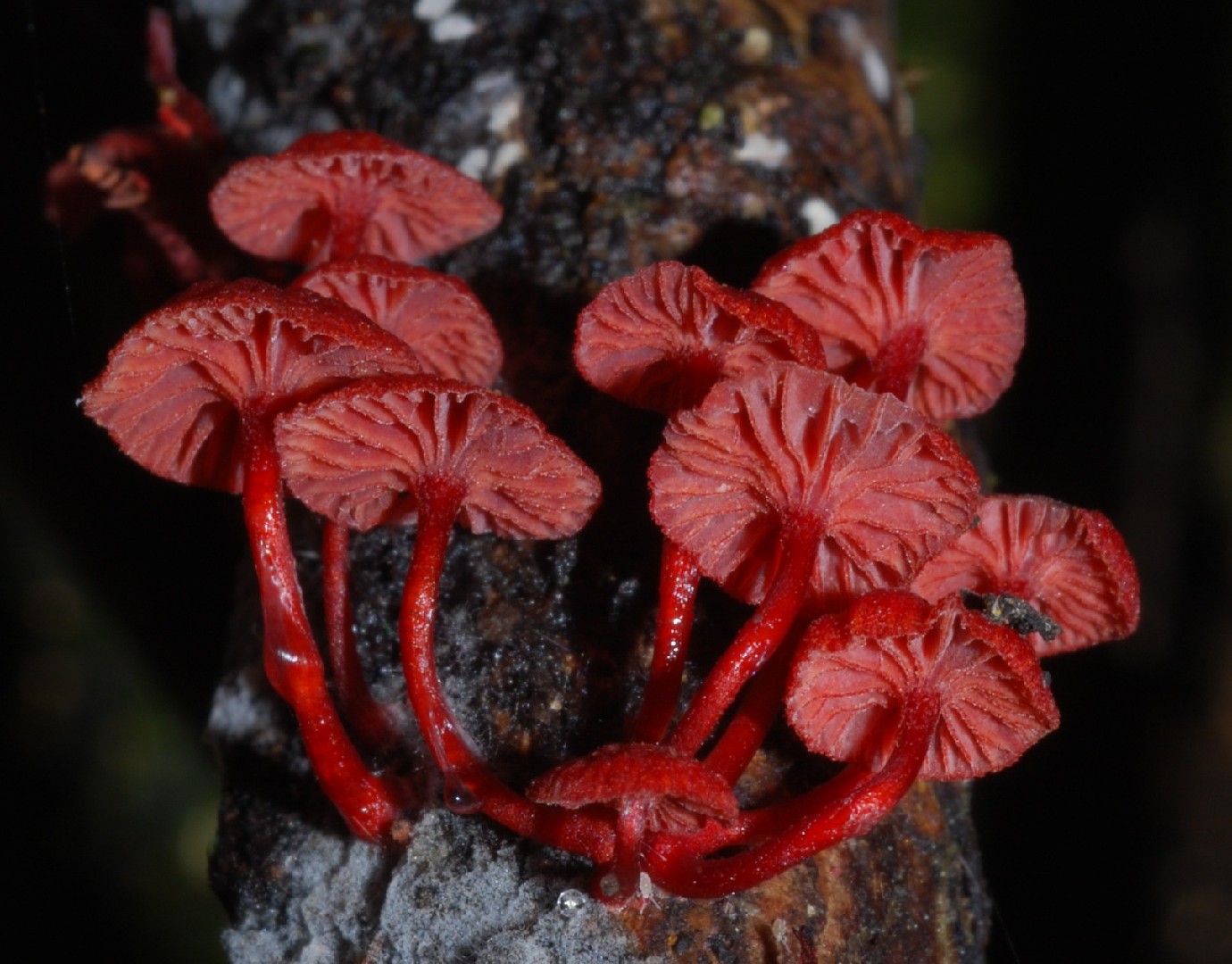
7. Ruby bonnet
A native of Australia and New Zealand, the vividly colored, deep red ruby bonnet (Cruentomycena viscidocruenta) appears in small groups on woody debris in autumn and winter. Its scientific name means “sticky-bloody” and this is a good description of how the fruitbodies appear when wet.
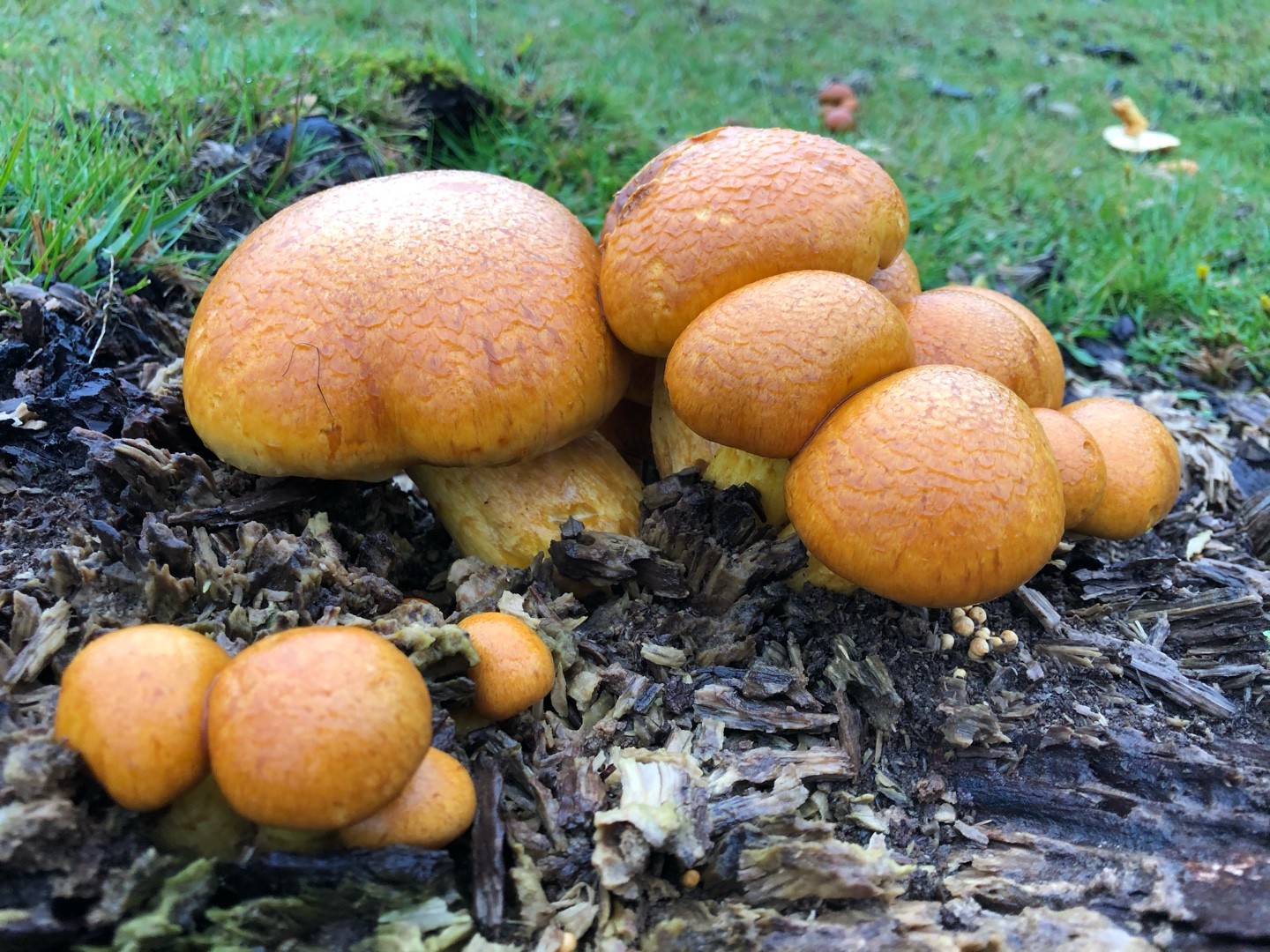
8. Laughing gym
Found in many countries around the northern hemisphere, the laughing gym grows on stumps of deciduous trees, and occasionally under conifers. This mushroom is large, firm, and colorful, and appears in small groups. Its scientific name, Gymnopilus junonius, means “naked cap sacred to Juno,” a reference to its distinctive and beautiful appearance. This mushroom is inedible and possibly toxic.
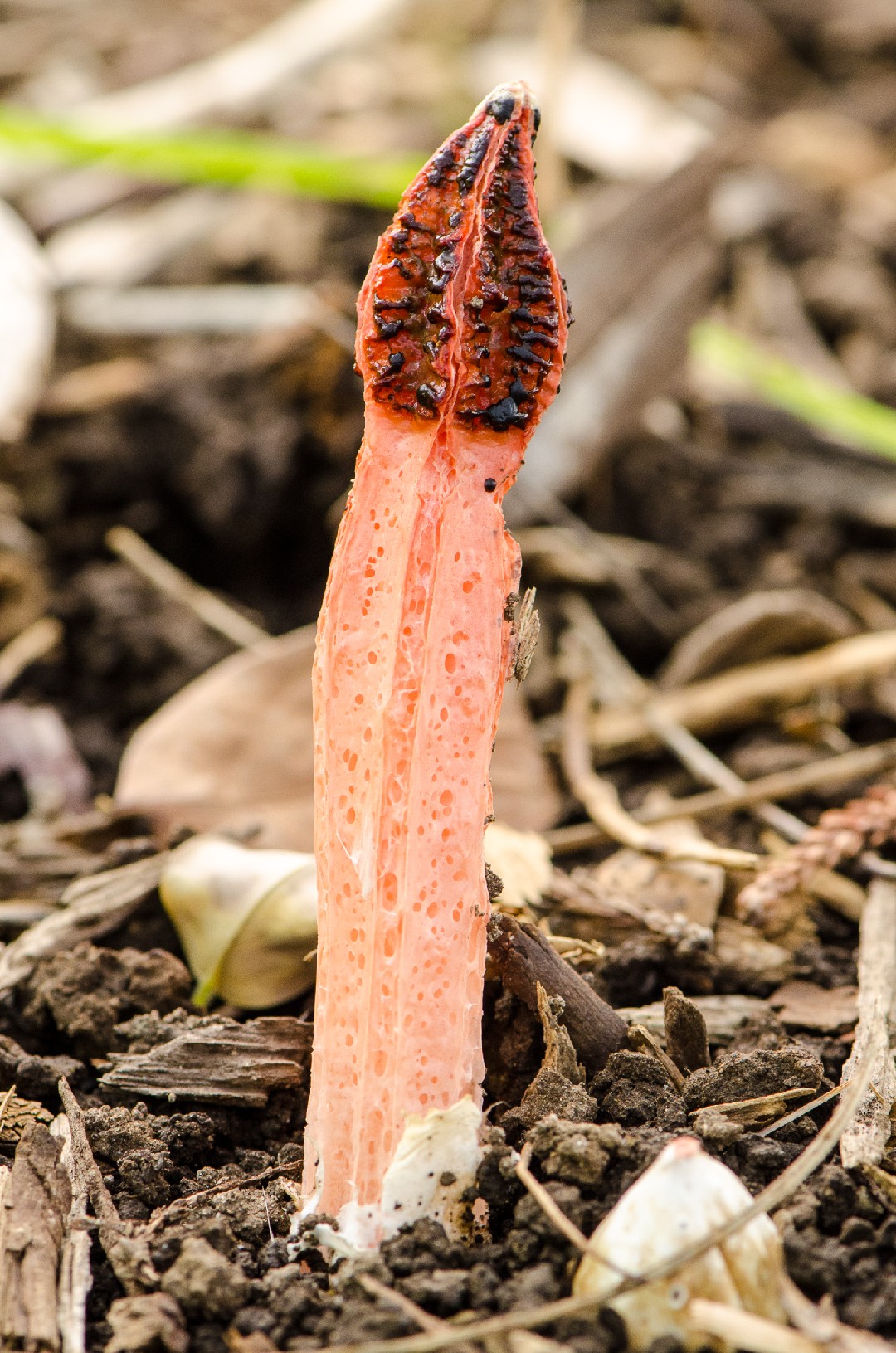
9. Lantern stinkhorn
Distinctive even among the outlandish varieties of the stinkhorn family, the lantern stinkhorn (Lysurus mokusin) bursts from the ground with a squared, flat-sided stem that’s ribbed like a churro. Atop this stipe is a hollow claw, like a hand with all its fingertips pressed together. The inside surface of this claw is coated with sticky, stinky goo meant to attract insects that will spread its spores.
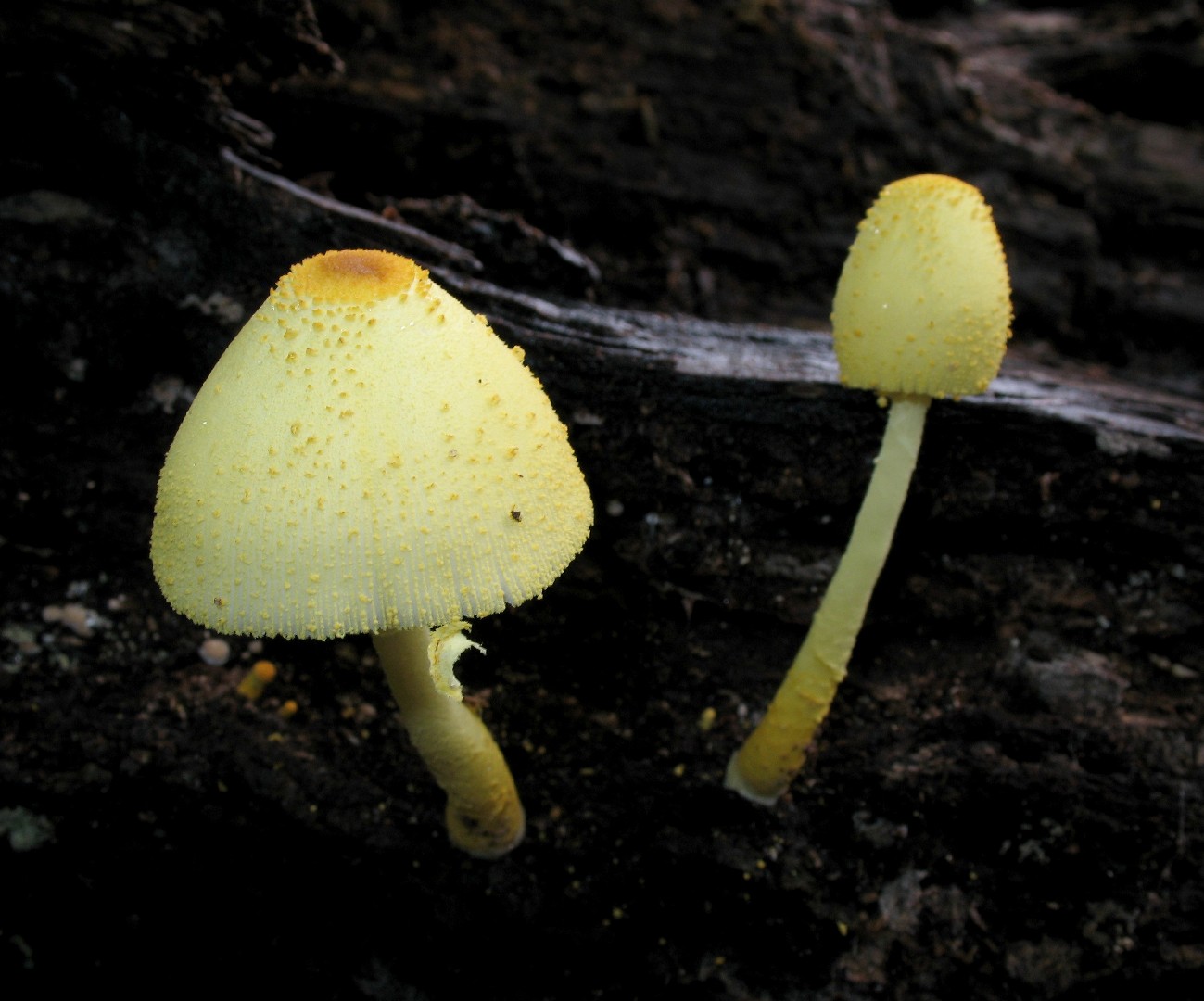
10. Flowerpot parasol
This tropical/subtropical mushroom is known to be toxic. If eaten it causes a very unpleasant stomachache with the risk of fatal complications. In temperate zones, flowerpot parasol is only found in hothouses and greenhouses, so the risk of accidental foraging is low, but it may occur with potted plants and indoor landscaping and pose a risk to curious children.


More







