




Top 20 Most Common Toxic or Poisonous Mushrooms in Grass Valley
Unravel the mystifying world of the toxic flora underfoot in Grass Valley, where the unique microclimate and varied terrain create an ideal habitat for mycelium bloom. Behold, our exploration into the 'Top 20 most common poisonous mushrooms in Grass Valley. This region's moisture-rich conditions and fertile soil help foster an array of fungi, including some toxic specimens. Safety ensues by being able to distinguish these harmful varieties. Equip yourself with knowledge, venture into Grass Valley landscapes, and dine safe with delectable fungi, minus the perilous ones.
* Disclaimer: Content feedback CAN NOT be used as any basis for EATING ANY PLANTS. Some plants can be VERY POISONOUS, please purchase edible plants through regular channels.

Most Common Toxic or Poisonous Mushrooms
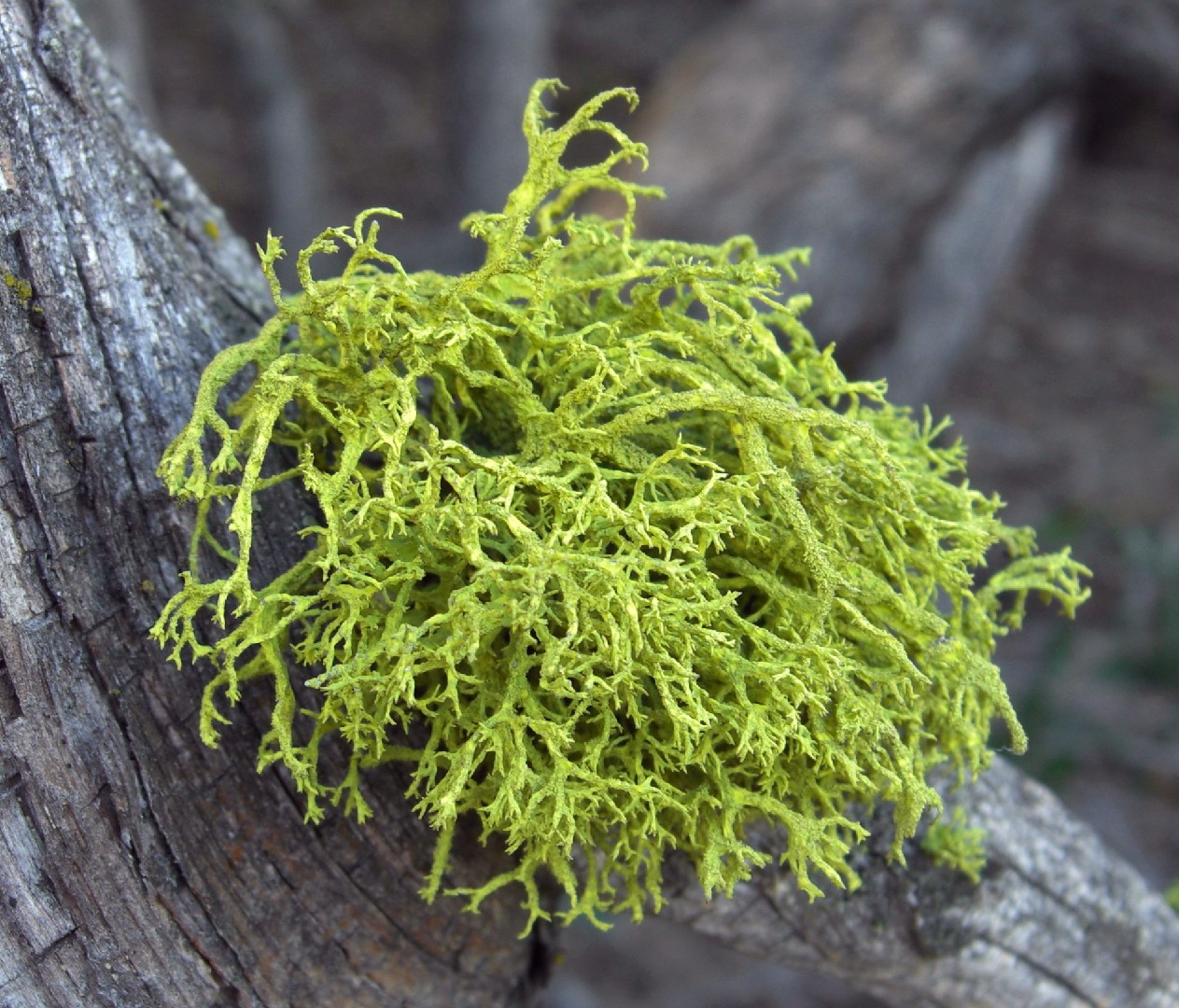
1. Wolf lichen
The thallus, or vegetative body, has a fructicose shape — that is, shrubby and densely branched — and a bright yellow to yellow-green, or chartreuse color, although the color will fade in drier specimens. Its dimensions are typically 2 to 7 cm (0.8 to 3 in) in diameter. The vegetative reproductive structures soredia and isidia are present on the surface of the thalli, often abundantly. 
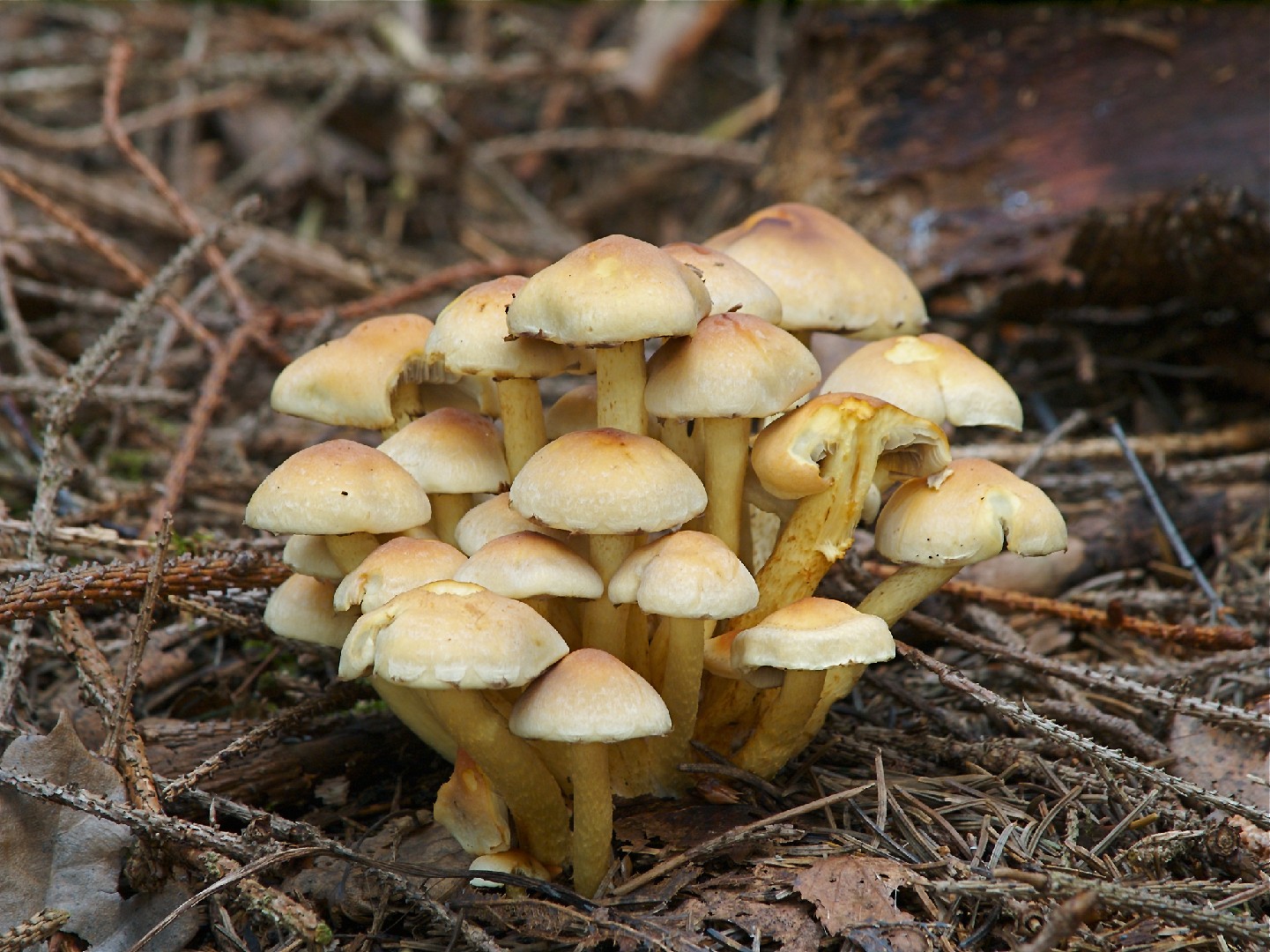
2. Sulphur tuft
The sulphur tuft grows on rotting wood of all types of trees; it is a particularly efficient decomposer of hardwoods. The mushrooms appear from spring to autumn and are often so tightly packed that they interfere with each other’s shape. This poisonous mushroom can cause temporary paralysis, distorted vision, and stomach pain if consumed.
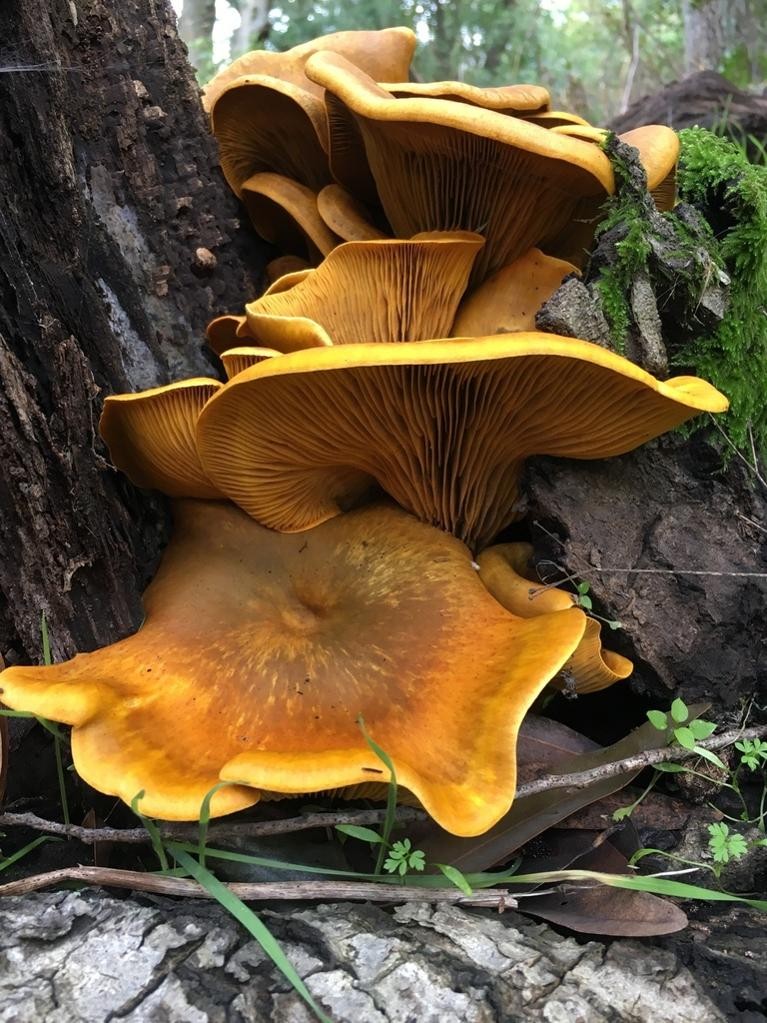
3. Western jack-o'-lantern mushroom
The western jack-o'-lantern mushroom (Omphalotus olivascens) may be the most visually striking mushroom of the forest during day and night. During the day, brilliant large orange flat caps grow from both the ground and decaying stumps. At night, these mushrooms may glow in the dark, depending on location and maturity.
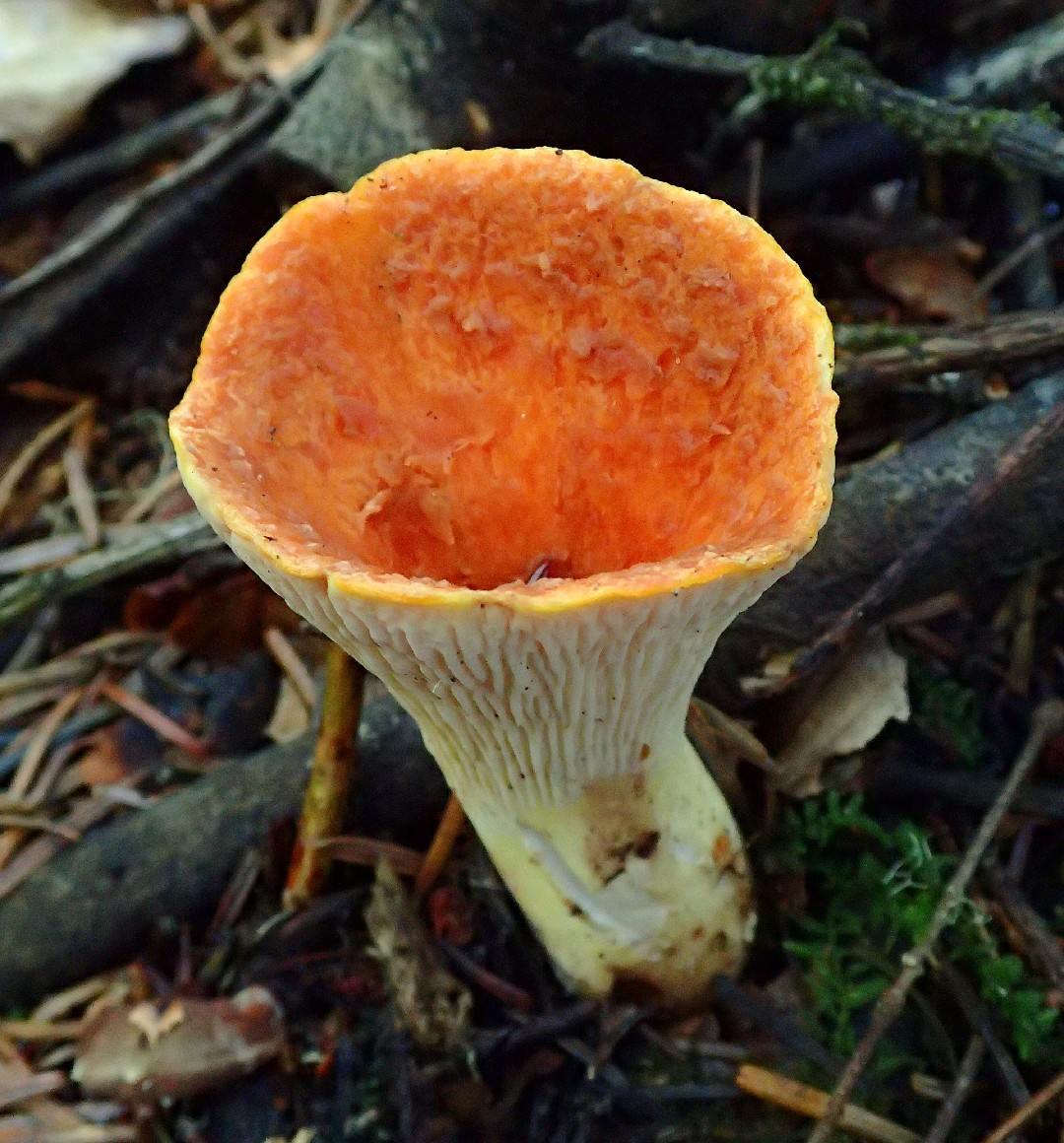
4. Woolly chanterelle
The woolly chanterelle, which looks only vaguely similar to its famed, edible chanterelle cousins, is vase-shaped and has large, pale folds and wrinkles on its underside (as opposed to having gills, like those of more sought-after chanterelles). Woolly chanterelles can cause upset stomach, vomiting, and diarrhea in some who eat them, while leaving others completely unaffected. Needless to say, the species is not considered a "choice edible".
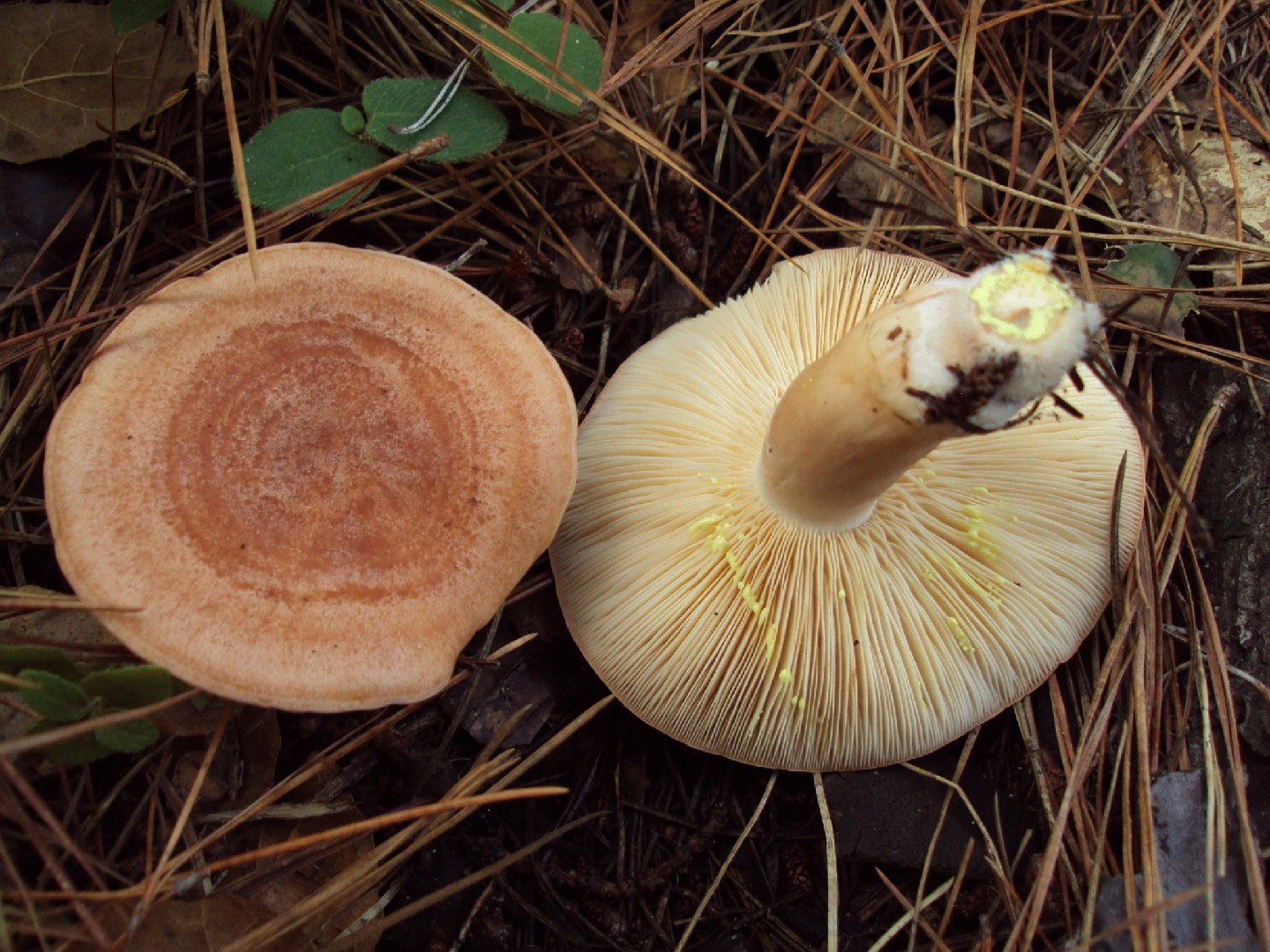
5. Yellow-staining milkcap
Like most other milkcaps, the yellow-staining milkcap will ooze a white, latex-like substance when cut or otherwise damaged, but, unlike closely related species, the latex of this mushroom will quickly turn canary-yellow when exposed to the air. Go ahead and try it out for yourself, but don't take this one home to the kitchen! The yellow-staining milkcap is toxic.
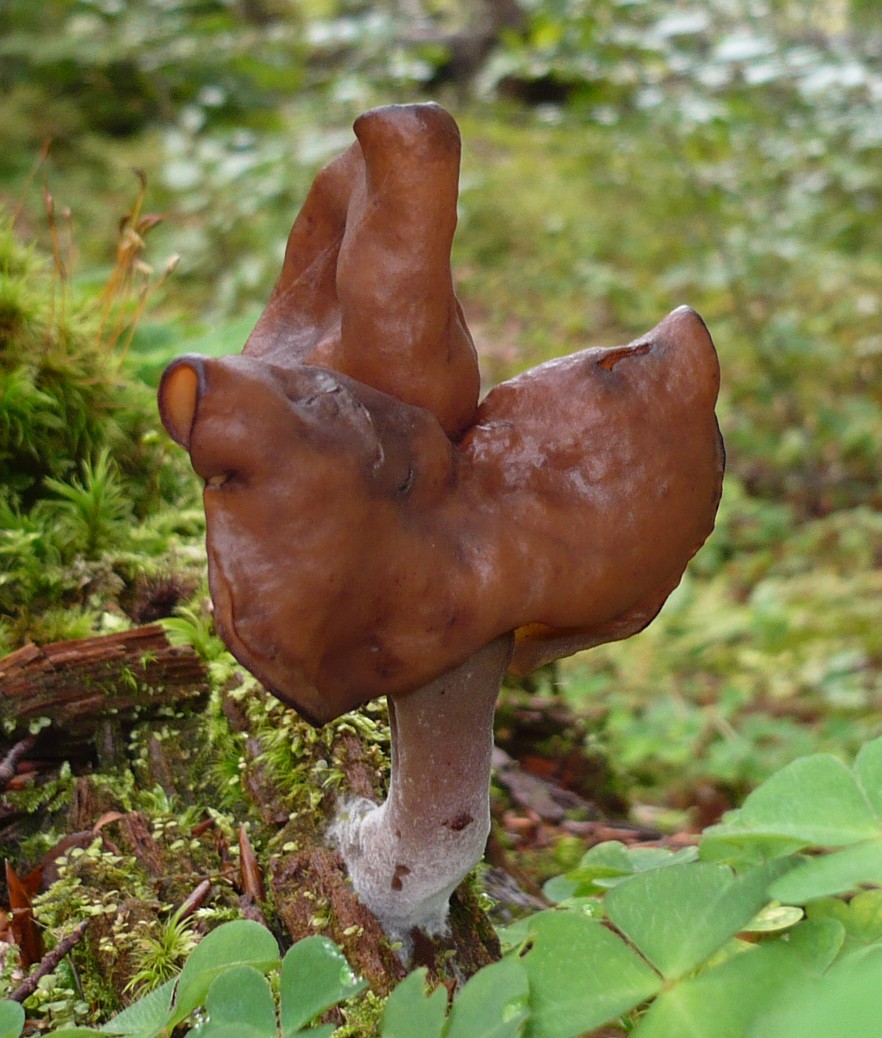
6. Hooded false morel
The hooded false morel (Gyromitra infula) does not look nearly as similar to true morels as some other false morels do. This mushroom has a highly irregular, often saddle-shaped cap that rarely has the honeycomb-like holes of a common morel. The species is widely distributed across the temperate northern hemisphere and tends to grow on rotting coniferous wood.
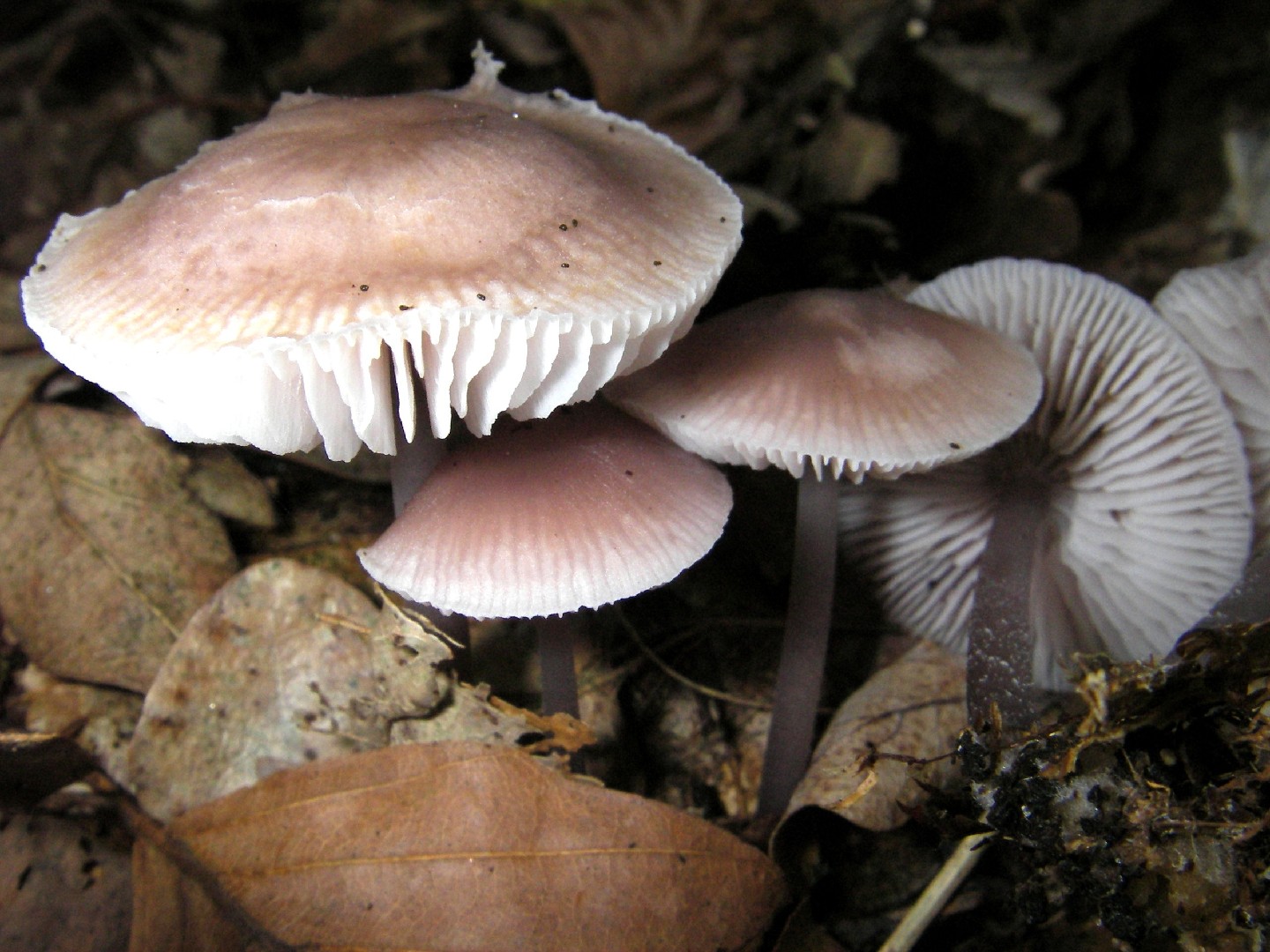
7. Lilac bonnet
The lilac bonnet is common around the northern hemisphere in woodlands of all types, and can sometimes also be seen in grasslands. It is toxic to humans due to its muscarine content, a poison that can cause convulsions and death after ingestion.
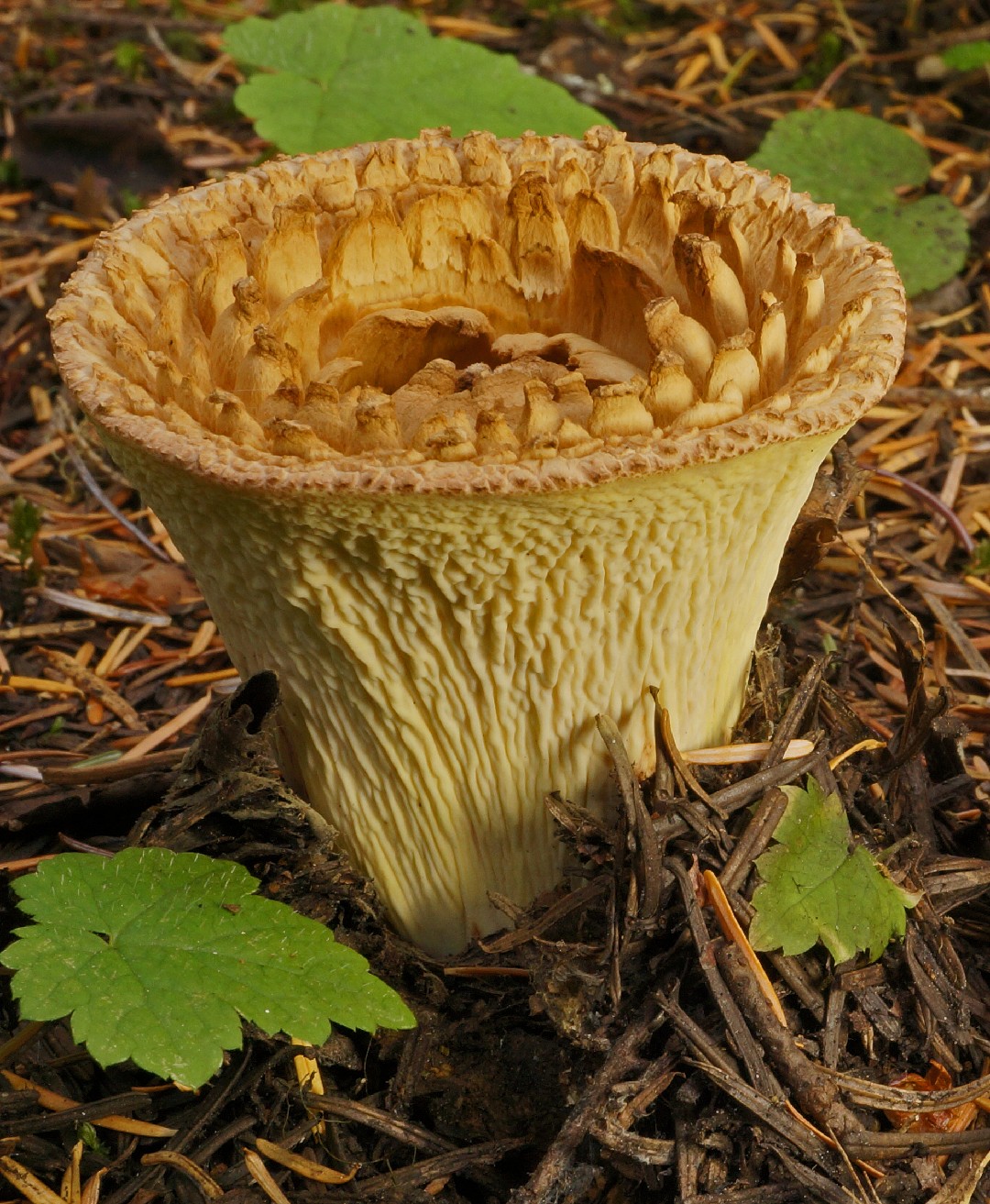
8. Turbinellus kauffmanii
Turbinellus kauffmanii appears in summer and fall and is often found growing in fallen needles from conifer trees. The vase-shaped body and flat light brown cap make the fungus easy to identify. As the species ages, the scales split open revealing white flesh. A pungent odor also identifies younger species.
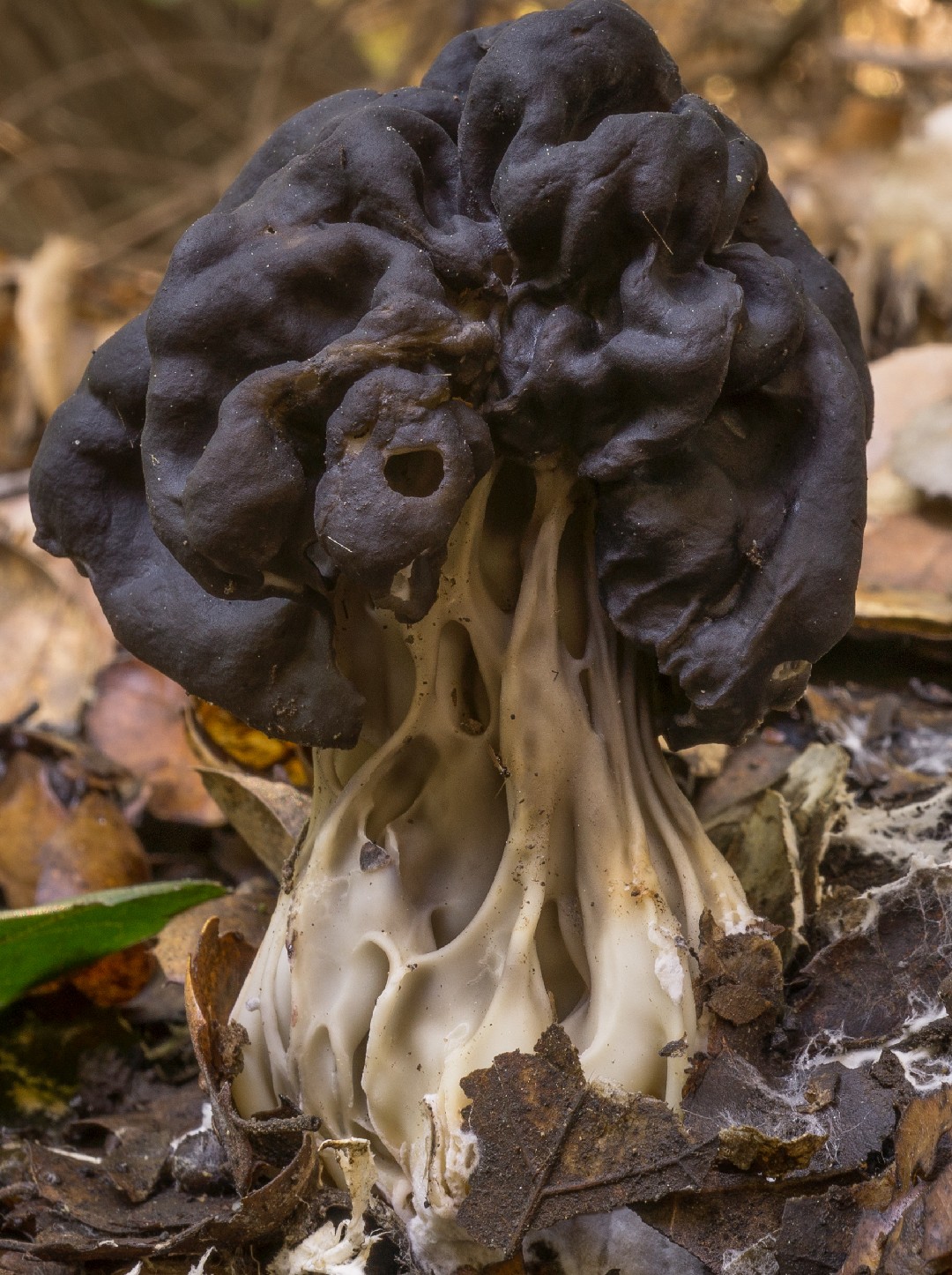
9. Oak-loving elfin saddle
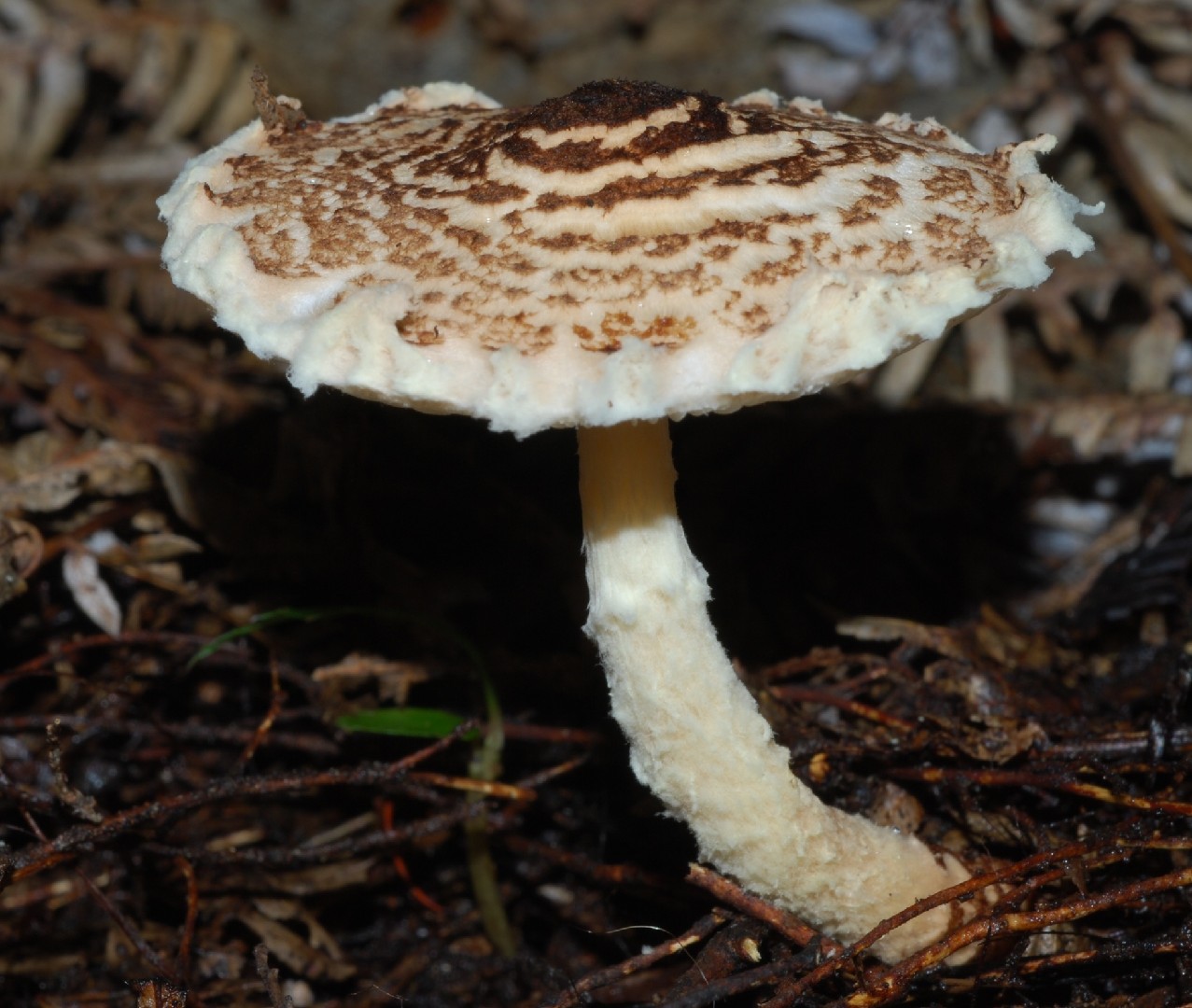
10. Yellowfoot dapperling
The yellowfoot dapperling (Lepiota magnispora) is a shaggy-capped species of Lepiota that can be found growing in wet forests across the western United States. While the species lacks a foot, it does usually have a blush of yellow or tan coloration at the base of its stalk - caps also have a tan or yellow hue, though they tend to darken to brown at their centers.

More







