




Top 12 Edible Mushrooms Popular in Woodward
Situated amidst varied landscapes, Woodward boasts an abundant variety of fungi, making mycophagy a true delight for its residents. With a unique blend of climate and terrain, this city fosters a rich habitat for a wide collection of mushrooms. Our coverage of the 'Top 12 most common edible mushrooms in Woodward' provides an enlightening exploration into these ubiquitous fungi. Here, we unfold the mysteries of their appearances, tantalizing tastes, natural habitats, and versatile culinary uses. Let's dive into the fascinating world of Woodward's mycological wonders.
* Disclaimer: Content feedback CAN NOT be used as any basis for EATING ANY PLANTS. Some plants can be VERY POISONOUS, please purchase edible plants through regular channels.

Most Popular Edible Mushrooms
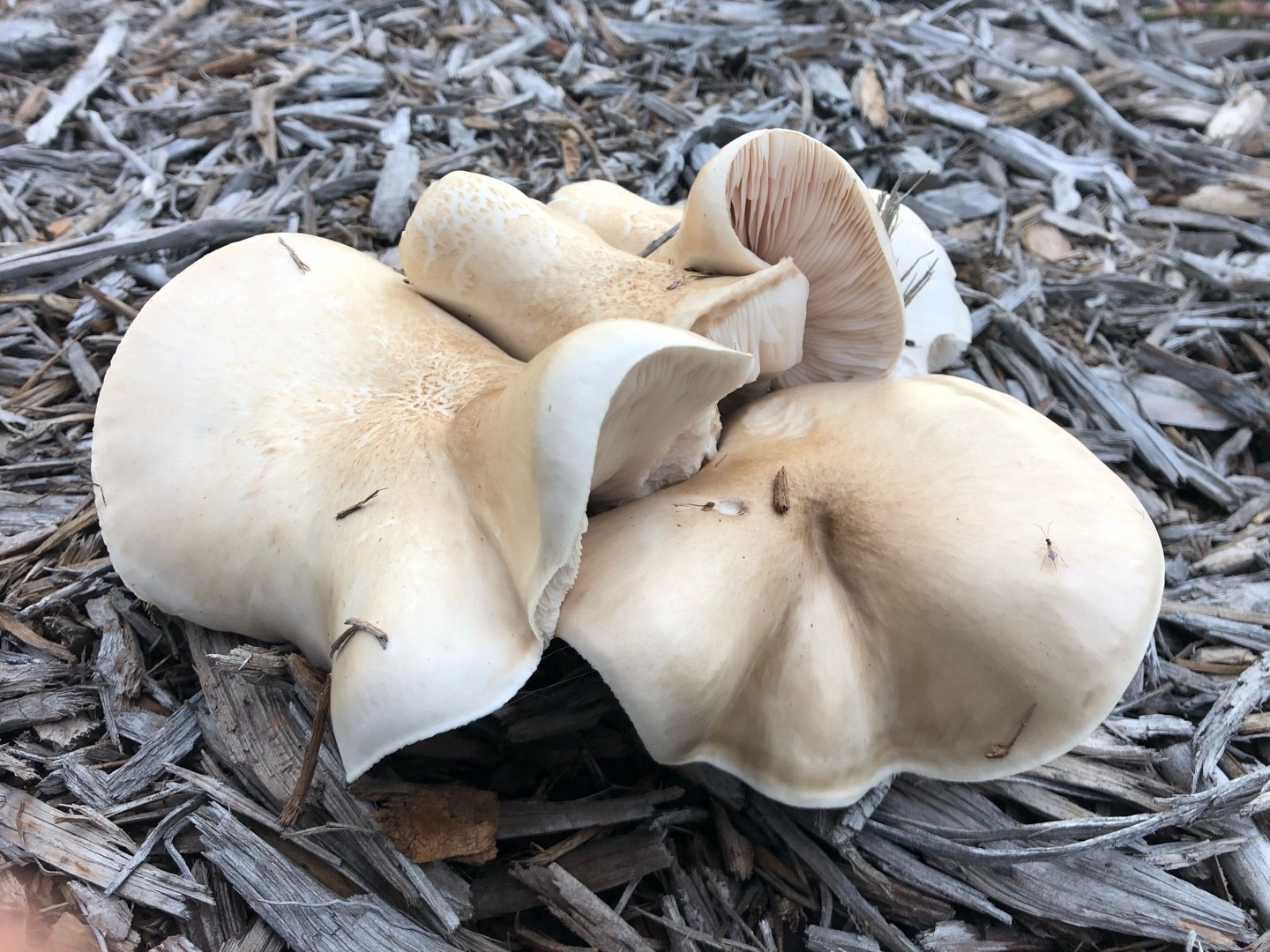
1. Scaly shield
The medium-sized fruitbodies of the scaly shield can be found across much of eastern North America. As it is fond of growing in mulch or woodchips, it is most commonly encountered in parks, yards, and gardens. The species is easily confused with its close cousin, Pluteus cervinus (also known as the "deer mushroom"), though Pluteus petasatus usually develops a distinct pinkish hue on its gills, wheras P. cervinus does not.
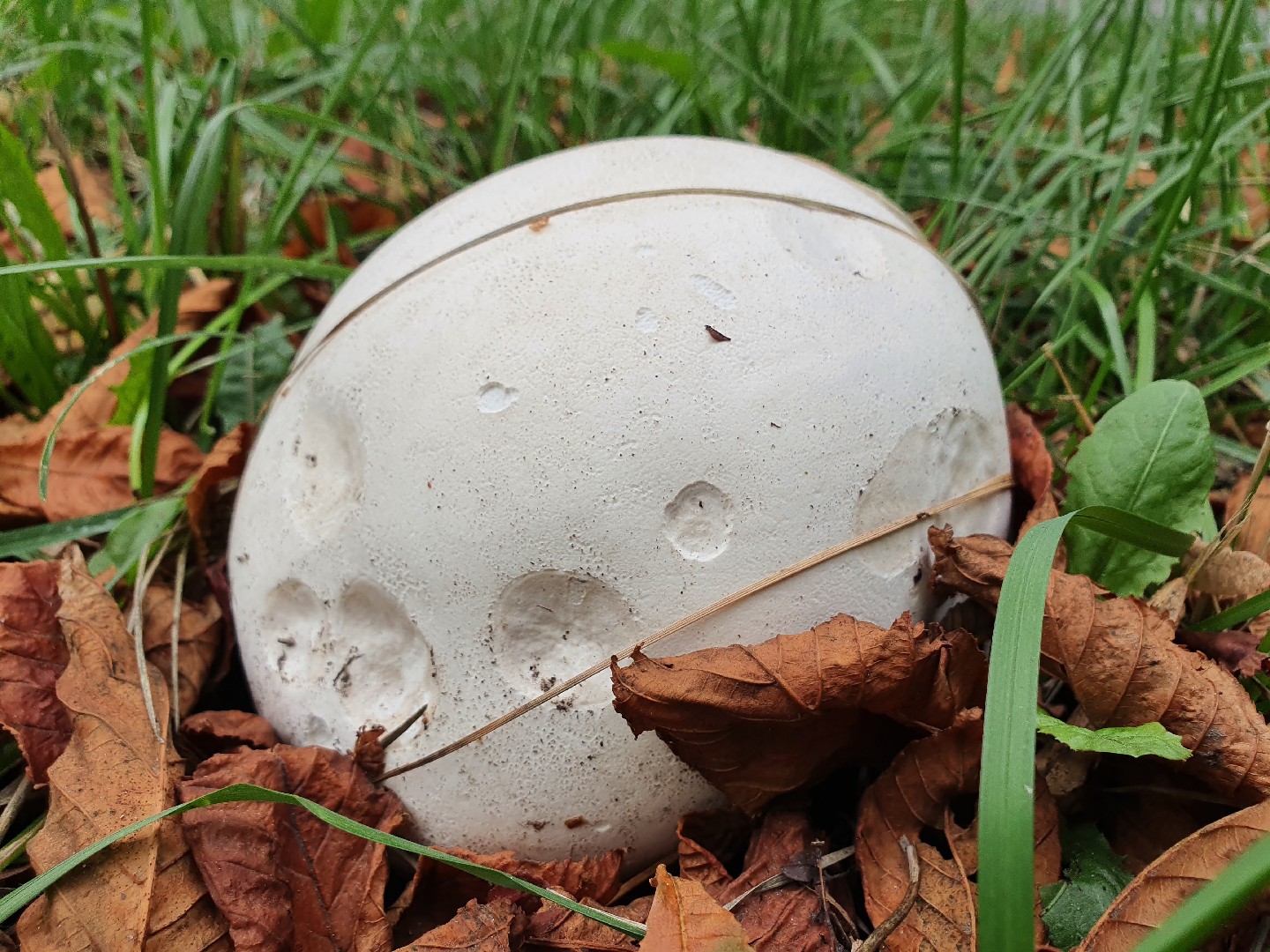
2. Giant puffball
These distinctive round, white fungi appear around the world in fields and at the edges of wooded areas. Living up to its name, a single giant puffball can grow as large as a watermelon. They have no stems, and produce trillions of spores that release into the air through holes in “puffs.” They have been used as slow-burning tinder and produce copious smoke when set aflame. Giant puffballs are technically edible, but should only be consumed when the mushroom is young and firm.
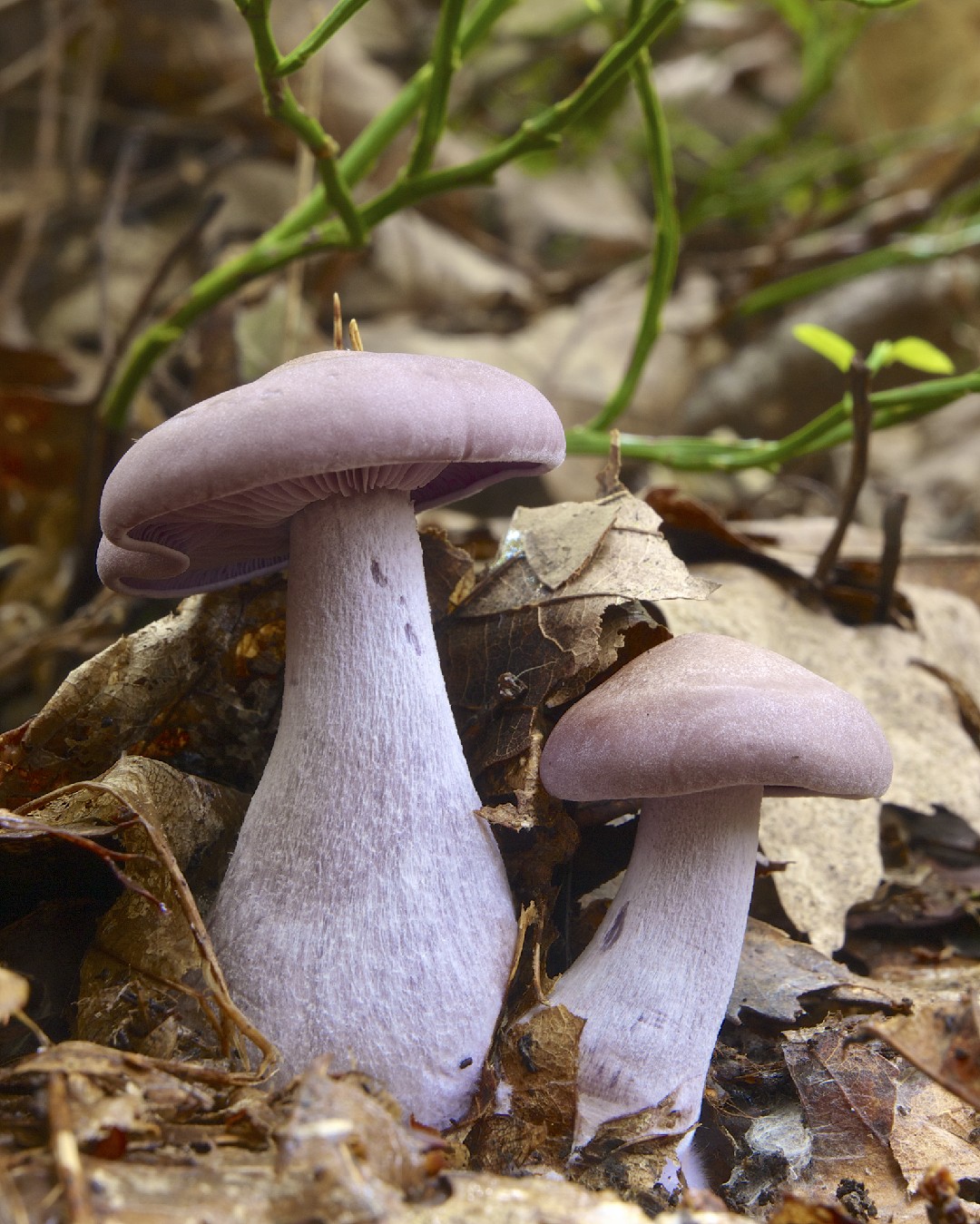
3. Blewit
The blewit mushroom grows in fallen leaves in autumn and winter, sometimes appearing in ‘fairy ring’ circles. It can be used to make a green dye when chopped and boiled in an iron pot. The scientific name, Lepista nuda, derives from Latin words meaning “bare goblet,” a reference to the shape and texture of the mushroom.
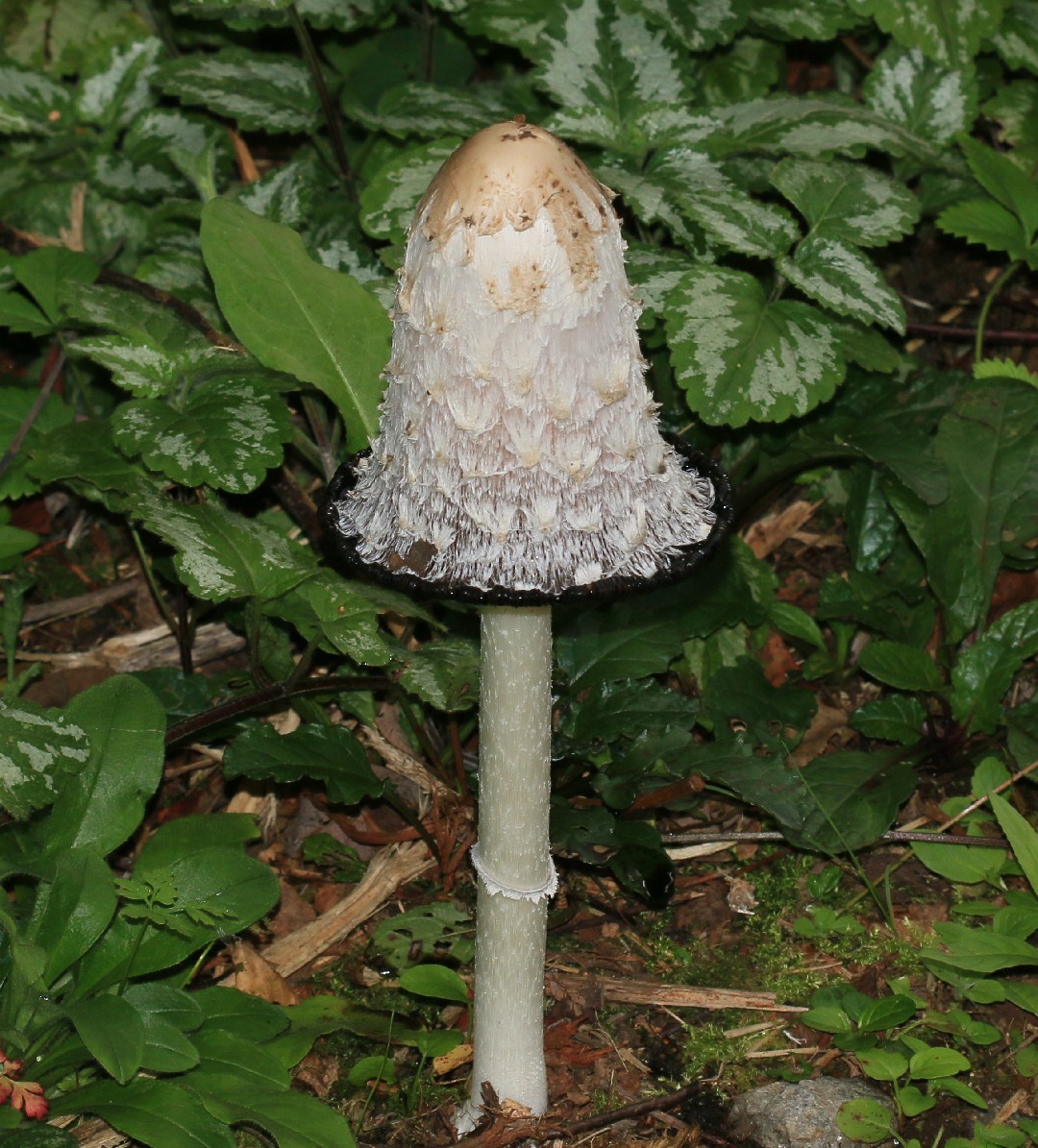
4. Shaggy mane
The shaggy mane mushroom is commonly found in North American and European grasslands. Some peoples foraged for its young egg-shaped caps, but it has more recently been found to be a bioaccumulator of heavy metals, meaning it pulls toxic metals up from the soil where it grows. As a result, shaggy manes should not be eaten. The mushrooms usually appear in clusters or “fairy rings.”
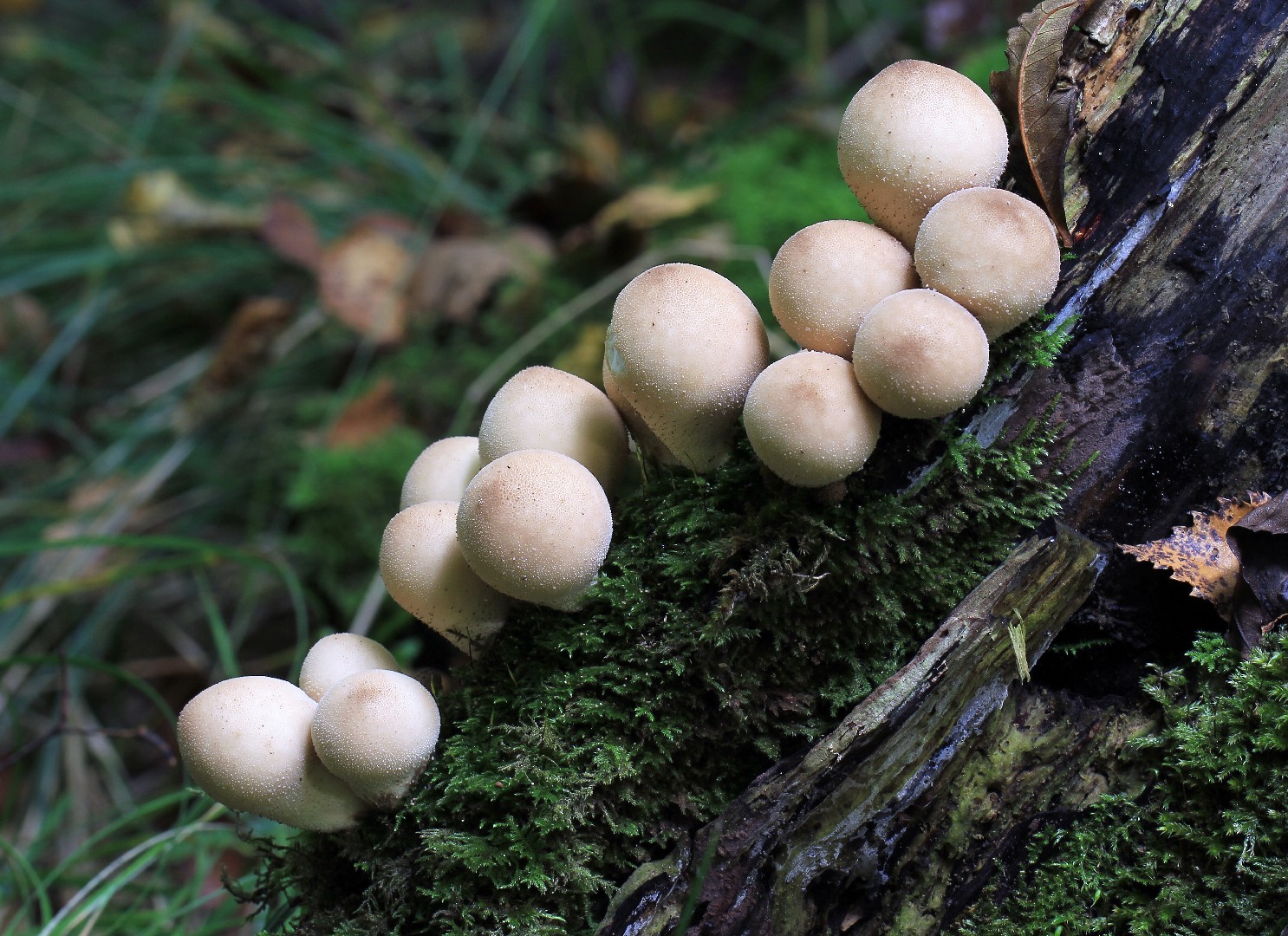
5. Pear-shaped puffball
The mushrooms of this species grow in such tight clusters that they may cover fallen trees and stumps almost entirely in a brownish, puffy coat. Pear-shaped puffballs appear all around the northern hemisphere on decaying hardwoods from fall through winter.
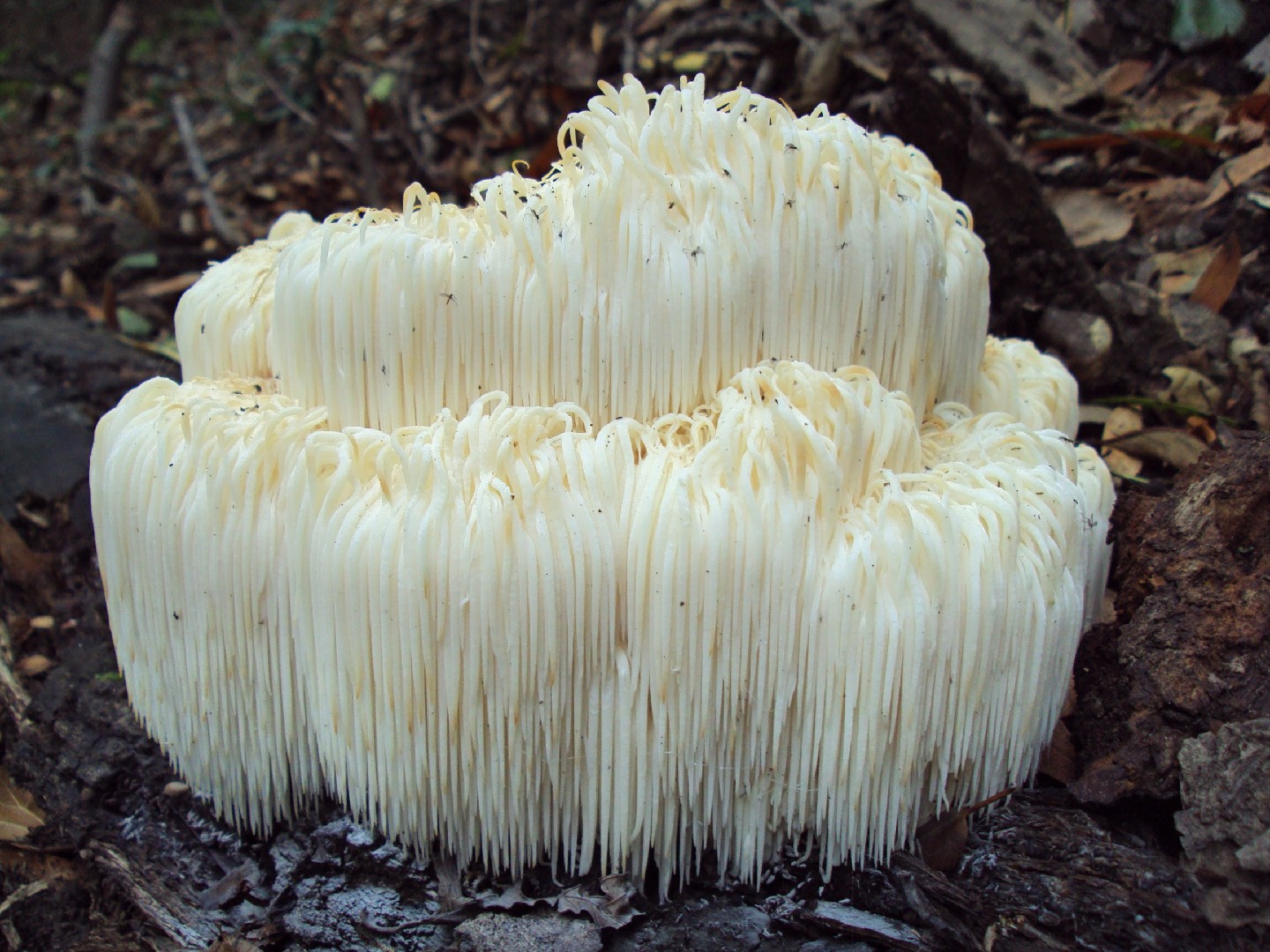
6. Lion's Mane Mushroom
Lion's Mane Mushroom(Hericium erinaceus) is easily identifiable by its characteristic appearance, reminiscent of the majestic mane of a lion. It often sprouts along hardwoods, which may be living or dead. Scientists thus debate whether this species is truly parasitic or merely saprophytic in nature.
7. Scaly shield
The medium-sized fruitbodies of the scaly shield can be found across much of eastern North America. As it is fond of growing in mulch or woodchips, it is most commonly encountered in parks, yards, and gardens. The species is easily confused with its close cousin, Pluteus cervinus (also known as the "deer mushroom"), though Pluteus petasatus usually develops a distinct pinkish hue on its gills, wheras P. cervinus does not.
8. Giant puffball
These distinctive round, white fungi appear around the world in fields and at the edges of wooded areas. Living up to its name, a single giant puffball can grow as large as a watermelon. They have no stems, and produce trillions of spores that release into the air through holes in “puffs.” They have been used as slow-burning tinder and produce copious smoke when set aflame. Giant puffballs are technically edible, but should only be consumed when the mushroom is young and firm.
9. Blewit
The blewit mushroom grows in fallen leaves in autumn and winter, sometimes appearing in ‘fairy ring’ circles. It can be used to make a green dye when chopped and boiled in an iron pot. The scientific name, Lepista nuda, derives from Latin words meaning “bare goblet,” a reference to the shape and texture of the mushroom.
10. Shaggy mane
The shaggy mane mushroom is commonly found in North American and European grasslands. Some peoples foraged for its young egg-shaped caps, but it has more recently been found to be a bioaccumulator of heavy metals, meaning it pulls toxic metals up from the soil where it grows. As a result, shaggy manes should not be eaten. The mushrooms usually appear in clusters or “fairy rings.”
More







