




Top 16 Edible Mushrooms Popular in Fruita
Embark on a journey into the forested realms of Fruita, a verdant haven abound in mushroom varieties. Let's uncover the top 16 edible types predominant in its unique climate and terrain. From their distinctive appearances to unique taste profiles, habitat preferences, and coveted spots in culinary arts, these fungal marvels contribute towards enhancing Fruita's gastronomic diversity. Tune into this enlightening exploration for a precise understanding of these magnificent beings.
* Disclaimer: Content feedback CAN NOT be used as any basis for EATING ANY PLANTS. Some plants can be VERY POISONOUS, please purchase edible plants through regular channels.

Most Popular Edible Mushrooms
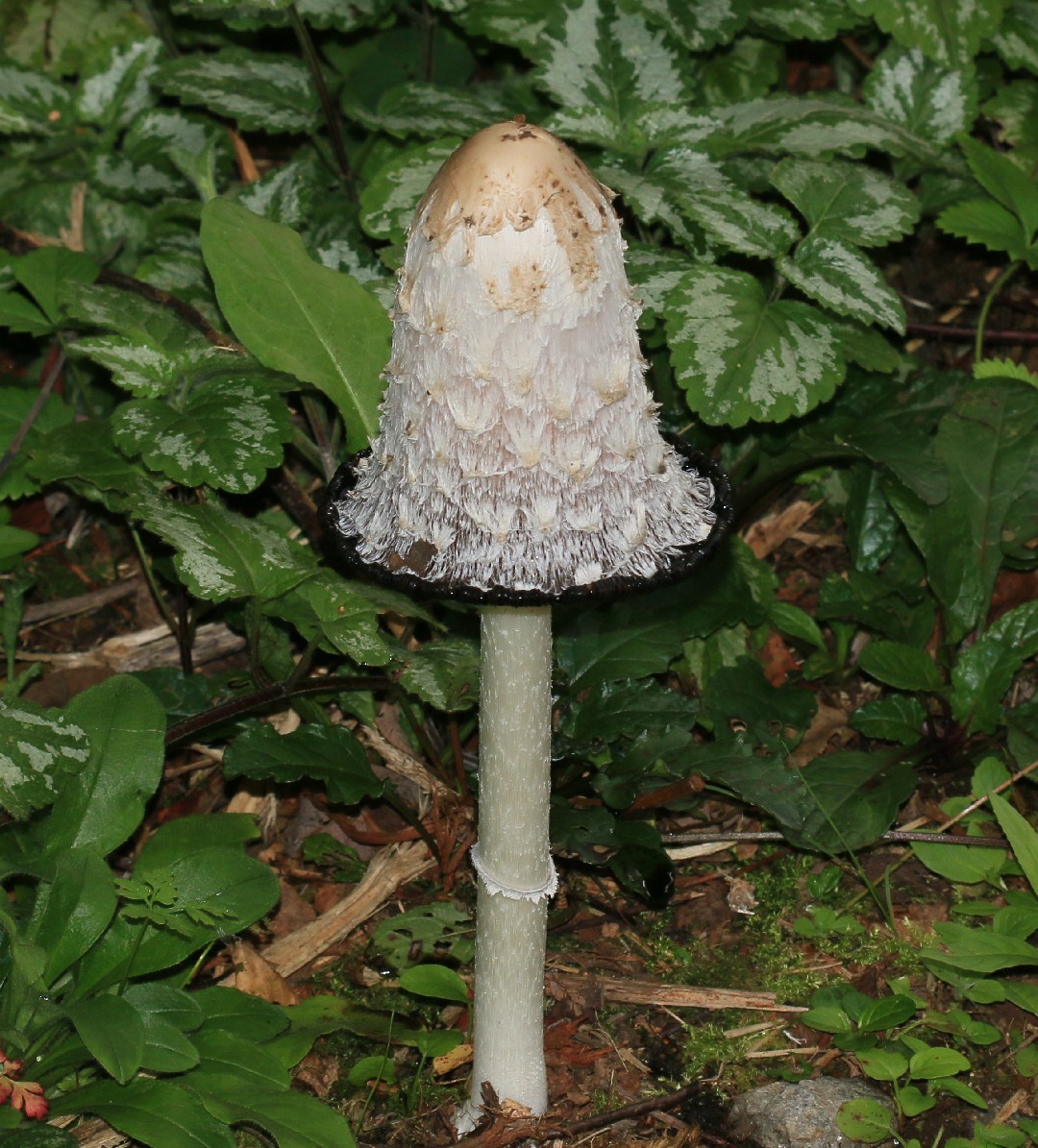
1. Shaggy mane
The shaggy mane mushroom is commonly found in North American and European grasslands. Some peoples foraged for its young egg-shaped caps, but it has more recently been found to be a bioaccumulator of heavy metals, meaning it pulls toxic metals up from the soil where it grows. As a result, shaggy manes should not be eaten. The mushrooms usually appear in clusters or “fairy rings.”
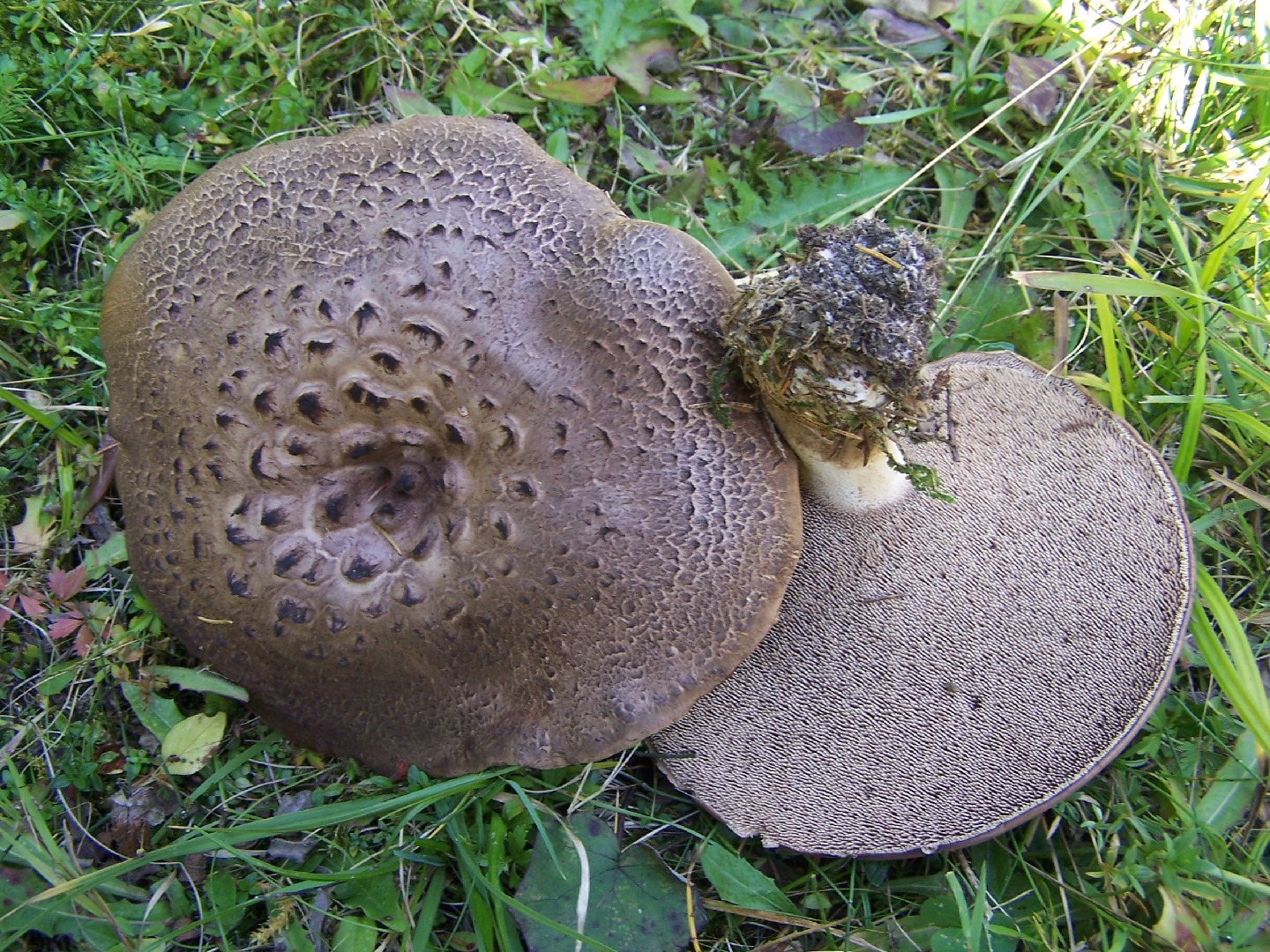
2. Shingled hedgehog
Shingled hedgehog(Sarcodon imbricatus) is often found in the company of fir trees, and it is therefore partial to mountainous or hilly regions. Endemic to Europe and North America, the species is prone to forming fairy rings. It fruits in early autumn.
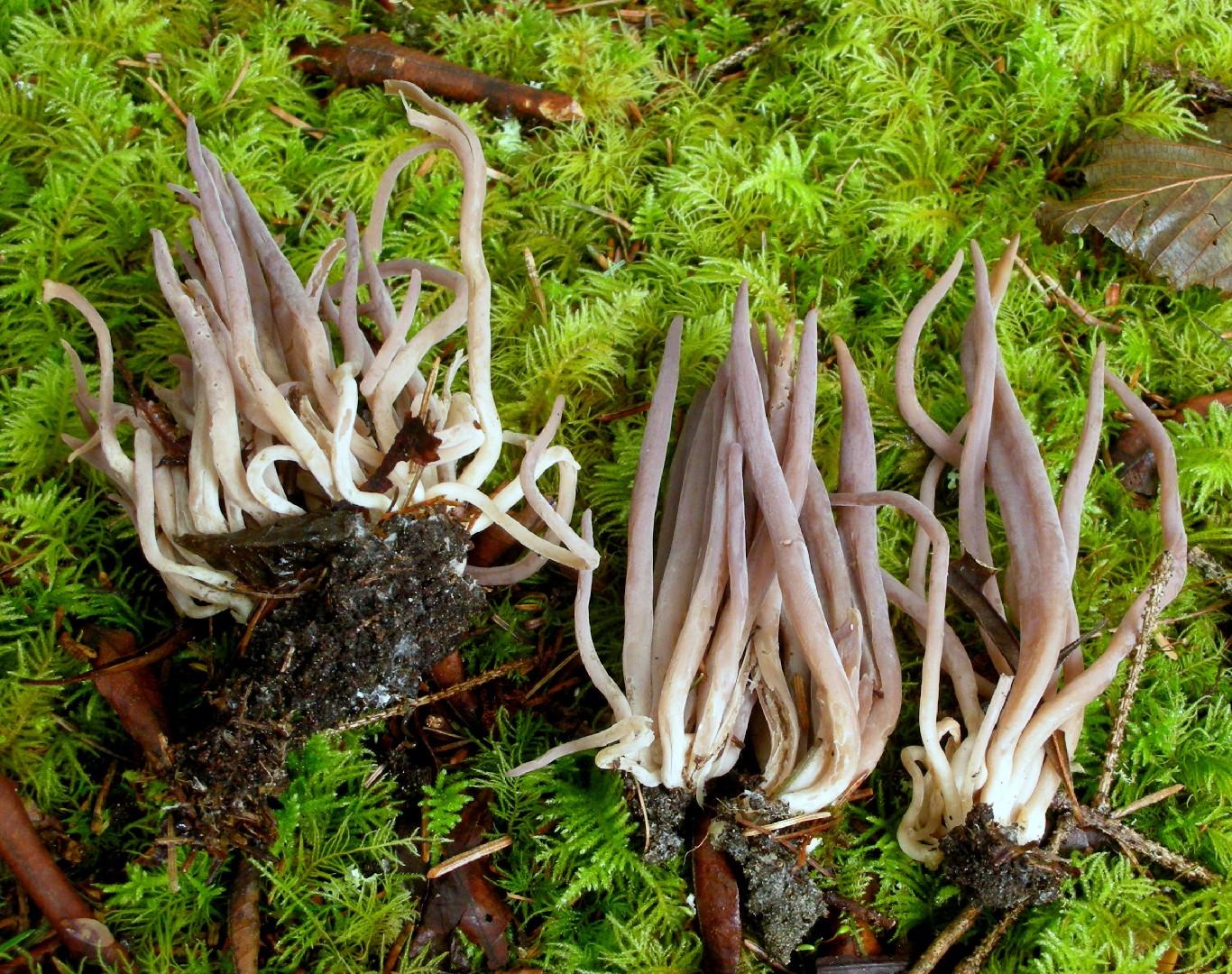
3. Purple coral
The purple coral is a tiny, but beautiful and impressive fungus that can be immediately distinguished from other Alloclavaria and Clavaria species by its distinctive purple colour. This mushroom grows in large clusters, but it's still unclear whether it's a saprobic or mycorrhizal species.
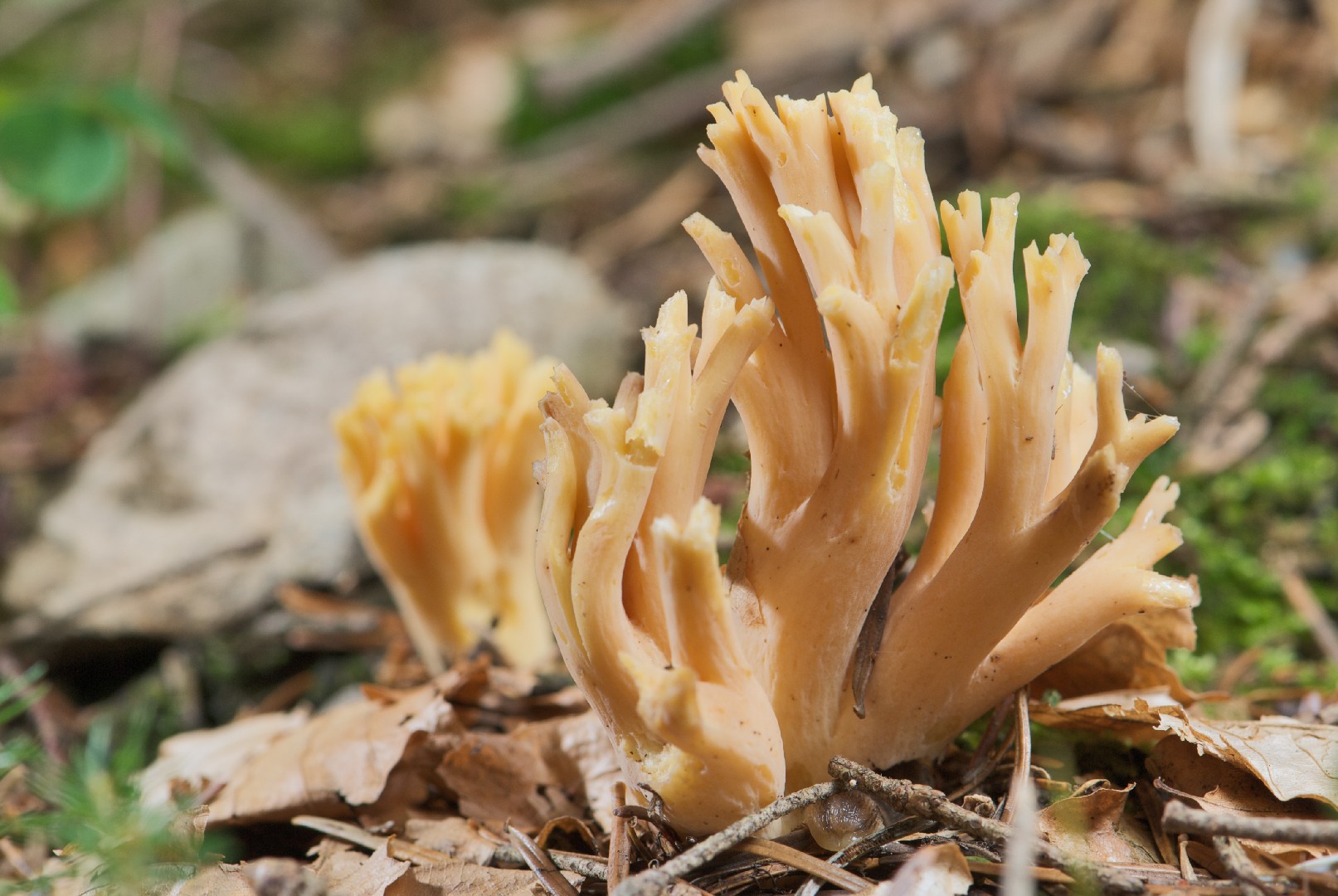
4. Changle
A beautiful fungus resembling undersea coral, the changle (Ramaria flava) appears as a bright tuft of lemony or sulfurous yellow when young. It fades into a deeper brown shade with age. The changle's cluster of branches is hard to distinguish from other coral species, some of which are quite poisonous.
5. March mushroom
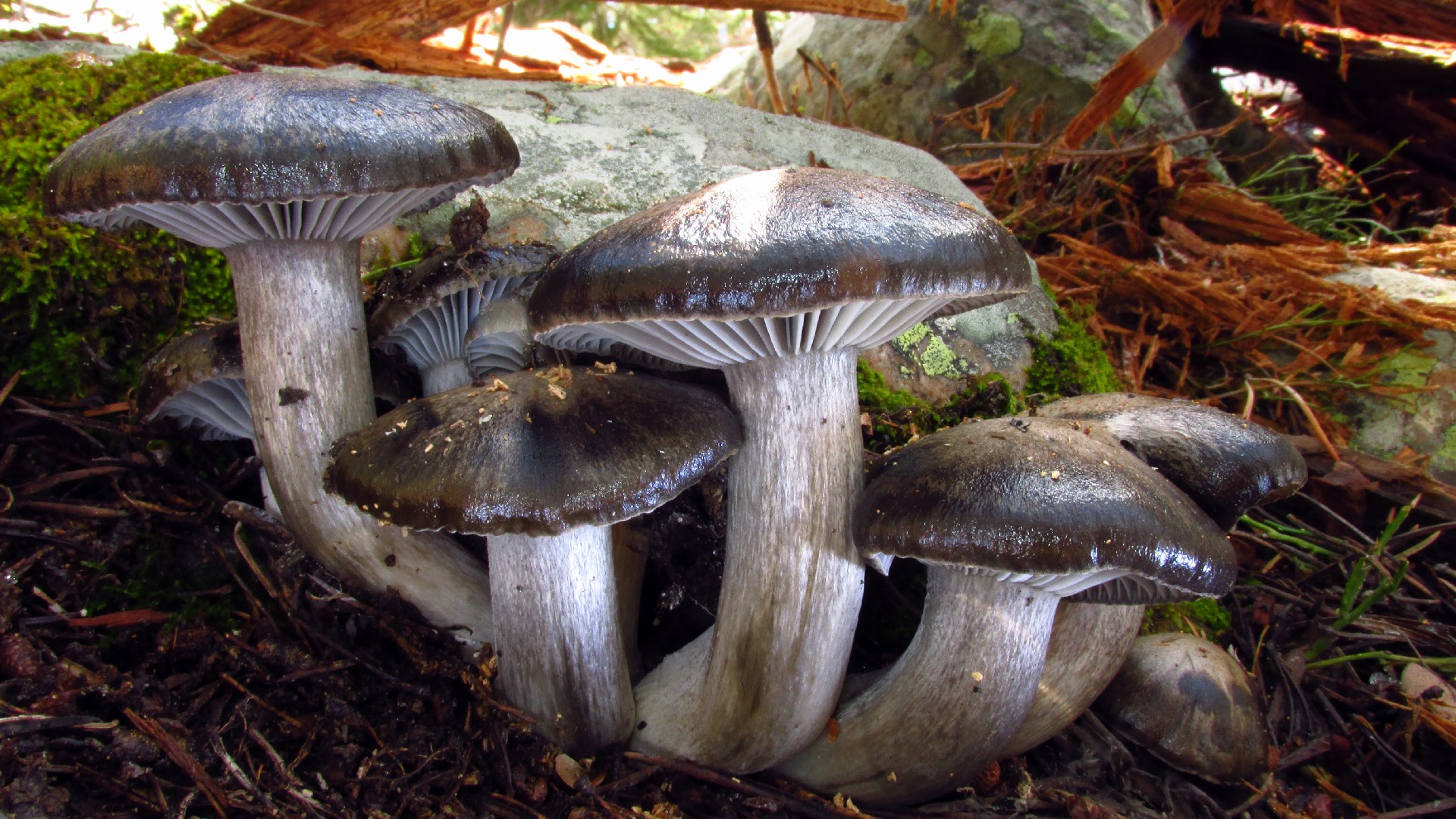
The fruit bodies have caps that are broadly convex, measuring 2.5–11 cm (1.0–4.3 in) in diameter. Their surfaces are smooth and sticky, with a pale greyish-brown center and darker brown to blackish-grey margin. The distantly spaced, broad gills have an adnate to adnexed attachment to the stipe, and two tiers of intervening lamellulae (short gills). The gills are initially white before turning gray to bluish-gray in age. The whitish stipe measures 3–10 cm (1.2–3.9 in) long by 1–2.5 cm (0.4–1.0 in) thick, and is either equal in width throughout or tapers slightly towards the base. The stipe is smooth except for a few tufts of hairs near the top. Immediately underneath the cap cuticle, the flesh of the cap is water-soaked; elsewhere in the cap, it is gray-tinted with a sheen, while in the stipe it is dull white. It lacks any appreciable odor or taste. It is considered edible in Europe, where it is prized in some regions. The thin-walled, elliptical spores measure 6.5–8.5 by 4.5–5 µm. The basidia (spore-bearing cells) are narrowly club-shaped, four-spored, and measure 42–55 by 5.4–8.1 µm. 
6. Blue-staining slippery jack
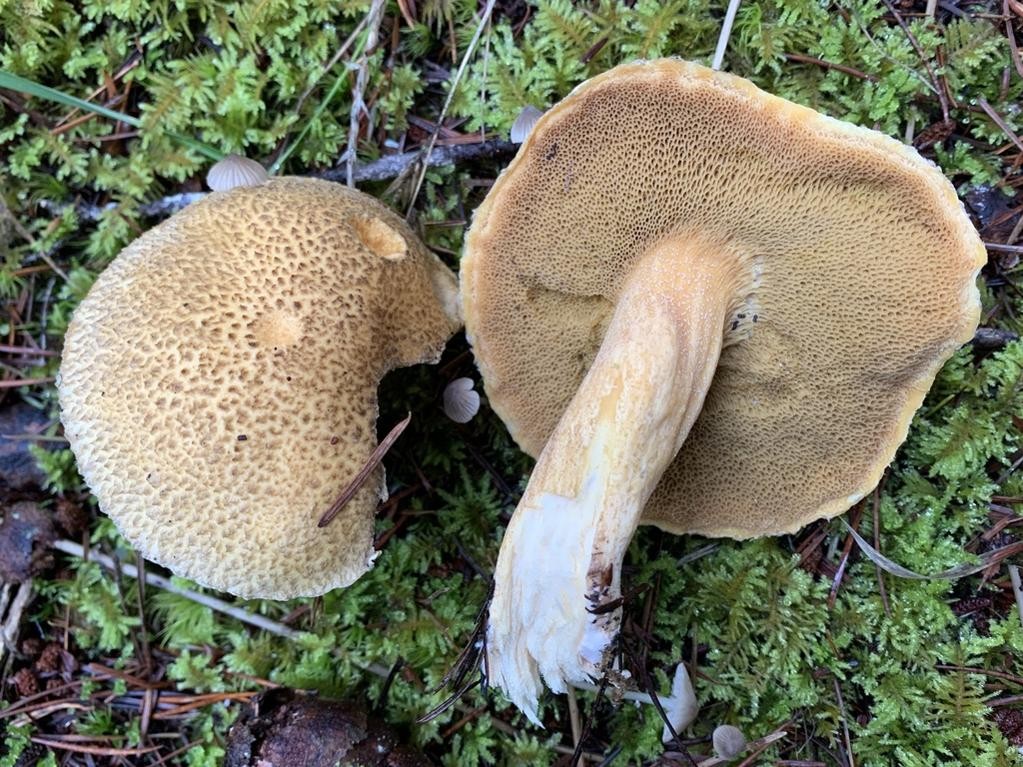
If you come across a blue-staining slippery jack (Suillus tomentosus) in the wilderness, chances are you're adventuring through a conifer forest after heavy rain. True to the common name, the caps can stain your hands a brownish-blue color. The surface area of the cap has a velvety texture when young.

7. Orange-capped bolete
Orange-capped bolete (Leccinum aurantiacum) is easily recognizable for its thick stalk and colorful red-orange cap. Bruised skin may turn burgundy before becoming gray. It sprouts in summer and autumn throughout North America and Europe, where it is particularly associated with the poplar tree.
8. Common stinkhorn
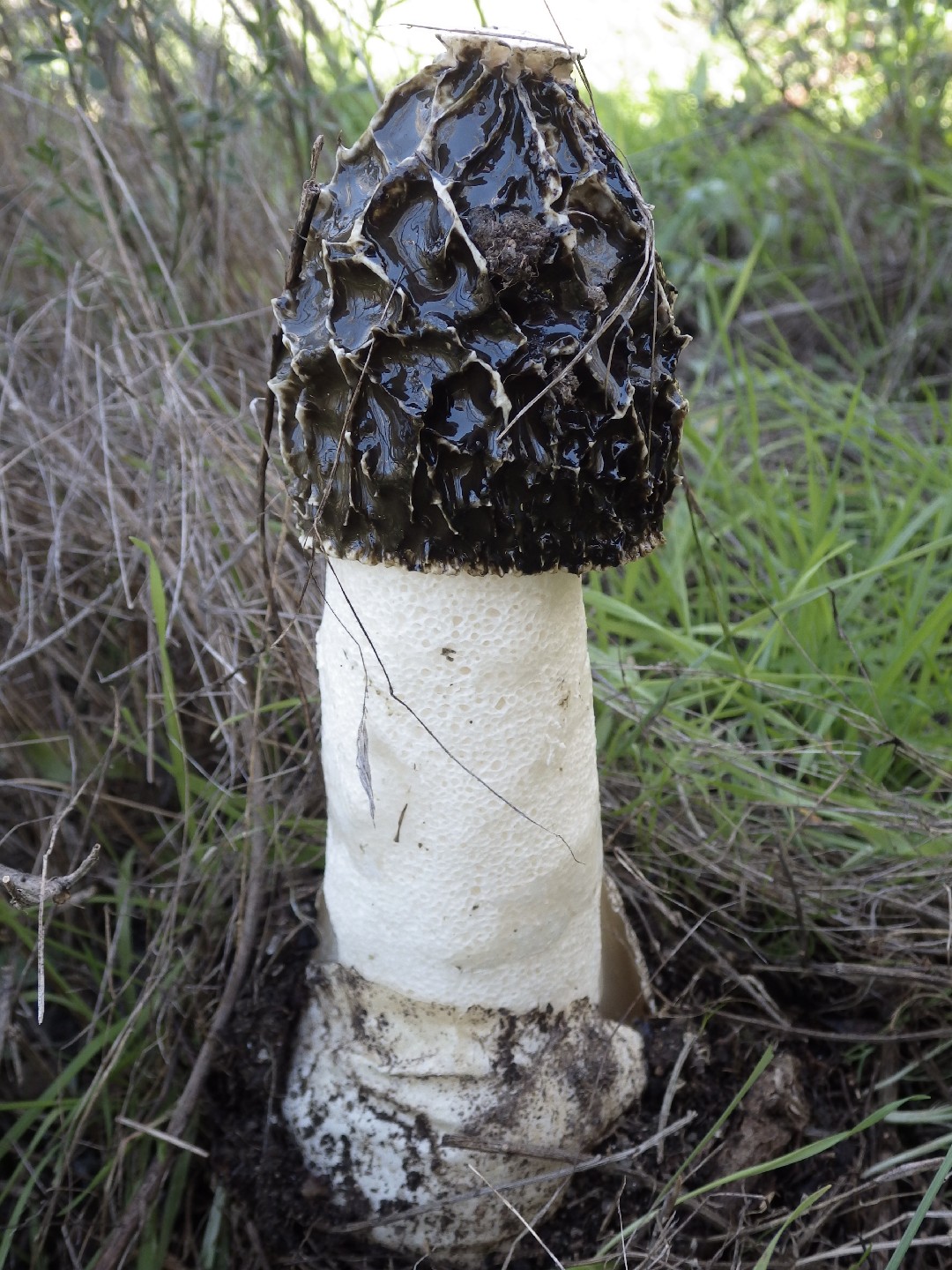
The common stinkhorn (Phallus impudicus) grows incredibly quickly, sometimes nearing 30 cm in a single afternoon. Their caps are pitted in a way which makes them reminiscent of morels. However, there's little mistaking the common stinkhorn for a morel; the former, in addition to sporting a much longer stalk, has a clear and pungent odor.
9. Shaggy mane
The shaggy mane mushroom is commonly found in North American and European grasslands. Some peoples foraged for its young egg-shaped caps, but it has more recently been found to be a bioaccumulator of heavy metals, meaning it pulls toxic metals up from the soil where it grows. As a result, shaggy manes should not be eaten. The mushrooms usually appear in clusters or “fairy rings.”
10. Shingled hedgehog
Shingled hedgehog(Sarcodon imbricatus) is often found in the company of fir trees, and it is therefore partial to mountainous or hilly regions. Endemic to Europe and North America, the species is prone to forming fairy rings. It fruits in early autumn.
More







