




Top 20 Edible Mushrooms Popular in Maramures
Nestled within majestic landscapes, Maramures serves as a lush environment for a myriad of fungal species. Discover the 20 most common edible mushrooms abundant in this region, each with its distinct appearance, enticing taste, unique habitat, and fascinating culinary uses. Unveil the flavorful secrets of Maramures as you embark on this mycological journey, brimming with educational and intriguing information.
* Disclaimer: Content feedback CAN NOT be used as any basis for EATING ANY PLANTS. Some plants can be VERY POISONOUS, please purchase edible plants through regular channels.

Most Popular Edible Mushrooms
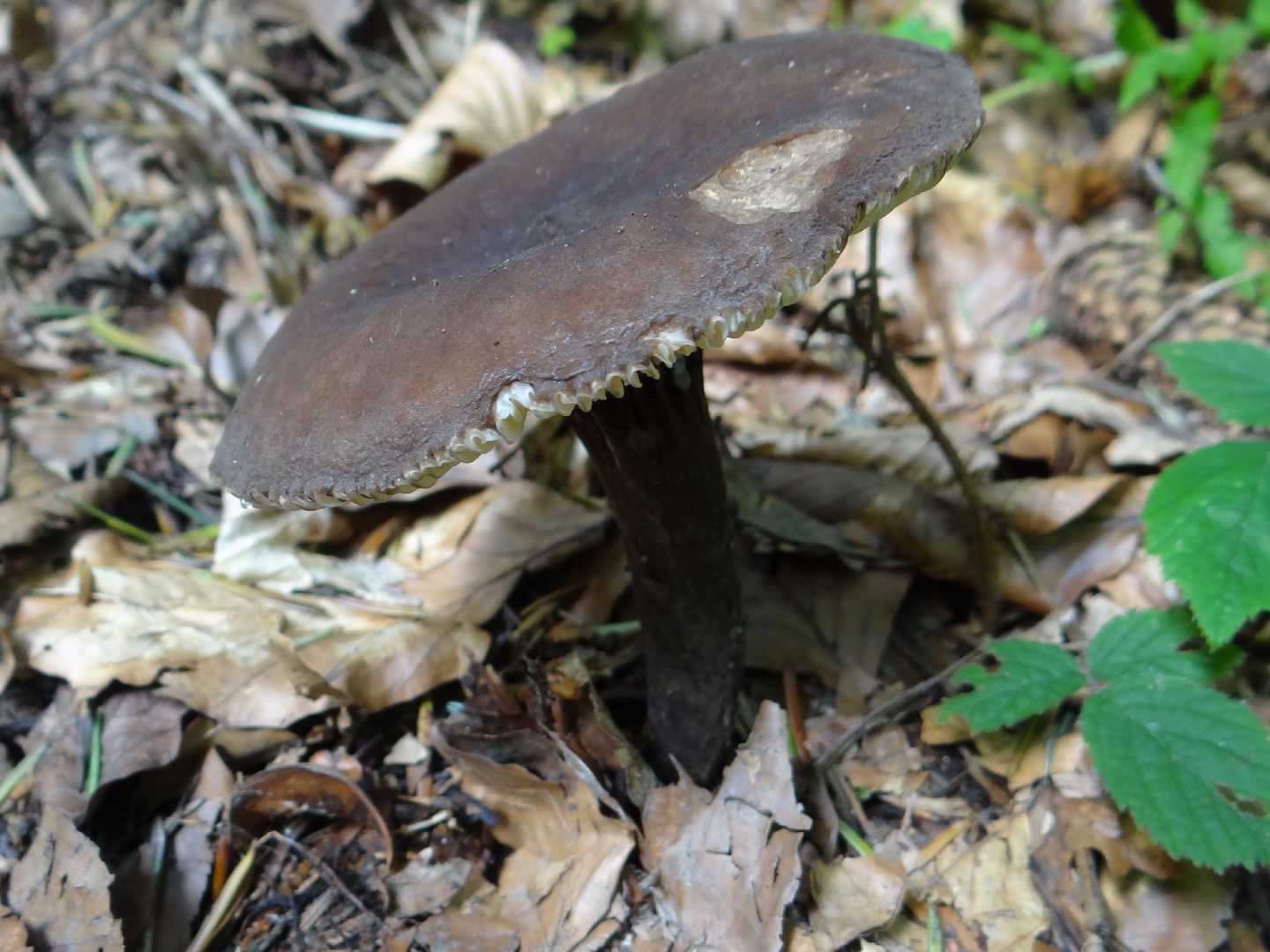
1. Velvet milkcap
The velvet milkcap grows naturally across Europe and North America. However, the European species is quite stable in its appearance, while the North American specimens are highly variable. Numerous forms of the velvet milkcap are yet to be described, and until then, this chocolate-looking mushroom should not be considered safe to eat.
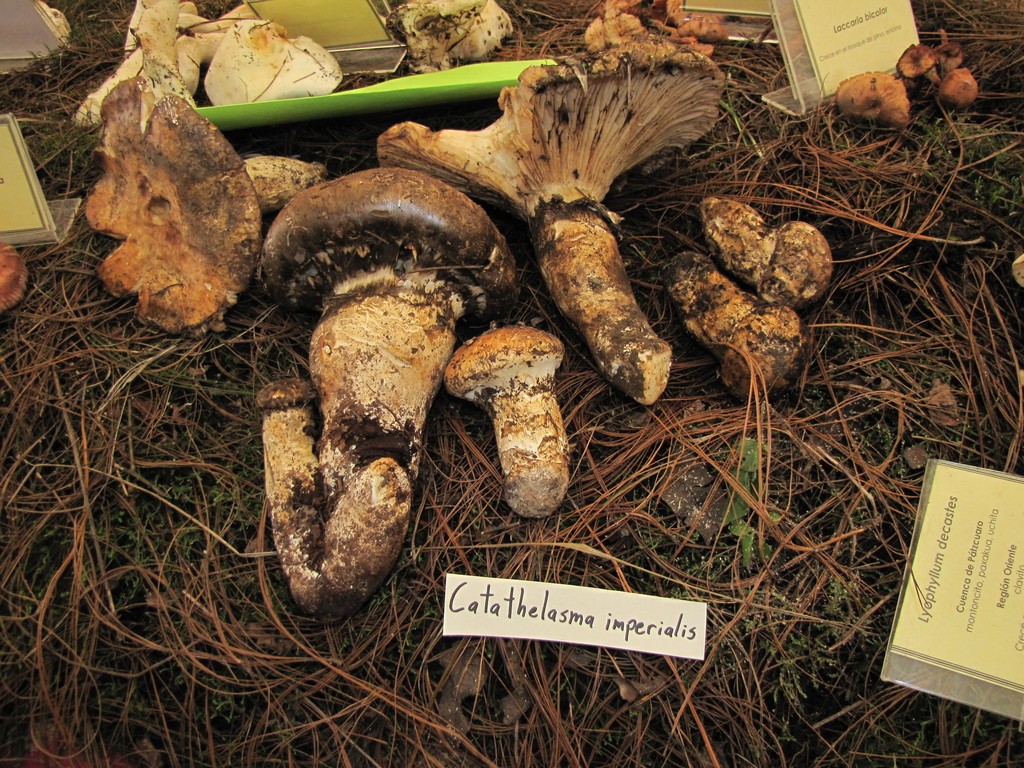
2. Imperial cap
The following description combines several references. Cap: 8 – 40 cm, orange brown to hazel brown, with darker patches. Often remaining closed up with a domed shape, but sometimes expanding and finally depressed. Gills: Whitish, decurrent, crowded, sometimes forked. Stem: Pale brown with two rings. Tapering below, often partly buried. Odor: Of flour, cucumber or unripe melon skin. Spores: White (en masse), 10 - 15 x 5 - 6 µm, smooth, somewhat spindle-shaped, amyloid. Habitat: Under conifers, especially Pine and Spruce, in mountainous regions. European sources give the cap size as up to about 20 cm, while North American ones indicate an enormous maximum size of 40 cm. The upper ring is derived from the partial veil (which covered the lower surface of the cap before it opened), whereas the thinner lower ring originally formed part of the universal veil (which enveloped the whole mushroom). 
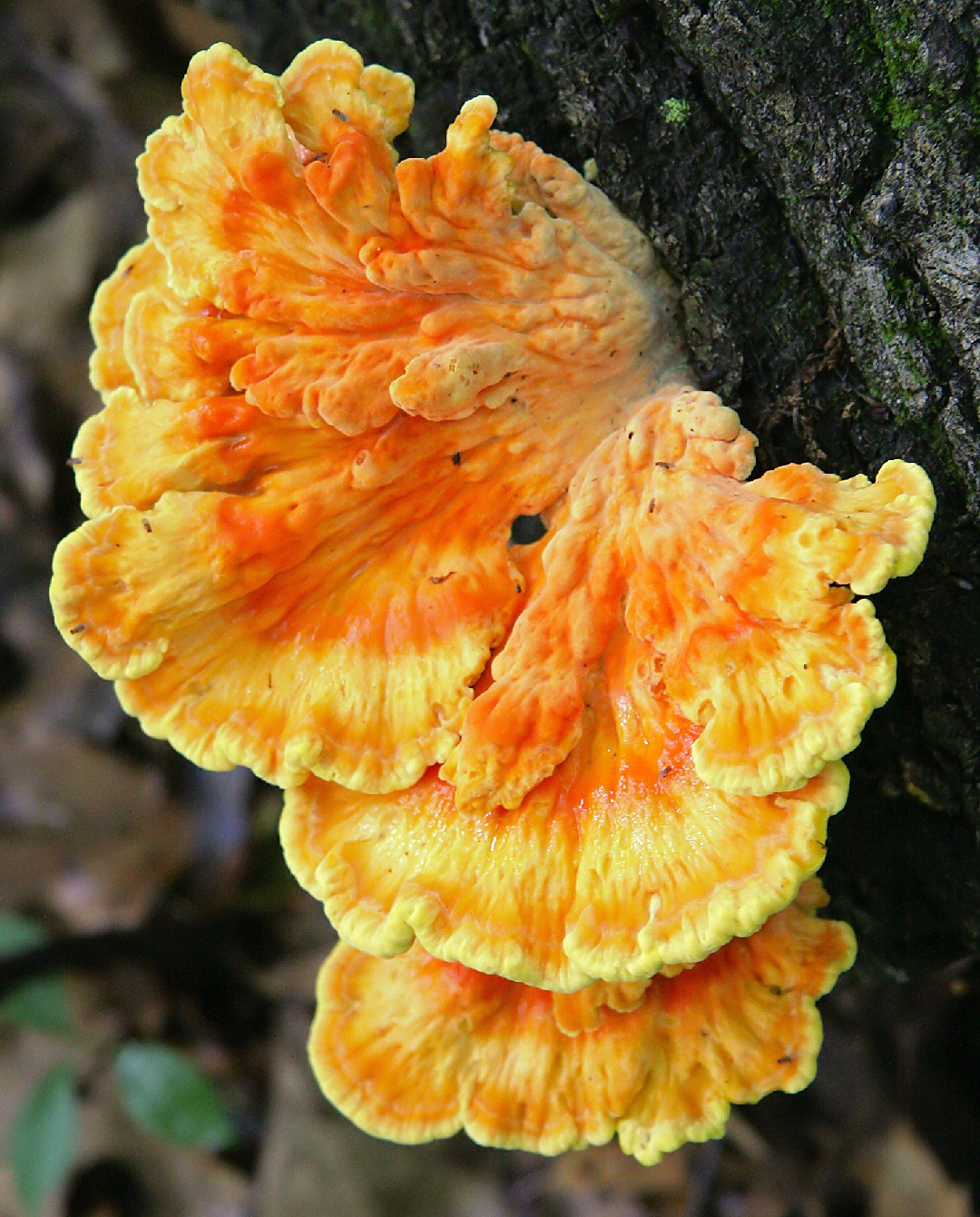
3. Chicken of the woods
Chicken of the woods is very noticeable in hardwood forests, appearing in clusters on standing tree trunks in bright orange and yellow hues that sometimes last through the entire winter. It is a parasite that causes an unfortunate brown heart rot, and is considered a particularly troublesome pest of Yew trees. If the fruitbodies can be seen, the tree is likely already beyond saving.
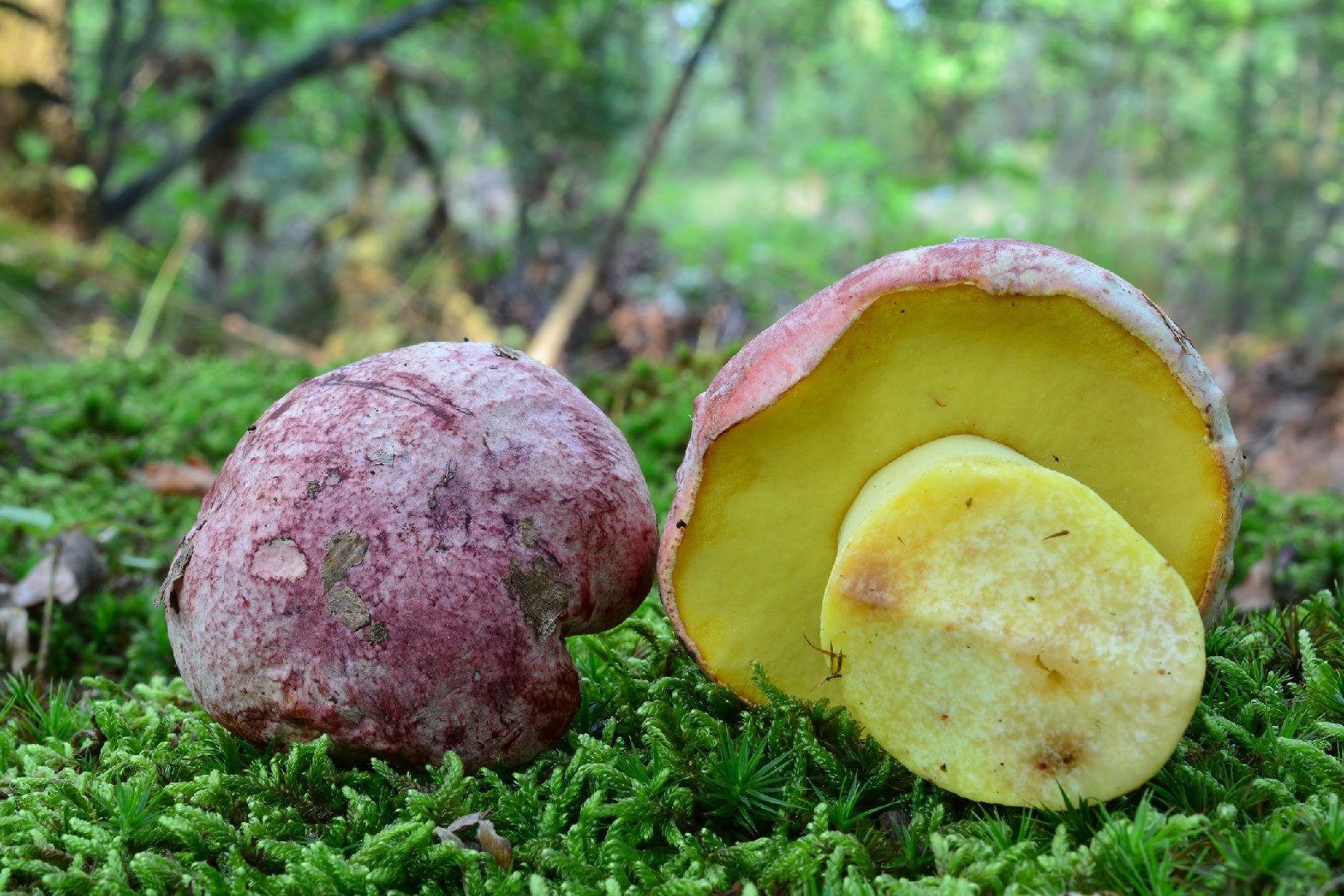
4. Royal bolete
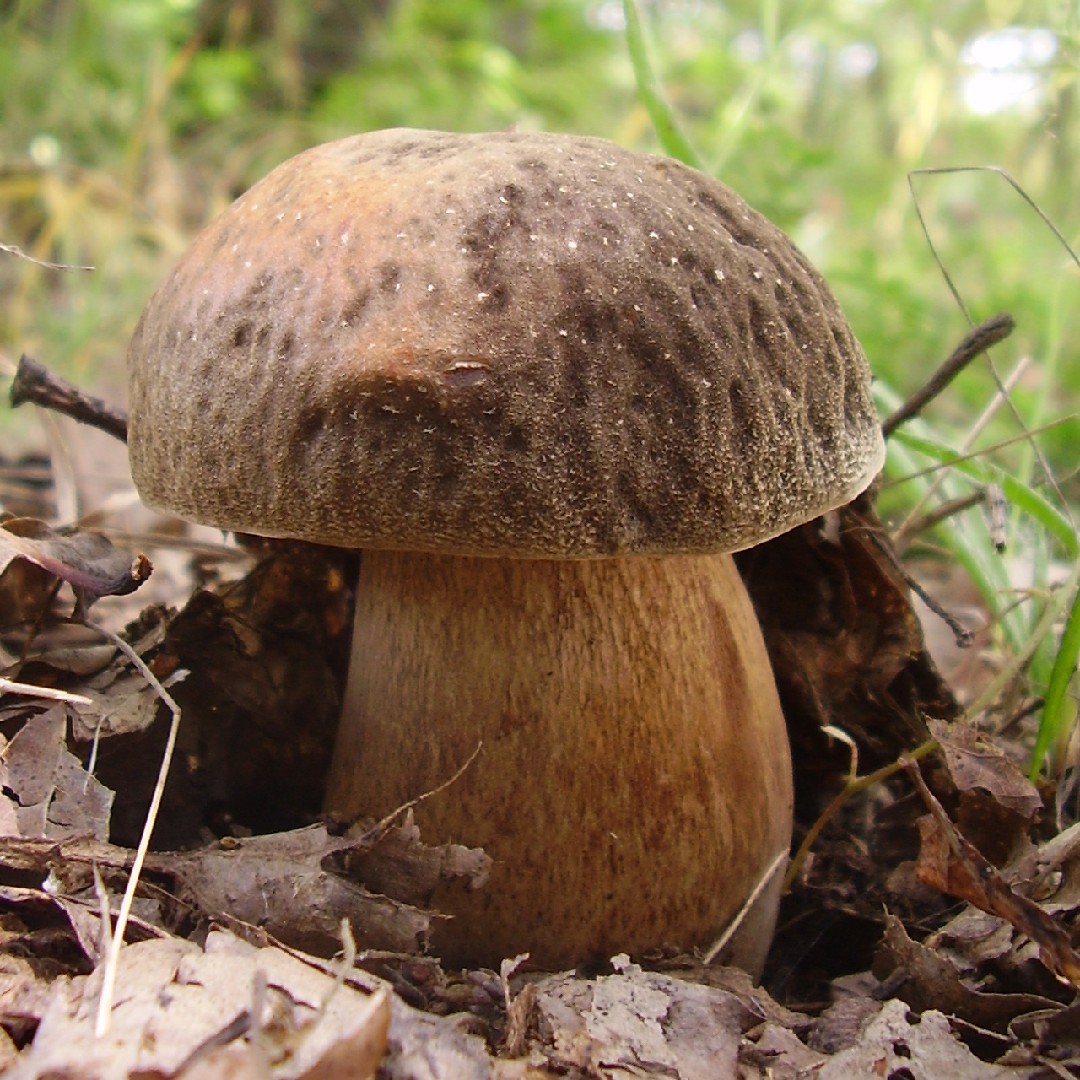
The fruit bodies of Butyriboletus regius have caps that are initially convex before flattening out in maturity, reaching a diameter of 7–20 cm (2.8–7.9 in) wide. The cap surface is pink to red, occasionally with hints of yellow or brown, more so around the margin. Initially velvety to slightly tomentose (hairy) when young, these minute hairs tend to slough off with age, and the cap develops wrinkles and pits. The cap flesh is yellow, and slowly and erratically bruises blue in North American specimens. The pores on the underside of the cap are angular, and measure about 1–2 per millimetre. The color of the pore surface is bright yellow to start, but eventually darkens somewhat, and will stain blue with damage. The depth of the tubes comprising the pores extends to 0.8–2.5 cm (0.3–1.0 in). The stem measures 5–13 cm (2.0–5.1 in) long by 2.5–5 cm (1.0–2.0 in) thick, and typically has a thick, bulbous base. It is solid (i.e., not hollow), and a bright yellow color, often with reddish tones, particularly near the base of the stem. The stem surface can be covered with fine yellow reticulations either throughout its length, or just on the upper portion. Butyriboletus regius produces an olive-brown spore print. Its smooth, hyaline (translucent) spores are roughly elliptical to somewhat fusoid (wider in the middle and tapering toward the ends) to more or less cylindrical, and have dimensions of 12–17 by 4–5 μm. Chemical tests can be used to help identify Butyriboletus regius in the field. The cap cuticle will stain a pale purple color if FeSO4 is applied; this same test will turn the flesh grayish.
5. Sticky bolete
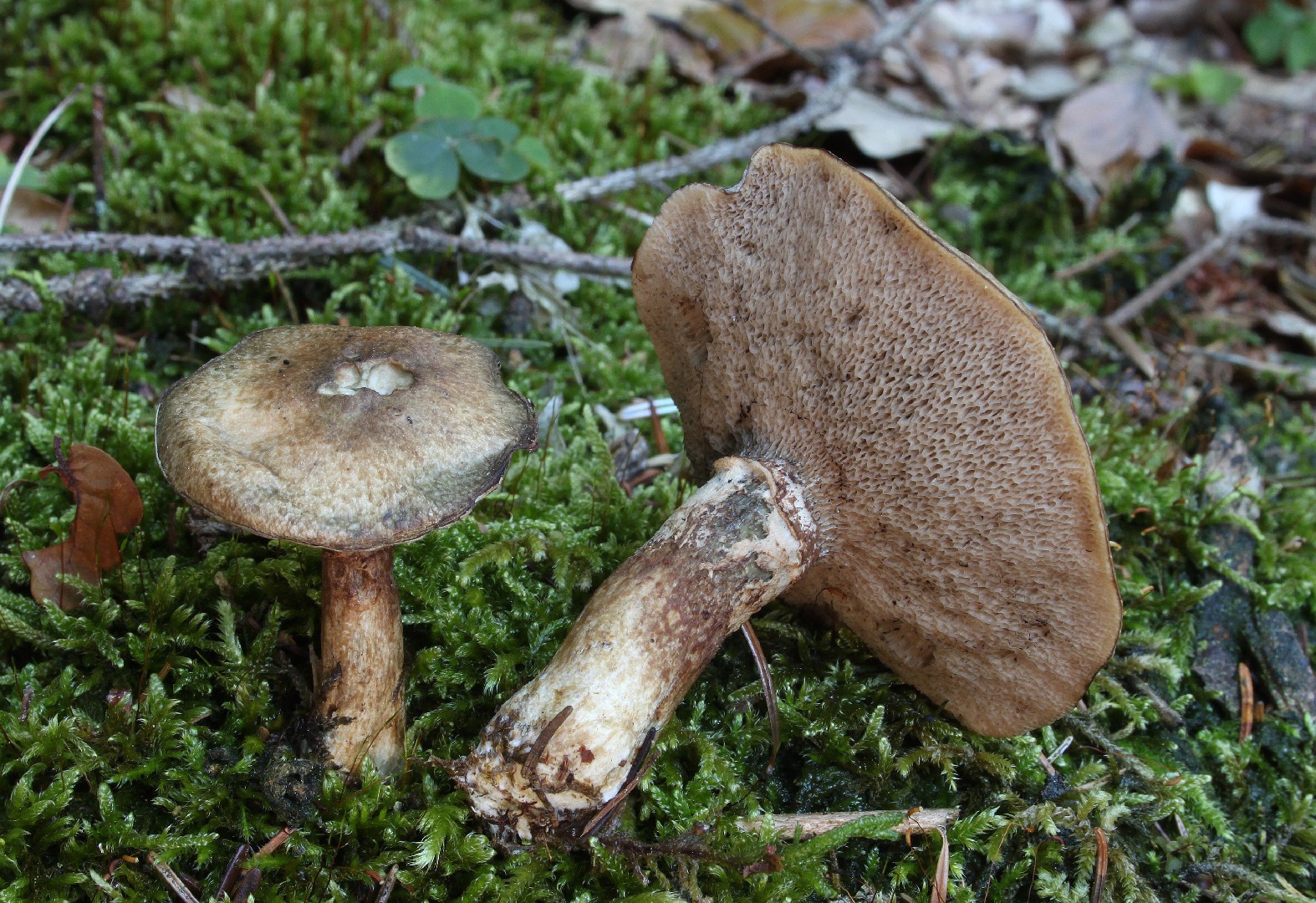
Sticky bolete is a bolete commonly found in groups on larch plantation paths. The common name, "sticky bolete," comes from this mushroom's slimy and sticky film that develops on wet caps. This film does not form any other species in the genus and is a distinguishable feature of this mushroom.
6. Parasol
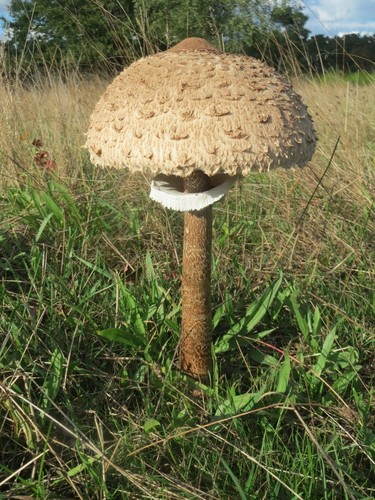
Found in clearings and grassy areas in late summer, the wild parasol mushroom has a snakeskin-patterned stem. The brown spots on its cap make it look a bit shaggy, but that name is reserved for its poisonous counterpart, the Shaggy Parasol (Chlorophyllum rhacodes). You can distinguish the two by the stems: the latter has a smooth stem and red flesh inside.
7. Shingled hedgehog
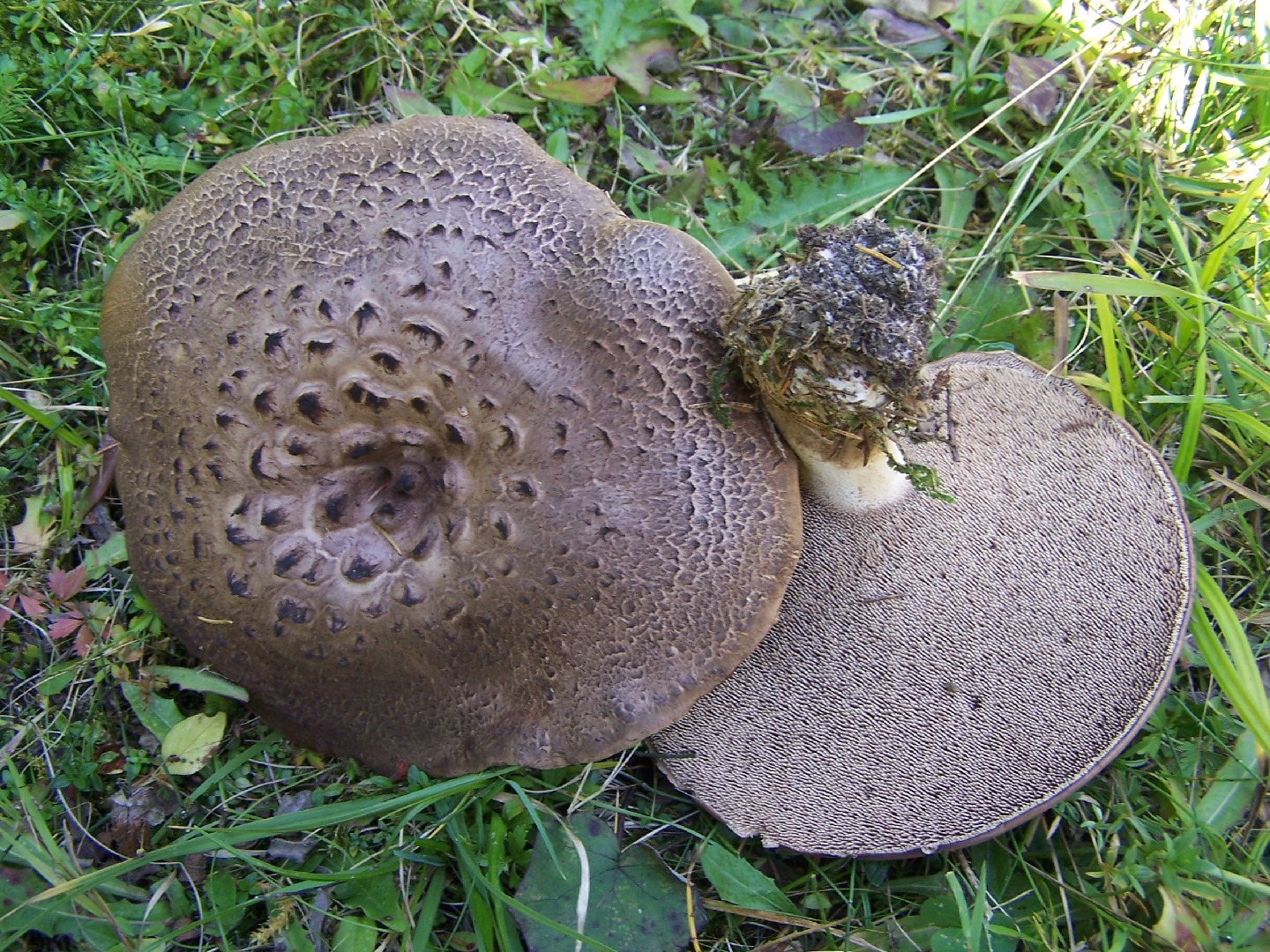
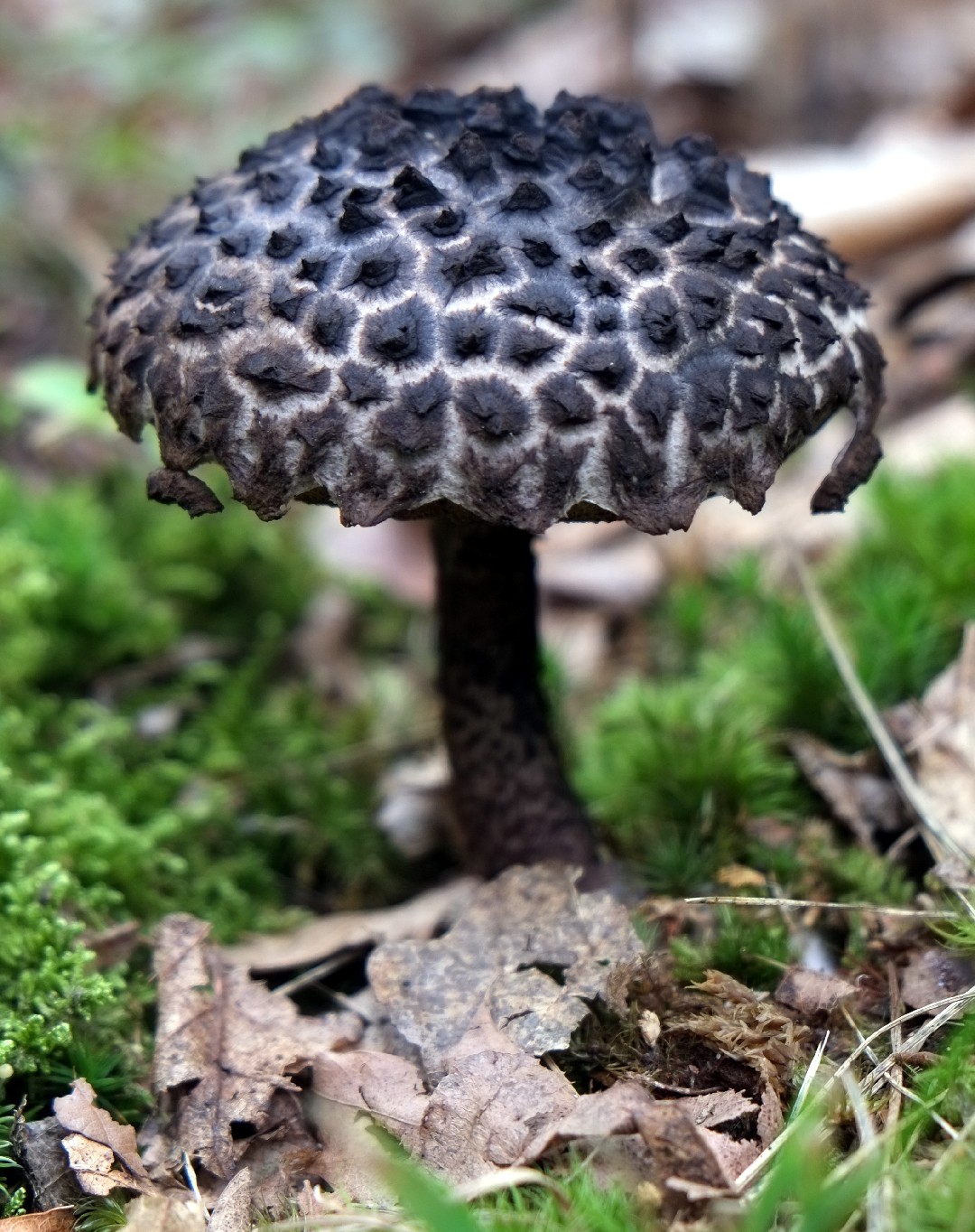
Shingled hedgehog(Sarcodon imbricatus) is often found in the company of fir trees, and it is therefore partial to mountainous or hilly regions. Endemic to Europe and North America, the species is prone to forming fairy rings. It fruits in early autumn.
8. Caesar's mushroom
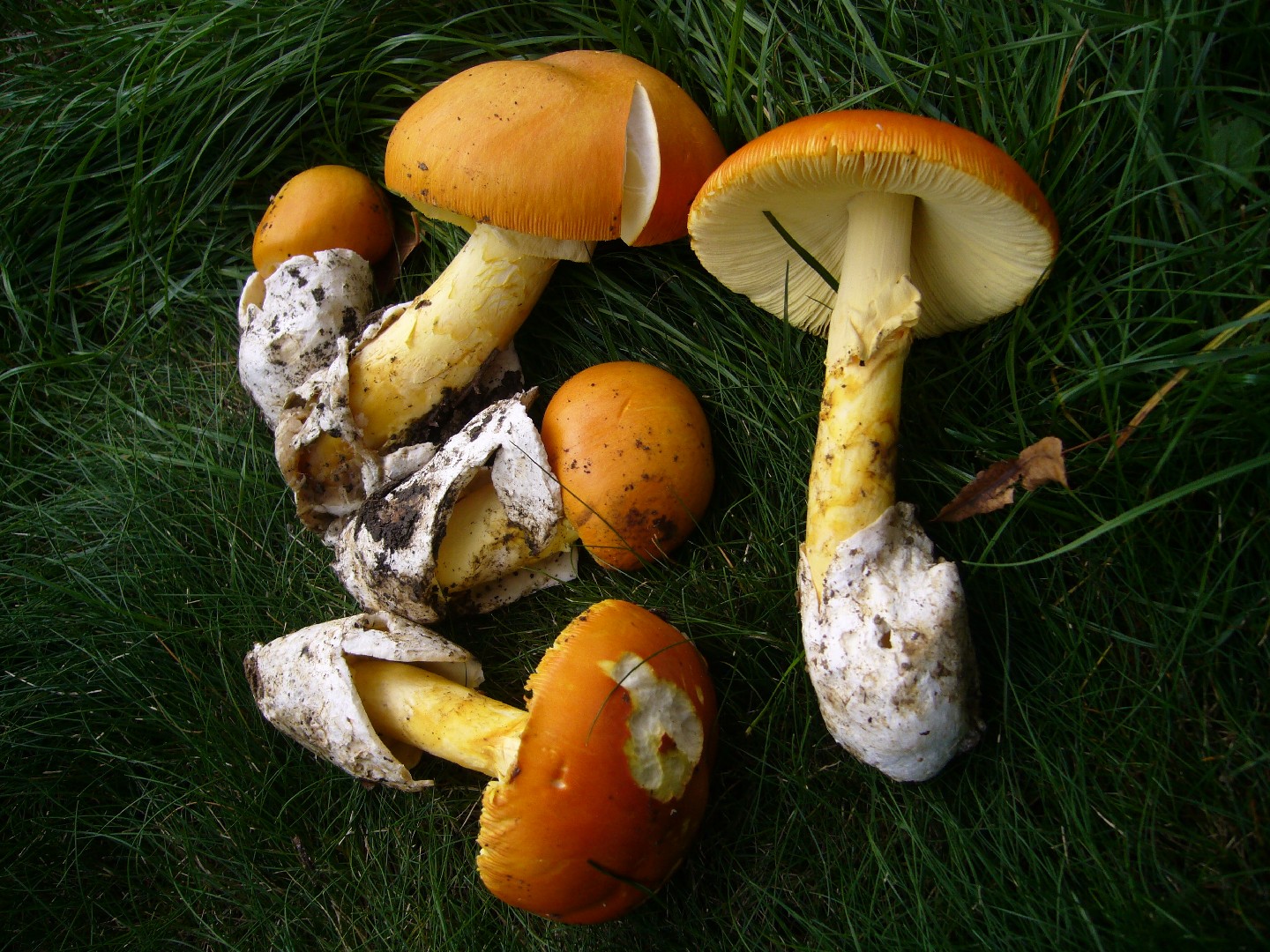
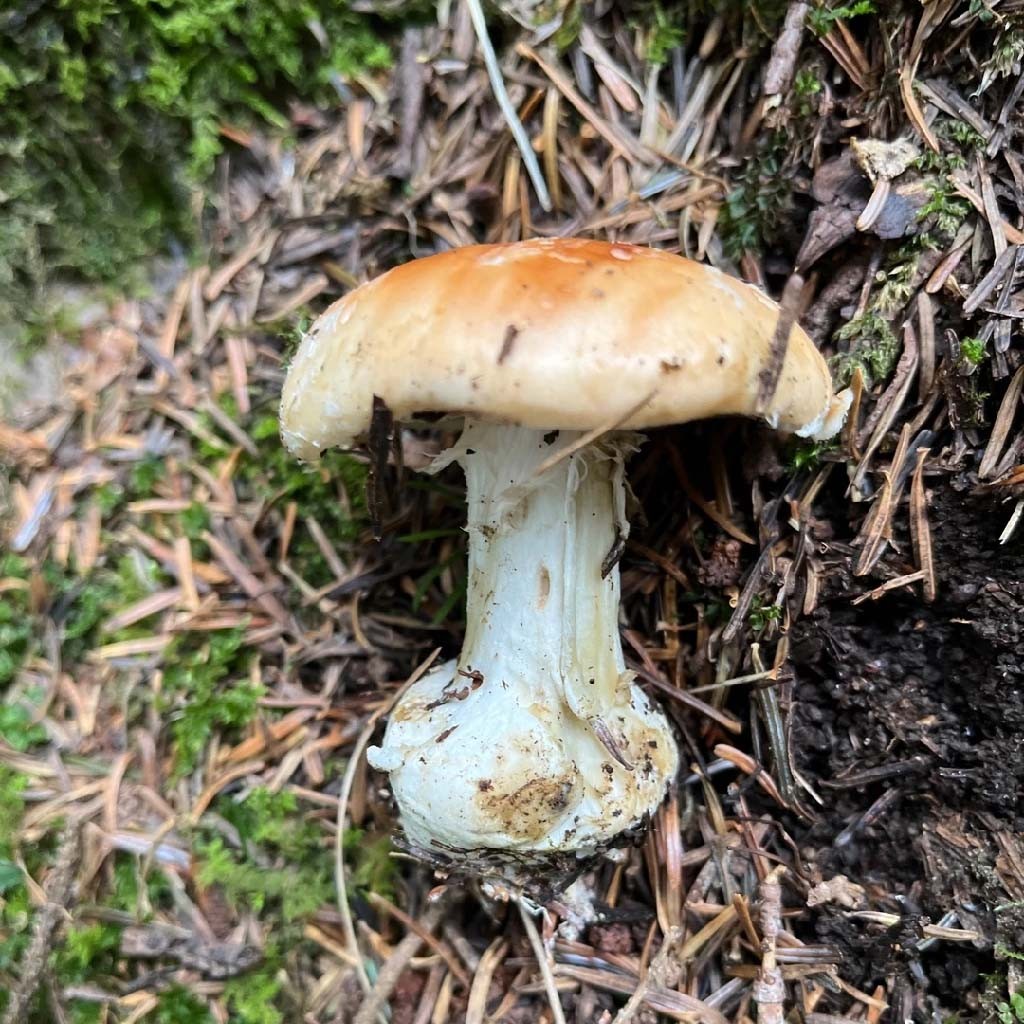
Caesar's mushroom (Amanita caesarea) is a brightly colored Amanita associated with ancient Roman nobility. Sporting a vivid orange cap and a yellow stalk and gills, this mushroom is an exciting find - however, because faded or young individuals may resemble the highly deadly Death Cap, it is recommended that this species be treated with a "look but do not touch" policy.
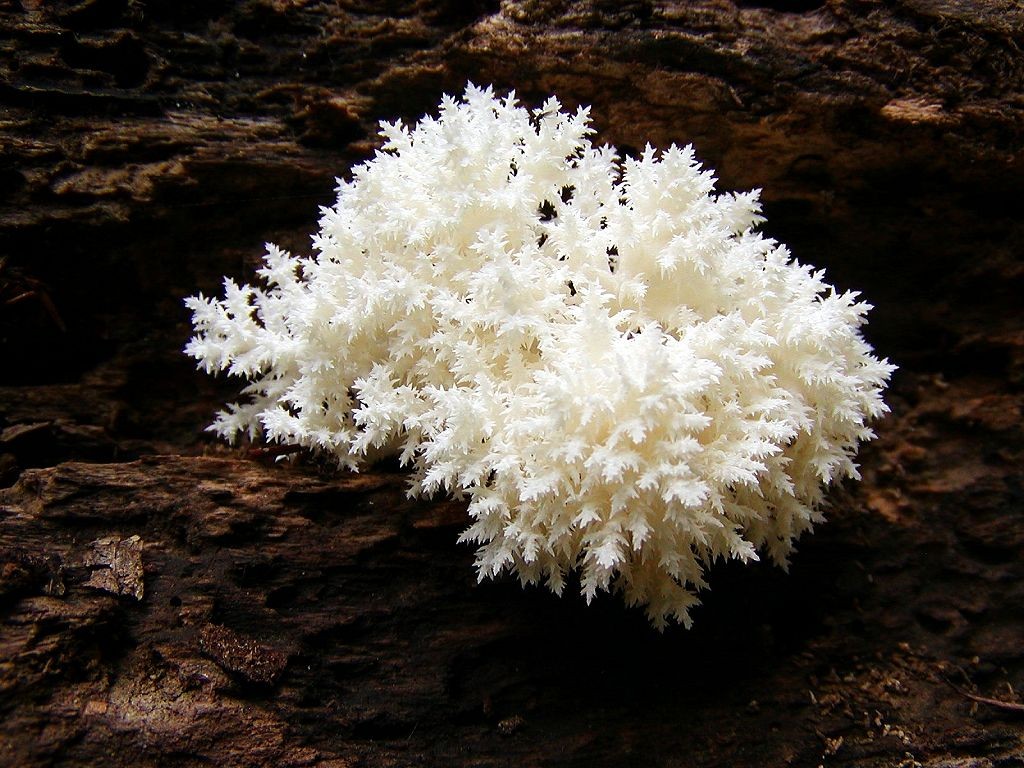
9. Coral tooth fungus
Coral tooth fungus (Hericium coralloides) is a species of coral mushroom most frequently sighted on dead or decaying hardwoods. Generally, younger specimens are white and become increasingly yellowish as they mature. Found around the world, the Māori refer to this species as pekepekekiore.
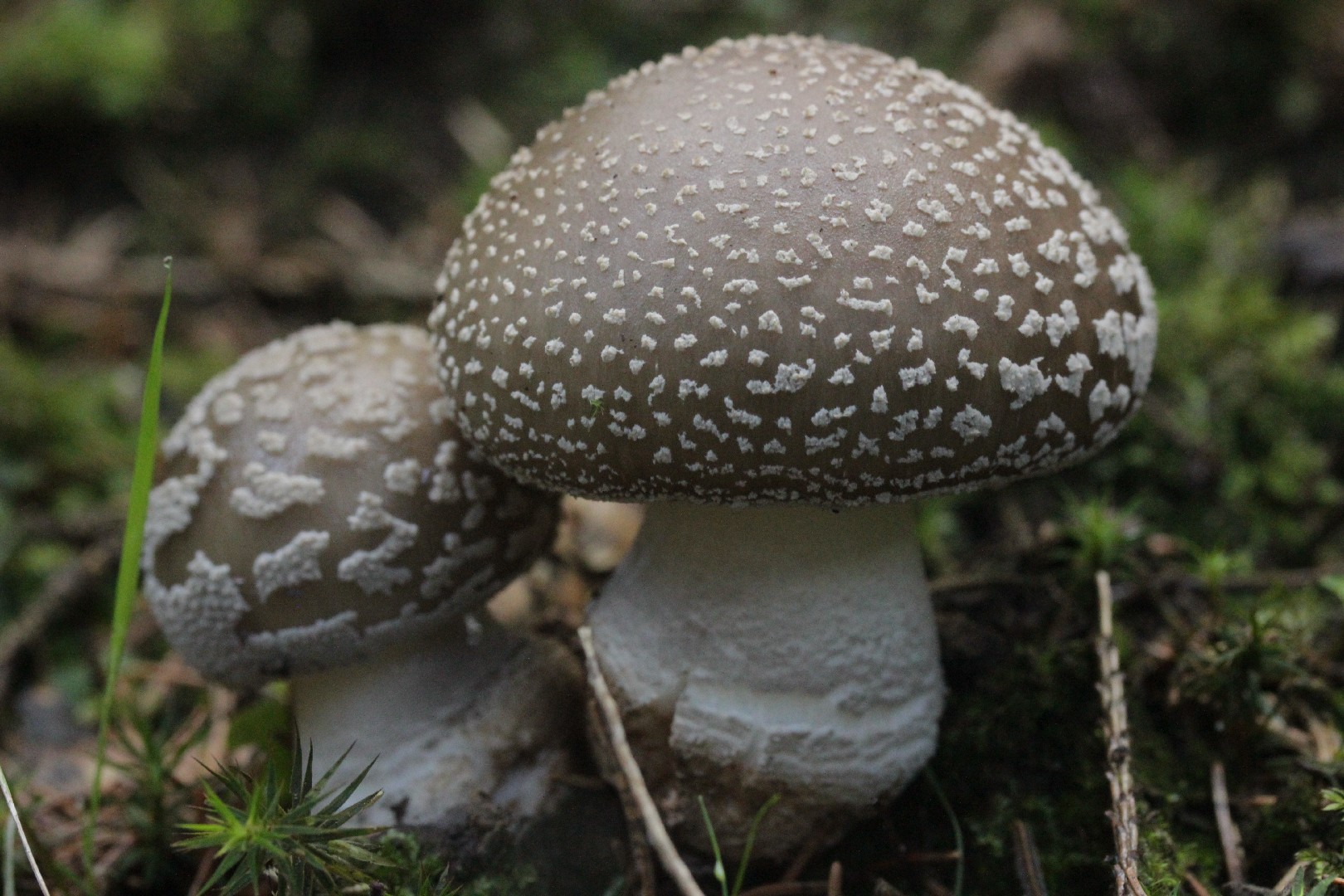
10. Grey spotted amanita
The cracked plaster appearance of grey spotted amanita (Amanita excelsa) caps is a common sight in Europe that also sporadically pops up in North America. This species has a long history and has been recorded and studied as far back as 1821. They contain a potent toxin called thermolabile, making those who consume it very sick if not cooked. This species is not recommended for consumption.
More







