




Top 16 Edible Mushrooms Popular in Chino
Unearth the diverse world of mycology in Chino, a region rich in biodiversity and an ideal habitat for mushrooms. Explore our list of the top 16 most commonly found edible mushrooms in Chino where we delve into their distinctive appearances, flavors, and habitat specifics. Discover how these fungi varieties serve as culinary treasures, transforming the ordinary into the extraordinary with their unique tastes and textures. Each mushroom's description is painstakingly researched and verifiable, ensuring an accurate and enlightening guide for both amateur mycologists and gourmet aficionados alike. Get ready to embark on a fascinating fungi journey in Chino!
* Disclaimer: Content feedback CAN NOT be used as any basis for EATING ANY PLANTS. Some plants can be VERY POISONOUS, please purchase edible plants through regular channels.

Most Popular Edible Mushrooms
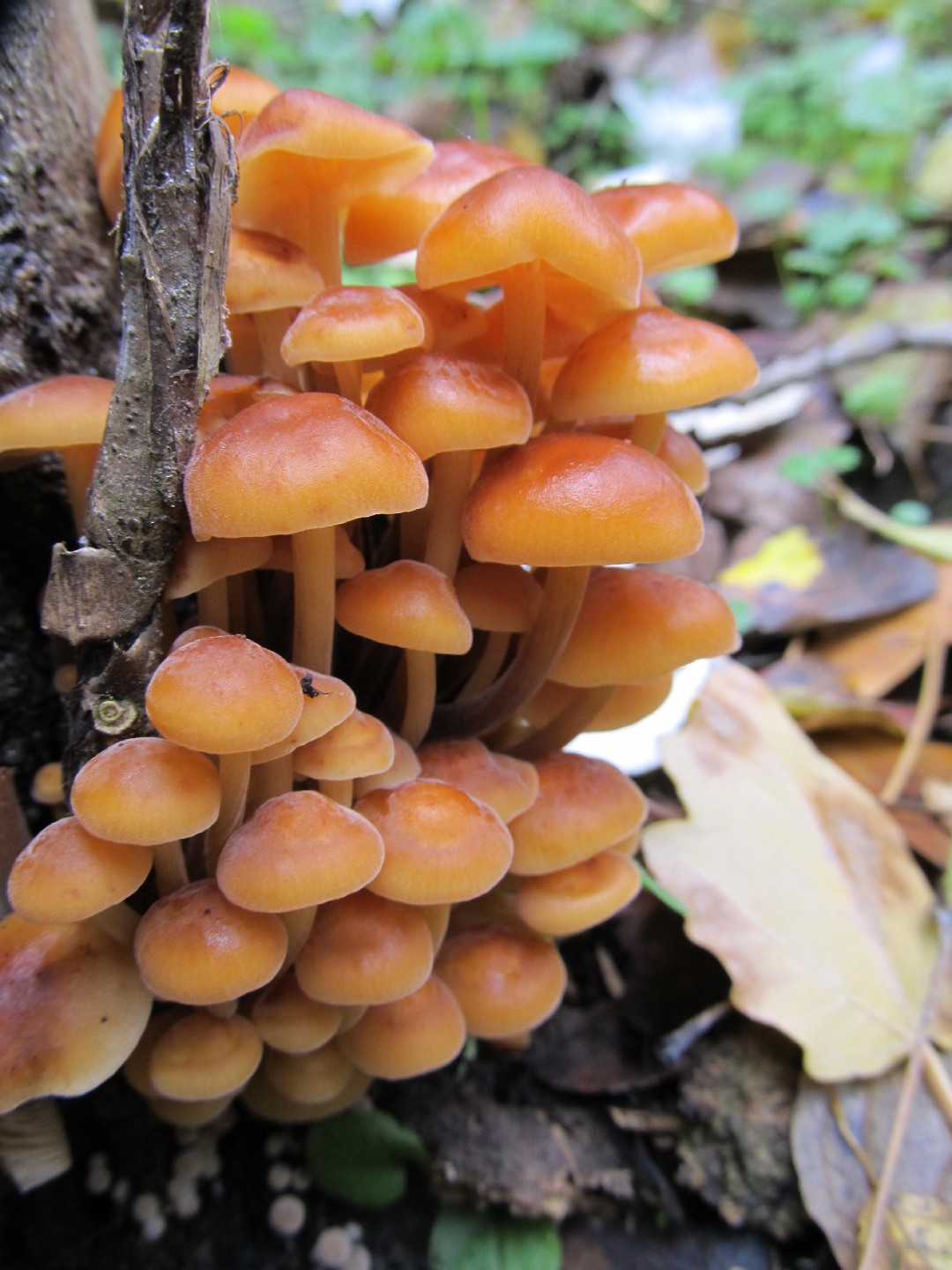
1. Enoki
The enoki grows wild on dead elm trees, and is also cultivated for human use. This flavorful species (Flammulina velutipes) has been used in dishes around the world for generations, being particularly high in nutrients. Though store-bought enoki are often plain white, wild ones can be found in a range of colors.
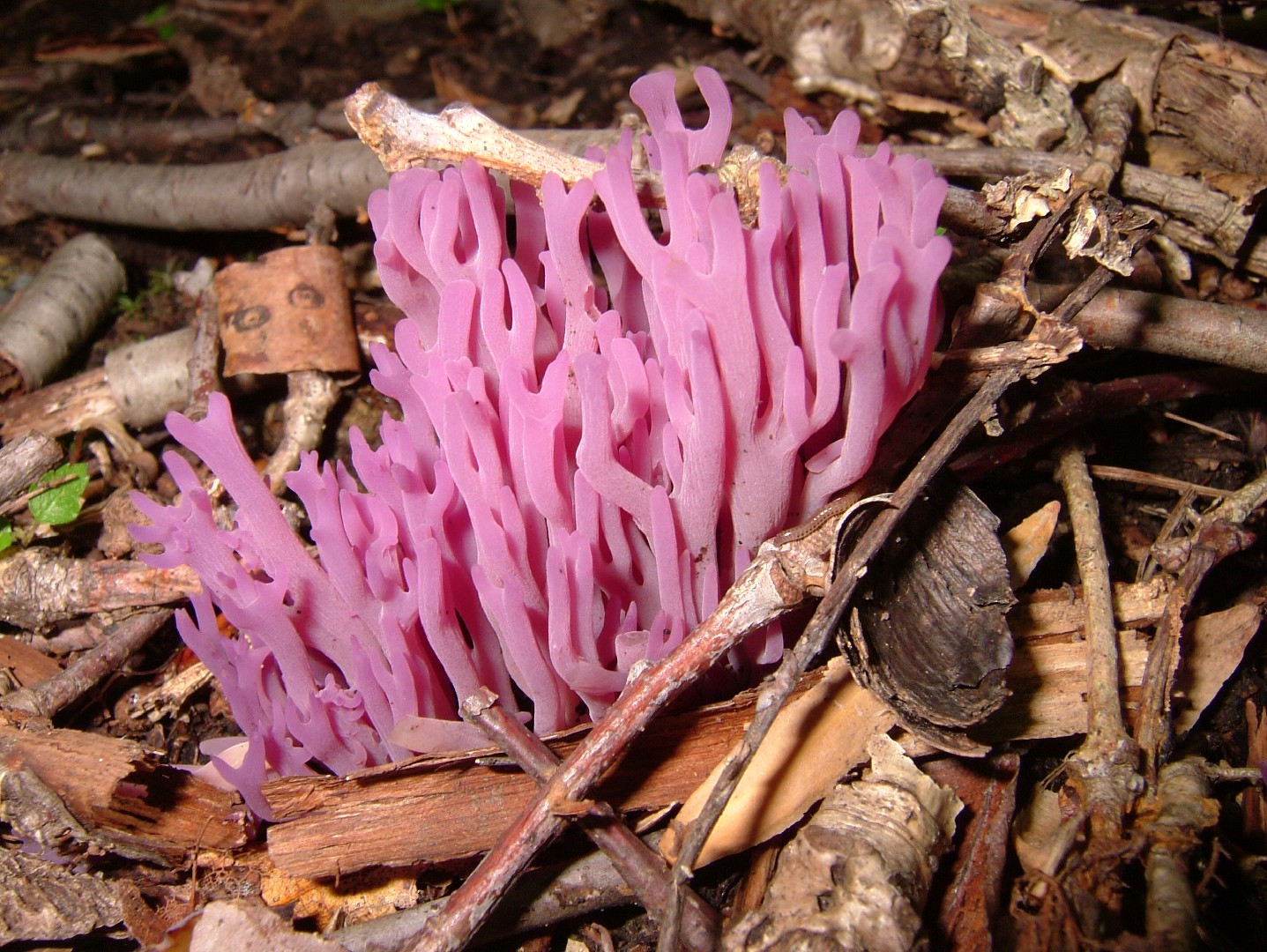
2. Violet coral
The striking violet coral (Clavaria zollingeri) is most common in the eastern part of North America, although it can also be found elsewhere. The clustered, branching fruitbody looks spectacularly similar to an underwater coral, in both shape and color. This species is distinguished by the antler-like pattern with which each frond branches.
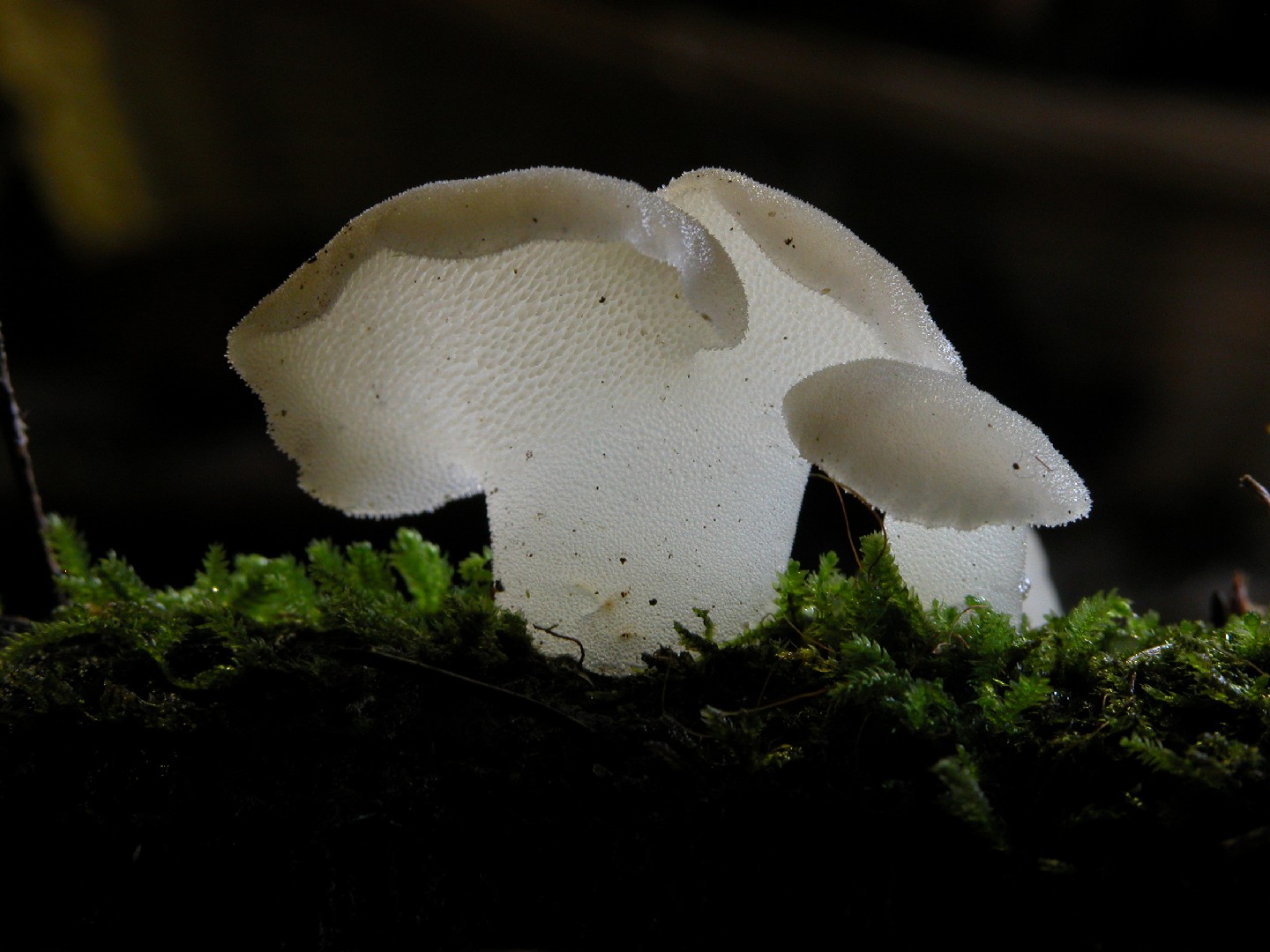
3. Toothed jelly fungus
This whimsically-named mushroom has a global distribution and a unique appearance. Toothed jelly fungus has a white, translucent - almost spectral - coloration and sports little downward pointing "teeth" on the underside of its cap. Although its toothed underside may scream "hedgehog mushroom", it is actually a member of a separate genus (Pseudohydnum, as opposed to Hydnum).
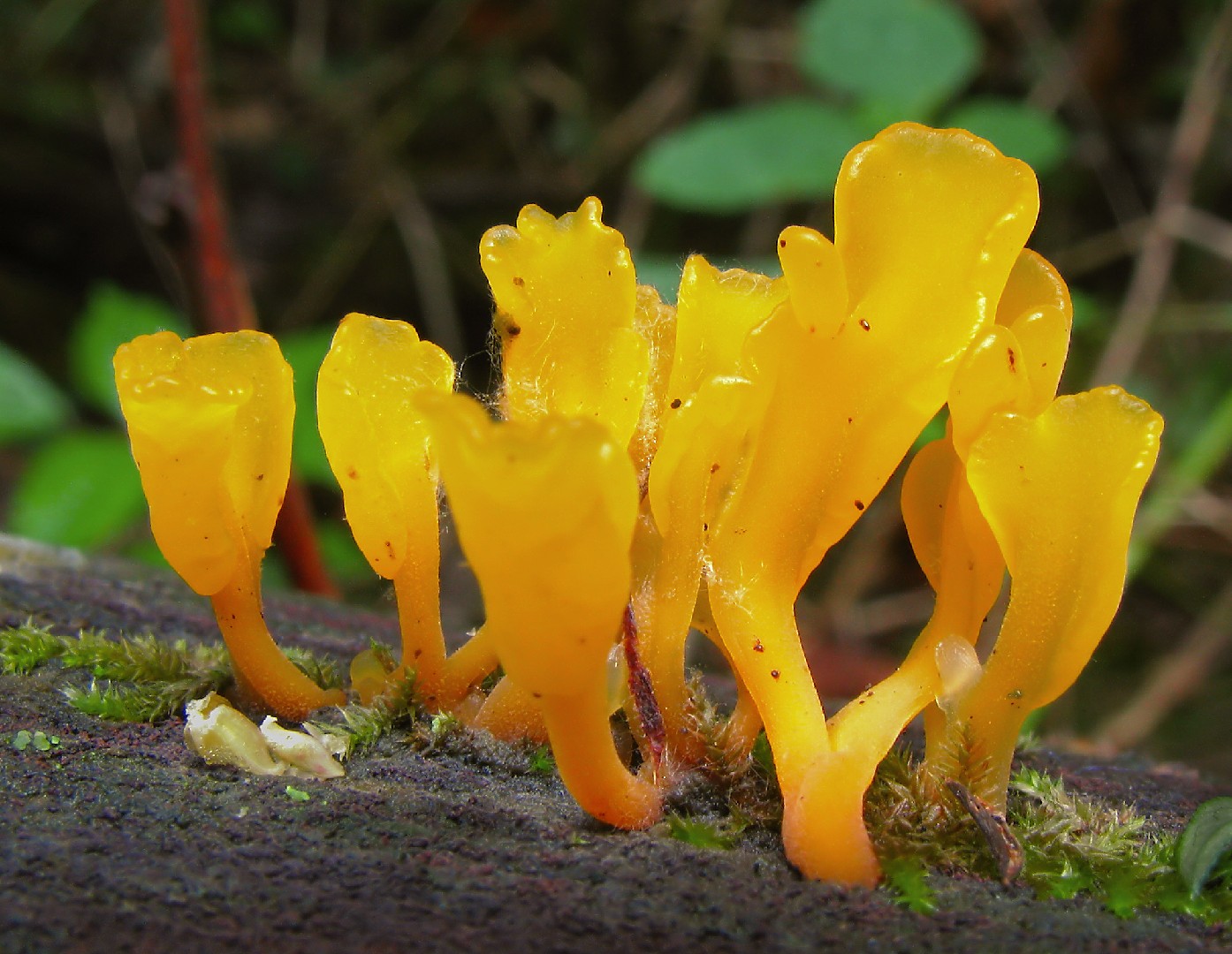
4. Fan-shaped jelly-fungus
Just as its Latin and the common English names suggest, the fan-shaped jelly-fungus (Dacryopinax spathularia) is a fan-shaped or spatula-shaped jelly-like mushroom. It commonly grows in wood cracks and it sometimes even appears in the cracks of the processed wood and lumber. Despite the word "jelly" in its name, the fan-shaped jelly-fungus is not considered edible.
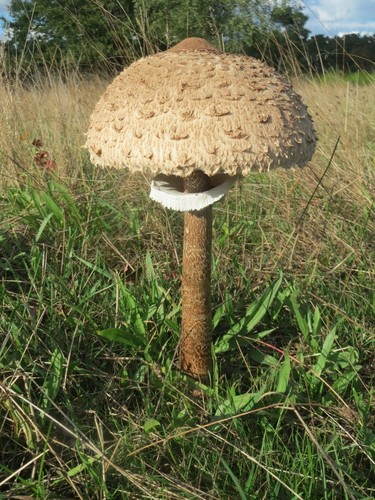
5. Parasol
Found in clearings and grassy areas in late summer, the wild parasol mushroom has a snakeskin-patterned stem. The brown spots on its cap make it look a bit shaggy, but that name is reserved for its poisonous counterpart, the Shaggy Parasol (Chlorophyllum rhacodes). You can distinguish the two by the stems: the latter has a smooth stem and red flesh inside.
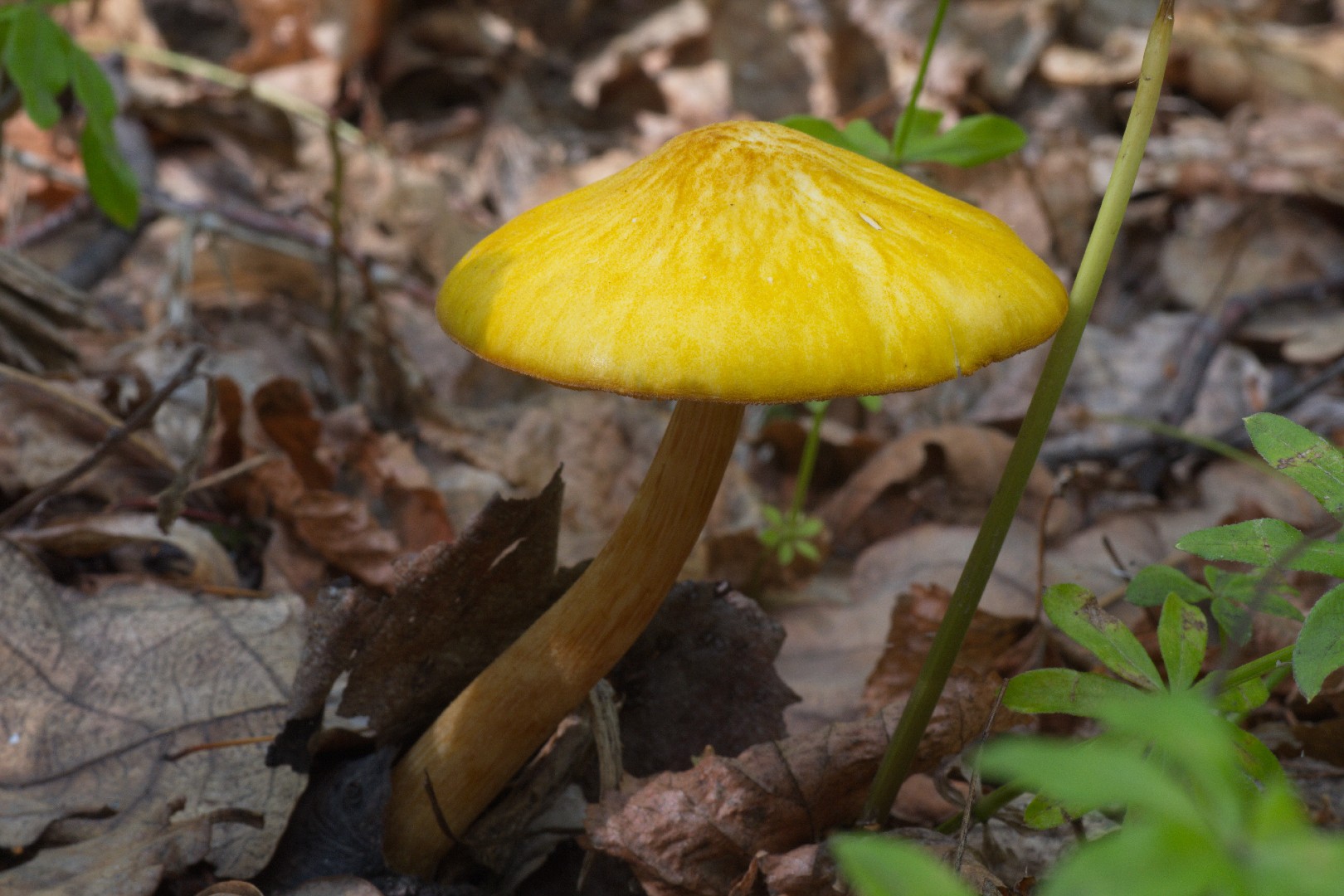
6. Lion shield
Lion shield hides easily in damp, partial shade, and dark places on forest floors thriving in decaying wood. This mushroom has a bright yellow cap that gradually flattens to resemble a shield, giving the mushroom the name "lion's shield."
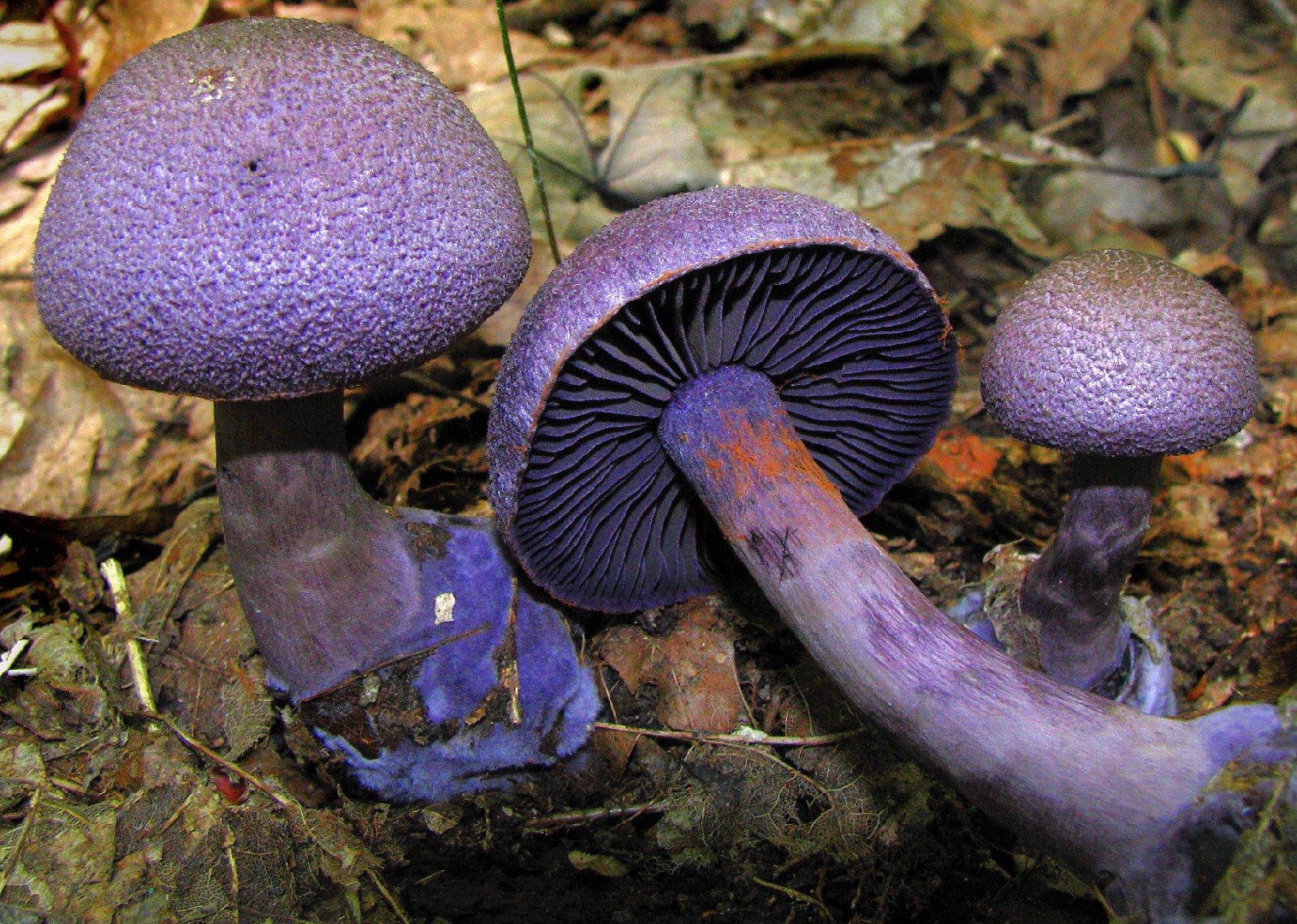
7. Violet webcap
This absolutely striking mushroom looks like something out of a fairy tale. The entire fruitbody of the violet webcap - cap, stalk, and gills - ranges in color from a light lavender to a very deep purple. The species' caps are bulbous and pockmarked, often appearing velvety. Though a feast for the eyes, this species is usually considered inedible.

8. Shaggy mane
The shaggy mane mushroom is commonly found in North American and European grasslands. Some peoples foraged for its young egg-shaped caps, but it has more recently been found to be a bioaccumulator of heavy metals, meaning it pulls toxic metals up from the soil where it grows. As a result, shaggy manes should not be eaten. The mushrooms usually appear in clusters or “fairy rings.”
9. Enoki
The enoki grows wild on dead elm trees, and is also cultivated for human use. This flavorful species (Flammulina velutipes) has been used in dishes around the world for generations, being particularly high in nutrients. Though store-bought enoki are often plain white, wild ones can be found in a range of colors.
10. Violet coral
The striking violet coral (Clavaria zollingeri) is most common in the eastern part of North America, although it can also be found elsewhere. The clustered, branching fruitbody looks spectacularly similar to an underwater coral, in both shape and color. This species is distinguished by the antler-like pattern with which each frond branches.
More







