




Top 12 Most Common Mushrooms in Zimbabwe
Zimbabwe, a country known for its diverse ecosystems, ranging from highland areas to lowland savannahs, provides an ideal habitat for a plethora of mushroom species. The rich, fertile soils, varied flora and relatively high rainfall sustain an impressive diversity of fungi. Here, we delve into the top 12 most common mushrooms found in this extraordinary land. Each species brings its own uniqueness, offering unmissable discoveries for mushroom enthusiasts and mycologists alike.

Most Common Mushrooms
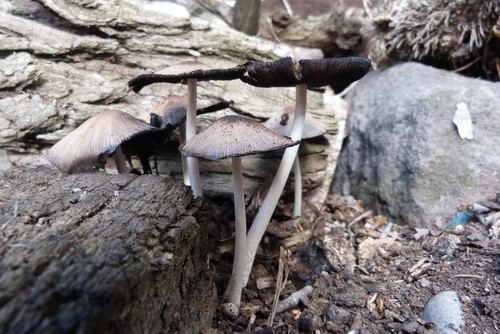
1. Mica cap
The bell-shaped mica cap mushrooms grow in clusters on wood debris and stumps, from spring to autumn. The caps appear wet and inky once they mature and begin to release spores. At that point, they can be boiled with cloves to create a useful black ink.
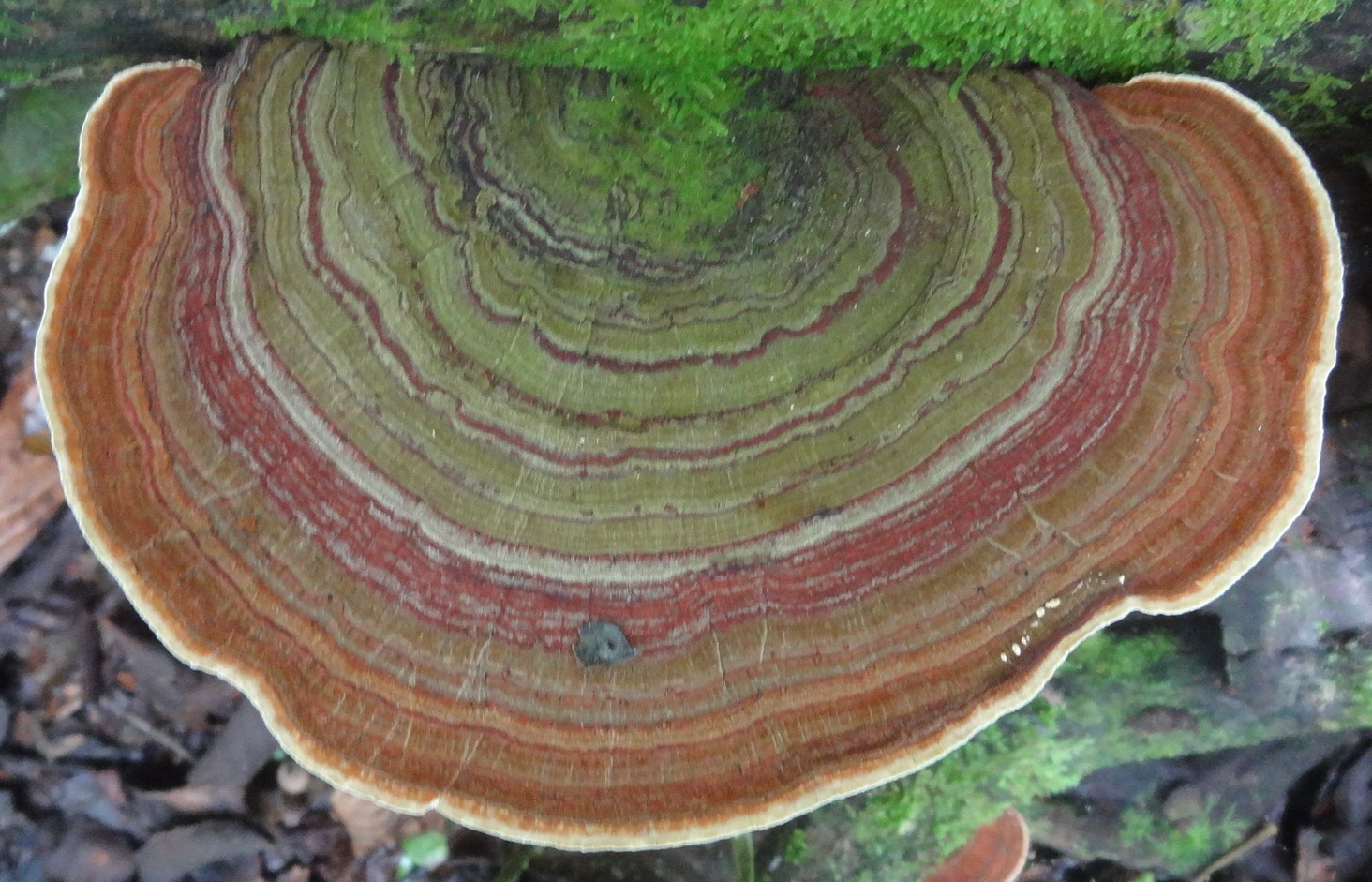
2. Trametes polyzona
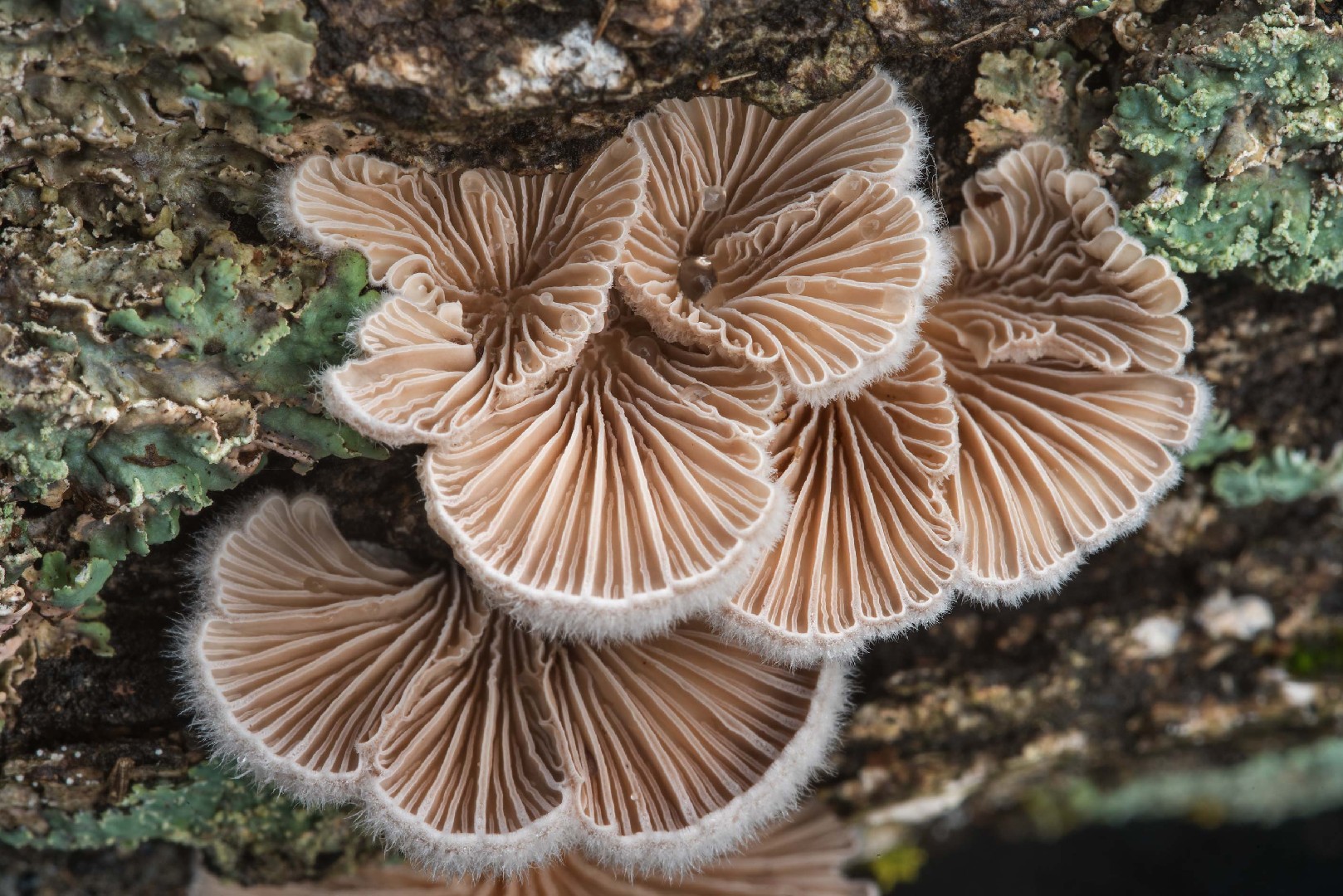
3. Split gill
Split gill(Schizophyllum commune) can be found across the globe. Uniquely, it is the only mushroom species known to display the capability to retract by movement. It is considered inedible, although not necessarily toxic. Furthermore, it is not recommended to smell this species, as the spores are capable of sprouting and growing in nasal passages.

4. Sordid blewit
The sordid blewit is a beautiful and attractive mushroom of the northern temperate zones around the world. The flesh is pink or purple when young, and it turns brownish as the mushroom matures. It forms so-called fairy rings. Although the sordid blewit is easily identified, inexperienced mushroom hunters can confuse it for certain Clitocybe species.
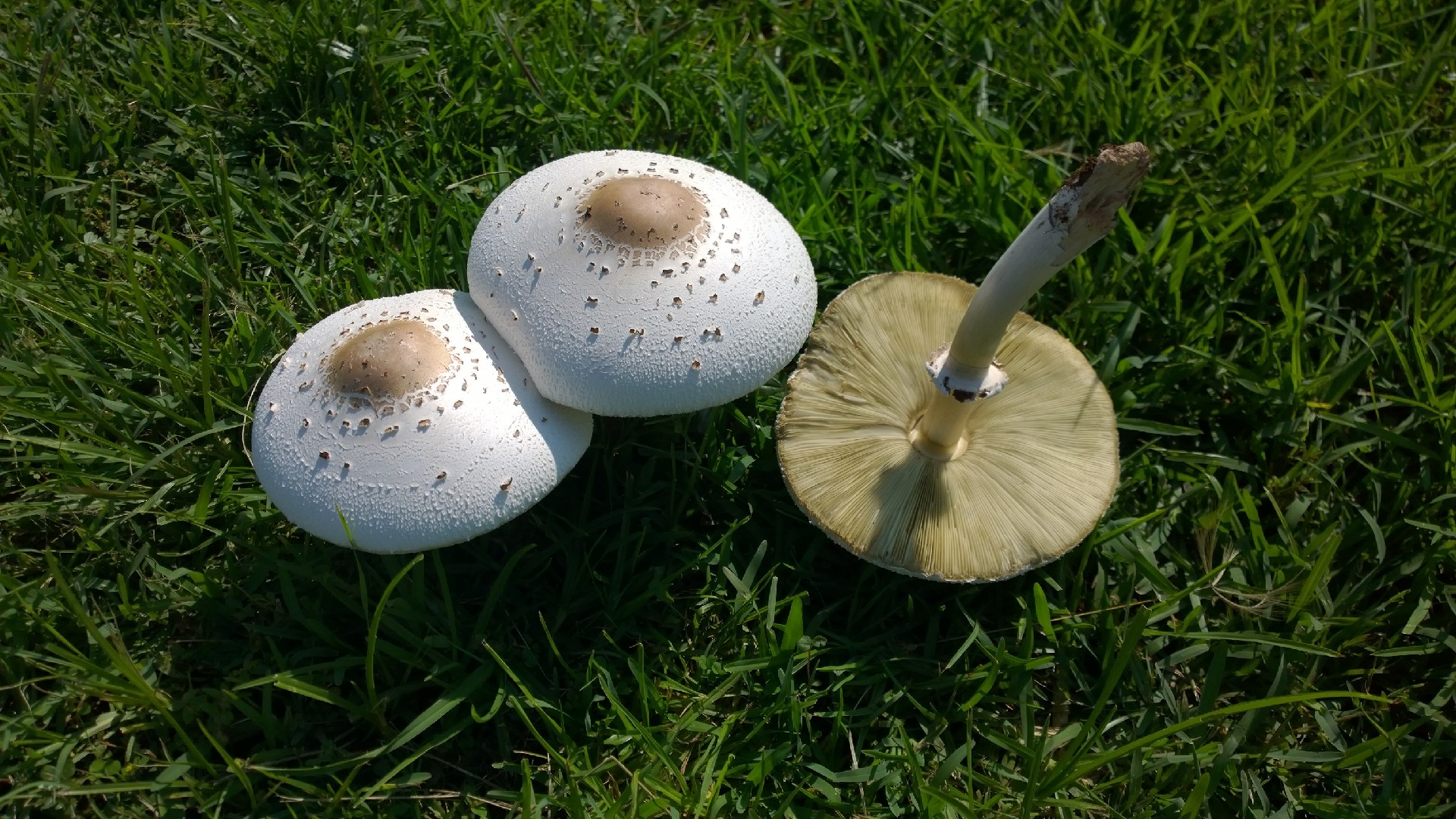
5. False parasol
Though the false parasol appears unassuming, the species is famous—or, infamous—for its toxicity. It looks unfortunately similar to Agericus campestrus, a commonly eaten mushroom, but the false parasol can be distinguished by its highly unusual green spore print. Although they are no good to eat, they can be pretty to look at. The species may grow in ring-shaped groups in meadows and on forest floors in what are sometimes called "fairy circles."
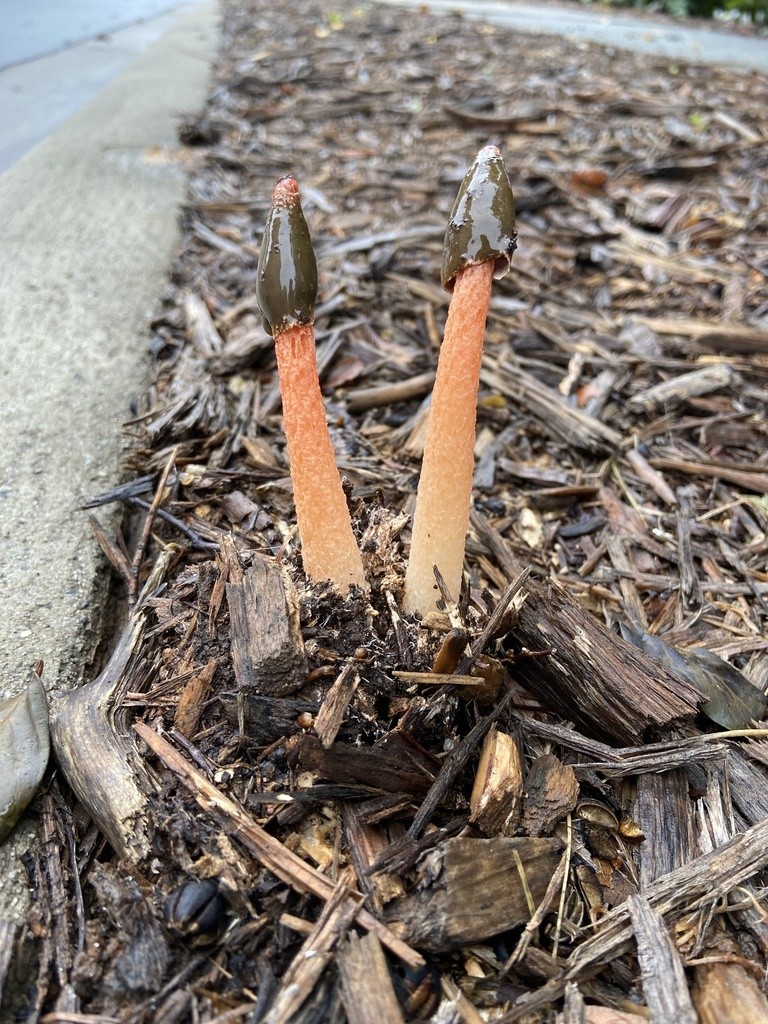
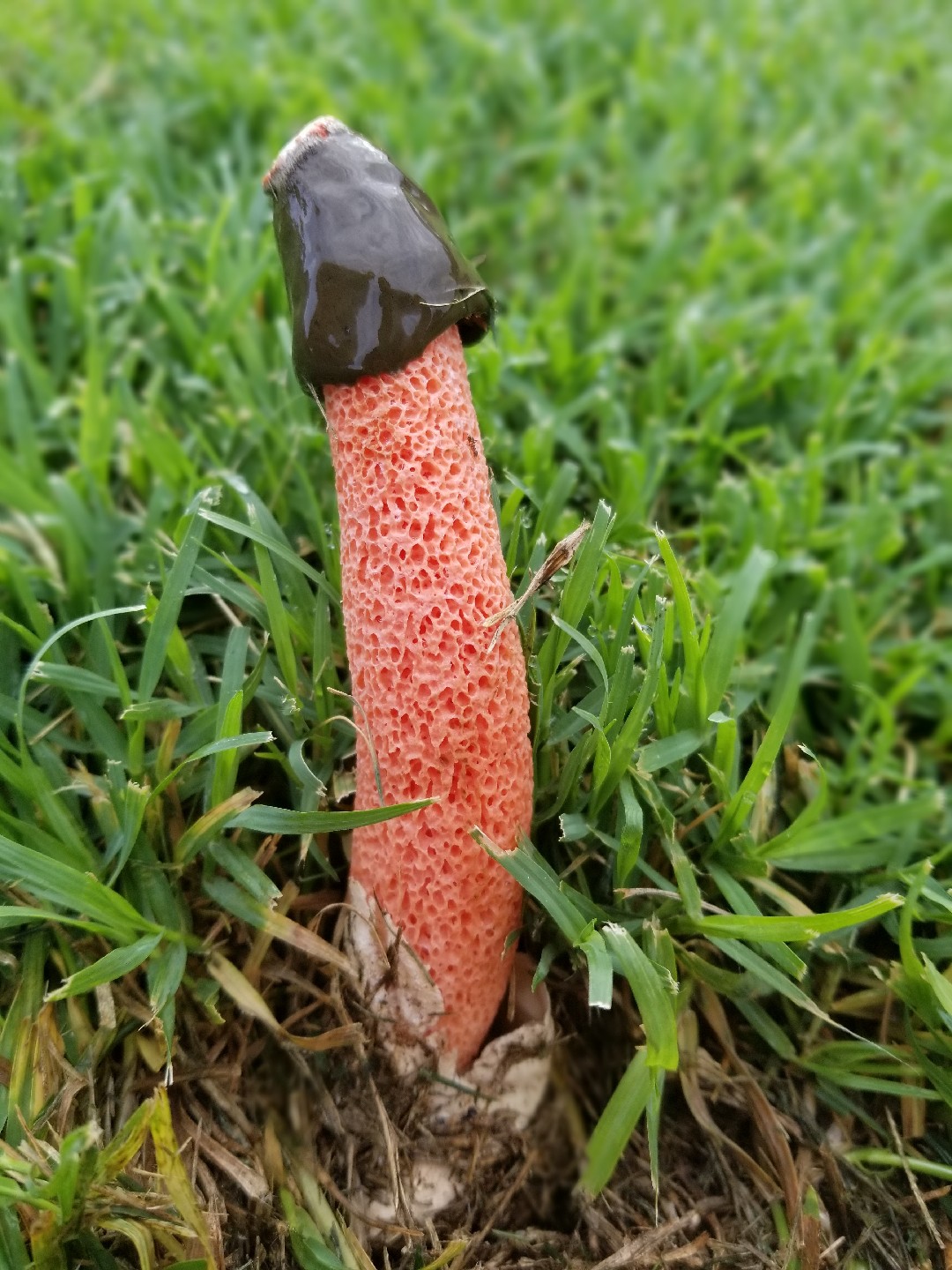
6. Phallus rugulosus
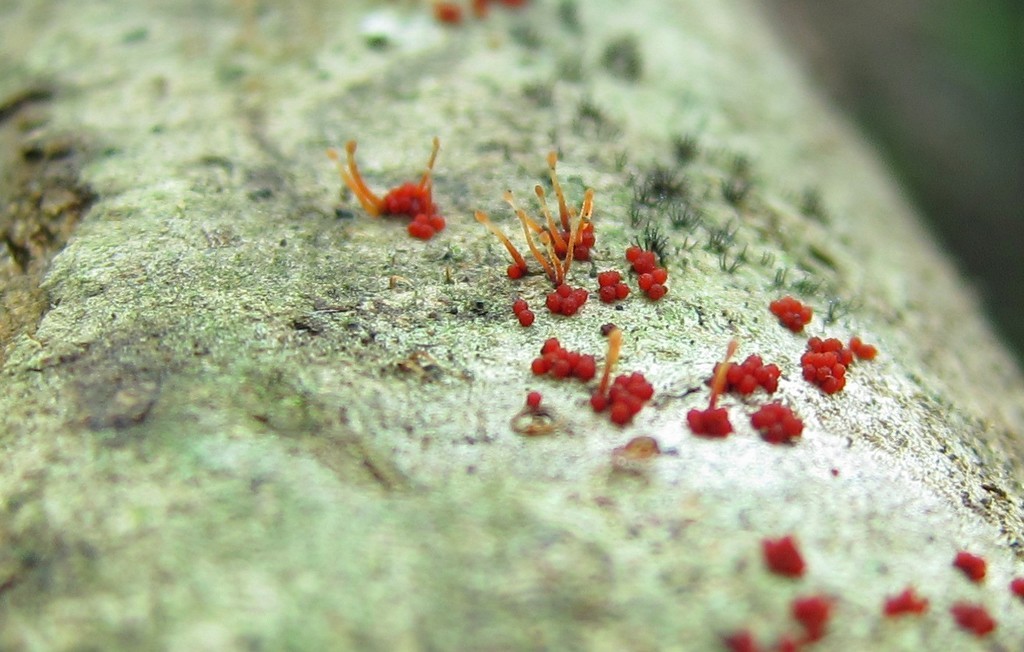
7. Nectria pseudotrichia

8. Mauve parachute
The tiny mauve parachute (Marasmius haematocephalus) is a miniature delight. A broad, delicate, brightly-hued cap sits like an open umbrella atop a slender, delicate, darkly-colored stalk. In dry conditions, the caps shrivel and become near-invisible beneath the detritus of the forest floor, but the next rain will open these hardy little mushrooms right back up again.
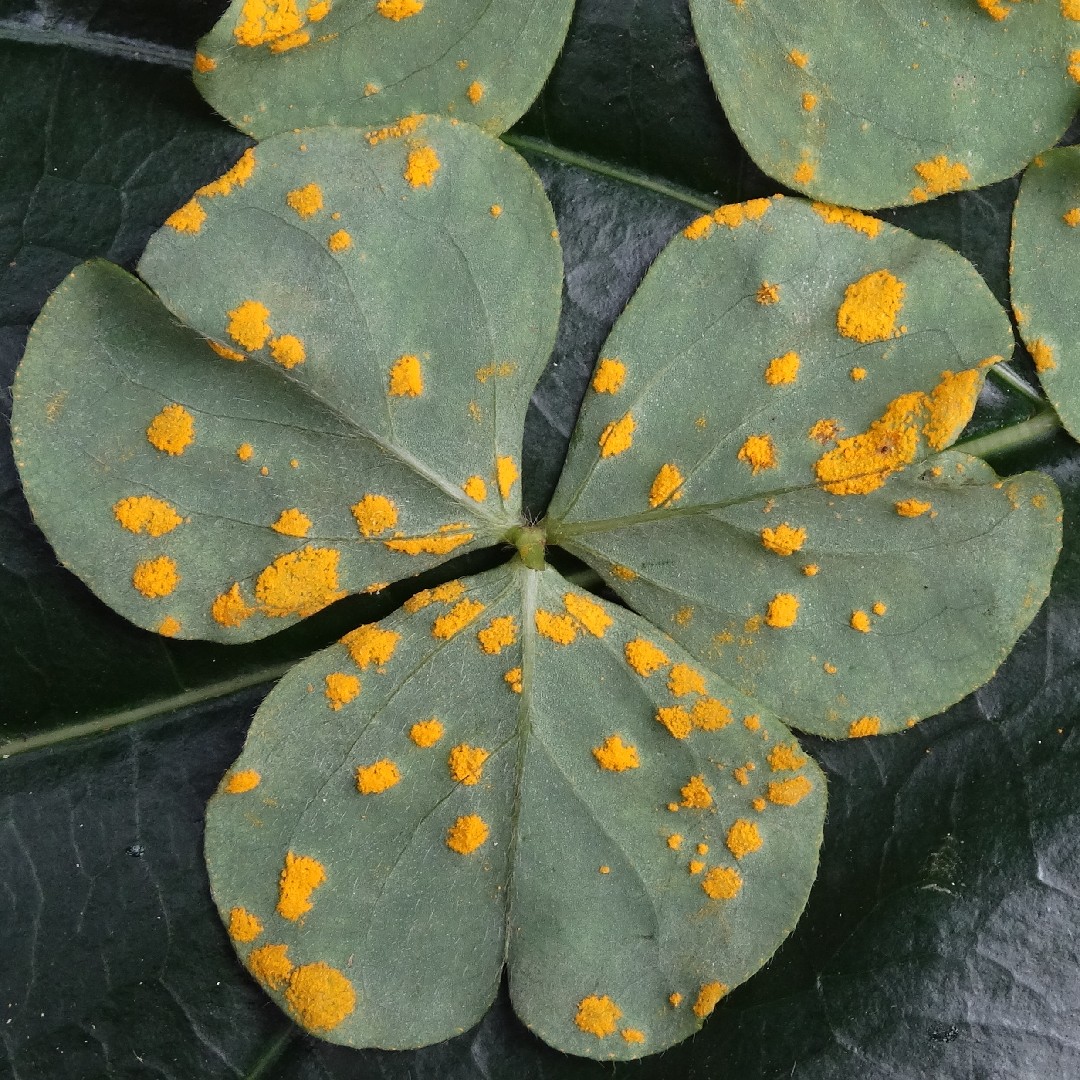
9. Oxalis rust
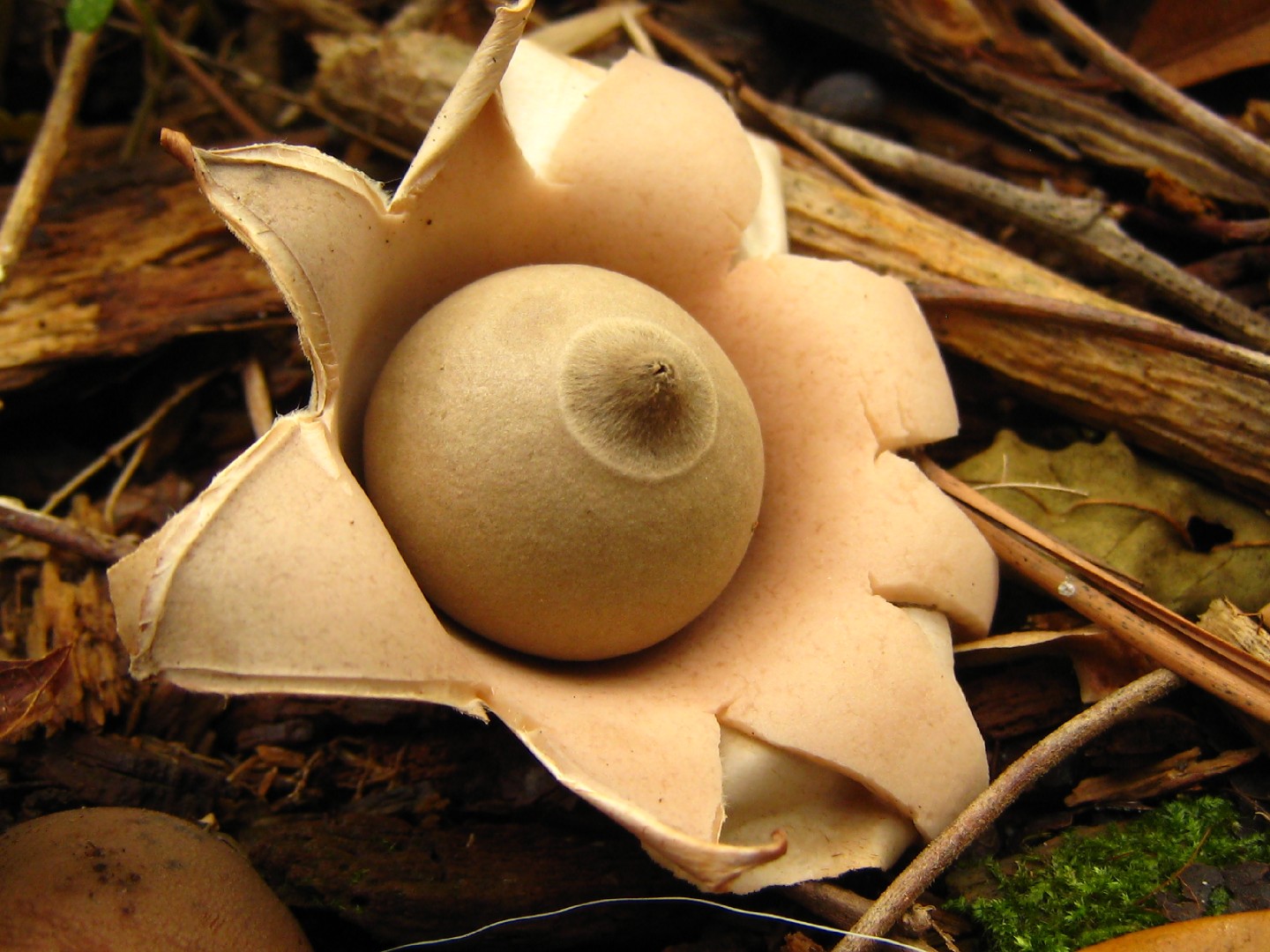
10. Rounded earthstar
Observers may mistake this mushroom for an odd flower before discovering its true identity. The rounded earthstar (Geastrum saccatum) has a round or egg-shaped center that is surrounded by several outward folding flaps that vaguely resemble petals. As is the case with puffballs, pushing on the mushroom's center structure may visibly release a cloud of spores. Rounded earthstars are habitat generalists with a global distribution. Though interesting to look at, they are not considered to be edible.

More







