




Top 20 Most Common Mushrooms in Shawnee
Welcome to our guide on the top 20 most common mushrooms in the United States! Located in the heart of America, Shawnee boasts a rich diversity of fungi. Thanks to its broad range of ecosystems, Shawnee offers an abundance of mushroom species unparalleled in the States. Whether you're a seasoned mycologist or a curious beginner, Shawnee is a prime location to discover some of the most fascinating fungi that Mother Nature has to offer.

Most Common Mushrooms
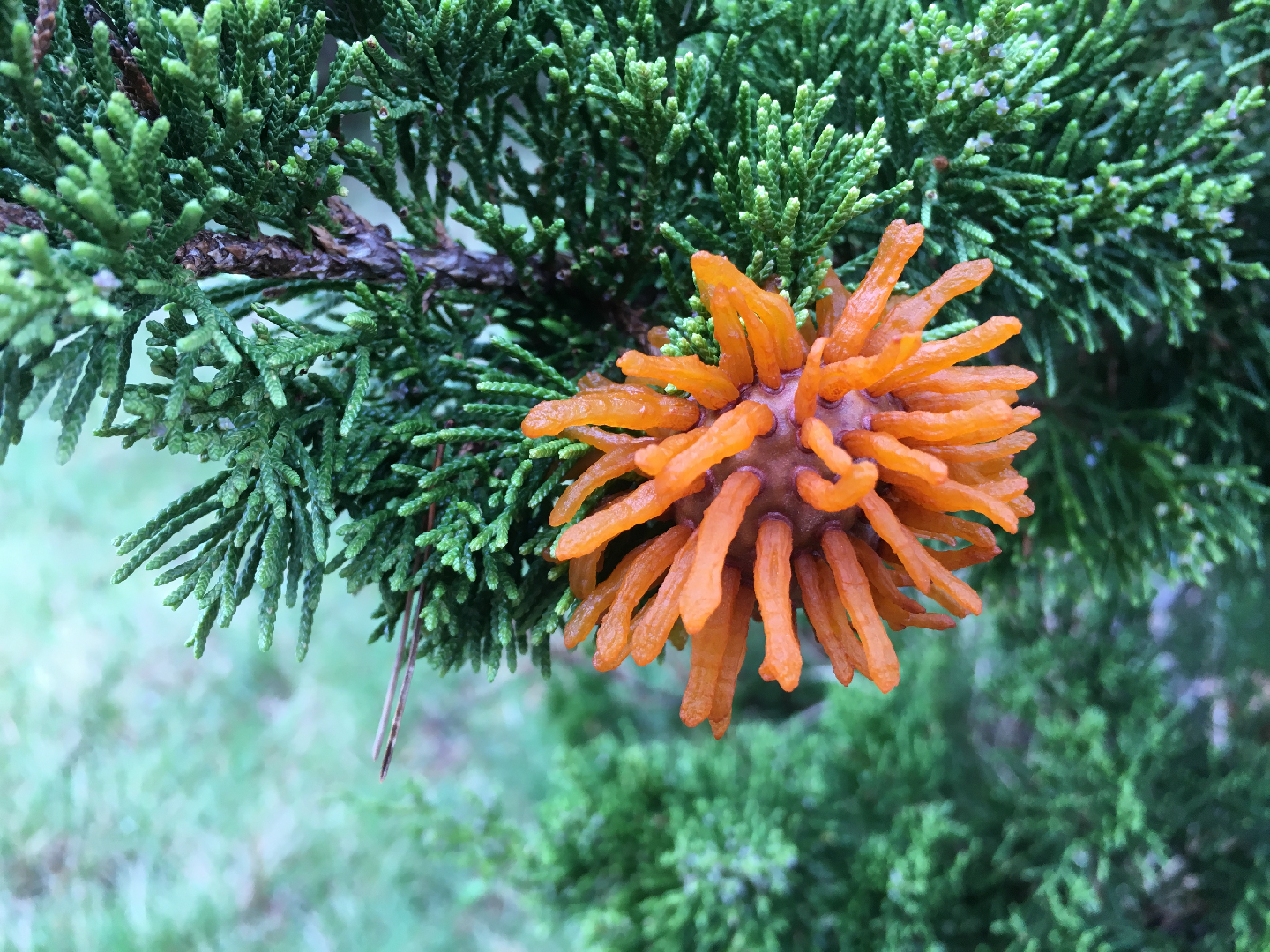
1. Cedar-apple rust
The vividly-colored fruitbodies of cedar-apple rust (Gymnosporangium juniperi-virginianae) might be mistaken for flowers, from a distance. Upon closer inspection they can be identified as fungal growths attacking the fruit of cedar trees. Their microscopic spores can travel up to an astounding 5 miles when carried on the wind and infect cedars quite far away, weakening the trees as they grow.
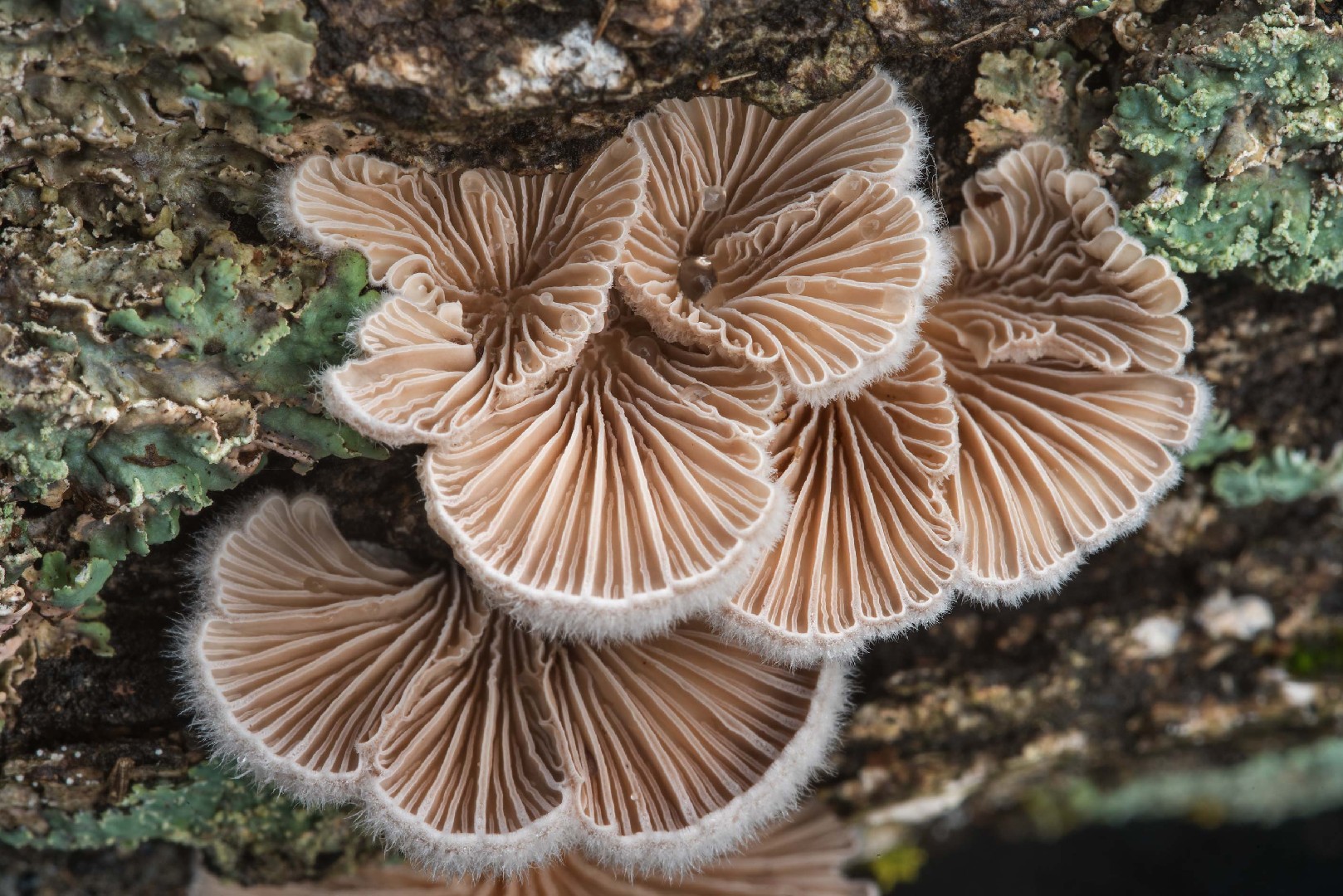
2. Split gill
Split gill(Schizophyllum commune) can be found across the globe. Uniquely, it is the only mushroom species known to display the capability to retract by movement. It is considered inedible, although not necessarily toxic. Furthermore, it is not recommended to smell this species, as the spores are capable of sprouting and growing in nasal passages.
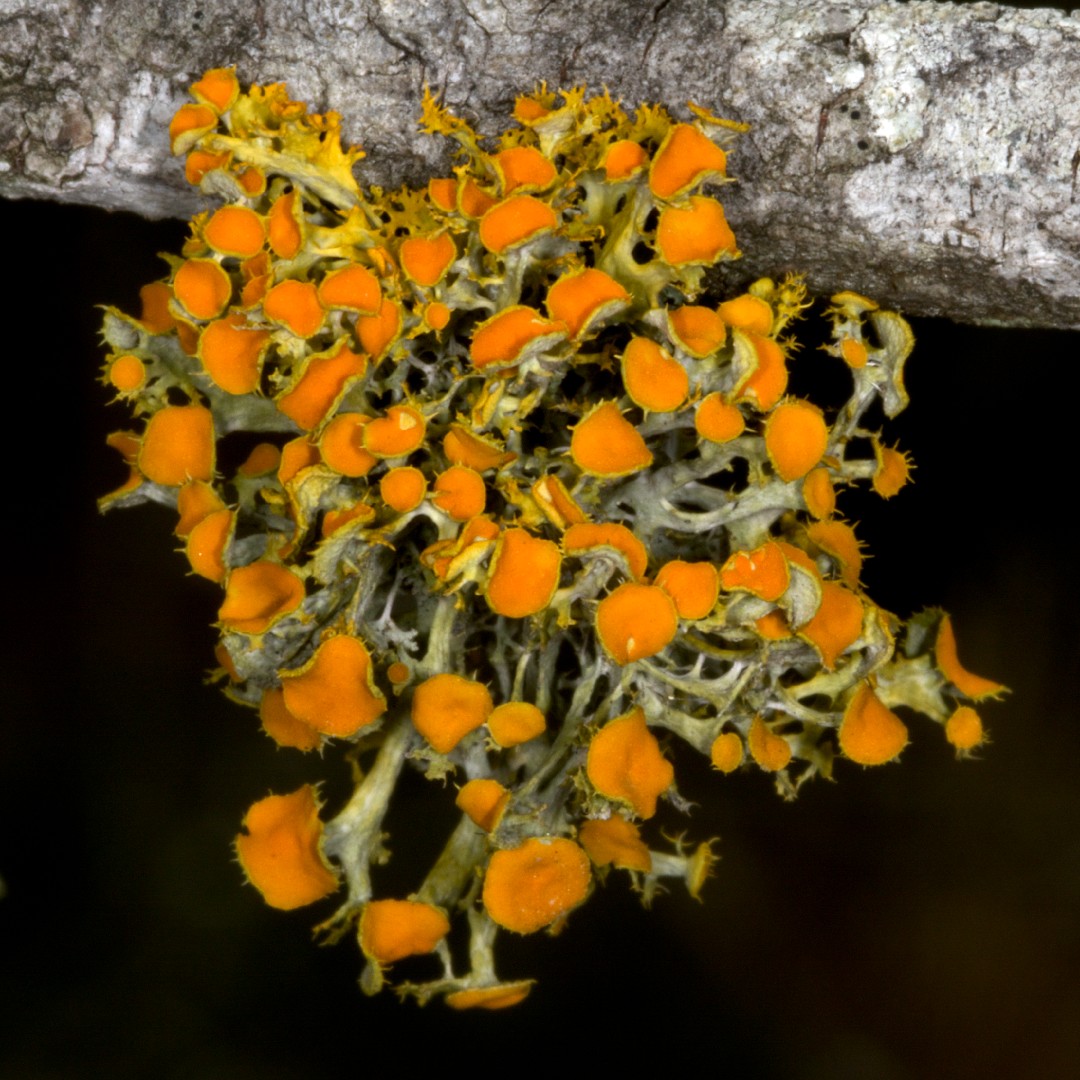
3. Gold-eye lichen
The almost indistinguishable species is a gray-yellow or light to orange-orange, bush-shaped camp with marginal fibrils. However, adhesive fibers are missing. The length of the slightly flattened sections is about 1.5 cm. The frequently formed fruiting bodies (apothecaries) have an orange disc with characteristic eyelashes on the edge and a diameter of 2 to 7 mm. The Photobiont is a member of the green algae genus Trebouxia.
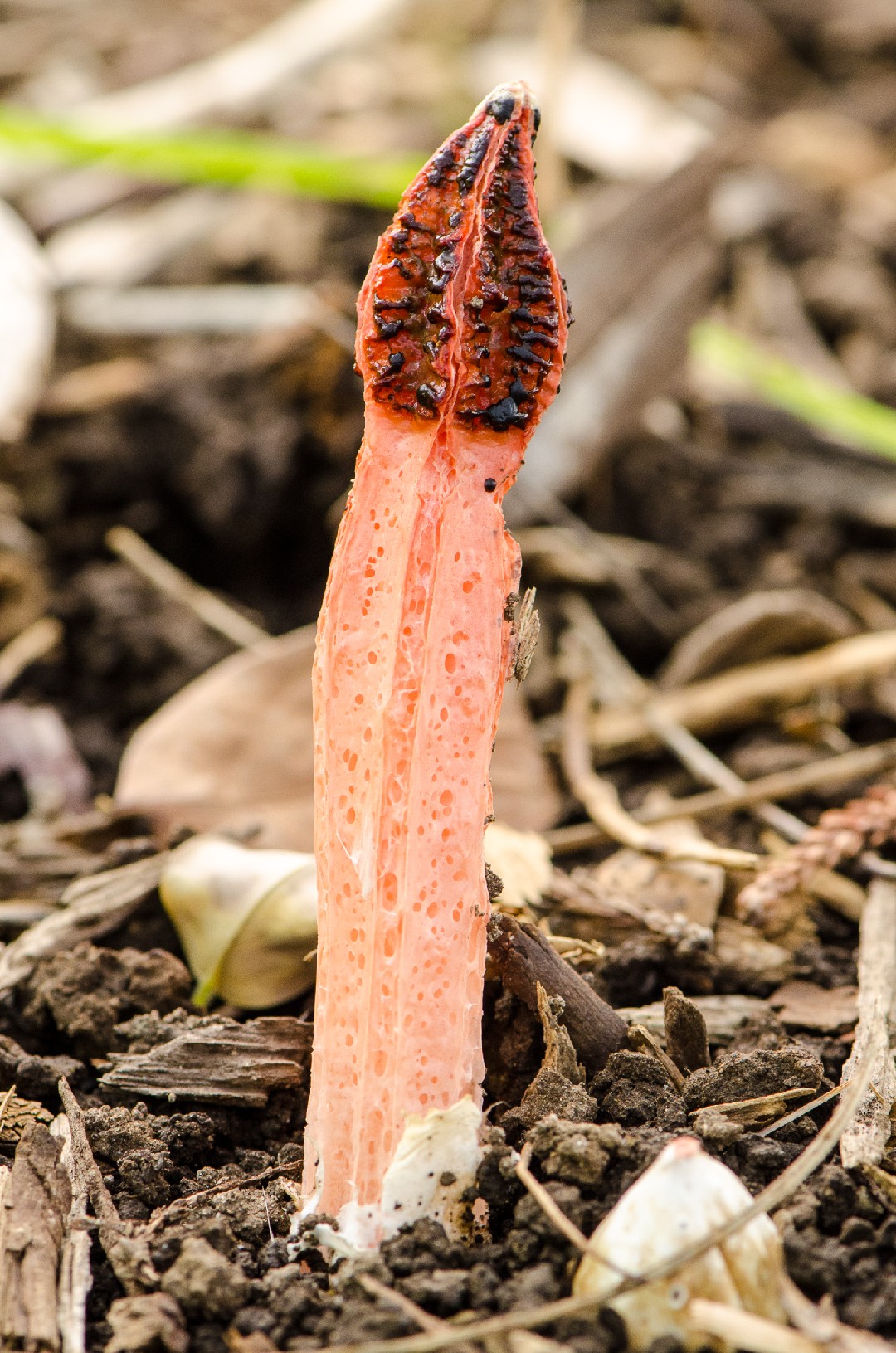
4. Lantern stinkhorn
Distinctive even among the outlandish varieties of the stinkhorn family, the lantern stinkhorn (Lysurus mokusin) bursts from the ground with a squared, flat-sided stem that’s ribbed like a churro. Atop this stipe is a hollow claw, like a hand with all its fingertips pressed together. The inside surface of this claw is coated with sticky, stinky goo meant to attract insects that will spread its spores.
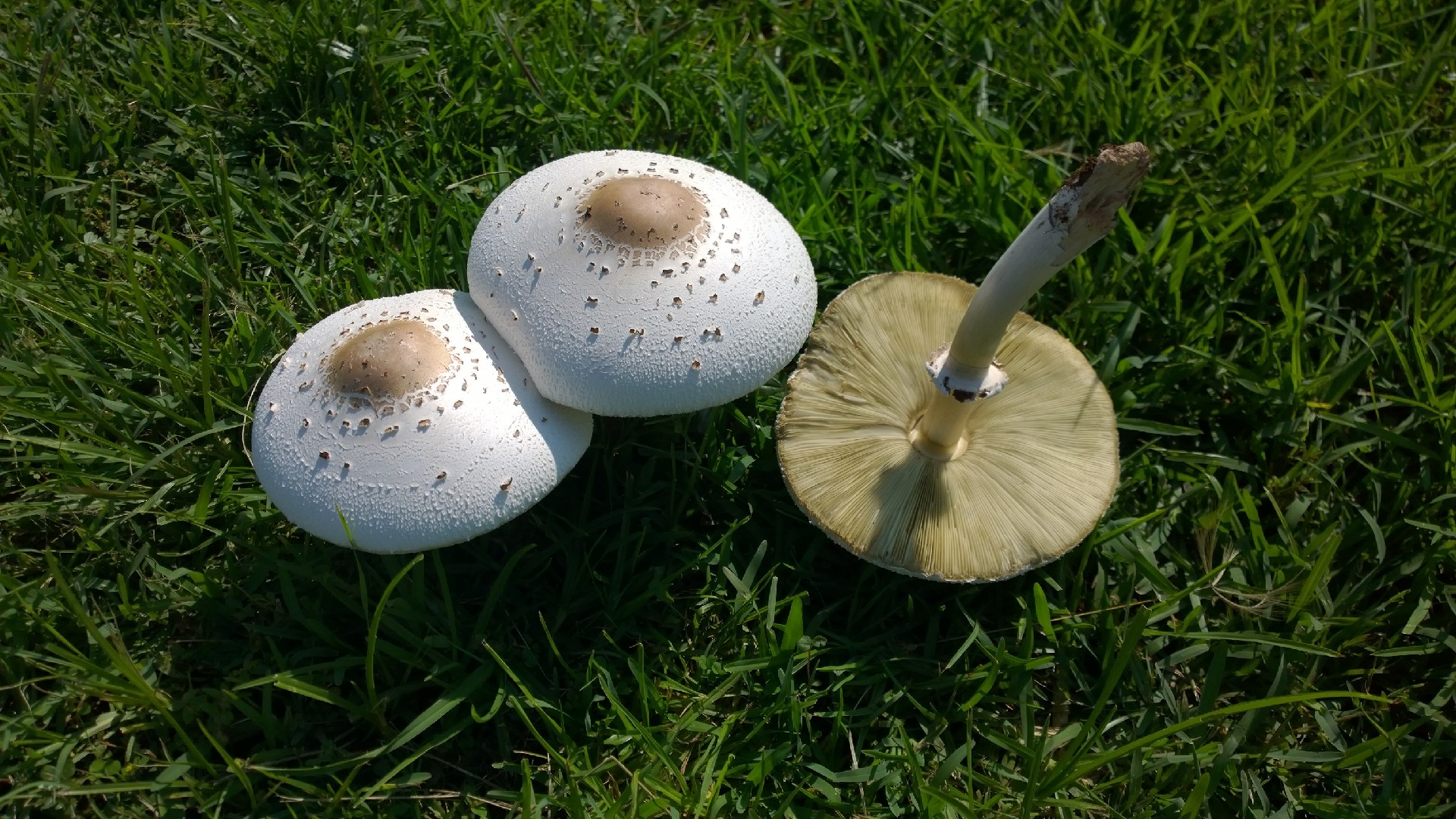
5. False parasol
Though the false parasol appears unassuming, the species is famous—or, infamous—for its toxicity. It looks unfortunately similar to Agericus campestrus, a commonly eaten mushroom, but the false parasol can be distinguished by its highly unusual green spore print. Although they are no good to eat, they can be pretty to look at. The species may grow in ring-shaped groups in meadows and on forest floors in what are sometimes called "fairy circles."

6. White morel
The odd-looking cap of the white morel (Morchella americana) is surprisingly nutritious, making it a highly sought-after mushroom for foragers. When sold on the market, they are a seasonal treat that carries a very high price tag! Unlike other mushrooms, the white morel will thrive in little to no shade. They can range from a honey-blonde color to an unattractive grey.

7. Shaggy mane
The shaggy mane mushroom is commonly found in North American and European grasslands. Some peoples foraged for its young egg-shaped caps, but it has more recently been found to be a bioaccumulator of heavy metals, meaning it pulls toxic metals up from the soil where it grows. As a result, shaggy manes should not be eaten. The mushrooms usually appear in clusters or “fairy rings.”
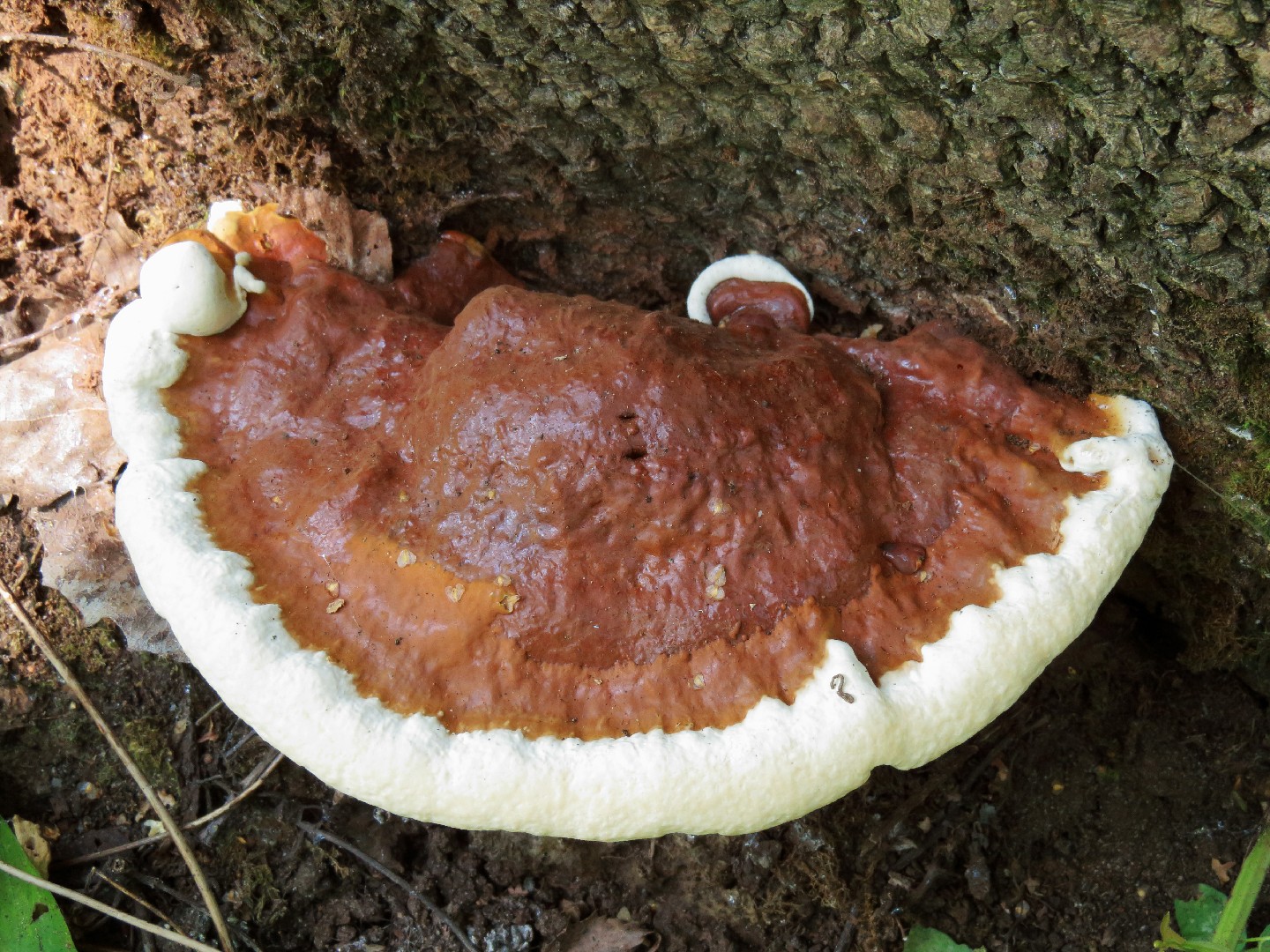
8. Ganoderma resinaceum
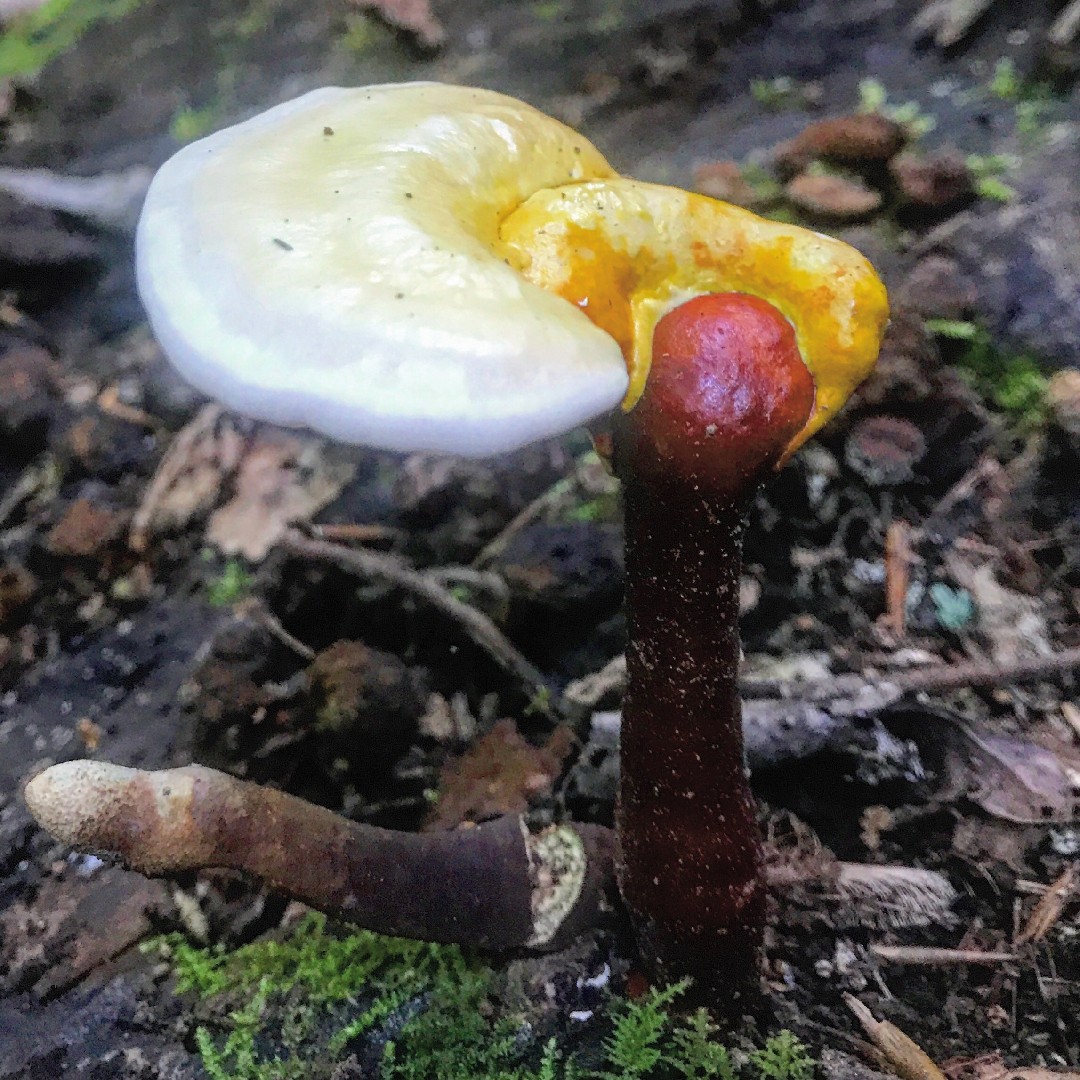
The Harzige Lackporling is a console-shaped mushroom that can be 15-35 cm long, 10-20 wide and 4-8 cm thick. The top is colored red or purple-brown. The hat is covered by a pale yellow resin crust, which melts in the match or lighter flame. The beaded rim is fresh yellow to yellow orange, creamy in a dry state. The underside of the mushroom covered with round pores (3 per mm) is young white and later cream colored. The tubes are about 8-10 mm long. The relatively thin trama is light brown and tough cork-like. Juicing occurs when young fruiting bodies are cut, which solidifies into a resinous mass within a short time. The fruiting bodies are annual.
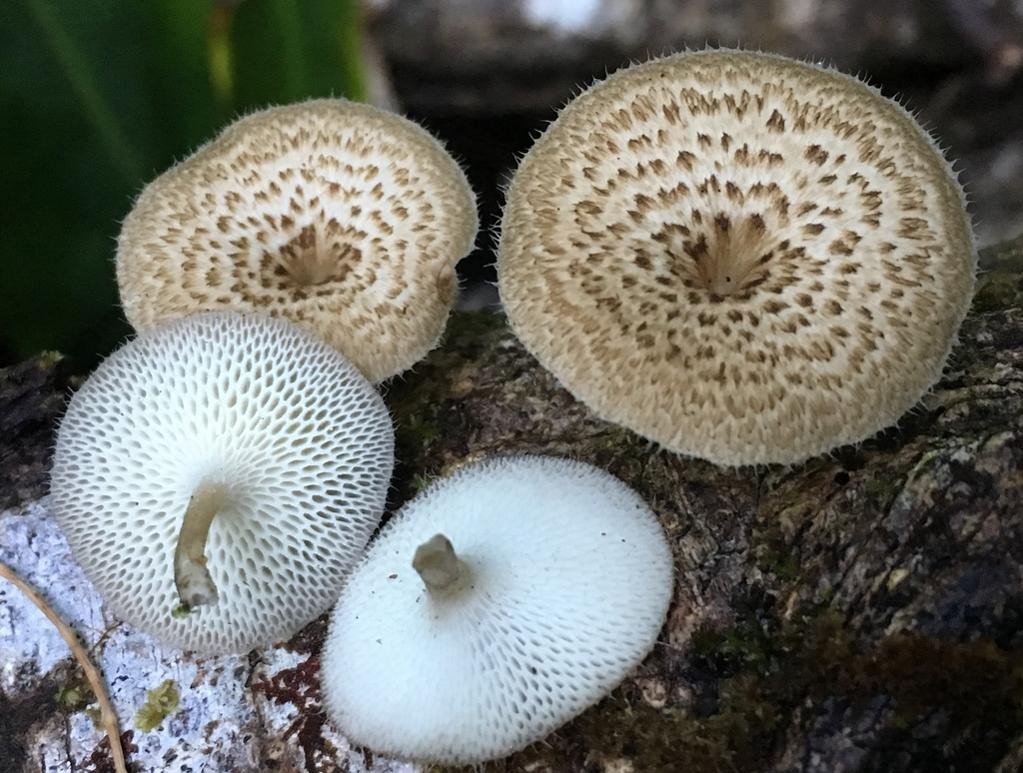
9. Spring polypore
Morel mushroom hunters may be most familiar with spring polypore since it is one of the earliest mushrooms to appear in the spring, as hinted by its name. Lentinus mushrooms typically have gills, but when investigated, this mushroom reveals surprising honeycomb-shaped pores.
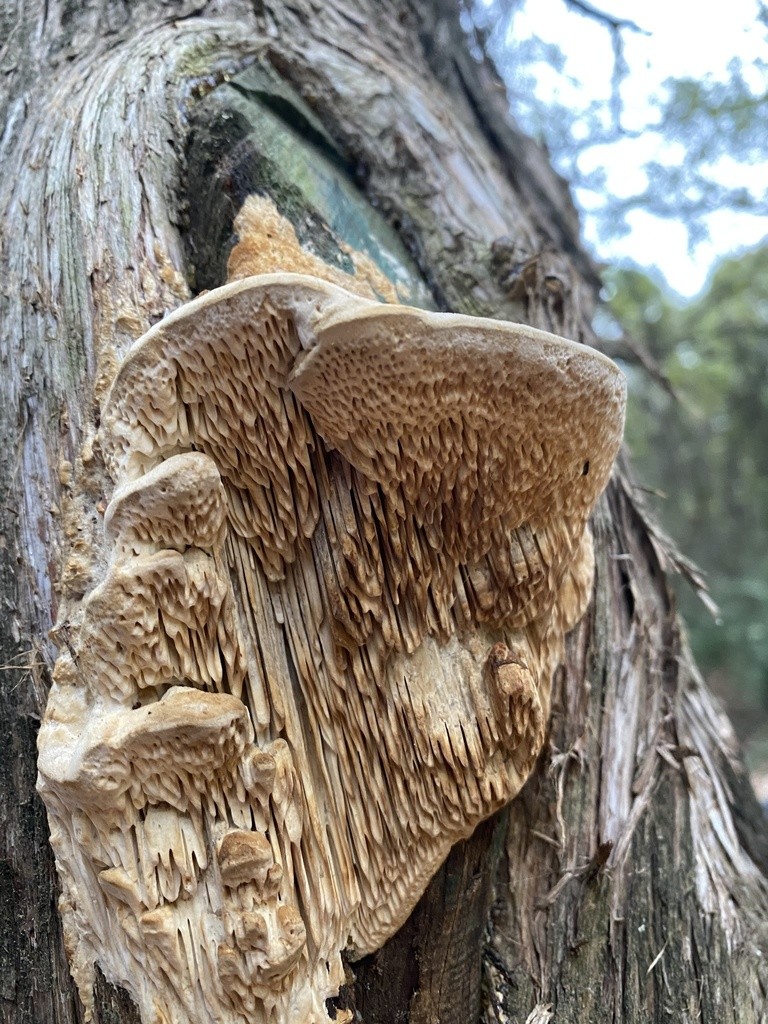
10. Subantrodia juniperina
More







