




Top 20 Most Common Mushrooms in Louisiana
Breath-taking bayous and lush green forests paint a picture of Louisiana, an ideal habitat for fungal flourish. Diversely rich in mushroom species, Louisiana boasts a remarkable array of 20 commonly found specimens. This list delves into the unique features of these individual varieties, giving you a deeper understanding of the state's mycological treasures found in its intriguingly moist and warm environment. Explore Louisiana's extraordinary fungal diversity brought alive in this comprehensive guide.

Most Common Mushrooms
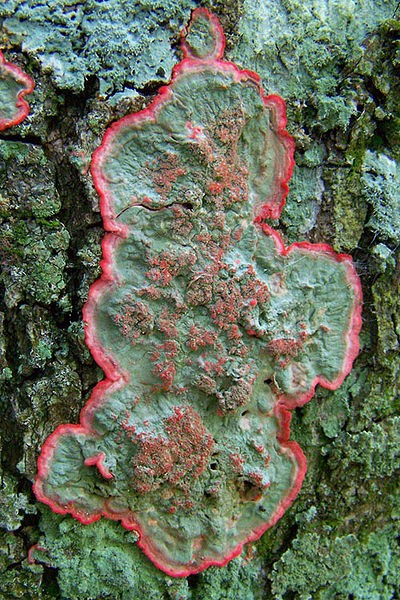
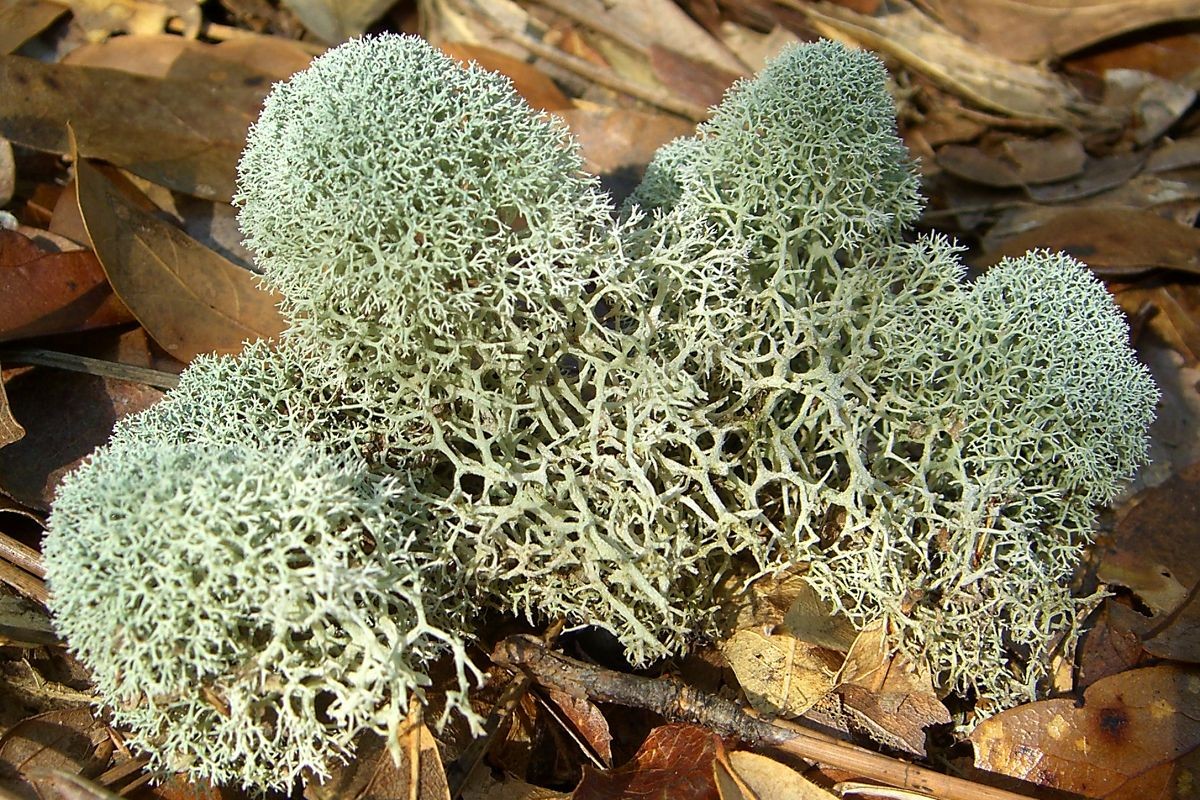
1. Christmas lichen
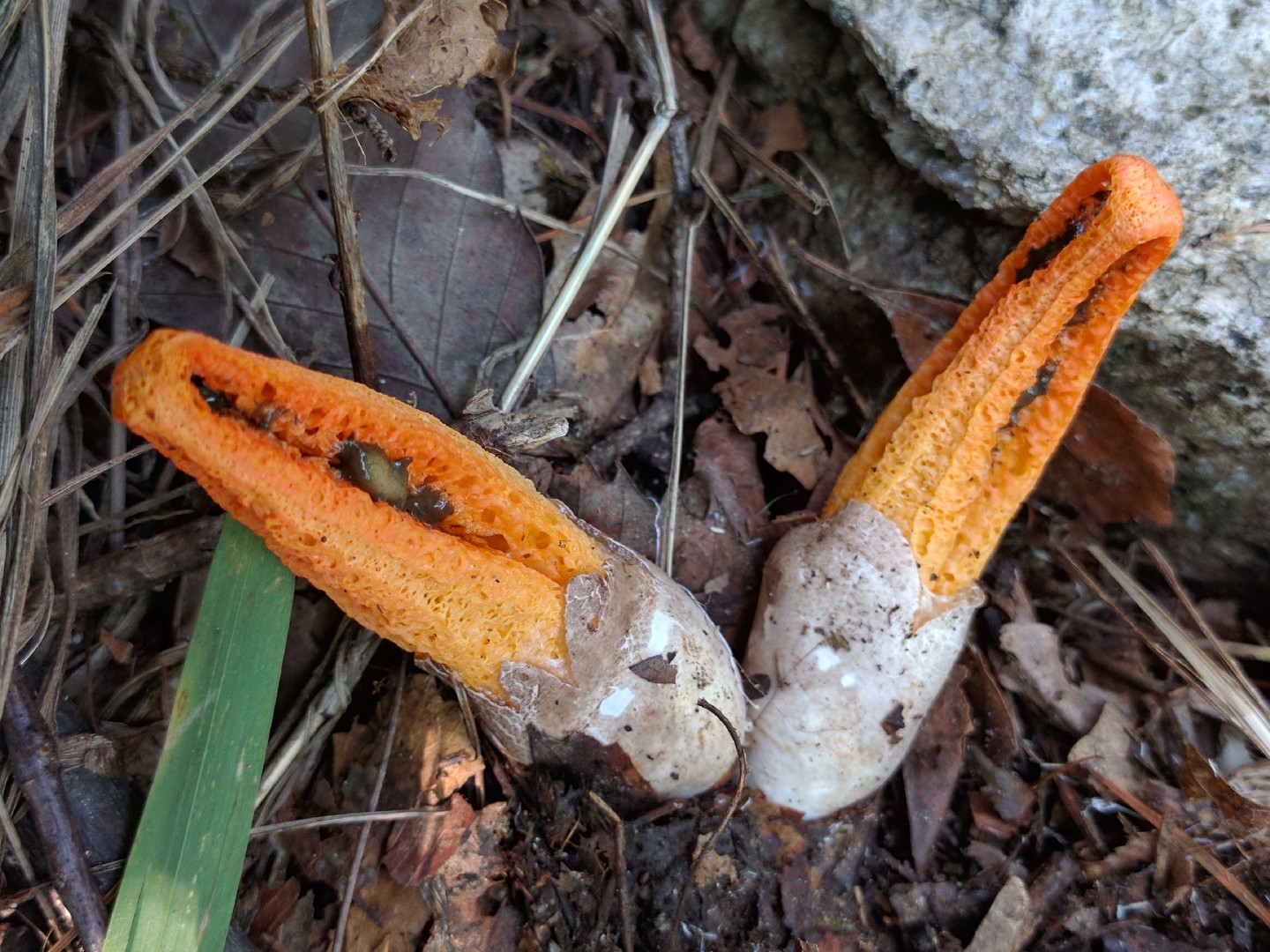
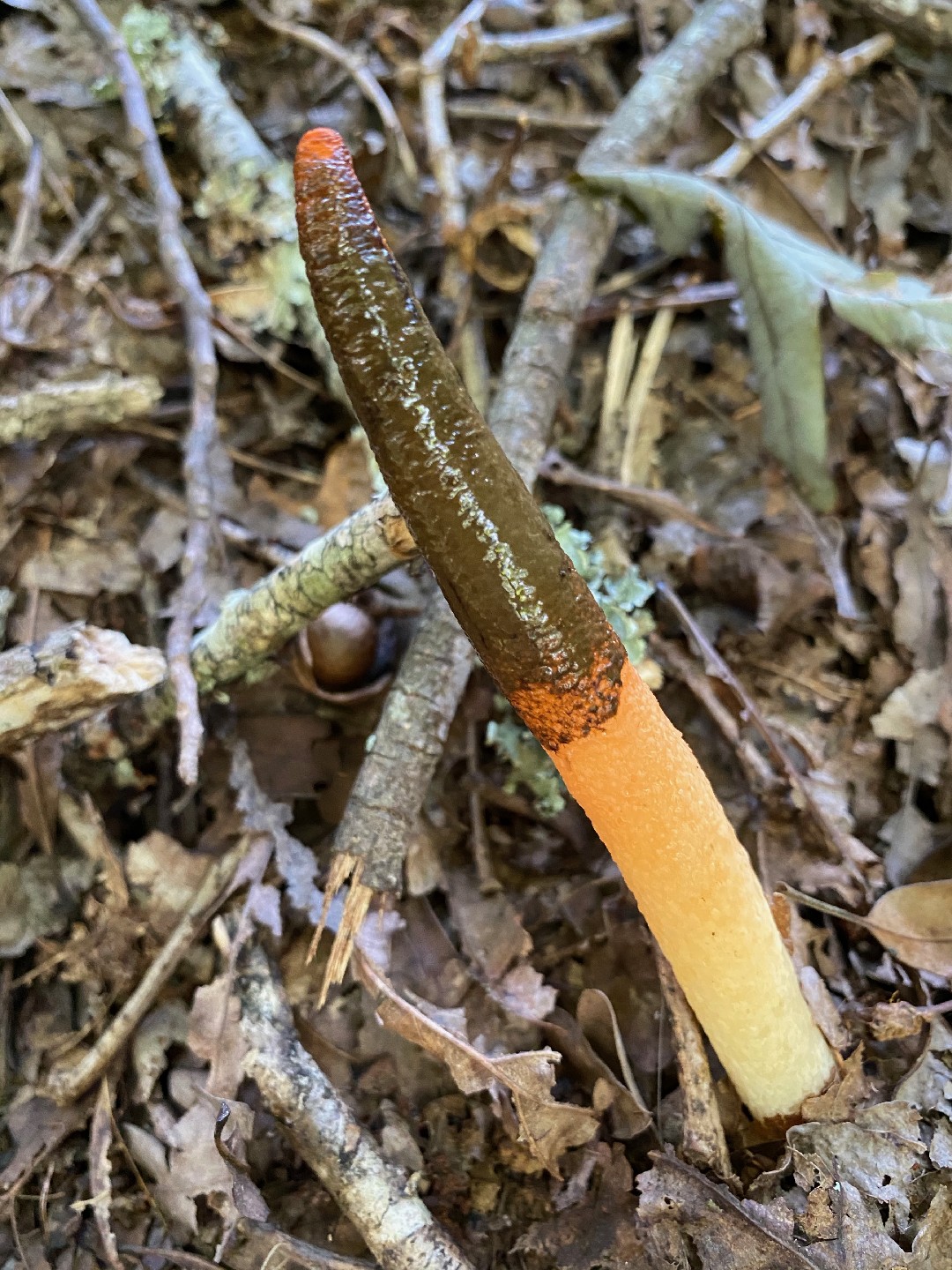
2. Column stinkhorn
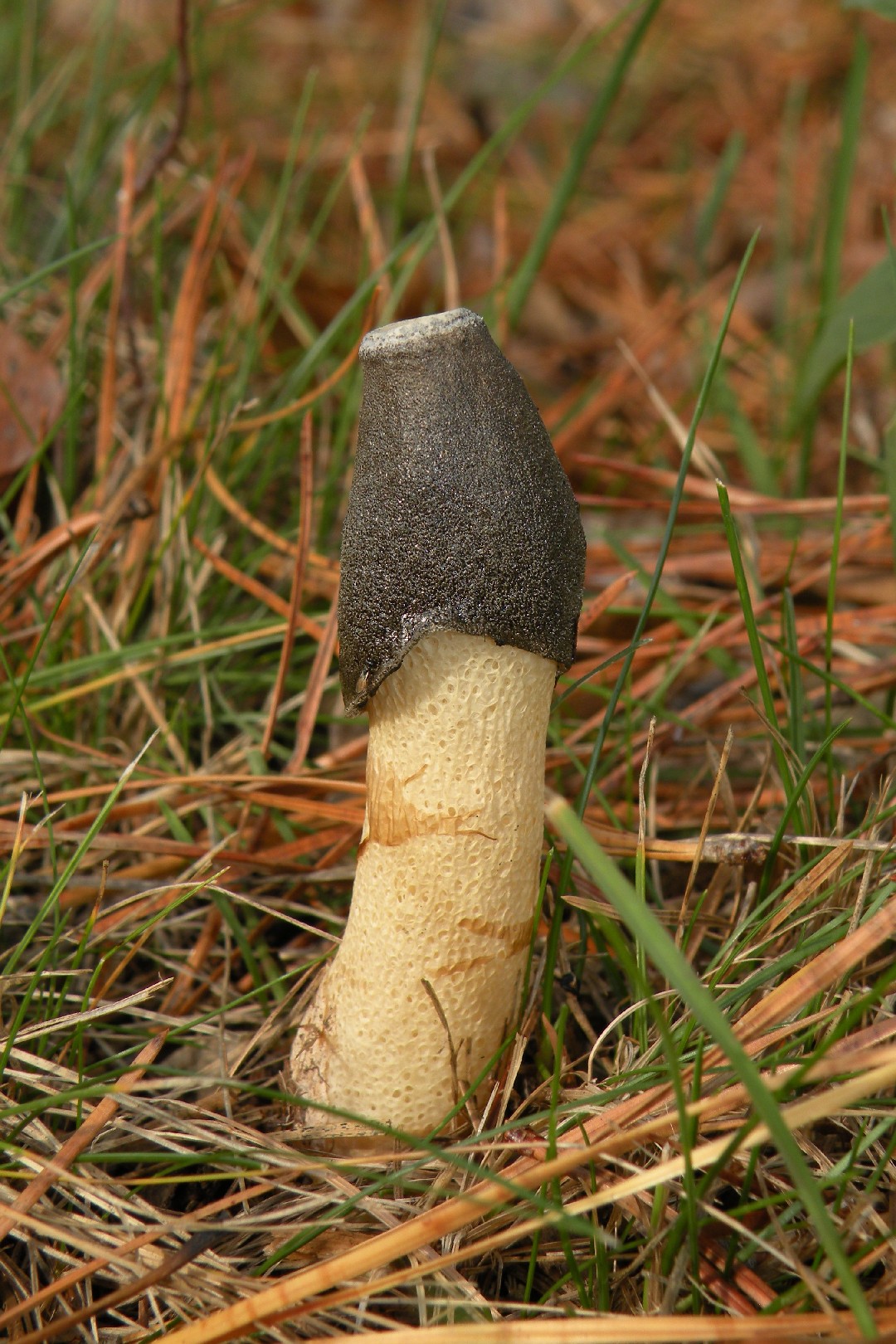
The slime of the column stinkhorn emits an extremely foul odour, but many insects, particularly flies, find this slime very attractive. Attracting flies is the fungus' method for spreading its spores. This warm climate fungus has been introduced to North America, probably together with exotic plants.
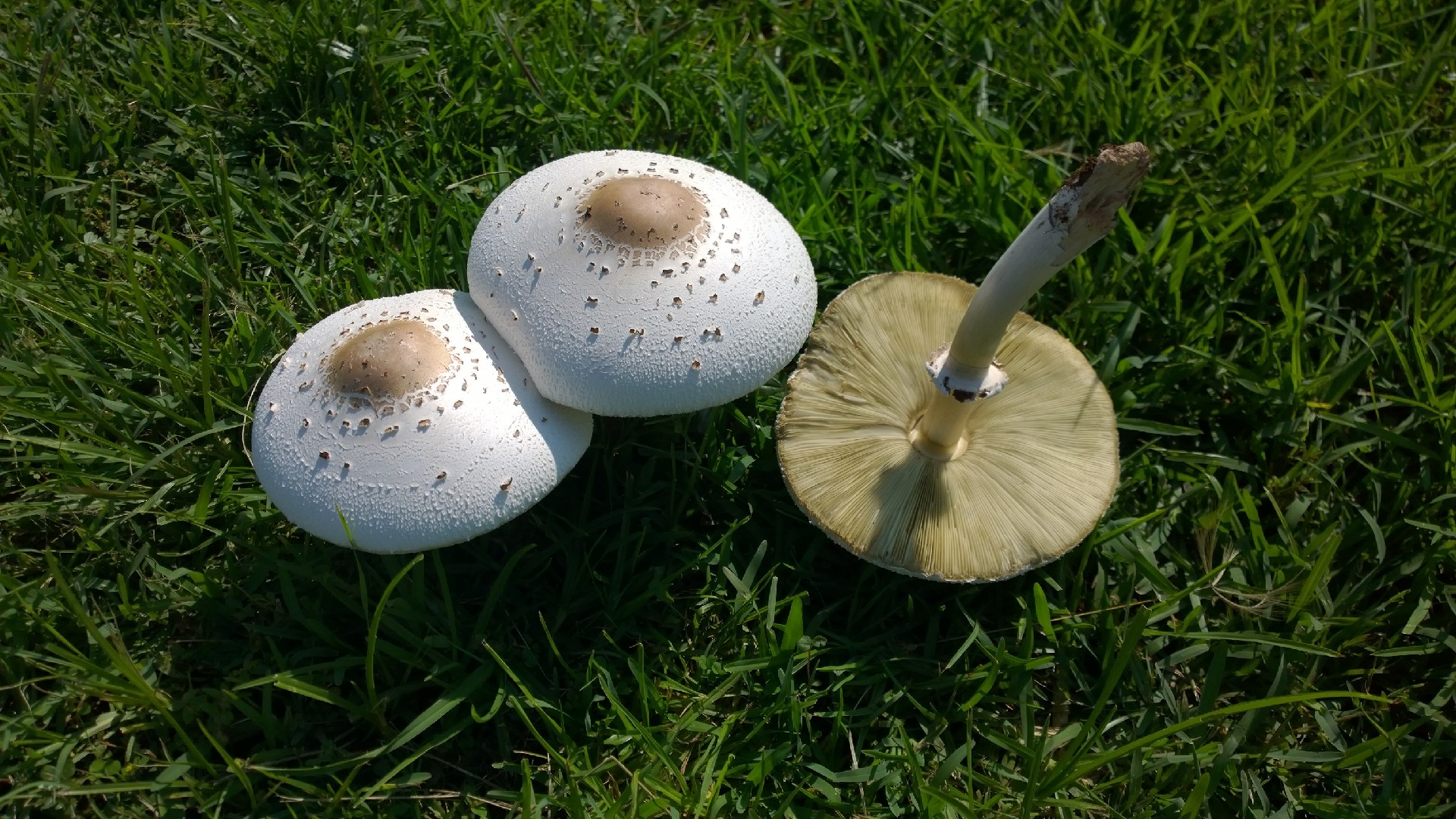
3. False parasol
Though the false parasol appears unassuming, the species is famous—or, infamous—for its toxicity. It looks unfortunately similar to Agericus campestrus, a commonly eaten mushroom, but the false parasol can be distinguished by its highly unusual green spore print. Although they are no good to eat, they can be pretty to look at. The species may grow in ring-shaped groups in meadows and on forest floors in what are sometimes called "fairy circles."
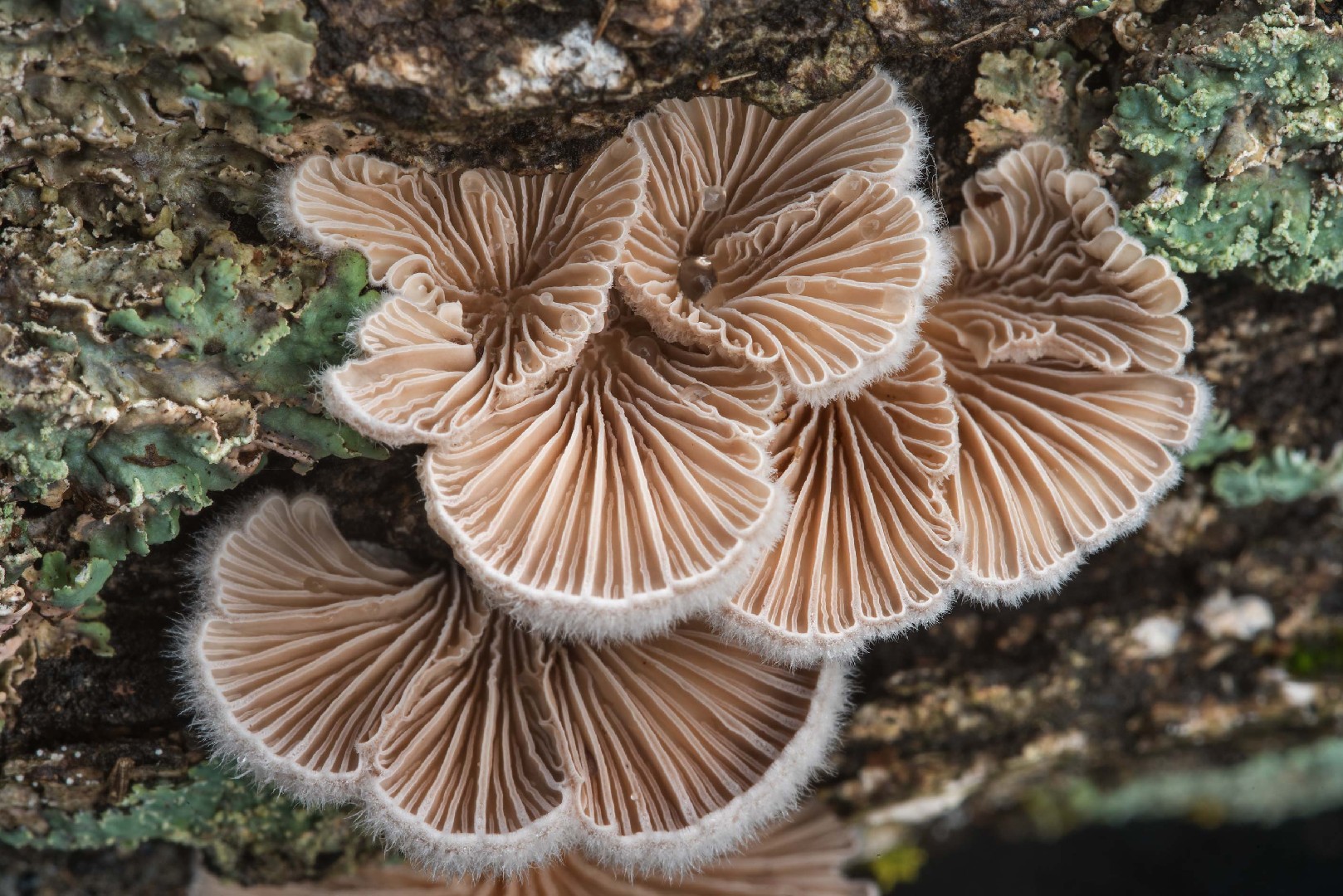
4. Split gill
Split gill(Schizophyllum commune) can be found across the globe. Uniquely, it is the only mushroom species known to display the capability to retract by movement. It is considered inedible, although not necessarily toxic. Furthermore, it is not recommended to smell this species, as the spores are capable of sprouting and growing in nasal passages.
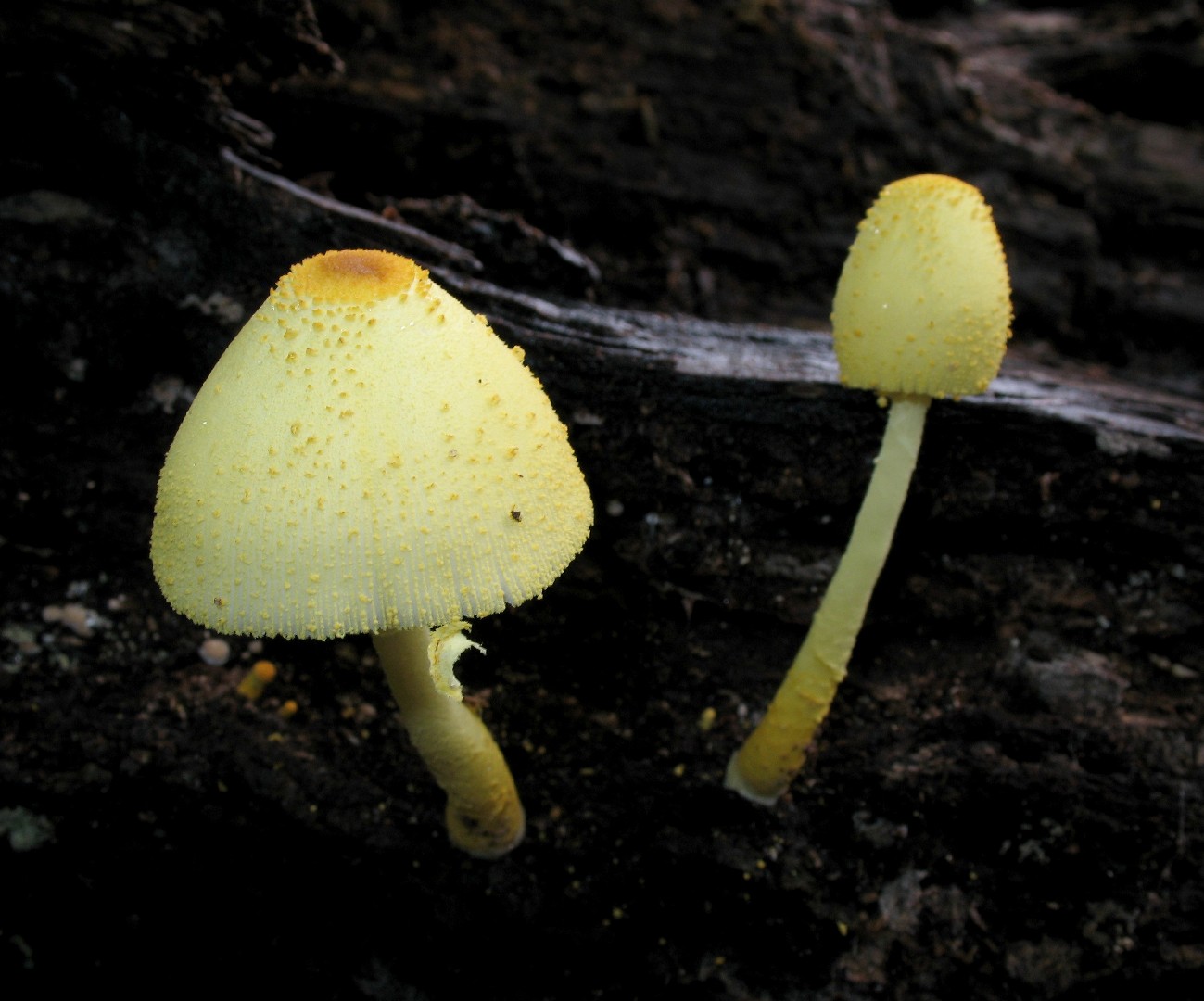
5. Flowerpot parasol
This tropical/subtropical mushroom is known to be toxic. If eaten it causes a very unpleasant stomachache with the risk of fatal complications. In temperate zones, flowerpot parasol is only found in hothouses and greenhouses, so the risk of accidental foraging is low, but it may occur with potted plants and indoor landscaping and pose a risk to curious children.
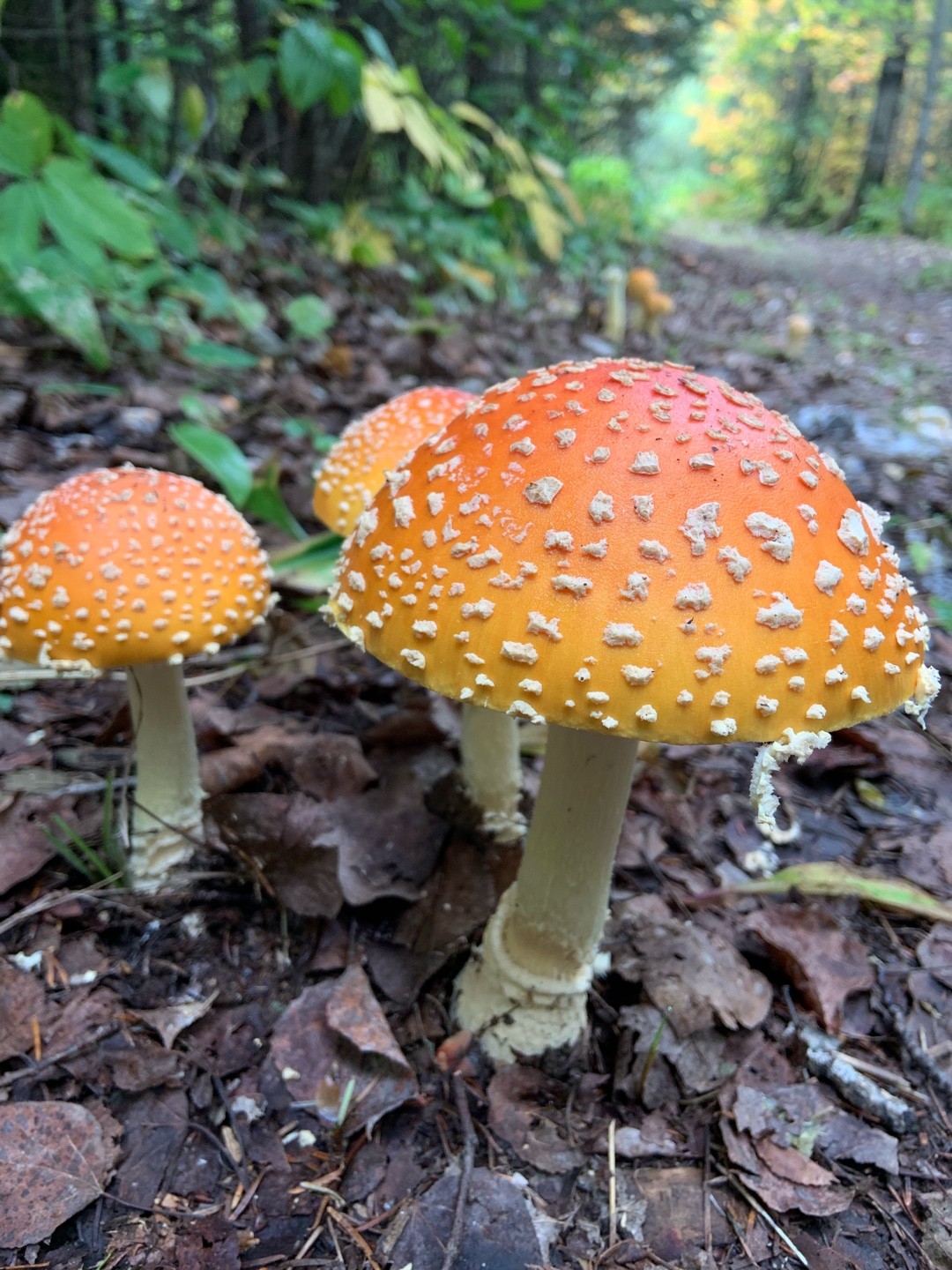
6. Peach-colored fly agaric
If you're looking for peach-colored fly agaric (Amanita persicina), start by hunting around in the leaf litter of hemlock, pine, and oak trees on the eastern coast of North America. Their rotund cap can commonly be overlooked, but well worth seeking out just to view the freckles and color. This species is poisonous, so take nothing but a photograph.
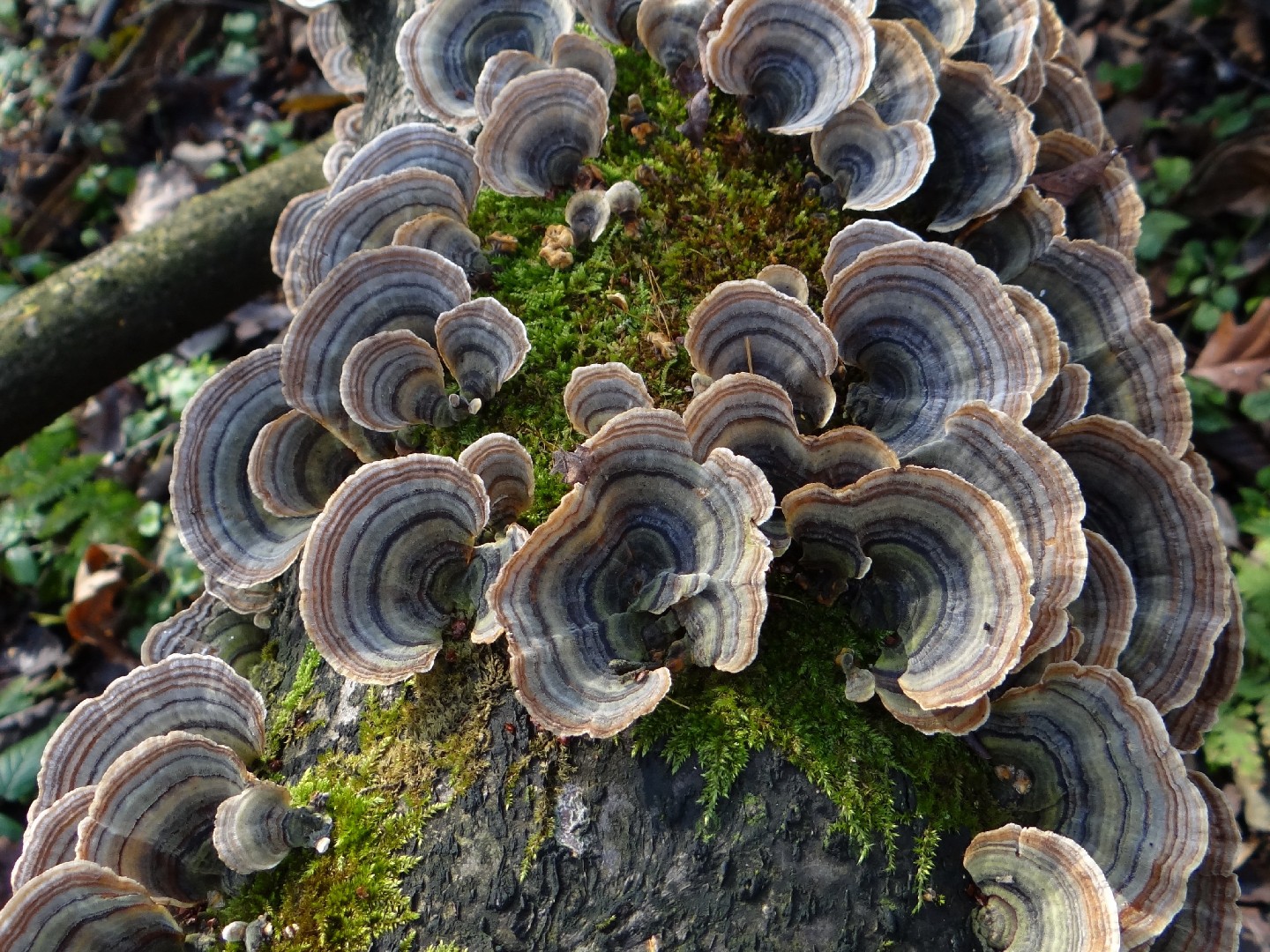
7. Turkey tail
The distinctively-striped turkey tail fungus grows on stumps and logs all over the forests of the northern hemisphere. It is, in fact, probably the most common species you will find. That doesn't mean this mushroom is plain, however; each cap is uniquely patterned. Look for bands of alternating textures as well as color.
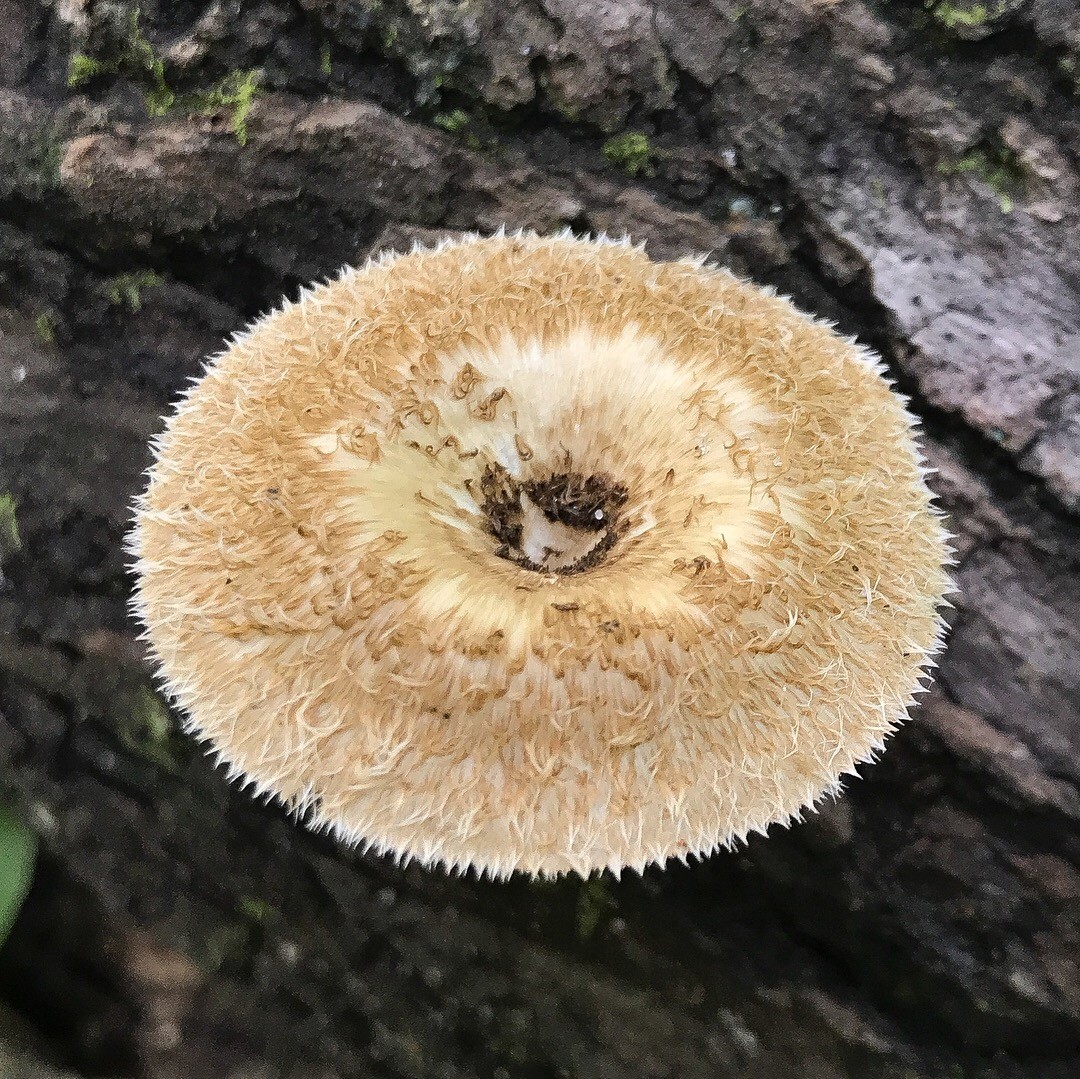
8. Fringed sawgill
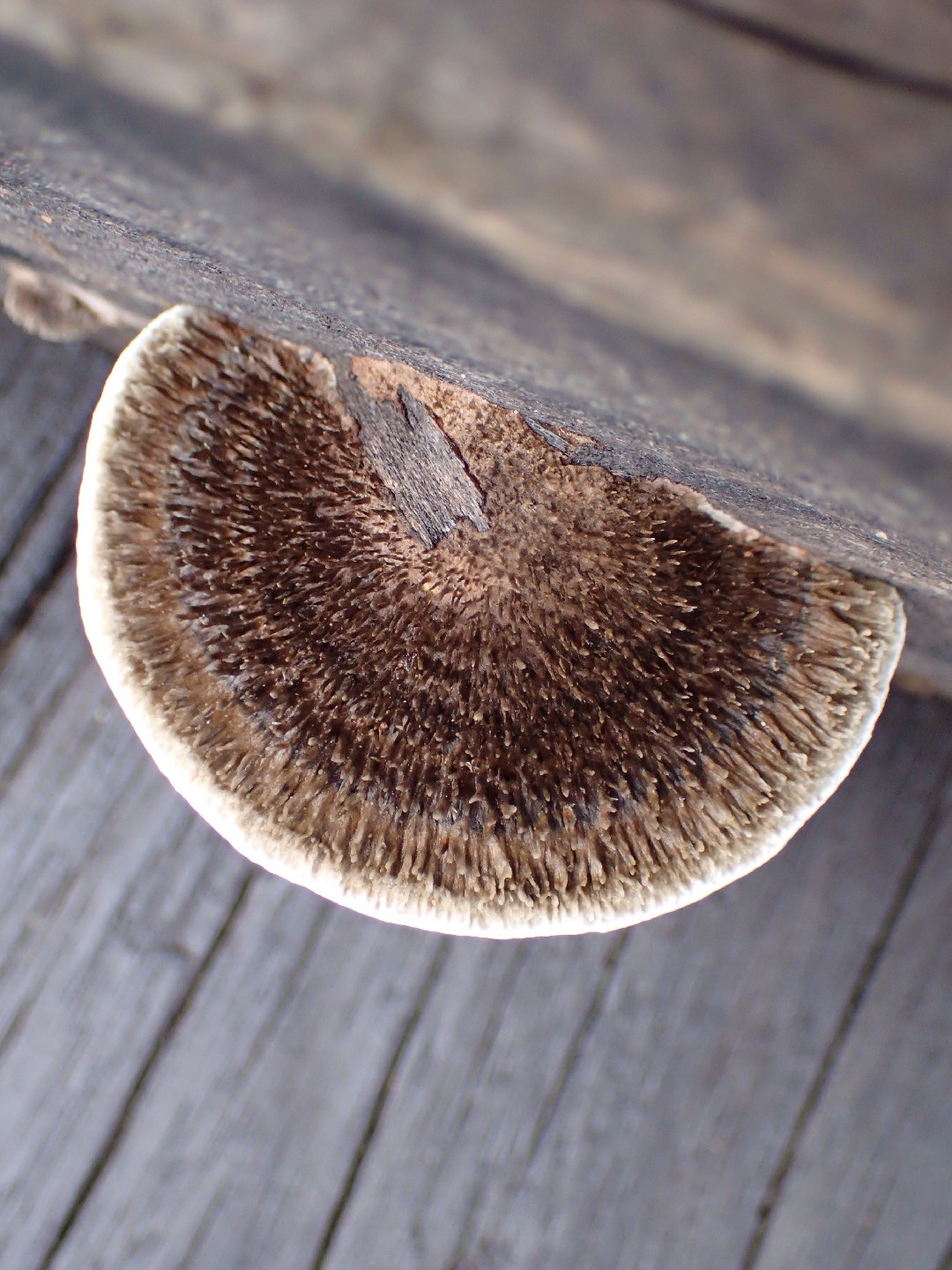
The odd shape cap of the fringed sawgill can be spotted from afar by its fuzzy, almost wig-like appearance. The cap is predominately dark tan towards the concave center but fades to a crisp white along the edges and gills. Size ranges from thumb-sized to dinner plate size.
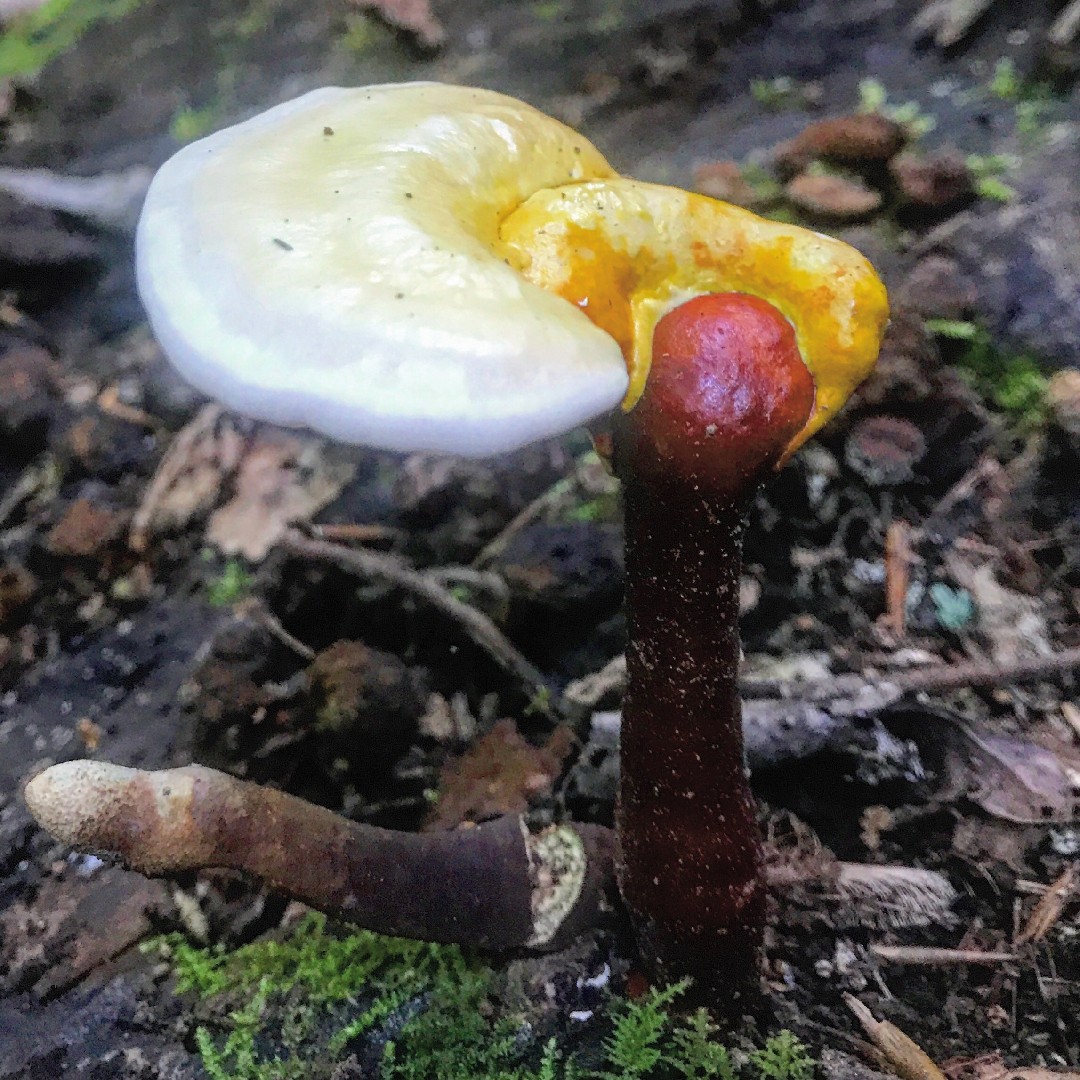
9. Ganoderma resinaceum
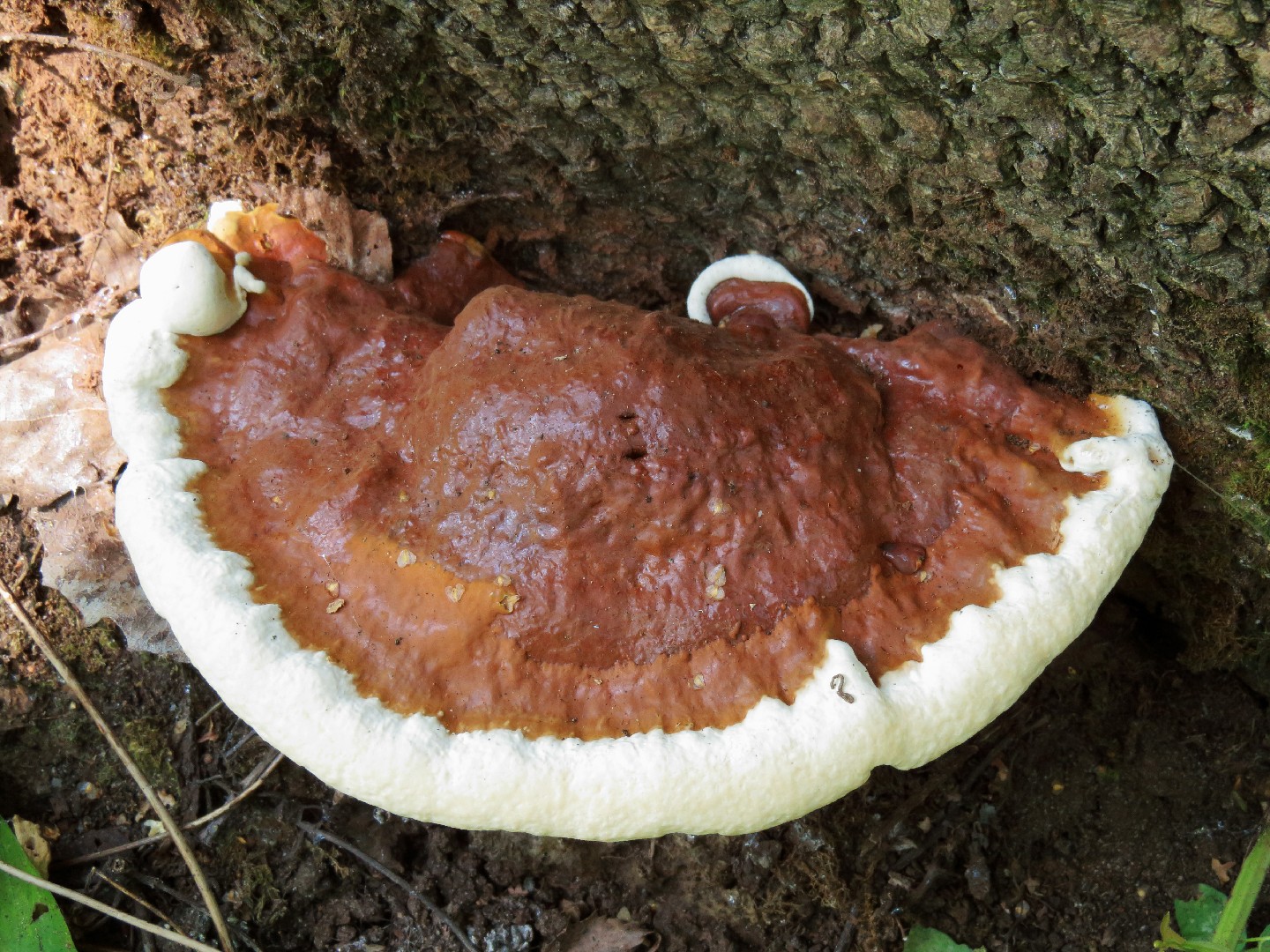
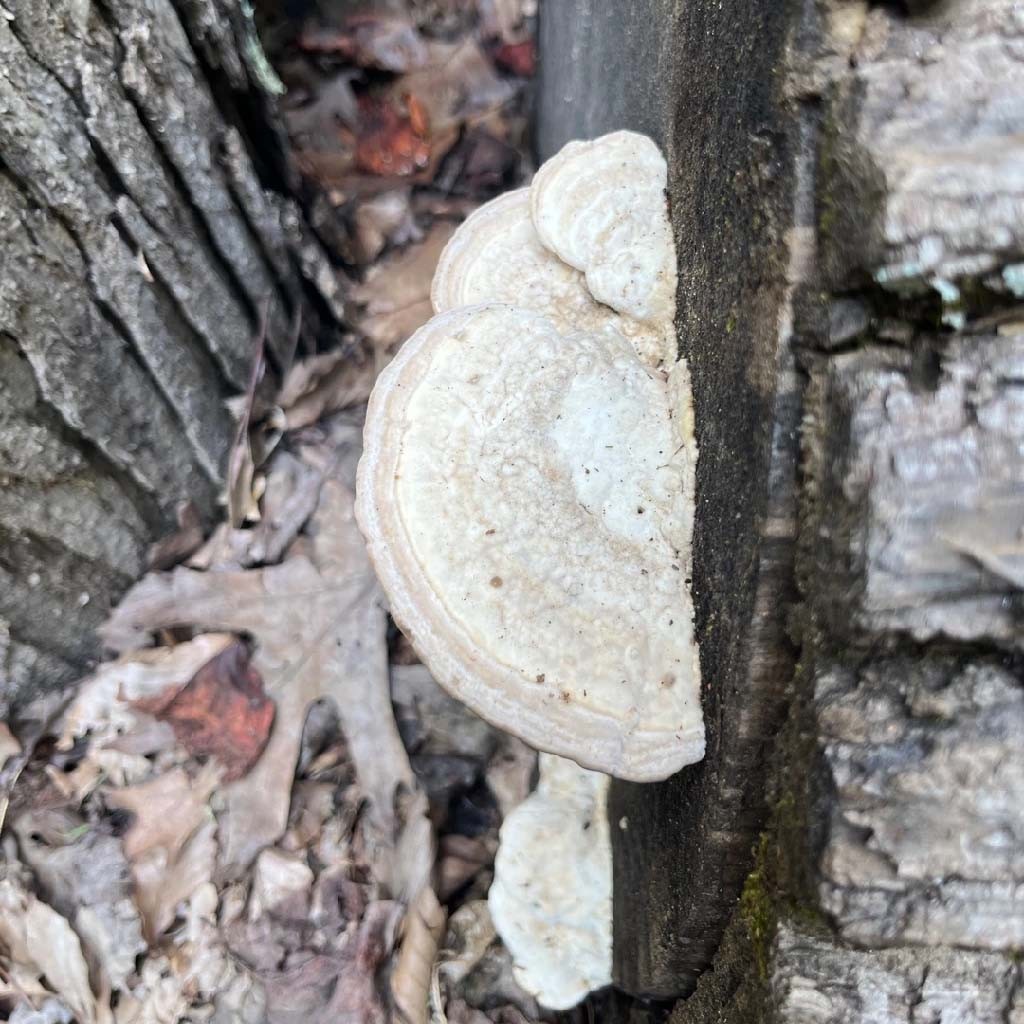
The Harzige Lackporling is a console-shaped mushroom that can be 15-35 cm long, 10-20 wide and 4-8 cm thick. The top is colored red or purple-brown. The hat is covered by a pale yellow resin crust, which melts in the match or lighter flame. The beaded rim is fresh yellow to yellow orange, creamy in a dry state. The underside of the mushroom covered with round pores (3 per mm) is young white and later cream colored. The tubes are about 8-10 mm long. The relatively thin trama is light brown and tough cork-like. Juicing occurs when young fruiting bodies are cut, which solidifies into a resinous mass within a short time. The fruiting bodies are annual.
10. Tropical white polypore
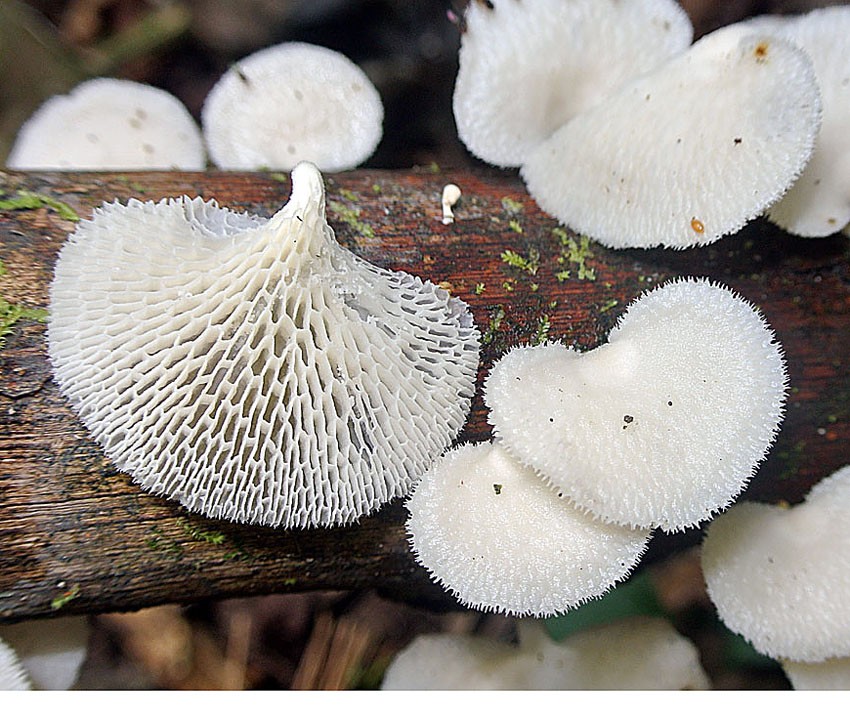
Tropical white polypore(Favolus tenuiculus) can be most often found on pieces of decaying wood, particularly in areas replete with moisture. Until recently it was a member of the genus Polyporus, which has since been subdivided. Named for its evocative appearance, the species is a favorite food of local insect species.
More







