




Top 20 Most Common Mushrooms in Kansas
Nestled amidst fertile plains, Kansas is an intriguing state with a diverse array of habitats, making it a haven for mushroom enthusiasts. From the rolling prairies to the hardwood forests, this region is bursting with fungal wonders seeking to be discovered. Home to an impressive array of 20 most common species of magnificent mushrooms, Kansas showcases an exciting blend of nature's beauty and mystery. Learn more about this fungal paradise and delve deeper into the intricacies of renowned and rare mushrooms species thriving in this region.

Most Common Mushrooms
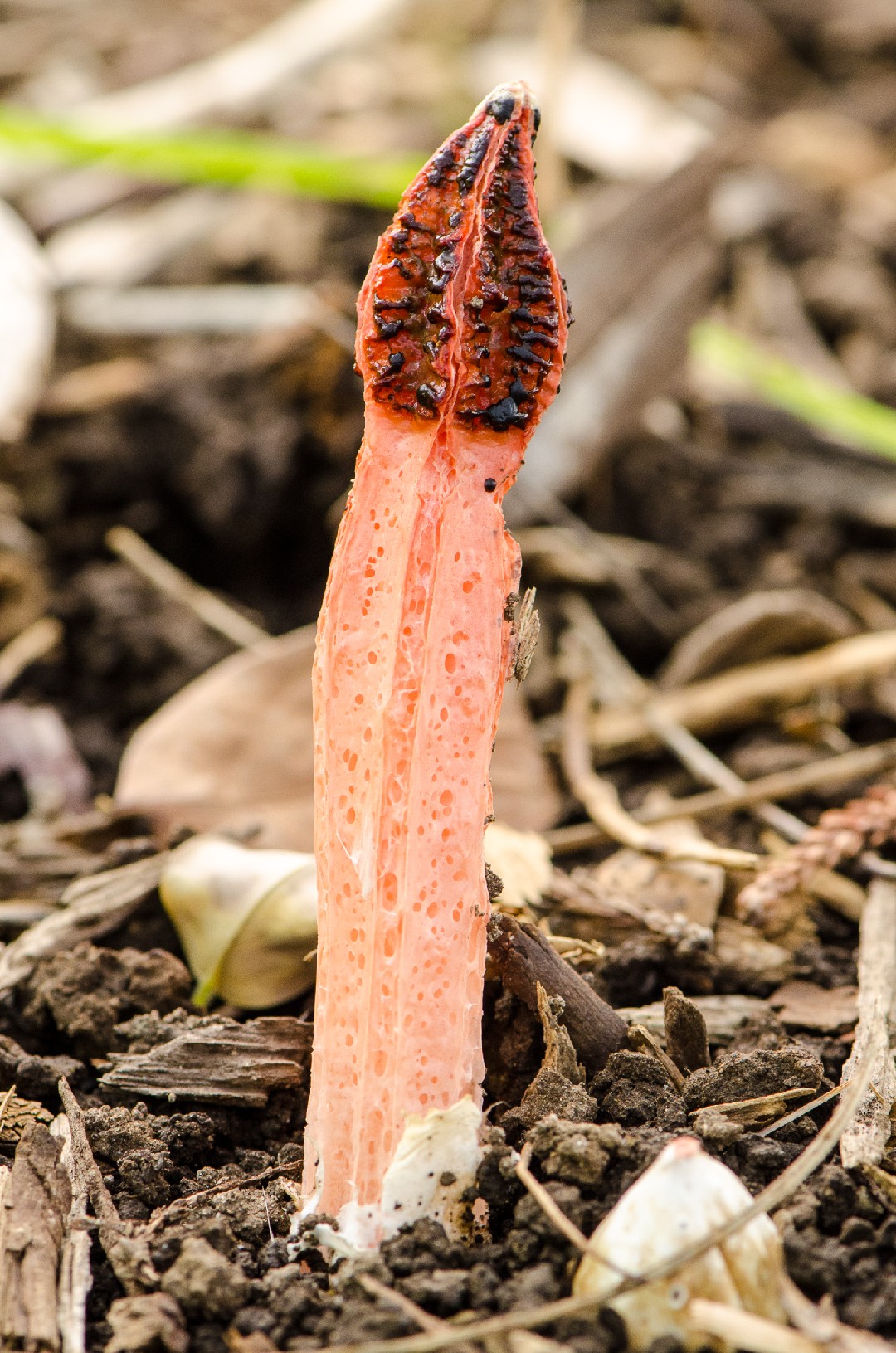
1. Lantern stinkhorn
Distinctive even among the outlandish varieties of the stinkhorn family, the lantern stinkhorn (Lysurus mokusin) bursts from the ground with a squared, flat-sided stem that’s ribbed like a churro. Atop this stipe is a hollow claw, like a hand with all its fingertips pressed together. The inside surface of this claw is coated with sticky, stinky goo meant to attract insects that will spread its spores.
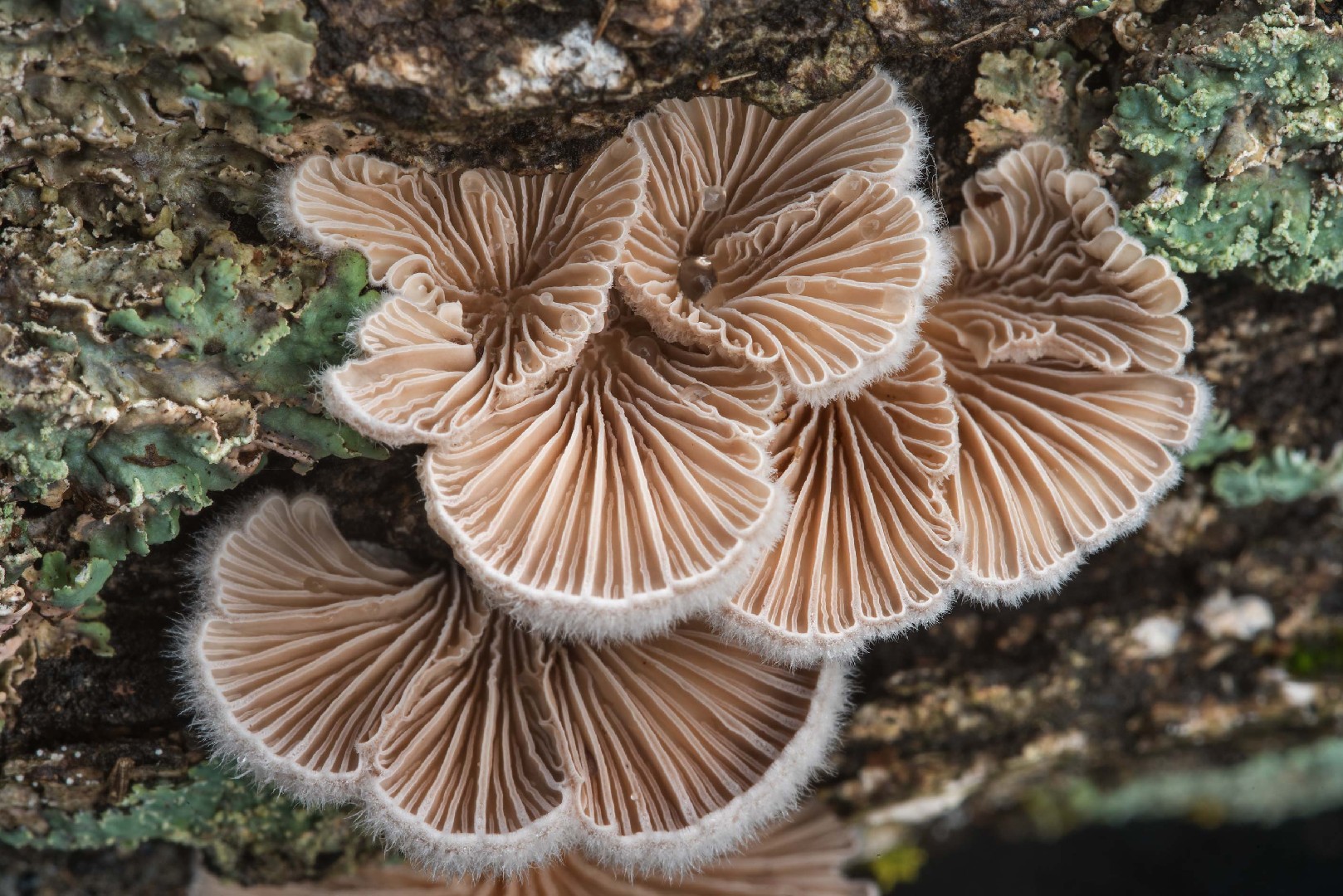
2. Split gill
Split gill(Schizophyllum commune) can be found across the globe. Uniquely, it is the only mushroom species known to display the capability to retract by movement. It is considered inedible, although not necessarily toxic. Furthermore, it is not recommended to smell this species, as the spores are capable of sprouting and growing in nasal passages.
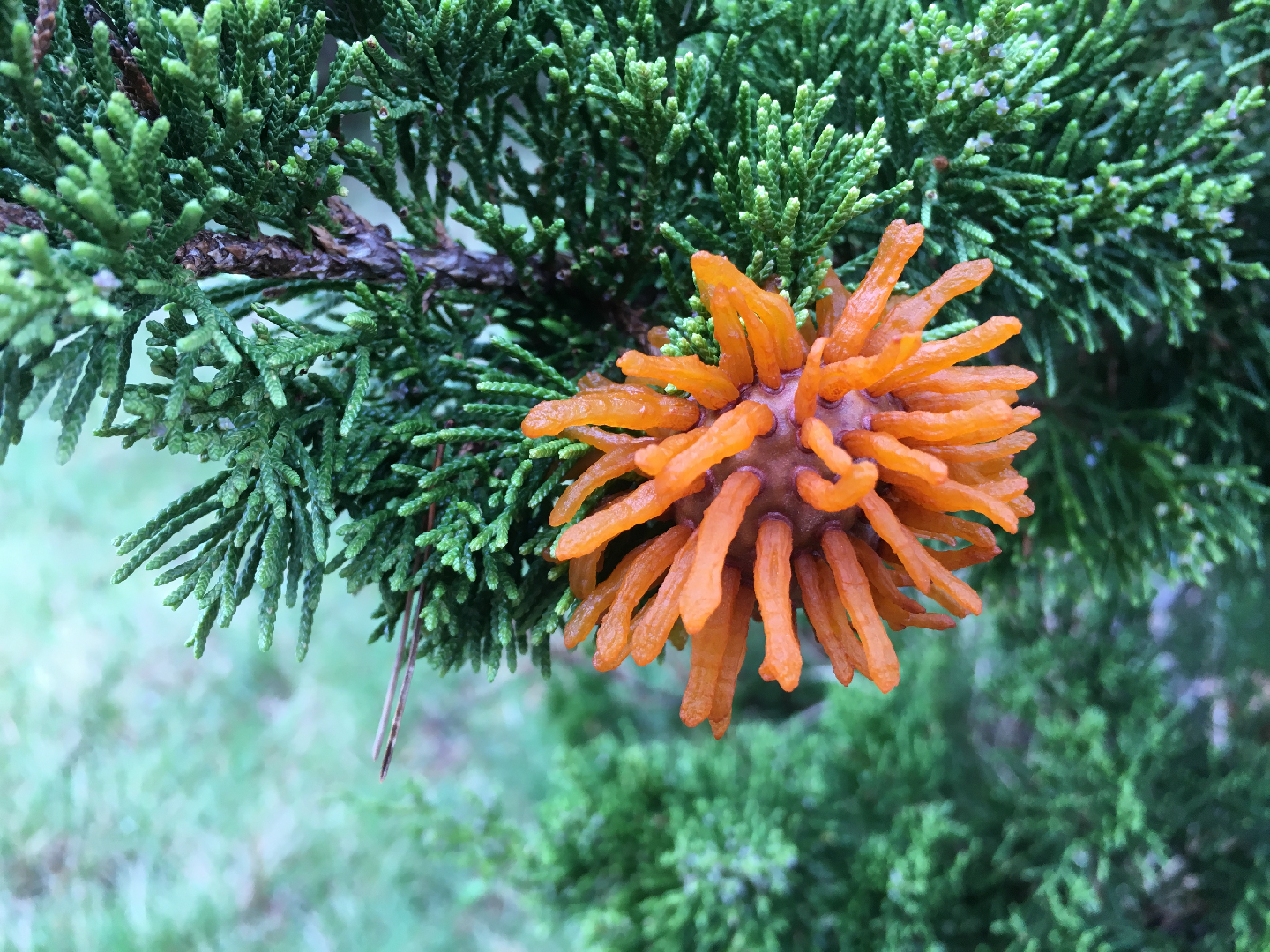
3. Cedar-apple rust
The vividly-colored fruitbodies of cedar-apple rust (Gymnosporangium juniperi-virginianae) might be mistaken for flowers, from a distance. Upon closer inspection they can be identified as fungal growths attacking the fruit of cedar trees. Their microscopic spores can travel up to an astounding 5 miles when carried on the wind and infect cedars quite far away, weakening the trees as they grow.
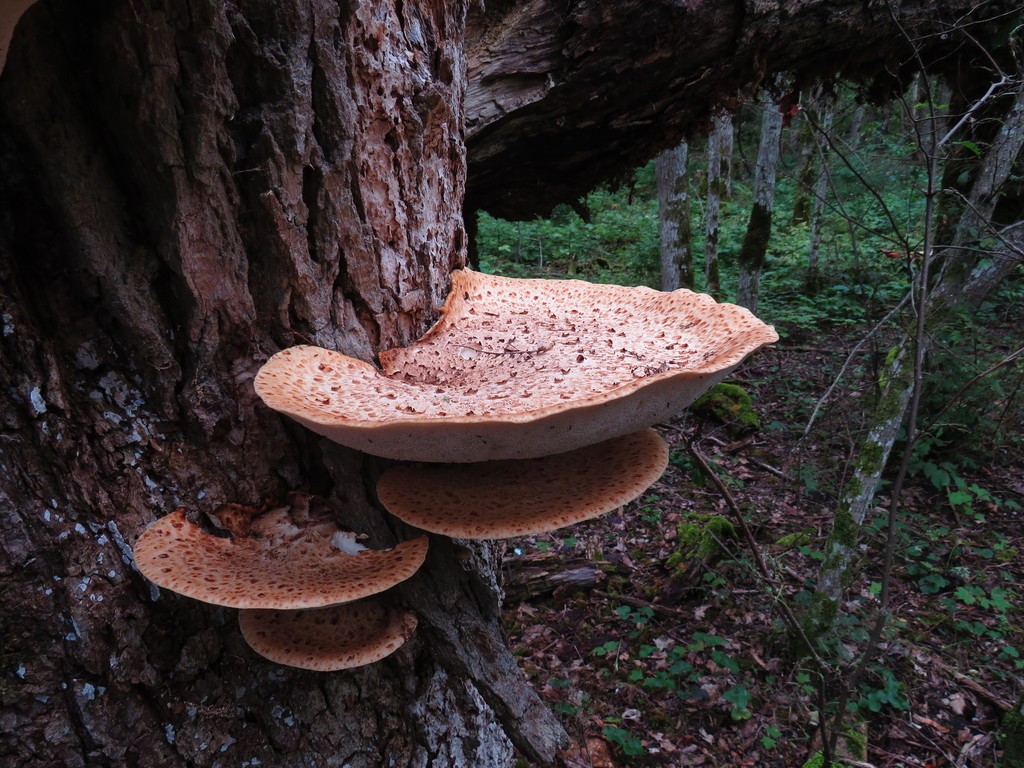
4. Dryad's saddle
A familiar sight to spring morel hunters, dryad's saddle is noteworthy for its large size, striking scales, and watermelon-like smell. Similar to other mushrooms in the bracket fungi family, dryad's saddle can be used to make paper. Younger mushrooms are better suited for this purpose due to their smaller and more consistent fibers.
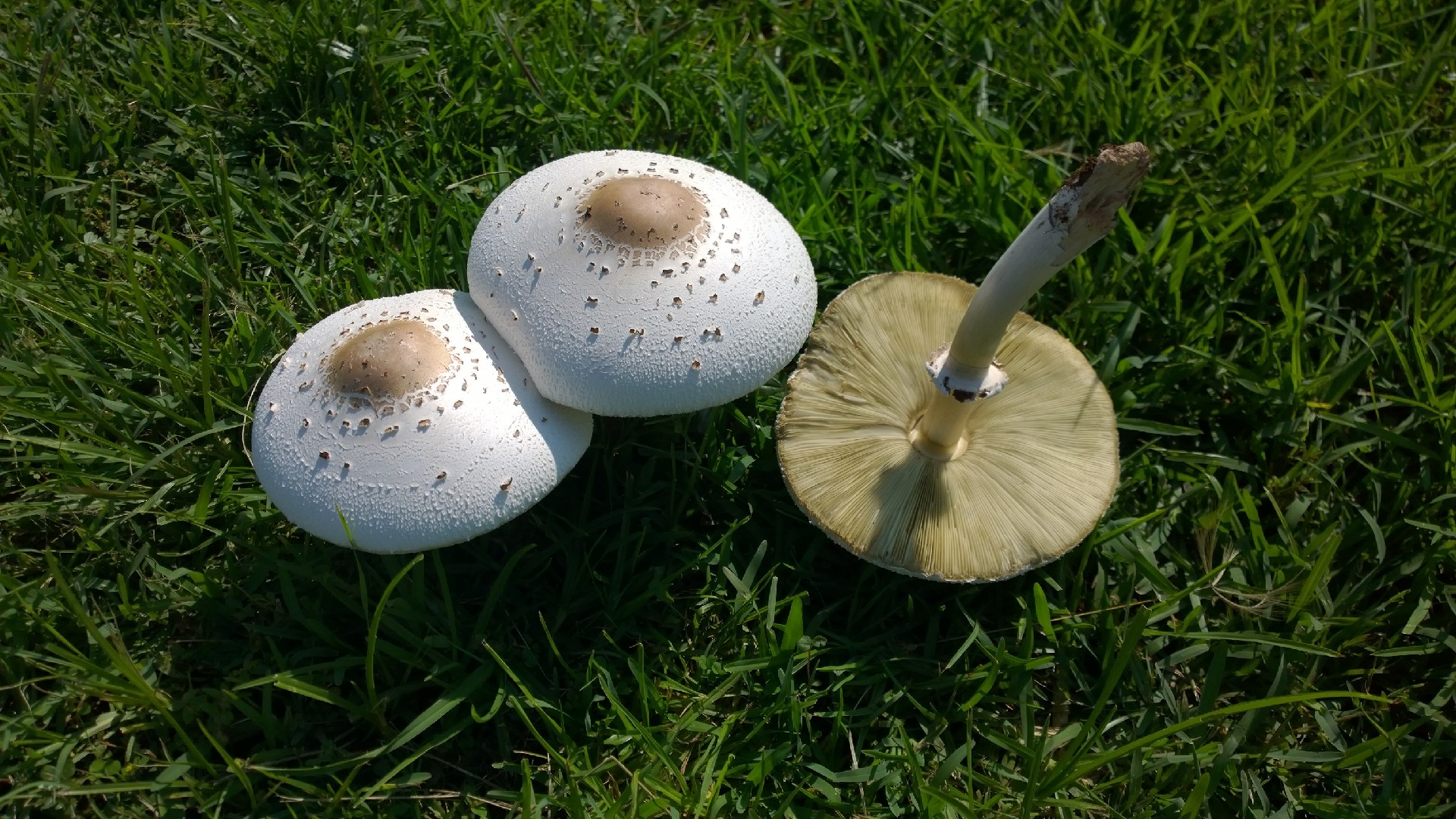
5. False parasol
Though the false parasol appears unassuming, the species is famous—or, infamous—for its toxicity. It looks unfortunately similar to Agericus campestrus, a commonly eaten mushroom, but the false parasol can be distinguished by its highly unusual green spore print. Although they are no good to eat, they can be pretty to look at. The species may grow in ring-shaped groups in meadows and on forest floors in what are sometimes called "fairy circles."
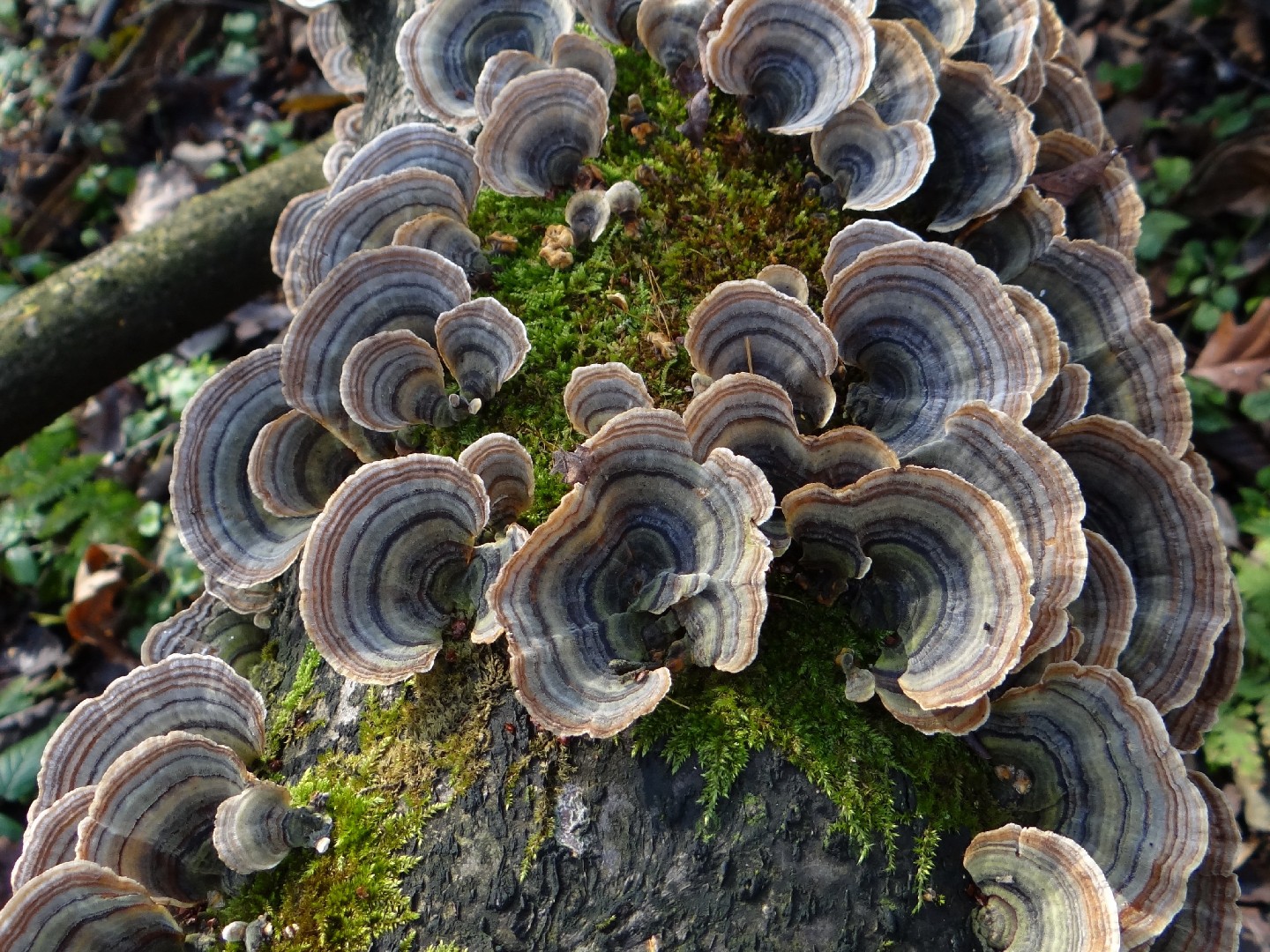
6. Turkey tail
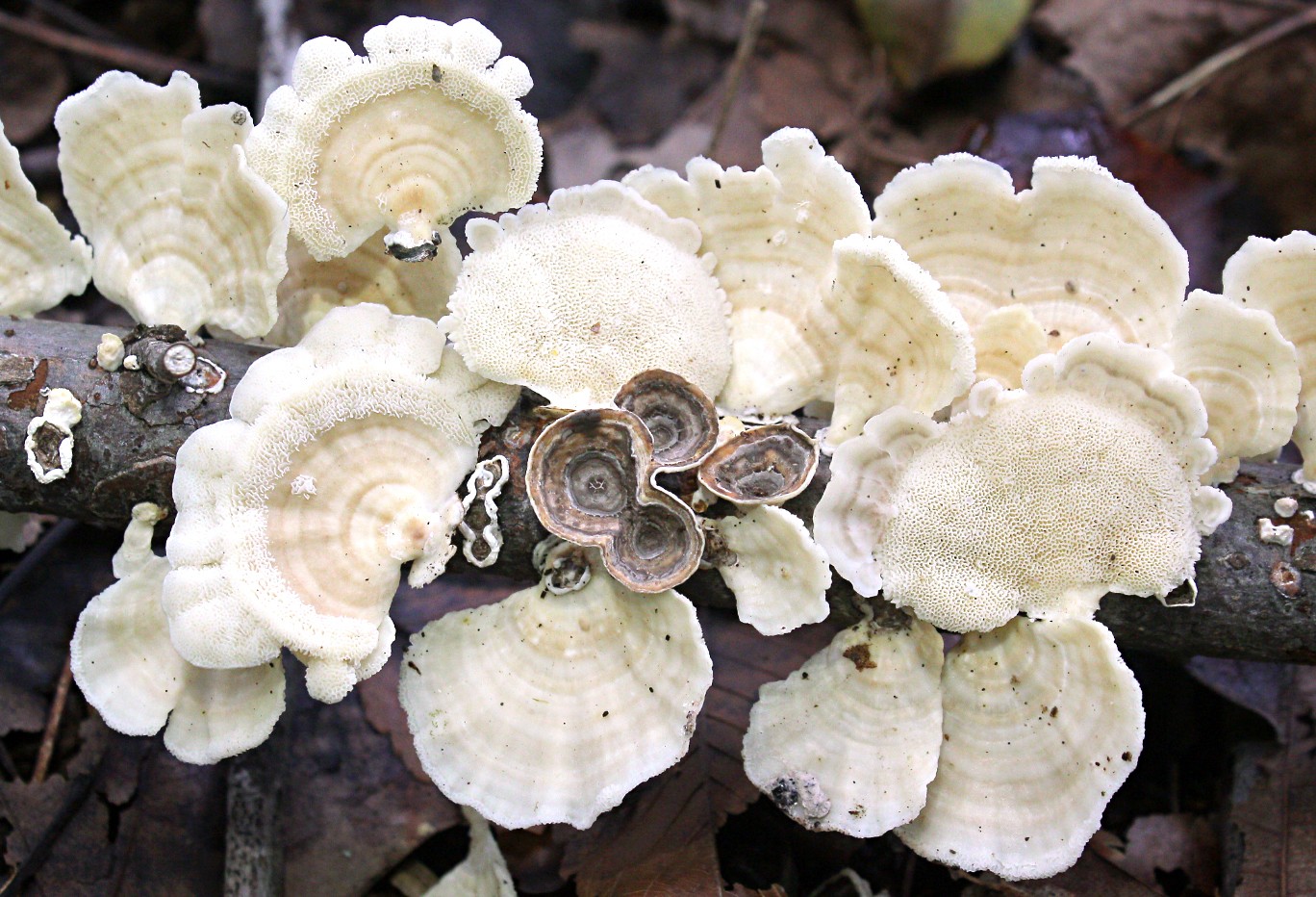
The distinctively-striped turkey tail fungus grows on stumps and logs all over the forests of the northern hemisphere. It is, in fact, probably the most common species you will find. That doesn't mean this mushroom is plain, however; each cap is uniquely patterned. Look for bands of alternating textures as well as color.
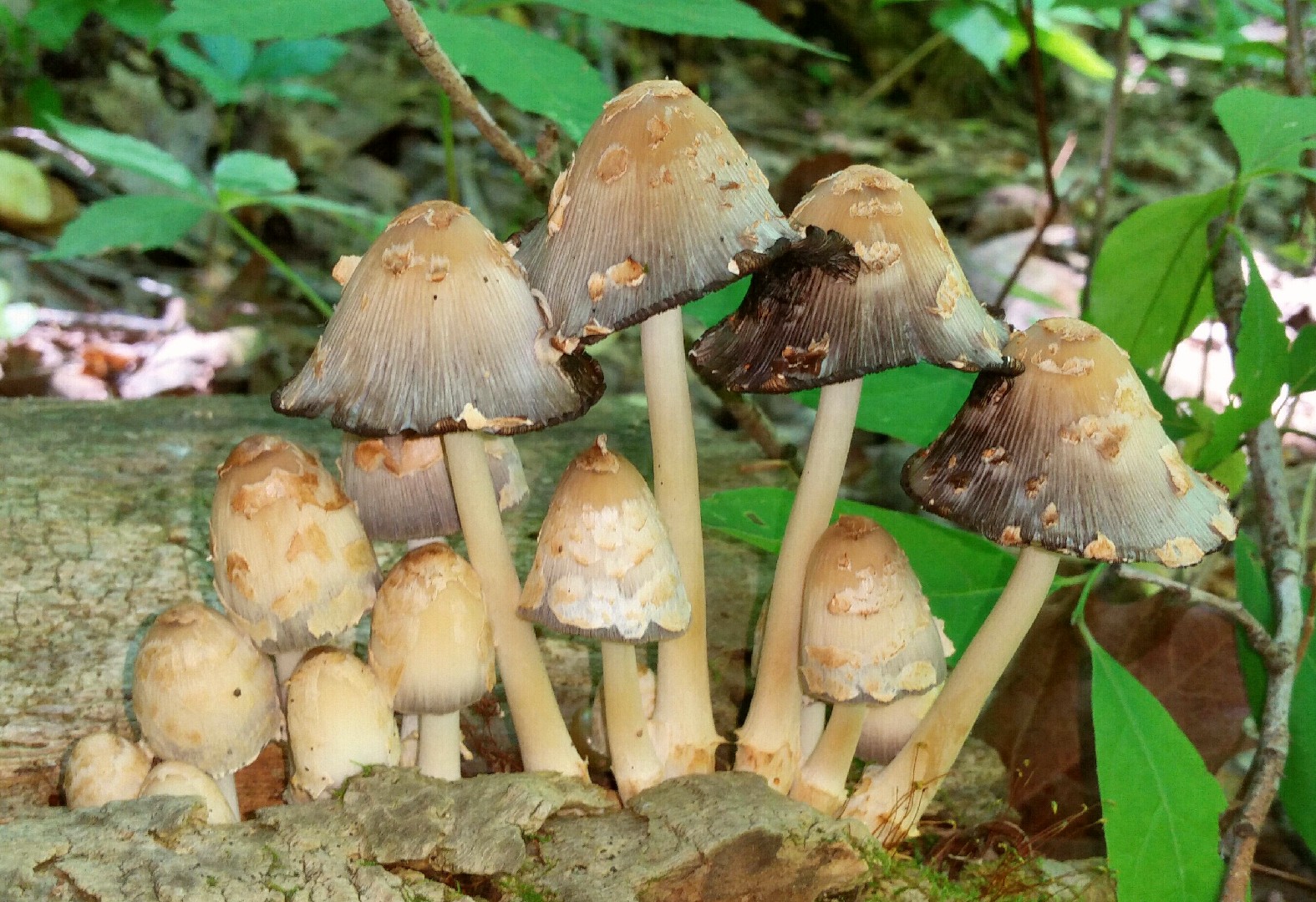
7. Scaly ink cap
The scaly ink cap (Coprinopsis variegata) has a bell-shaped cap that is tall and cylindrical and hides gills that change with age from white to bright pink to black underneath. The cap becomes haggard as it ages and often gives the appearance that it is shedding its flesh in sheets. These are extremely common in decaying logs and are seldom more than a hand's height tall.
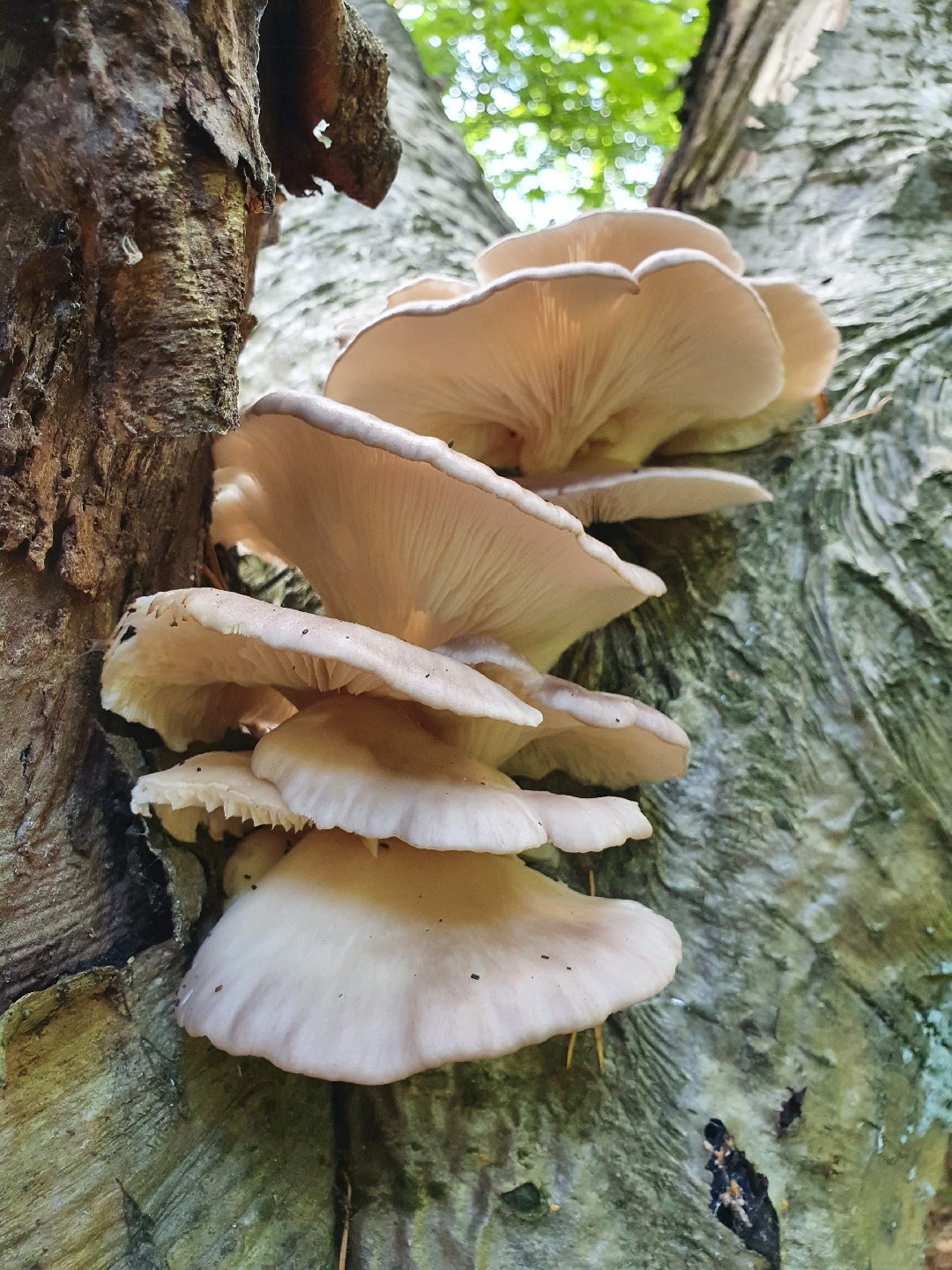
8. Oyster mushroom
Oyster mushrooms grow wild but are also cultivated for sale in supermarkets. They can even be cultivated at home. They will grow on coffee grounds and spent grain, and are occasionally even fashioned into an environmentally-friendly substitute for styrofoam. There are several toxic look-alike species, so it is best to buy these mushrooms at the store.
9. Chicken of the woods
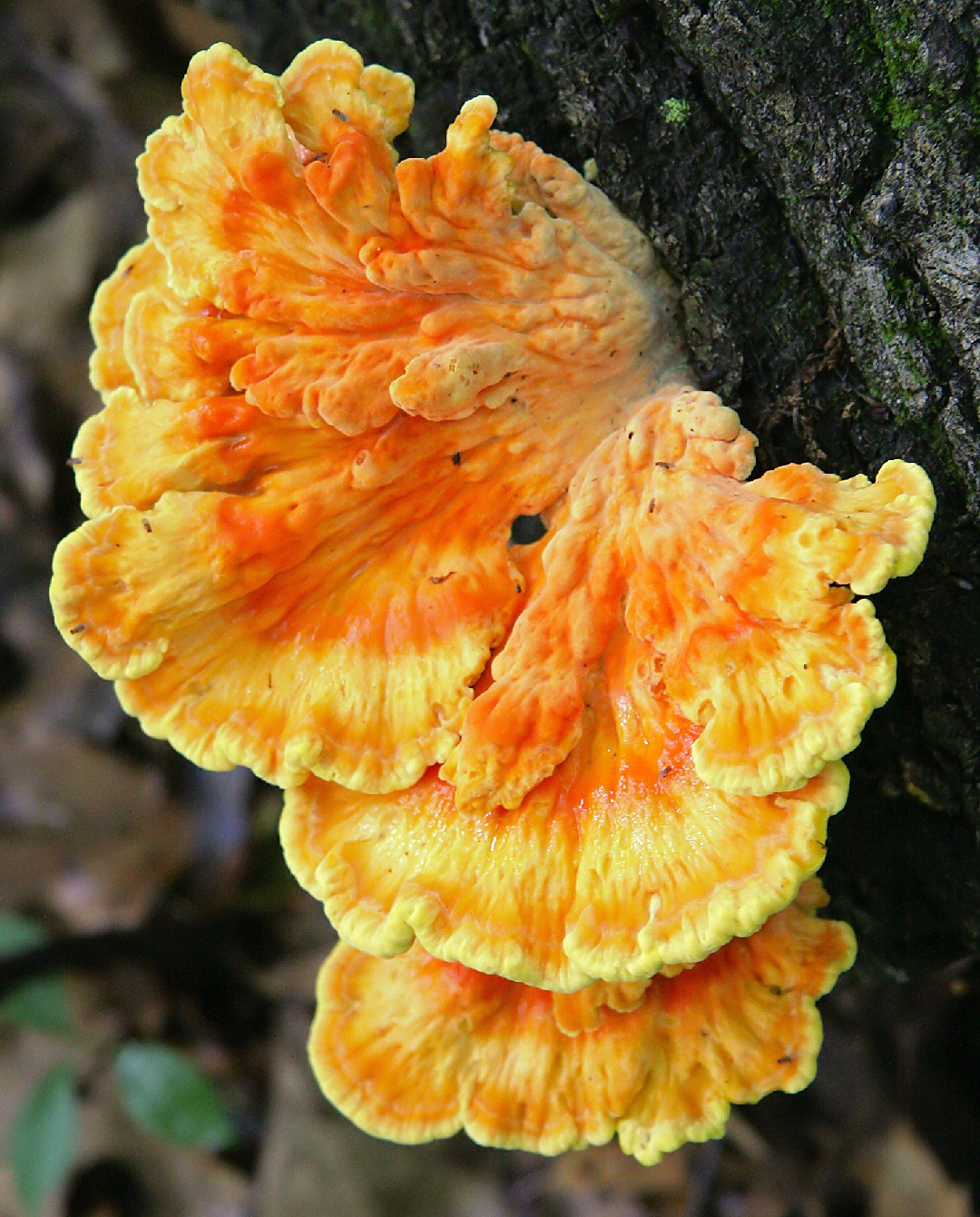
Chicken of the woods is very noticeable in hardwood forests, appearing in clusters on standing tree trunks in bright orange and yellow hues that sometimes last through the entire winter. It is a parasite that causes an unfortunate brown heart rot, and is considered a particularly troublesome pest of Yew trees. If the fruitbodies can be seen, the tree is likely already beyond saving.
10. Gold-eye lichen
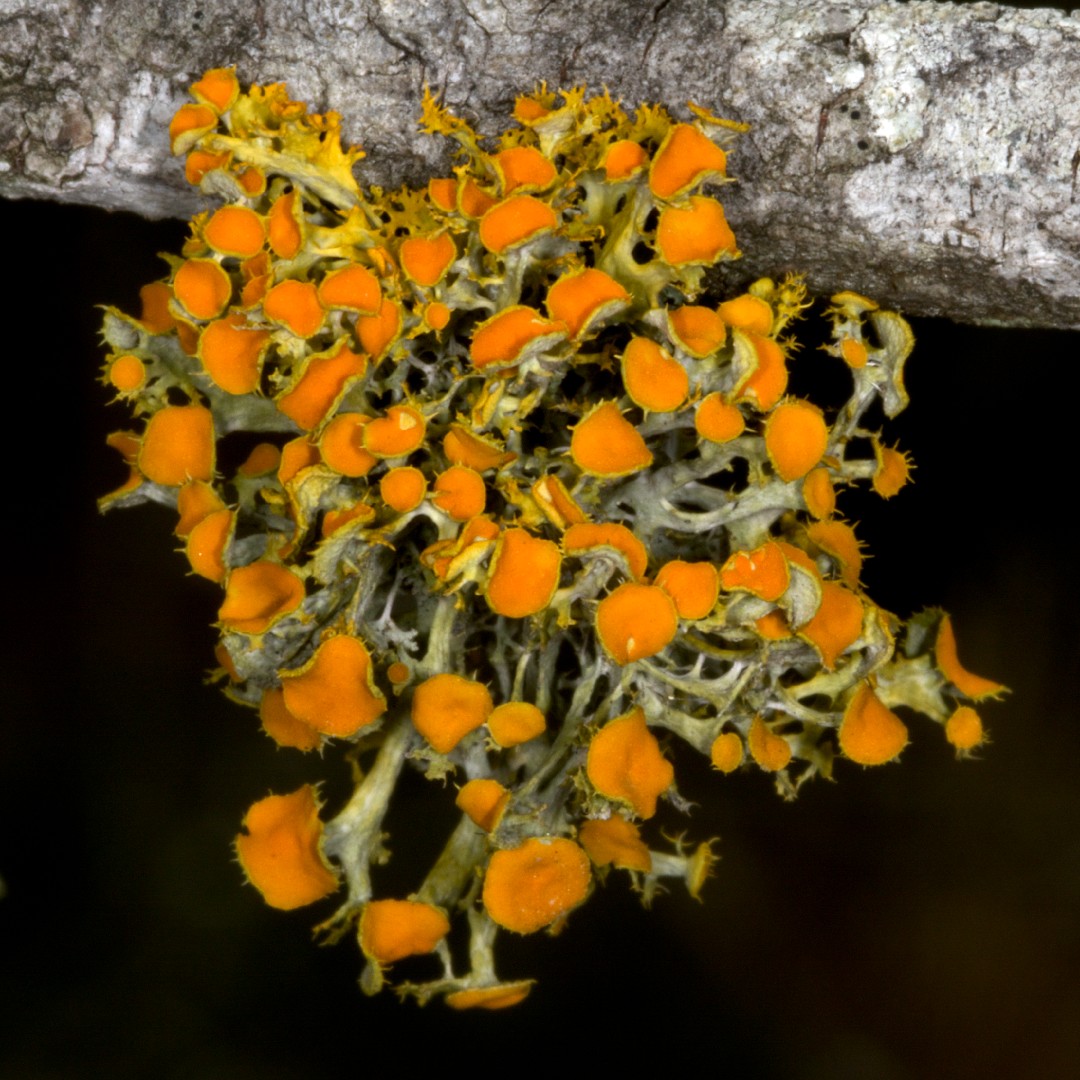
The almost indistinguishable species is a gray-yellow or light to orange-orange, bush-shaped camp with marginal fibrils. However, adhesive fibers are missing. The length of the slightly flattened sections is about 1.5 cm. The frequently formed fruiting bodies (apothecaries) have an orange disc with characteristic eyelashes on the edge and a diameter of 2 to 7 mm. The Photobiont is a member of the green algae genus Trebouxia.

More







