




Top 20 Most Common Mushrooms in Taiwan
Taiwan, a verdant island known as 'Taiwan', is renowned for its exceptional biodiversity. The unique climatic conditions, fertile soil, and dense forests provide an ideal habitat for a myriad of mushroom species. The richness of mushroom diversity here makes 'Taiwan' a paradise for mycologists and gastronomes alike. This list dives in to highlight the top '20' common mushrooms in 'Taiwan', offering a glimpse into their captivating world. We explore their range, characteristics and culinary applications, based on thoroughly researched and documented data.

Most Common Mushrooms
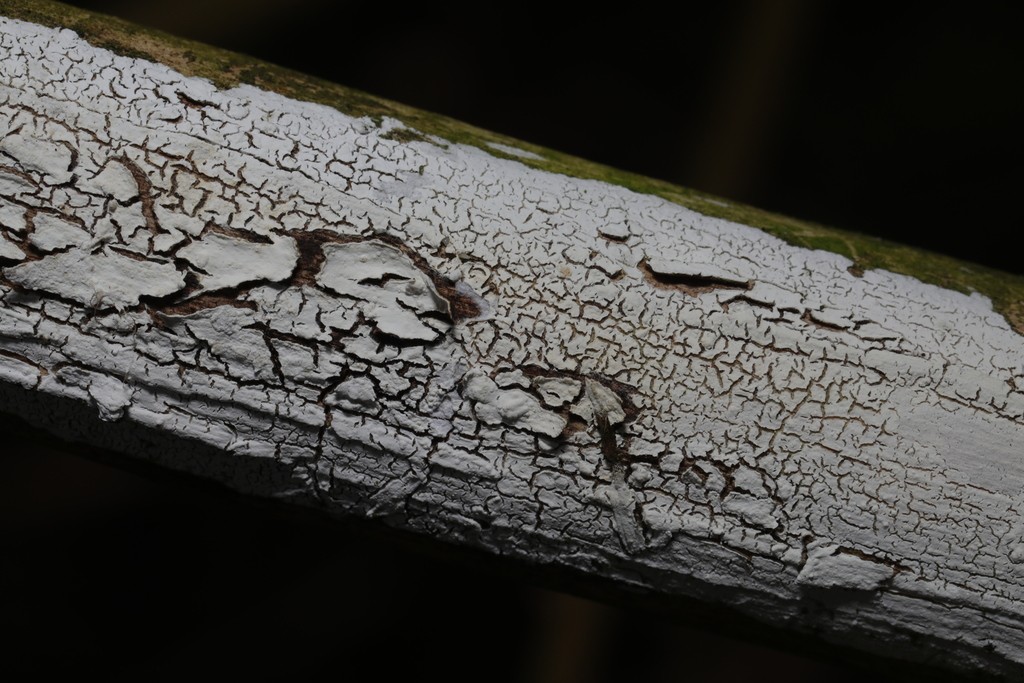
1. Elder whitewash
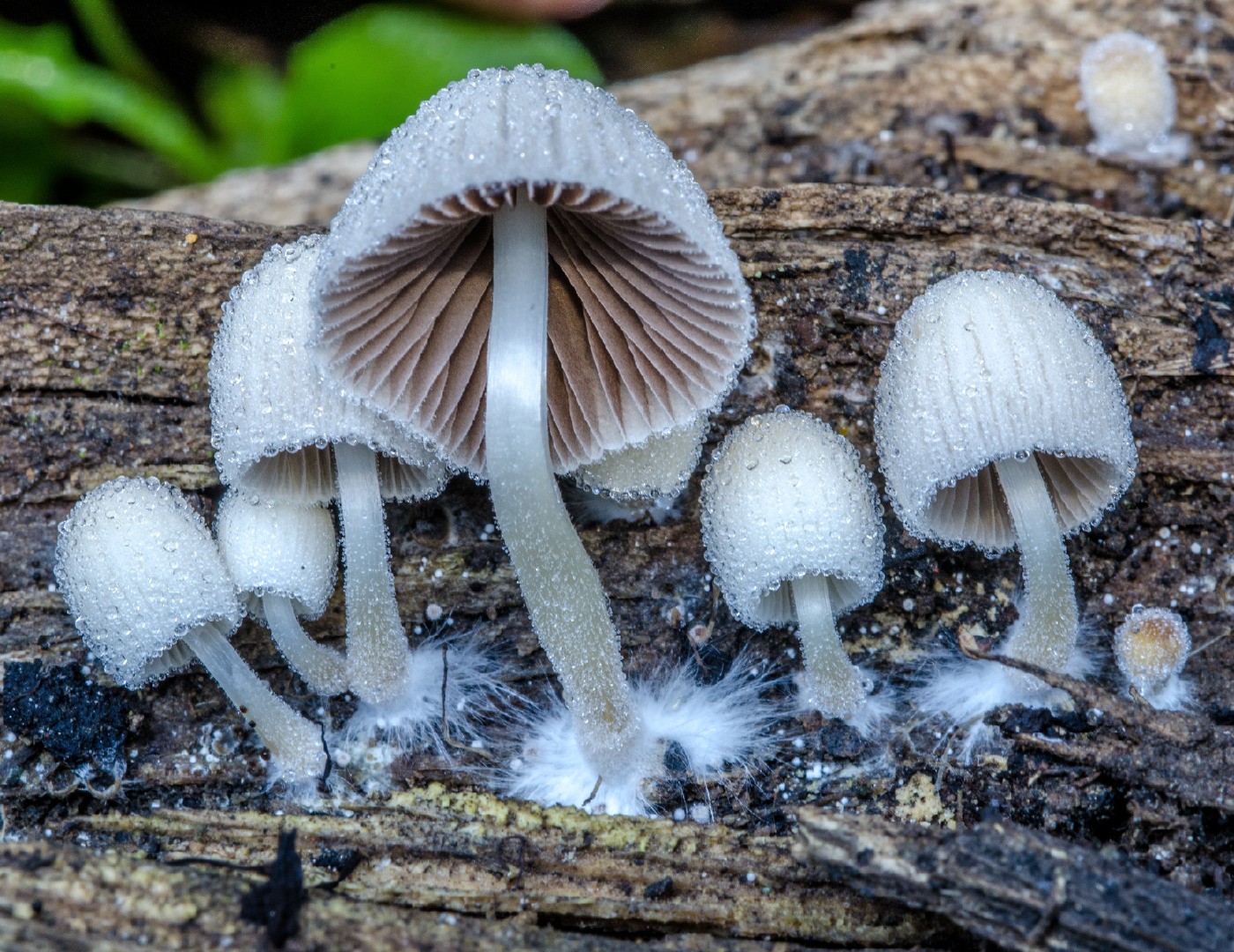
2. Fairy inkcap
The mushrooms of the fairy inkcap species have a tendency to congregate in large masses over dead tree stumps and decaying roots. They appear all around the world from early spring all the way to the first frosts, but each fruit only lasts a few days before turning black and distributing its spores.
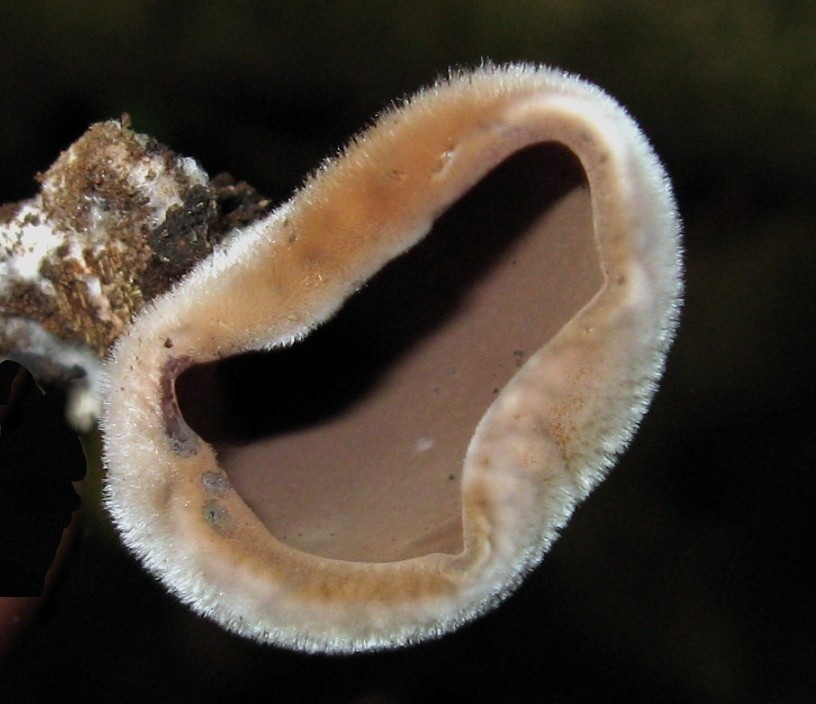
3. Ear fungus
Fruit body resupinate or pileate, loosely attached, laterally and sometimes by a very short stalk, elastic, gelatinous; sterile surface dark yellowish brown to dark brown with greyish brown bands, hairy, silky. Hymenium smooth, or wrinkled, pale brown to dark brown to blackish brown with a whitish boom. Hairs thick-walled, up to 0.6 mm long. Basidia cylindrical, hyaline, three-septate, 46–60 × 4–5.5 μm with 1–3 lateral sterigmata; sterigmata 9–15 × 1.5–12 μm. spores, hyaline, reniform to allantoid, 13–16 × 4–5.5 μm, guttulate. 
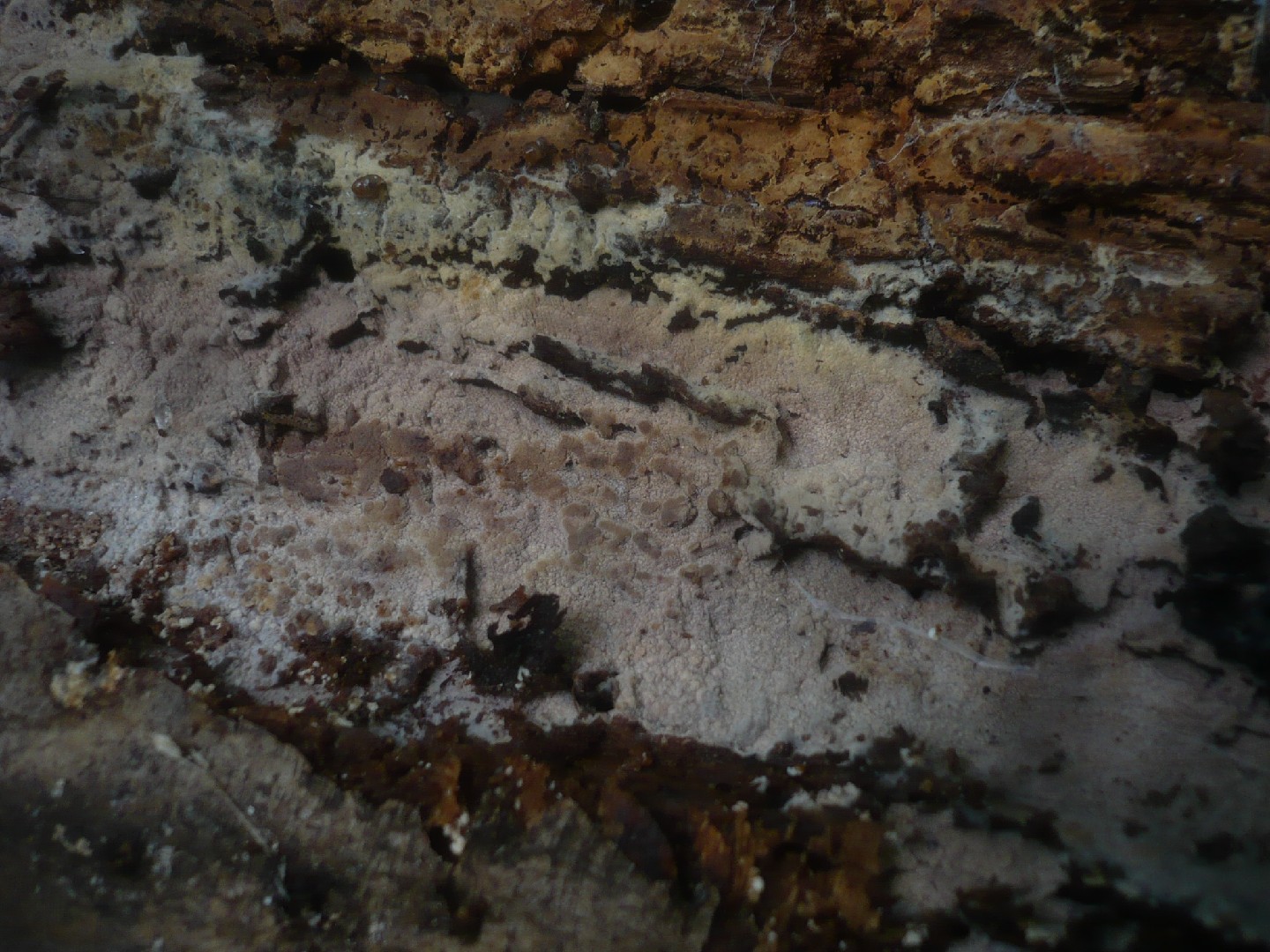
4. Hyphoderma setigerum
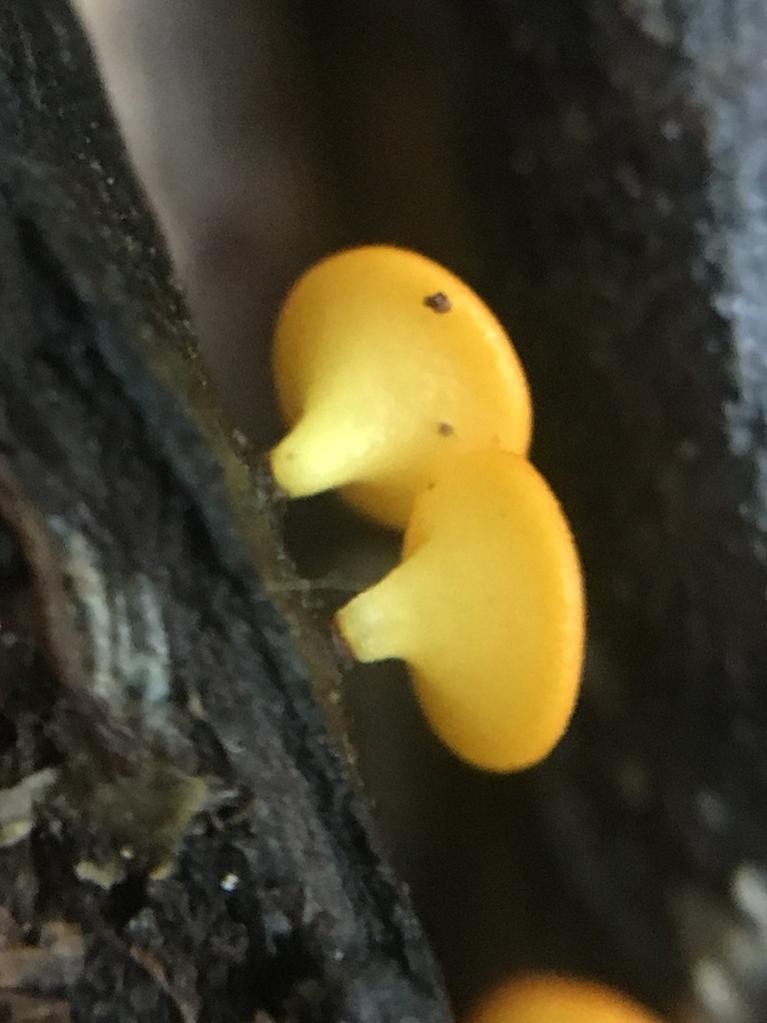
5. Dicephalospora rufocornea
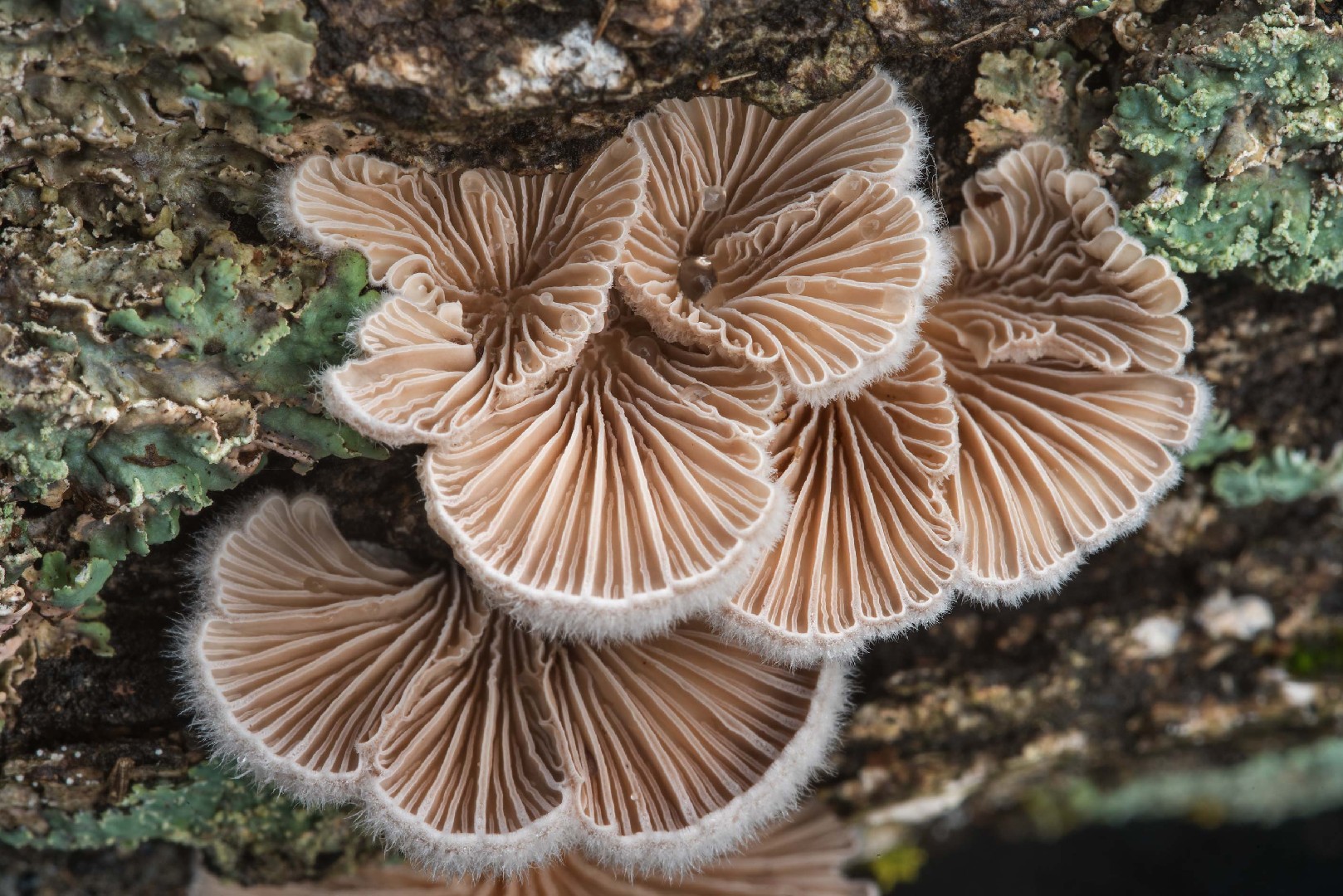
6. Split gill
Split gill(Schizophyllum commune) can be found across the globe. Uniquely, it is the only mushroom species known to display the capability to retract by movement. It is considered inedible, although not necessarily toxic. Furthermore, it is not recommended to smell this species, as the spores are capable of sprouting and growing in nasal passages.
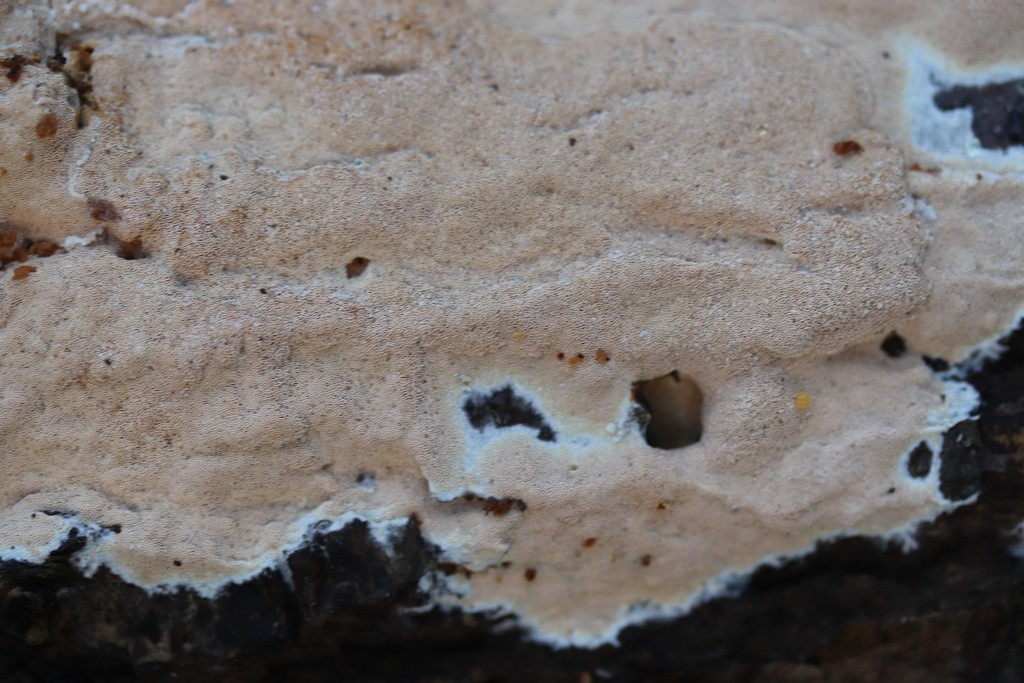
7. Xylodon flaviporus
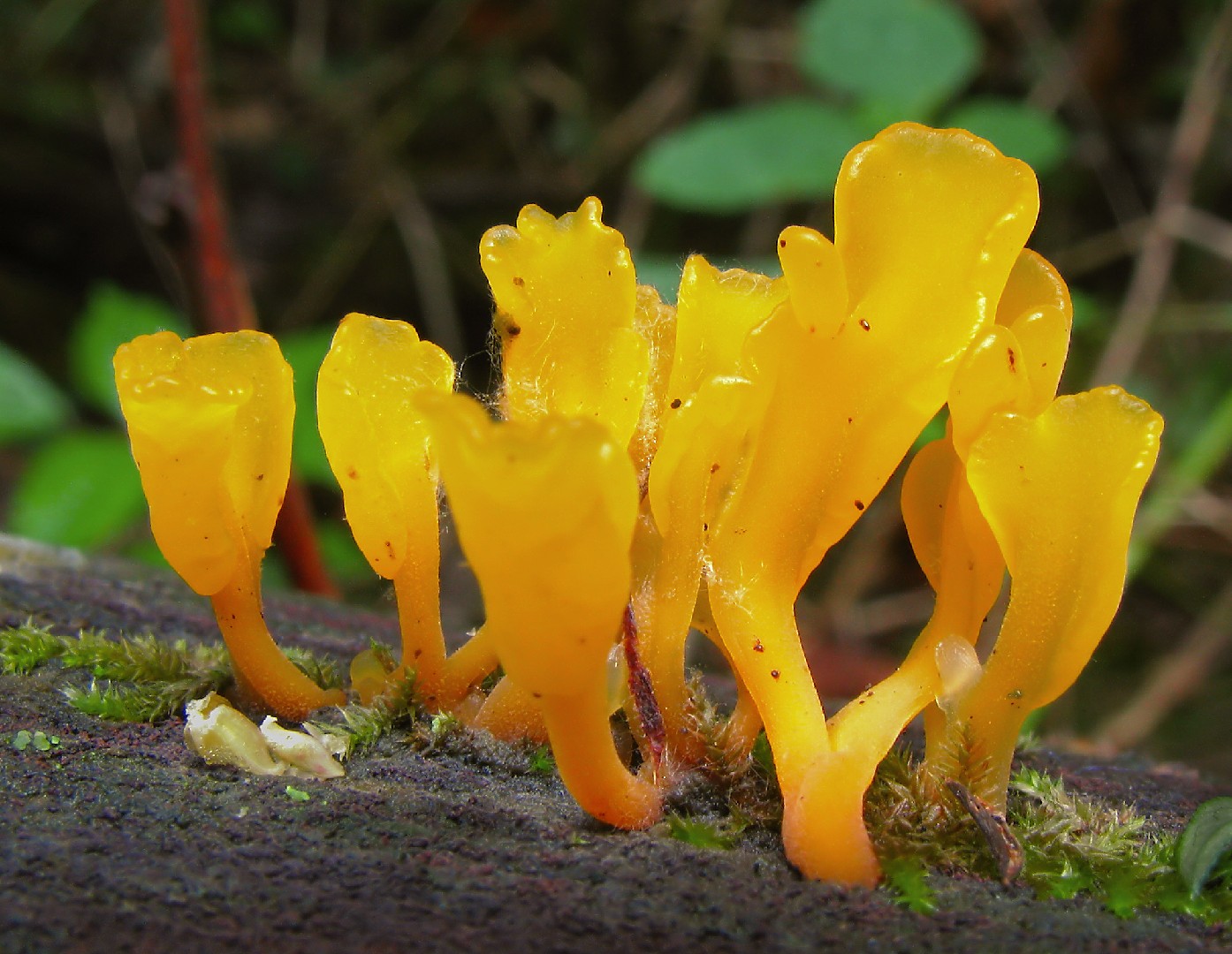
8. Fan-shaped jelly-fungus
Just as its Latin and the common English names suggest, the fan-shaped jelly-fungus (Dacryopinax spathularia) is a fan-shaped or spatula-shaped jelly-like mushroom. It commonly grows in wood cracks and it sometimes even appears in the cracks of the processed wood and lumber. Despite the word "jelly" in its name, the fan-shaped jelly-fungus is not considered edible.
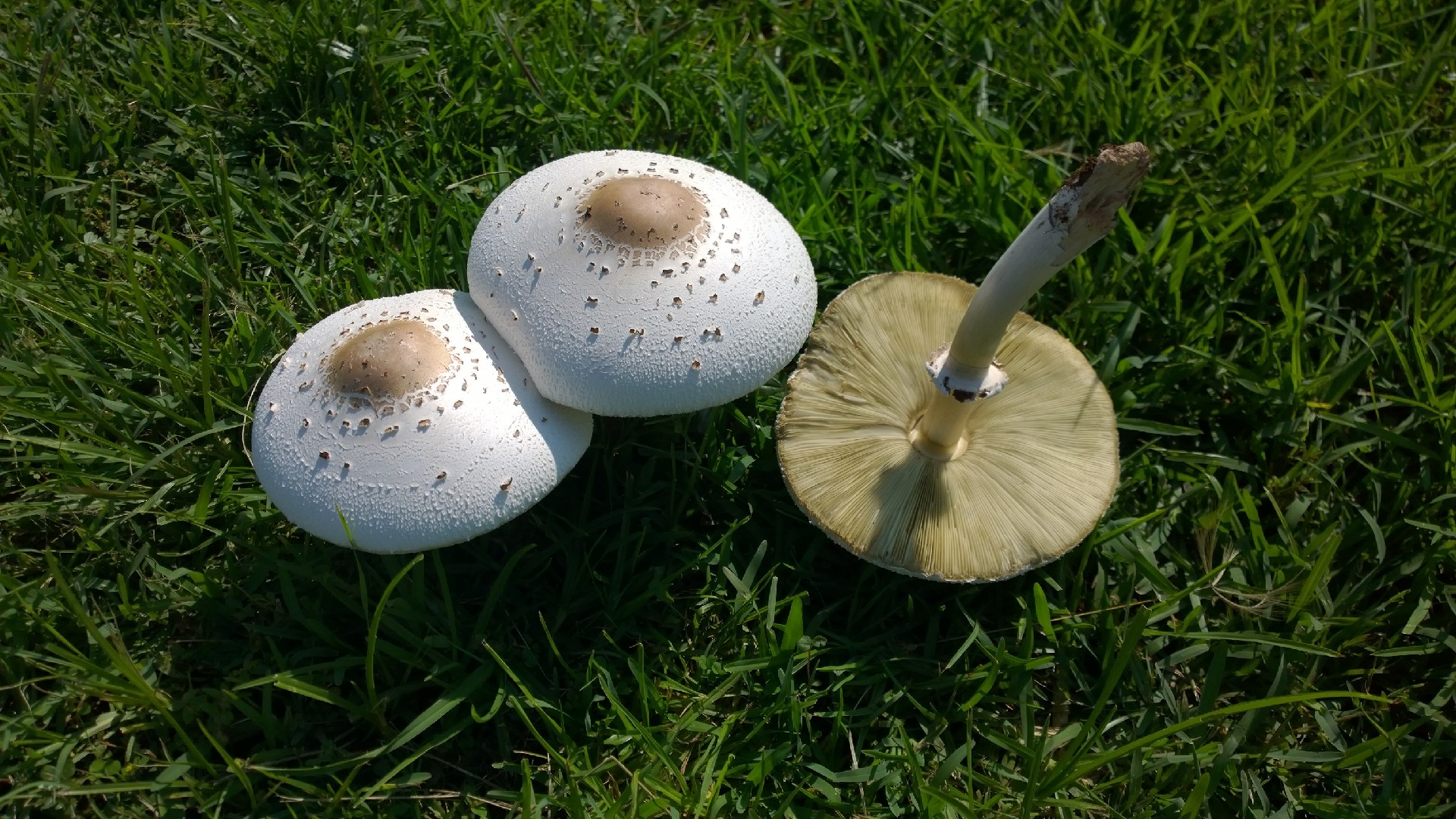
9. False parasol
Though the false parasol appears unassuming, the species is famous—or, infamous—for its toxicity. It looks unfortunately similar to Agericus campestrus, a commonly eaten mushroom, but the false parasol can be distinguished by its highly unusual green spore print. Although they are no good to eat, they can be pretty to look at. The species may grow in ring-shaped groups in meadows and on forest floors in what are sometimes called "fairy circles."
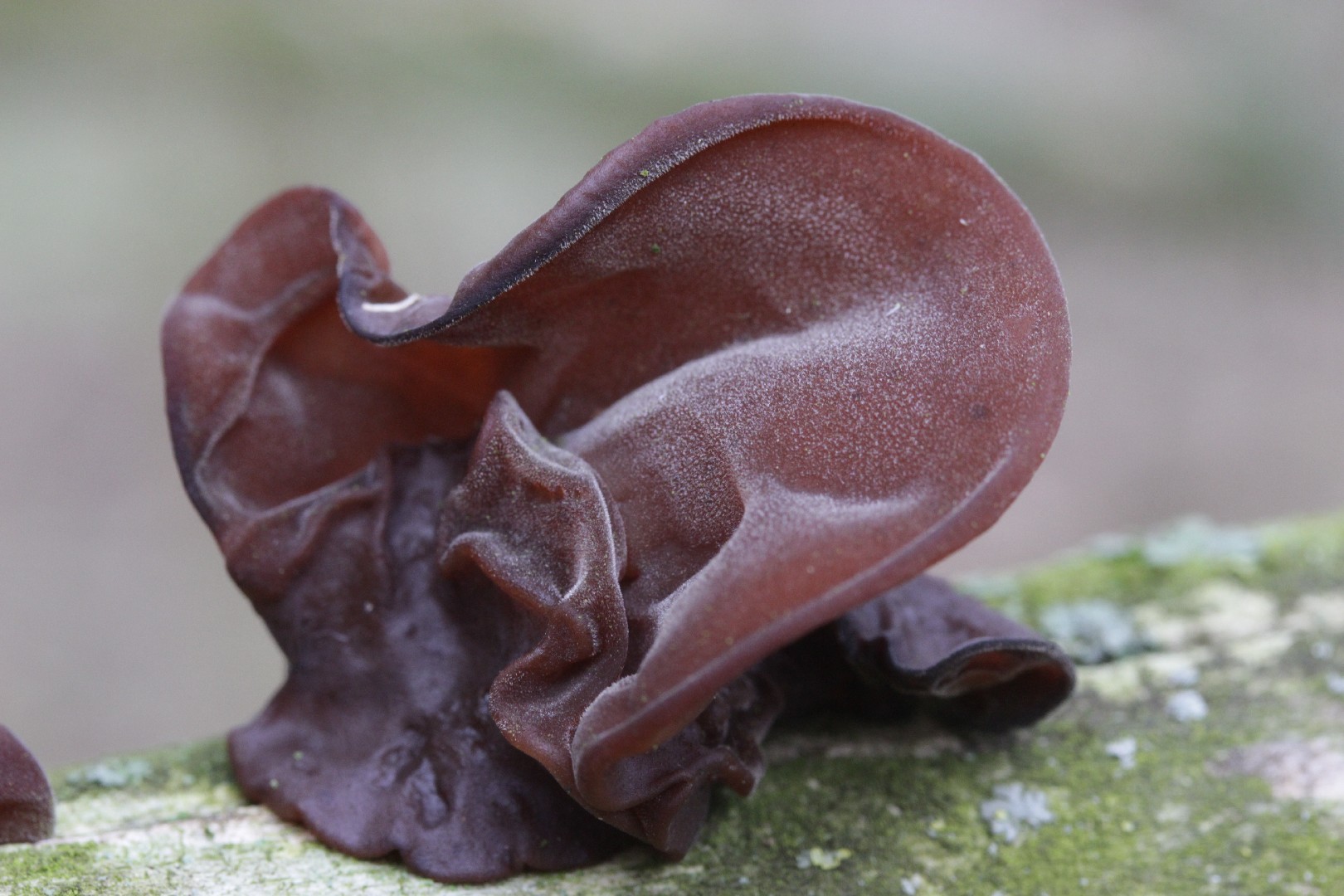
10. Jelly ear
The distinctive jelly ear grows mainly through winter and spring, mostly on the dead trunks and branches of elder trees. It occurs around the world and is often cooked into dishes in Asian countries. This ear-shaped jelly mushroom is often available in stores both fresh and dried.
More







