




Top 20 Most Common Mushrooms in South Korea
Nestled in the heart of East Asia, South Korea is renowned for its rich biodiversity, marked by a unique blend of temperate and subtropical climates. The varied landscapes and distinct seasons make South Korea a fertile ground for a diverse range of mushroom species. In this list, we're exploring the 20 most common mushrooms flourishing in South Korea, each offering a kaleidoscope of flavors, nutritional benefits, and unique properties. Stay tuned as we unravel the fascinating universe of fungi in the land of morning calm, setting the stage for an exciting exploration of South Korea's mycological treasures.

Most Common Mushrooms
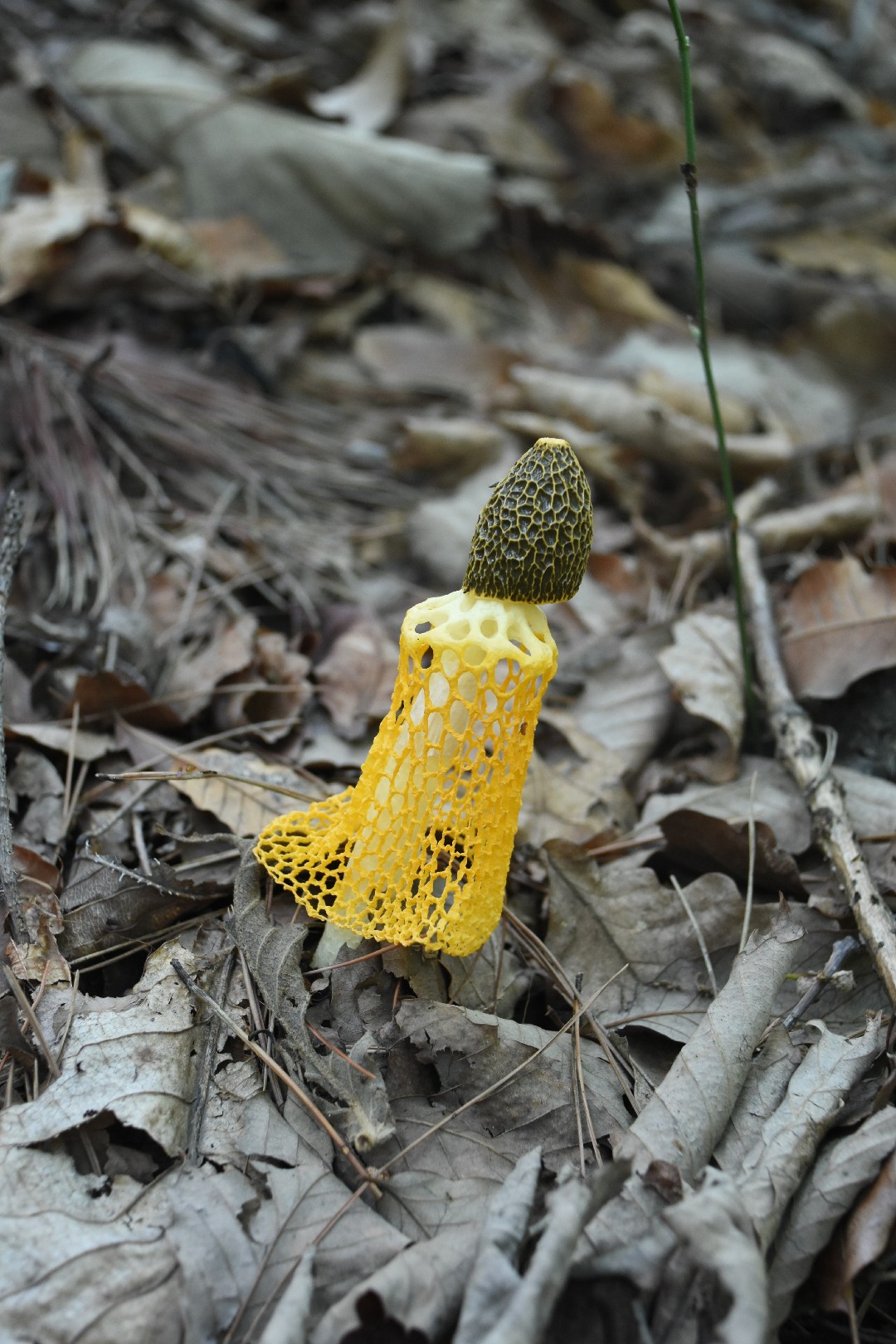
1. Phallus luteus
Phallus luteus's unique appearance makes it easy to recognize in forests. The multi-colored mushroom has yellow webbing hanging off the cap closely resembling a skirt. Like other species in the genus, phallus luteus is also recognizable by its pungent odor.
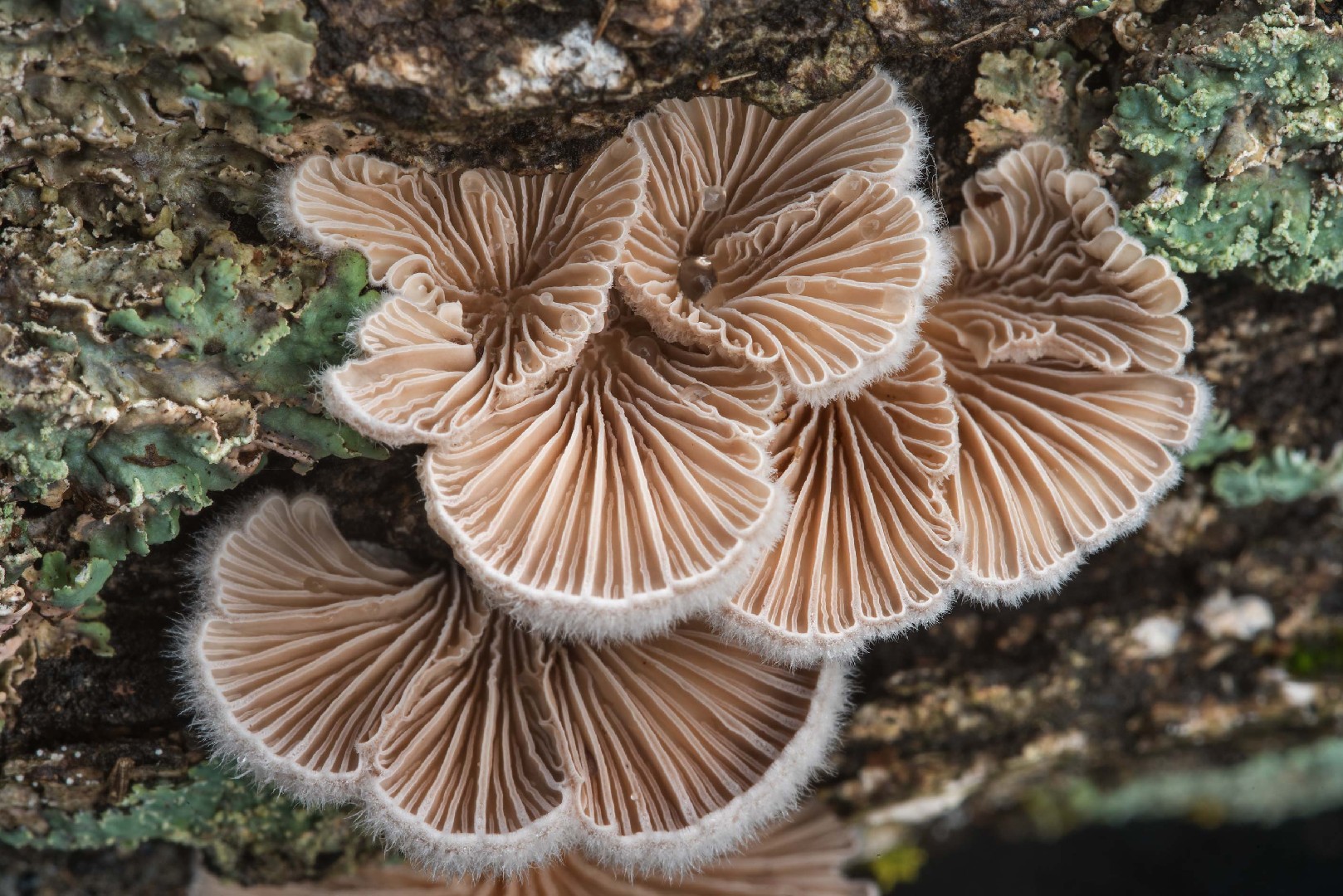
2. Split gill
Split gill(Schizophyllum commune) can be found across the globe. Uniquely, it is the only mushroom species known to display the capability to retract by movement. It is considered inedible, although not necessarily toxic. Furthermore, it is not recommended to smell this species, as the spores are capable of sprouting and growing in nasal passages.
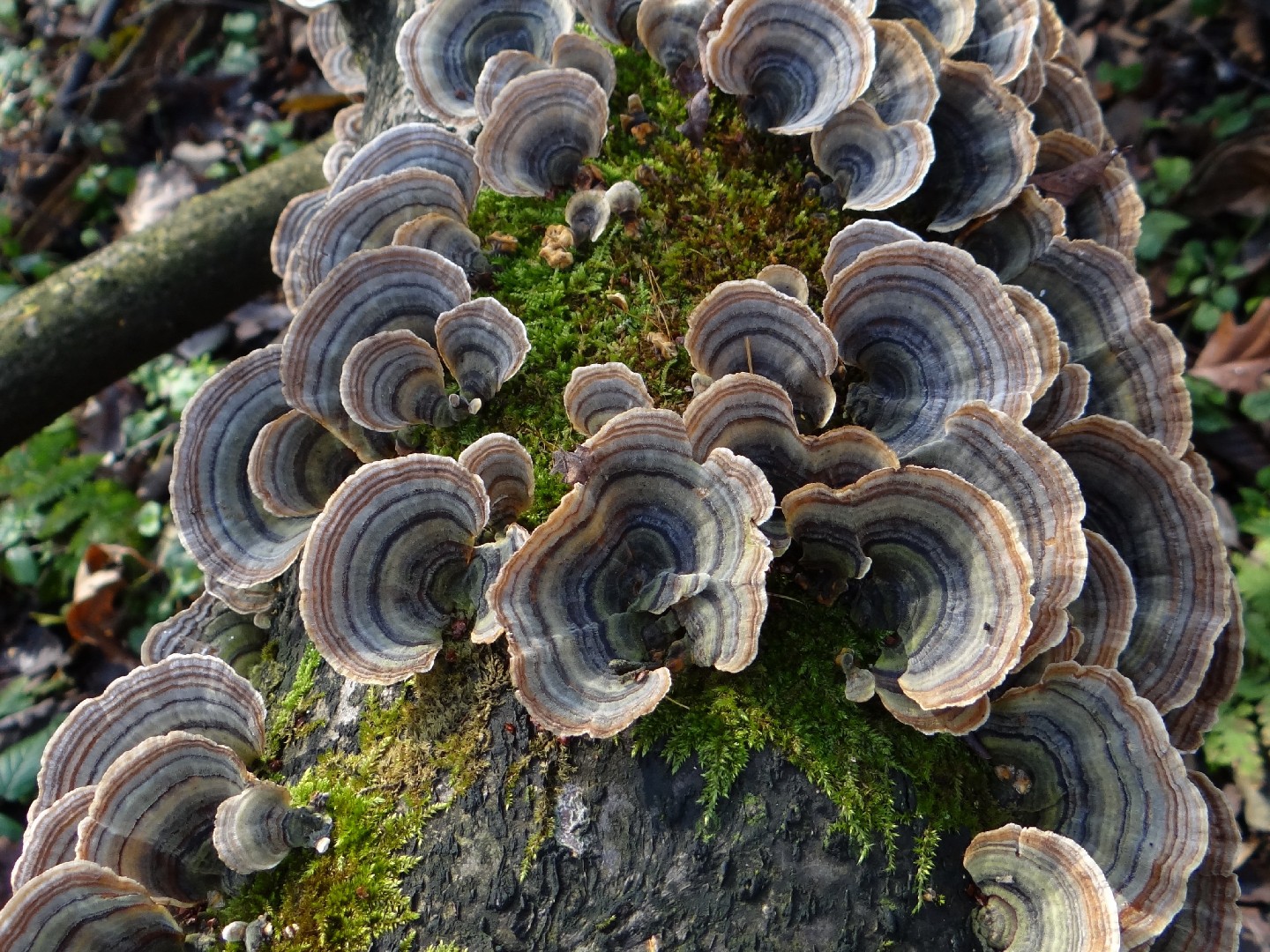
3. Turkey tail
The distinctively-striped turkey tail fungus grows on stumps and logs all over the forests of the northern hemisphere. It is, in fact, probably the most common species you will find. That doesn't mean this mushroom is plain, however; each cap is uniquely patterned. Look for bands of alternating textures as well as color.
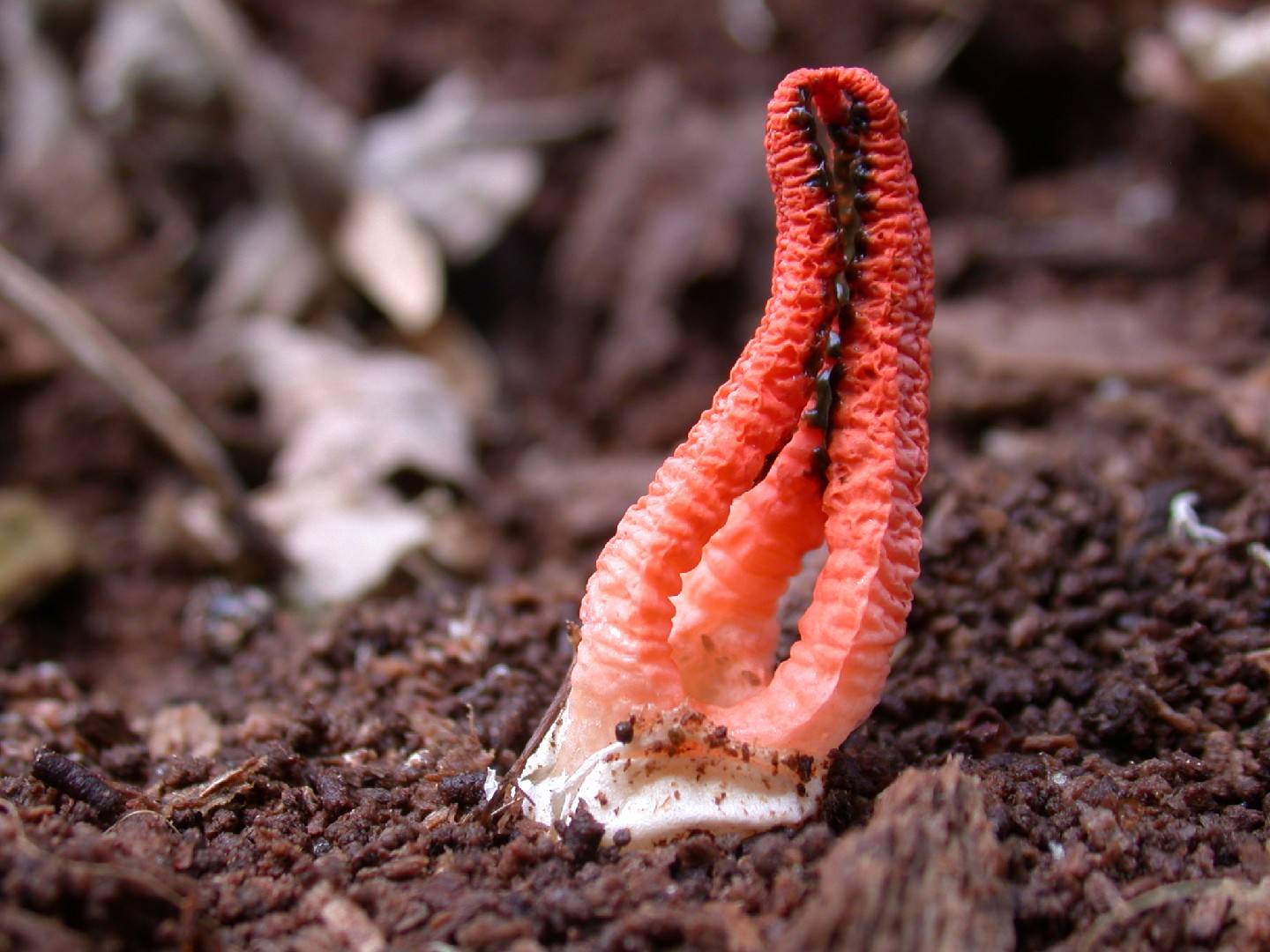
4. Stinky squid
Stinky squid is known for the foul-smelling slime that it is coated in during its growing period. This mushroom is easy to spot in woods and urban areas due to its red, elongated arms that resemble a squid’s tentacles, giving the mushroom its name "stinky squid."
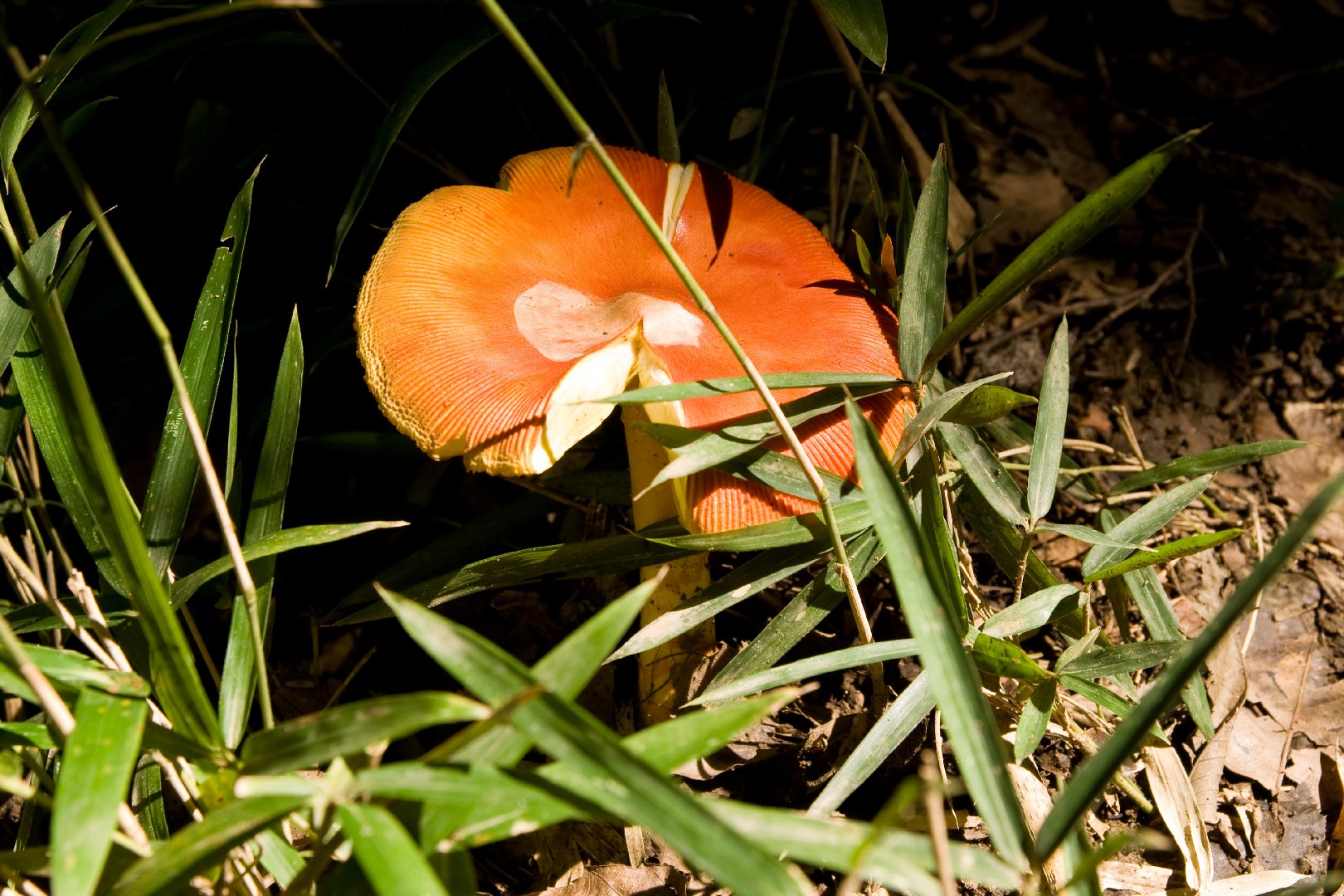
5. Half-dyed slender caesar
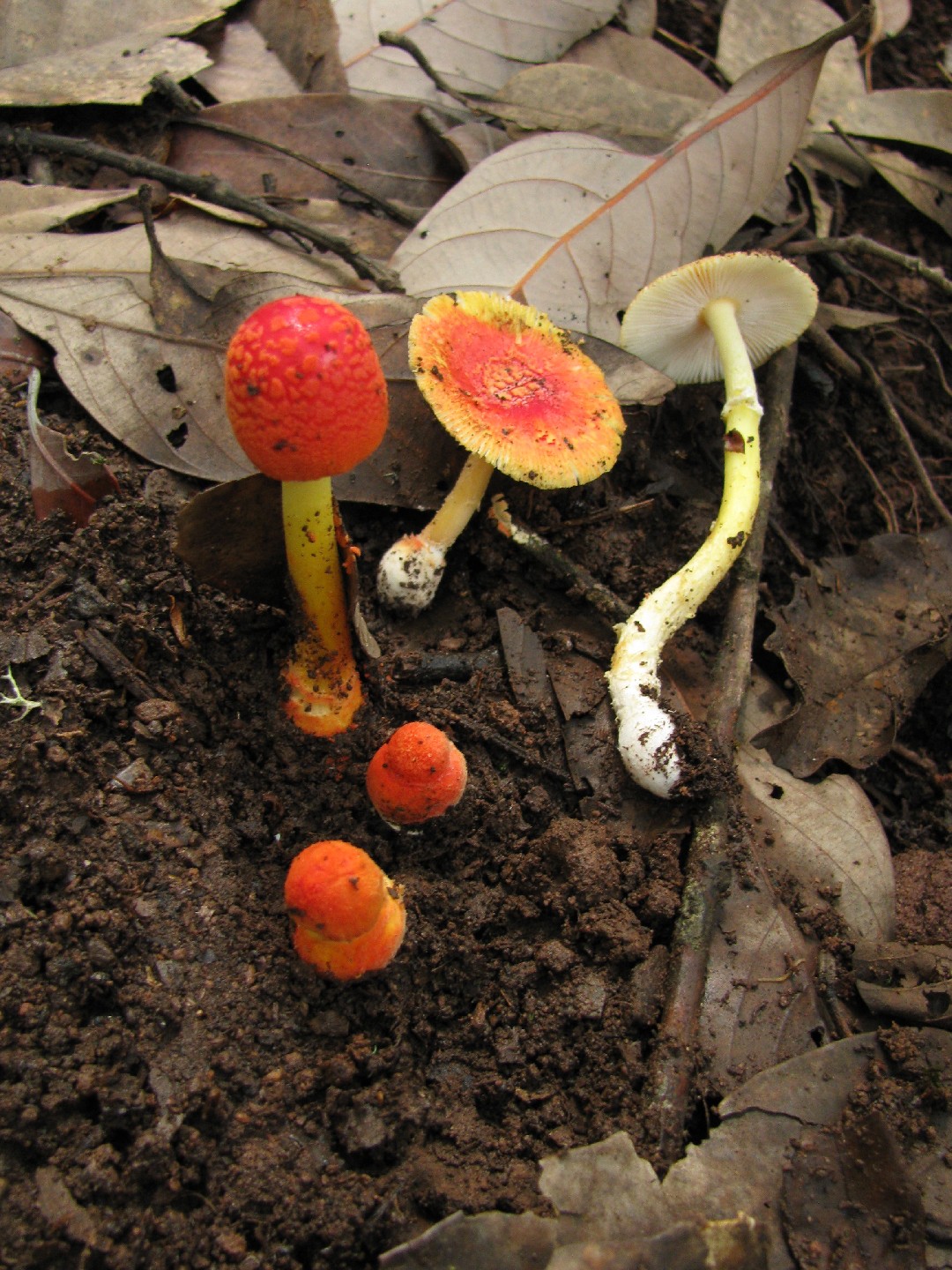
Half-dyed slender caesar’s bright-colored caps give it an attractive appearance growing on forest floors underneath conifers and broadleaf trees. However, they also make it easy to confuse half-dyed slender caesar with the East Asian death cap, a similar species with highly toxic properties.
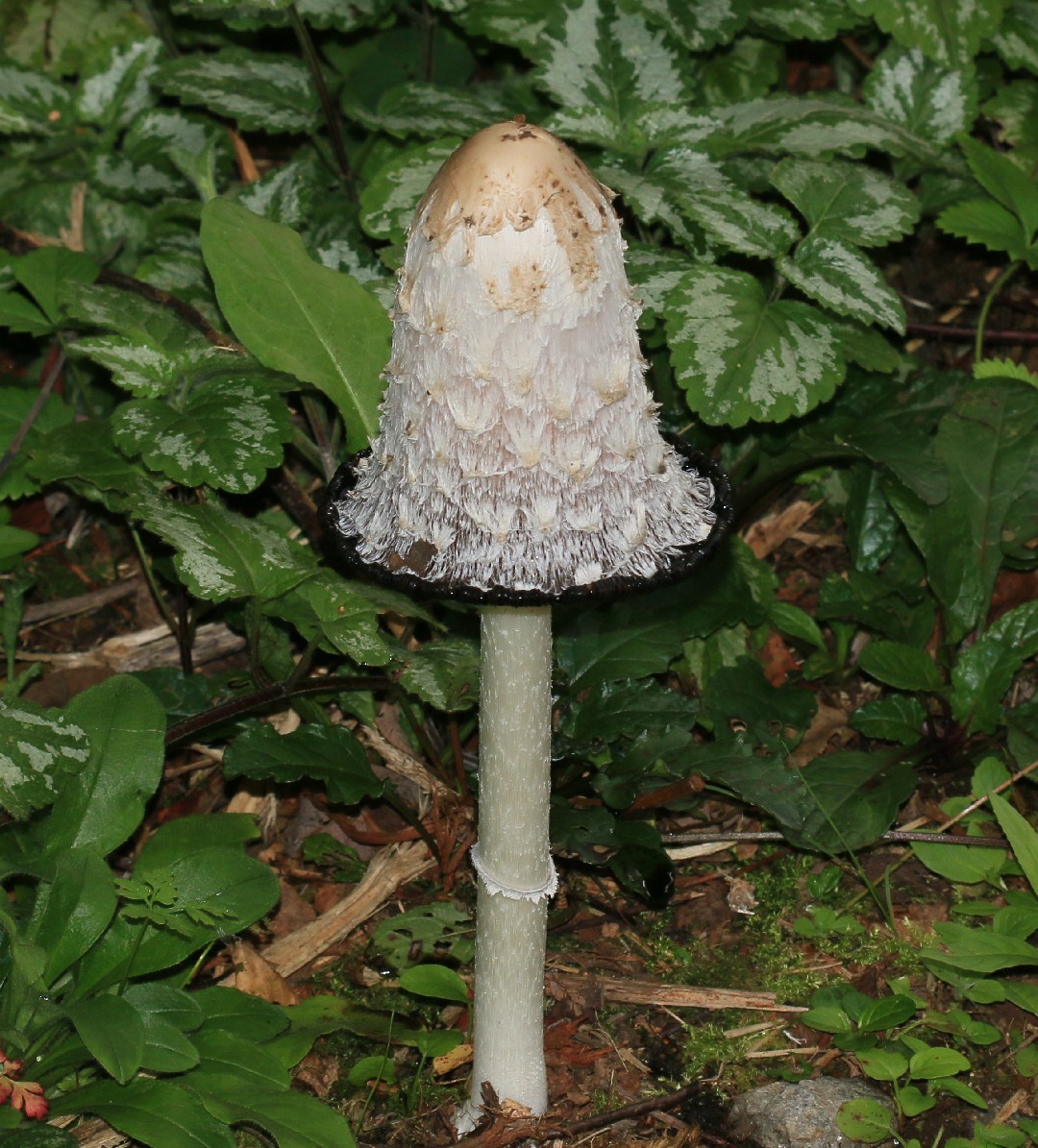
6. Shaggy mane
The shaggy mane mushroom is commonly found in North American and European grasslands. Some peoples foraged for its young egg-shaped caps, but it has more recently been found to be a bioaccumulator of heavy metals, meaning it pulls toxic metals up from the soil where it grows. As a result, shaggy manes should not be eaten. The mushrooms usually appear in clusters or “fairy rings.”
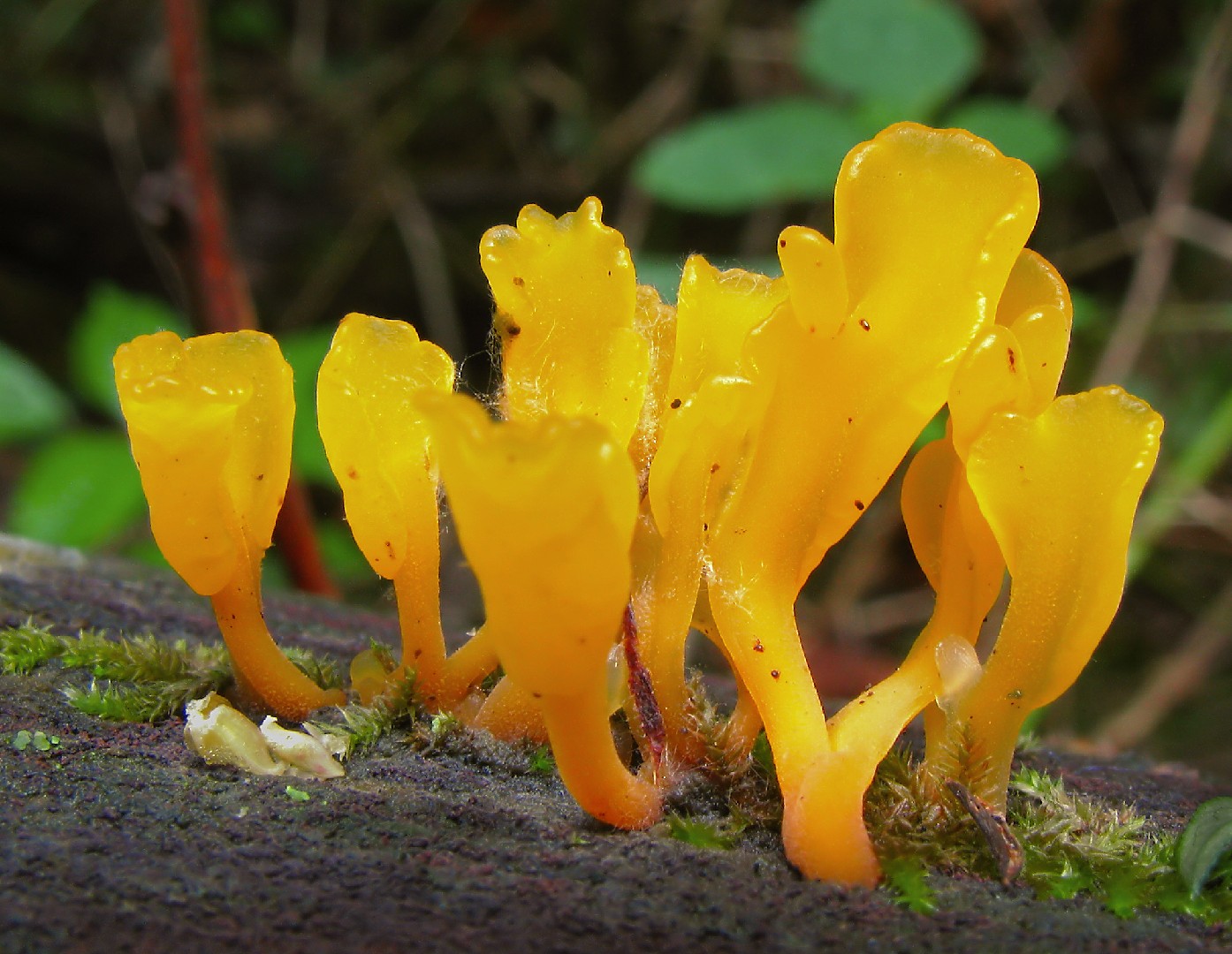
7. Fan-shaped jelly-fungus
Just as its Latin and the common English names suggest, the fan-shaped jelly-fungus (Dacryopinax spathularia) is a fan-shaped or spatula-shaped jelly-like mushroom. It commonly grows in wood cracks and it sometimes even appears in the cracks of the processed wood and lumber. Despite the word "jelly" in its name, the fan-shaped jelly-fungus is not considered edible.
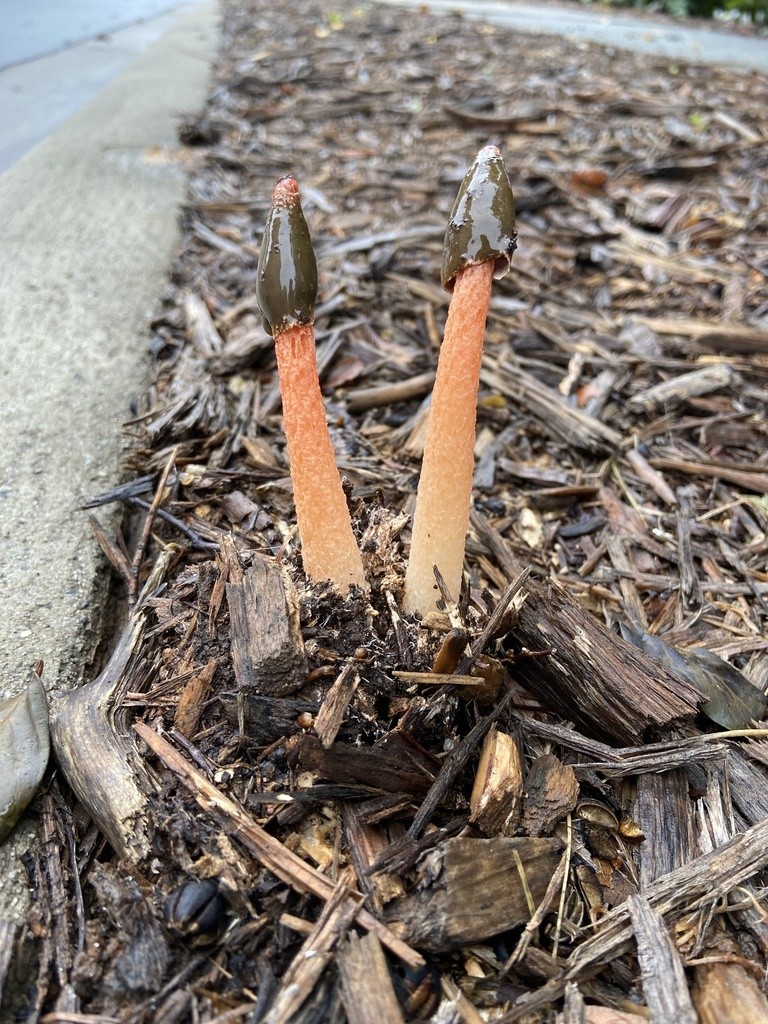
8. Phallus rugulosus
9. Parasol
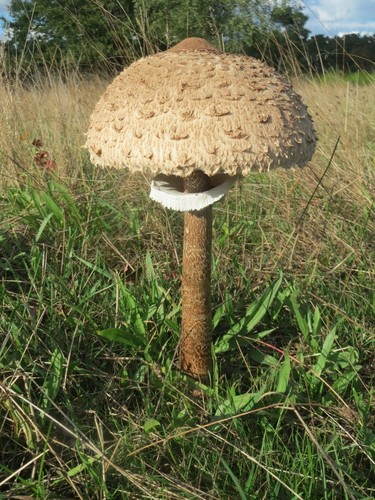
Found in clearings and grassy areas in late summer, the wild parasol mushroom has a snakeskin-patterned stem. The brown spots on its cap make it look a bit shaggy, but that name is reserved for its poisonous counterpart, the Shaggy Parasol (Chlorophyllum rhacodes). You can distinguish the two by the stems: the latter has a smooth stem and red flesh inside.
10. Yellow morel
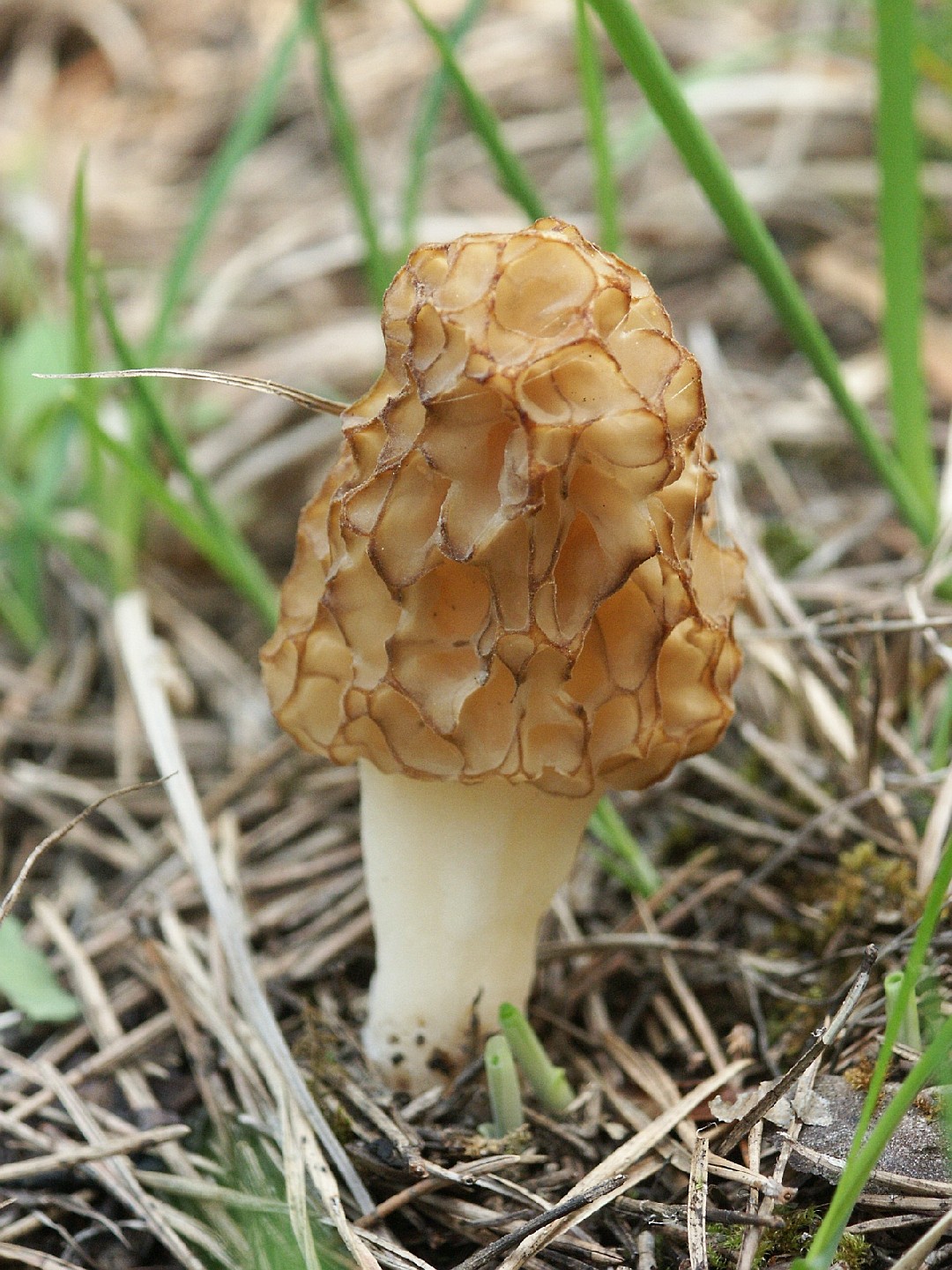
The yellow morel (Morchella esculenta) is one of the most iconic and sought-after species of edible mushrooms. It is often one of the first species that novice mushroom gatherers will hunt for. Yellow morels have elongated caps that are "honeycombed", being filled with roughly polygonal holes. Splitting them down the middle reveals them to be hollow on the inside, a key feature that distinguishes them from toxic false morels. Experts recommend cooking or boiling this mushroom before consumption, as raw morels may cause an upset stomach.
More







