




Top 18 Most Common Mushrooms in Limpopo

Most Common Mushrooms
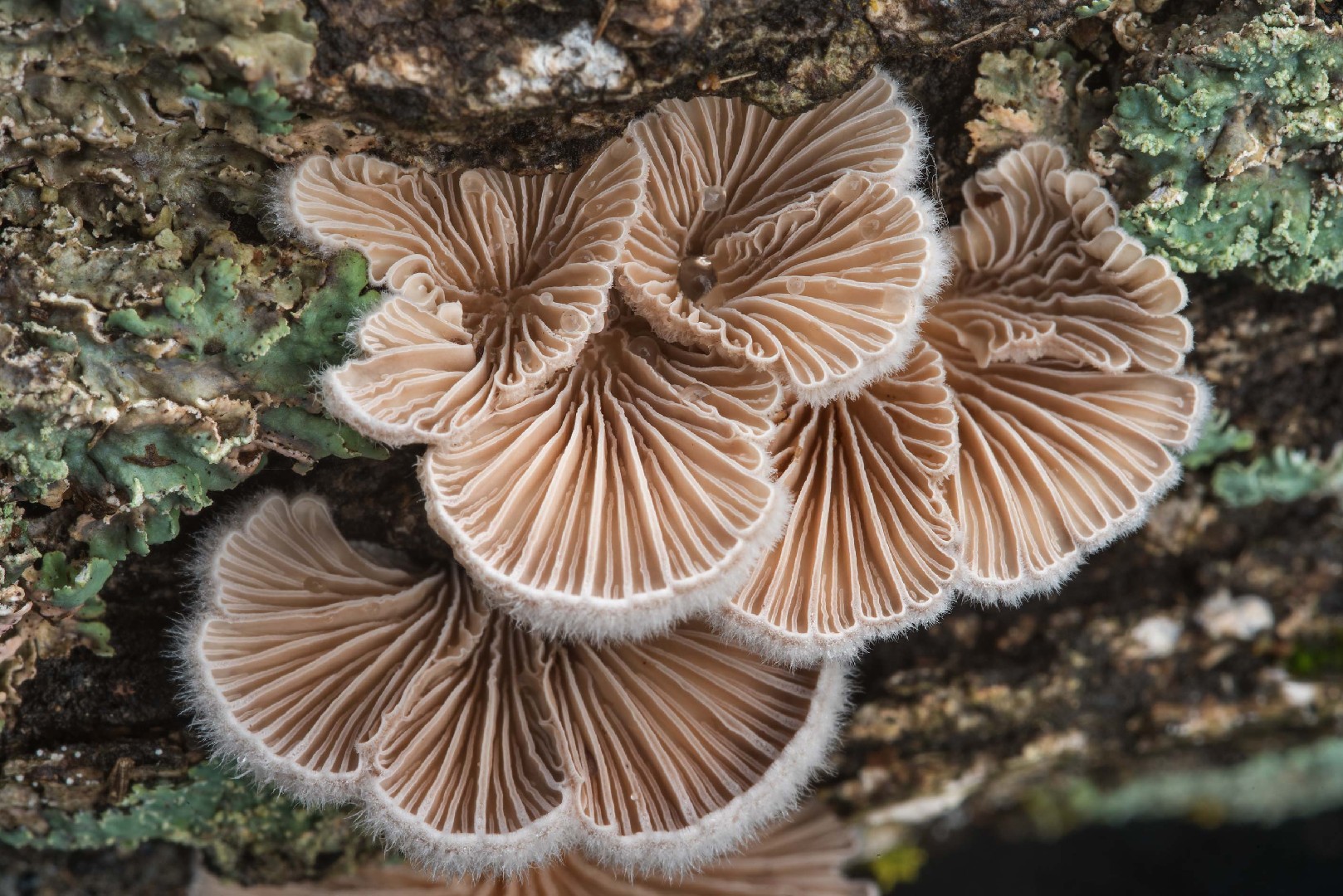
1. Split gill
Split gill(Schizophyllum commune) can be found across the globe. Uniquely, it is the only mushroom species known to display the capability to retract by movement. It is considered inedible, although not necessarily toxic. Furthermore, it is not recommended to smell this species, as the spores are capable of sprouting and growing in nasal passages.
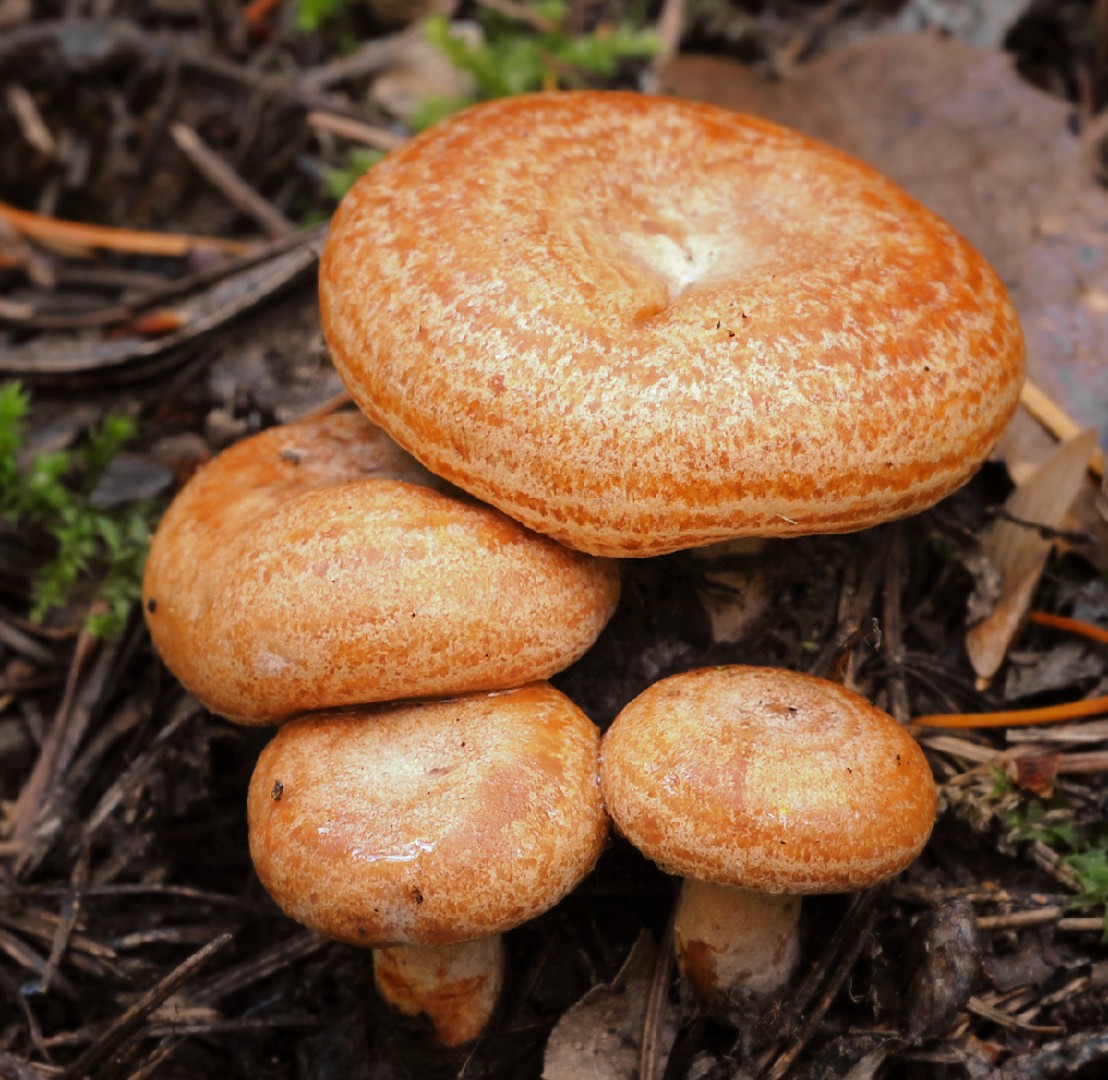
2. Saffron milk cap
Growing wild in the northern hemisphere and introduced to Australia, the saffron milk cap is found in pine forests during autumn. As the name implies, these mushrooms have been harvested for cooking for a long time. They have been known to cause stomach upset in some individuals, however, and carry a risk of being contaminated with heavy metals, so forage with caution.
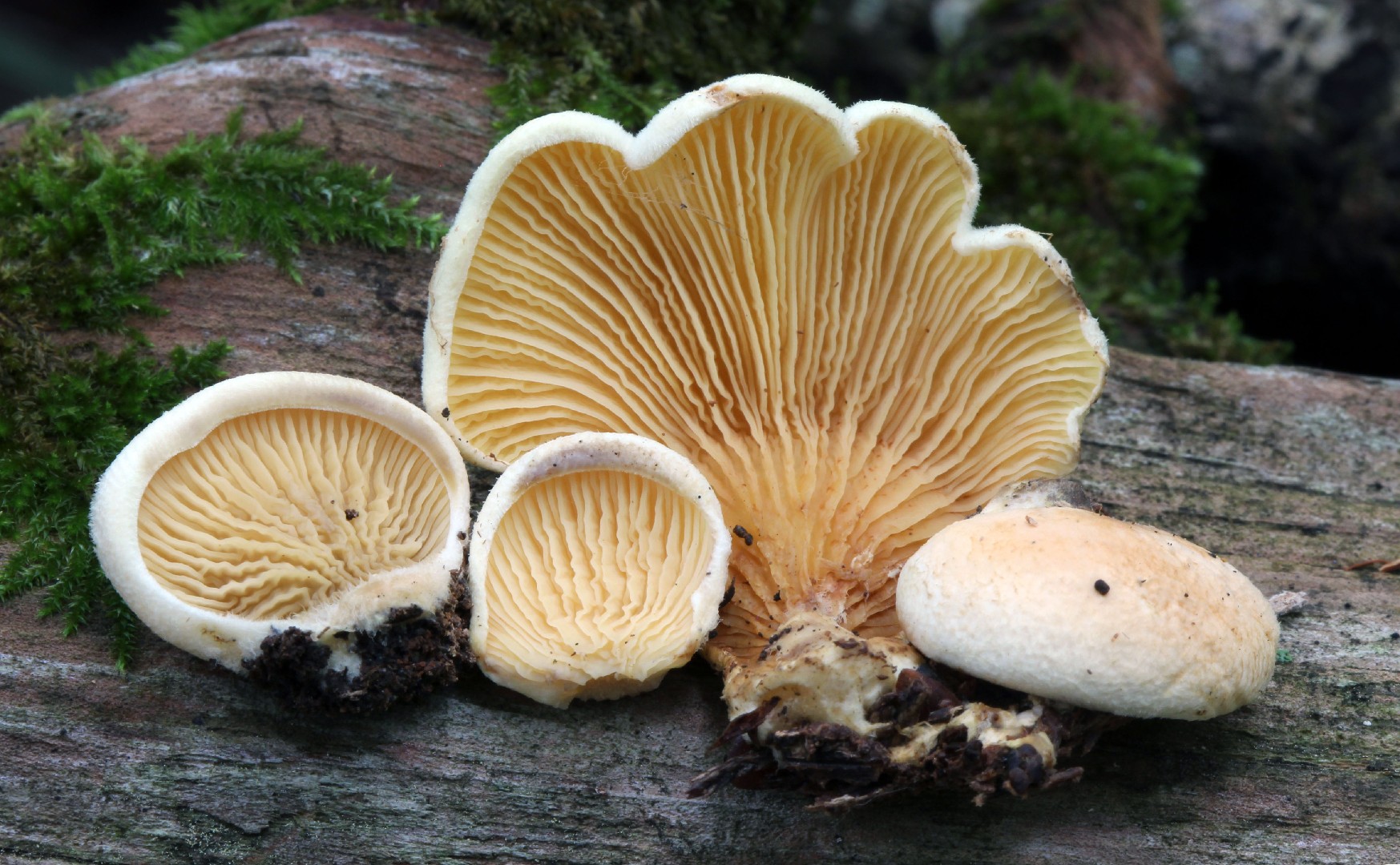
3. Oyster rollrim
The oyster rollrim lacks a stem, and its lightly fuzzy orange cap, which can grow to a width of 8 cm, will bald with age. This fungus grows in conifer woodlands throughout North America and Europe, from spring to late fall. It has no odor and is poisonous.
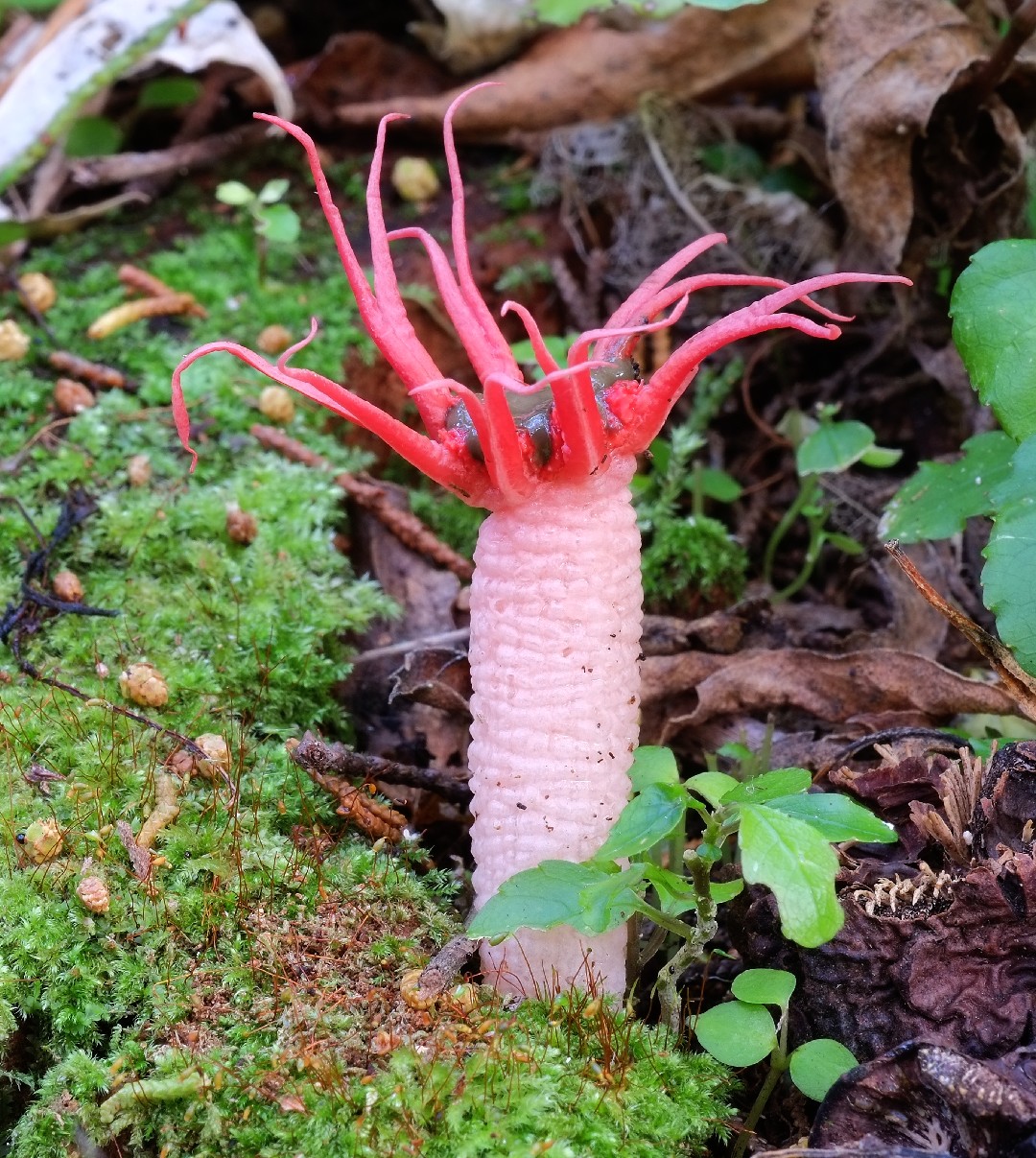
4. Anemone stinkhorn
The anemone stinkhorn (Aseroe rubra) looks like a creature straight from the depths of the ocean…or perhaps a horror movie! This Australian native starts fruiting with a white, egg-like ball that breaks open to reveal bright red tentacle-like fingers that spread toward the sky with radial symmetry and the odor of rotting meat. It has spread to tropical and sub-tropical areas around the world and is potentially poisonous.
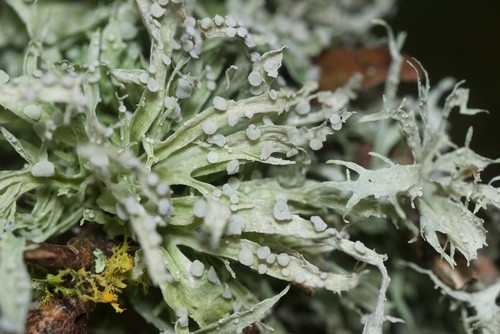
5. Cartilage lichen
Fructicose lichen cartilage lichen showcases an extraordinary ability to thrive in various habitats, from arid deserts to moist woodlands. Unique to cartilage lichen, it has a symbiotic relationship with both fungi and algae, with each benefiting the other. Intriguingly, cartilage lichen can capture atmospheric nutrients, even in the most nutrient-poor environments.
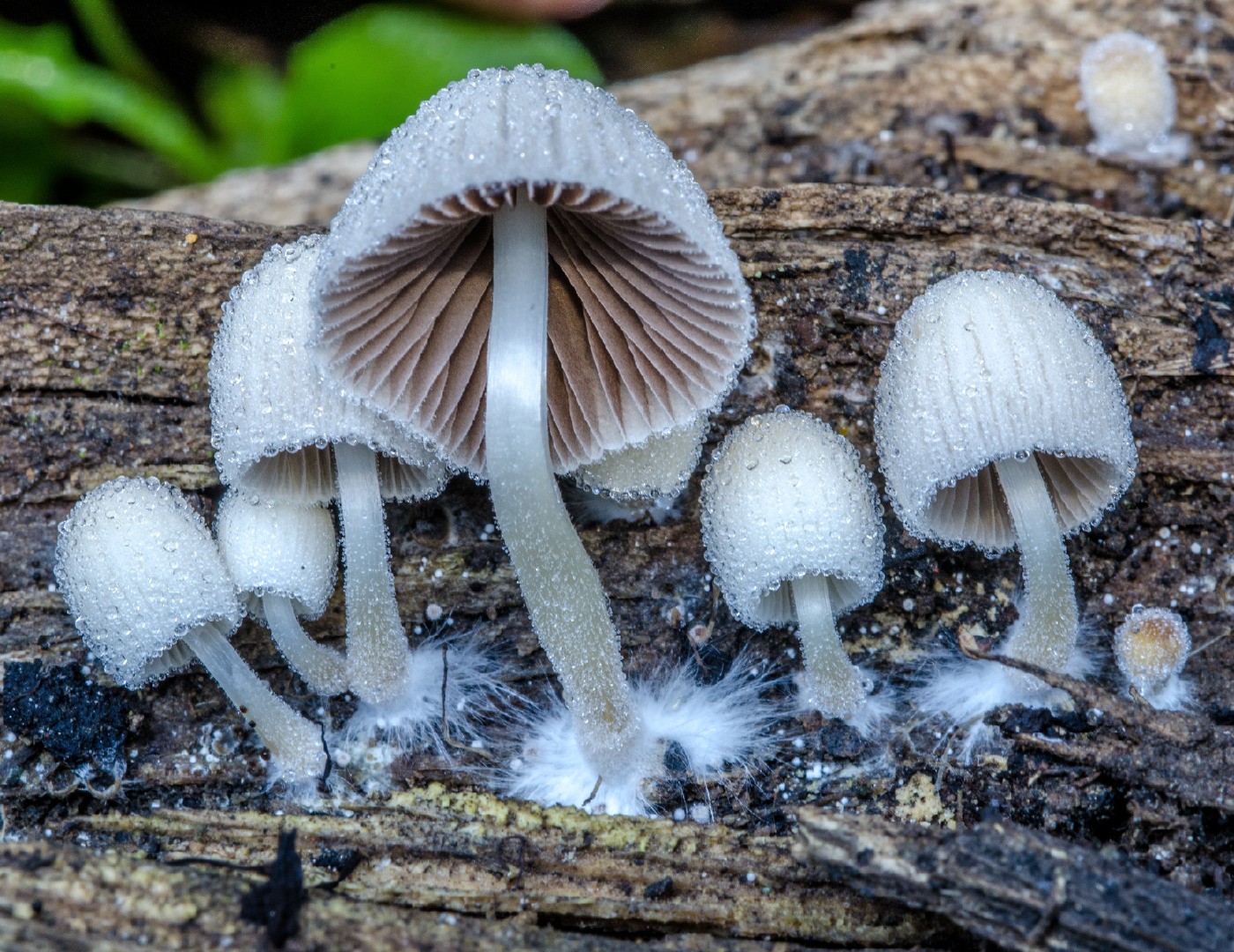
6. Fairy inkcap
The mushrooms of the fairy inkcap species have a tendency to congregate in large masses over dead tree stumps and decaying roots. They appear all around the world from early spring all the way to the first frosts, but each fruit only lasts a few days before turning black and distributing its spores.
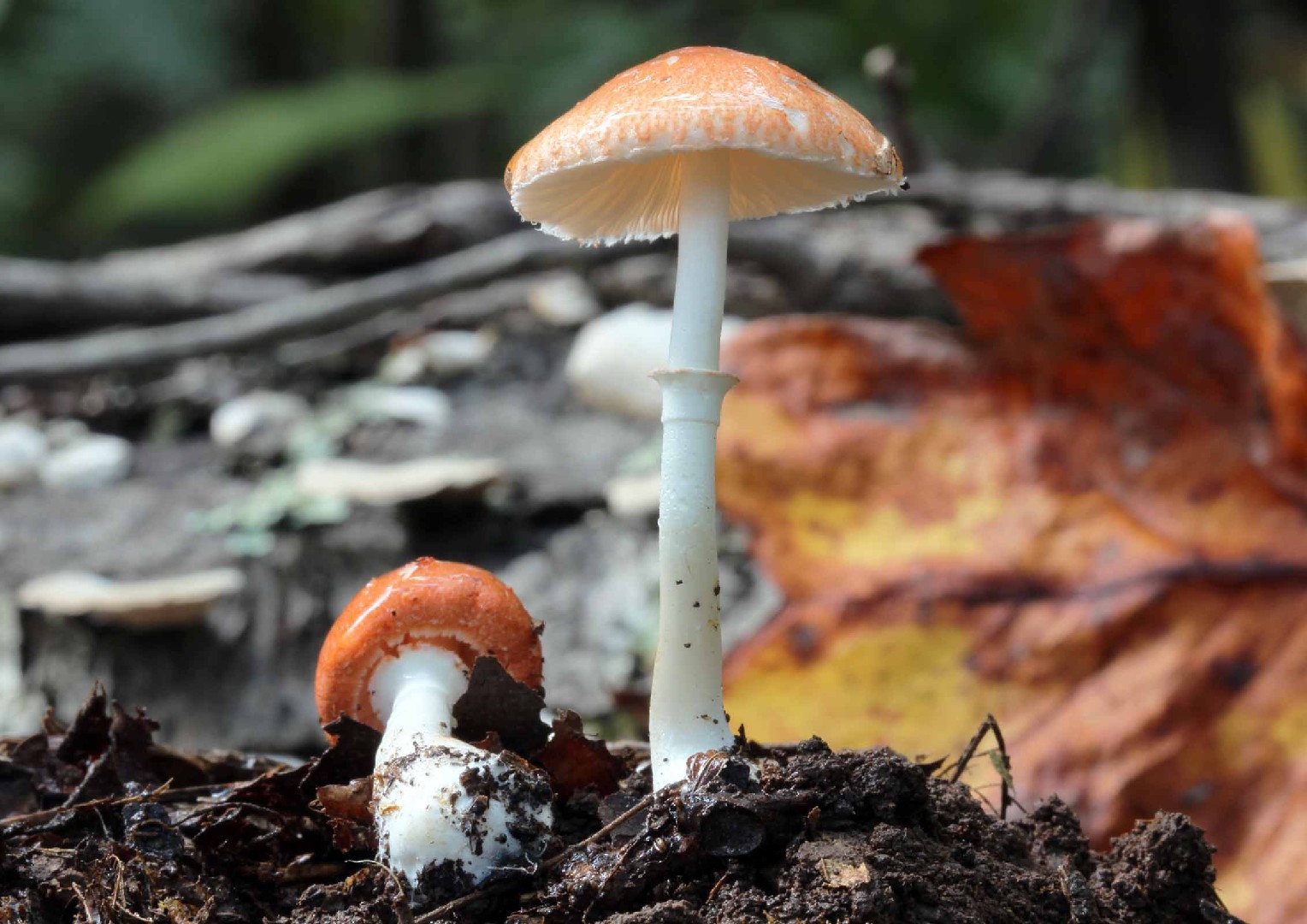
7. Red-tinged daperling
This beautiful mushroom is one of the first to pop out after early spring rains. Red-tinged daperling (Leucoagaricus rubrotinctus) is easily distinguished by its coral-red immature cap that remains pinkish in the center even when it matures. The species is not recommended for collecting and eating because its edibility status is still unknown.
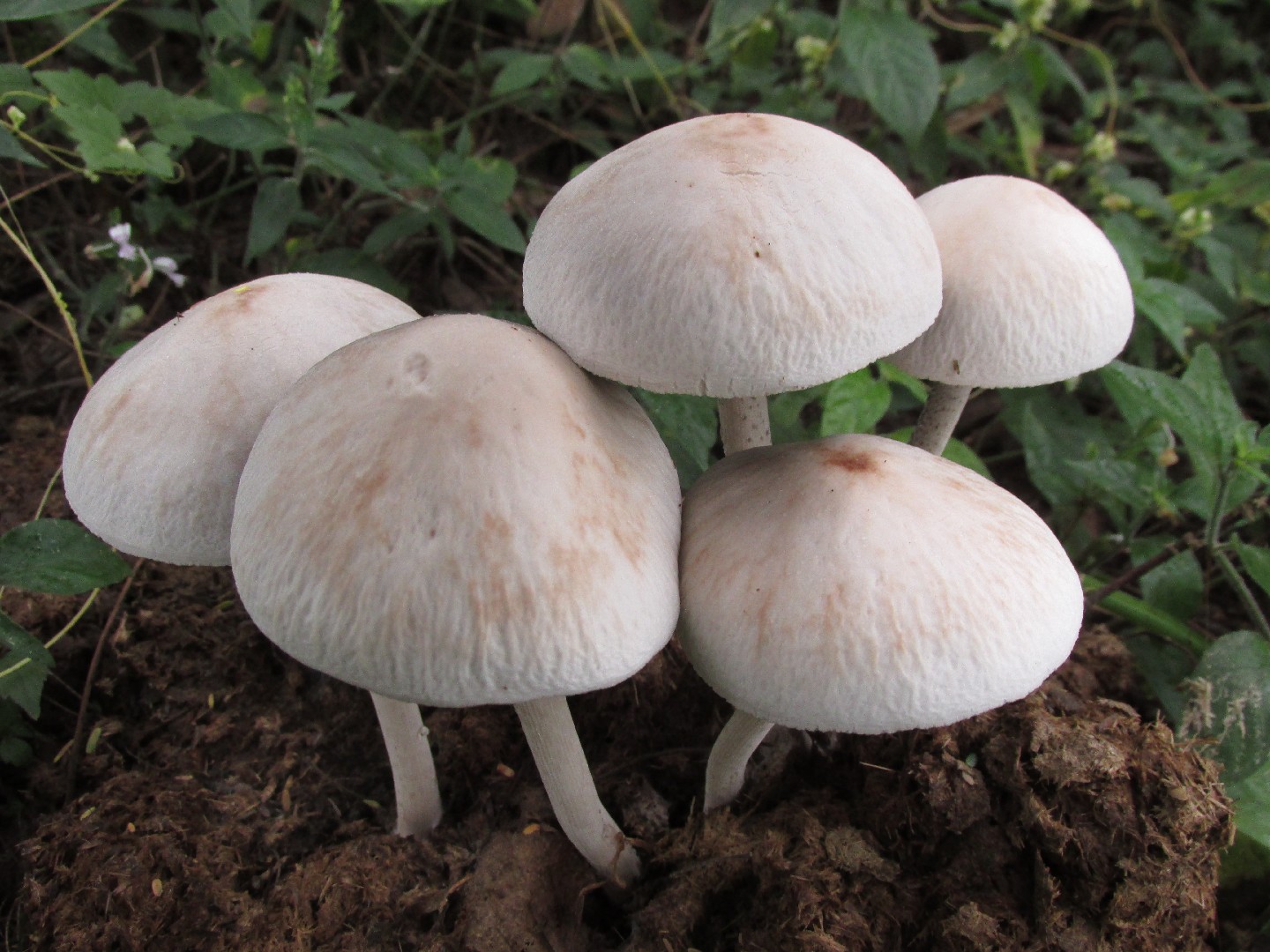
8. Panaeolus antillarum
The panaeolus antillarum is a small, nondescript mushroom that, like other members of the Panaeolus genus, favors fruiting in animal dung, though it may also be found in wet meadows or even lawns. Though its stalk and cap don't offer any quick or easy identifying characteristics, one distinguishing feature of this species is its spore print, which is jet black.
9. Dung roundhead
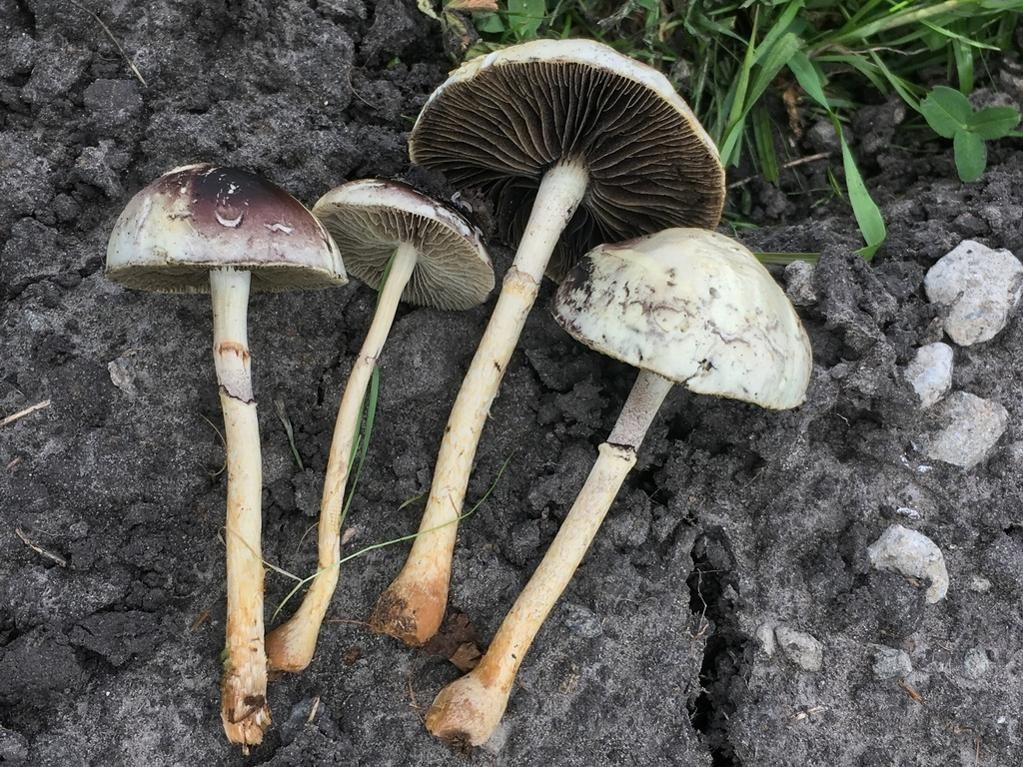
The dung roundhead (Protostropharia semiglobata) is named for its two distinguishing features. First, this mushroom is often found growing in or near dung, and so it is a common sight in grazed fields or agricultural areas. The "roundhead" is a reference to the species' smooth and almost perfectly half-spherical cap (the scientific name, "semiglobata", is also a reference to this). Dung roundheads have a global distribution.
10. Apricot club
More







