




Top 12 Most Common Mushrooms in Nigeria
Nestled within the thriving ecosystems of Nigeria, a diverse array of mushrooms carve out their unique niches. Largely influenced by factors such as the local flora and fauna, soil type, and climate, these mycological wonders truly encapsulate the vibrant biological diversity that the country boasts. Given the myriad of mushroom species found across Nigeria, this page is keen on revealing the top 12 strain standing out in prevalence and popularity amid mushroom enthusiasts and mycologists alike. Uncover the amazing fungal world of Nigeria and discover its fascinating mushroom biodiversity.

Most Common Mushrooms
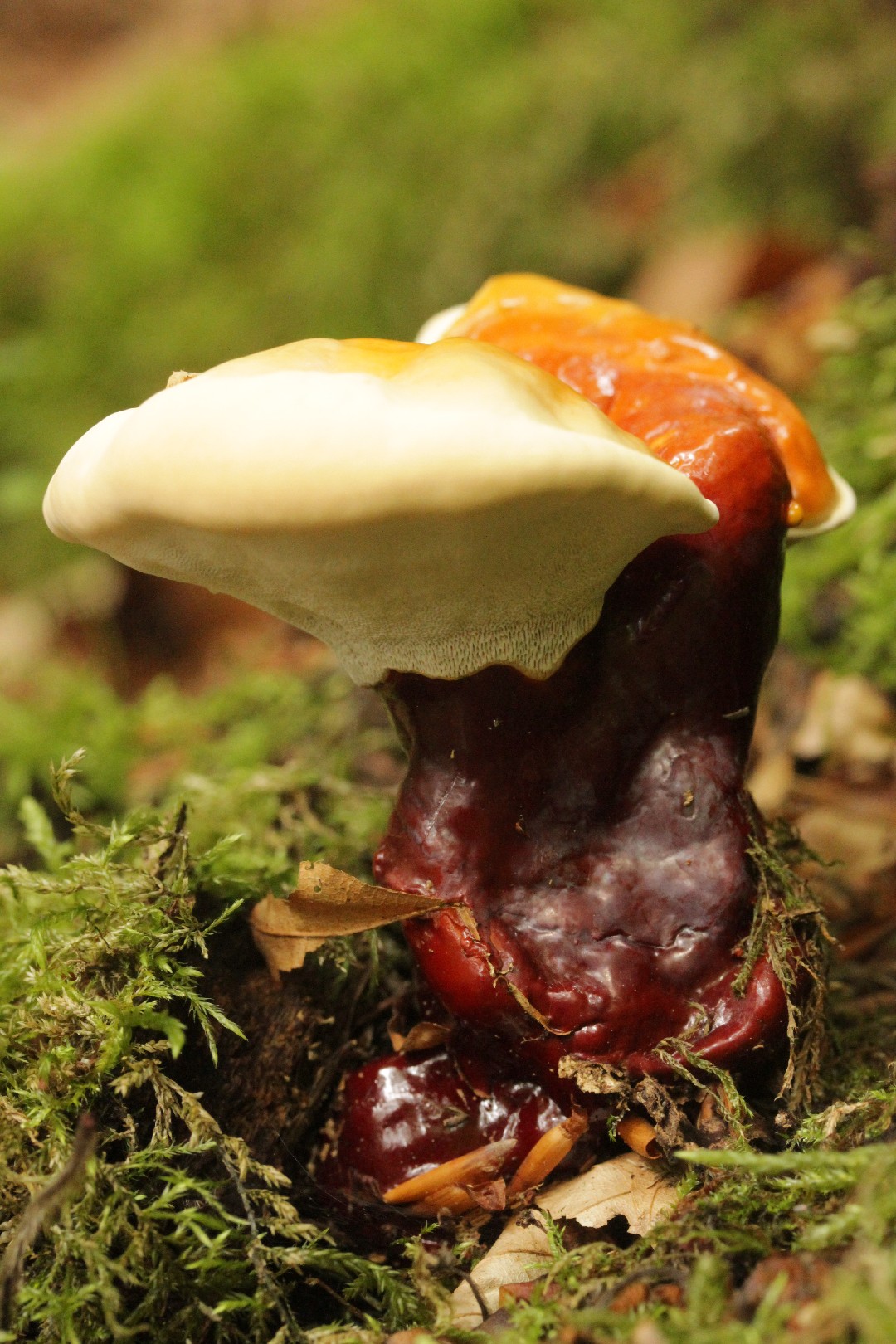
1. Reishi
The reishi (Ganoderma lucidum) is a large shelf fungus that grows as a bracket off the sides of trees, or occasionally as a rosette on the tops of stumps. Its surface is smooth and shiny. Growing wild from warm temperate zones to the subtropics, the reishi is also cultivated on grain and sawdust for commercial use. The mushroom has cultural significance in some Chinese cultures.
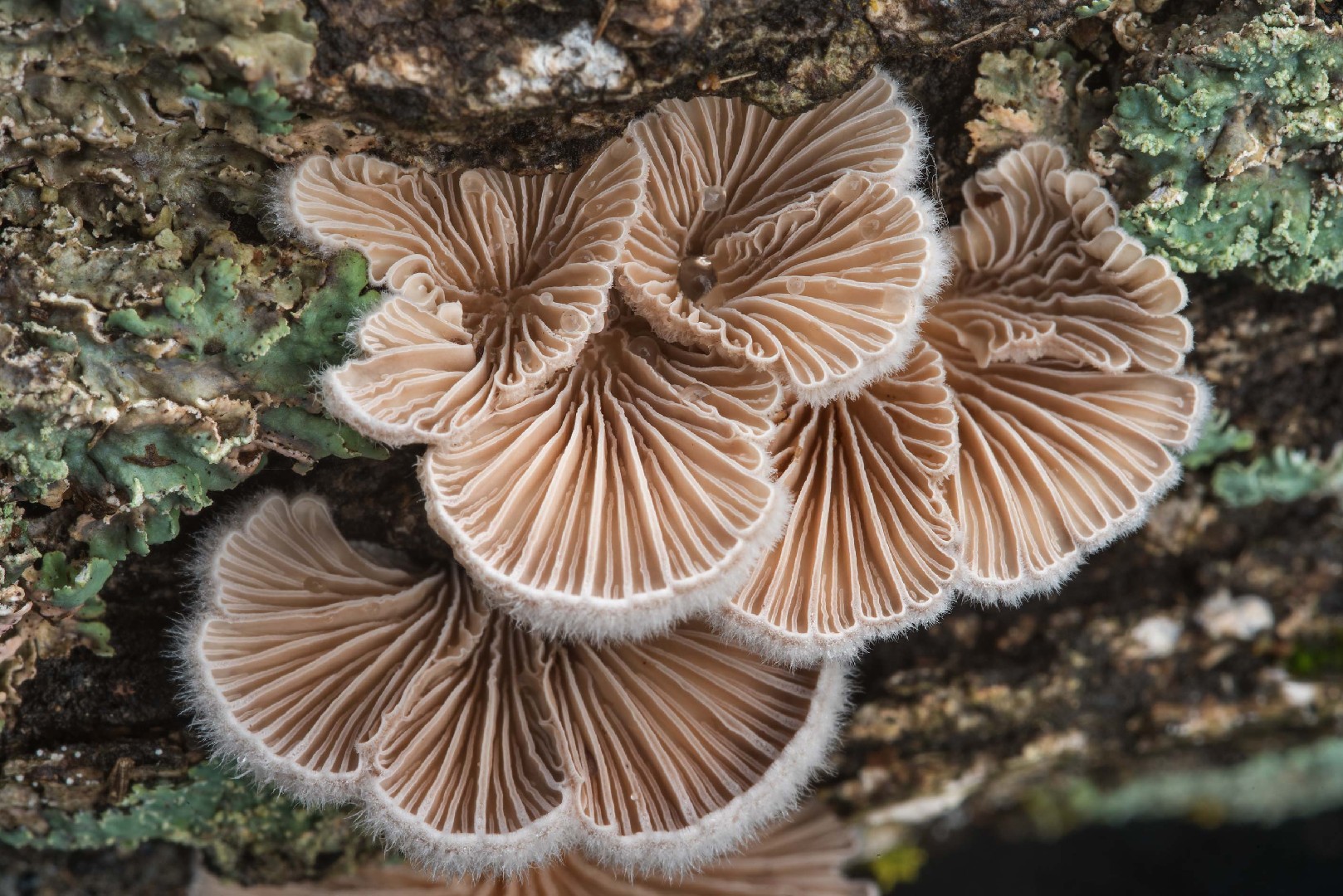
2. Split gill
Split gill(Schizophyllum commune) can be found across the globe. Uniquely, it is the only mushroom species known to display the capability to retract by movement. It is considered inedible, although not necessarily toxic. Furthermore, it is not recommended to smell this species, as the spores are capable of sprouting and growing in nasal passages.
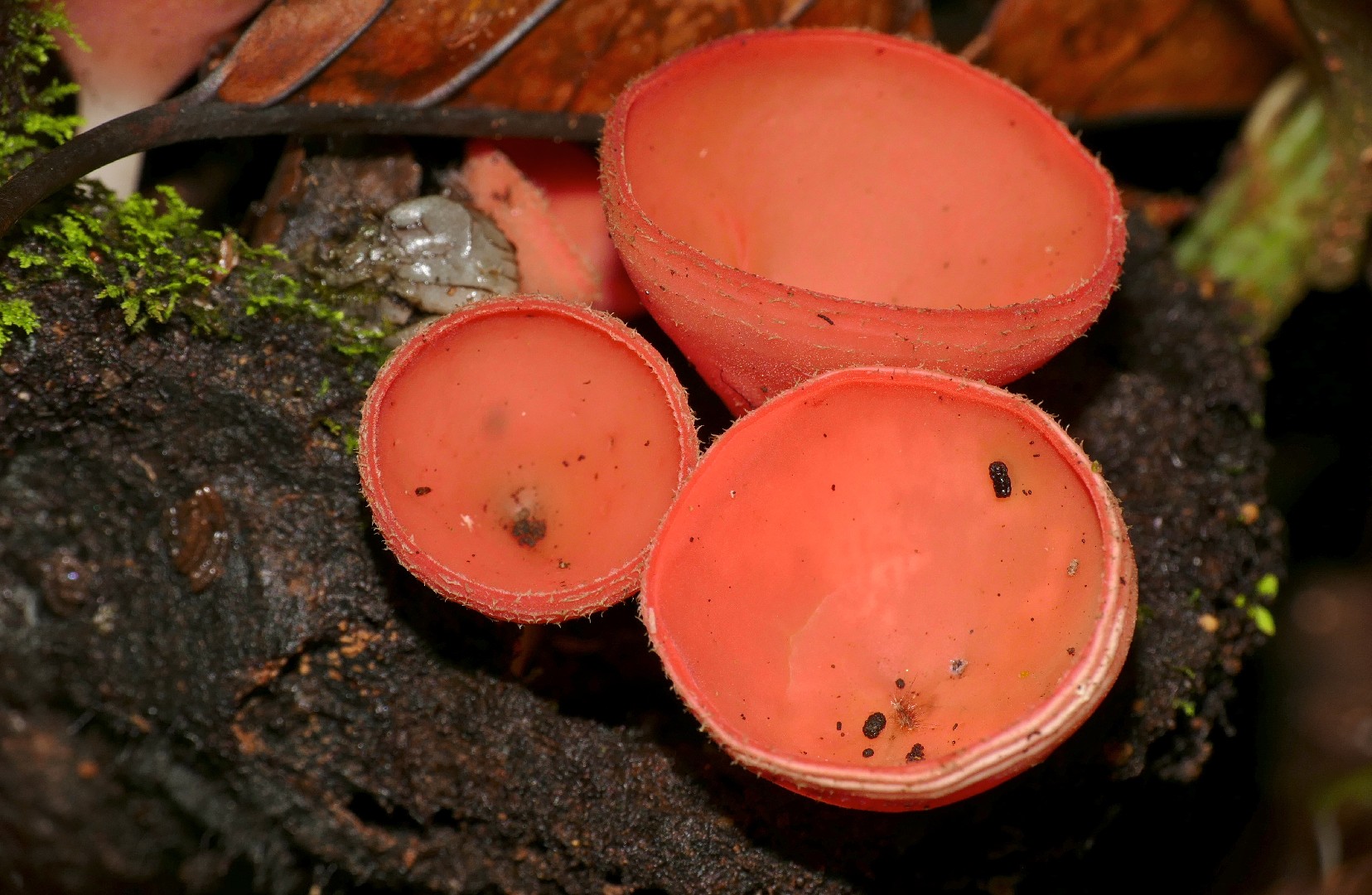
3. Cookeina sulcipes
Cookeina sulcipes forms a brightly-colored cup-shaped fruitbody on rotting dead woods in the floor of tropical forests. Hairlike projections ring the edge of the inverted cap, which is smooth on the inside. Studies suggest the amount of rain water held by these cups influences when the spores will be released.
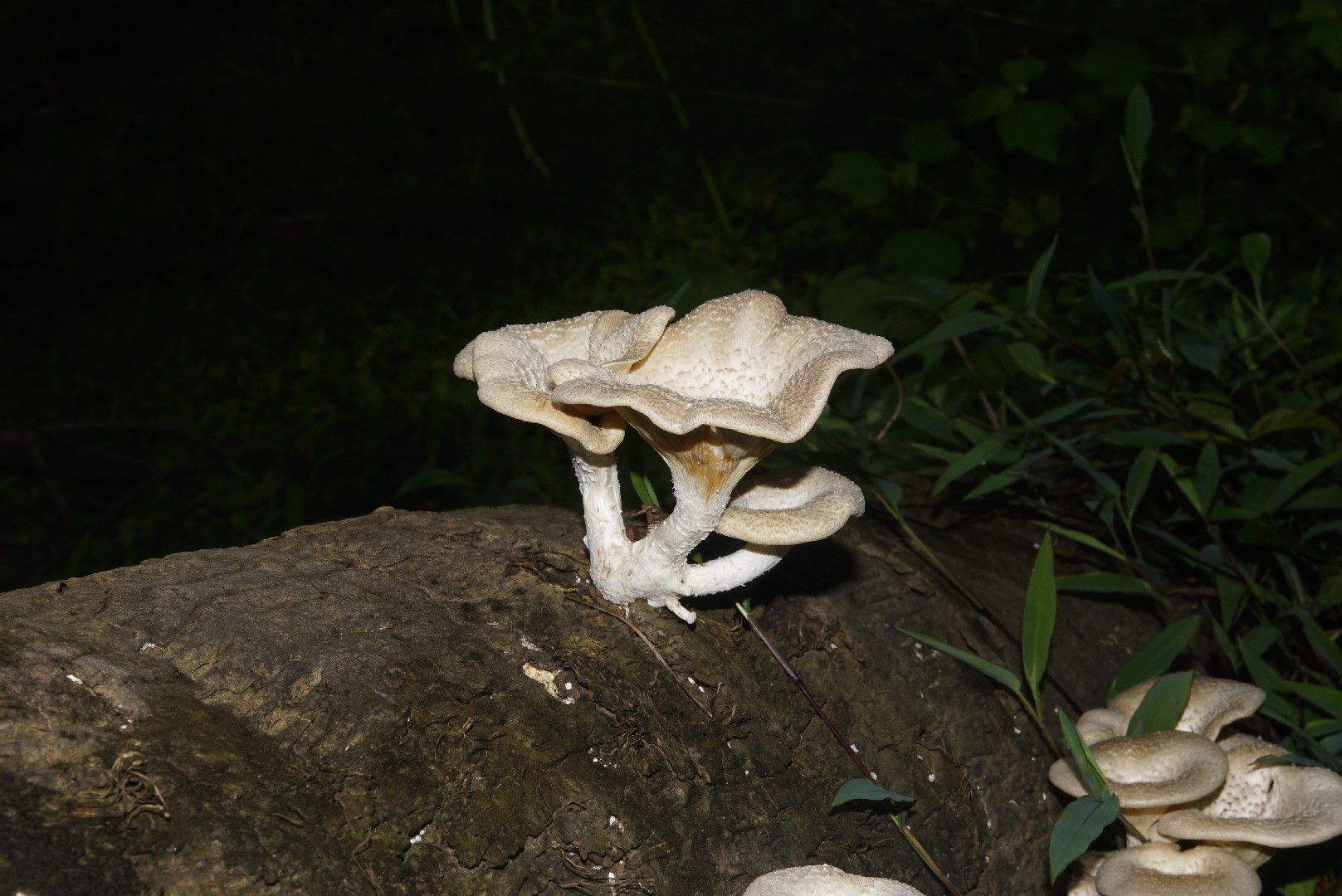
4. Lentinus squarrosulus

5. Mauve parachute
The tiny mauve parachute (Marasmius haematocephalus) is a miniature delight. A broad, delicate, brightly-hued cap sits like an open umbrella atop a slender, delicate, darkly-colored stalk. In dry conditions, the caps shrivel and become near-invisible beneath the detritus of the forest floor, but the next rain will open these hardy little mushrooms right back up again.
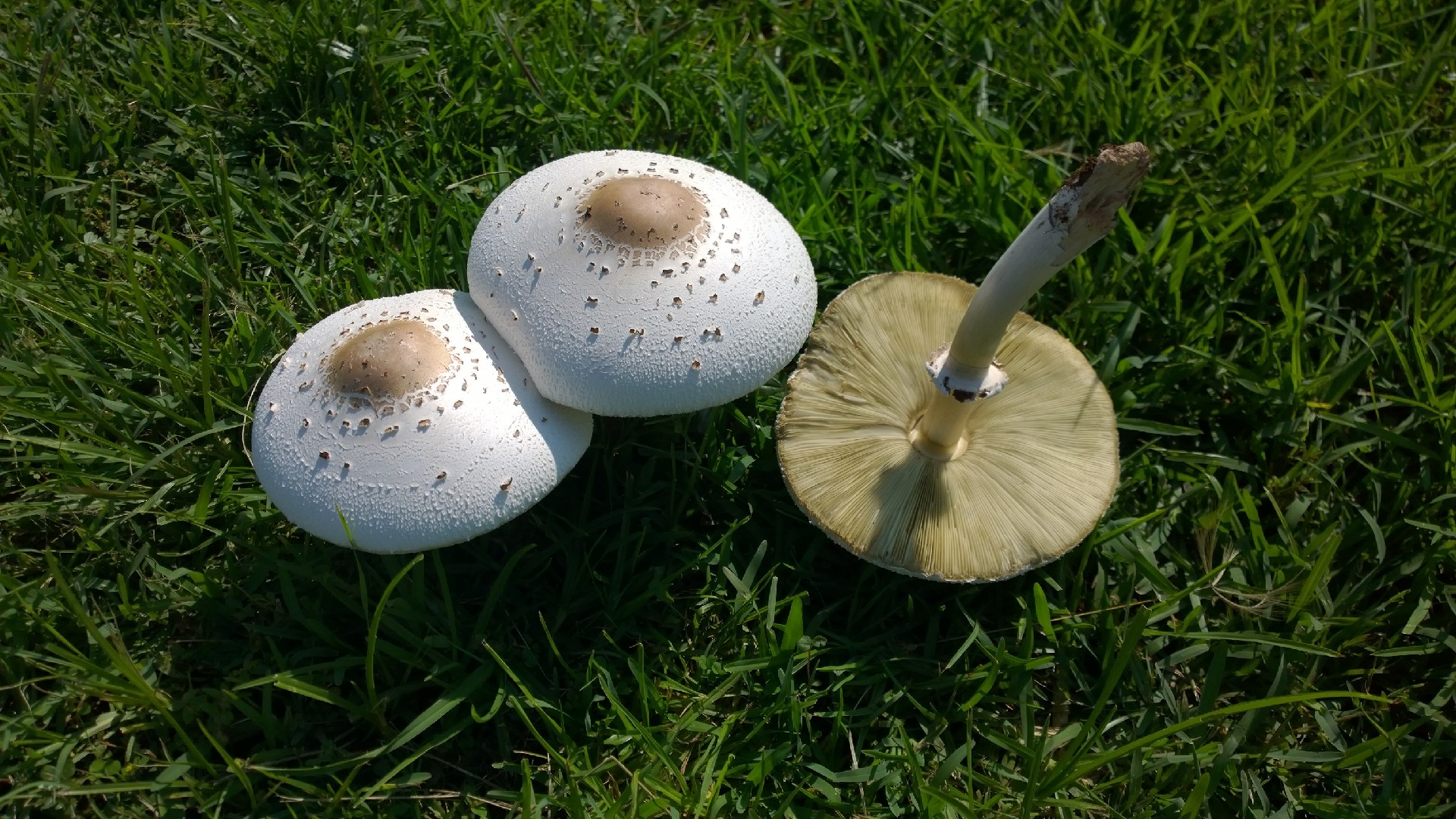
6. False parasol
Though the false parasol appears unassuming, the species is famous—or, infamous—for its toxicity. It looks unfortunately similar to Agericus campestrus, a commonly eaten mushroom, but the false parasol can be distinguished by its highly unusual green spore print. Although they are no good to eat, they can be pretty to look at. The species may grow in ring-shaped groups in meadows and on forest floors in what are sometimes called "fairy circles."
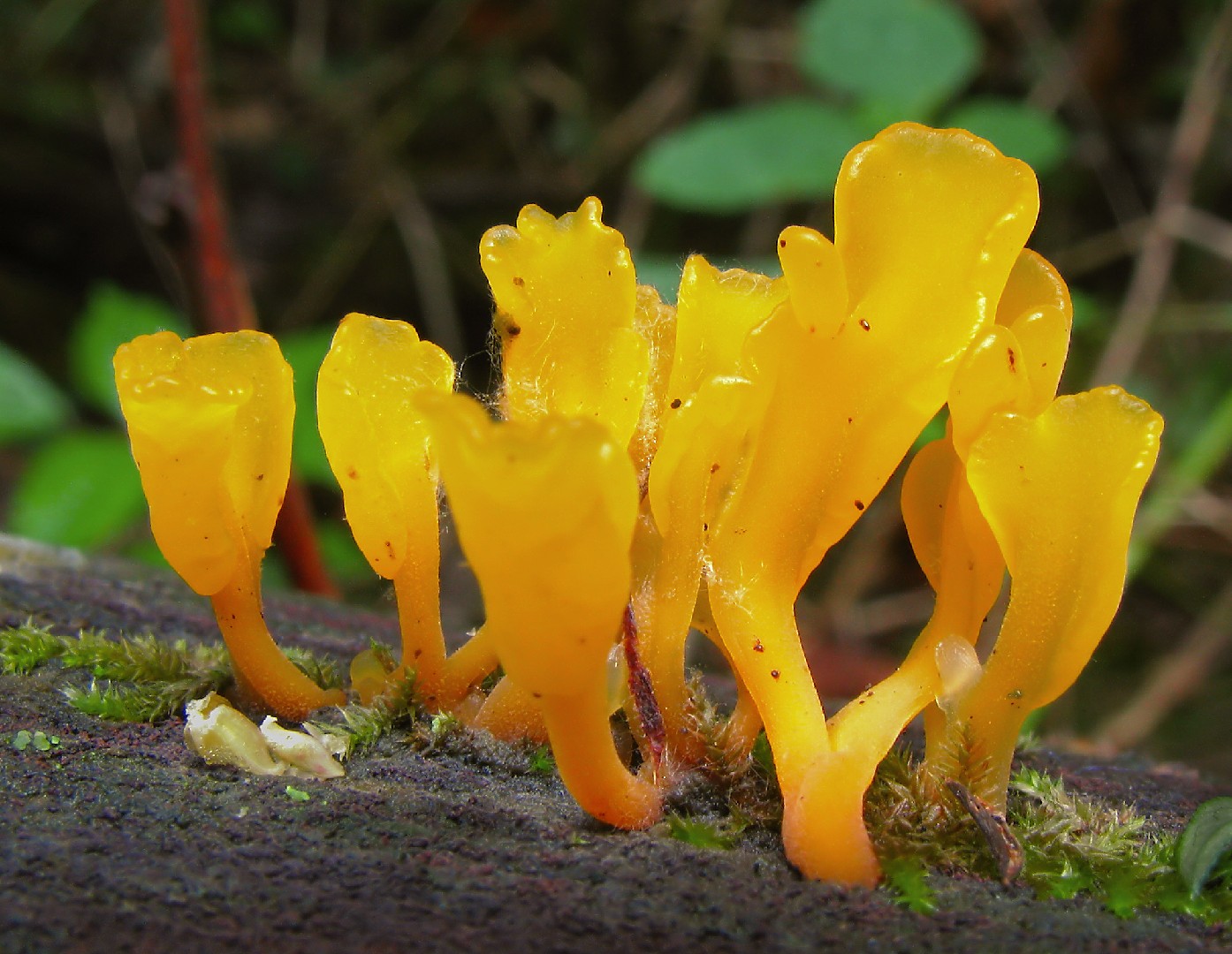
7. Fan-shaped jelly-fungus
Just as its Latin and the common English names suggest, the fan-shaped jelly-fungus (Dacryopinax spathularia) is a fan-shaped or spatula-shaped jelly-like mushroom. It commonly grows in wood cracks and it sometimes even appears in the cracks of the processed wood and lumber. Despite the word "jelly" in its name, the fan-shaped jelly-fungus is not considered edible.
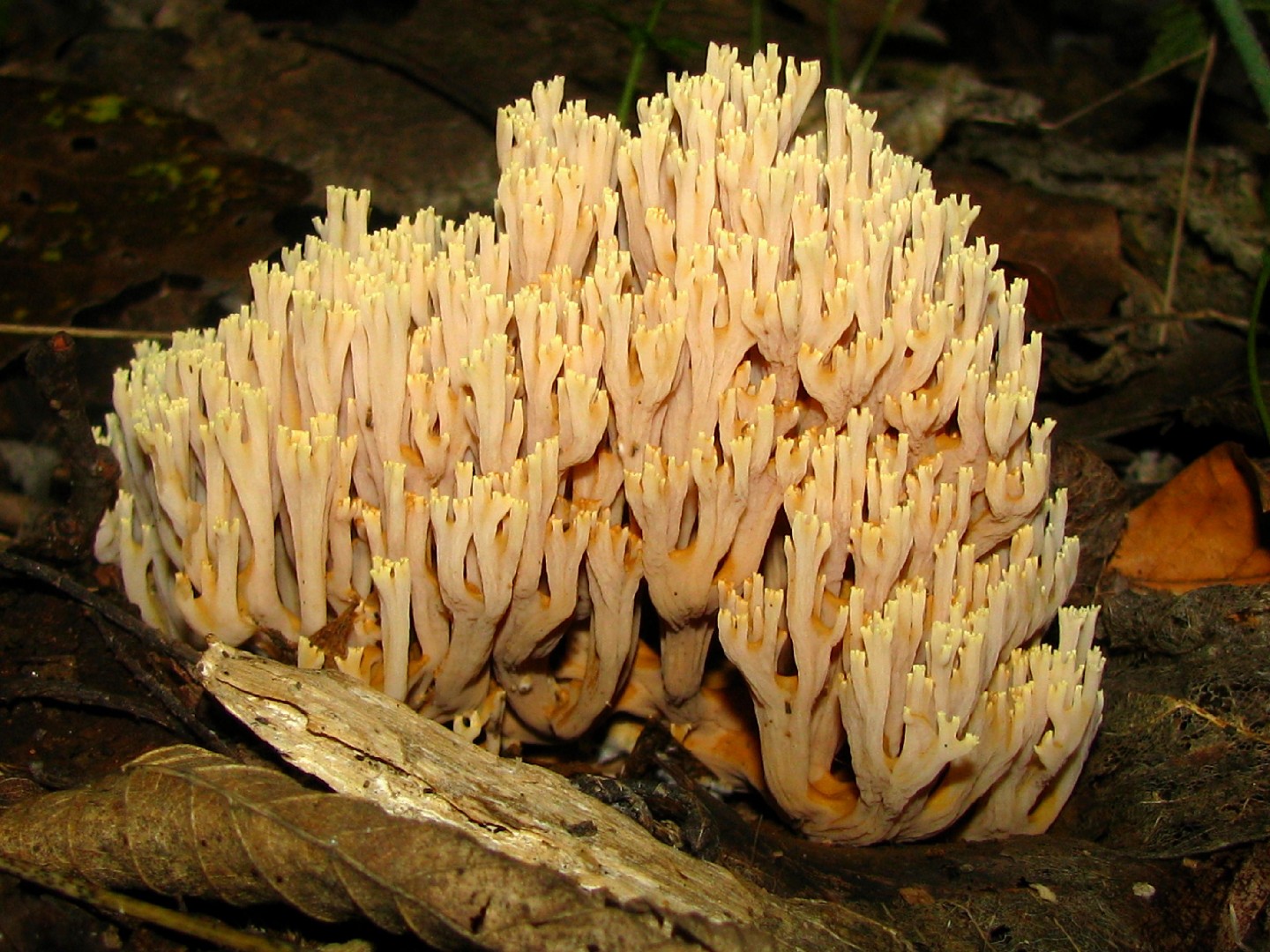
8. Upright coral
This pale-colored coral fungus grows from buried wood, particularly Beech or conifers. Its scientific name, Ramaria stricta, means “possessing many upright branches,” which is indeed a good description of its appearance. Upright coral fungus is inedible, and some of its lookalikes are even poisonous.
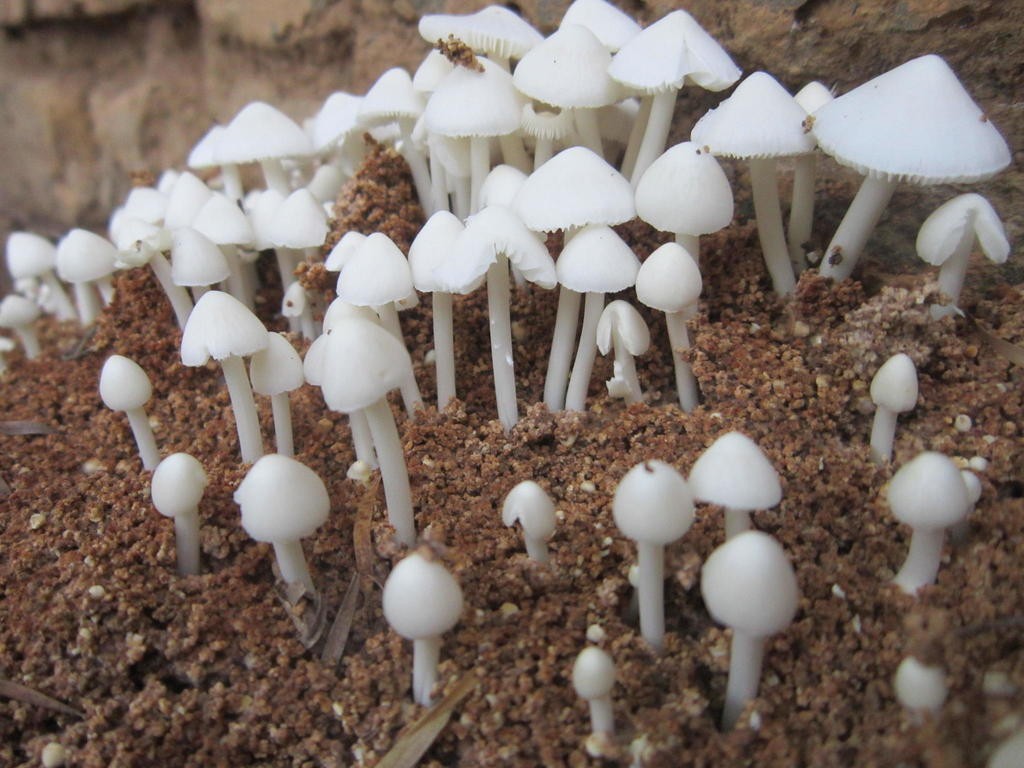
9. Termitomyces microcarpus
Like other mushrooms in its genus, termitomyces microcarpus thrives when termites are close by, as this mushroom is dependent on the insects for the plant matter they bring after feeding on trees. The fungus also benefits the termites by breaking down the organic matter the insects need to survive. Therefore, termitomyces microcarpus is usually found growing near termite mounds, specifically those found near bamboo.
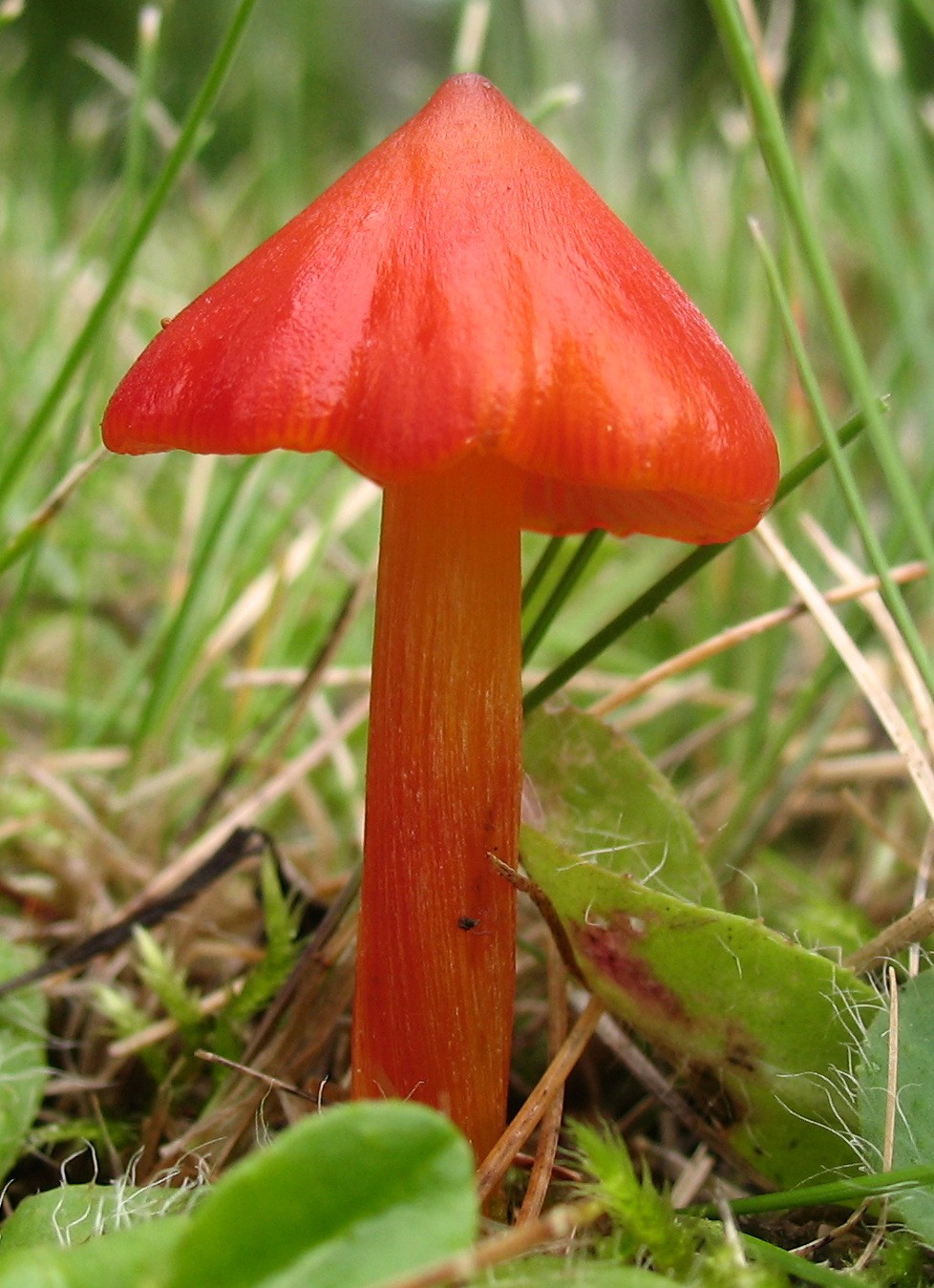
10. Witch's hat
Witch's hat mushrooms appear after summer and autumn rains, popping up in groups across fields, grasslands, and roadsides, particularly in places where the soil quality is poor. Catch them quickly to see bright orange or red colors, as the caps quickly turn jet black. They remain standing for several weeks in that glossy, stately form. Witch's hat is reported to be poisonous.
More







