




Top 20 Most Common Mushrooms in Moriyama

Most Common Mushrooms
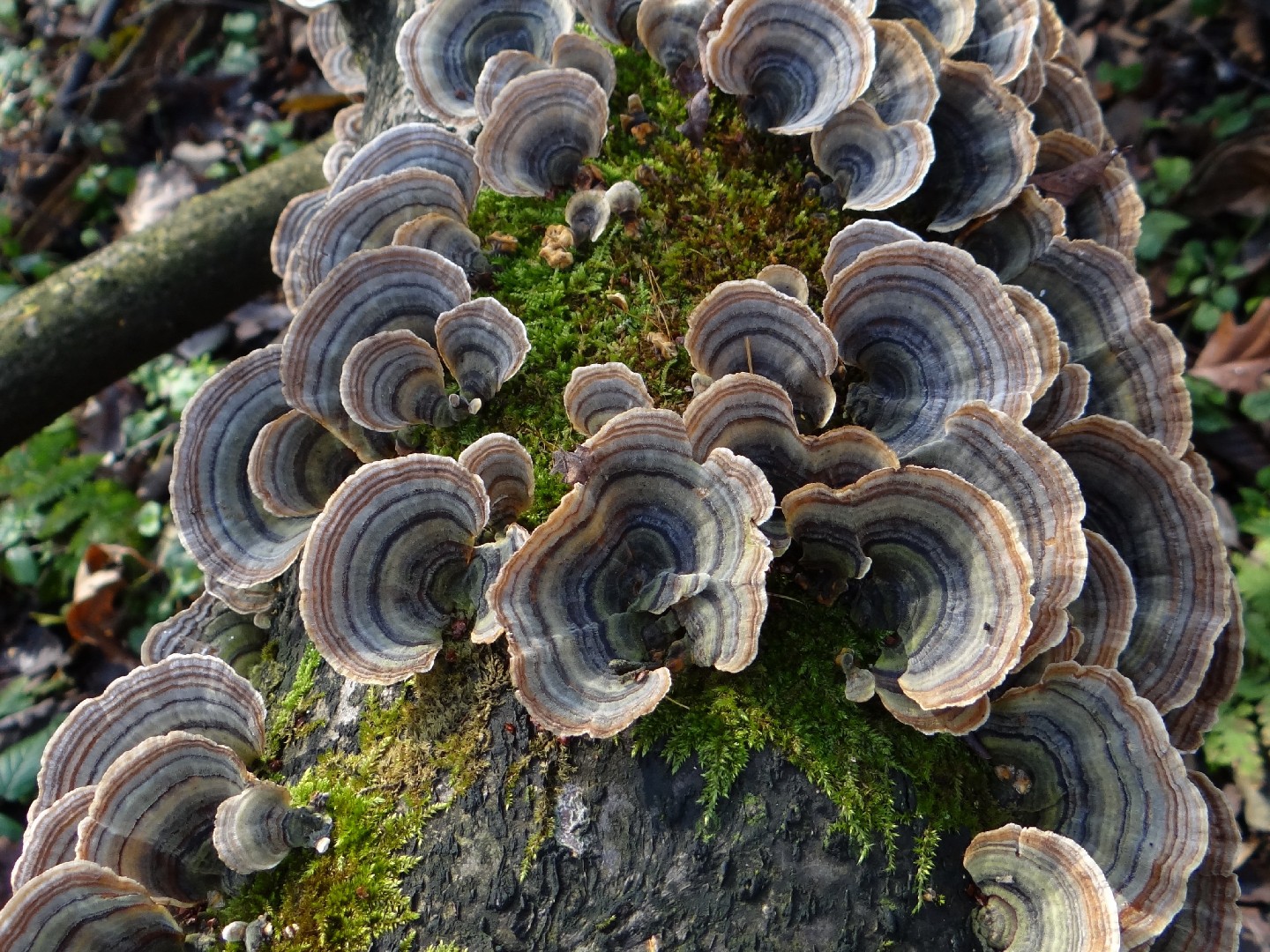
1. Turkey tail
The distinctively-striped turkey tail fungus grows on stumps and logs all over the forests of the northern hemisphere. It is, in fact, probably the most common species you will find. That doesn't mean this mushroom is plain, however; each cap is uniquely patterned. Look for bands of alternating textures as well as color.
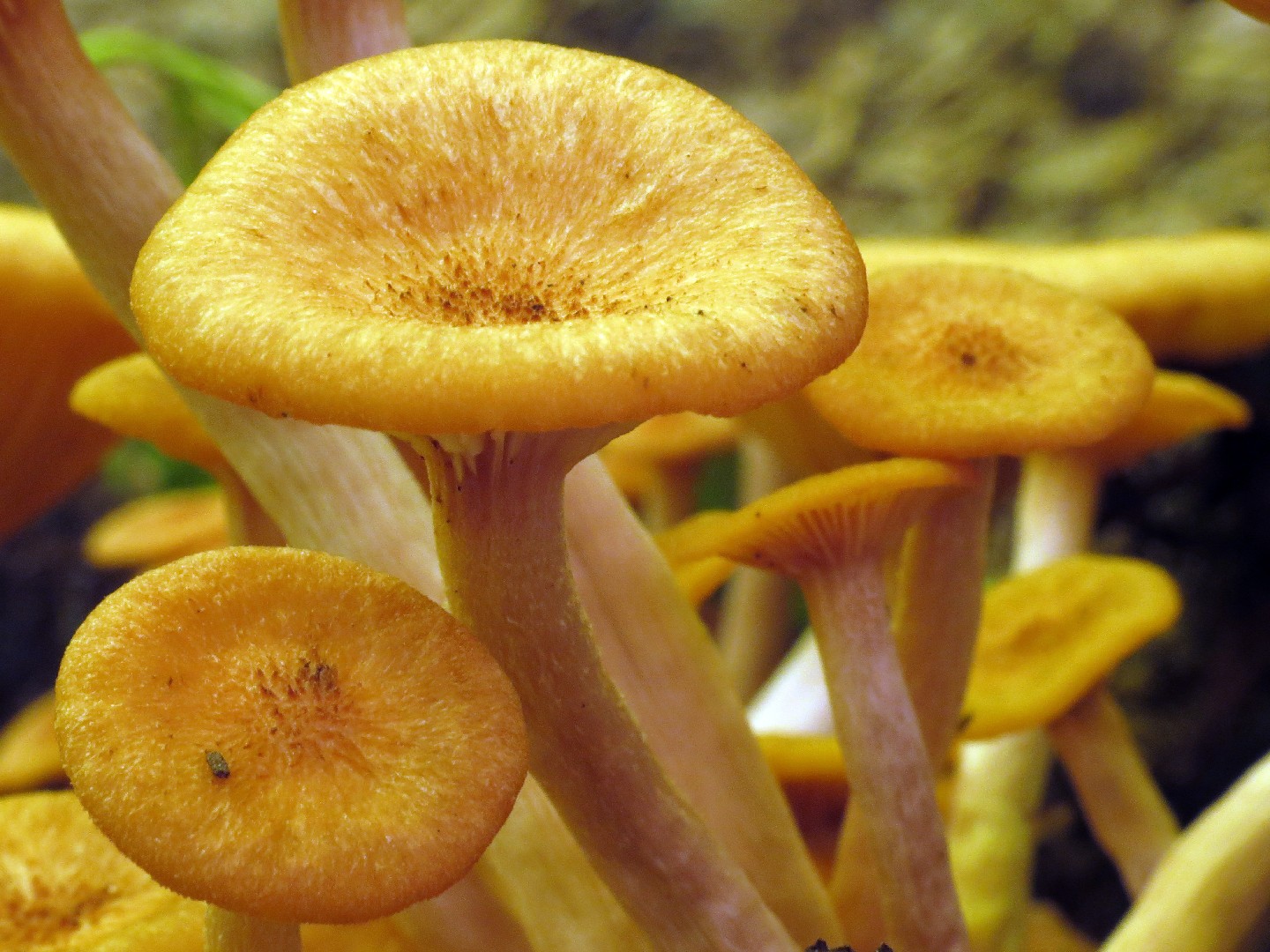
2. Ringless honey mushroom
The appearance of ringless honey mushroom can mimic other honey mushrooms. However, those other mushrooms have a ring, which is a circle of flesh around the mushroom's stem that this mushroom lacks. Ringless honey mushroom is a decomposer of wood with a particular preference for the deadwood from oak trees.
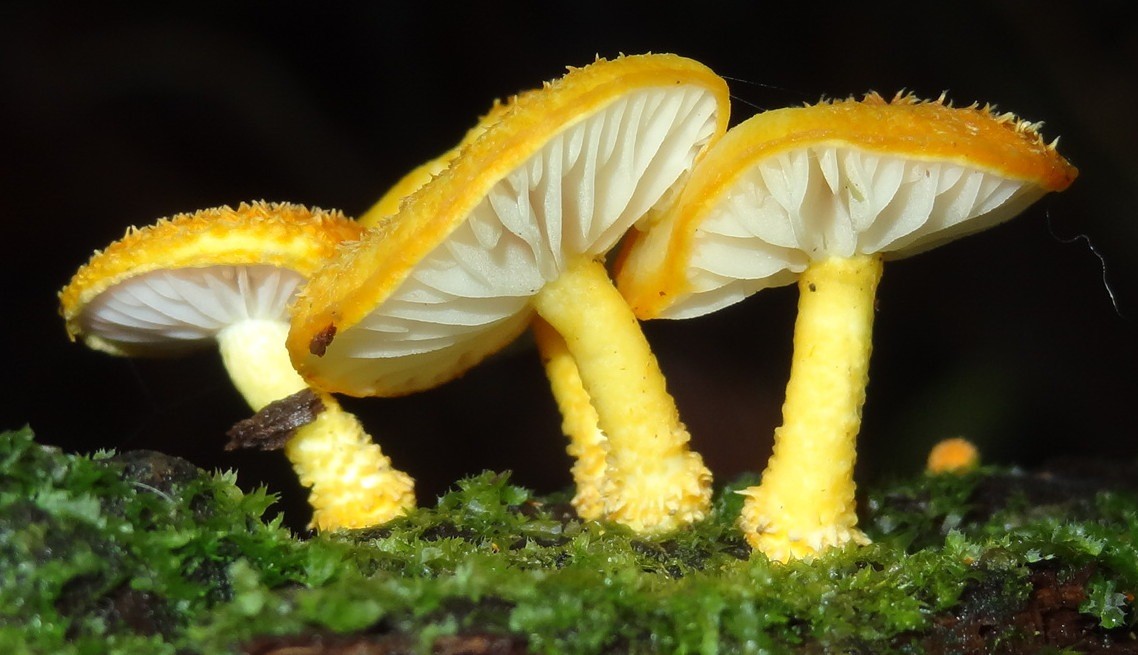
3. Golden scruffy collybia
The golden scruffy collybia (Cyptotrama asprata) produces tiny, picturesque mushrooms with caps and stems covered in even tinier bright orange spikes. The cap surface below is commonly a shade of yellow. These mushrooms smell faintly of artichokes.
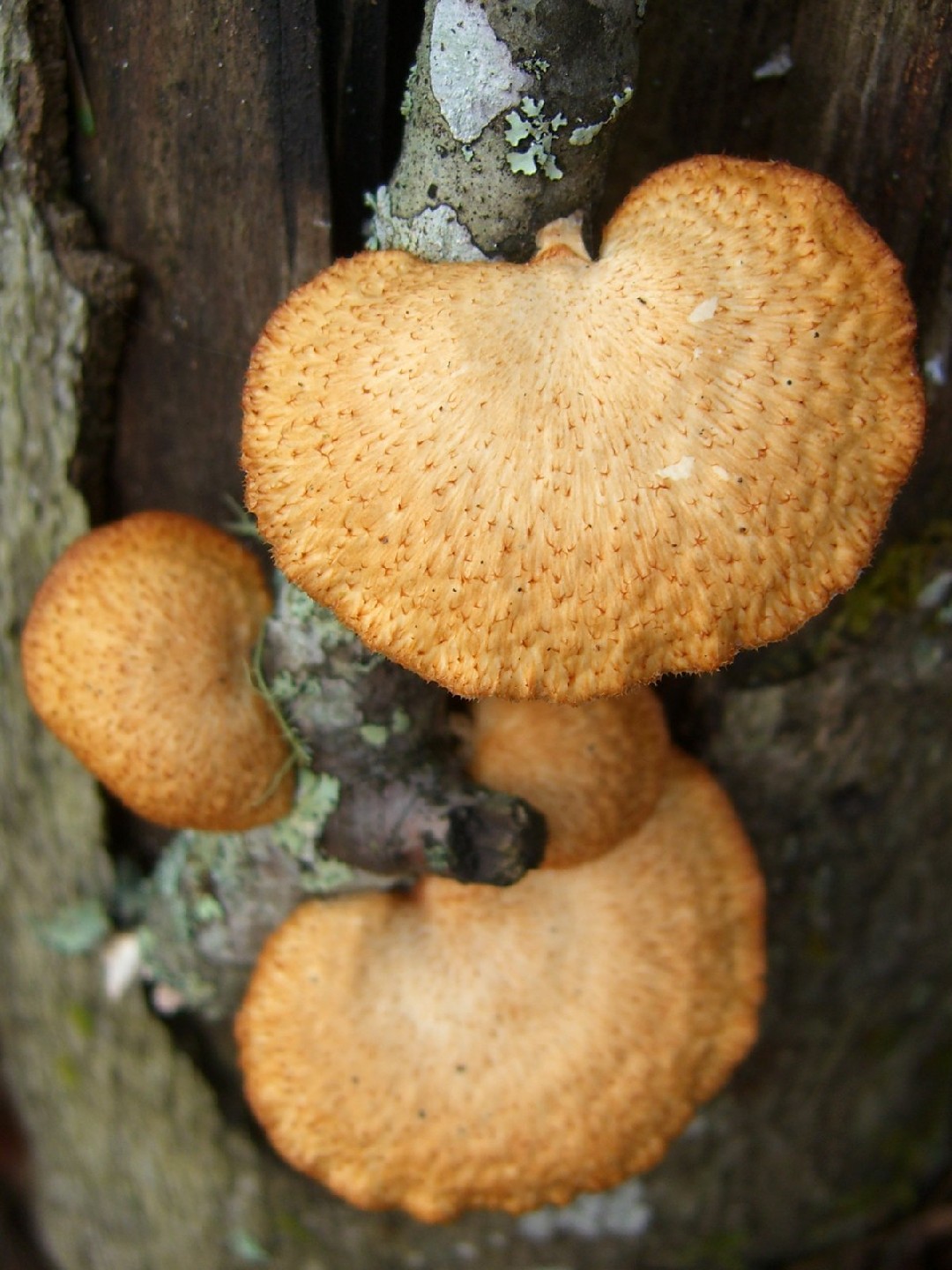
4. Hexagonal-pored polypore
The name says it all! This species' most distinguishing feature is its pores, which are six (or sometimes four) sided and give the mushroom's undersides an almost honeycomb-like appearance. Found across North America, Asia, Australia, and Europe, hexagonal-pored polypores prefer to grow on dead hardwood trees. Most sources consider this mushroom to be inedible, though non-toxic.
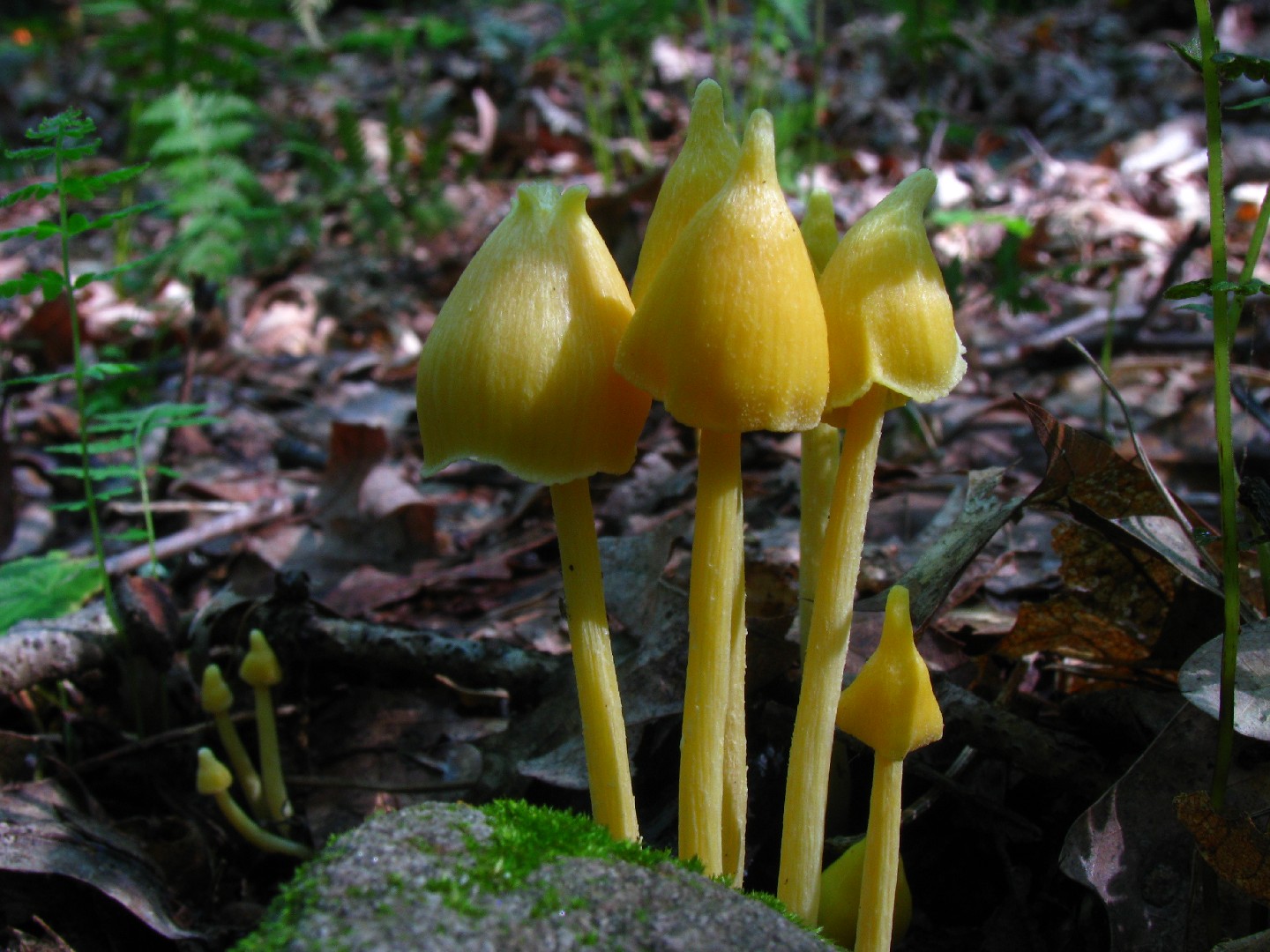
5. Yellow unicorn entoloma
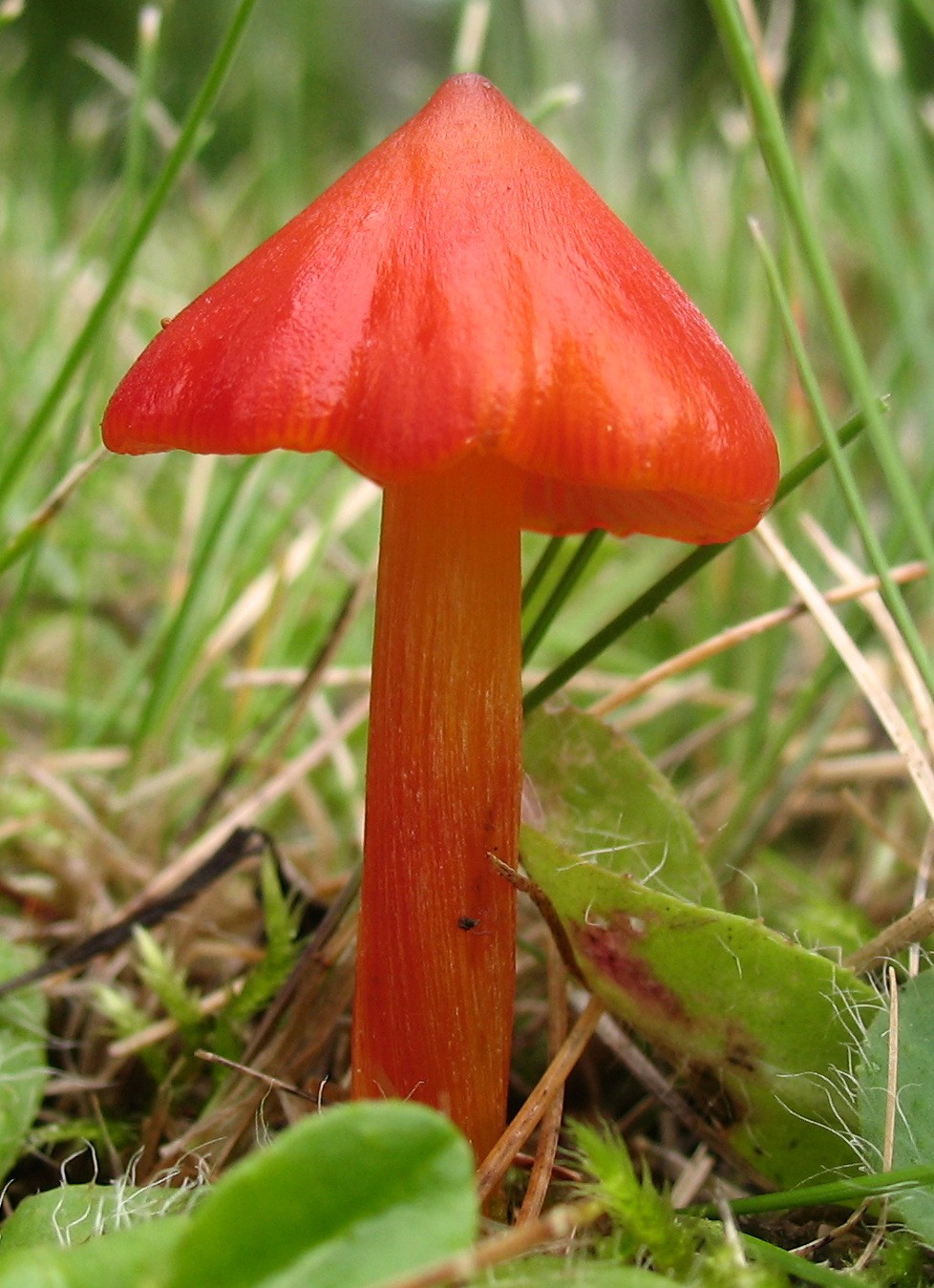
The yellow unicorn entoloma (Entoloma murrayi) is a cute little mushroom that resembles an umbrella from a tropical drink. Its cap is quite pointy in the middle, and pronounced ridges extend down from that tip to the edges of the cap. Yellow unicorn entoloma's microscopic spores are cube-shaped. This inedible mushroom should be regarded as poisonous.
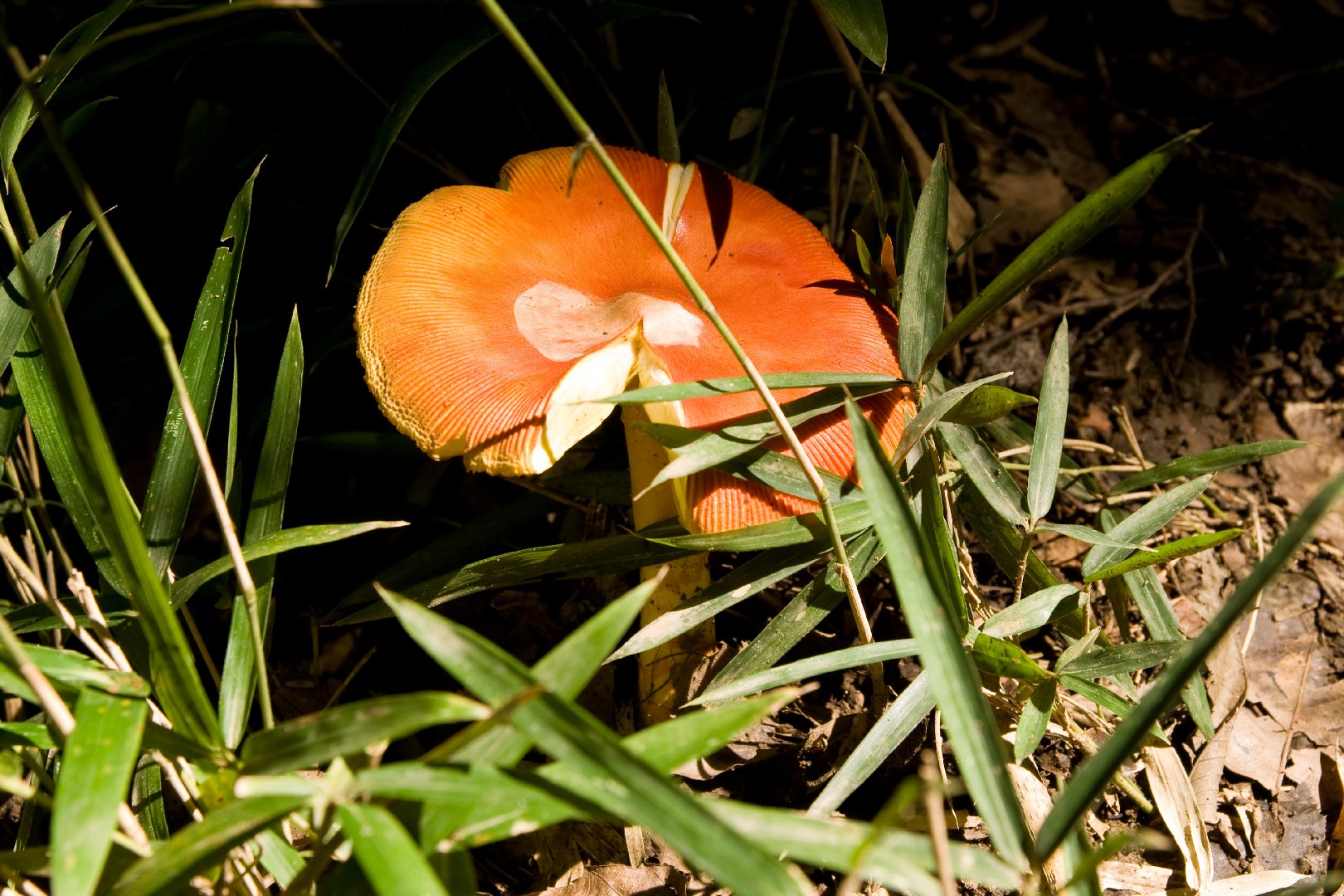
6. Half-dyed slender caesar
Half-dyed slender caesar’s bright-colored caps give it an attractive appearance growing on forest floors underneath conifers and broadleaf trees. However, they also make it easy to confuse half-dyed slender caesar with the East Asian death cap, a similar species with highly toxic properties.
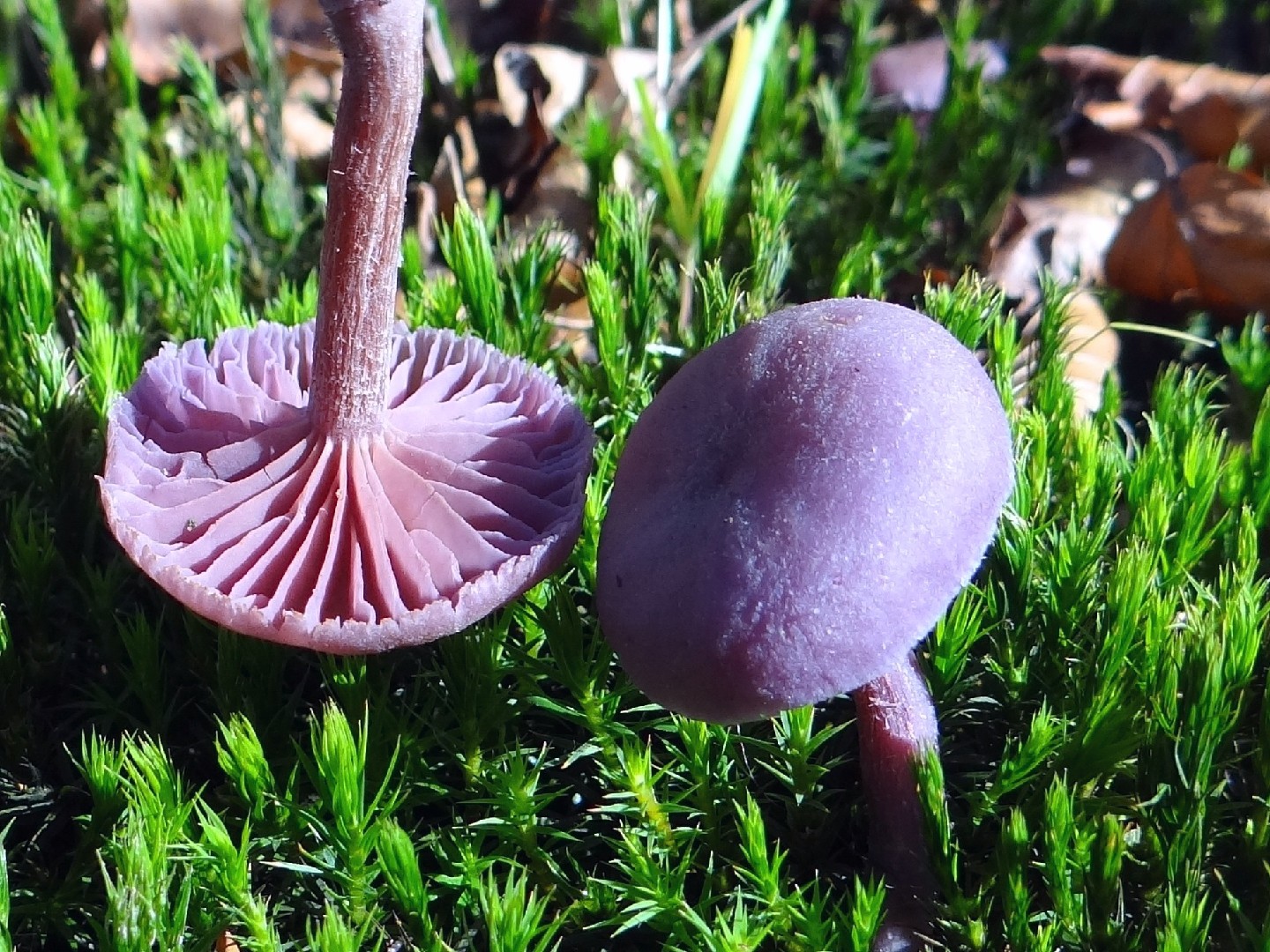
7. Amethyst deceiver
The amethyst deceiver (Laccaria amethystina) is a breathtaking mushroom that pops up from coniferous forest floors. The caps are a striking violet color in youth and are generally flat with a small indentation when the stem connects. As they mature, this violet color transforms to a less than breathtaking grey color, making it quite hard to identify after a certain age positively. Not edible.
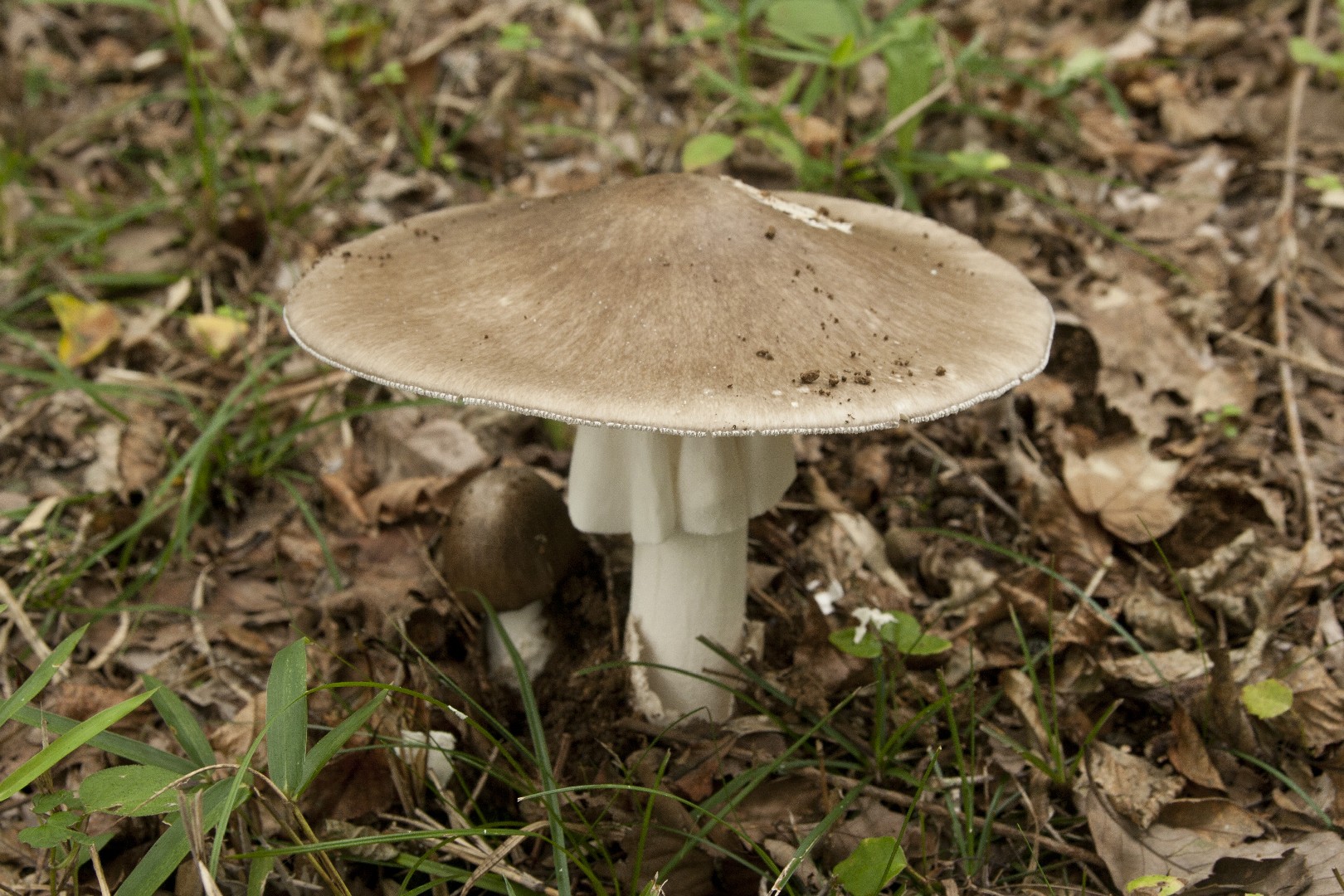
8. Hongo's false death cap
9. Dead man's foot
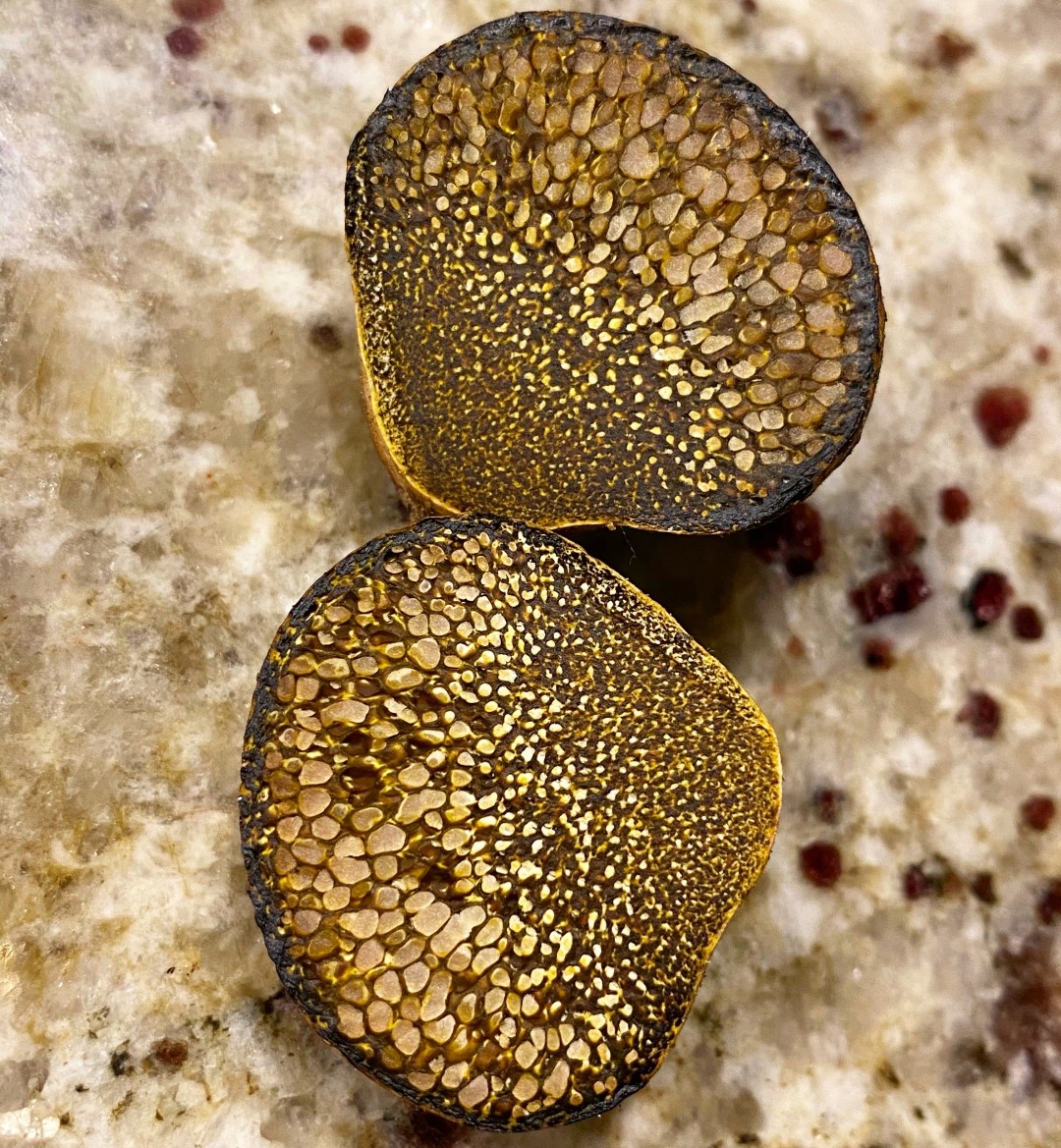
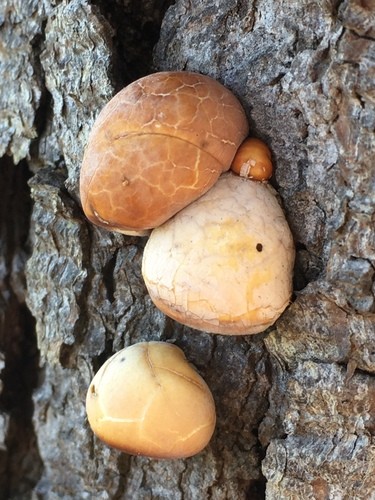
Dead man's foot (Pisolithus arhizus) actually bears a number of colorful names stemming from its unusual appearance, such as the horse dung fungus (Australia). It can be distilled into a viscous black gel, which is then used as a natural dye for clothing. It is considered to be inedible.
10. Fan-shaped jelly-fungus
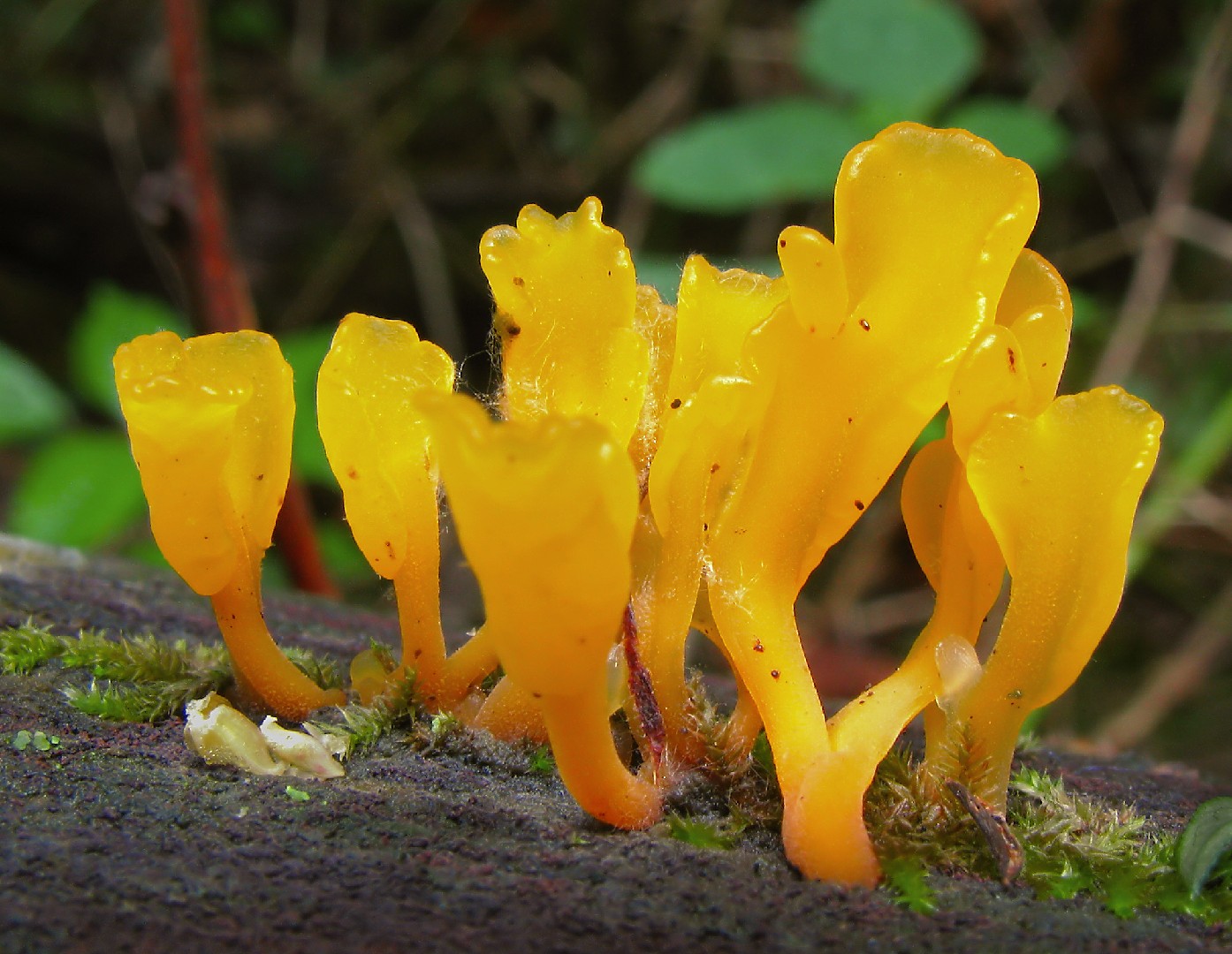
Just as its Latin and the common English names suggest, the fan-shaped jelly-fungus (Dacryopinax spathularia) is a fan-shaped or spatula-shaped jelly-like mushroom. It commonly grows in wood cracks and it sometimes even appears in the cracks of the processed wood and lumber. Despite the word "jelly" in its name, the fan-shaped jelly-fungus is not considered edible.

More







