




Top 20 Most Common Mushrooms in Genoa
Nestled along Italy's northwest coast, the captivating city of Genoa provides an enticing habitat for a vibrant variety of mushroom species. This considered, it's hardly surprising that Genoa is home to an incredibly diverse mycological panorama. This page celebrates the top 20 most commonly observed mushrooms of Genoa, each with its unique story, characteristics, and culinary relevance. Dive in to discover the world of edible fungi flourishing within Genoa's verdant landscapes and learn about the intriguing cultural significance they hold to the locals.

Most Common Mushrooms
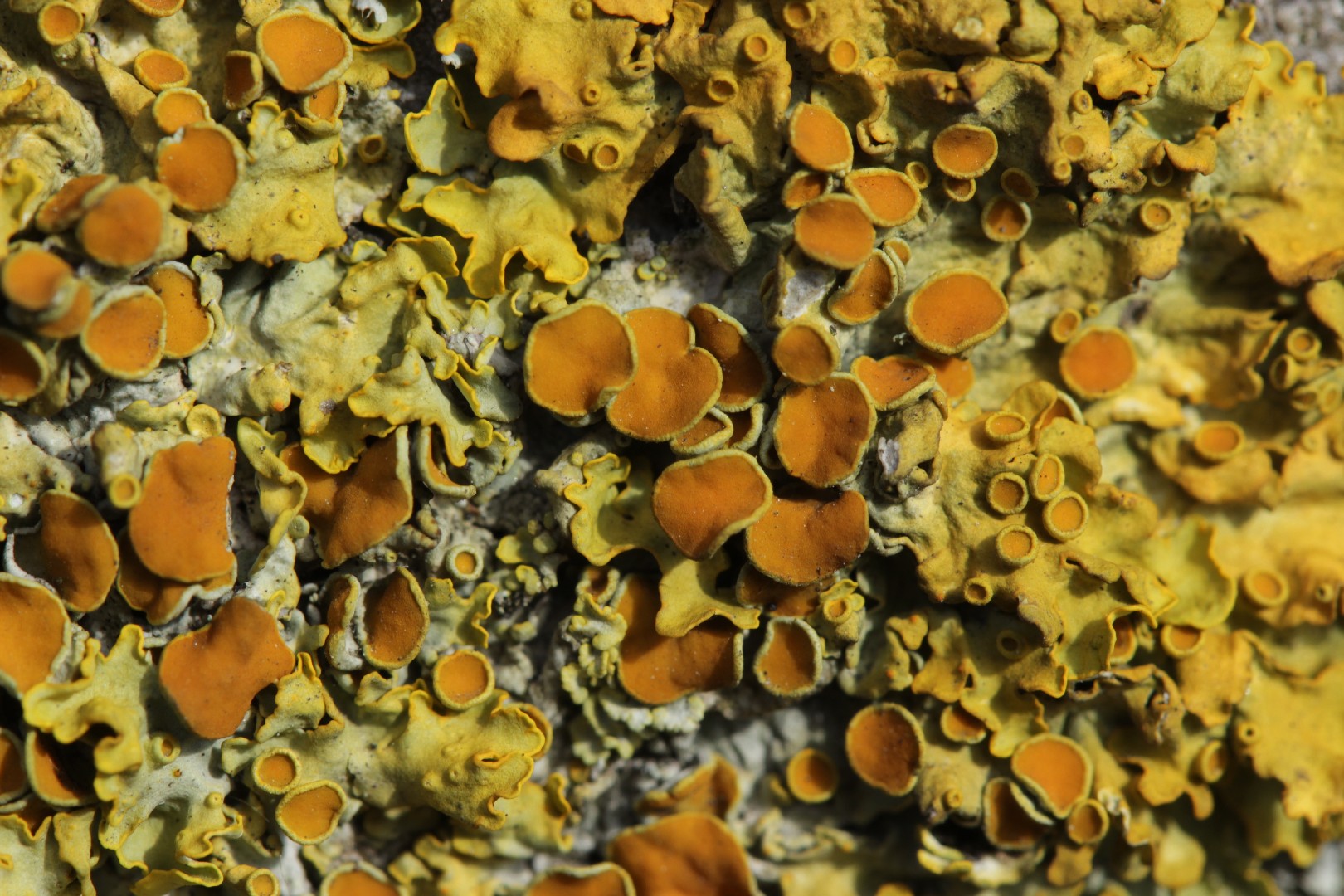
1. Common orange lichen
Common orange lichen was selected in 2006 by the United States Department of Energy as a model for genomic sequencing. Its widespread dispersal and bright yellow-orange color give the lichen its common name. It is primarily found growing on rocks, walls, and tree bark.
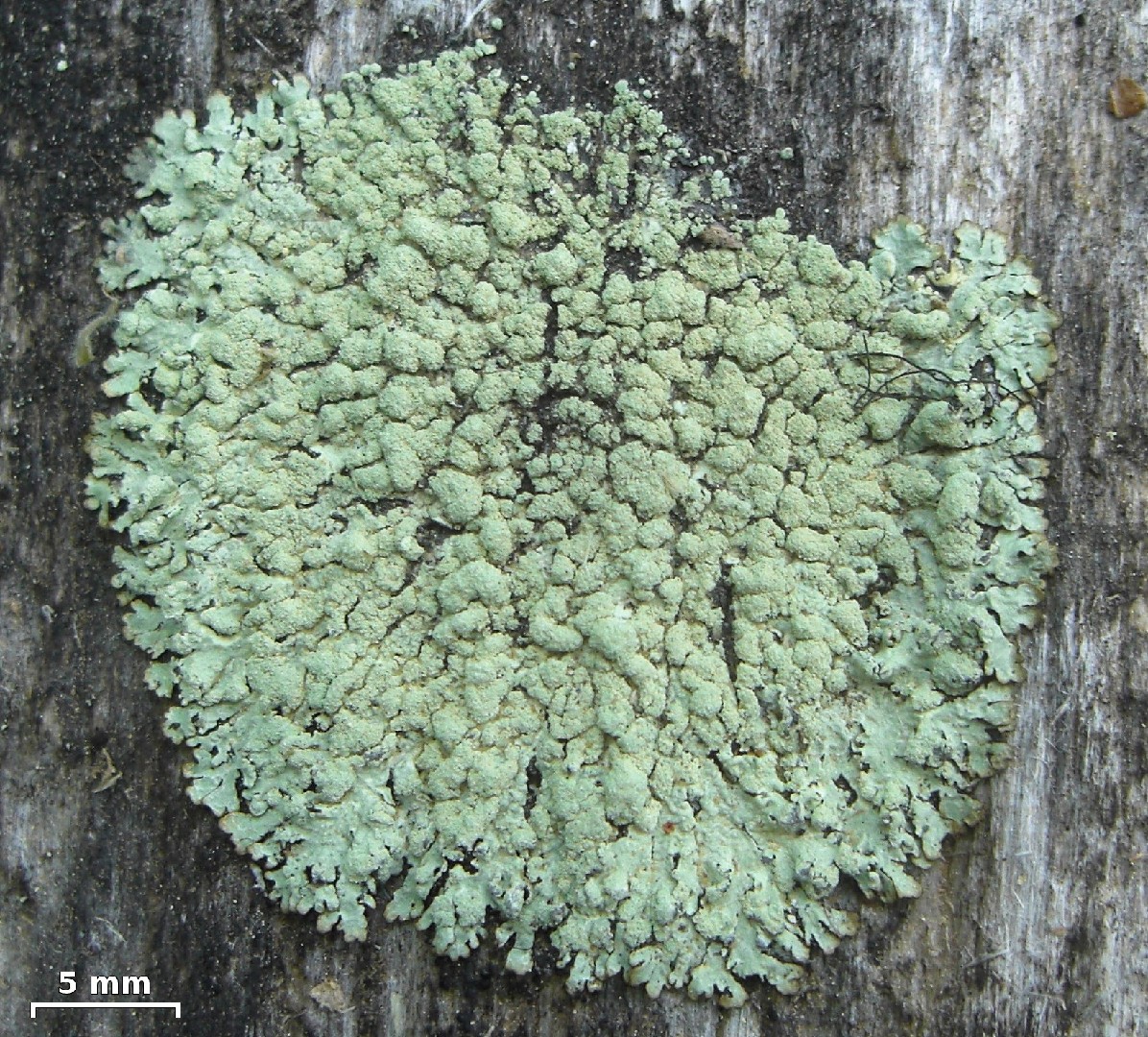
2. Green starburst lichen
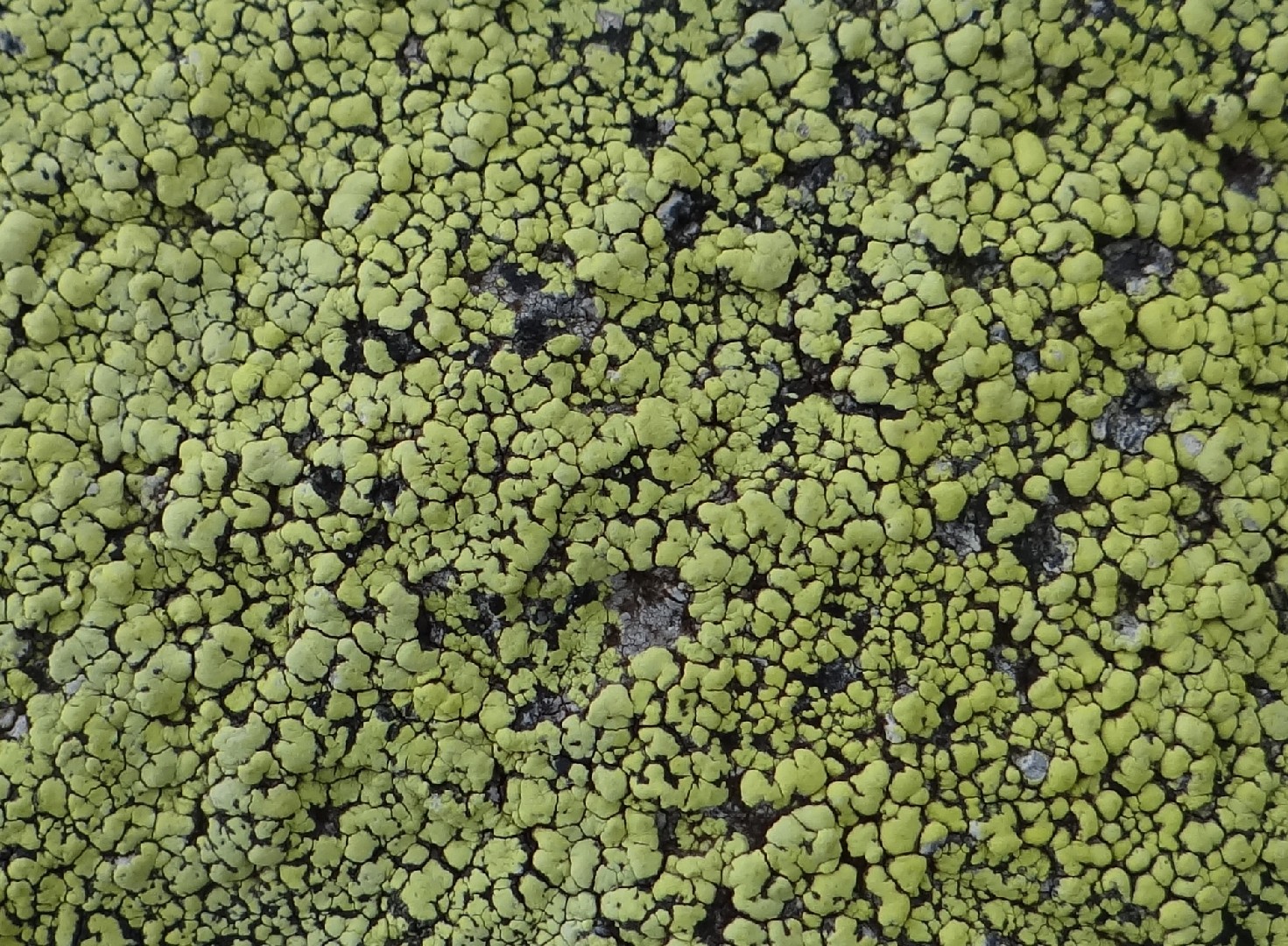
3. Map lichen
The map lichen is a crust lichen, the thallus lies close to the ground or grows through it. The species is bright yellow to olive green. It can cover large areas on stones. The lichen is divided into small angular fields, which are separated by a black border and pull through the lichen body. At the edge of the fields black edged fruiting bodies are sunk. The appearance of this structure is reminiscent of geographically separated areas on a map. Like many lichens, it has extremely slow growth. It grows depending on the location per year only 0.25-0.6 mm radially outward. It can reach an age of over 1,000 years and can be used to date the decline of glaciers. If the growth rate at a location is known, the last ice cover can be calculated from the largest specimens.
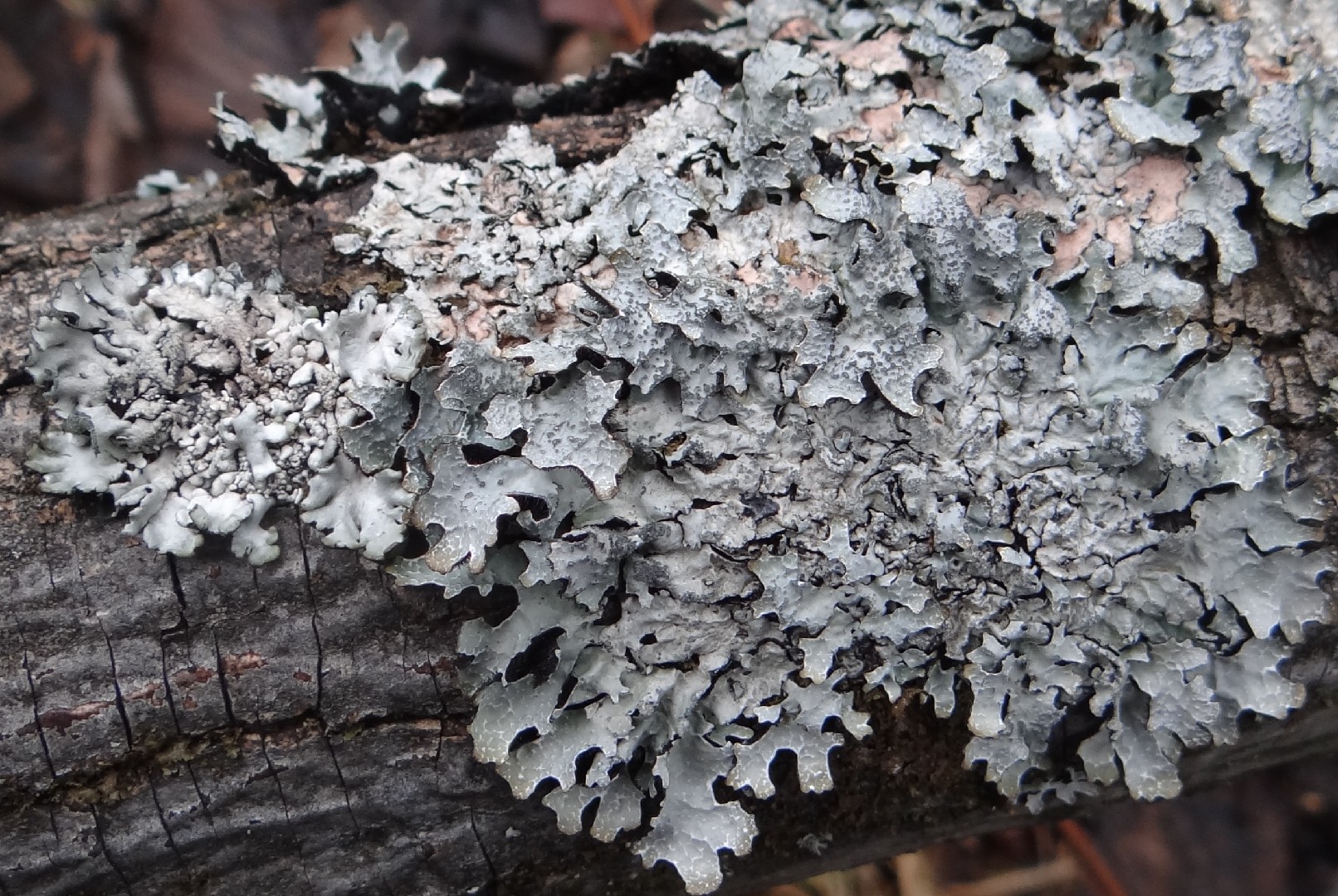
4. Hammered shield lichen
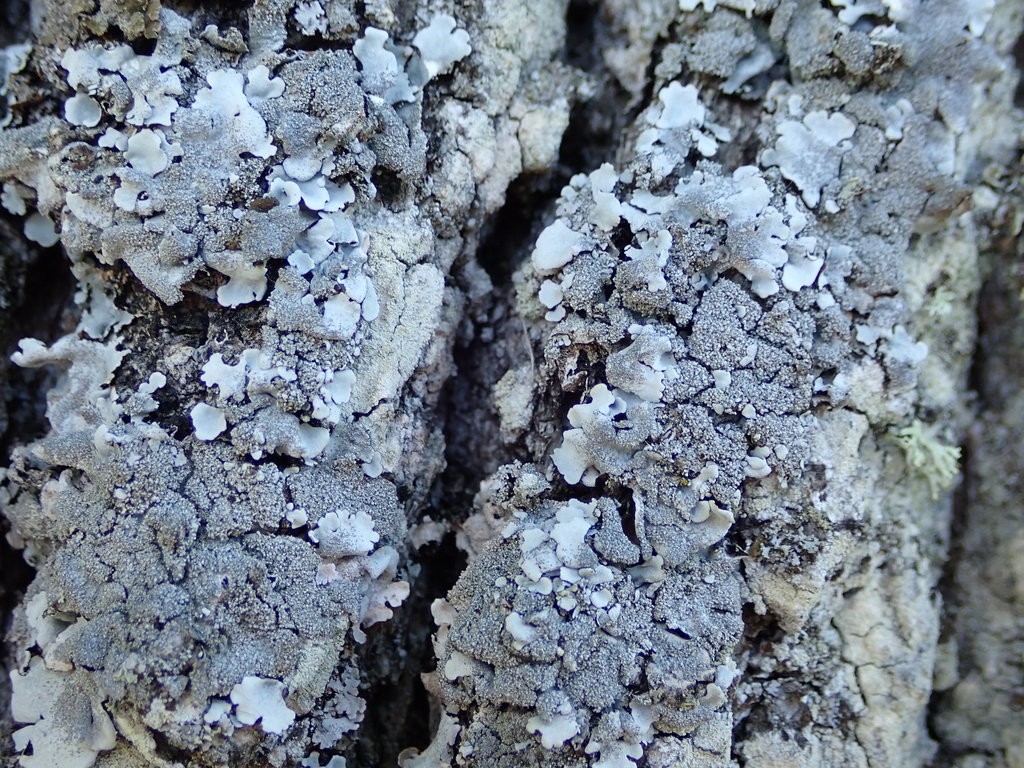
Hammered shield lichen is noted for its pollution tolerance. It is a widespread grey flat lichen that is mostly found upon tree bark and occasionally rocks. Hammered shield lichen is named for the depressions within the lobe which give it a hammered appearance.
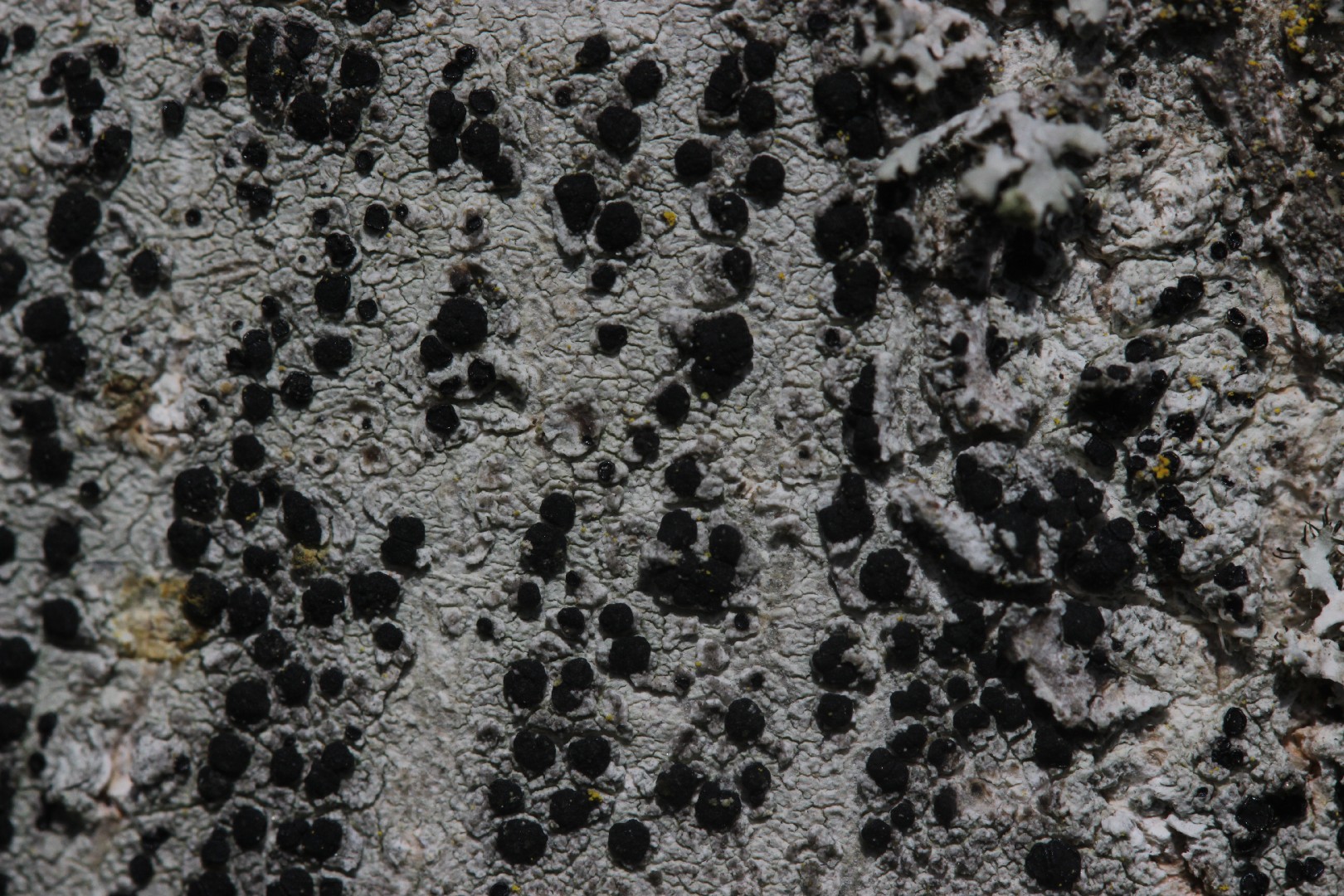
5. Lecidella lichen
Lecidella elaeochroma is a crust lichen, which means that its stock (Thallus) lies closely on the surface. The camp is whitish, gray, gray-green, olive or yellowish. Often it is also damaged by snail-eating and then greenish. The structure of the camp is smooth to grainy. Often it is weakly glossy or even limited by a black submission. The camp can sometimes be sorediös dissolved. It reaches diameter of 1 to 3 cm. The apothecia reach between 0.4 and 1.0 mm in diameter. Their discs are black to dark reddish brown and very rarely frosted. The Apotheciens are flat to strongly arched and can be deformed. Its edge is black and smooth. Overall, the appearance of this lichens is very rich in form.
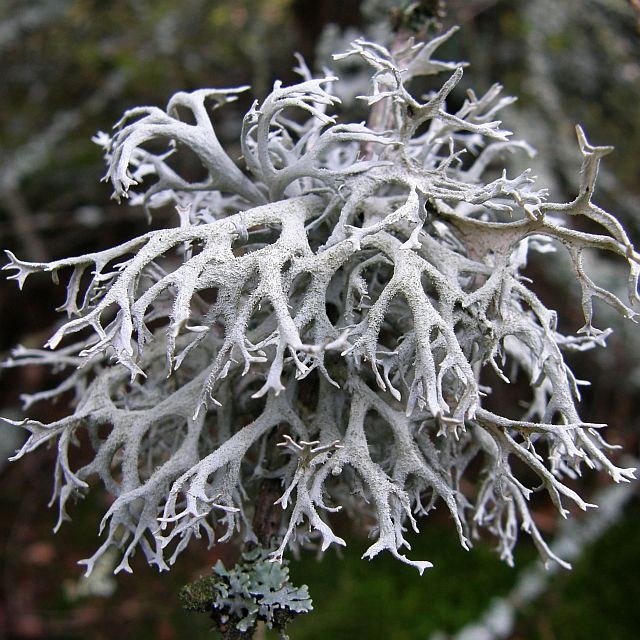
6. Tree moss
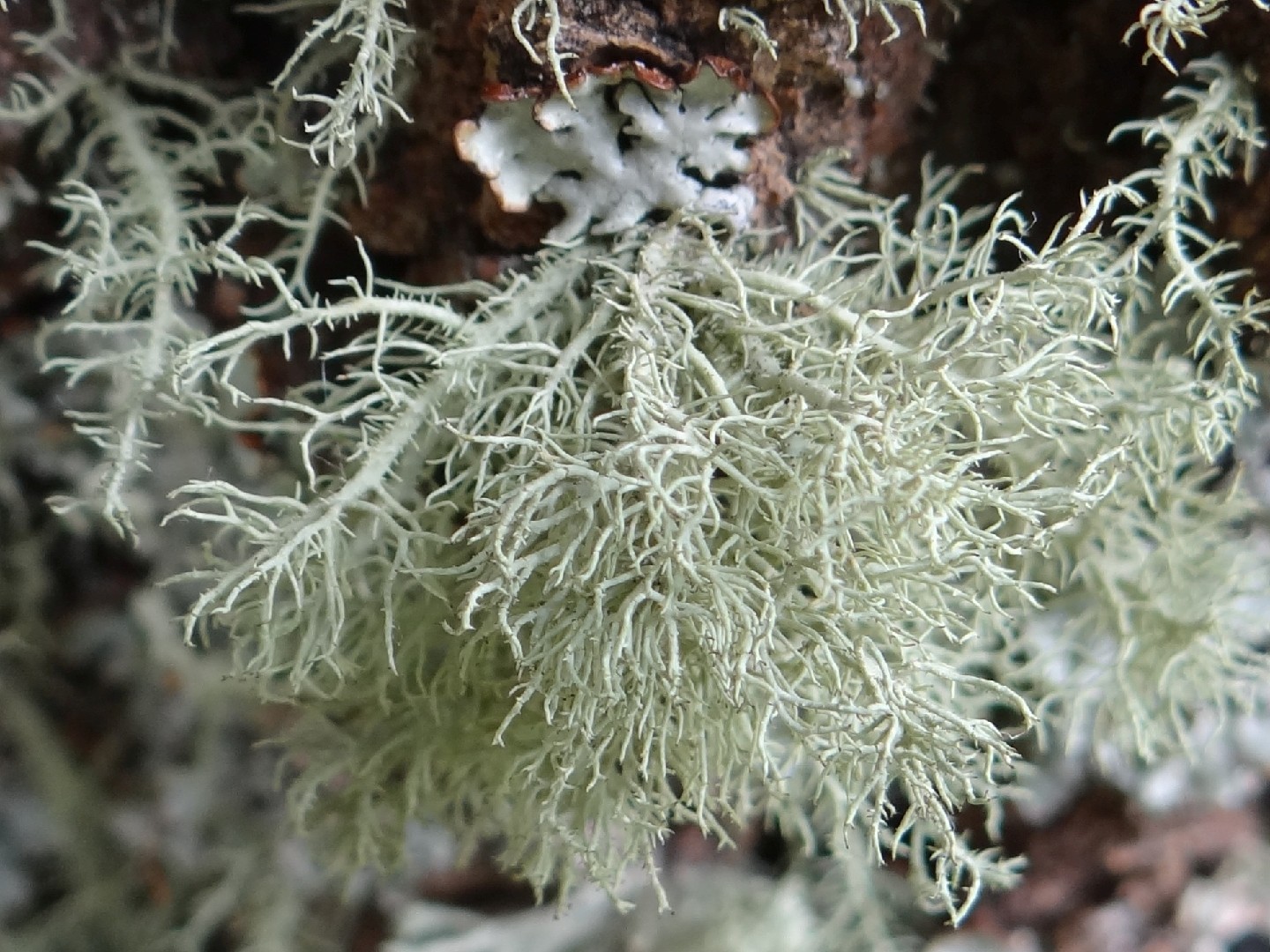
Pseudevernia furfuracea is associated with photobionts from the green algae genus Trebouxia. It reproduces asexually by isidia. The ontogeny of isidia development and its role in CO2 gas exchange in P. furfuracea has been investigated. The preferred growing surfaces for P. furfuracea are the so-called "nutrient poor" bark trees, including birch, pine and spruce. The species has two morphologically identical varieties that are distinguished by the secondary metabolites they produce: var. ceratea Zopf. produces olivetoric acid and other physodic acids, while var. furfuracea produces physodic but not olivetoric acid. Some authors (e.g., Hale 1968) have separated the chemotypes at the species level, designating the olivetoric acid-containing specimens as Pseudevernia olivetorina, but more recent literature separates them at the varietal level. 
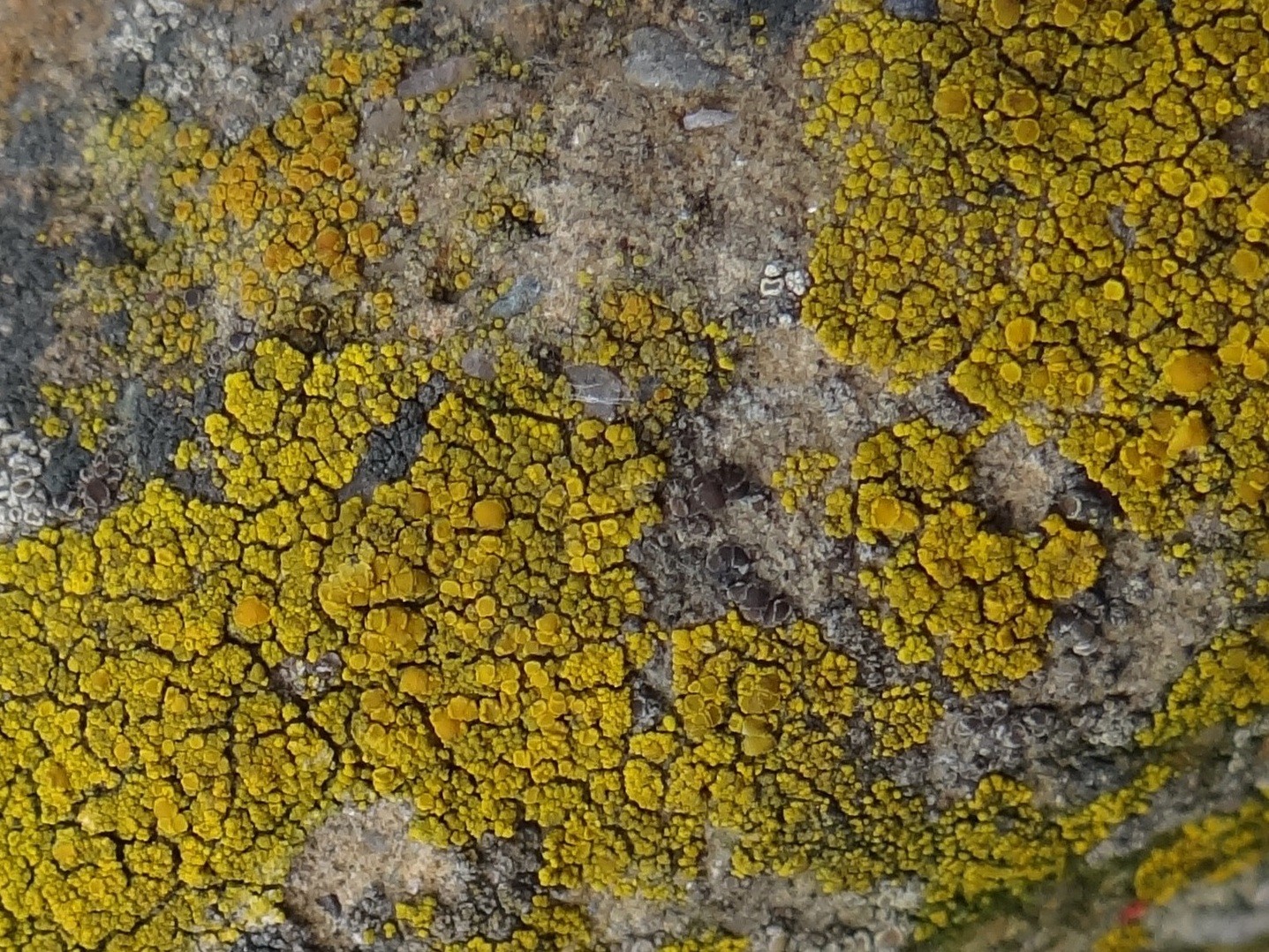
7. Common goldspeck
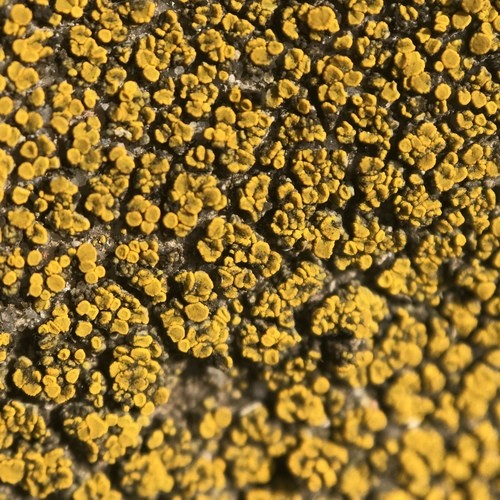
8. Hidden goldspeck lichen
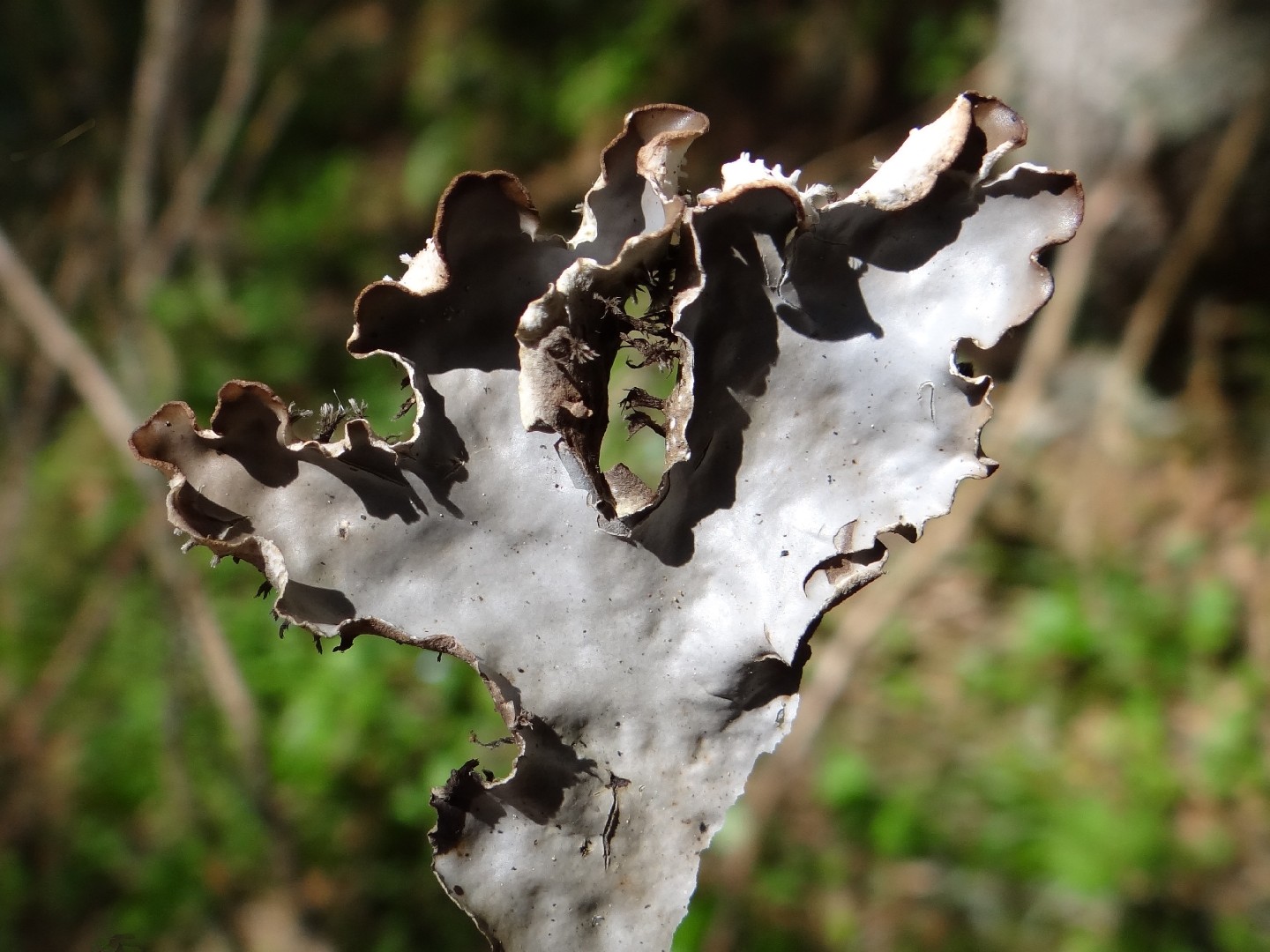
9. Felt lichen
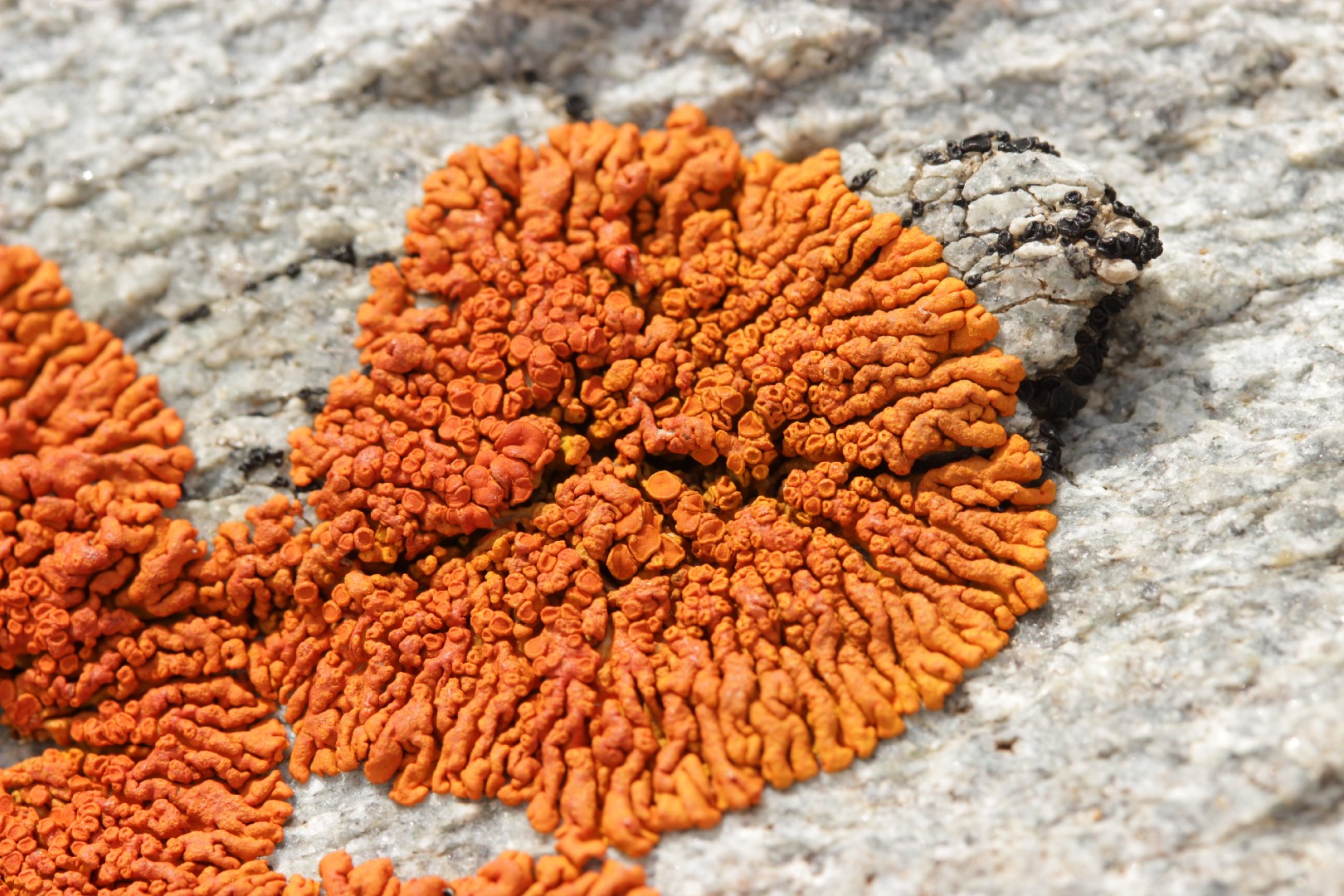
10. Elegant sunburst lichen
The thallus of this lichen is described as foliose, having the aspect of leaves, although the central portions of the thallus may appear nearly crustose. It is small, typically less than 5 cm (2 in) wide, with lobes less than 2 mm (0.08 in) broad, appressed to loosely appressed. The upper surface is some shade of orange while the lower surface is white, corticate, with short, sparse hapters (an attachment structure produced by some lichens). The vegetative propagules called soredia and isidia are absent, although apothecia are common. It has been described as possessing swollen, orange-yellow thalli (in streams), compact orange thalli (on boulders) or dark orange-red thalli on the driest rock faces. The variety X. elegans var. granulifera, characterized by having isidia-like vegetative propagules, has been reported from Greenland and Spitsbergen.
More







