




Top 20 Most Common Mushrooms in Perpignan
Nestled in the heart of Southern France, Perpignan offers an enticing environment; a perfect blend of warm, vibrant soil nourished by plentiful rainfall, providing an ideal habitat for a fascinating array of fungi. In this diverse ecosystem, 20 common mushroom species stand out, each displaying unique characteristics and culinary potential. Drawn from credible sources, this comprehensive exploration delves deep into the realm of these fungal marvels, as abundant as they are in Perpignan.

Most Common Mushrooms
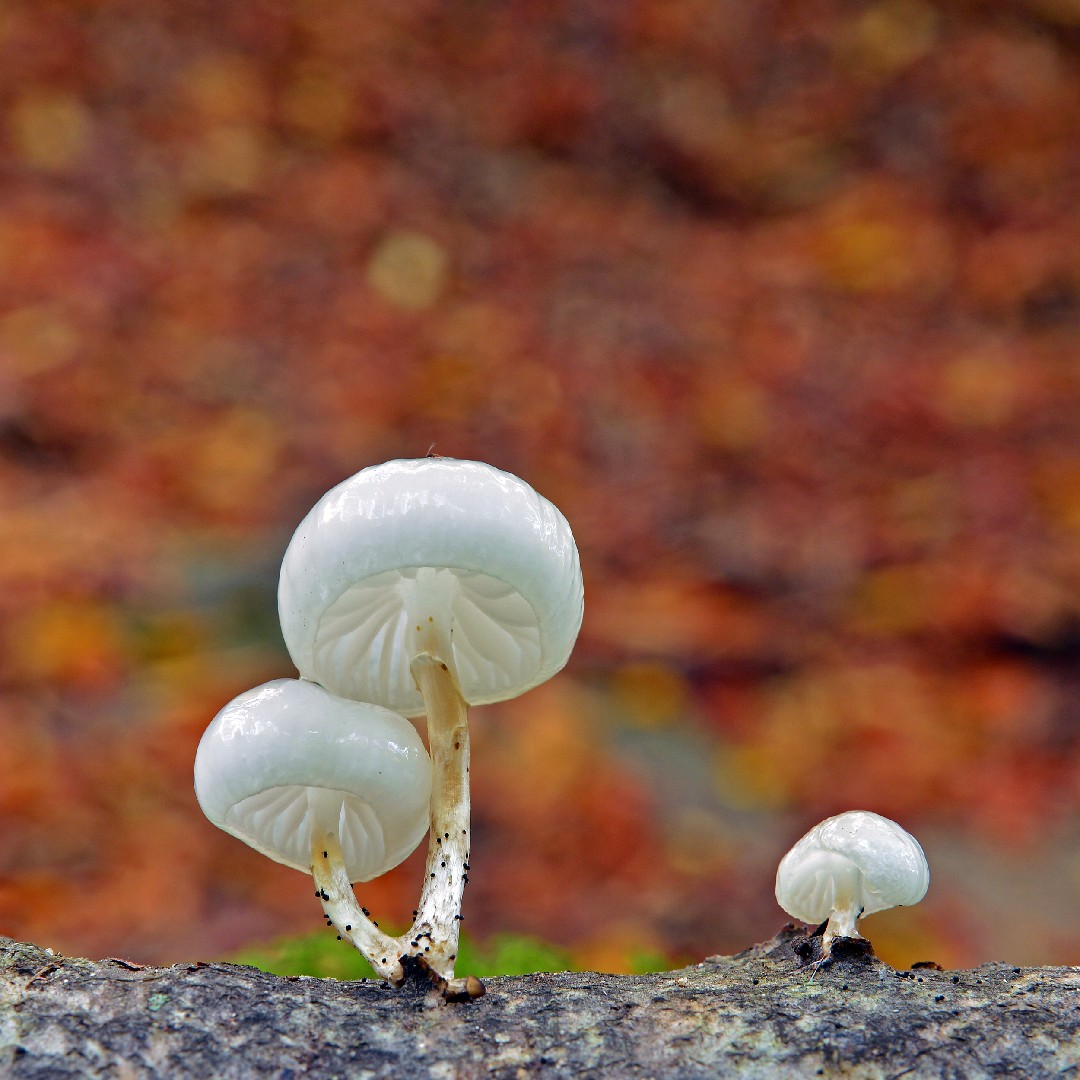
1. Porcelain mushroom
Porcelain mushroom can be found on a variety of deadwood including logs, dead standing trees, and dead upper branches. However, this mushroom is pickier about the type of deadwood, as it only grows on beech trees. This mushroom prefers to keep these trees to itself, releasing fungicides that can kill other mushrooms.
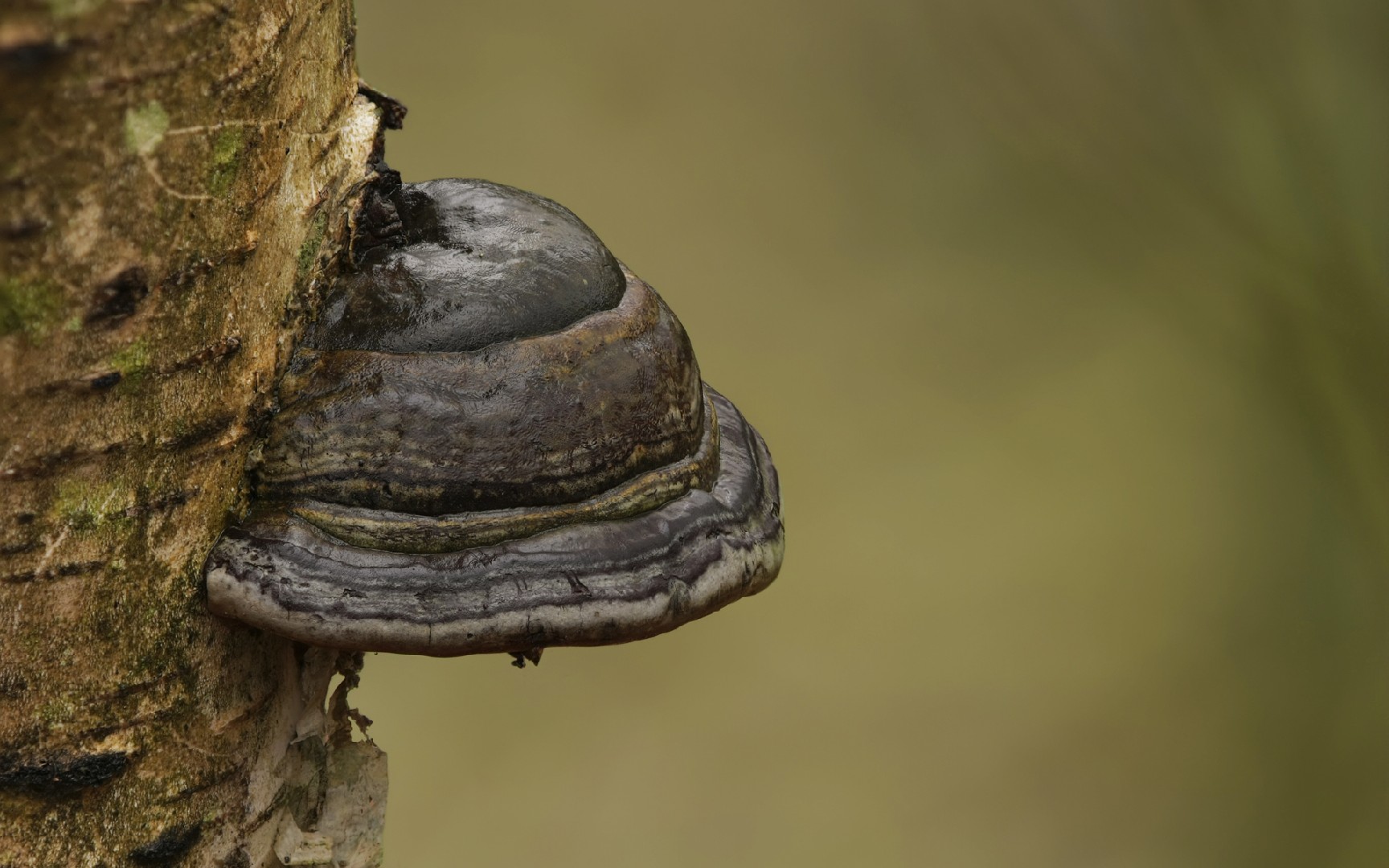
2. Tinder fungus
This large, tough shelf fungus can be found attached to birch, beech, and sycamore trees. It gets its common name, tinder fungus, from the fact that it burns quite slowly and can thus be used effectively for lighting fires. Dried pieces can also be a useful desiccant. A piece of this fungus was found in the possession of Otzi the Iceman, indicating that its usefulness has been known for millenia.
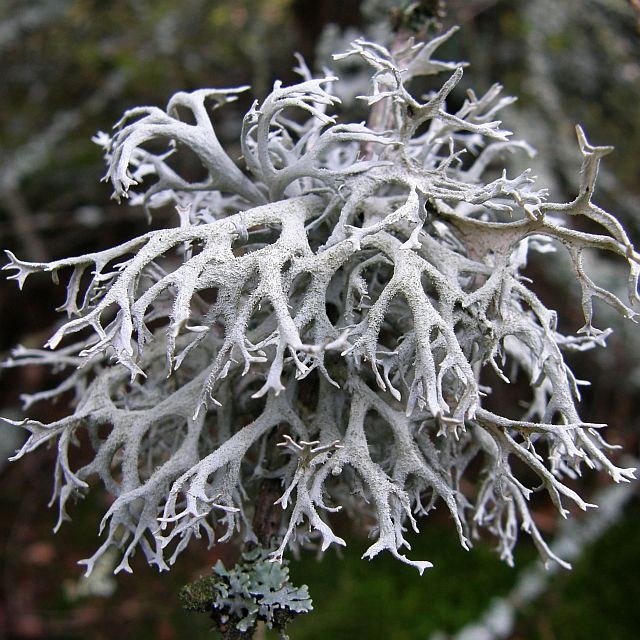
3. Tree moss
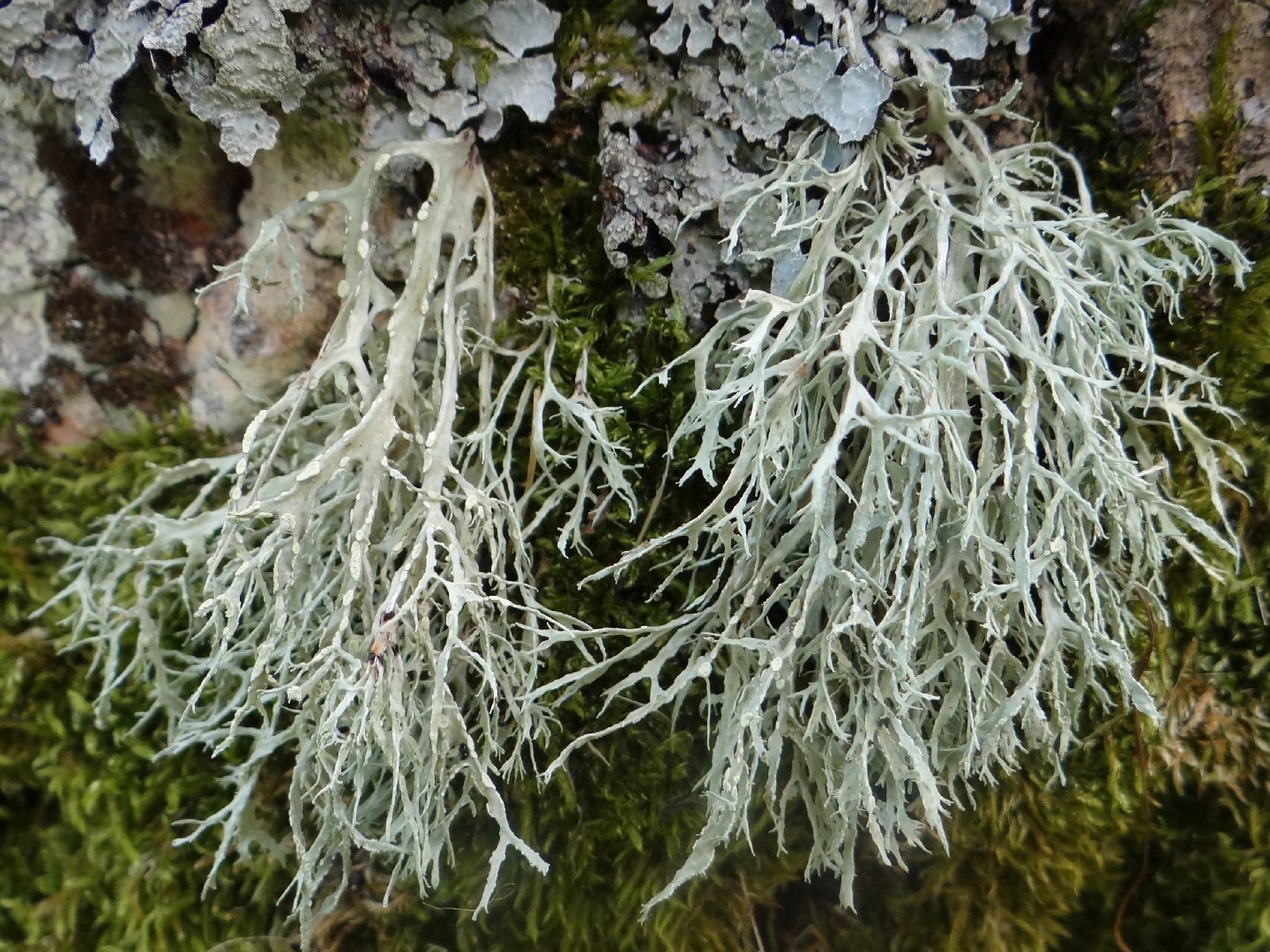
Pseudevernia furfuracea is associated with photobionts from the green algae genus Trebouxia. It reproduces asexually by isidia. The ontogeny of isidia development and its role in CO2 gas exchange in P. furfuracea has been investigated. The preferred growing surfaces for P. furfuracea are the so-called "nutrient poor" bark trees, including birch, pine and spruce. The species has two morphologically identical varieties that are distinguished by the secondary metabolites they produce: var. ceratea Zopf. produces olivetoric acid and other physodic acids, while var. furfuracea produces physodic but not olivetoric acid. Some authors (e.g., Hale 1968) have separated the chemotypes at the species level, designating the olivetoric acid-containing specimens as Pseudevernia olivetorina, but more recent literature separates them at the varietal level. 
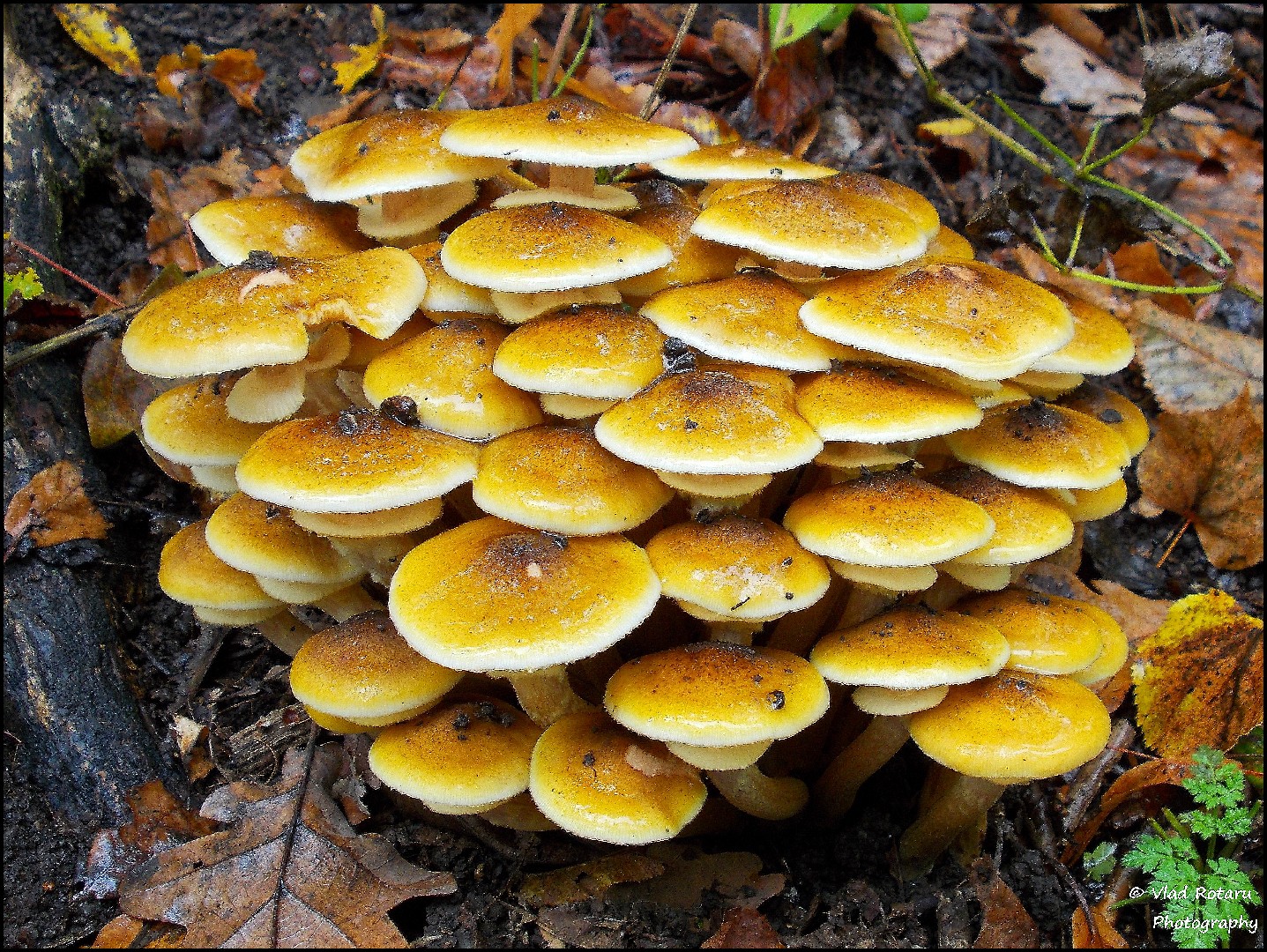
4. Honey fungus
The honey fungus is a parasitic fungus that grows on the roots of many woody and perennial plants, damaging and possibly killing its host. It spreads underground and is considered to be the most damaging fungal disease in gardens across the UK. The appearance of the mushrooms above-ground heralds a much more extensive infection below.
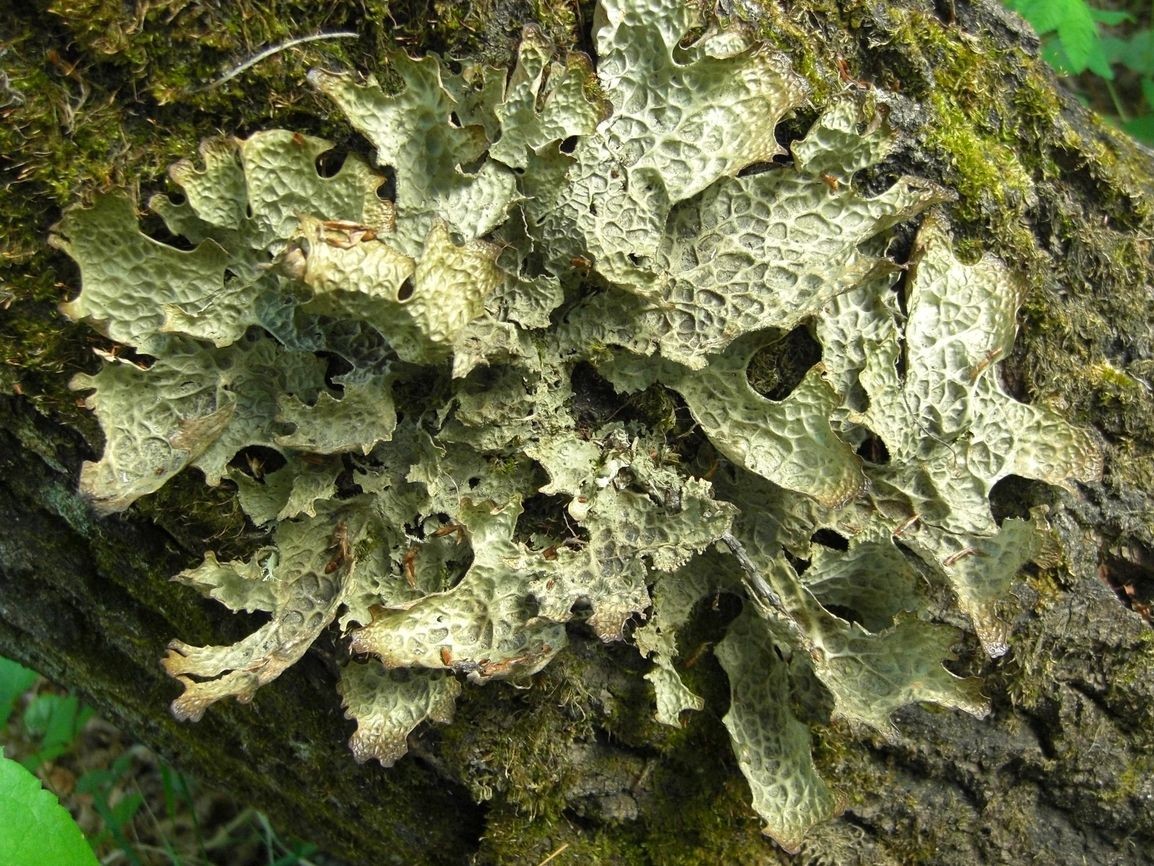
5. Tree lungwort
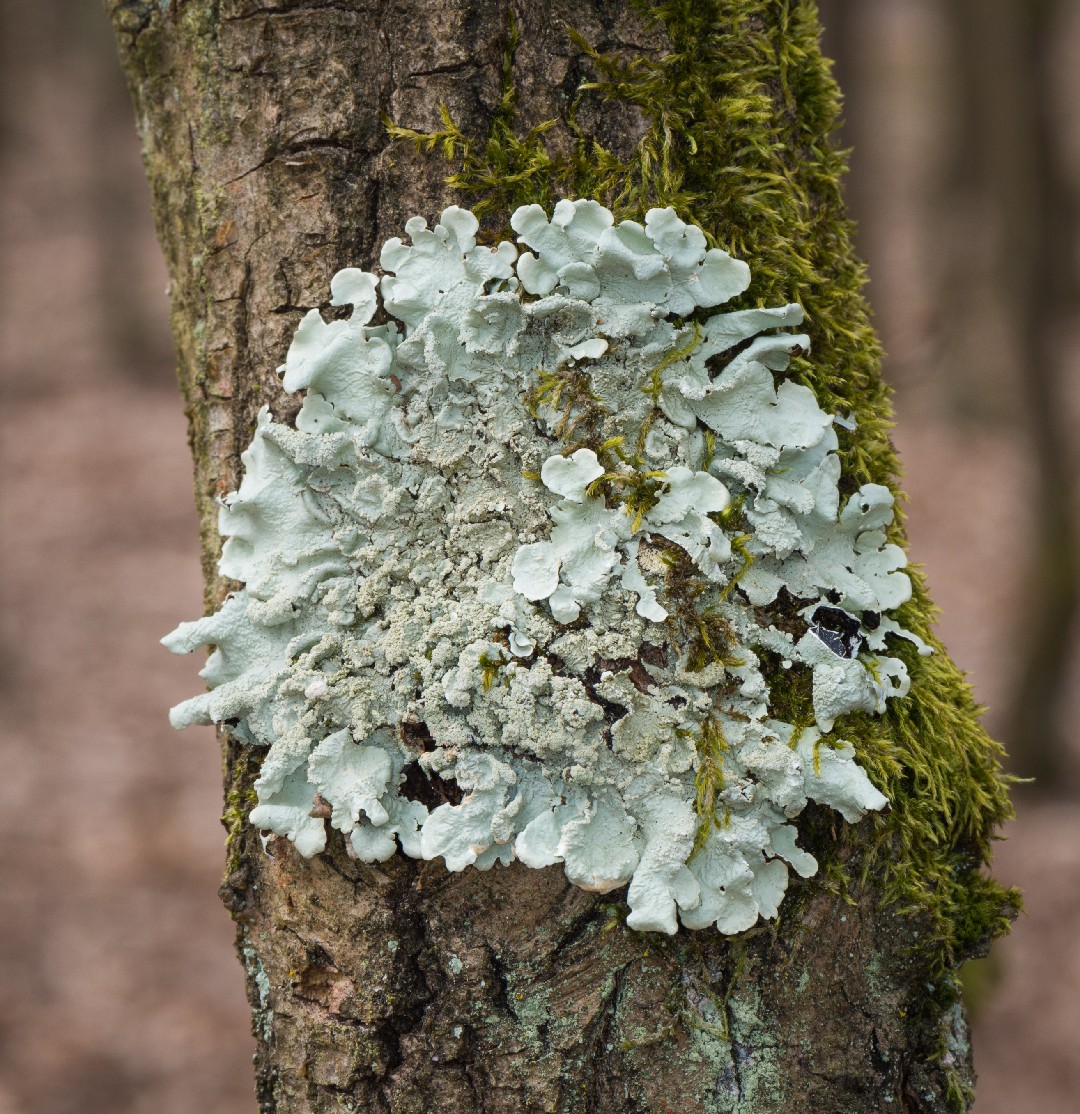
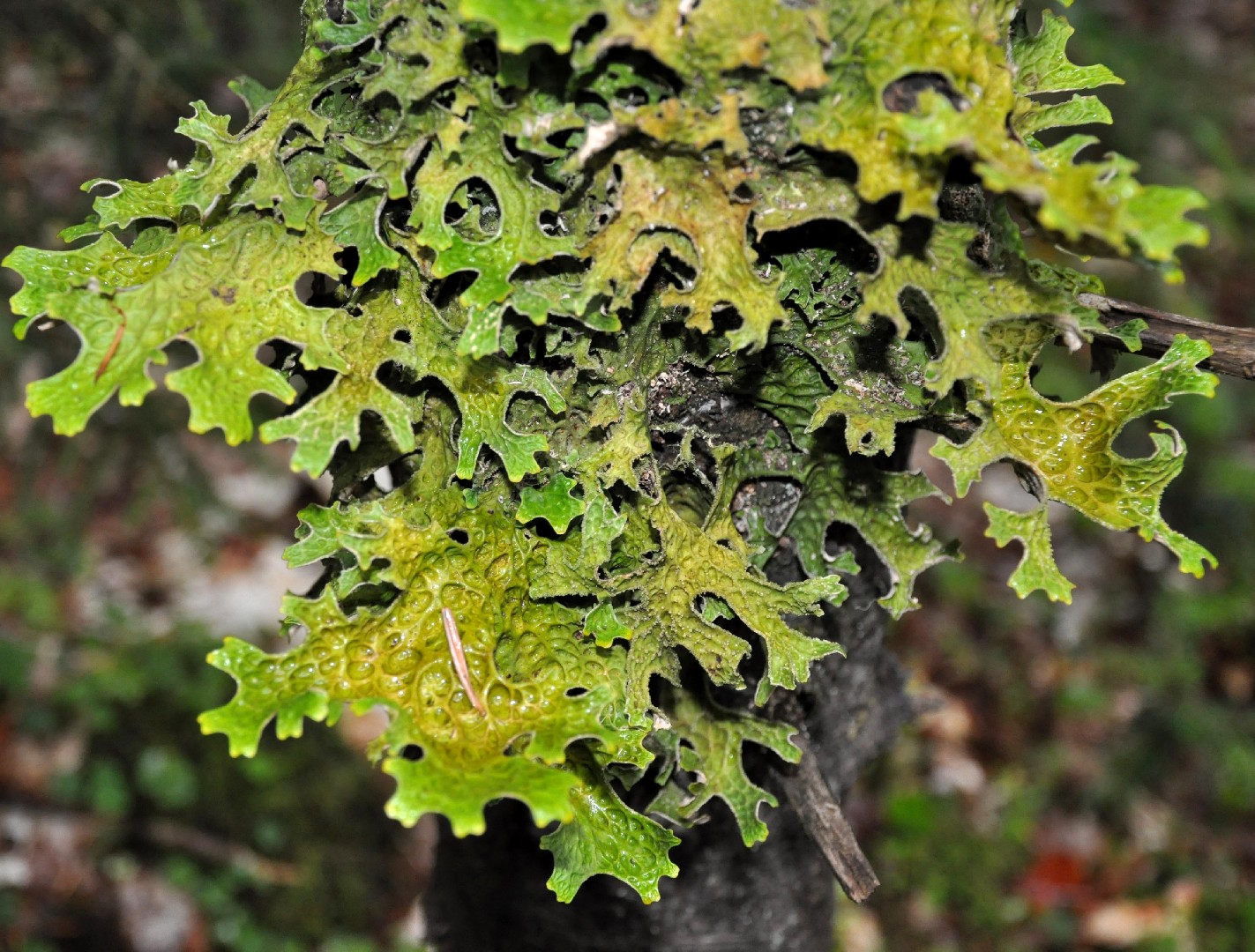
Tree lungwort is a green lichen that can be found in humid areas of North America, Europe, and Asia. It grows regularly on trees, rocks, and in urban areas rich with moss. It can be used as a dye. Animals may consume tree lungwort or use it as nesting material.
6. Xanthoporia radiata
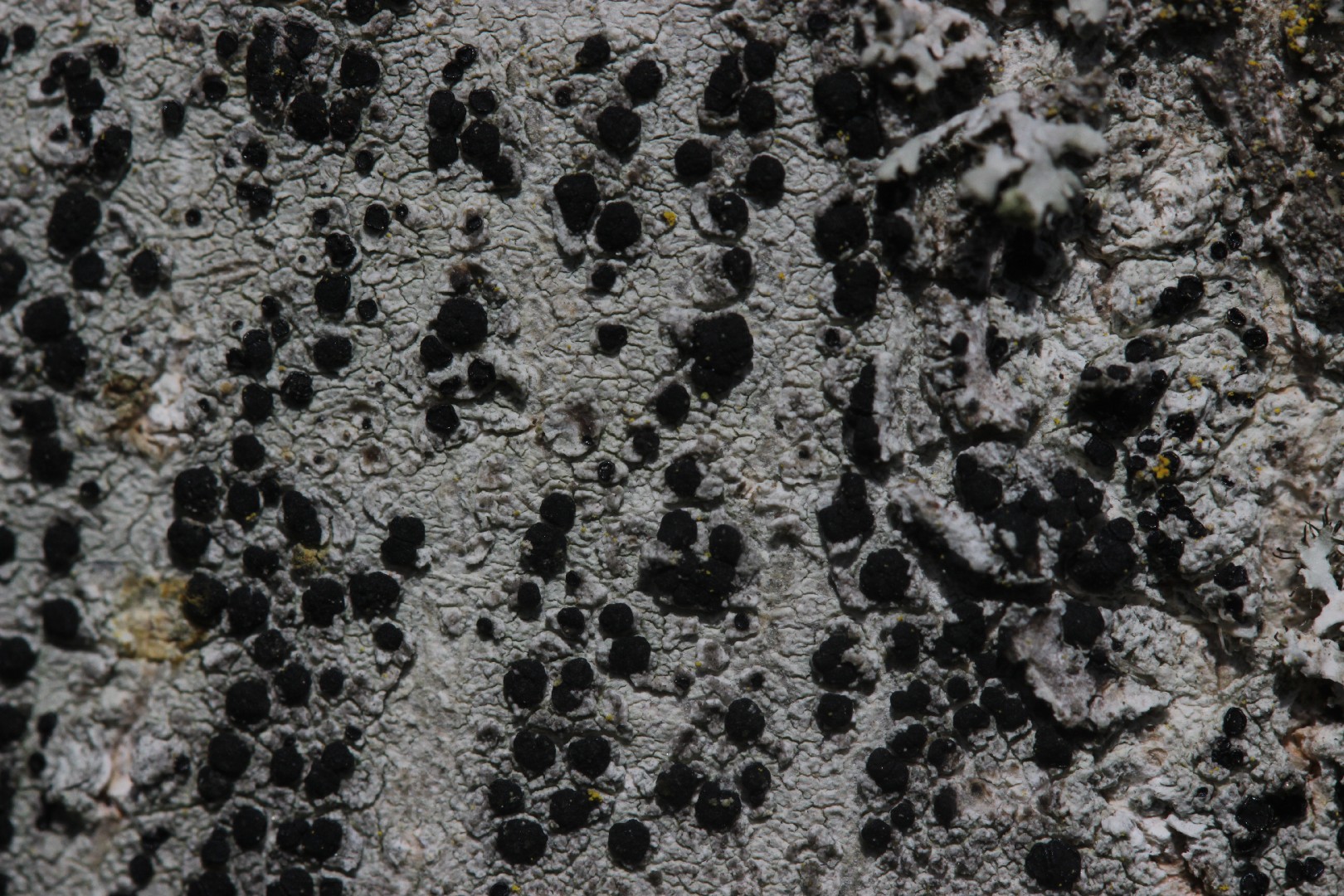
7. Lecidella lichen
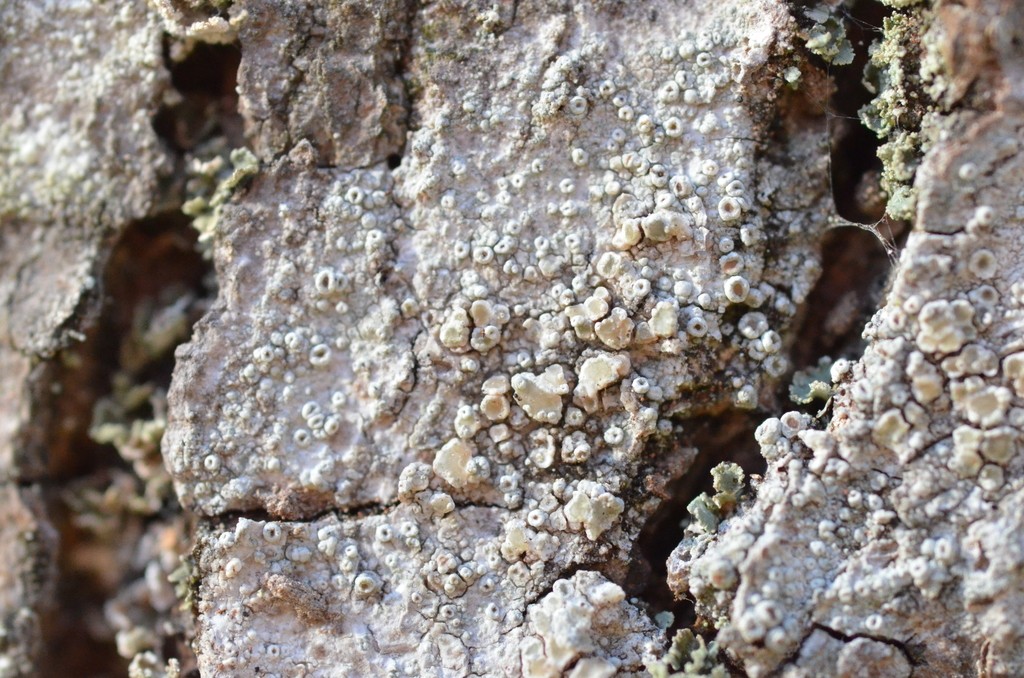
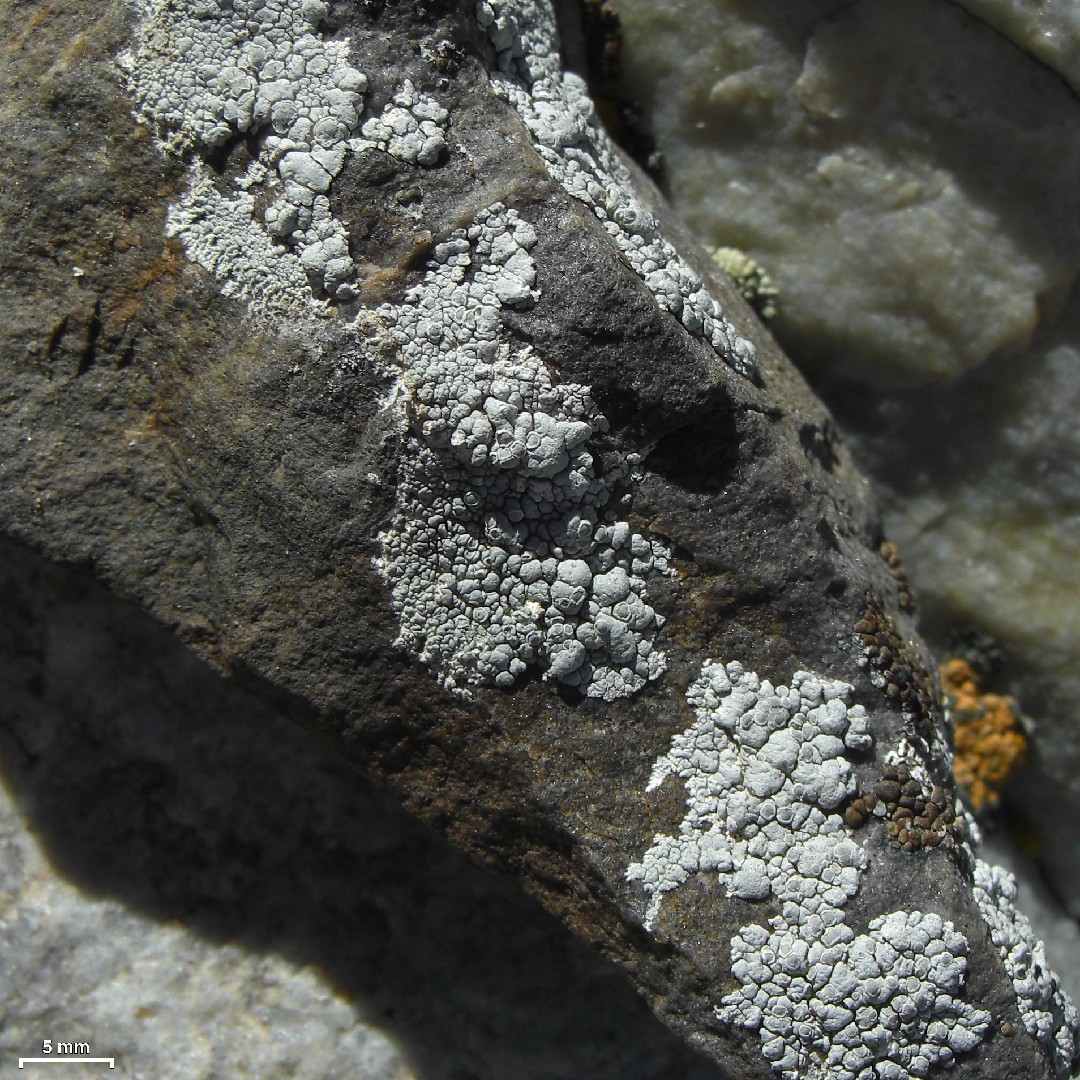
Lecidella elaeochroma is a crust lichen, which means that its stock (Thallus) lies closely on the surface. The camp is whitish, gray, gray-green, olive or yellowish. Often it is also damaged by snail-eating and then greenish. The structure of the camp is smooth to grainy. Often it is weakly glossy or even limited by a black submission. The camp can sometimes be sorediös dissolved. It reaches diameter of 1 to 3 cm. The apothecia reach between 0.4 and 1.0 mm in diameter. Their discs are black to dark reddish brown and very rarely frosted. The Apotheciens are flat to strongly arched and can be deformed. Its edge is black and smooth. Overall, the appearance of this lichens is very rich in form.
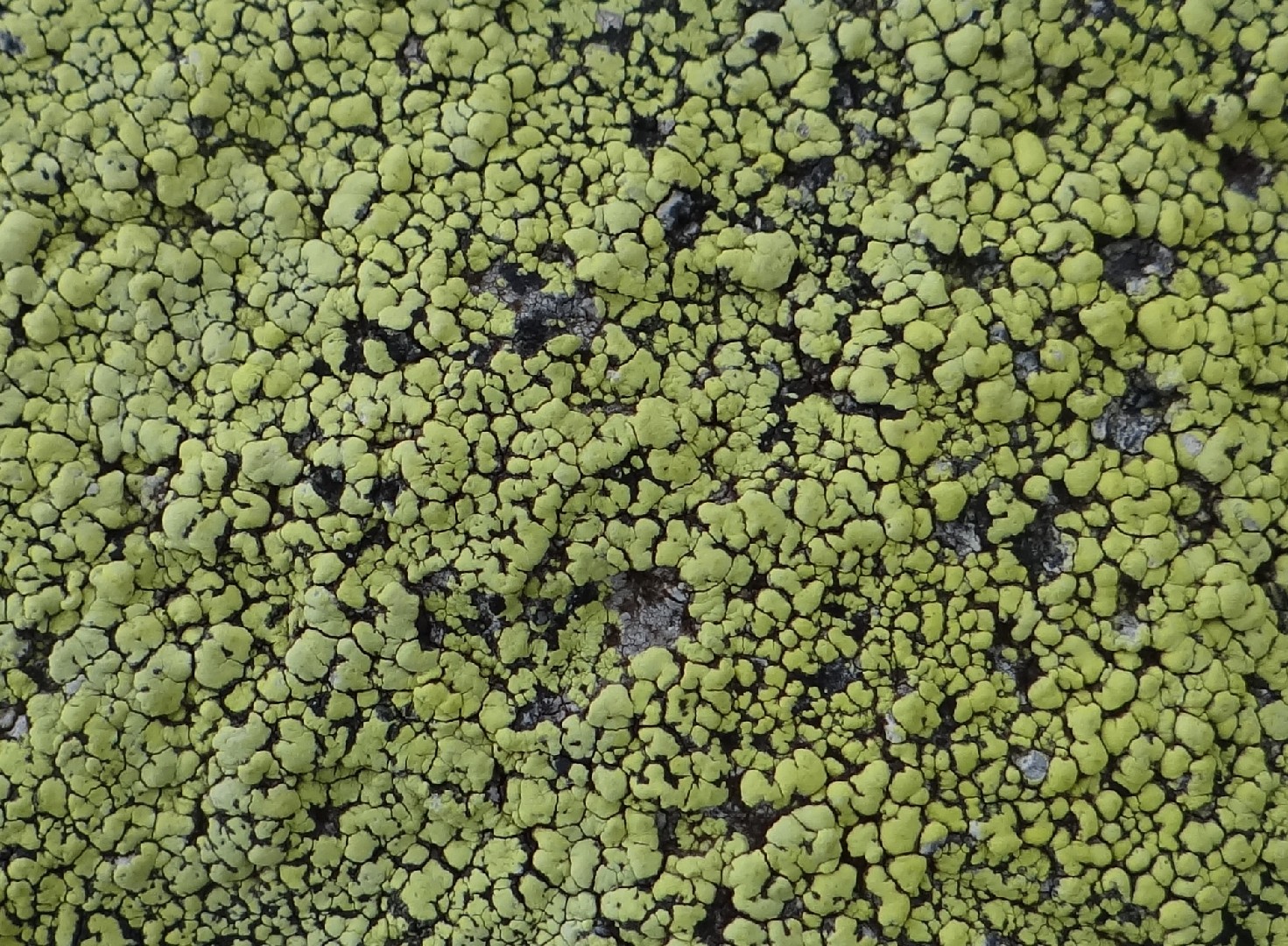
8. Map lichen
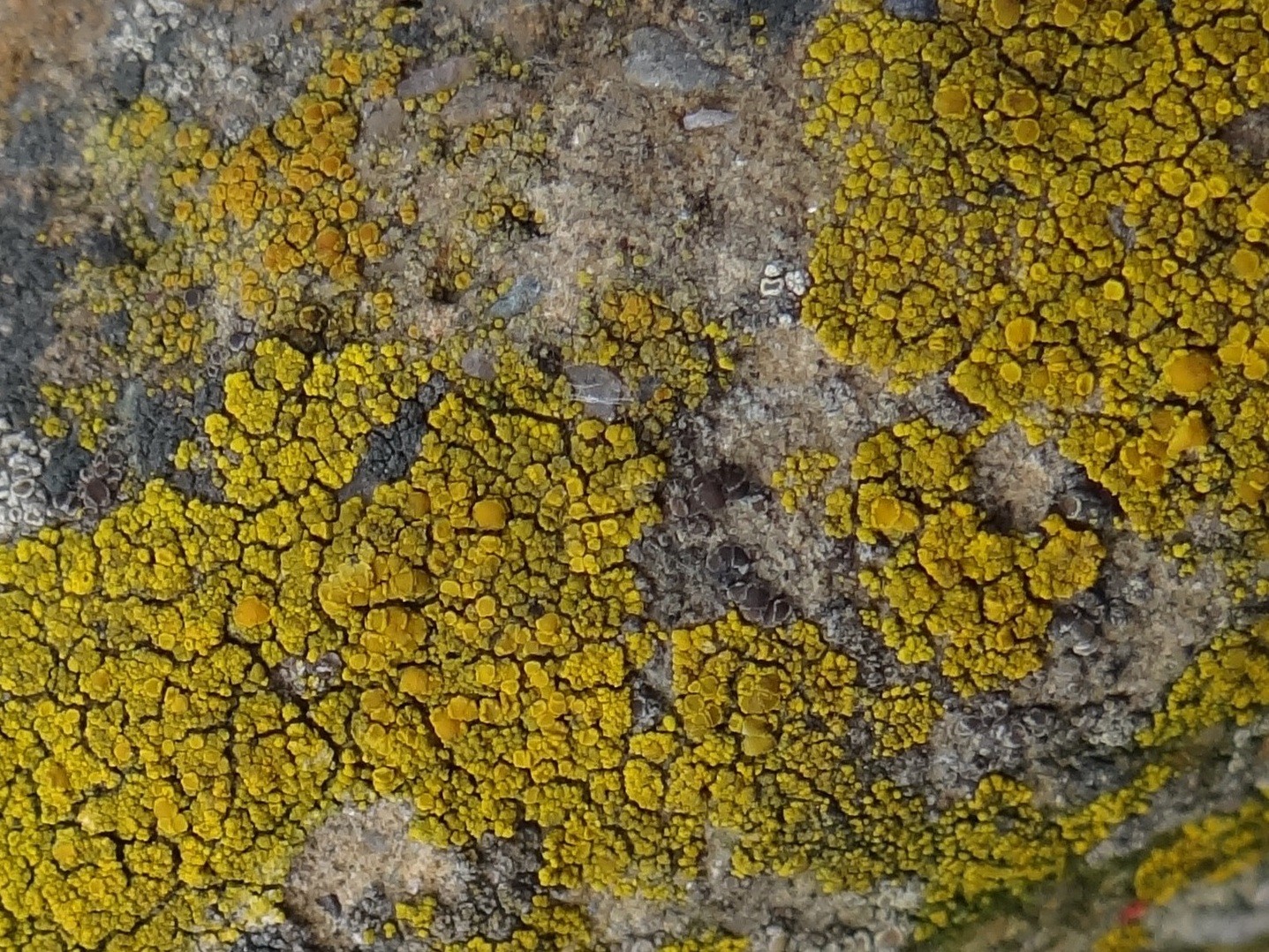
The map lichen is a crust lichen, the thallus lies close to the ground or grows through it. The species is bright yellow to olive green. It can cover large areas on stones. The lichen is divided into small angular fields, which are separated by a black border and pull through the lichen body. At the edge of the fields black edged fruiting bodies are sunk. The appearance of this structure is reminiscent of geographically separated areas on a map. Like many lichens, it has extremely slow growth. It grows depending on the location per year only 0.25-0.6 mm radially outward. It can reach an age of over 1,000 years and can be used to date the decline of glaciers. If the growth rate at a location is known, the last ice cover can be calculated from the largest specimens.
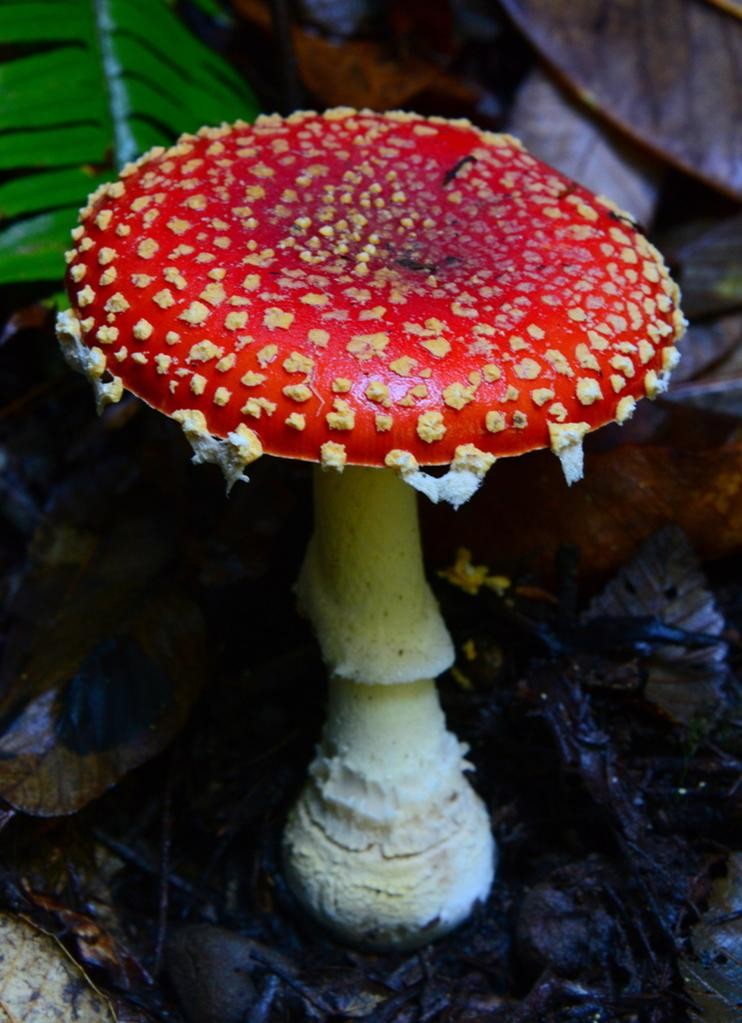
9. Fly agaric
In Northern Asia and Europe, fly agaric grows under trees near the winter solstice and is collected for ritual use tied to the season. Its characteristic shape and coloring are still ubiquitous in many European fairy tale illustrations and Christmas traditions. It is highly toxic.
10. Rim lichen
More







