




Top 20 Most Common Mushrooms in Concon

Most Common Mushrooms
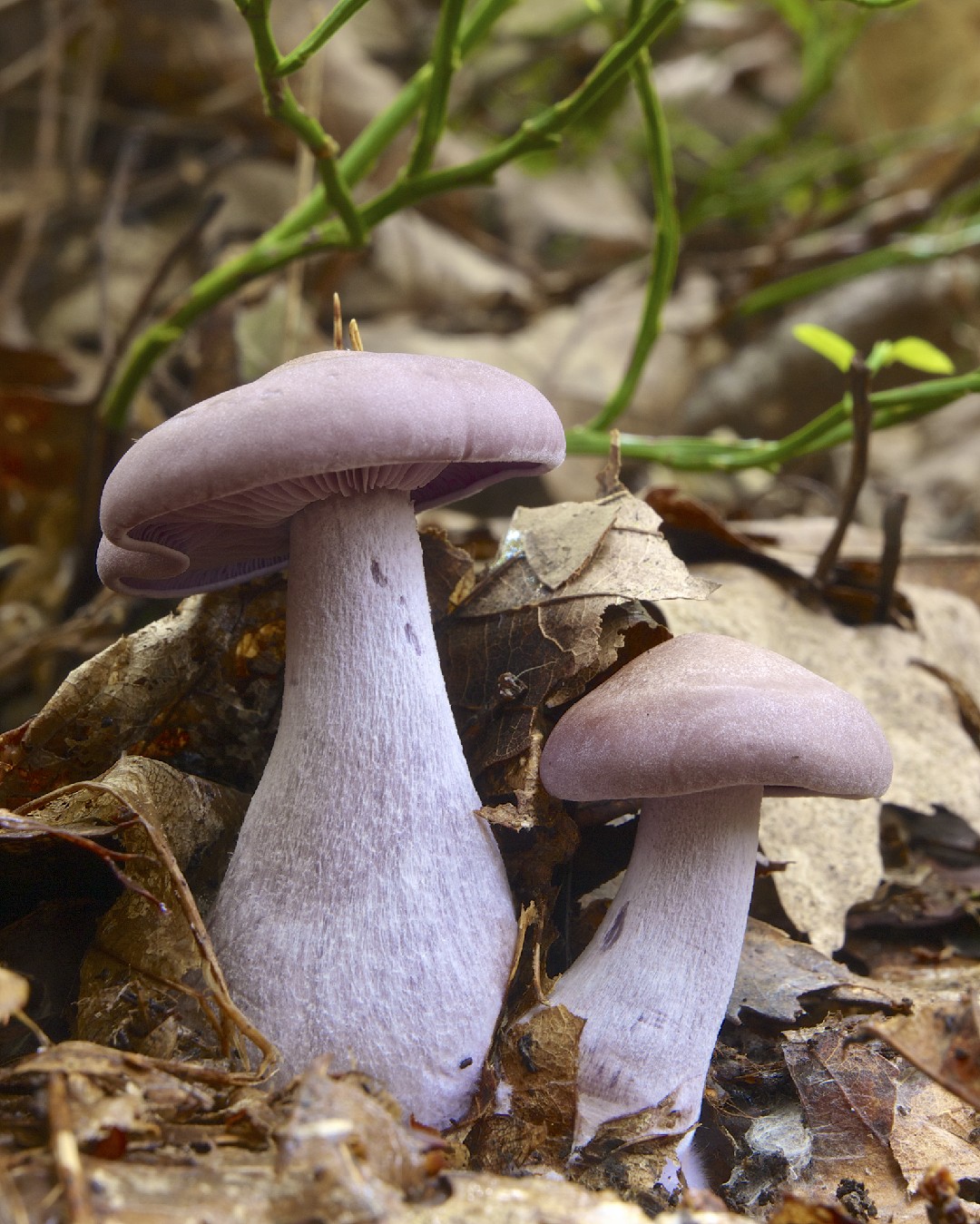
1. Blewit
The blewit mushroom grows in fallen leaves in autumn and winter, sometimes appearing in ‘fairy ring’ circles. It can be used to make a green dye when chopped and boiled in an iron pot. The scientific name, Lepista nuda, derives from Latin words meaning “bare goblet,” a reference to the shape and texture of the mushroom.
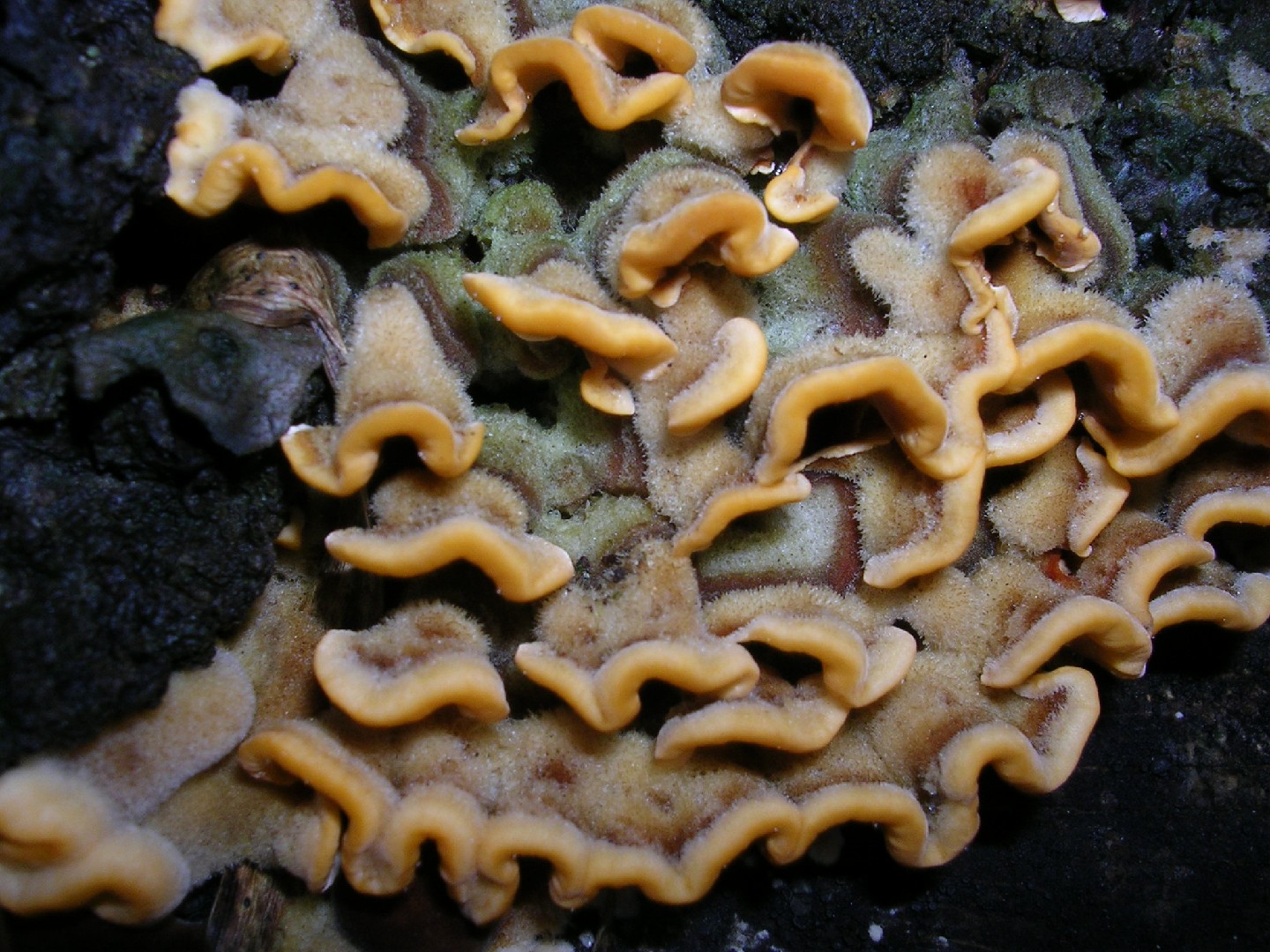
2. Hairy curtain crust
This clustered, overlapping fungus is found all over the world, and is considered native across both the northern and southern hemispheres. Both its common name, hairy curtain crust, and its scientific name, Stereum hirsutum, aptly describe its most obvious features: it is quite tough (stereum) and the younger fruitbodies are notably hairy (hirsutum).
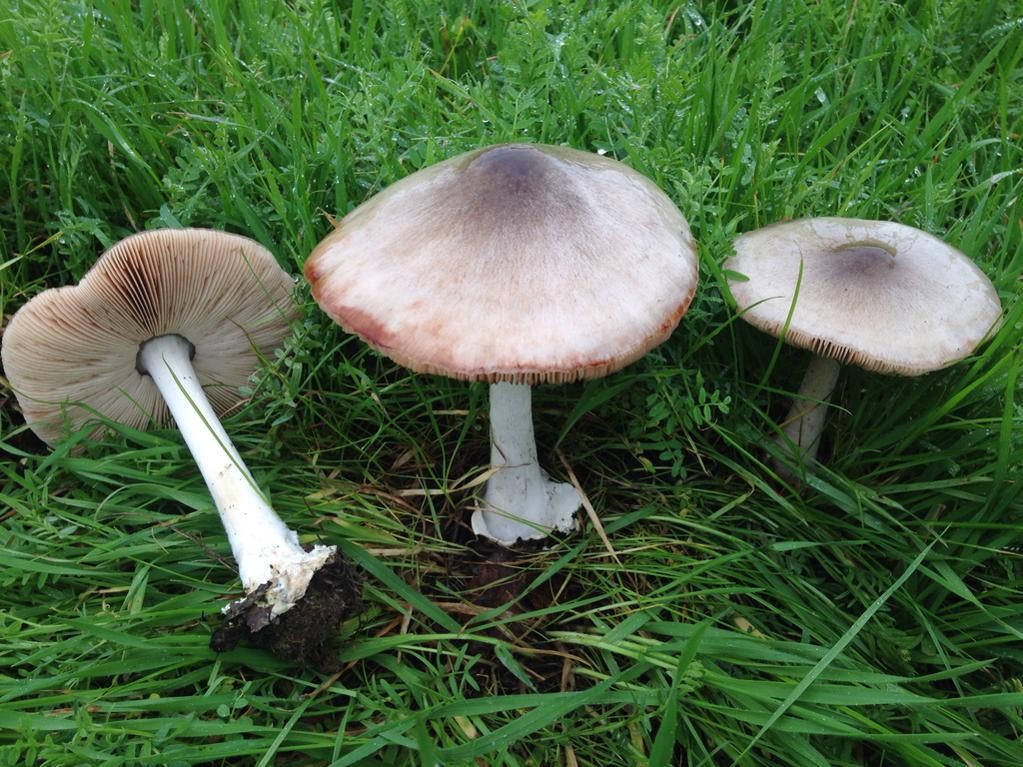
3. Big sheath mushroom
These large white mushrooms bloom all over cleared, harvested fields, as well as pastures and roadsides. The scientific species name comes from Greek words meaning “glue” (glioio) and “head” (cephalus), in reference to the sticky surface of this mushroom’s cap. The big sheath mushroom looks so similar to the poisonous Deathcap and Destroying Angel mushrooms that it should always be left alone.
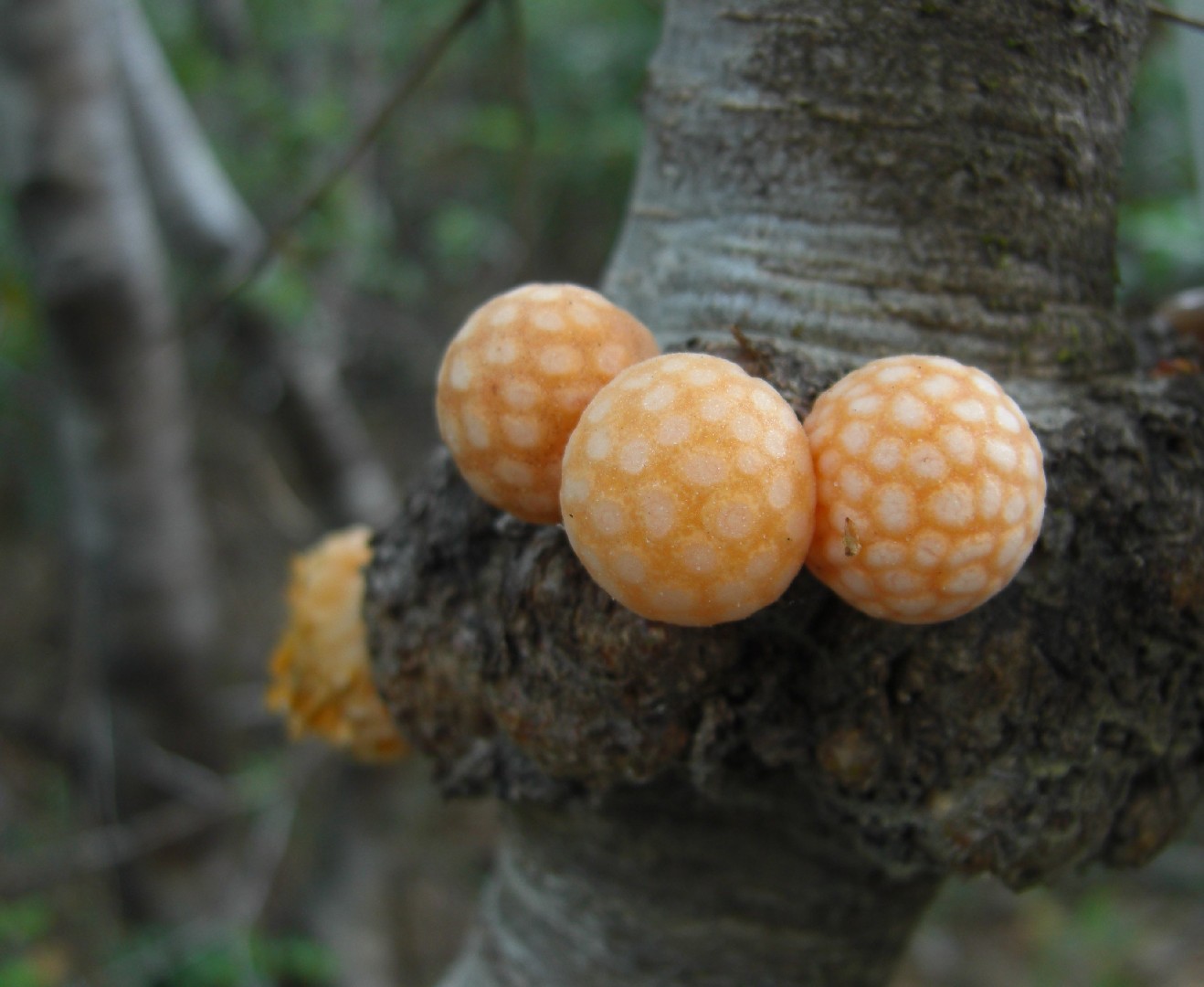
4. Cyttaria espinosae
The Cyttaria espinosae has a globose structure of white color and sticky surface, a thin white membrane covers the mushroom; This membrane is broken at the moment when the mushroom grows, revealing the apotheciae, which correspond to circular orange cavities on the surface of the mushroom in which the ascaspores and ascospores develop. The digüeñe is a strict and specific parasite of Nothofagus, mainly of Nothofagus obliqua and causes cancerous gills in the branches, from which the fruiting bodies emerge from spring to early summer. The rough surfaces of the fungus favor air movements in turbulence, which facilitates the dispersion of the spores by the wind.
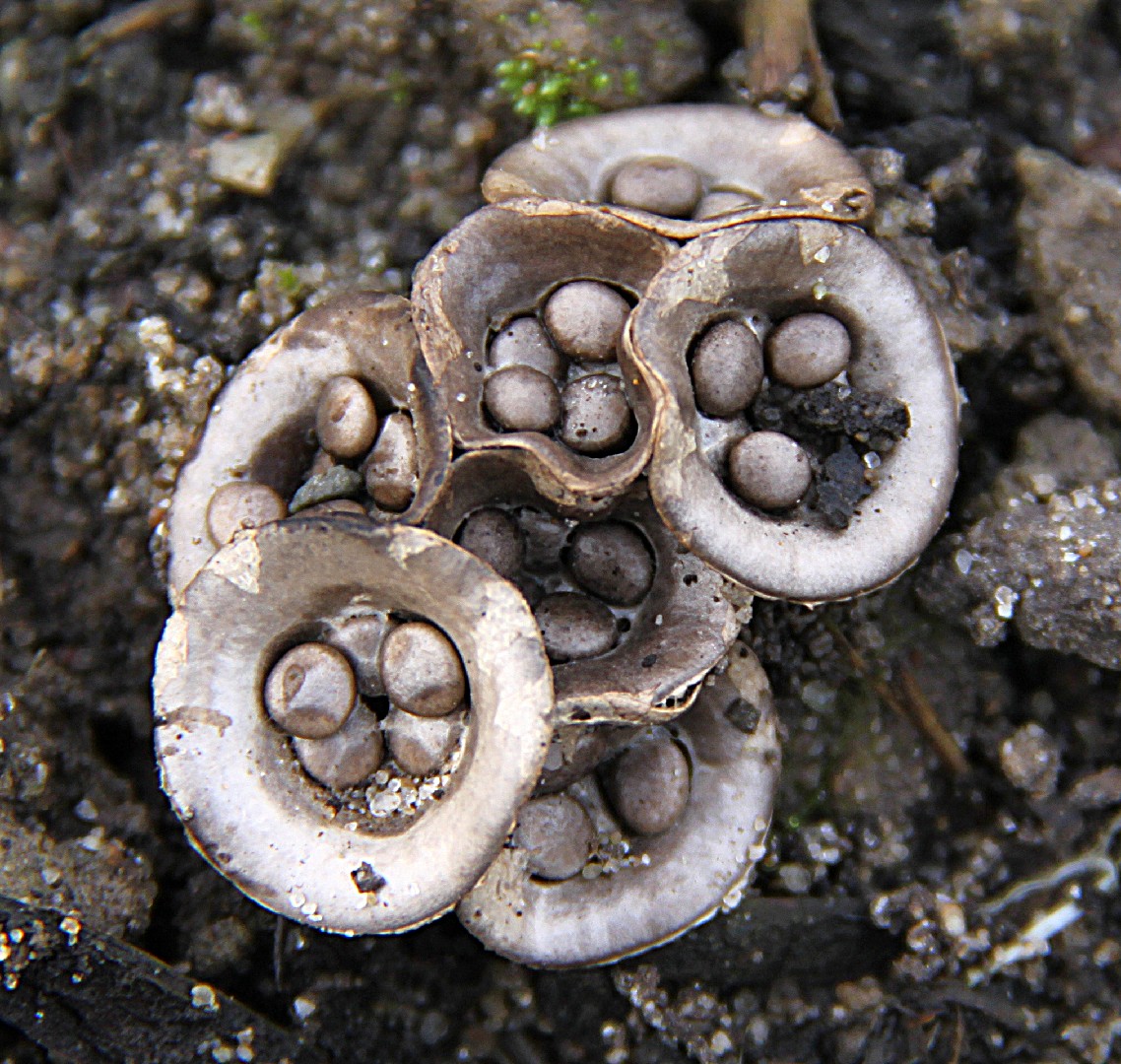
5. Field bird's-nest
The field bird's-nest forms spore-bearing structures that are called peridioles. These reproductive structures resemble eggs, especially because they're nested in a cup-shaped fruit body, just like eggs in a bird's nest, hence its common English name of Field bird's-nest.
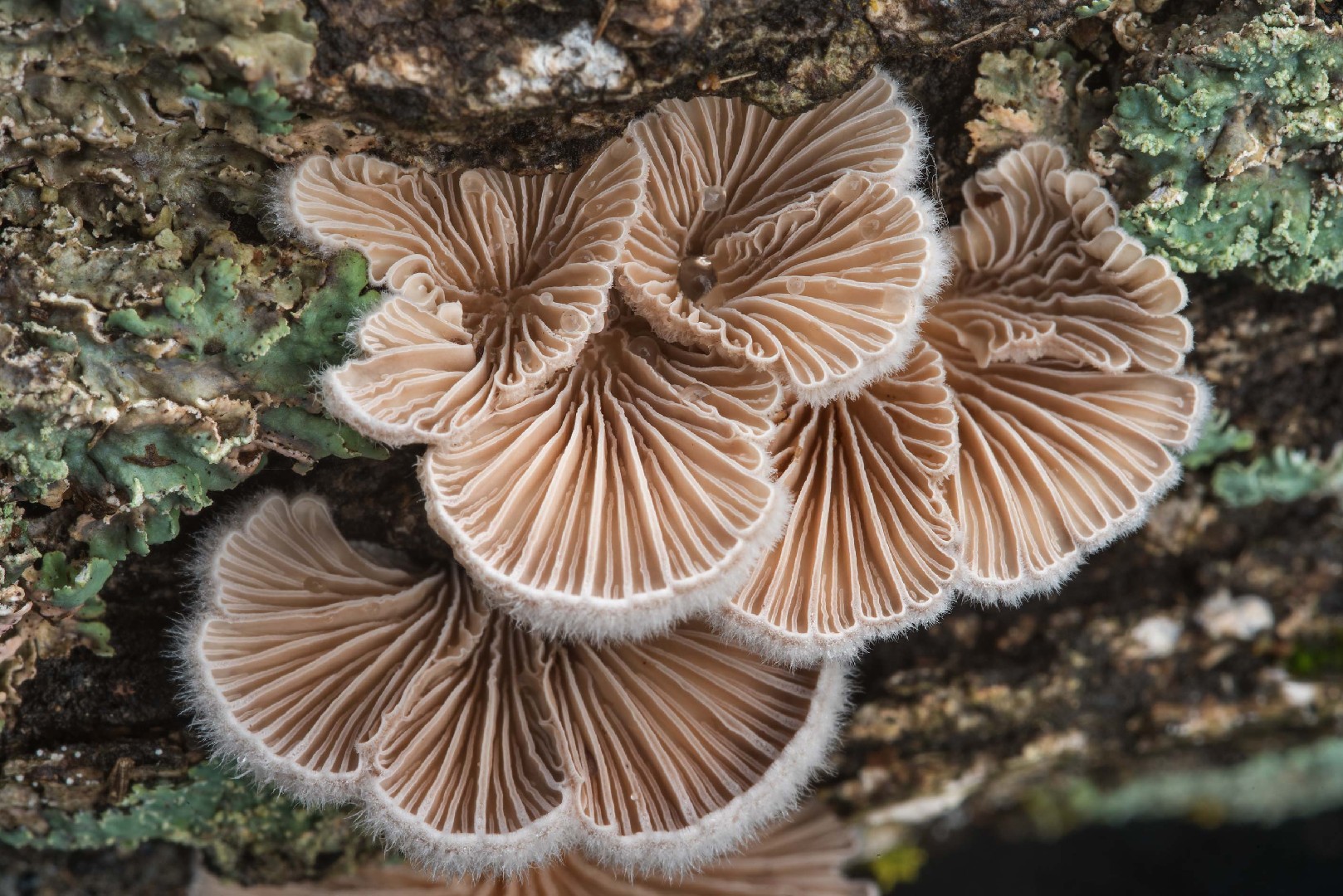
6. Split gill
Split gill(Schizophyllum commune) can be found across the globe. Uniquely, it is the only mushroom species known to display the capability to retract by movement. It is considered inedible, although not necessarily toxic. Furthermore, it is not recommended to smell this species, as the spores are capable of sprouting and growing in nasal passages.
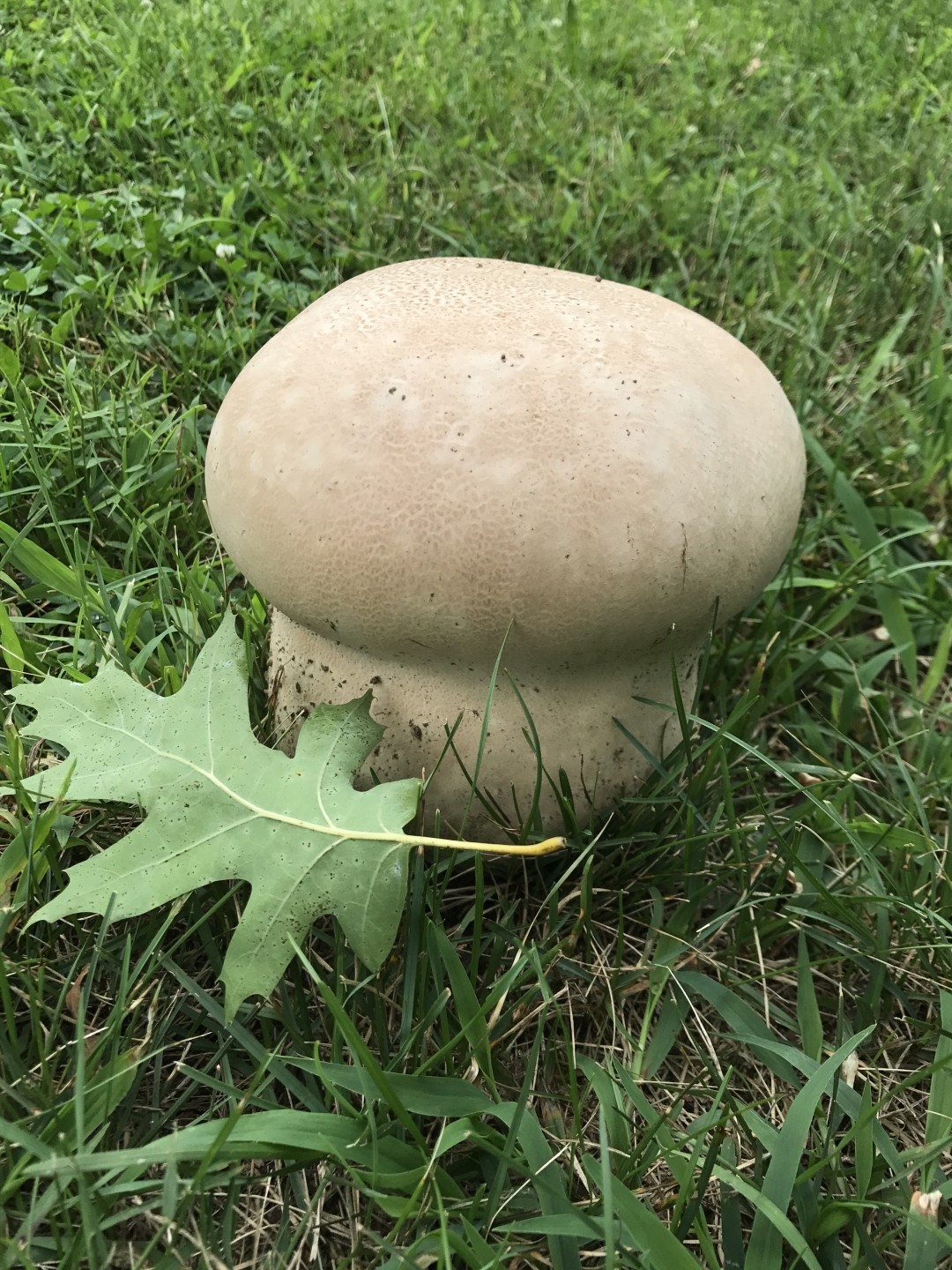
7. Purple-spored puffball
It's hard to mistake this mushroom for another. The aptly-named purple-spored puffball has a large, round, or pear-shaped fruiting body and is purple or chocolate-brown in color (with spores to match). Purple-spored puffballs are found in prairies and meadows across North America and Australia.
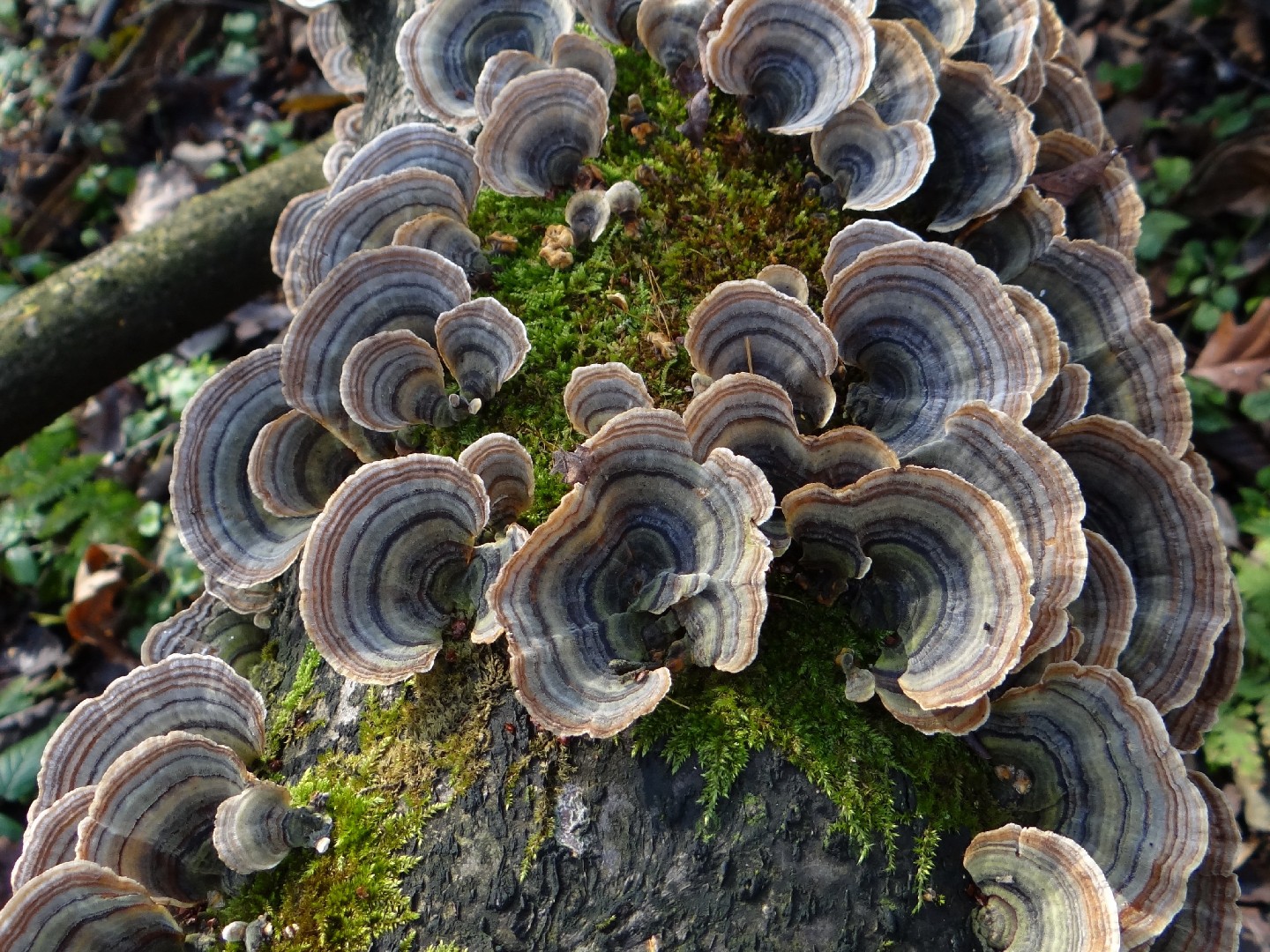
8. Turkey tail
The distinctively-striped turkey tail fungus grows on stumps and logs all over the forests of the northern hemisphere. It is, in fact, probably the most common species you will find. That doesn't mean this mushroom is plain, however; each cap is uniquely patterned. Look for bands of alternating textures as well as color.
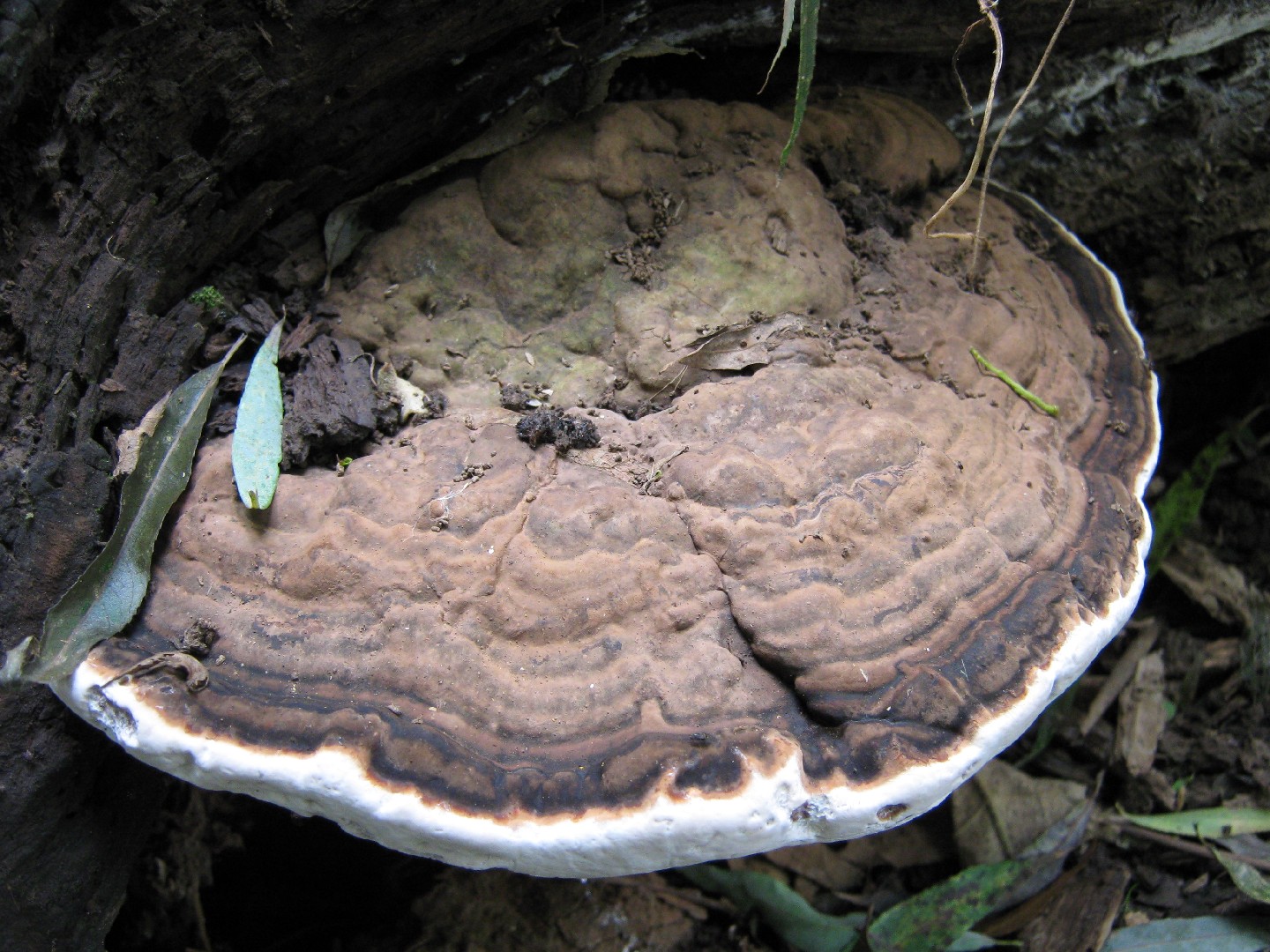
9. Southern bracket
The beaded Lackporling (Ganoderma adspersum, also Ganoderma australe or Ganoderma europaeum) is a fungus of the genus of Lackporlinge (Ganoderma) in the order of the pore fungi.
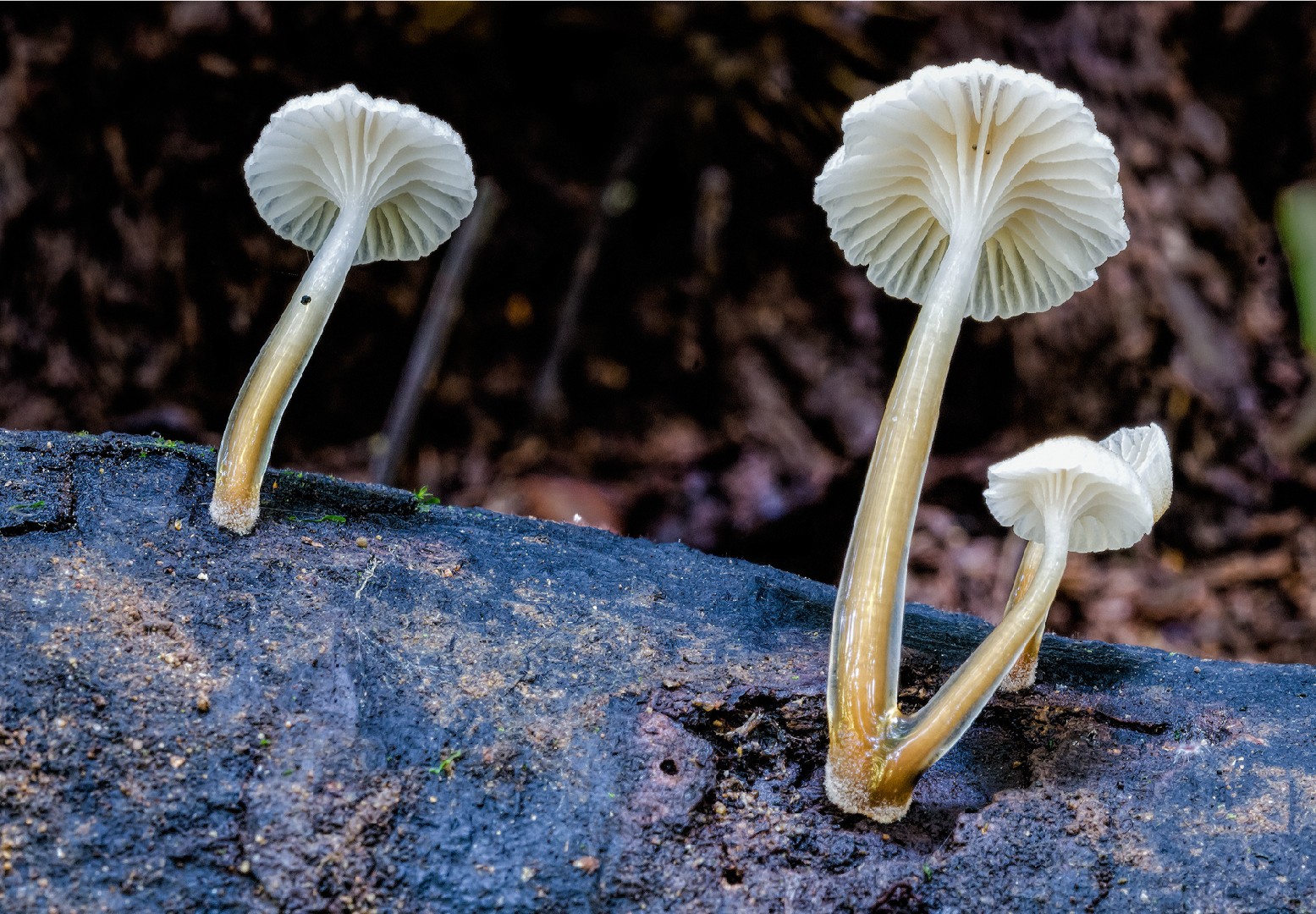
10. Austro dripping bonnet
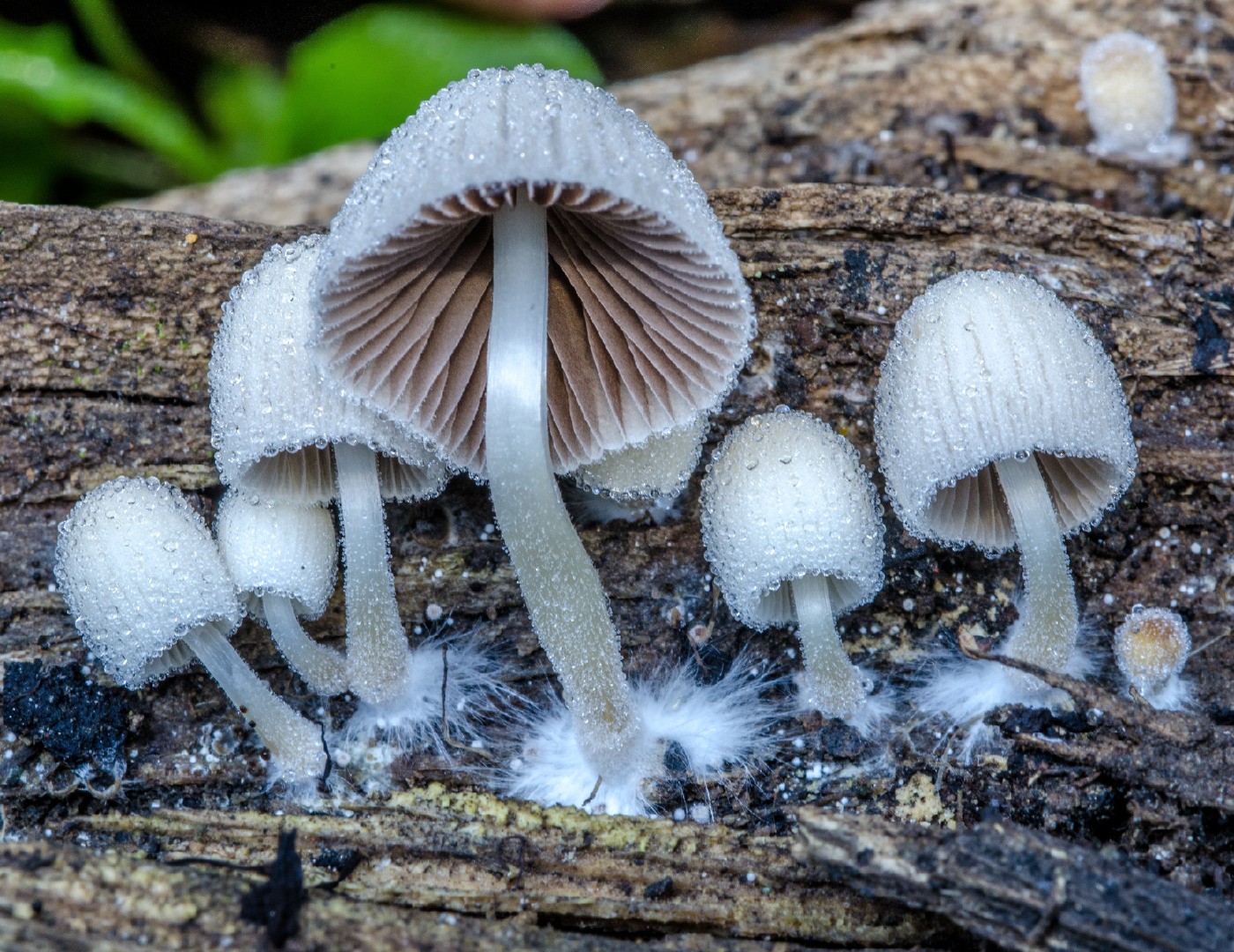
The austro dripping bonnet (Roridomyces austrororidus) is a must-see. Look closely at the tiny mushrooms emerging from the ground to see the iridescent, mucus-like sheen on eacj cap and stem. They erupt in groups from the damp, decaying debris on rainforest floors.


More







