




Top 20 Most Common Mushrooms in Prince Edward Island

Most Common Mushrooms
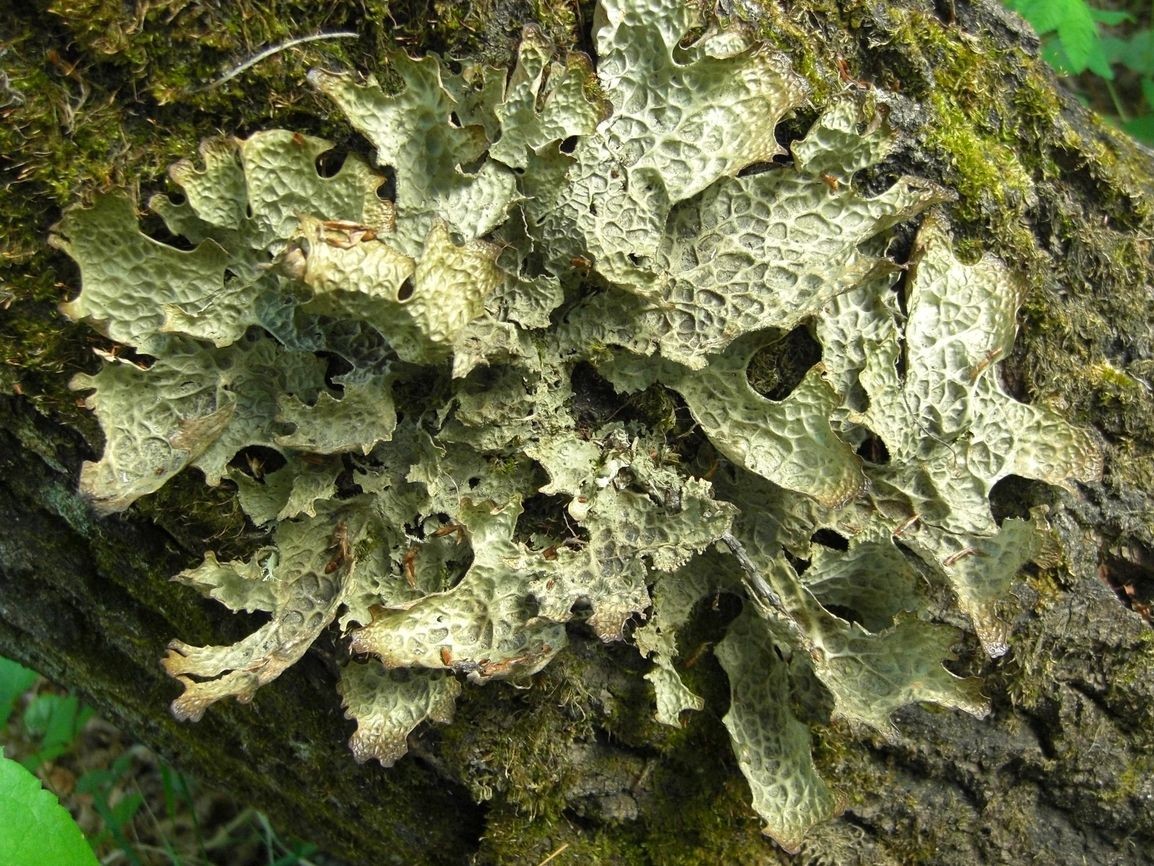
1. Tree lungwort
Tree lungwort is a green lichen that can be found in humid areas of North America, Europe, and Asia. It grows regularly on trees, rocks, and in urban areas rich with moss. It can be used as a dye. Animals may consume tree lungwort or use it as nesting material.
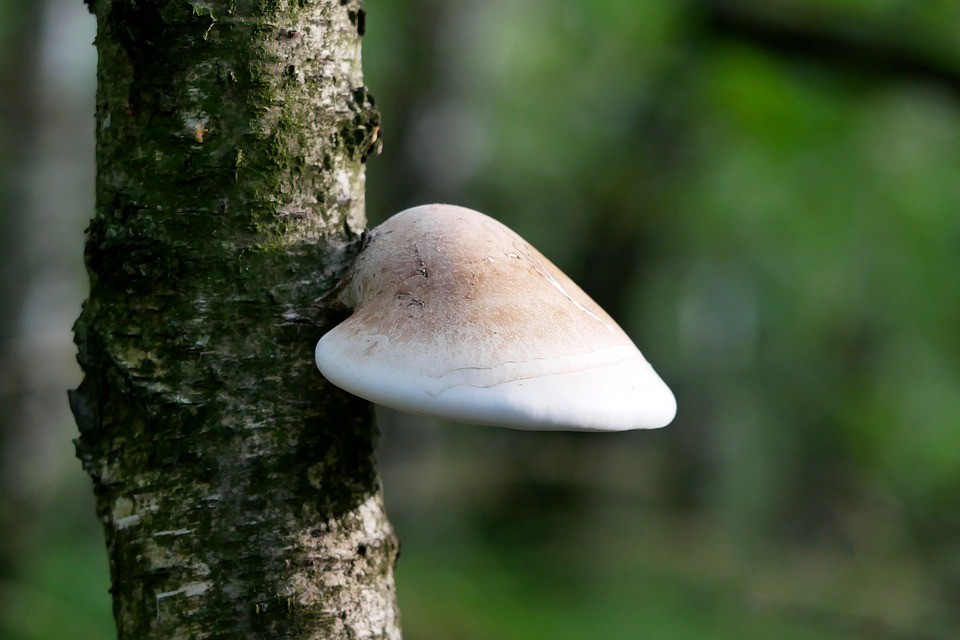
2. Birch polypore
The birch polypore has a variety of applications. Its thick skin has been used by barbers as a razor sharpener and as a mount for insect collectors. When dried, this mushroom was also used to carry fire over long distances because it burns slowly. The historical use of birch polypore doesn't stop there; pieces of this mushroom were found being carried by the five-thousand-year-old mummy Ötzi the Iceman.
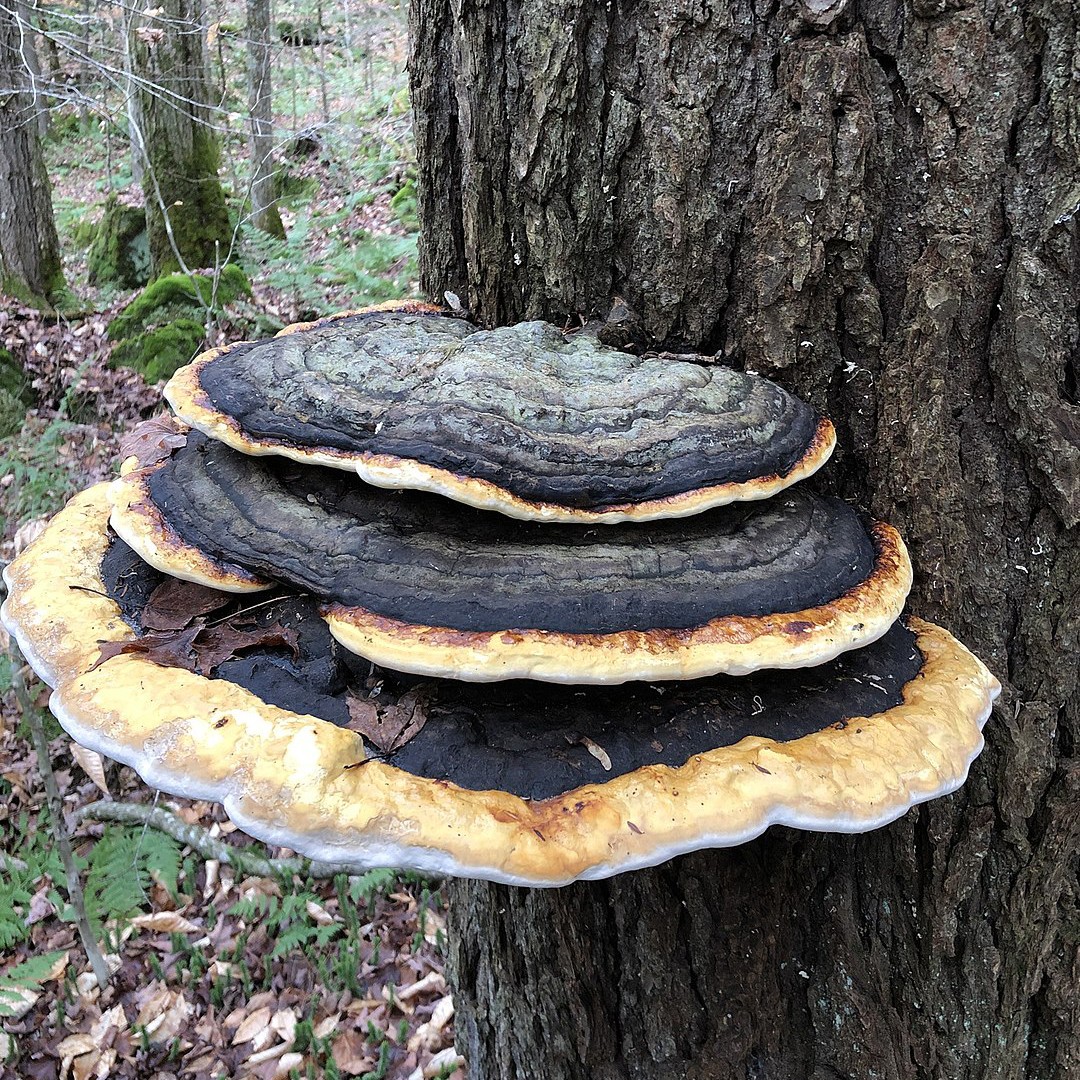
3. Red-belted polypore
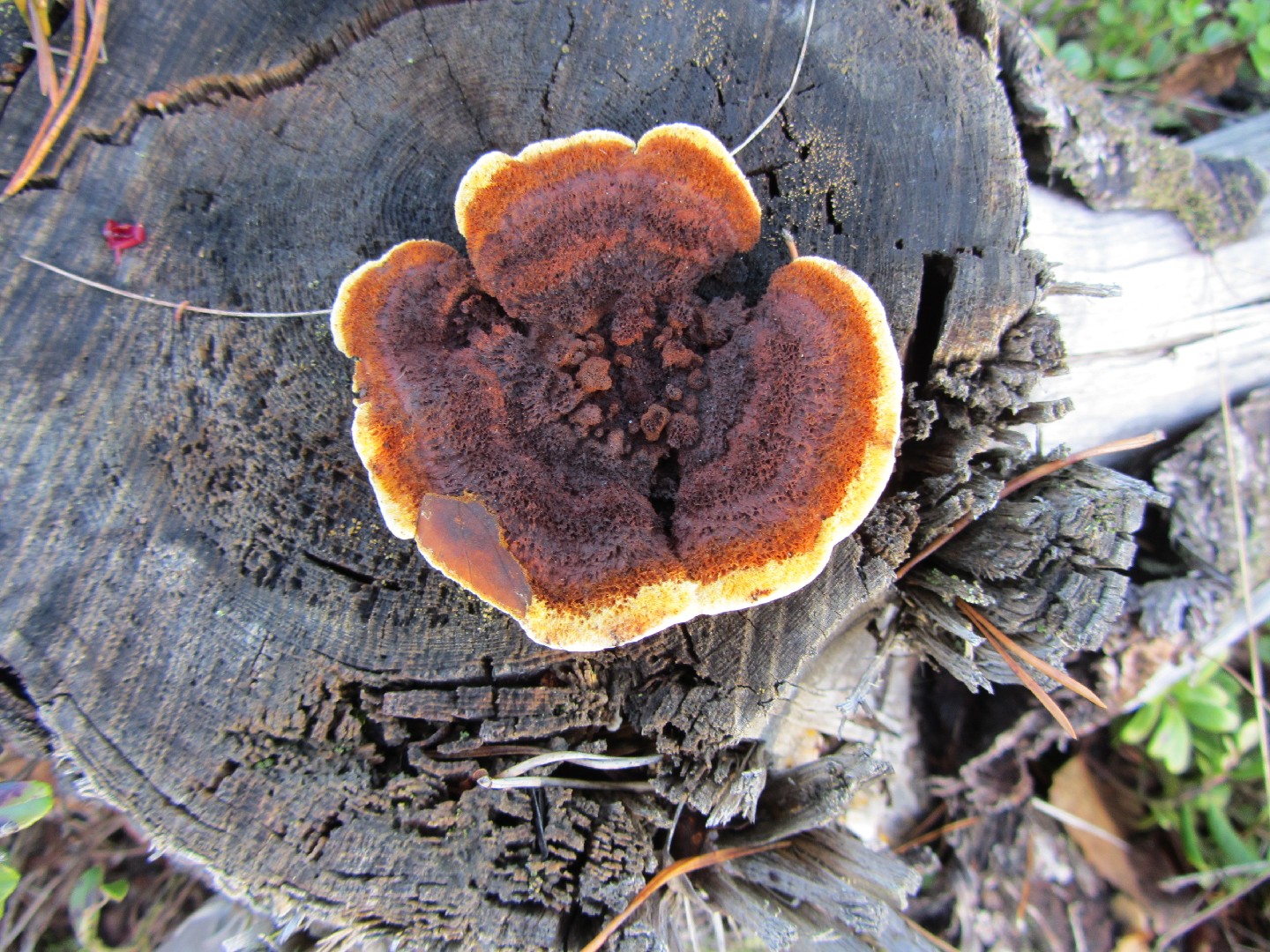
Red-belted polypore is a shelf fungus that's usually seen on aspen, birch, and various conifer trees. This perennial mushroom is known to cause the cubical brown rot in host trees. A species new to science, it was named in honor of Irene Mounce, a Canadian mycologist. 
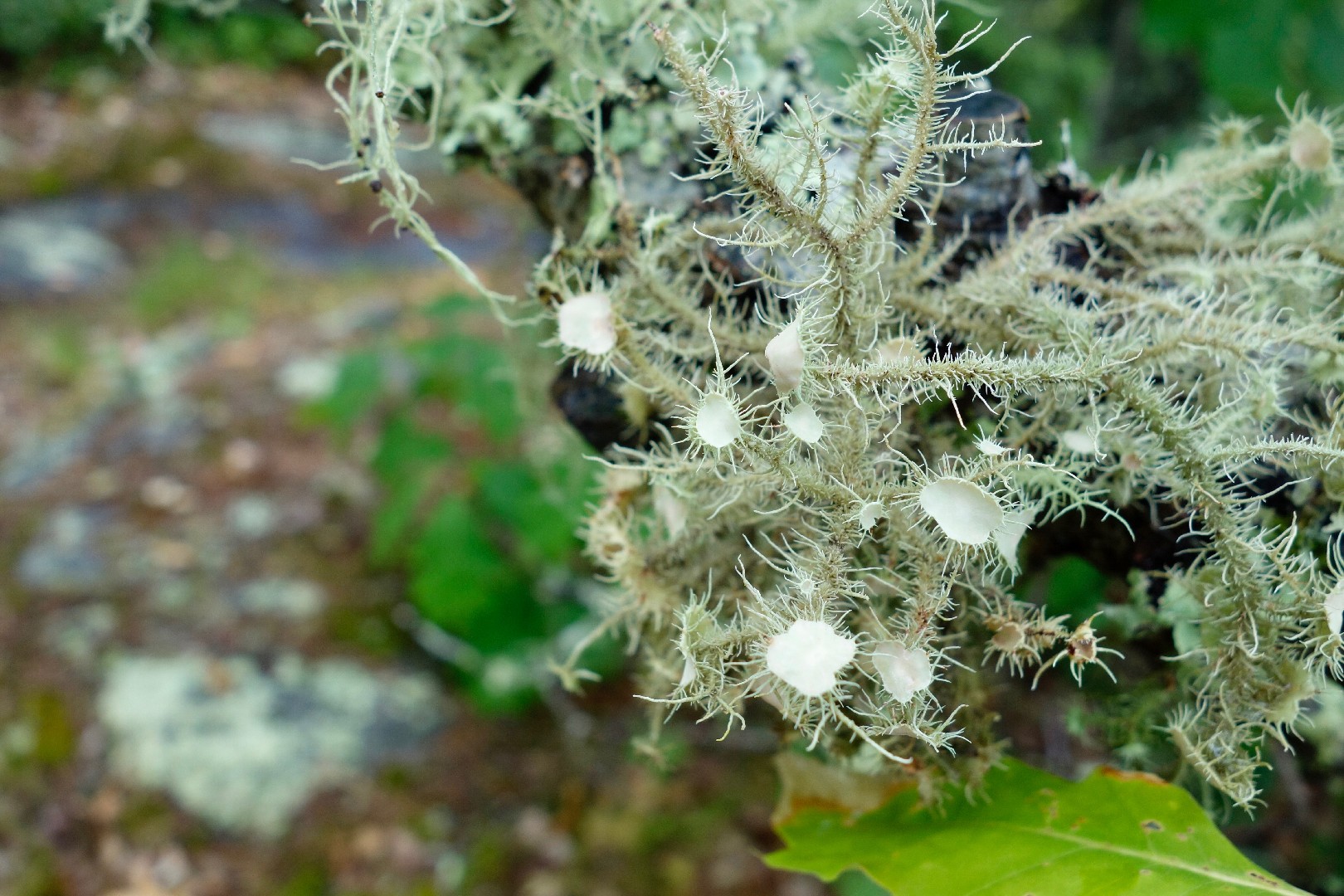
4. Bush beard lichen
Bush beard lichen is a shrub-like lichen. It is called Bush beard lichen after its white and dangling heads that have the appearance of beards. It is incredibly small at only 4 cm tall and can be found on deadwood bark.
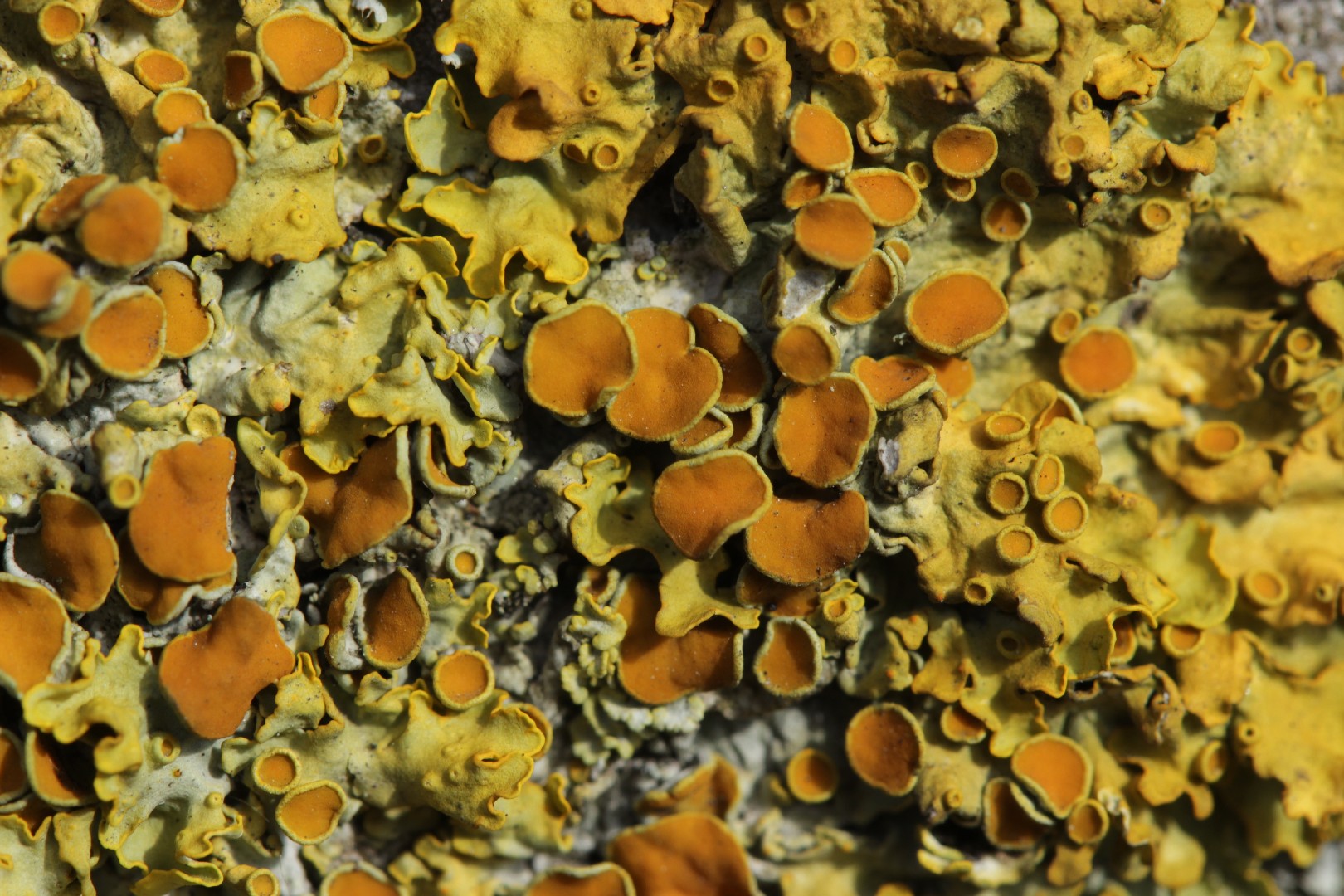
5. Common orange lichen
Common orange lichen was selected in 2006 by the United States Department of Energy as a model for genomic sequencing. Its widespread dispersal and bright yellow-orange color give the lichen its common name. It is primarily found growing on rocks, walls, and tree bark.
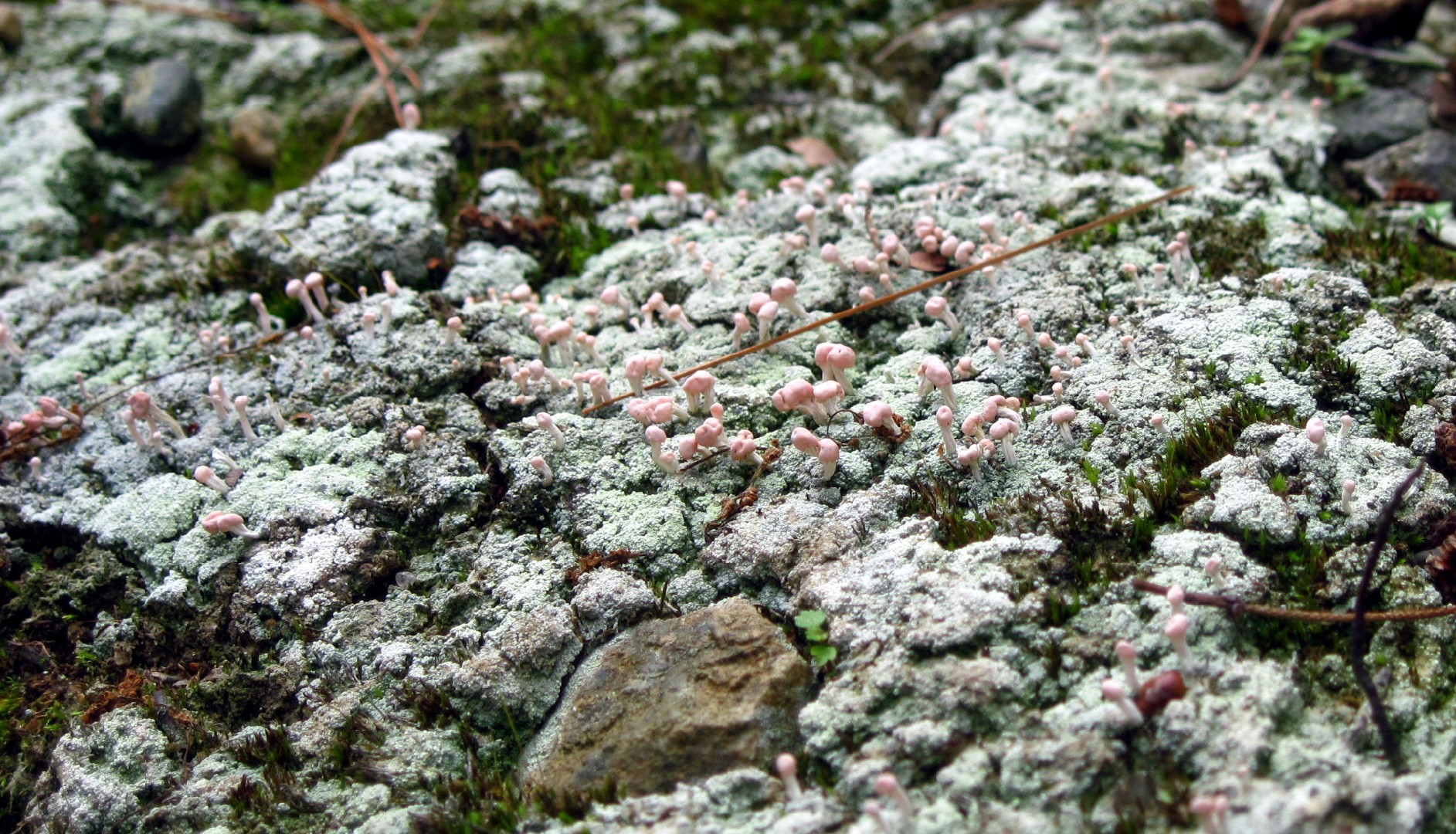
6. Pink earth lichen
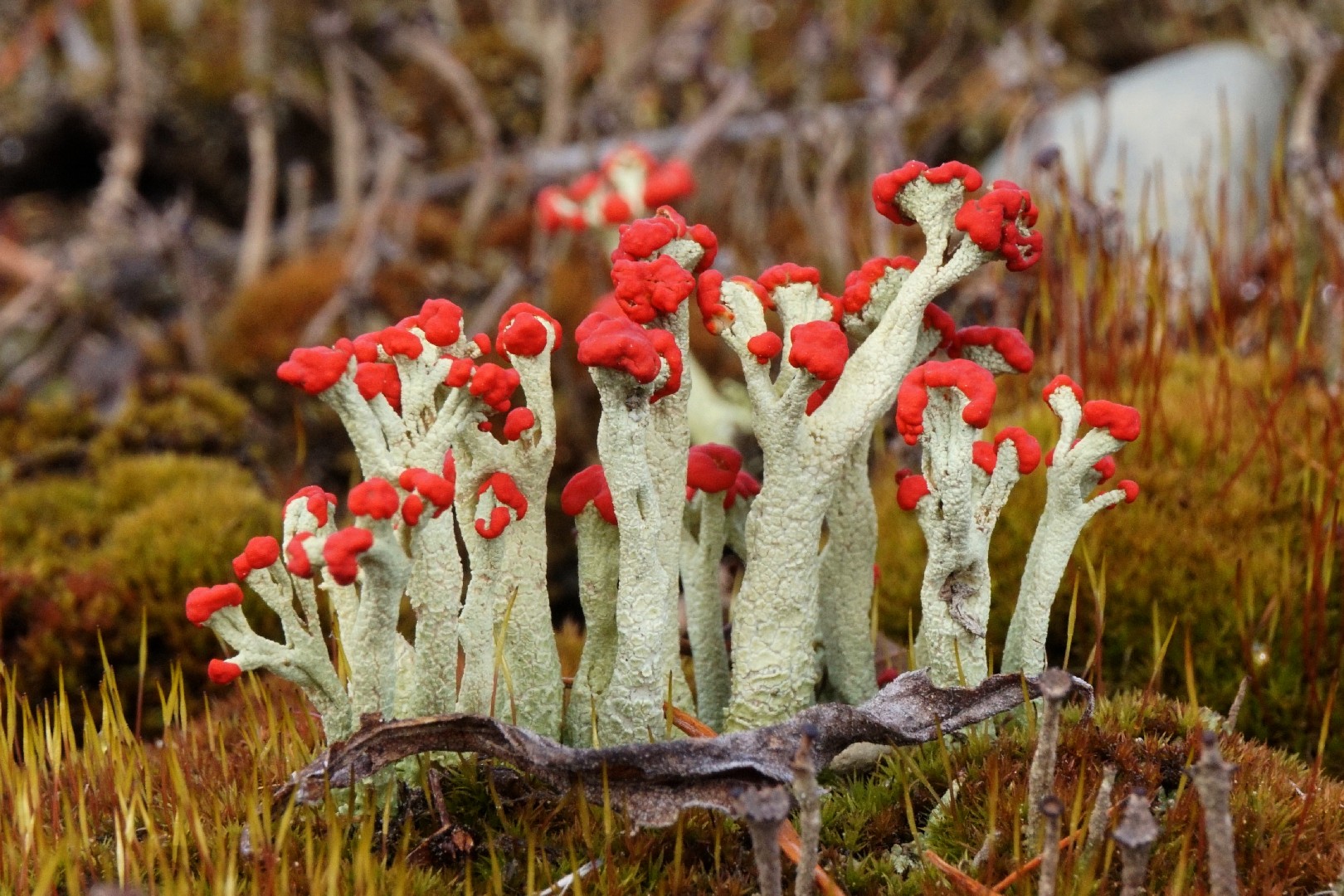
Pink earth lichen is noted for its pink discs and preference for disturbed land. The pink discs of pink earth lichen grow upon petite stalks. Has a bushy or coral like growth structure and can be mistaken for British Soldiers, which have a red tip.
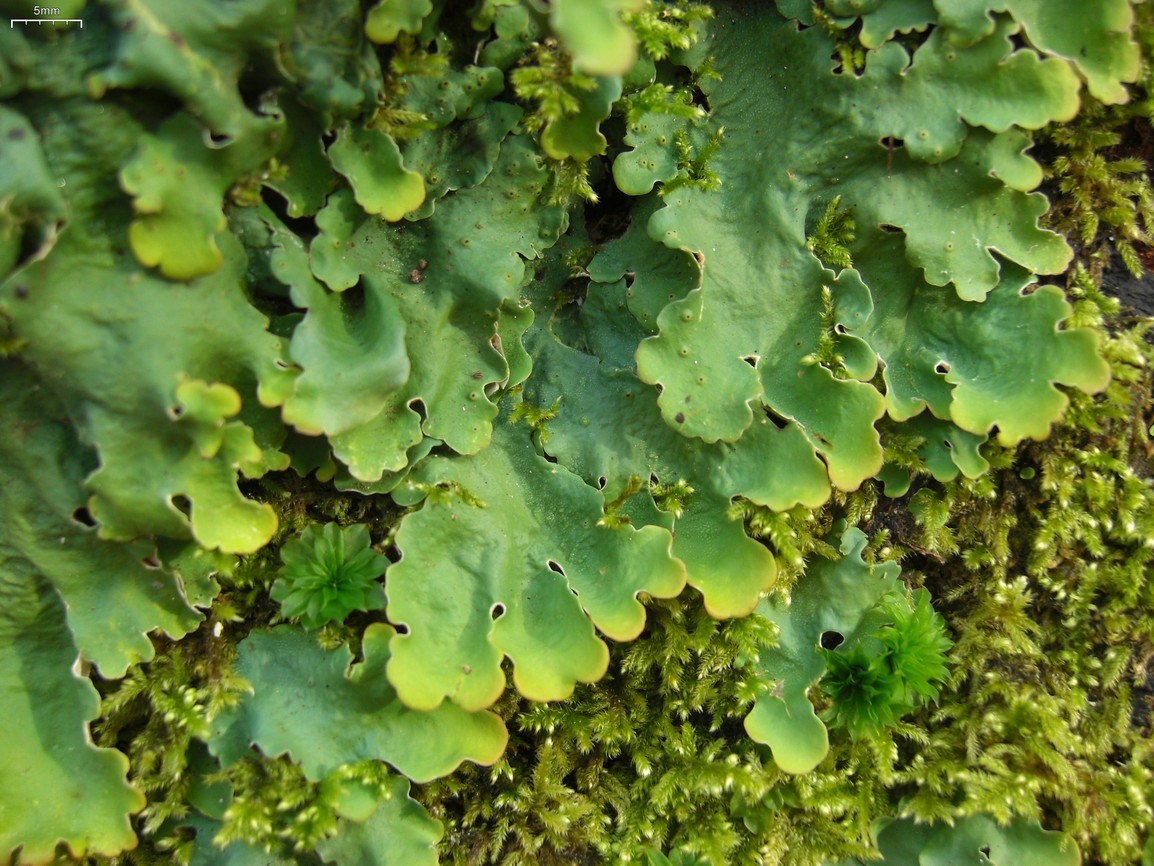
7. Smooth lungwort
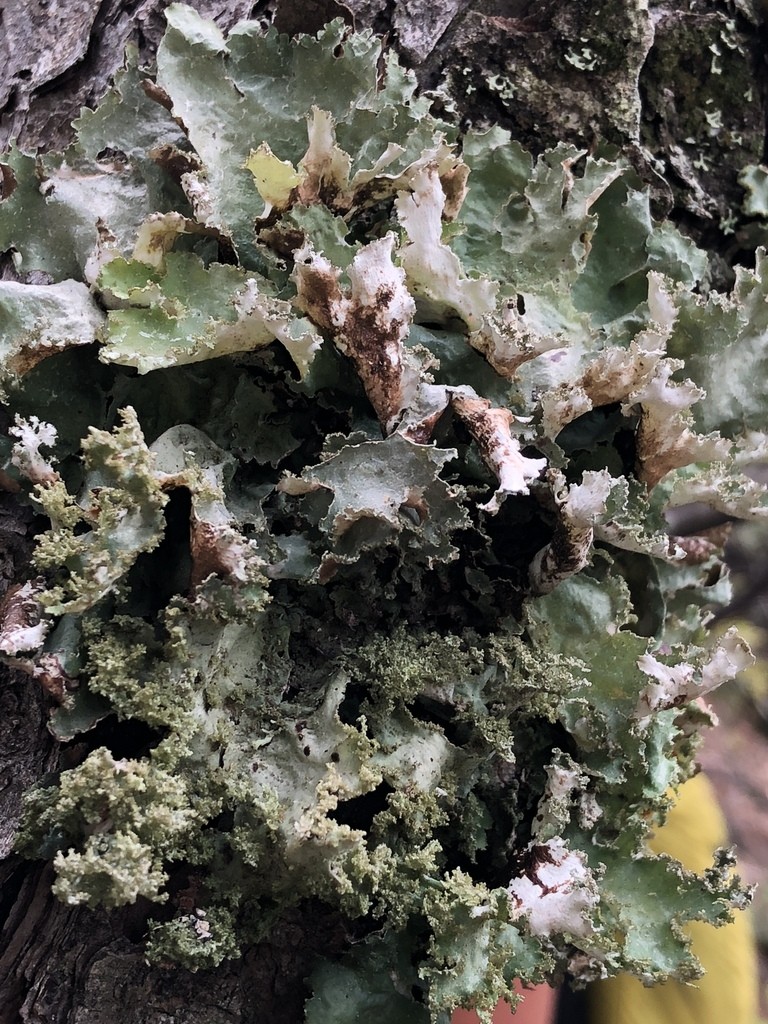
8. Varied rag lichen
Varied rag lichen grows on rocks, soil, and especially wood. Research has suggested that certain extracts from varied rag lichen can inhibit the growth of biofilms, which may lead to future commercial uses. The specific name, glauca, means "bluish-gray or green," though occasionally this species can appear a pale white color as well.
9. Orange jelly
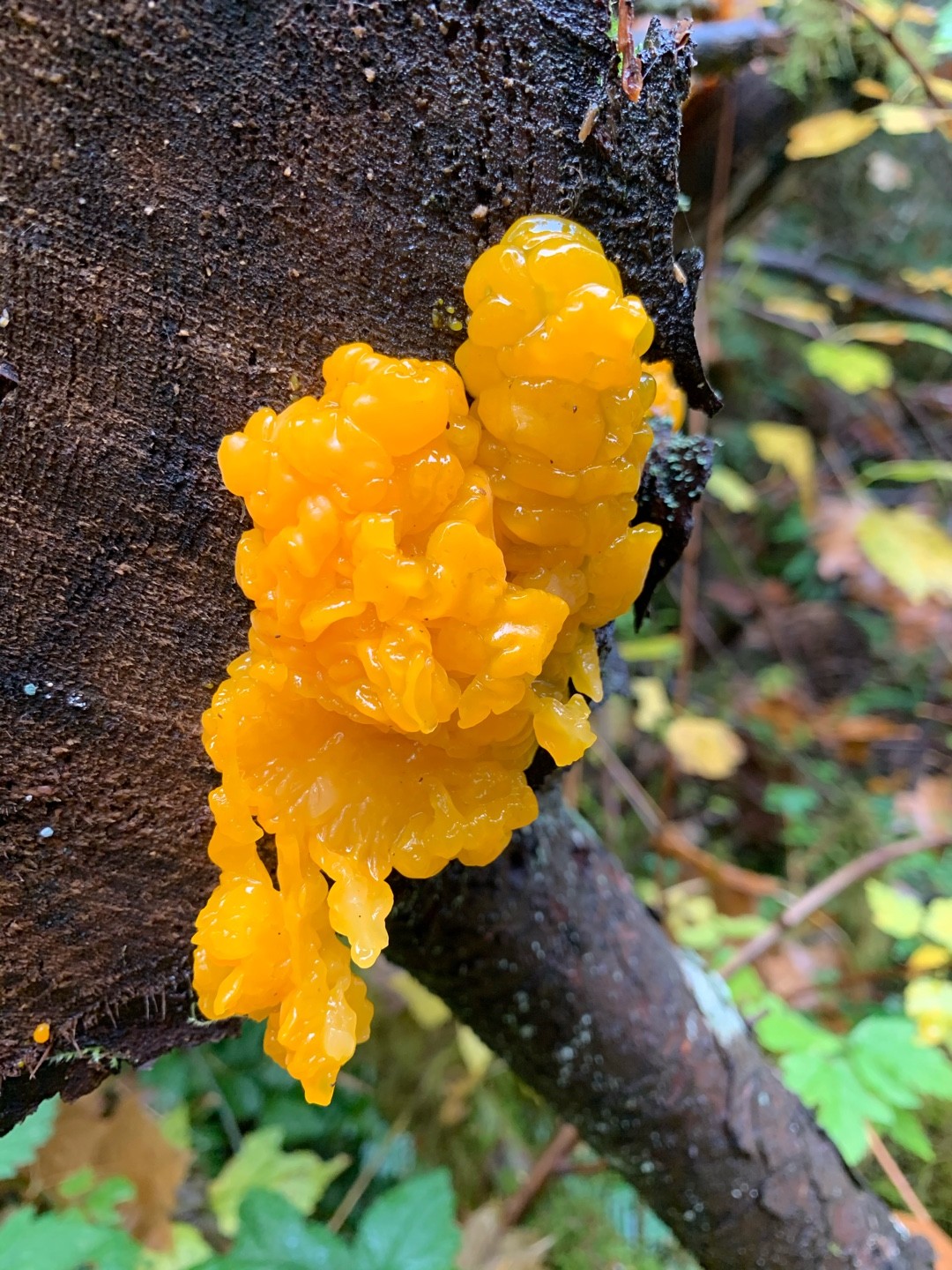
This offensive-looking slimy body of the orange jelly (Dacrymyces chrysospermus) erupts from fissures in tree bark in the forest. The point in which the caps attach to the host plant is brilliant white, creating a stark contrast from the bright yellow, brain-shaped cap. The most common place to find this mushroom is in decaying conifer wood.
10. Boreal oakmoss
More







