




Top 6 Most Common Mushrooms in Bermuda
Bermuda's distinctive climate and diverse soil profiles cultivate a rich environment fertile for mushroom growth. Encapsulated by a tropical monsoon climate, Bermuda offers an abundance of rain and humidity, creating an ideal sanctuary for mycelial organisms. This small paradise is teeming with 6 of the most common mushroom species, each as fascinating as the next. Uncover the unique personal characteristics of these fungi as you explore the world beneath the greenery in Bermuda. Discover their allure, uses, and importance to the local ecosystem that makes them a mystical and essential part of Bermuda's natural wealth.

Most Common Mushrooms
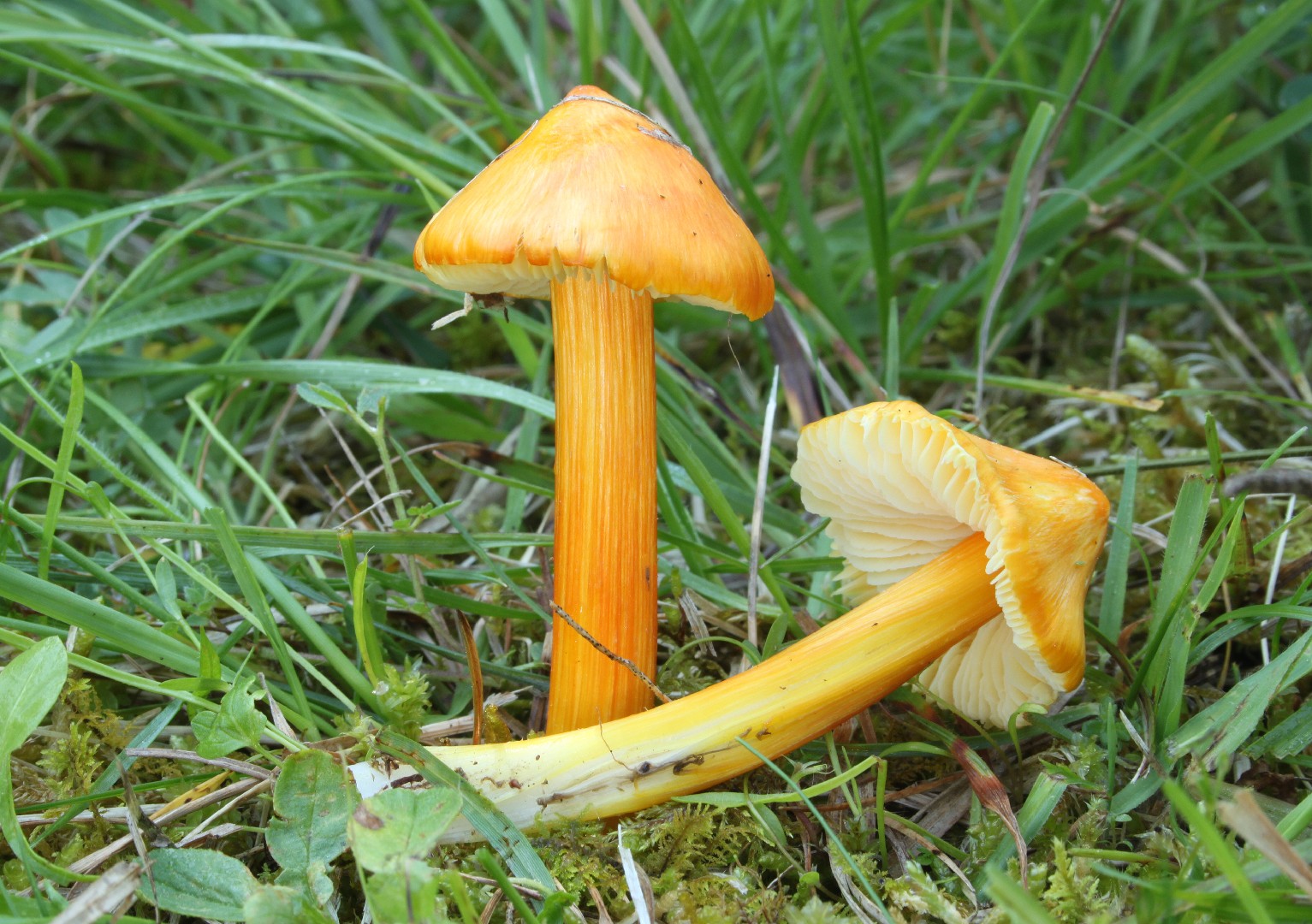
1. Persistant waxcap
This tiny mushroom was first classified back in 1893, and has been studied since by famed mycologists around the world. Despite its scientific popularity, the persistant waxcap (Hygrocybe acutoconica) is not a common mushroom to come across in the wild. It does have a twin in shape and size, the Hygrocybe cuspidata, but this twin is brilliant red instead of yellow.
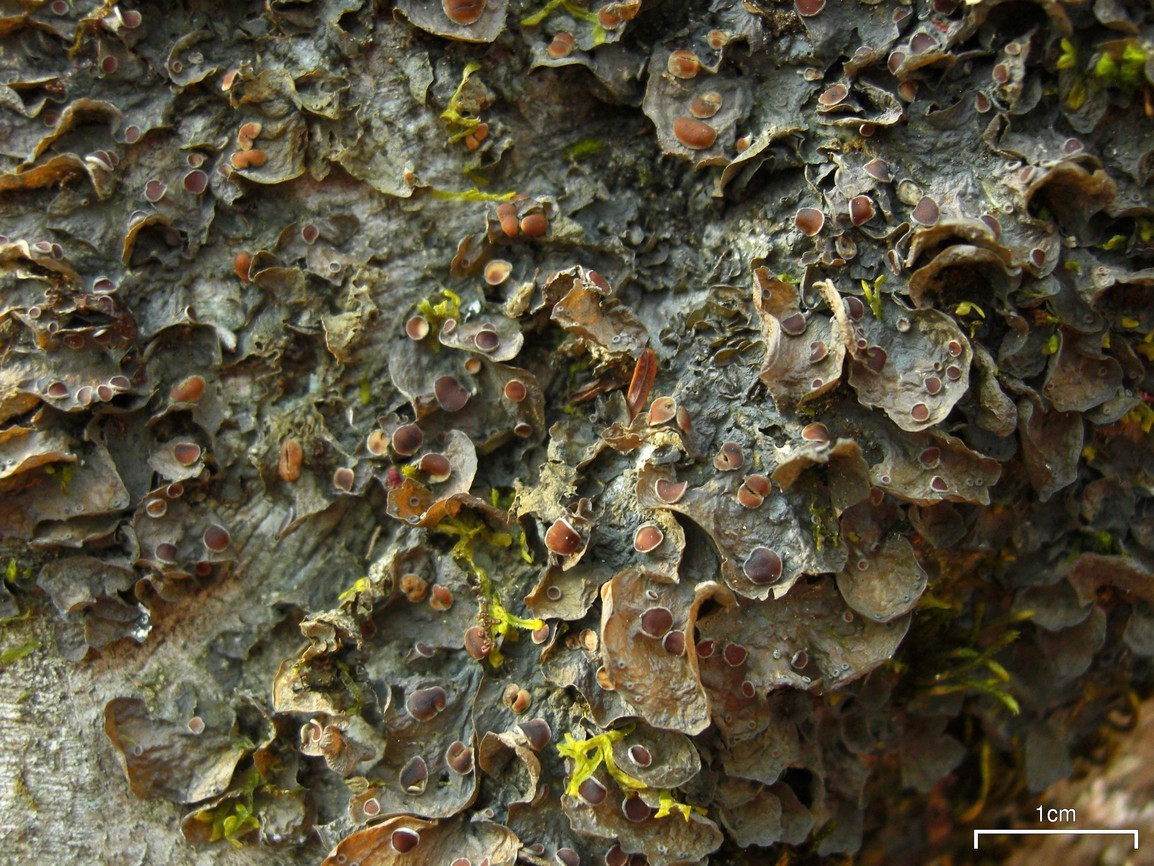
2. Blue jellyskin
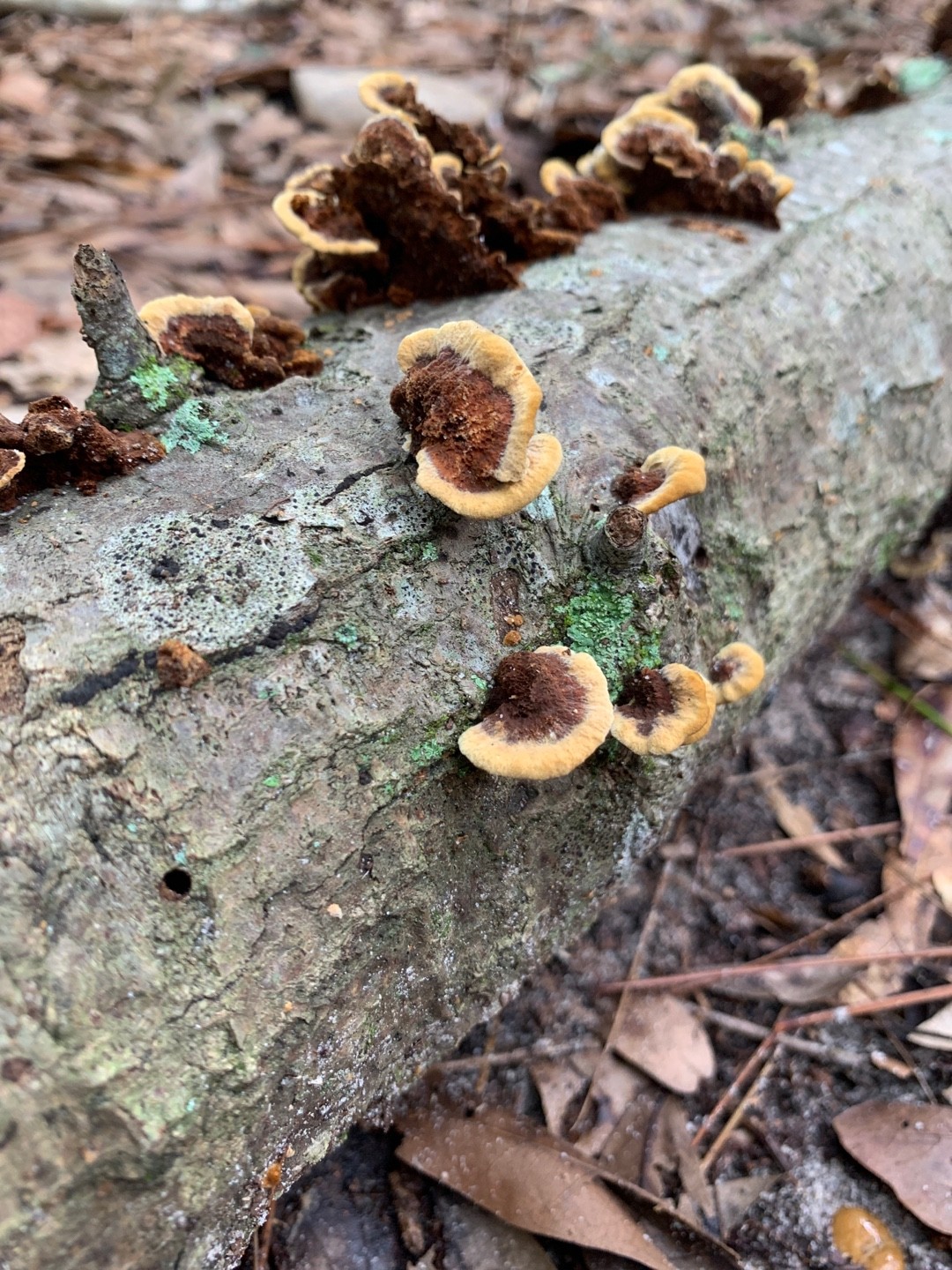
3. Mustard yellow polypore
The mustard yellow polypore (Phellinus gilvus) is a very cork-like mushroom commonly found popping up from logs and trees. This mushroom grows year-round in most areas. The caps are burnt amber in color around the edge and mature into rings, which darken to an almost black color closer to the mushroom's connection to the tree or log. The mustard yellow polypore is not an edible mushroom.
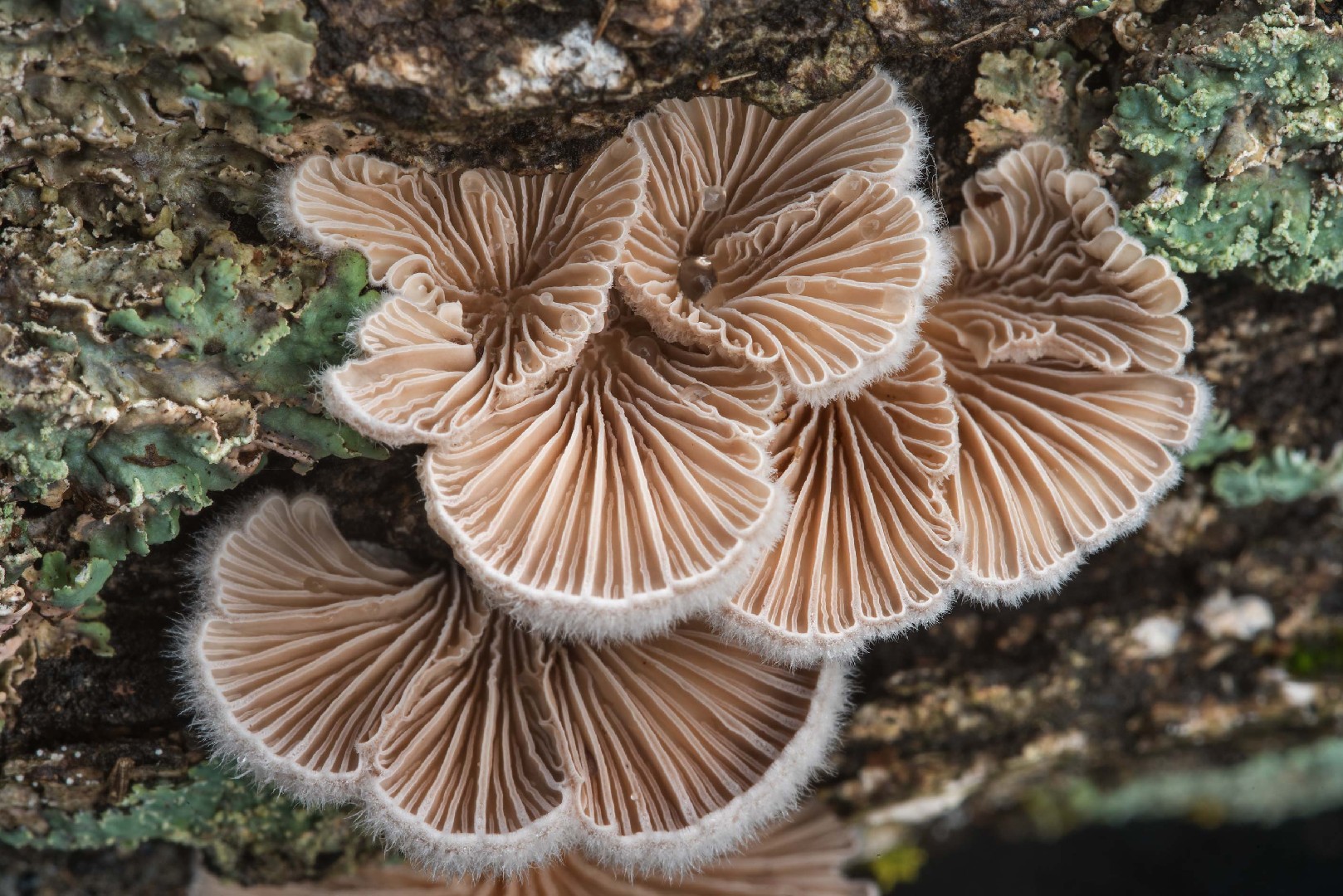
4. Split gill
Split gill(Schizophyllum commune) can be found across the globe. Uniquely, it is the only mushroom species known to display the capability to retract by movement. It is considered inedible, although not necessarily toxic. Furthermore, it is not recommended to smell this species, as the spores are capable of sprouting and growing in nasal passages.
5. Spring polypore
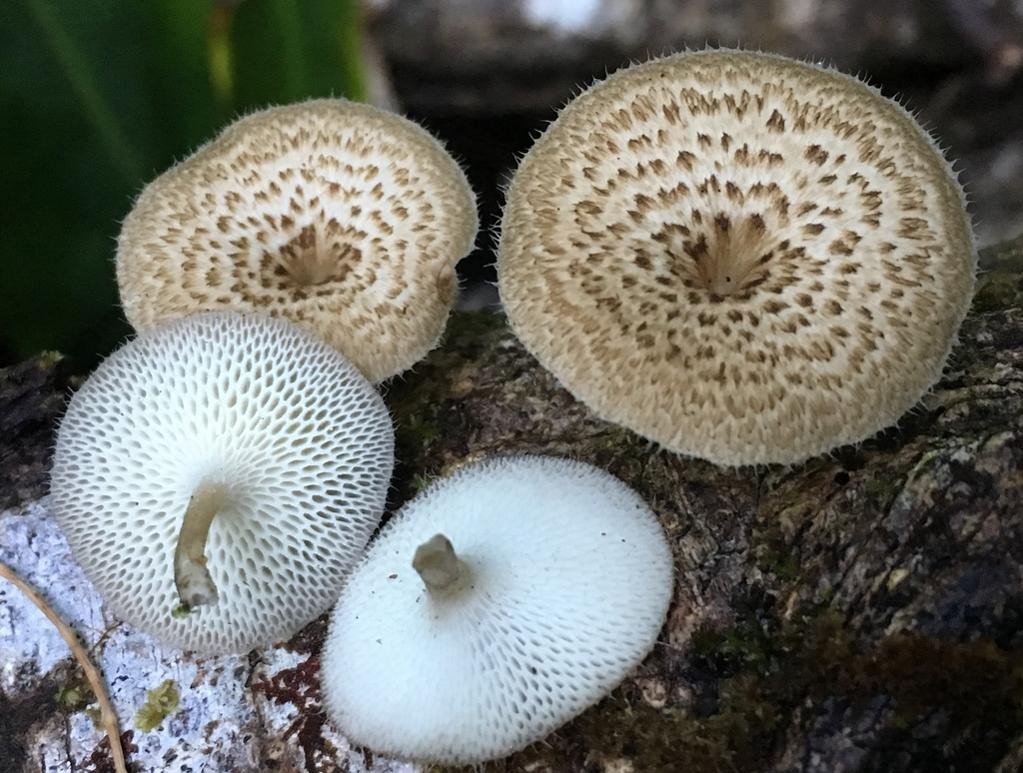
Morel mushroom hunters may be most familiar with spring polypore since it is one of the earliest mushrooms to appear in the spring, as hinted by its name. Lentinus mushrooms typically have gills, but when investigated, this mushroom reveals surprising honeycomb-shaped pores.
6. Stalked lattice stinkhorn
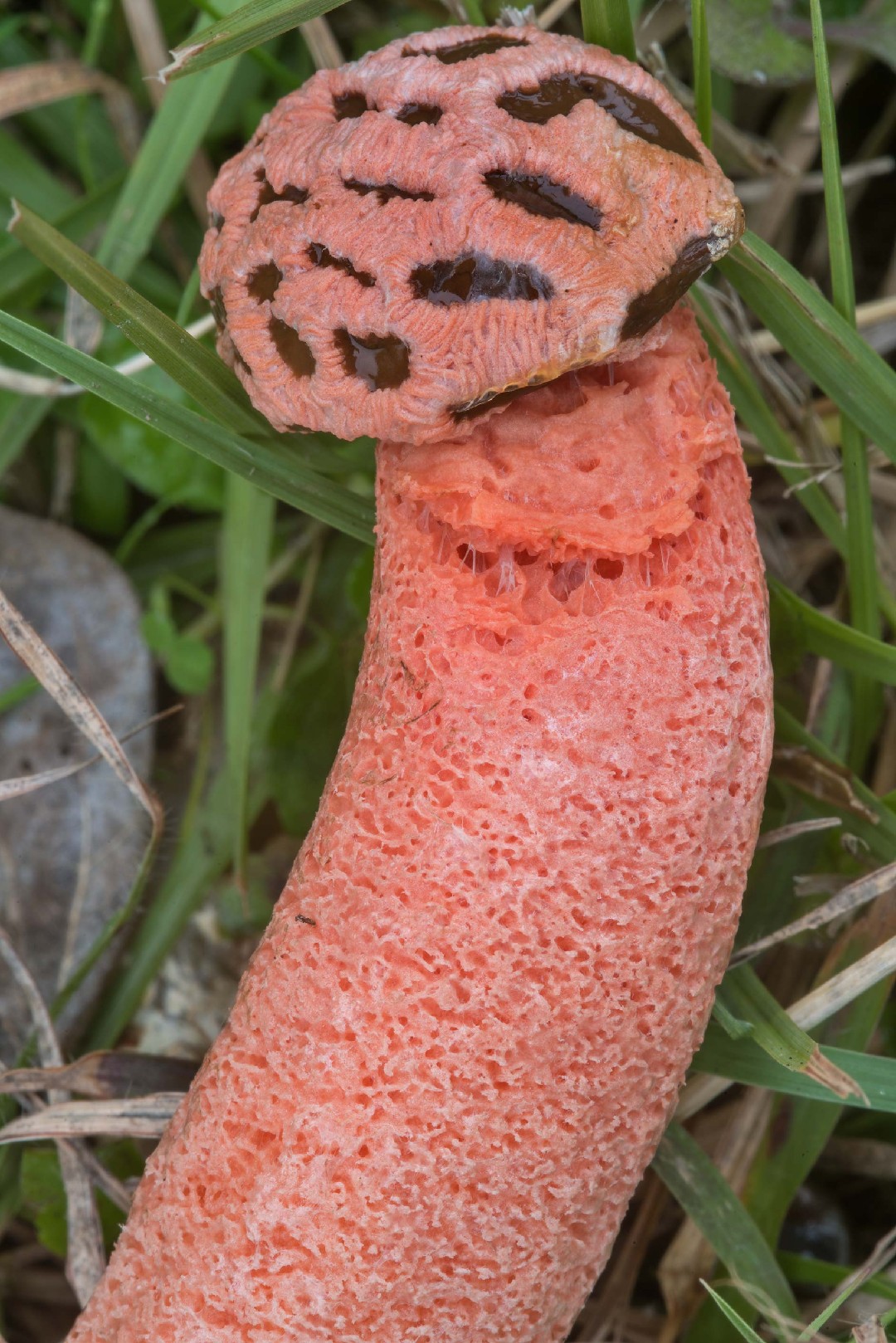
Immature fruiting bodies of L. periphragmoides start as round or oval "eggs" that may be up to 5 cm (2.0 in) in diameter. On the underside of the egg are whitish rhizomorphs that anchor it to the substrate. The peridium is white to buff-colored on the external surface, and has a gelatinous layer inside. An egg cut in half lengthwise reveals internal layers, including a tough white outer peridium, and a thick layer of firm, translucent, gelatinous matter transversed by strands (trabeculae) of denser white tissue. The strands are anastomosing partitions, connecting with the peridium externally and with the bars of the receptaculum within. The gelatinous layer is therefore divided up into many irregular longitudinal chambers. The egg eventually ruptures as the stalk expands and breaks through, creating a volva at the base of the stipe. In maturity, the fruit bodies, are up to 15 cm (5.9 in) tall, with a latticed spherical cap (the receptaculum) atop a long yellow or reddish stipe. In general, Old World specimens tend to be yellow, while New World specimens are reddish, although exceptions have been noted in the literature. The receptaculum is typically 1.5–3.5 cm (0.6–1.4 in) in diameter and forms a red or orange lattice, or mesh. There are typically between 20 and 100 small pentagonal to hexagonal meshes in the receptaculum; the arms of the mesh have sharp ridges on the outer surface, corrugations on the sides, and are flat to weakly ridged on the inner surface. The internal surfaces of the receptaculum are covered with an olive-green spore-bearing gleba, which sometimes seeps through the mesh holes. Like most stinkhorn species, the gleba has a foul odor, comparable to rotten meat, but it is "less-offensive" than most. The smell of fresh, newly exposed gleba has been reported to be sweet, similar to amyl acetate; the foul odor forming only after it has been exposed to air for some time. The stipe is 5–15 cm (2.0–5.9 in) by 0.8–3 cm (0.3–1.2 in) thick, and is hollow and spongy. The walls of the stipe are made of an inner layer of large tubes and two or three outer layers of small tubes. Specimens may occasionally be found with fused heads on two separate stipes arising from a single volva. A variety with a white fruit body is known, Lysurus periphragmoides var. albidum (originally described as Simblum texense var. albidum by Long). It was reported growing from sandy alkaline soil in semi-arid regions of New Mexico, but has not been reported again since Long's collections in 1941. Spores are elliptical or oblong in shape, smooth, inamyloid, and have dimensions of 3.5–4.5 by 1.5–2.5 µm. The use of scanning electron microscopy has revealed that L. periphragmoides (in addition to several other Phallales species) has a hilar scar—a small indentation in the surface of the spore where it was previously connected to the basidium via the sterigma. Like many of the stinkhorns, L. periphragmoides is generally considered only edible when in its immature "egg" form. 







