




Top 16 Most Common Mushrooms in Northern Territory

Most Common Mushrooms
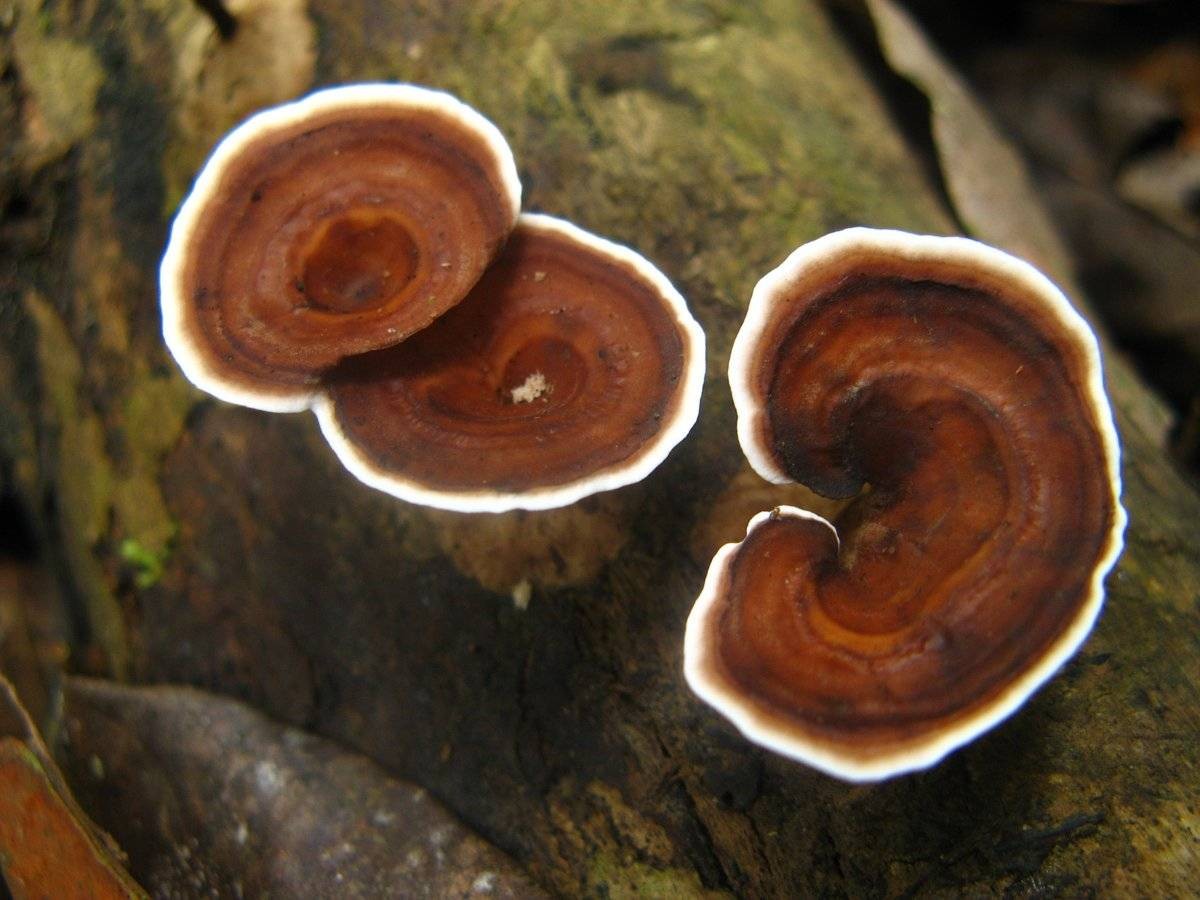
1. Yellow-footed micropore
The scientific name of the yellow-footed micropore (Microporus xanthopus) translates to “tiny-pored yellow foot.” Its short stem is usually yellow, leading up to a concave, funnel-like cap. The species is common in all the tropics of the world outside of the Americas. The striated, multi-hued caps grow largest in wet, darkly-shaded locations.
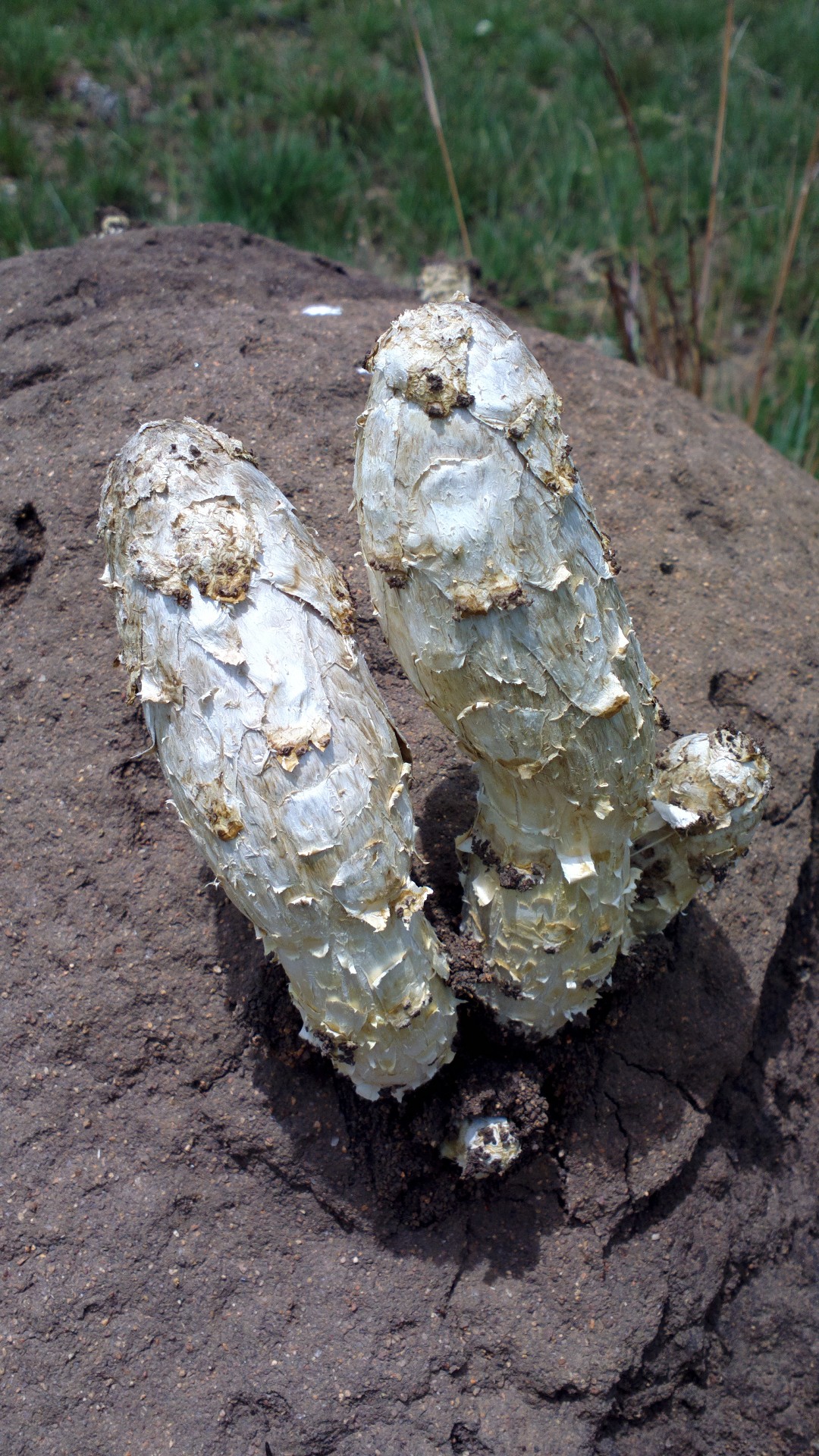
2. Desert shaggy mane
As its name suggests, the desert shaggy mane (Podaxis pistillaris) erupts from seemingly improbably conditions, out of the hot and arid ground in North American deserts. They are commonly found living harmoniously with colonies of termites in termite mounds. The desert shaggy mane is toxic and not safe to consume.
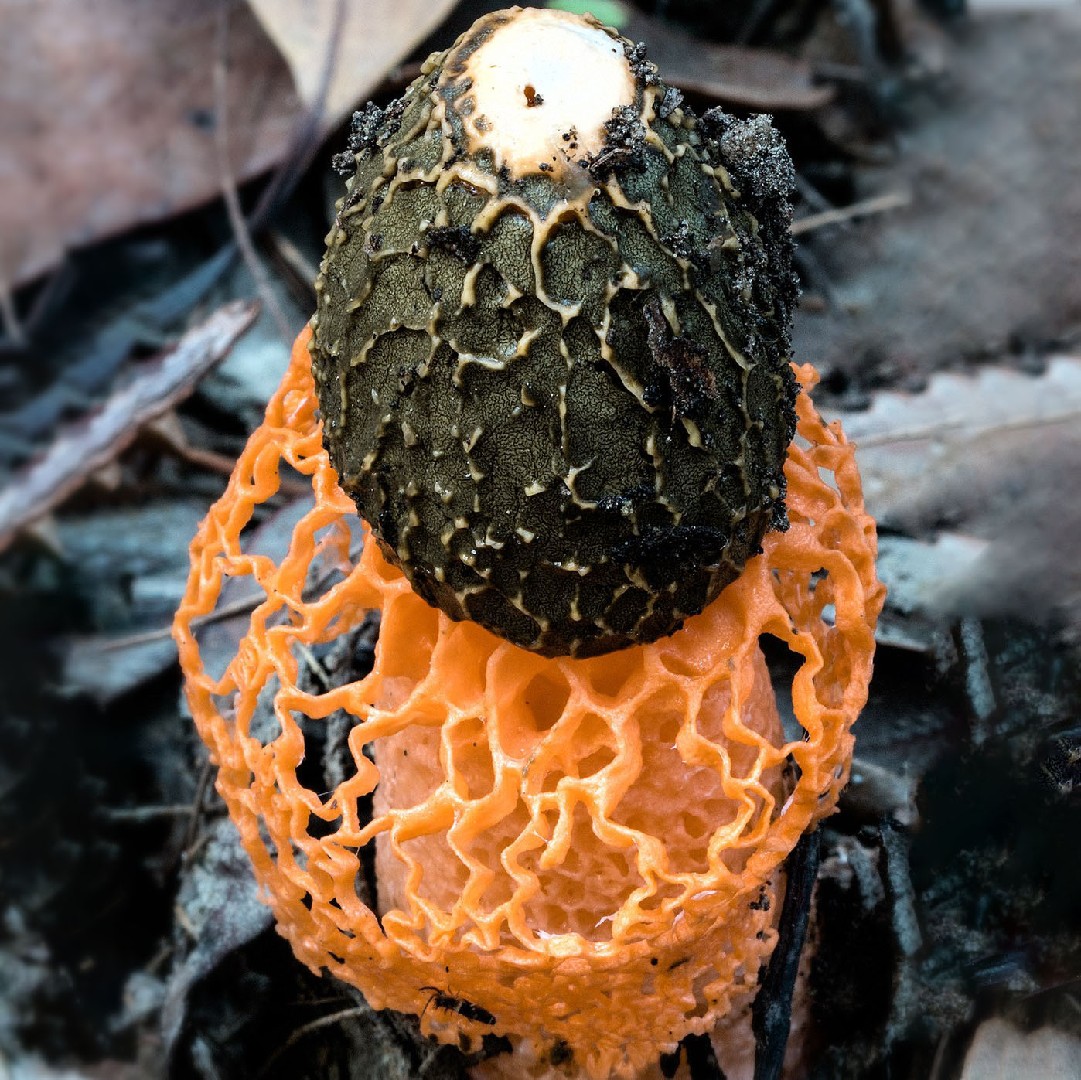
3. Yellow bridal veil stinkhorn
Yellow bridal veil stinkhorn is a species of stinkhorn that occurs in the tropics around the world. Its brownish slime releases a very distinctive and unpleasant smell that attracts flies and other insects. It can be found on the ground, growing among dead leaves and wood chips. 
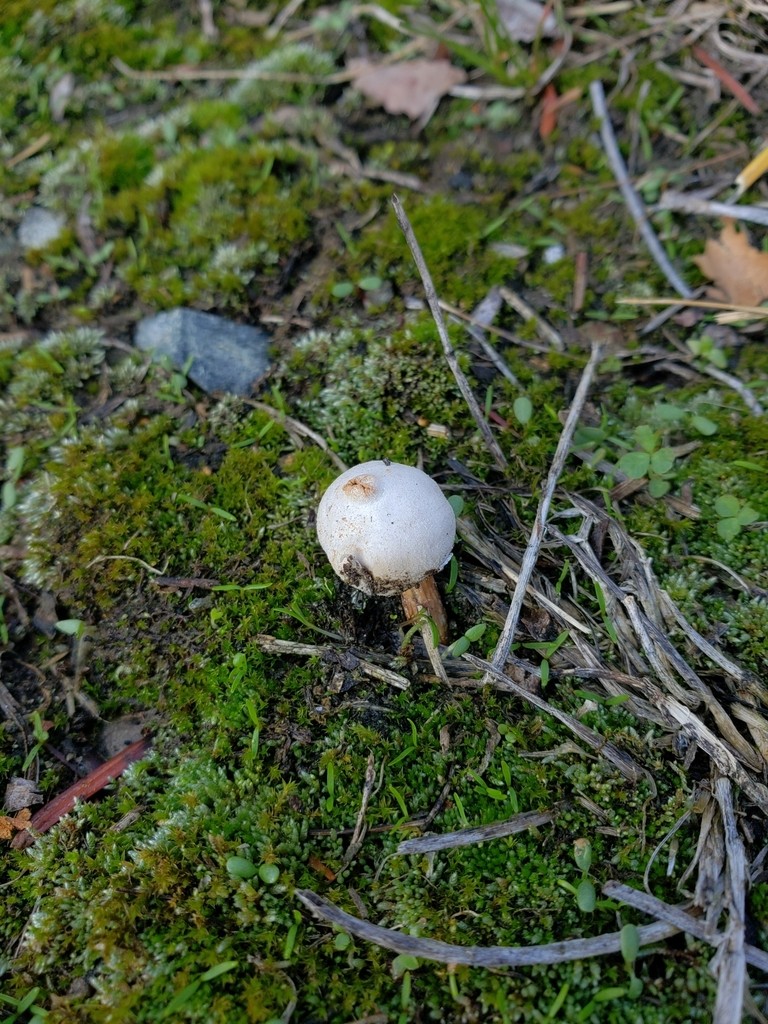
4. Chlamydopus meyenianus
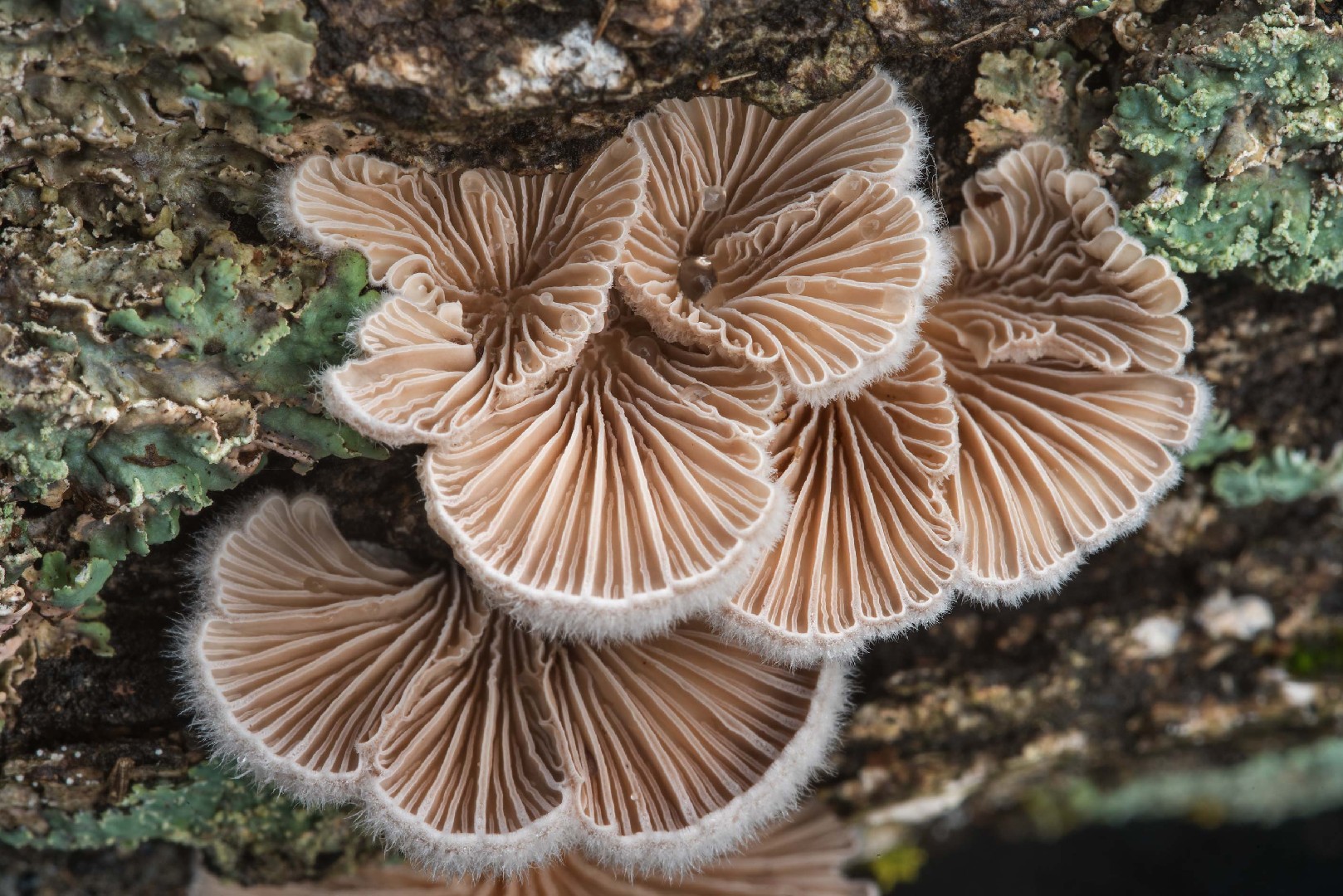
5. Split gill
Split gill(Schizophyllum commune) can be found across the globe. Uniquely, it is the only mushroom species known to display the capability to retract by movement. It is considered inedible, although not necessarily toxic. Furthermore, it is not recommended to smell this species, as the spores are capable of sprouting and growing in nasal passages.
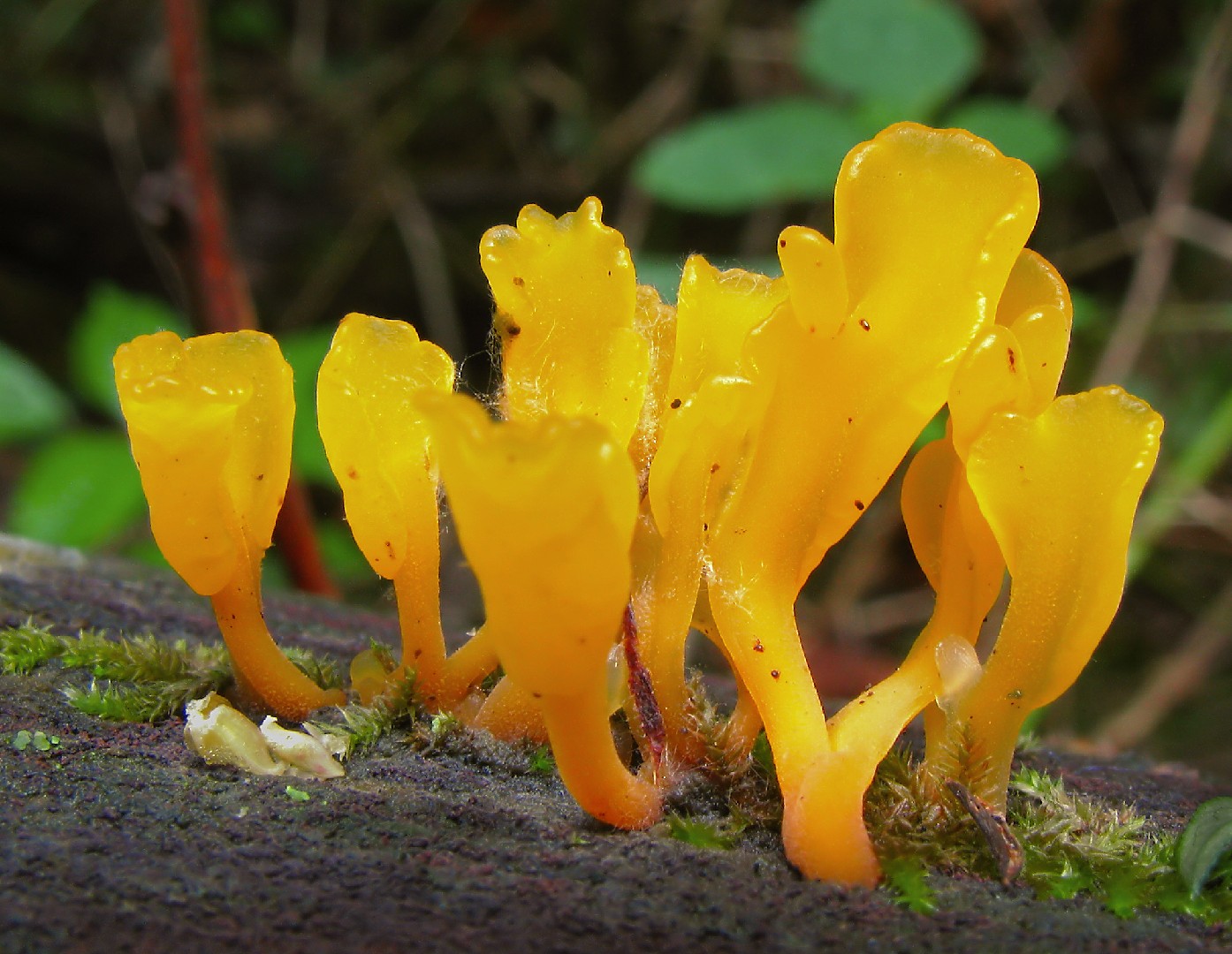
6. Fan-shaped jelly-fungus
Just as its Latin and the common English names suggest, the fan-shaped jelly-fungus (Dacryopinax spathularia) is a fan-shaped or spatula-shaped jelly-like mushroom. It commonly grows in wood cracks and it sometimes even appears in the cracks of the processed wood and lumber. Despite the word "jelly" in its name, the fan-shaped jelly-fungus is not considered edible.
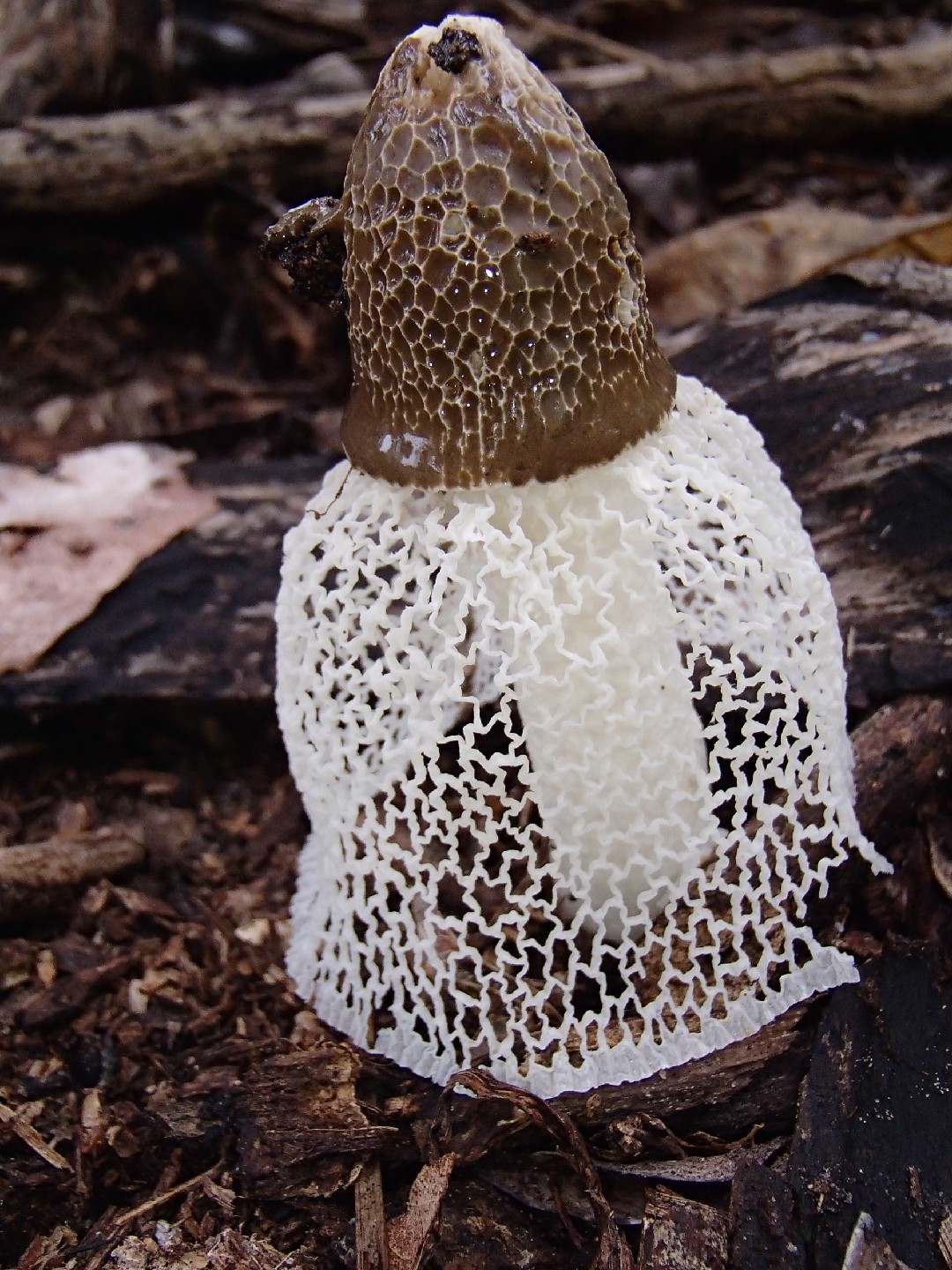
7. Bridal veil stinkhorn
Bridal veil stinkhorn (Phallus indusiatus) can be found rising up from the ground in tropical forests around the world. A distinctive netted fringe “skirt” descends from the cap along the length of the stalk. A type of “stinkhorn,” the fruitbodies of this species produce scents that vary between sickly-sweet to just plain unpleasant. The odor is meant to attract insects that usually lay their eggs in carrion.
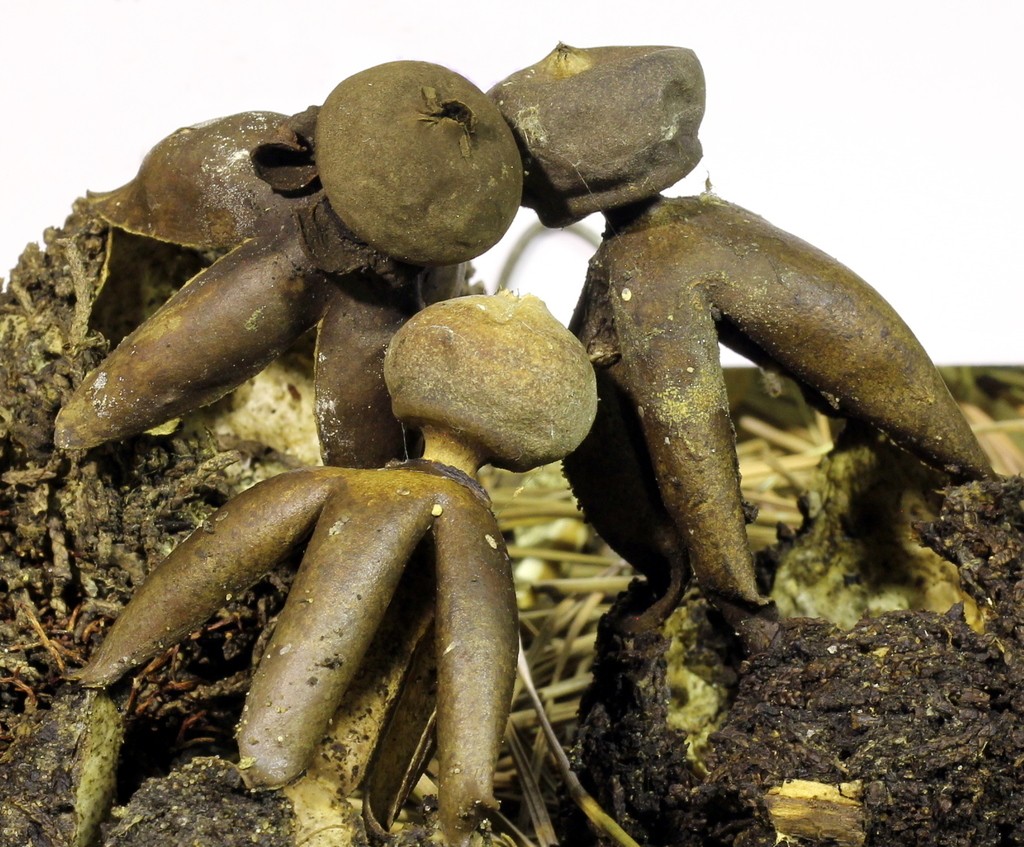
8. Acrobatic earthstar
The immature fruit body is roughly spherical in shape, typically 1.5–2.5 cm (0.6–1.0 in) in diameter, and dark brown in color. At maturity, the exoperidium (outer layer) splits into four to five rays which curve backwards so as to elevate the fruit body and raise the spore sac for optimal spore dispersal; the tips of the rays remain attached to a basal cup. The spore sac contains an ostiole, a small opening near the apex. The mature fruiting body may be up to 6 cm (2.4 in) in diameter and 8 cm (3.1 in) tall. The exoperidium is attached to the soil by rhizomorphs. Spores are spherical, warted, thick-walled, nonamyloid and 5–6 µm. In mass, the spores have a dark-brown color. This species is found singly or in small groups under bushes and in deciduous woods.
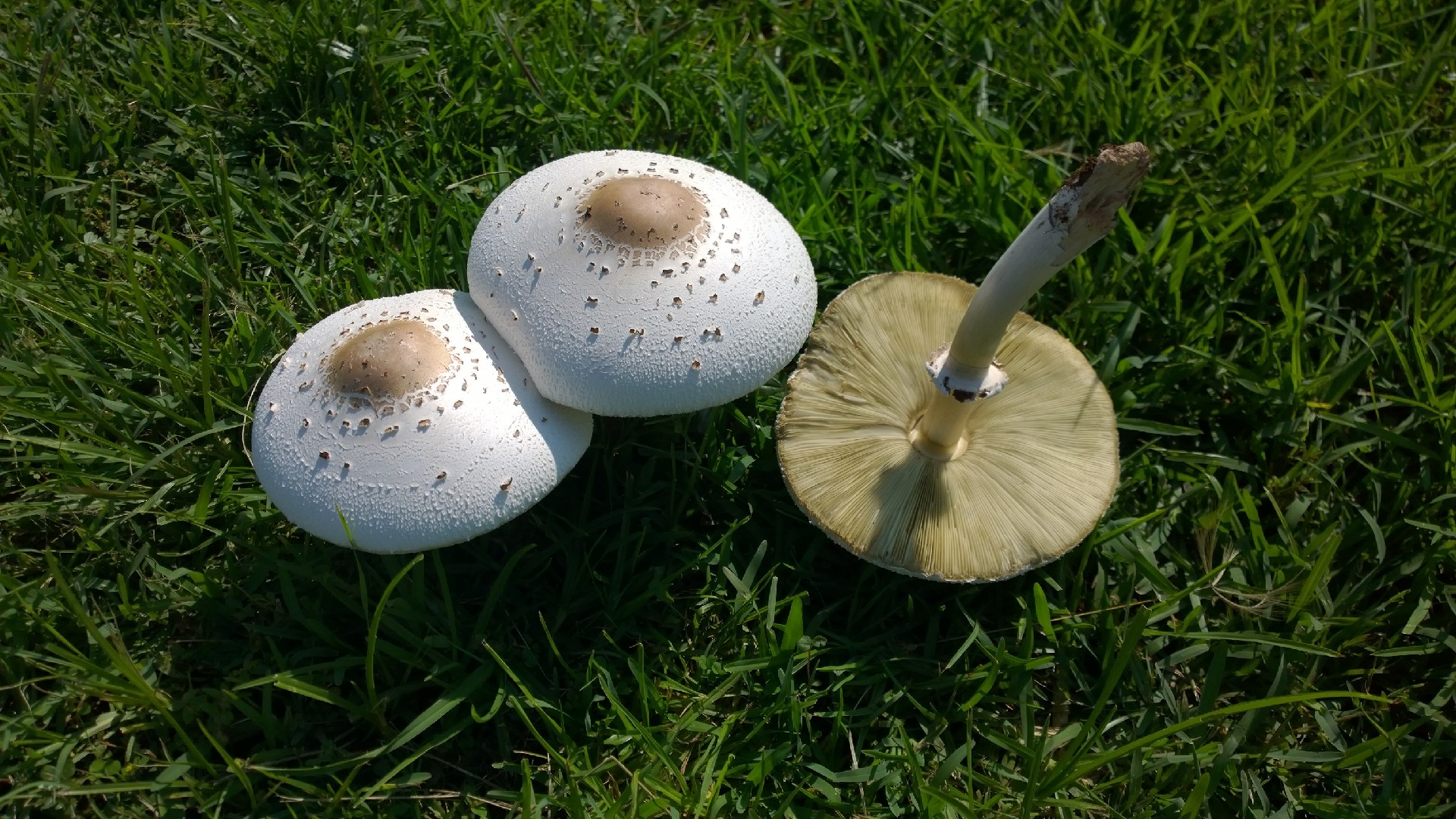
9. False parasol
Though the false parasol appears unassuming, the species is famous—or, infamous—for its toxicity. It looks unfortunately similar to Agericus campestrus, a commonly eaten mushroom, but the false parasol can be distinguished by its highly unusual green spore print. Although they are no good to eat, they can be pretty to look at. The species may grow in ring-shaped groups in meadows and on forest floors in what are sometimes called "fairy circles."
10. Perenniporia ochroleuca
More







