




Top 20 Most Common Mushrooms in Manlleu
Nestled in a region rich in natural beauty, Manlleu provides an ideal habitat for mushroom growth. The city's humid climate, fertile soils, and diverse forestry constitute quintessential conditions for the thriving of an array of mushroom species. In the heart of Manlleu, you will find the top 20 most common mushrooms that stand out for their distinct characteristics. The variety of edible and non-edible, the curious and the common, reflects the remarkable biodiversity of this region. Discover the mycology of Manlleu with us - truly, a fungi-wonderland!

Most Common Mushrooms
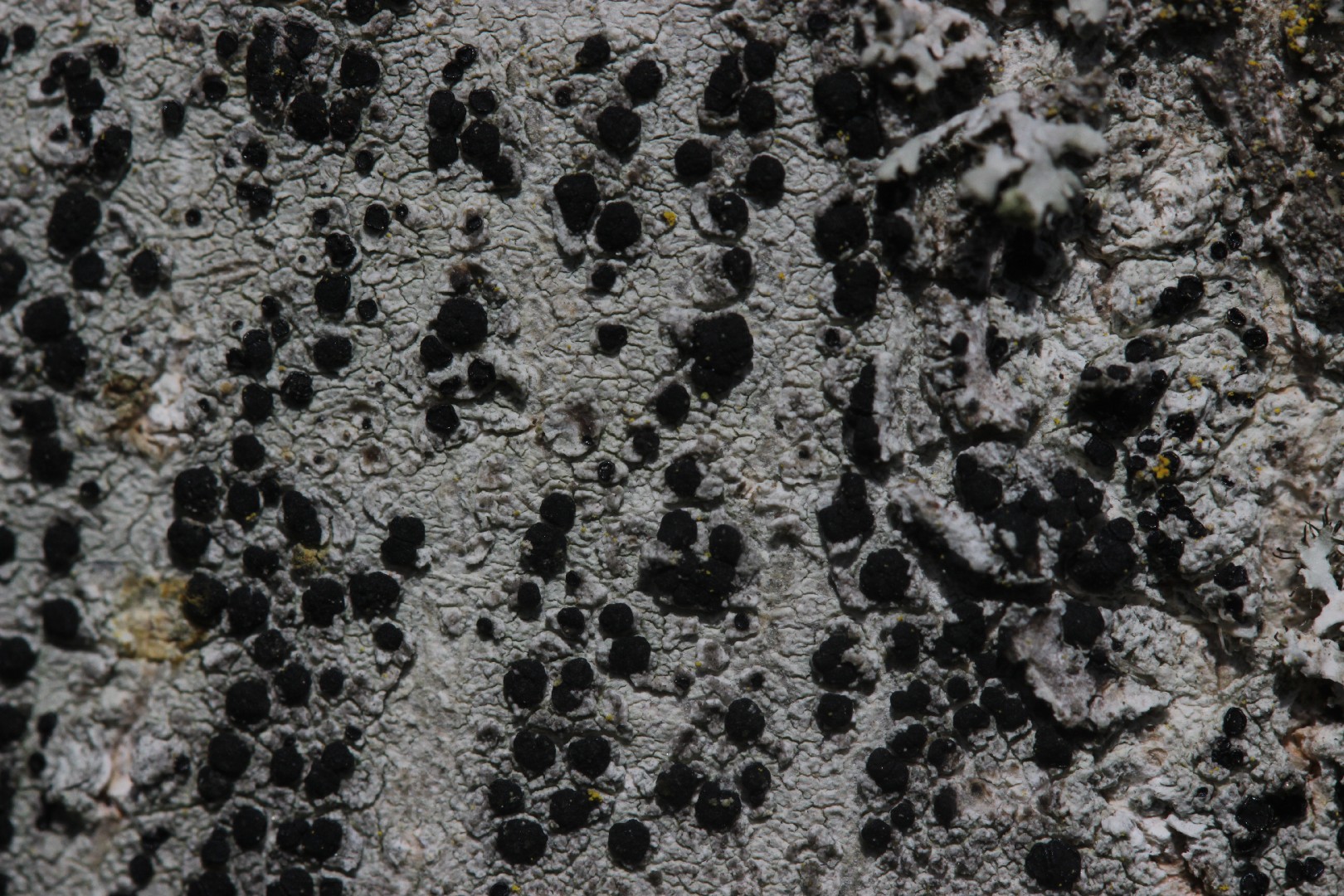
1. Lecidella lichen
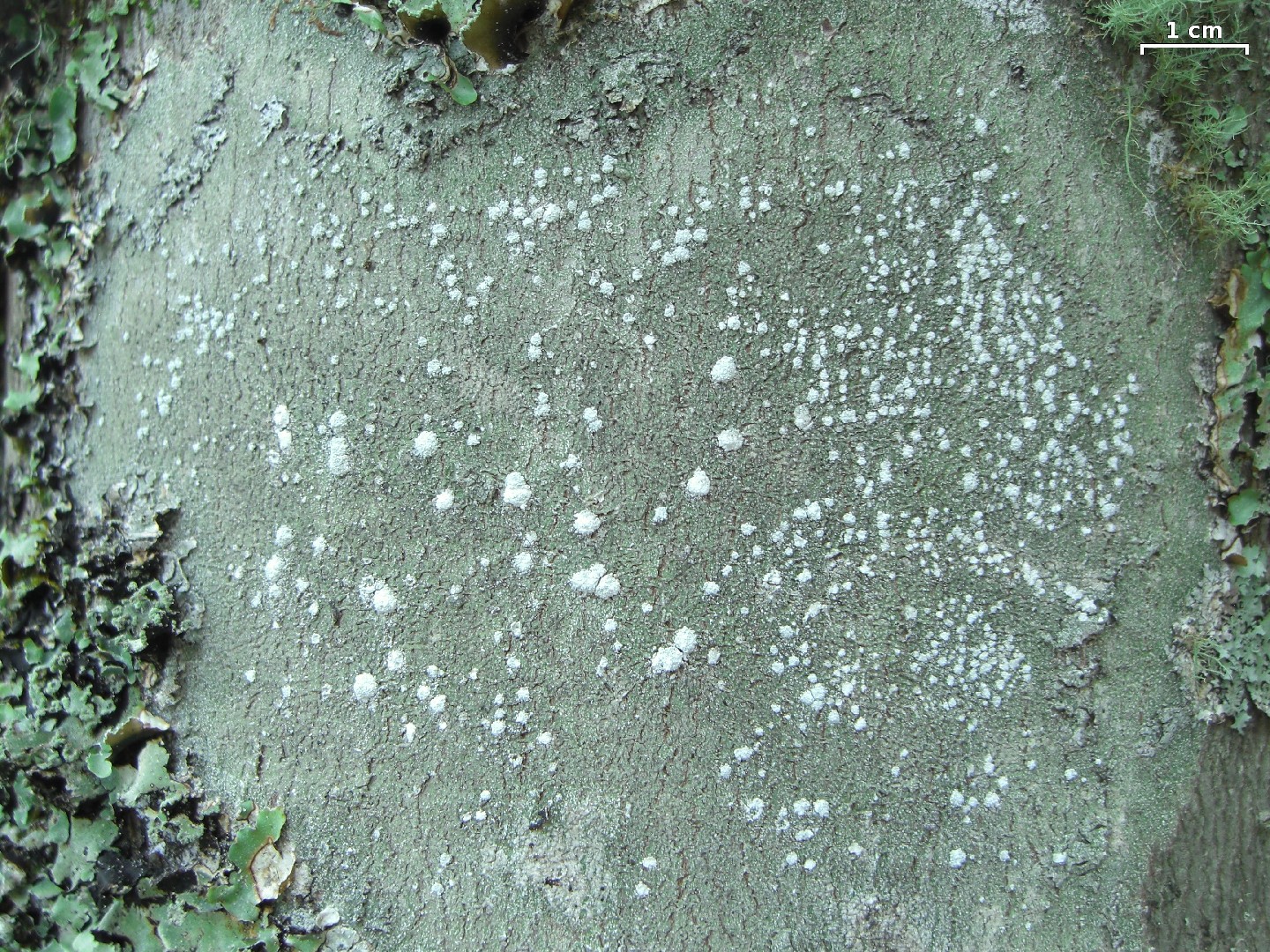
Lecidella elaeochroma is a crust lichen, which means that its stock (Thallus) lies closely on the surface. The camp is whitish, gray, gray-green, olive or yellowish. Often it is also damaged by snail-eating and then greenish. The structure of the camp is smooth to grainy. Often it is weakly glossy or even limited by a black submission. The camp can sometimes be sorediös dissolved. It reaches diameter of 1 to 3 cm. The apothecia reach between 0.4 and 1.0 mm in diameter. Their discs are black to dark reddish brown and very rarely frosted. The Apotheciens are flat to strongly arched and can be deformed. Its edge is black and smooth. Overall, the appearance of this lichens is very rich in form.
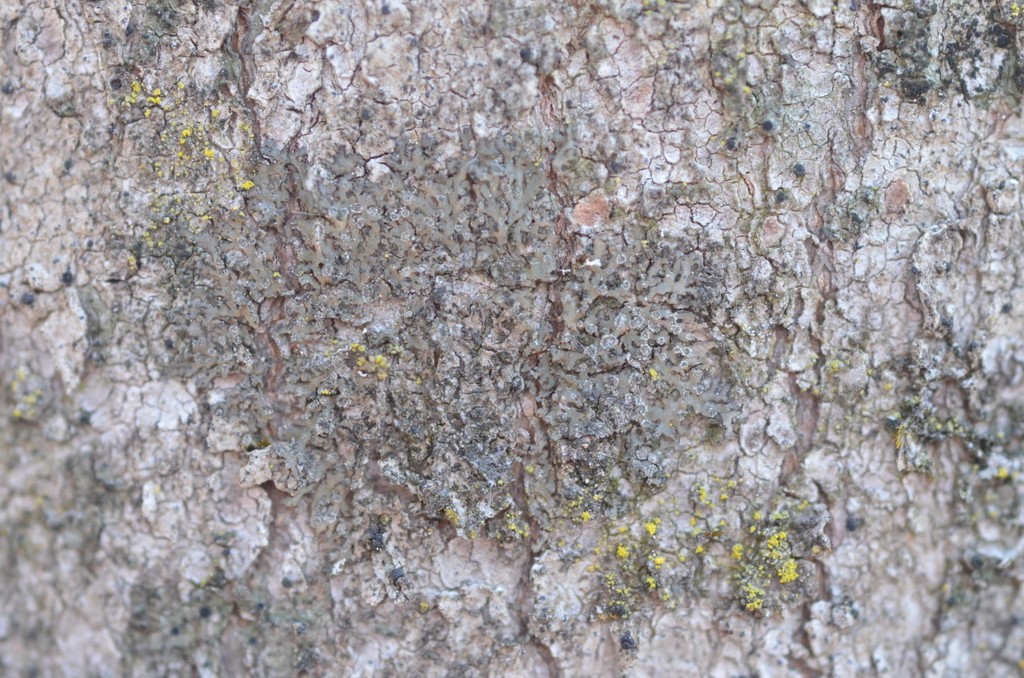
2. Grainy shadow-crust lichen
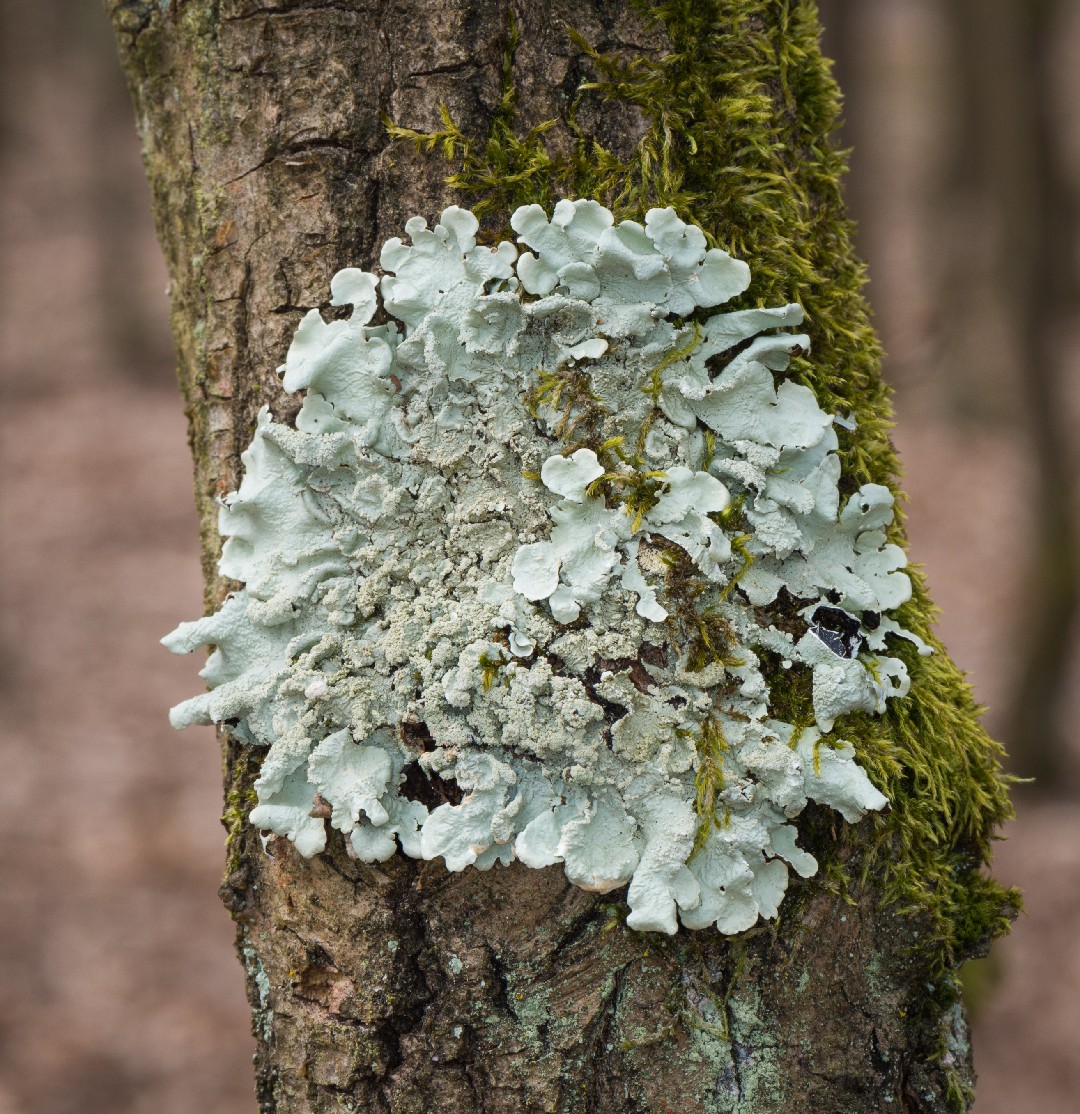
3. Common greenshield lichen
The common greenshield lichen is a familiar species in temperate forests around the world. It can be found growing on rock outcroppings and trees in a wide variety of habitats. Individuals can grow to be quite large and may be gregarious, forming large mats or sheets on suitable surfaces. Like other lichens, the common greenshield lichen will shrivel and harden when moisture is scarce.
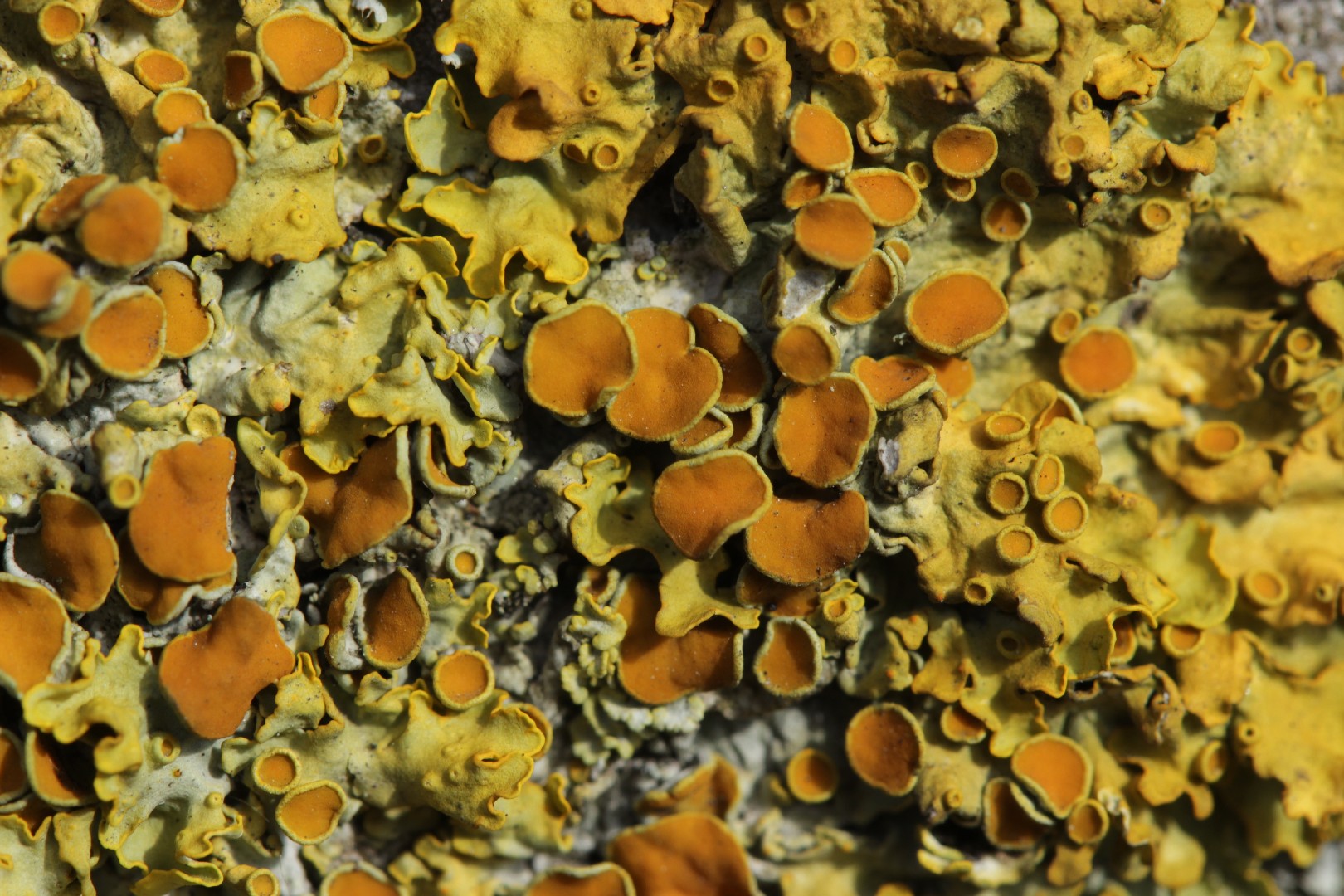
4. Common orange lichen
Common orange lichen was selected in 2006 by the United States Department of Energy as a model for genomic sequencing. Its widespread dispersal and bright yellow-orange color give the lichen its common name. It is primarily found growing on rocks, walls, and tree bark.
5. Black stone flower
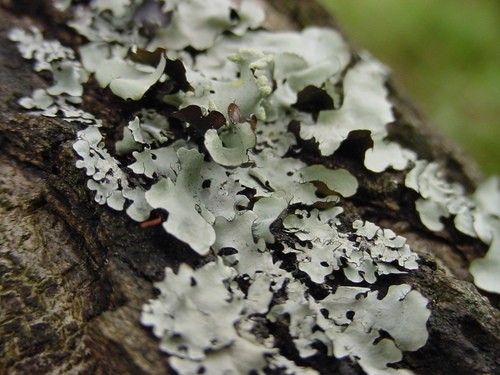
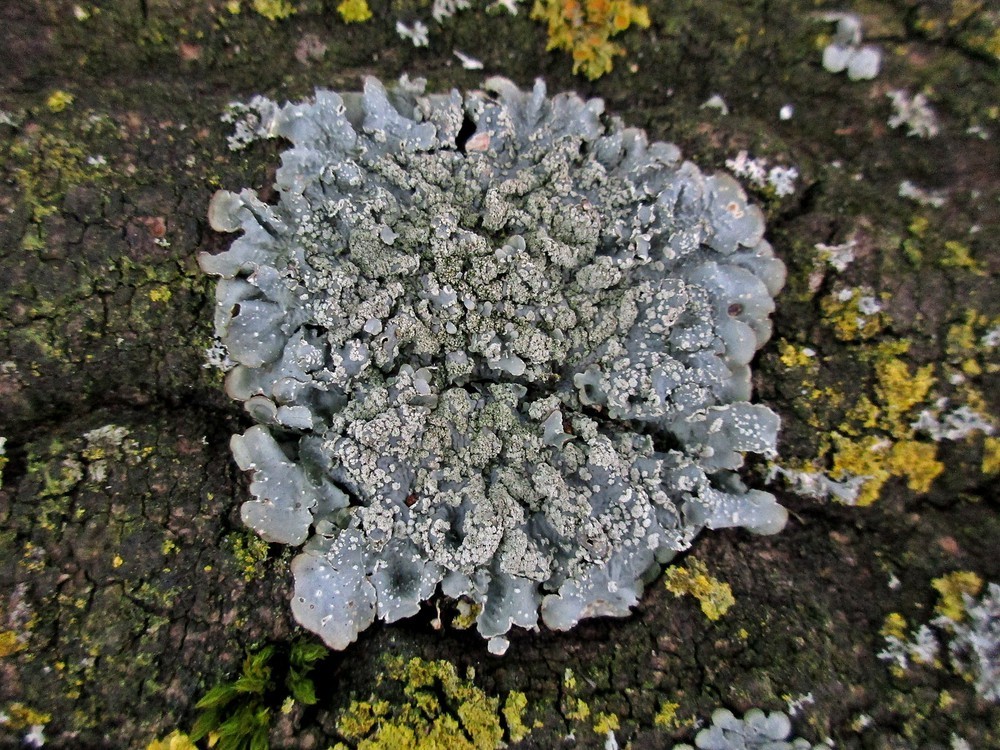
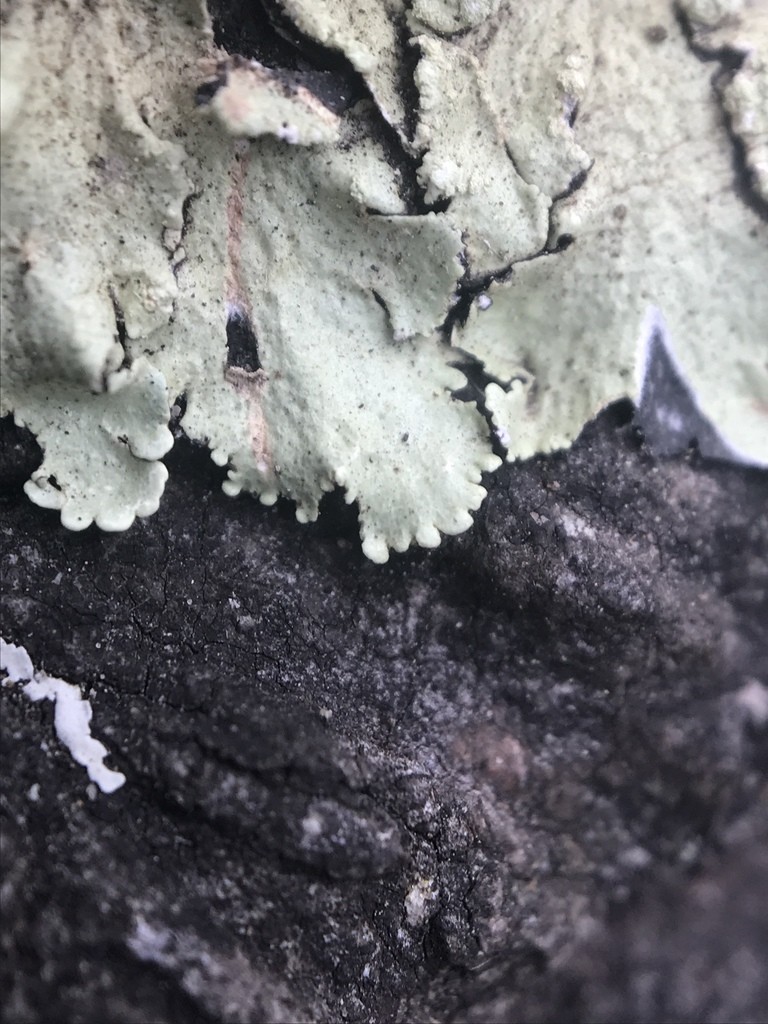
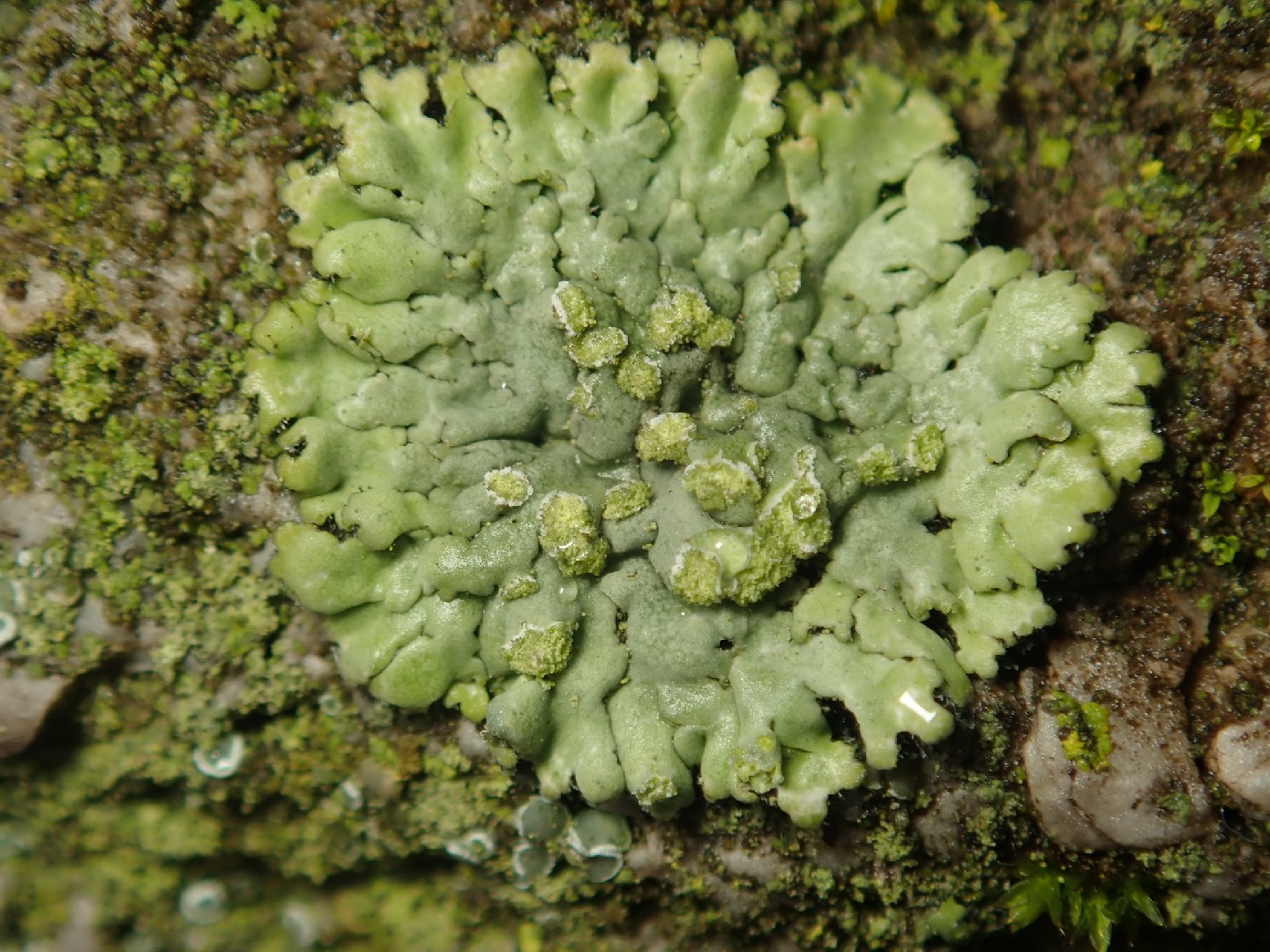
The deposits of Parmotrema perlatum reach up to 20 cm in diameter. The thallus top is in a dry state pearl gray, moist greenish. It has black cilia on the edges. The underside is black, with unbranched rhizins and a brownish colored zone on the edge. Especially at the edges she wears sorals, in which the soredien (asexual propagules) are formed. Fruit bodies (Apothecia) are very rare.
6. Whitewash lichen
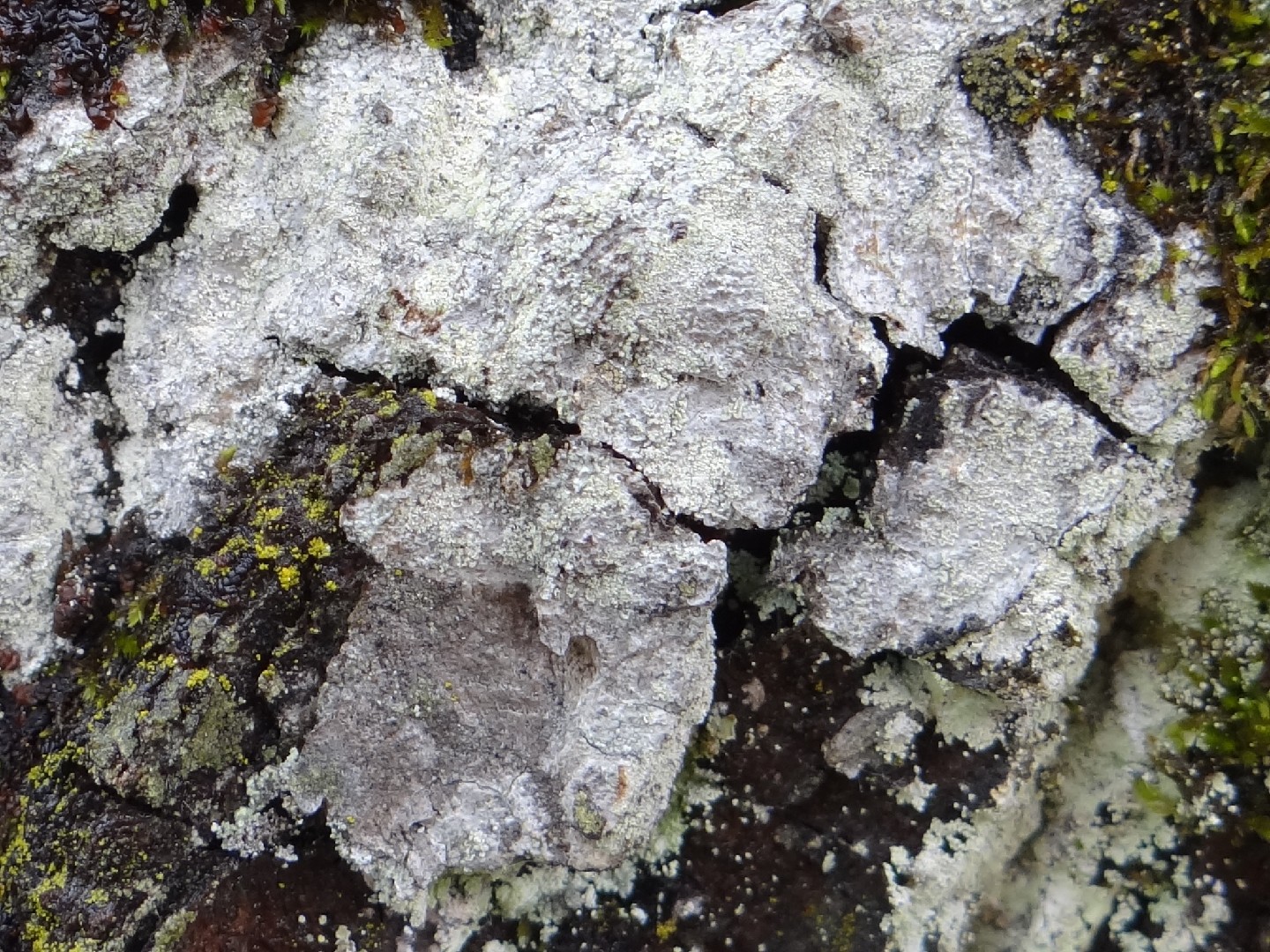
Whitewash lichen is most commonly found growing on trees, especially hardwoods that are in well-lit areas. Its color usually begins a bright green-white that turns to a dull brown-grey. When fresh, it spreads out smoothly over trees as though coating them in white paint.
7. Blemished lichen
8. Rim lichen
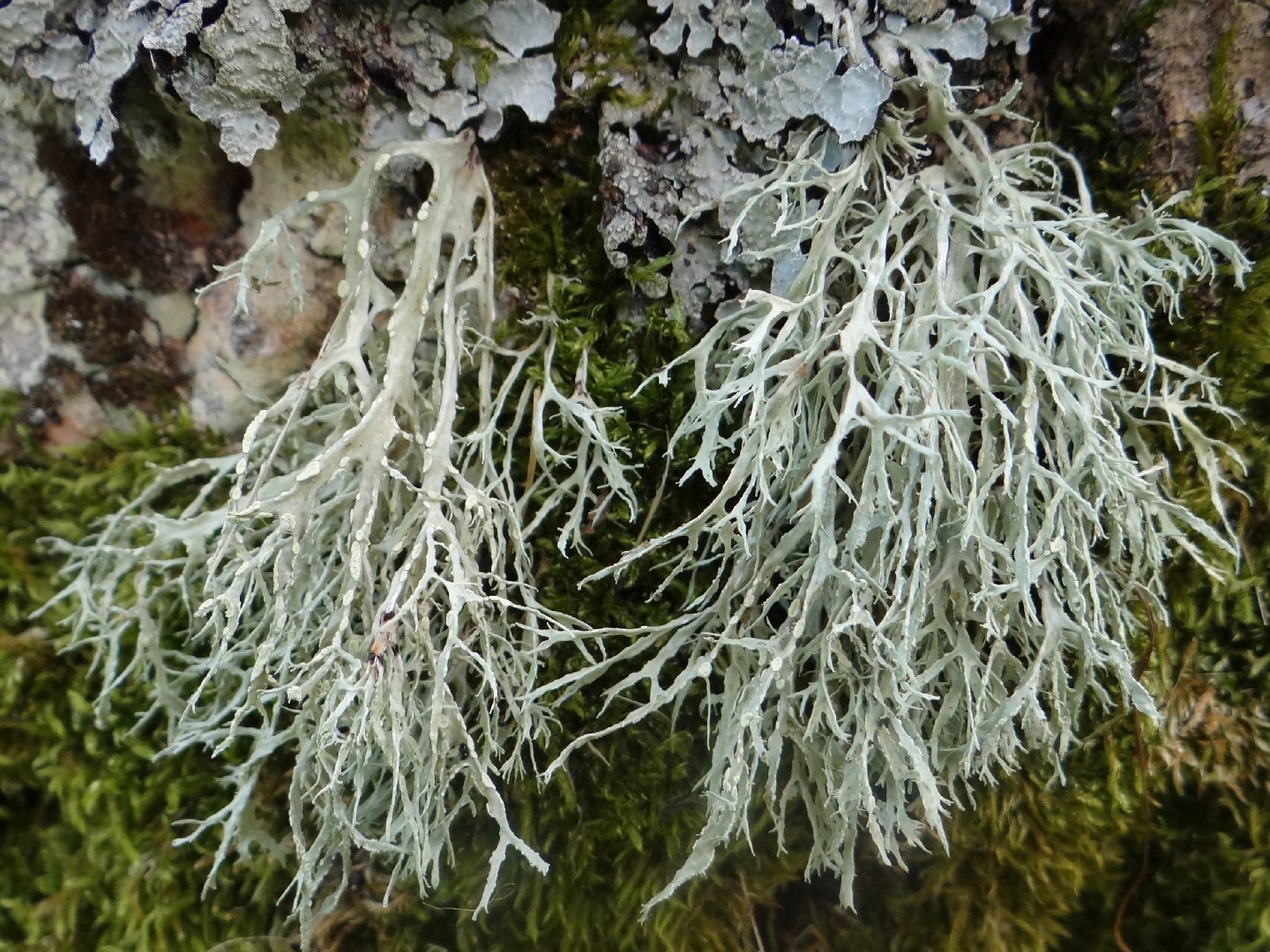
9. Farinose cartilage lichen
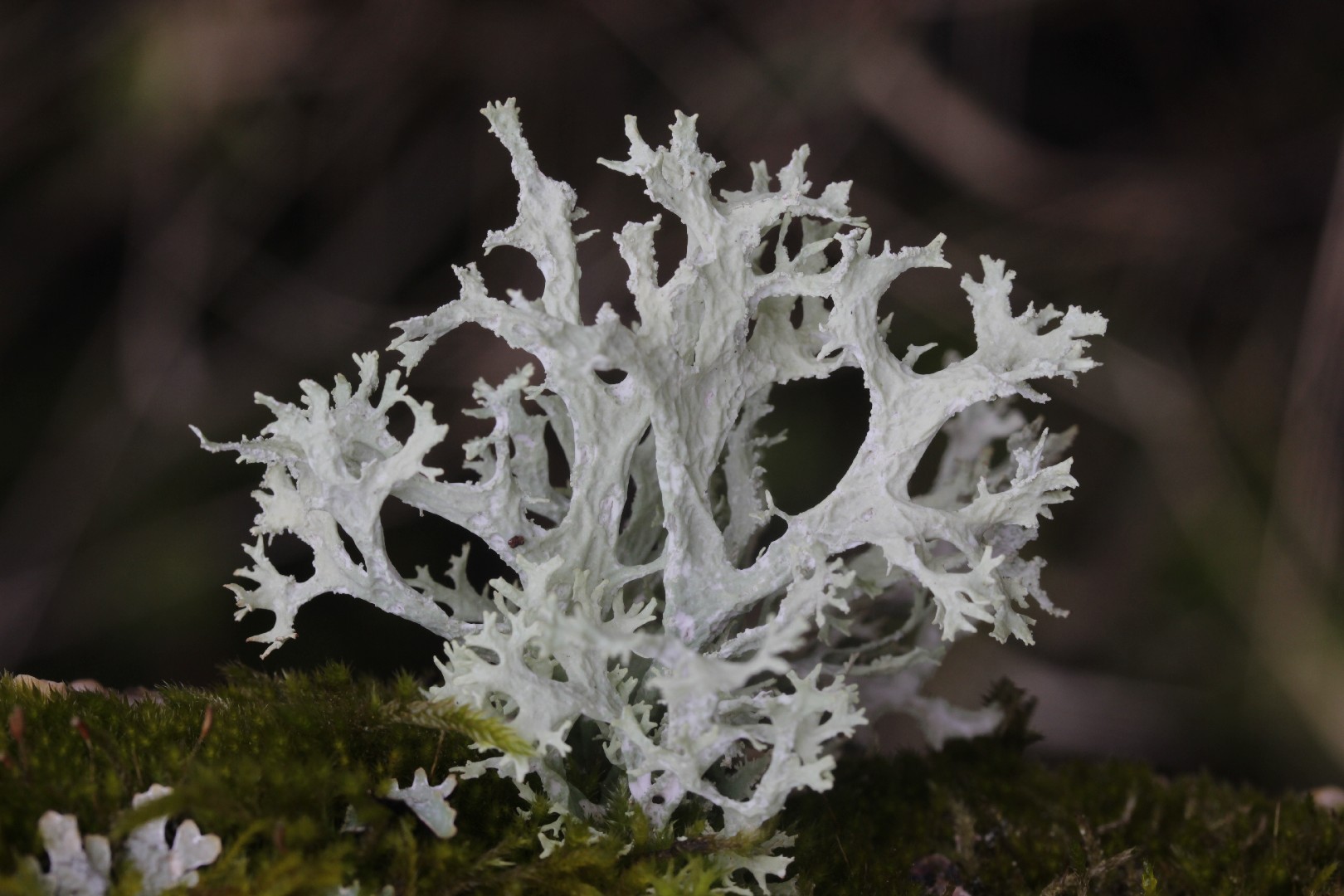
Farinose cartilage lichen has a bushy appearance and is easy to identify by its long, slender branches. The reproductive structures are often scattered on the fungi. The lichen thrives in warm moist, mixed forests, forming on second-growth trees and shrubs.
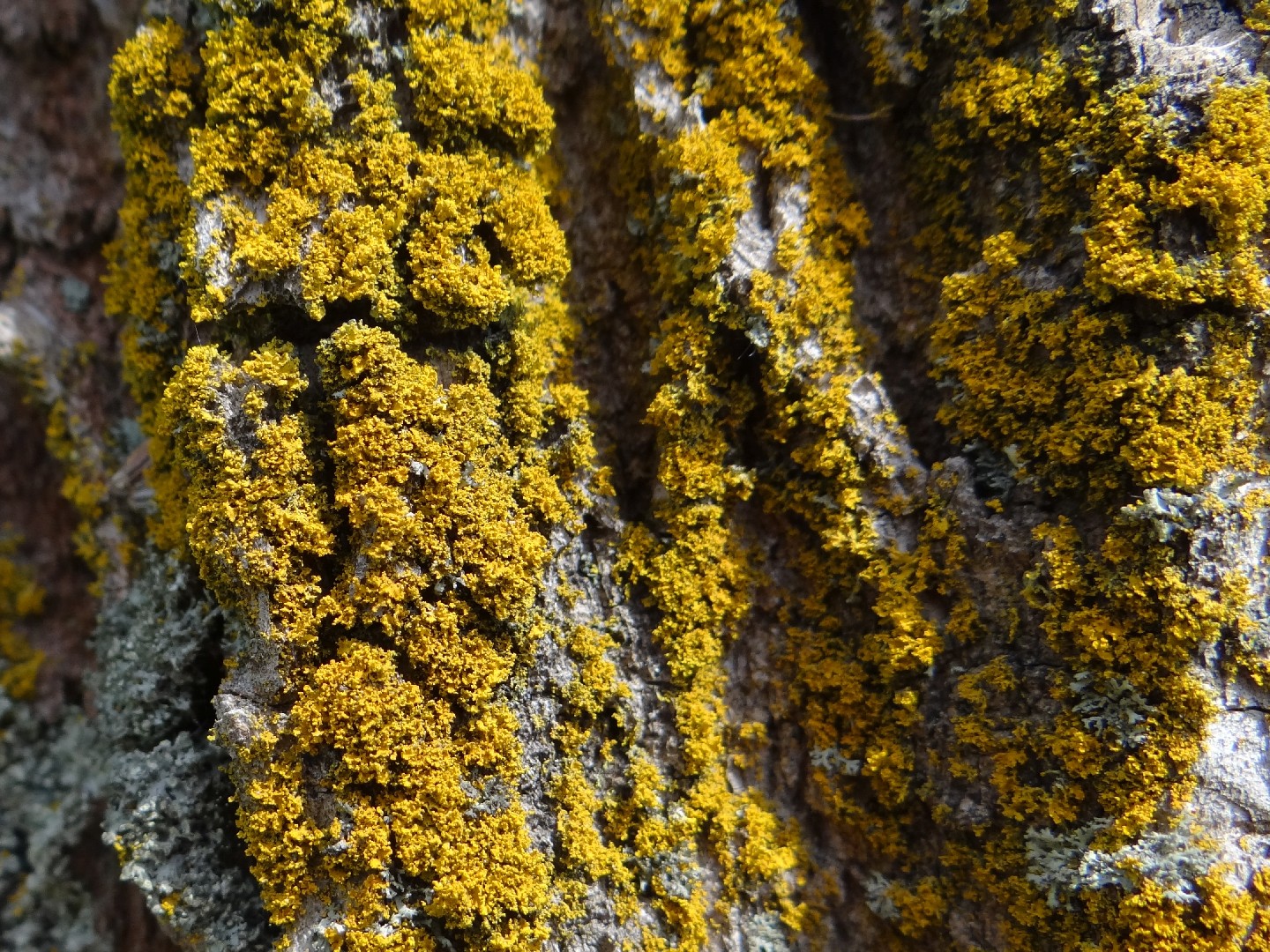
10. Candleflame lichen
Candleflame lichen has a preference for nutrient-rich bark, and is often found in hedgerows, although it can be spotted on rocks. Often recognized for its distinct yolk coloring, candleflame lichen has wavy, layered lobes and is a fast colonizer.
More







