




Top 20 Most Common Mushrooms in Grumo Nevano

Most Common Mushrooms
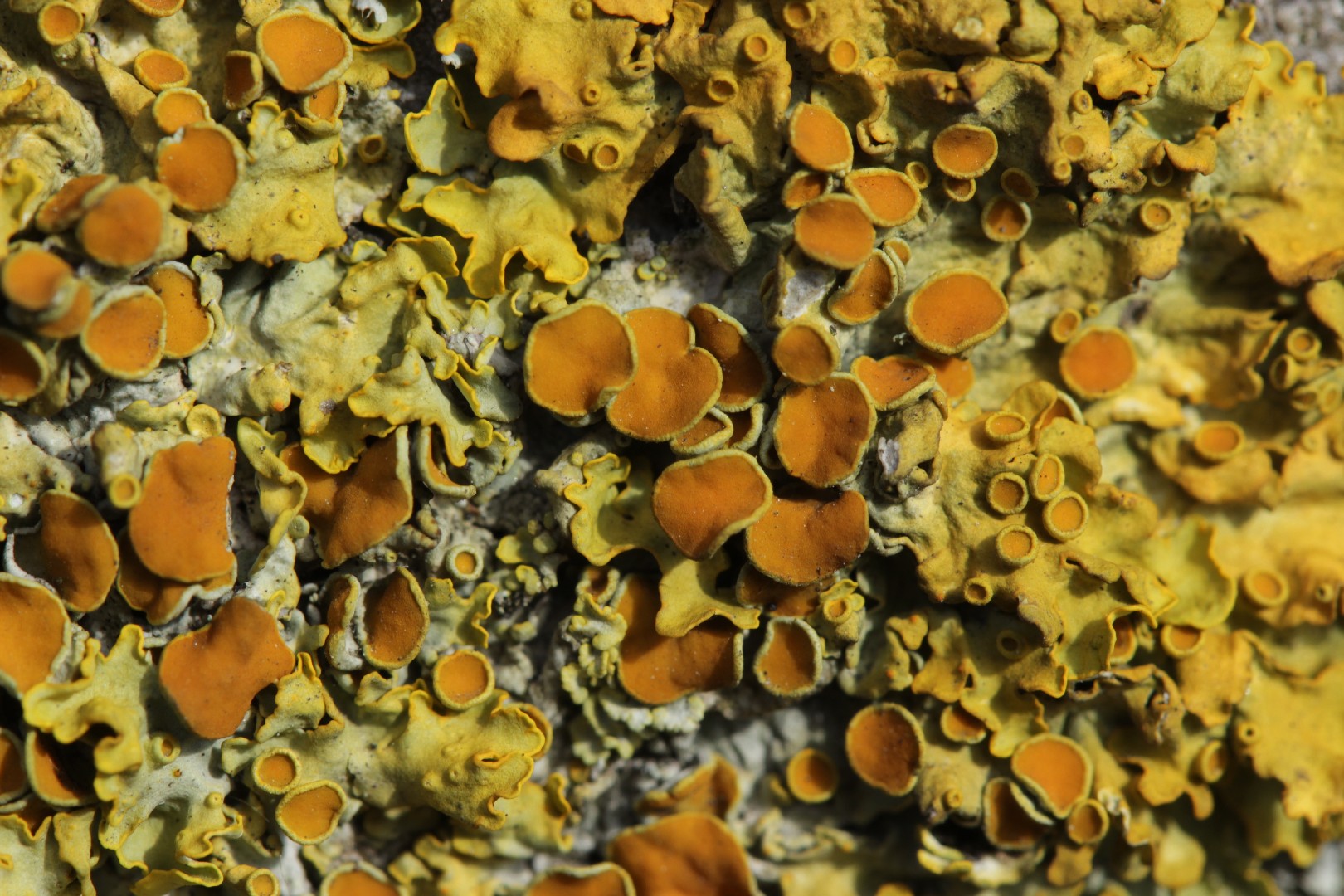
1. Common orange lichen
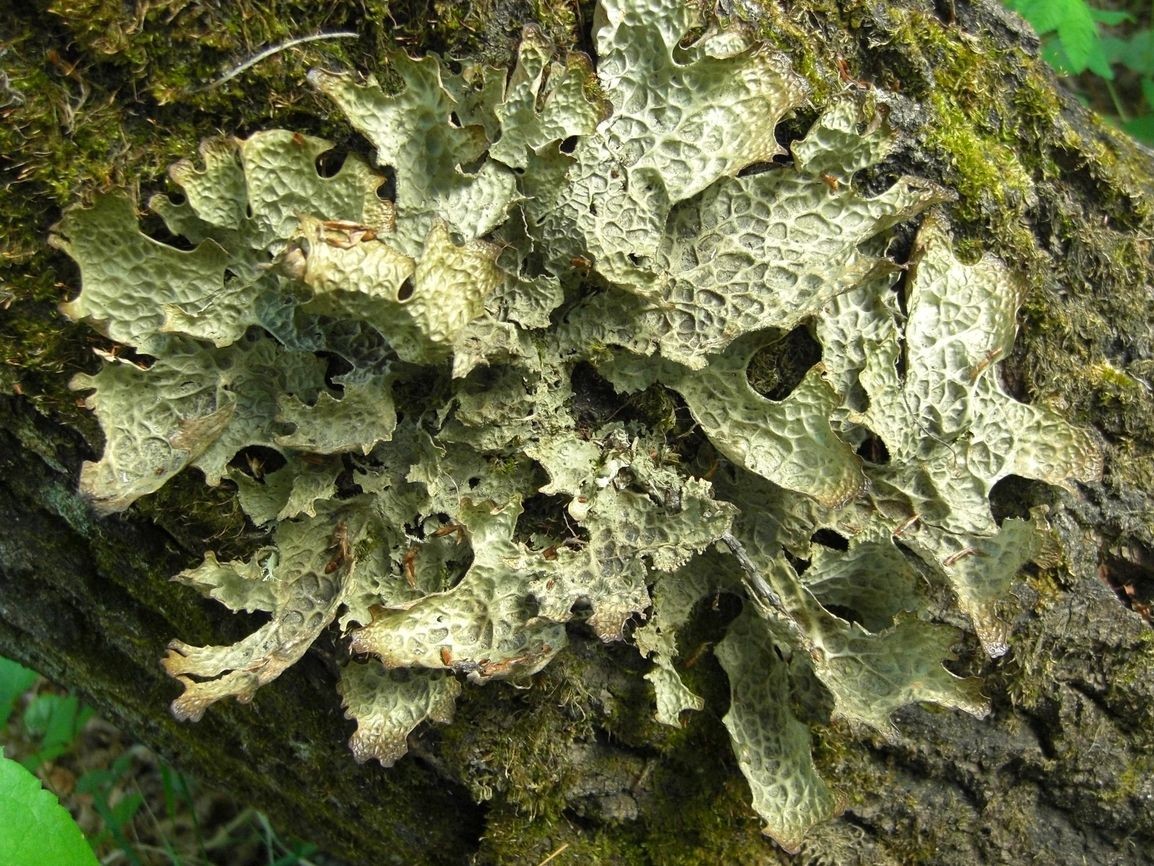
Common orange lichen was selected in 2006 by the United States Department of Energy as a model for genomic sequencing. Its widespread dispersal and bright yellow-orange color give the lichen its common name. It is primarily found growing on rocks, walls, and tree bark.
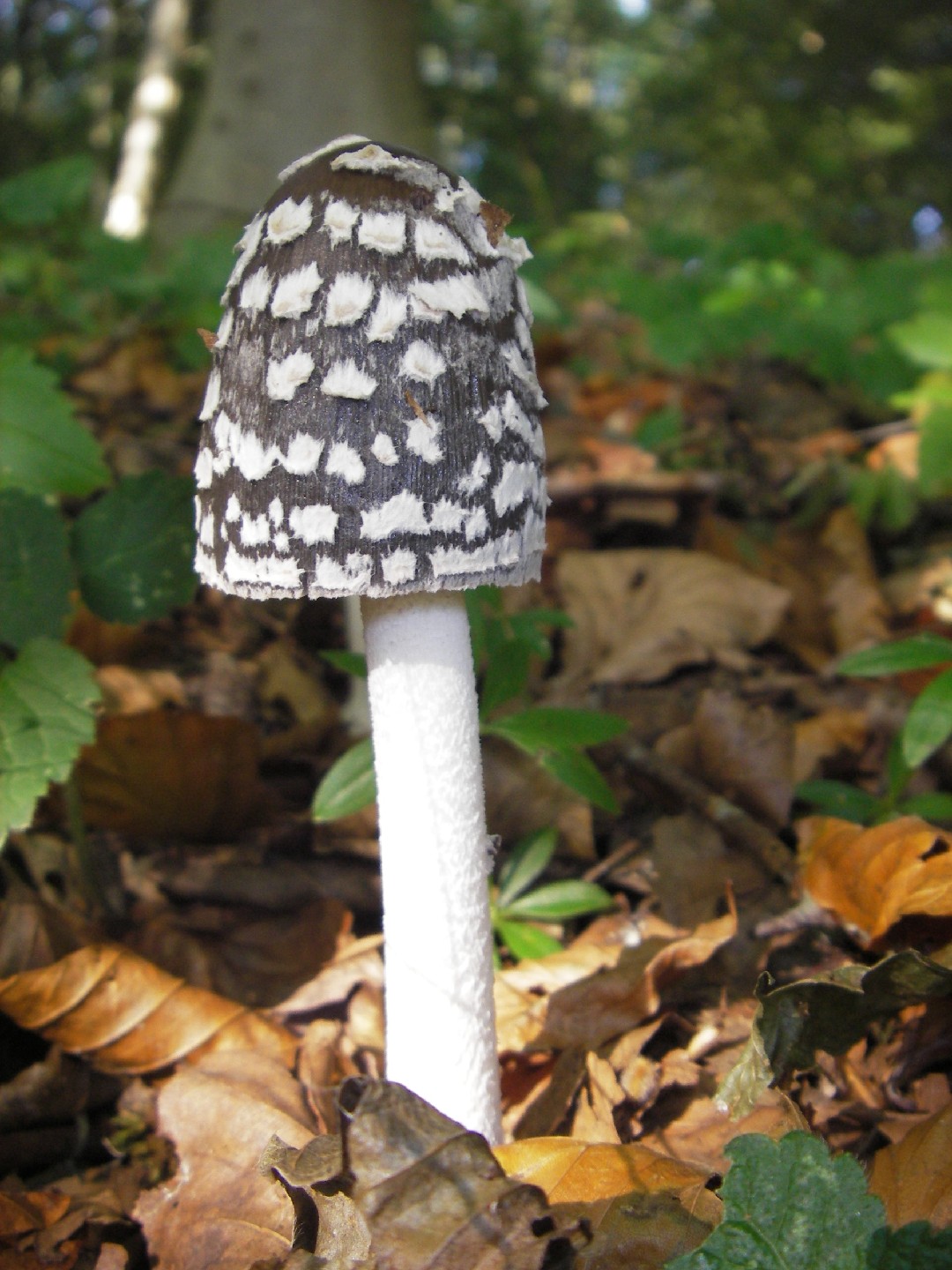
2. Magpie inkcap
The magpie inkcap is a striking and poisonous species of inkcap that can be found in Europe, Australia, and North America. The species has an egg-shaped cap that is typical to inkcaps, but its coloration sets it apart; white spots or splotches adorn a solid, dark brown or black background, reminiscent of the coloration of a magpie.
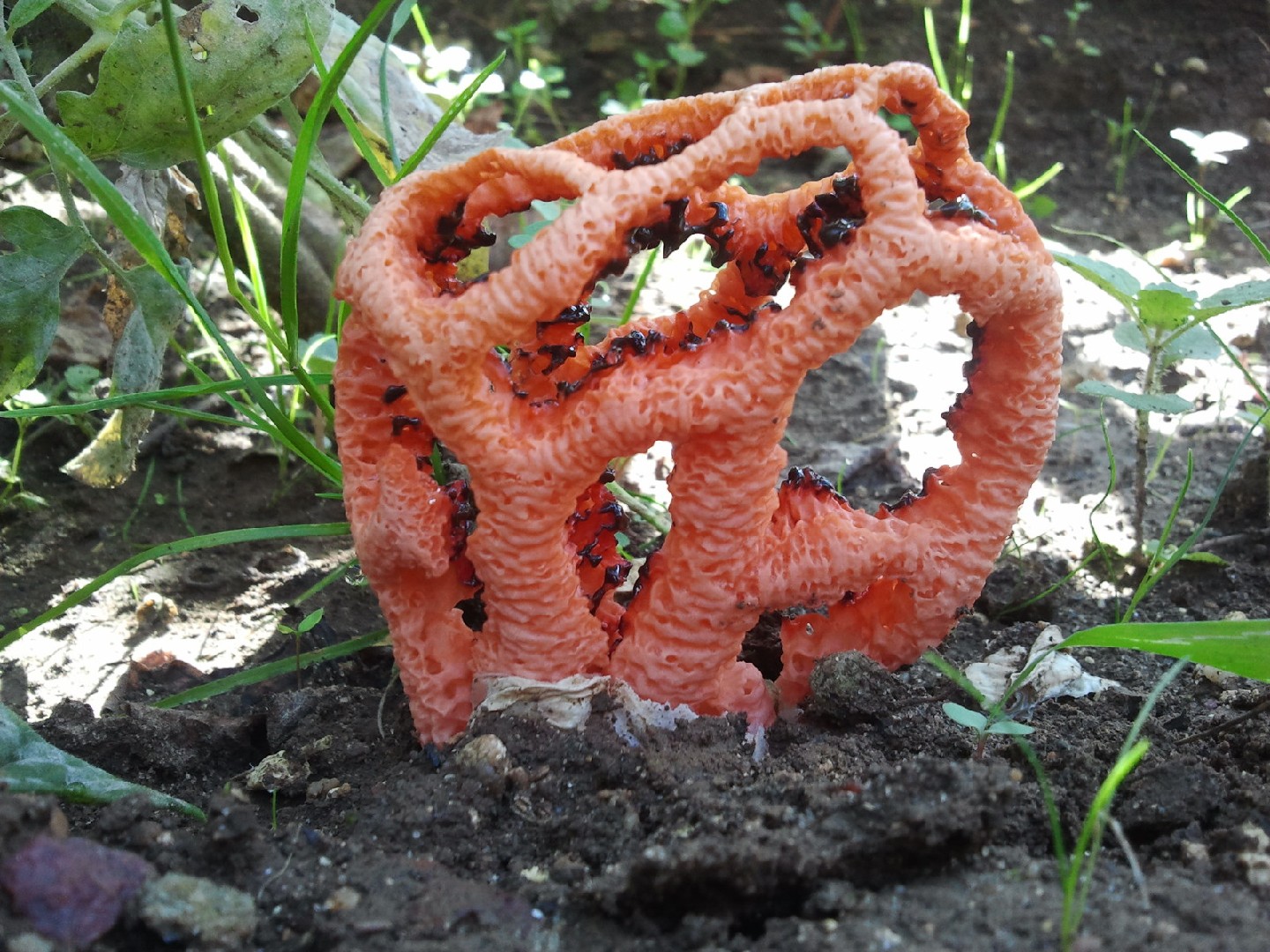
3. Red cage
The red cage is a highly distinctive mushroom with a wild shape, even for a stinkhorn. Its fruitbody grows as a hollow, latticed structure, usually red or pinkish in color, that gives it the appearance of a rubber or plastic children's toy. A true stinkhorn, this species secretes a pungent-smelling slime that attracts flies - but repels humans!
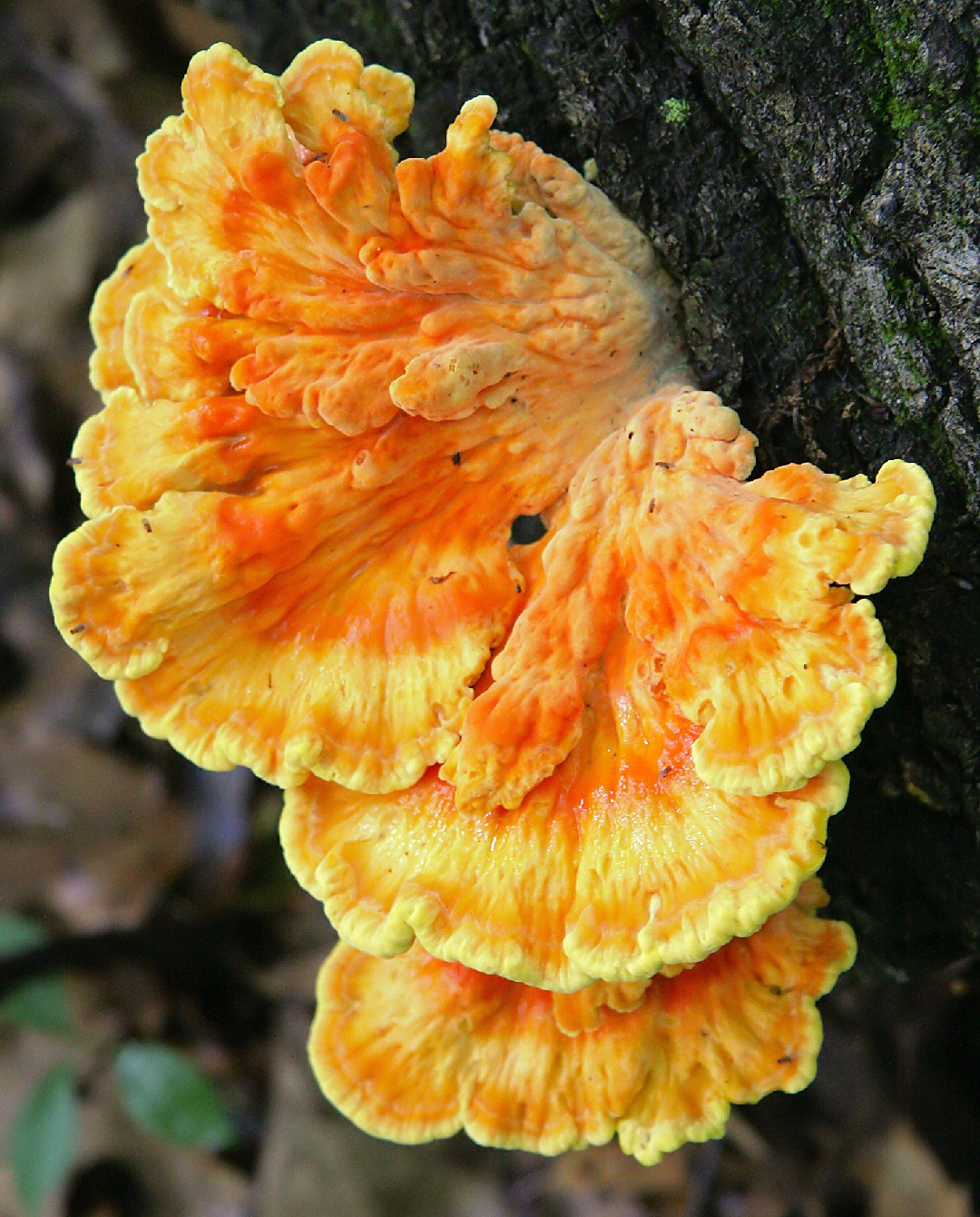
4. Chicken of the woods
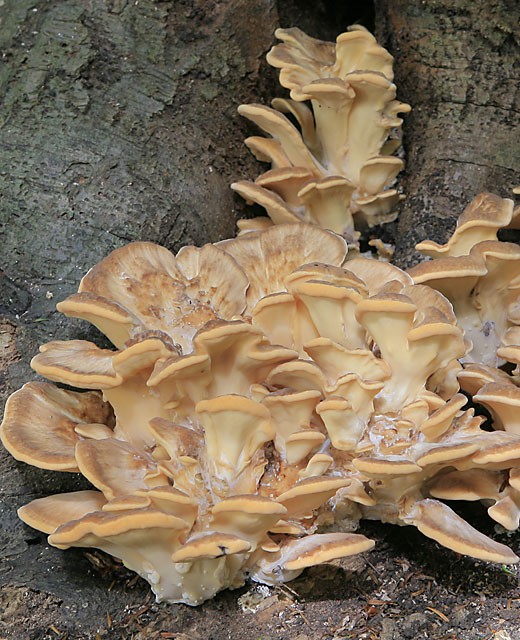
Chicken of the woods is very noticeable in hardwood forests, appearing in clusters on standing tree trunks in bright orange and yellow hues that sometimes last through the entire winter. It is a parasite that causes an unfortunate brown heart rot, and is considered a particularly troublesome pest of Yew trees. If the fruitbodies can be seen, the tree is likely already beyond saving.
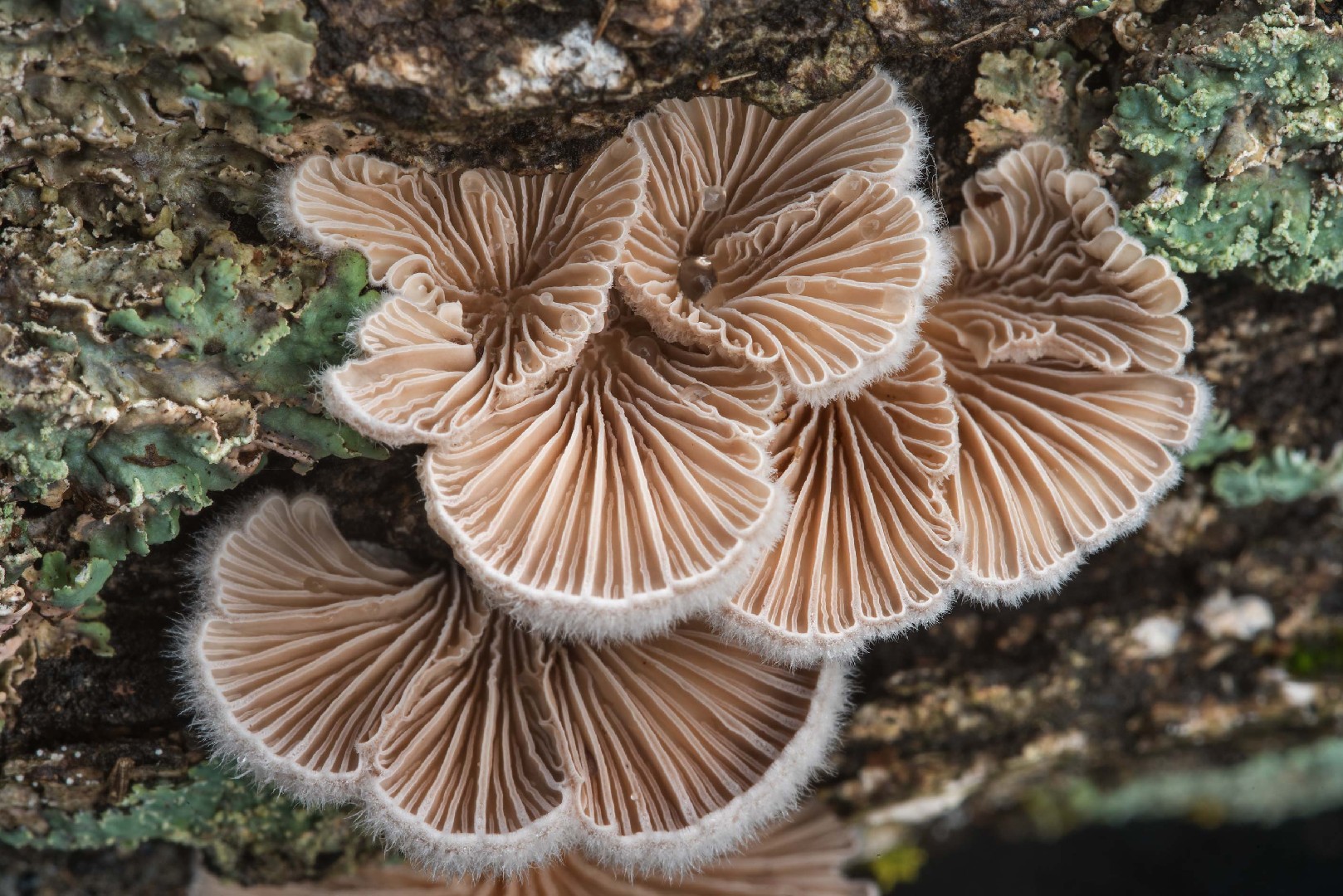
5. Split gill
Split gill(Schizophyllum commune) can be found across the globe. Uniquely, it is the only mushroom species known to display the capability to retract by movement. It is considered inedible, although not necessarily toxic. Furthermore, it is not recommended to smell this species, as the spores are capable of sprouting and growing in nasal passages.
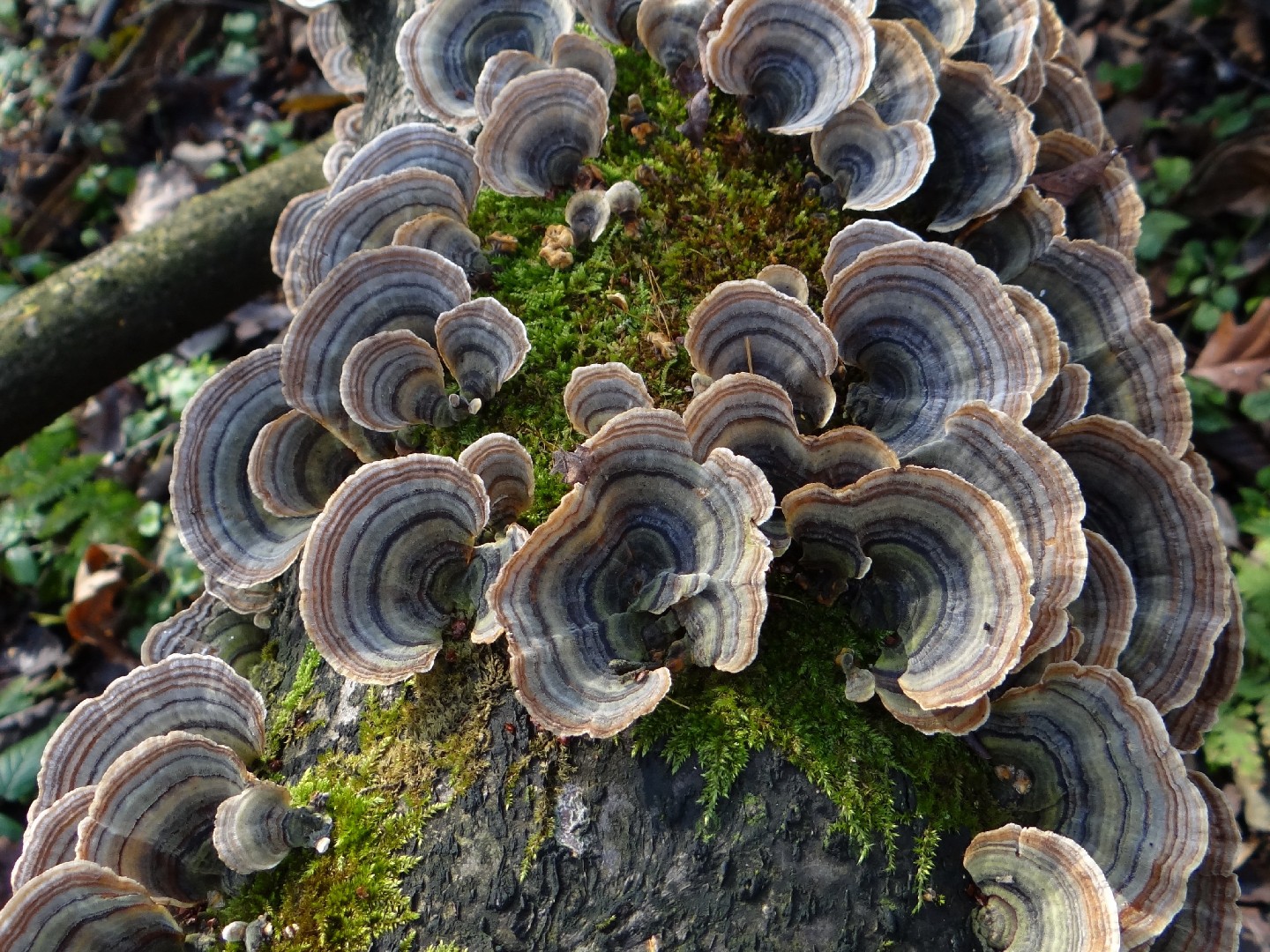
6. Turkey tail
The distinctively-striped turkey tail fungus grows on stumps and logs all over the forests of the northern hemisphere. It is, in fact, probably the most common species you will find. That doesn't mean this mushroom is plain, however; each cap is uniquely patterned. Look for bands of alternating textures as well as color.
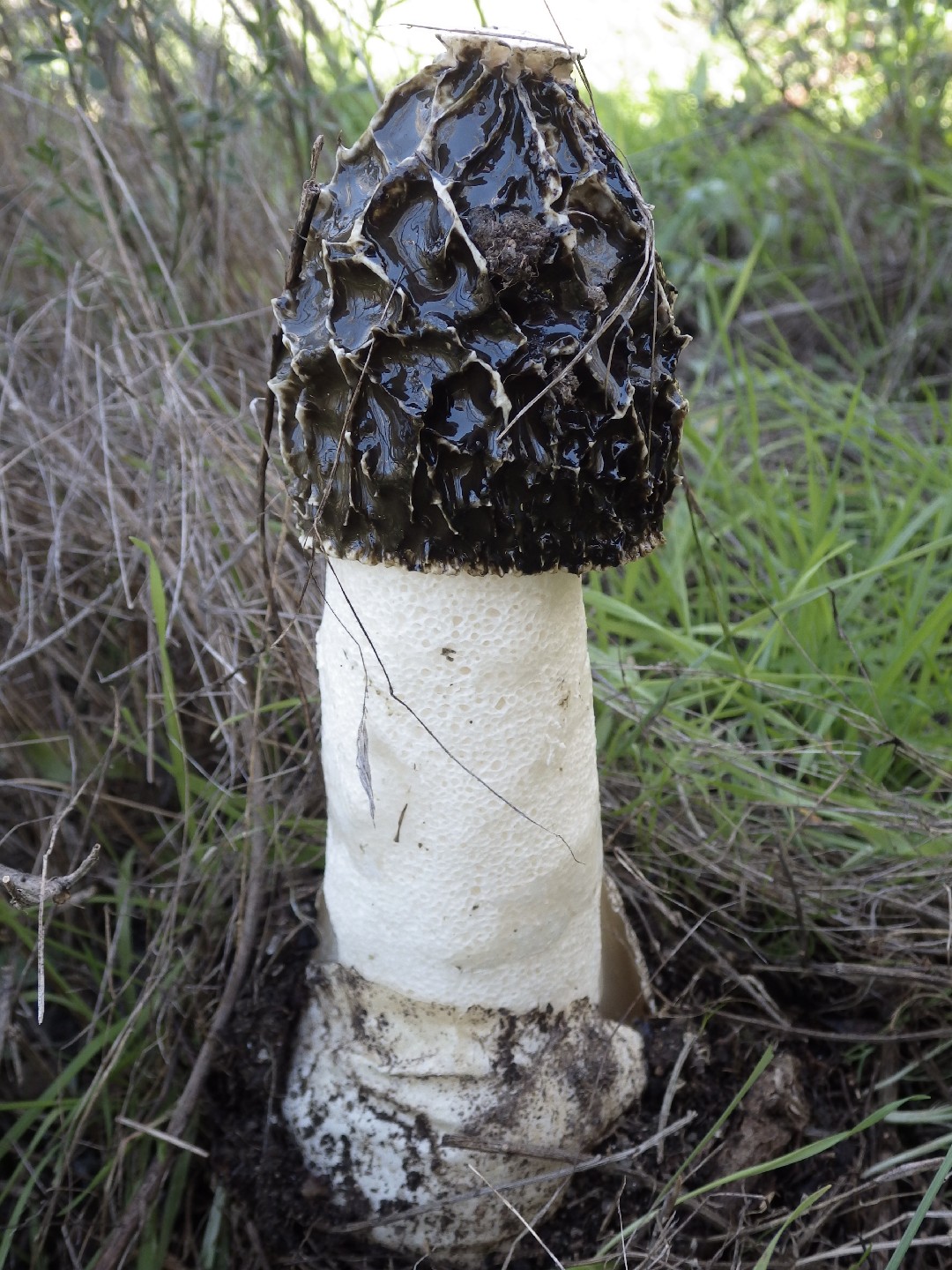
7. Common stinkhorn
The common stinkhorn (Phallus impudicus) grows incredibly quickly, sometimes nearing 30 cm in a single afternoon. Their caps are pitted in a way which makes them reminiscent of morels. However, there's little mistaking the common stinkhorn for a morel; the former, in addition to sporting a much longer stalk, has a clear and pungent odor.
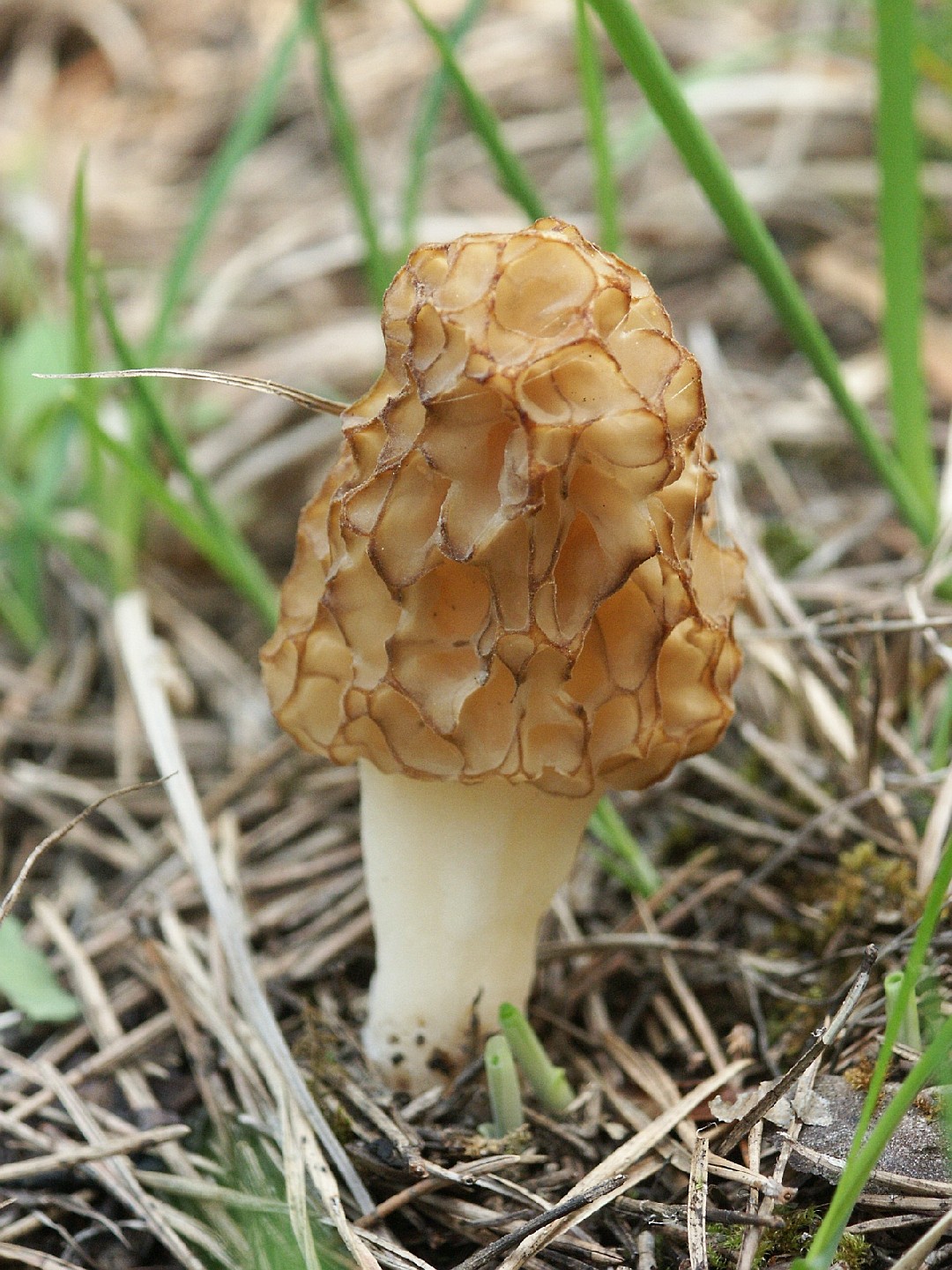
8. Yellow morel
The yellow morel (Morchella esculenta) is one of the most iconic and sought-after species of edible mushrooms. It is often one of the first species that novice mushroom gatherers will hunt for. Yellow morels have elongated caps that are "honeycombed", being filled with roughly polygonal holes. Splitting them down the middle reveals them to be hollow on the inside, a key feature that distinguishes them from toxic false morels. Experts recommend cooking or boiling this mushroom before consumption, as raw morels may cause an upset stomach.
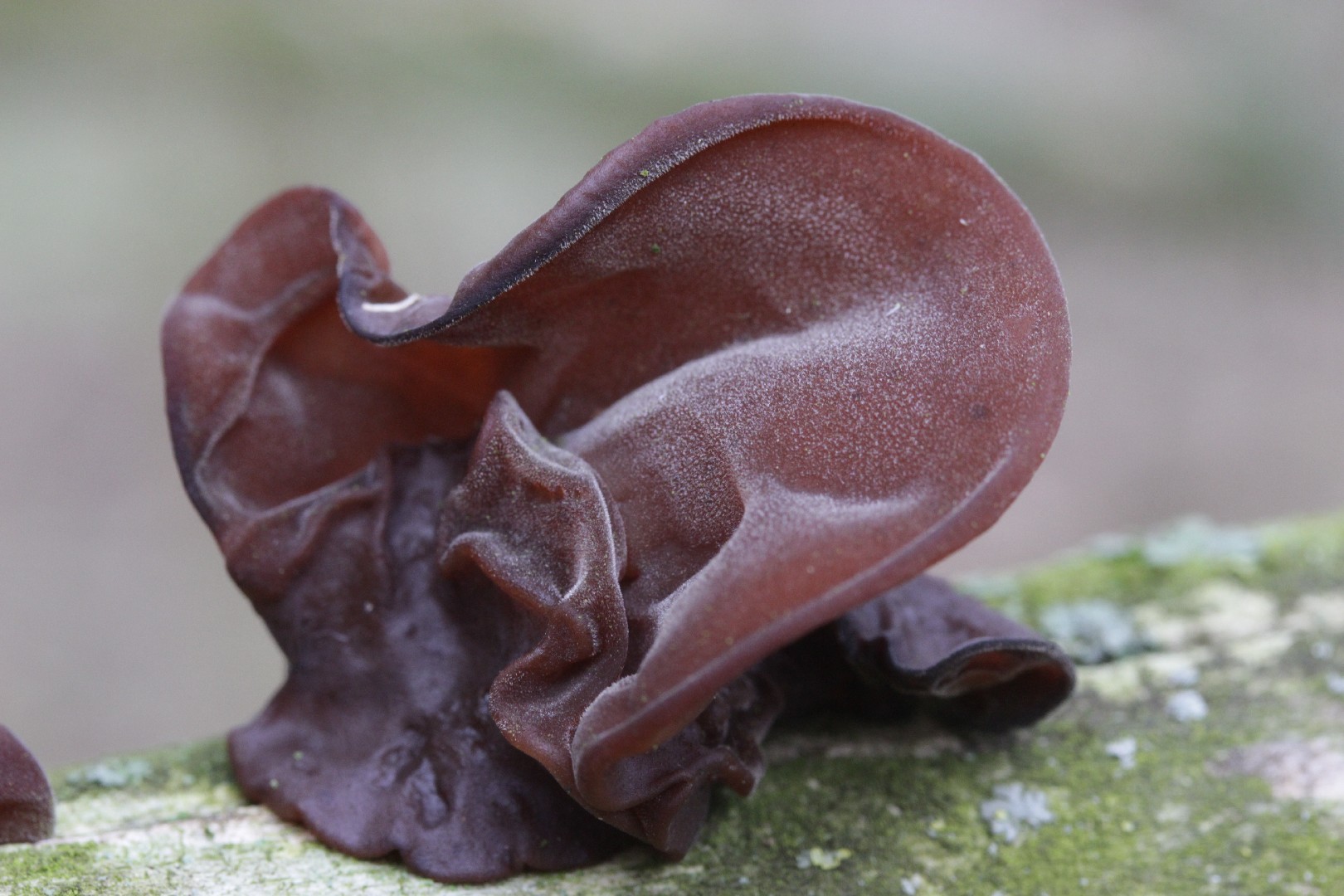
9. Jelly ear
The distinctive jelly ear grows mainly through winter and spring, mostly on the dead trunks and branches of elder trees. It occurs around the world and is often cooked into dishes in Asian countries. This ear-shaped jelly mushroom is often available in stores both fresh and dried.
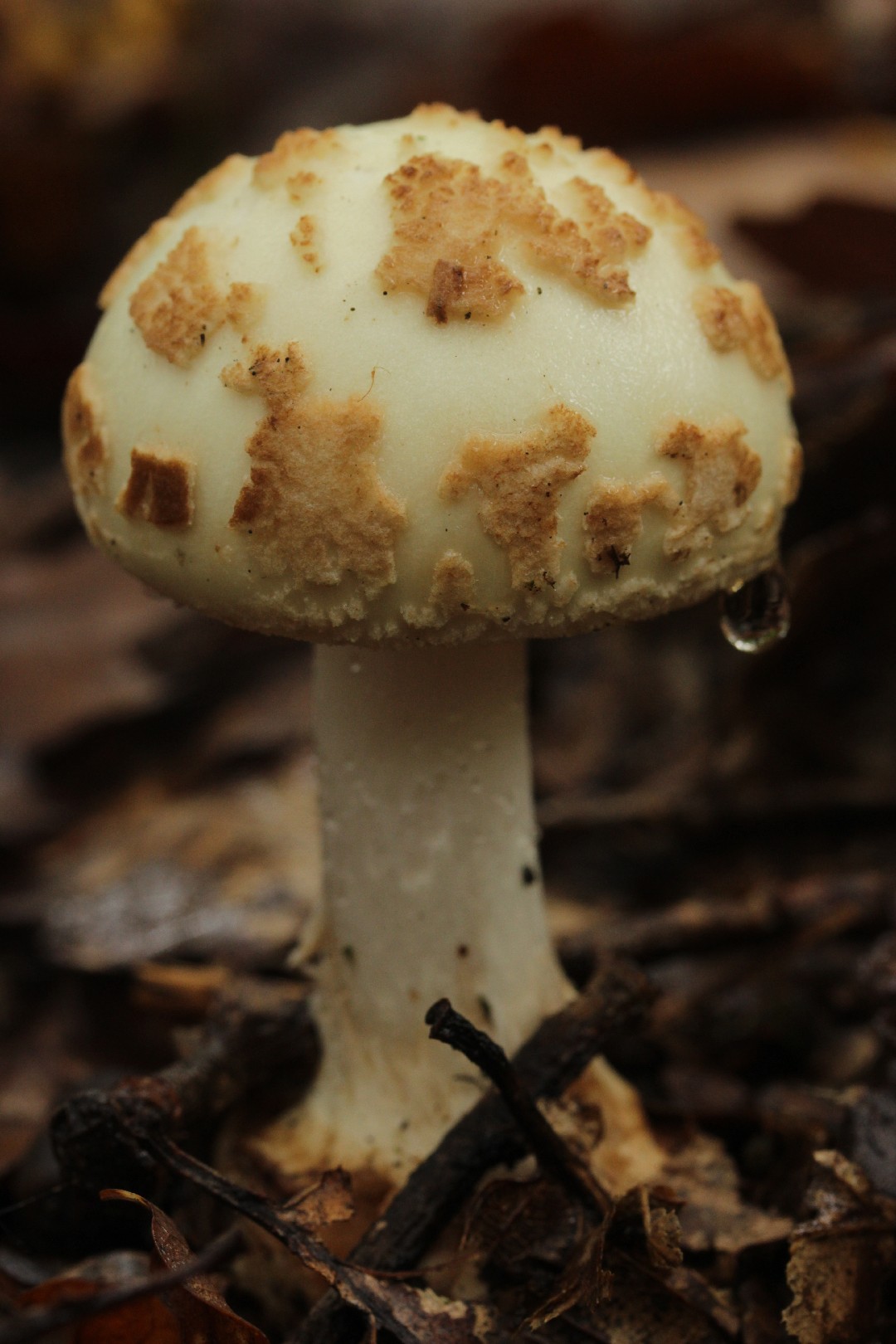
10. False death cap
A close cousin to the more deadly Amanitas such as Destroying Angel and Deathcap, the false death cap is an inedible mushroom that regularly grows on forest floors across the northern hemisphere. It consumes both hardwood and soft, and fruits from late summer to autumn.

More







