




Top 5 Most Common Mushrooms in Kulat

Most Common Mushrooms
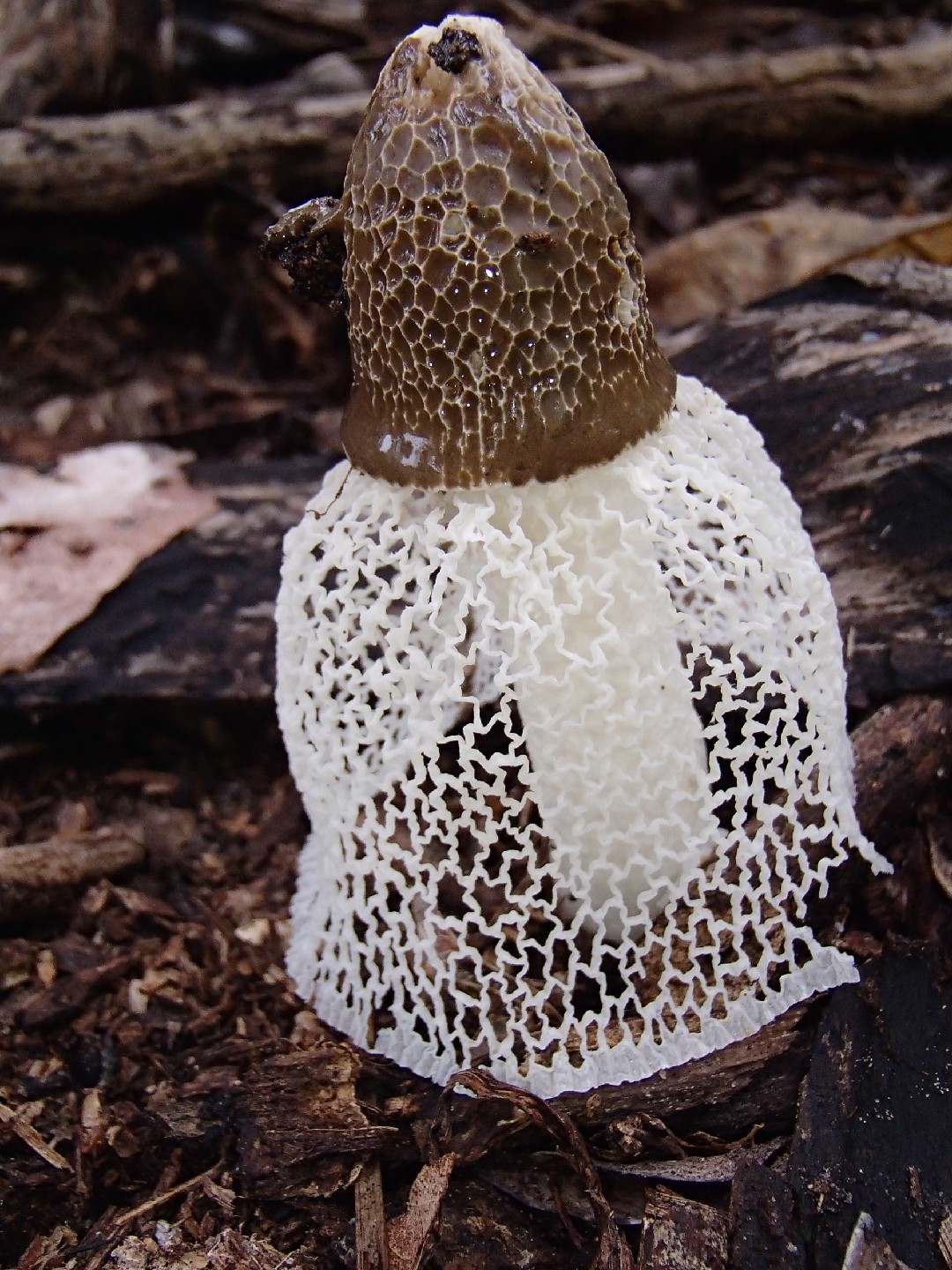
1. Bridal veil stinkhorn
Bridal veil stinkhorn (Phallus indusiatus) can be found rising up from the ground in tropical forests around the world. A distinctive netted fringe “skirt” descends from the cap along the length of the stalk. A type of “stinkhorn,” the fruitbodies of this species produce scents that vary between sickly-sweet to just plain unpleasant. The odor is meant to attract insects that usually lay their eggs in carrion.
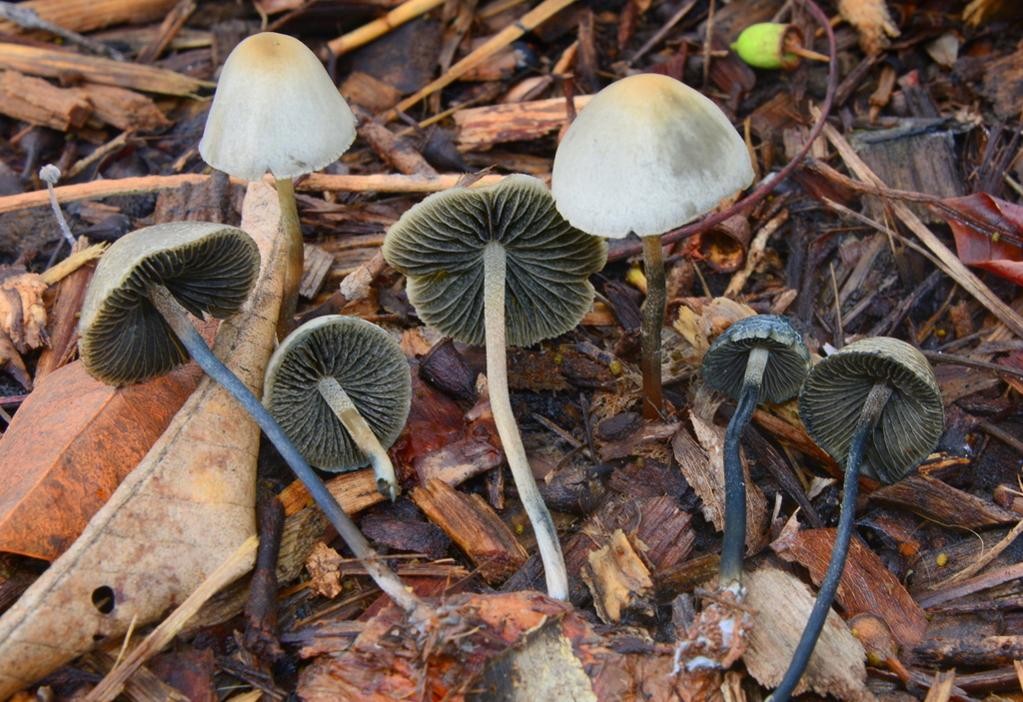
2. Blue meanies
The blue meanies (Panaeolus cyanescens) grows abundantly from composted dung in fields across the globe. They are small in size, with short, bell-shaped caps iridescent pale blue in color. The underside of the cap displays gills that are widely spread apart. This mushroom is a toxic poisoning risk. Consumption is not recommended.
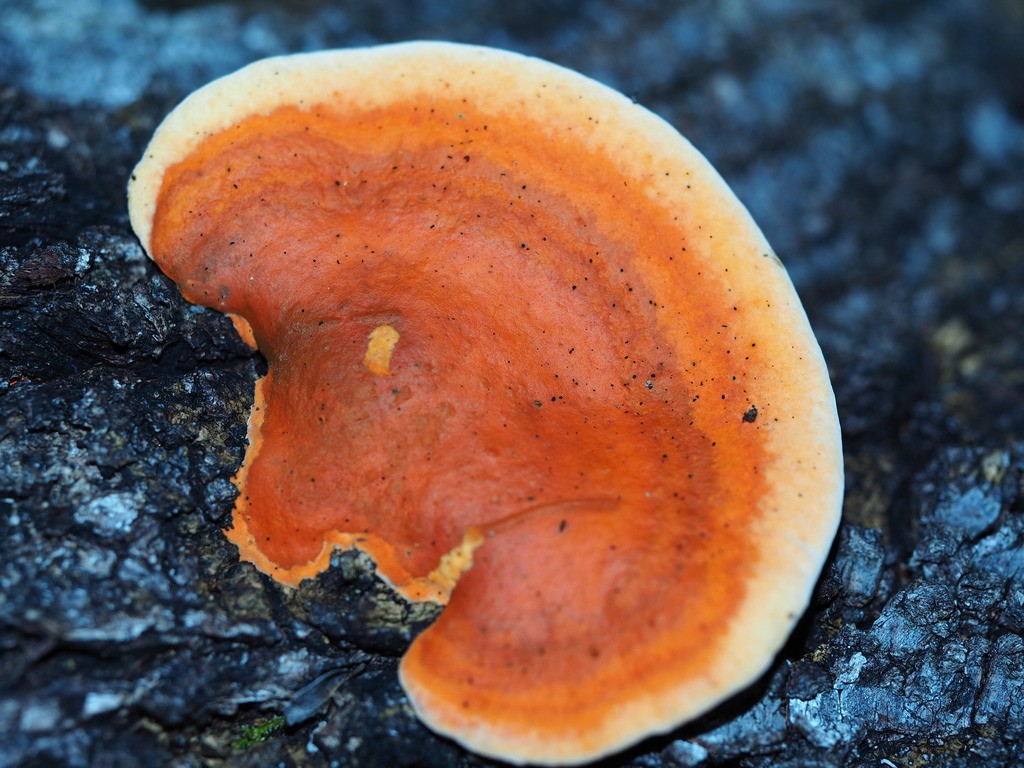
3. Southern cinnabar polypore
Southern cinnabar polypore grows in a variety of contexts, though it prefers to grow on deadwood near open water sources. This mushroom fruits from the late summer to early winter. True to its name, young southern cinnabar polypore has a bright orange color that's similar to cinnabar but may fade in older age.
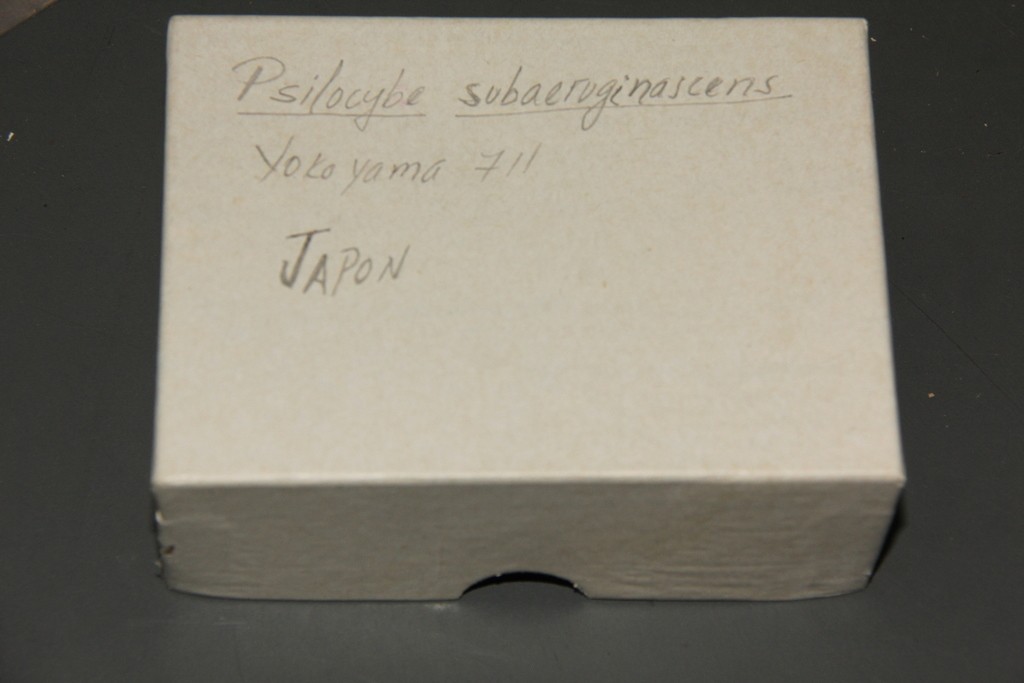
4. Psilocybe subaeruginascens
The cap is 1–6 cm, conical to convex, tan brown, hygrophanous, margin striate when moist, and often has a broad umbo. It bruises bluish where damaged. The gills are crowded, sometimes forking, slightly mottled, cream color when young, violet brown in age, with adnate to adnexed and sometimes subdecurrent attachment. The spores are dark violet brown, rhomboid to subrhomboid to subellipsoid, and 7.5-12 x 6.5-8.5 µm. The stipe is 2.5 to 6.5 cm long, .2 to .3 cm thick, white to gray, finely striate, and equal to slightly enlarged near the base. It has a well-developed partial veil which leaves a persistent membranous annulus on the upper stem. It bruises blue where damaged. The taste and odor are farinaceous. 
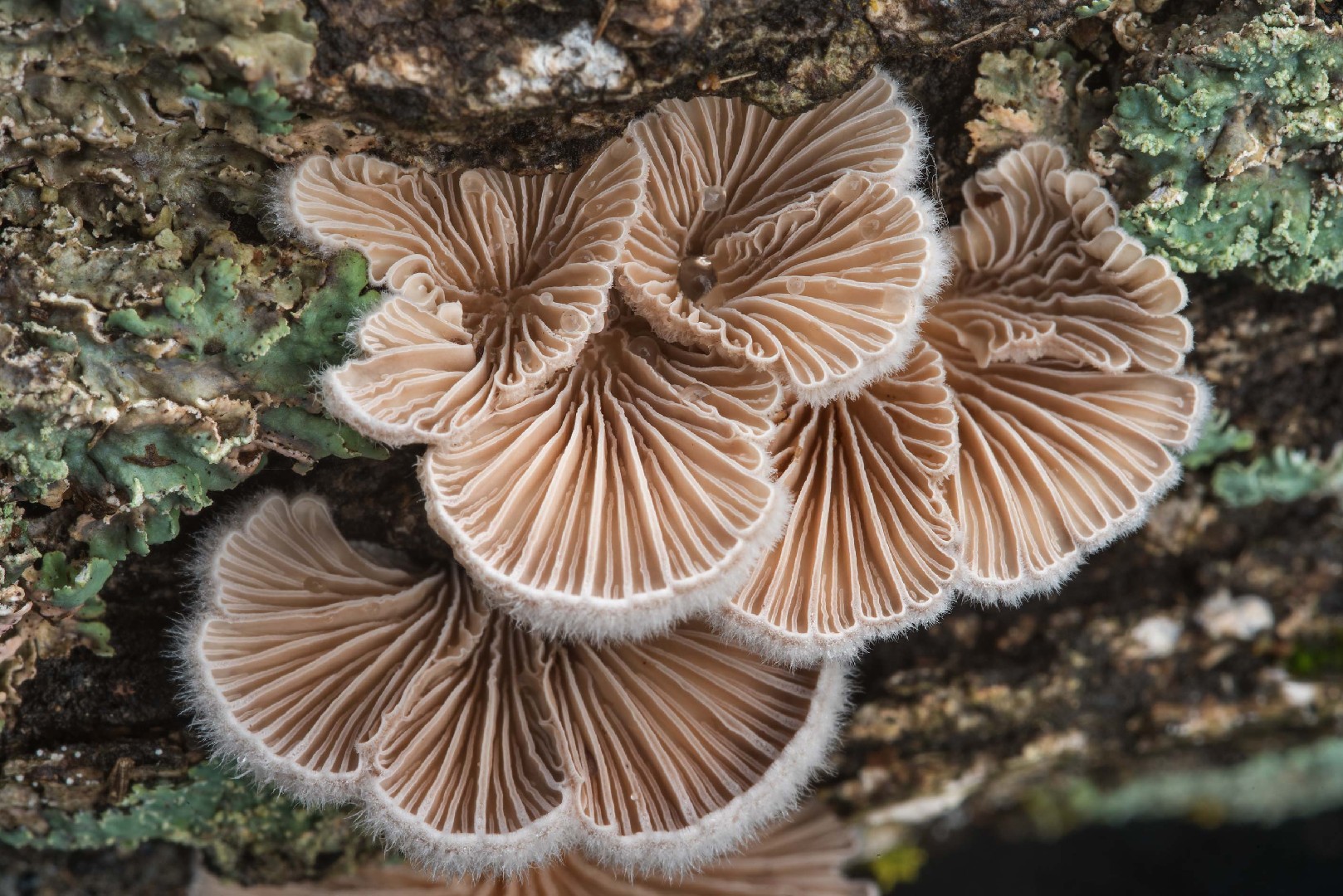
5. Split gill
Split gill(Schizophyllum commune) can be found across the globe. Uniquely, it is the only mushroom species known to display the capability to retract by movement. It is considered inedible, although not necessarily toxic. Furthermore, it is not recommended to smell this species, as the spores are capable of sprouting and growing in nasal passages.







