




Top 6 Most Common Mushrooms in Pune

Most Common Mushrooms
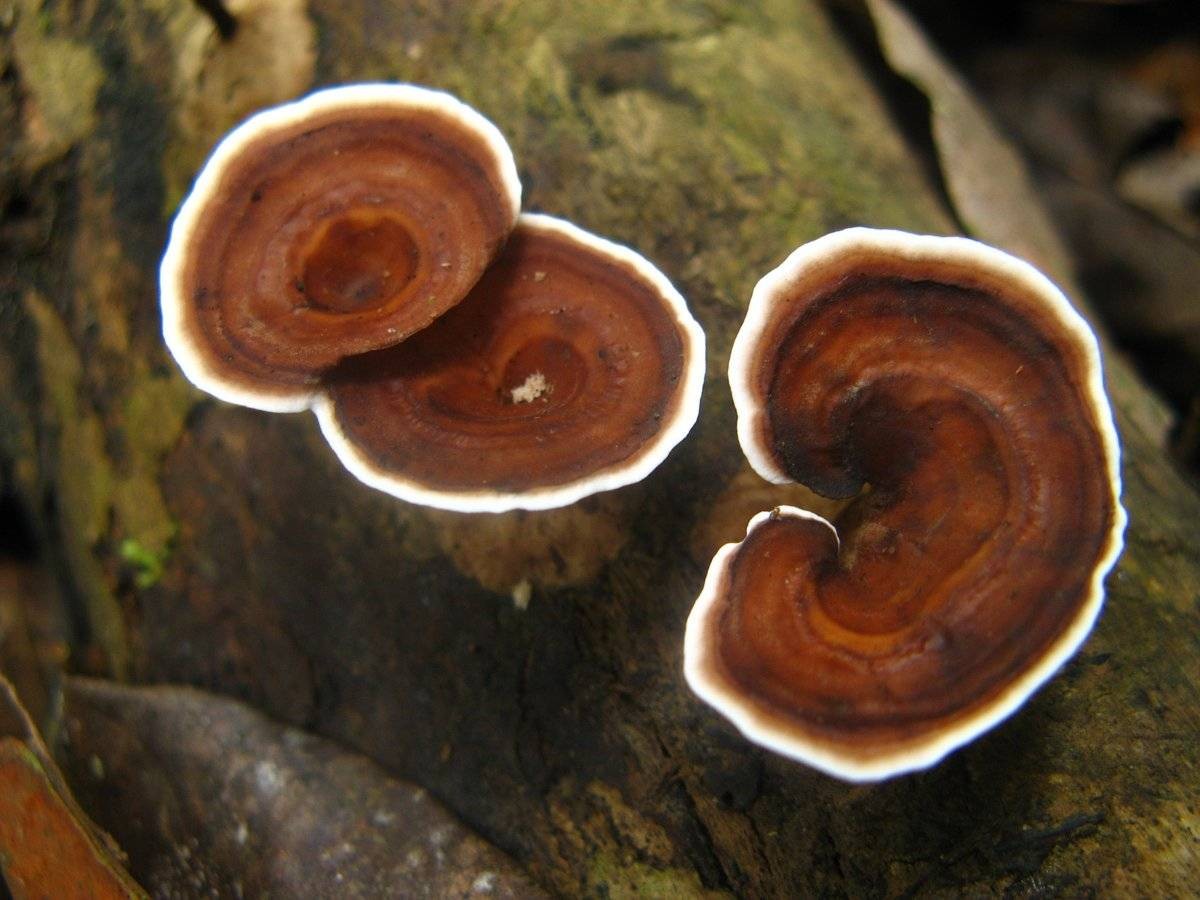
1. Yellow-footed micropore
The scientific name of the yellow-footed micropore (Microporus xanthopus) translates to “tiny-pored yellow foot.” Its short stem is usually yellow, leading up to a concave, funnel-like cap. The species is common in all the tropics of the world outside of the Americas. The striated, multi-hued caps grow largest in wet, darkly-shaded locations.
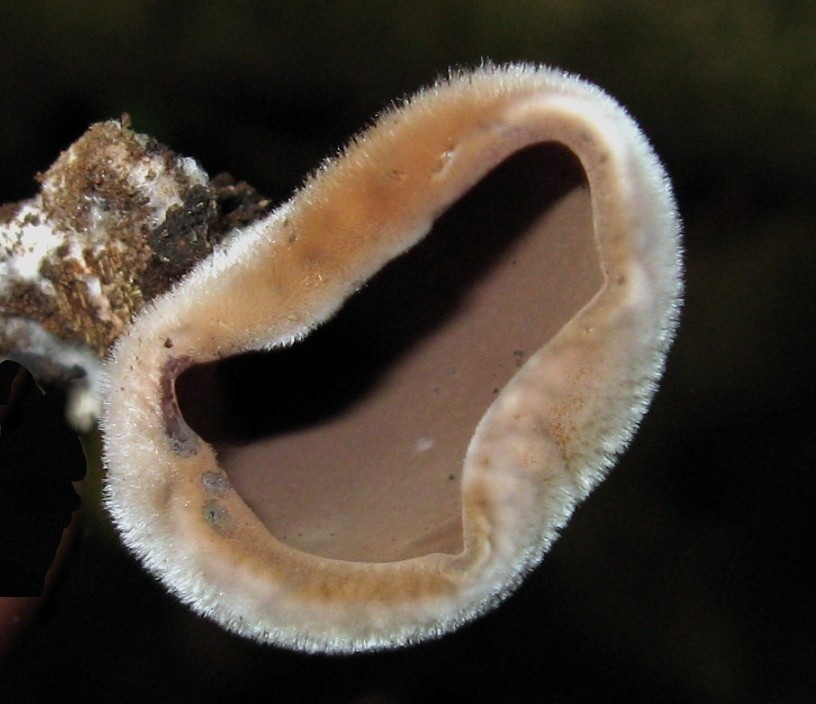
2. Ear fungus
Fruit body resupinate or pileate, loosely attached, laterally and sometimes by a very short stalk, elastic, gelatinous; sterile surface dark yellowish brown to dark brown with greyish brown bands, hairy, silky. Hymenium smooth, or wrinkled, pale brown to dark brown to blackish brown with a whitish boom. Hairs thick-walled, up to 0.6 mm long. Basidia cylindrical, hyaline, three-septate, 46–60 × 4–5.5 μm with 1–3 lateral sterigmata; sterigmata 9–15 × 1.5–12 μm. spores, hyaline, reniform to allantoid, 13–16 × 4–5.5 μm, guttulate. 
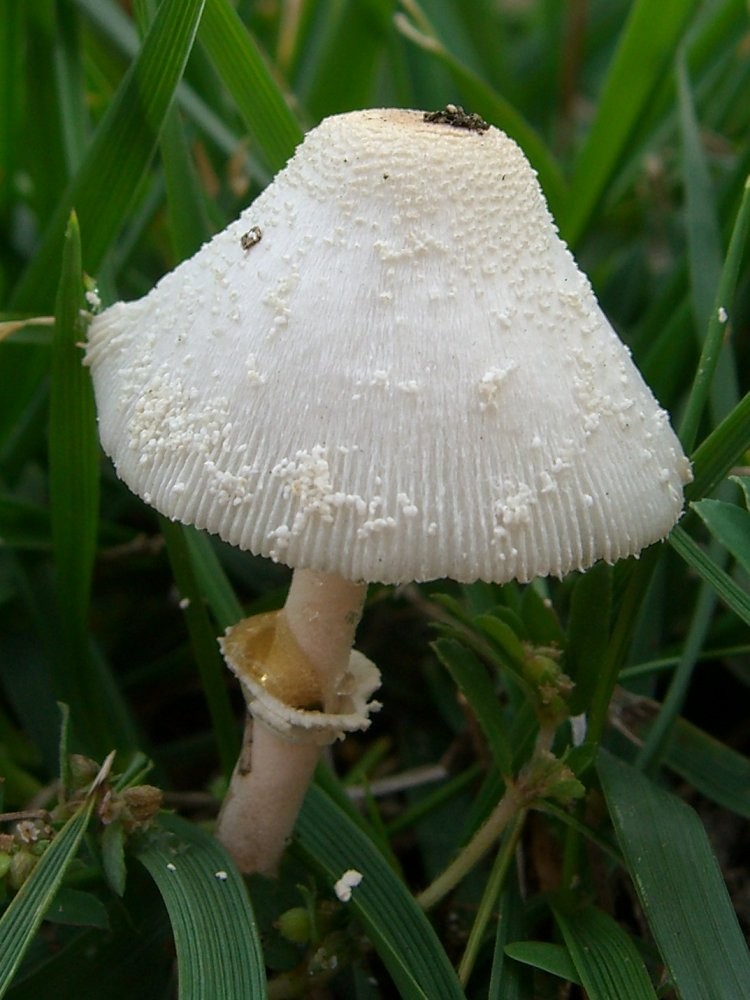
3. Onion-stalk parasol mushroom
This generalist mushroom, found across North America, can be found in all sorts of moist woodland settings. The species appears to be particularly fond of wood chips or mulch, and so it is often found in garden or park settings. The onion-stalk parasol mushroom, despite the word "onion" in its name, is inedible.
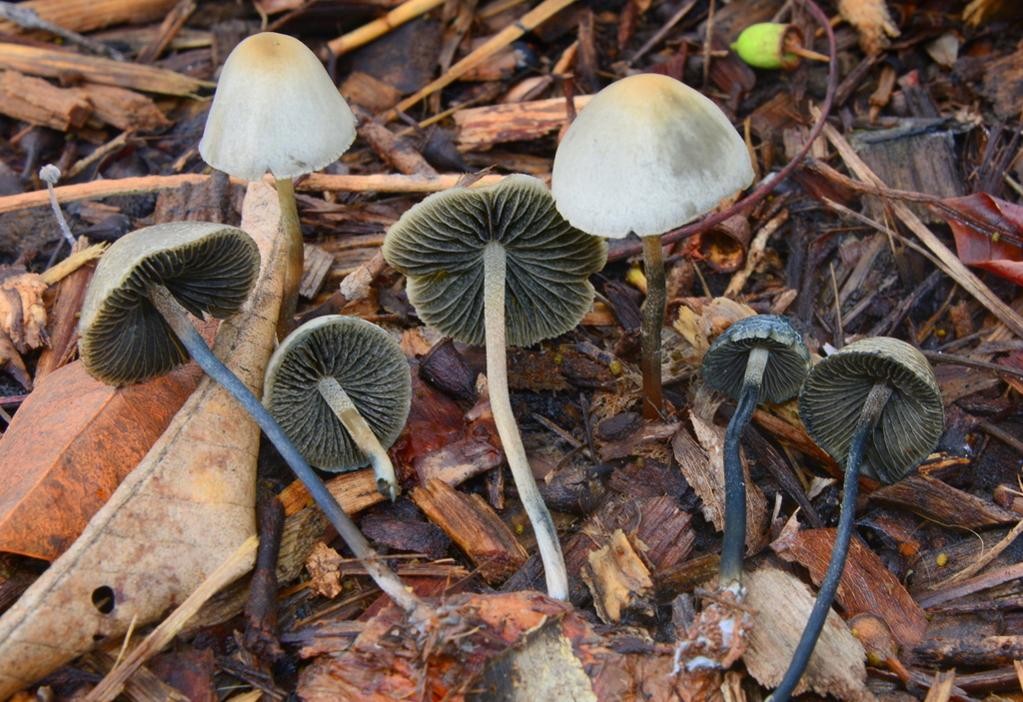
4. Blue meanies
The blue meanies (Panaeolus cyanescens) grows abundantly from composted dung in fields across the globe. They are small in size, with short, bell-shaped caps iridescent pale blue in color. The underside of the cap displays gills that are widely spread apart. This mushroom is a toxic poisoning risk. Consumption is not recommended.
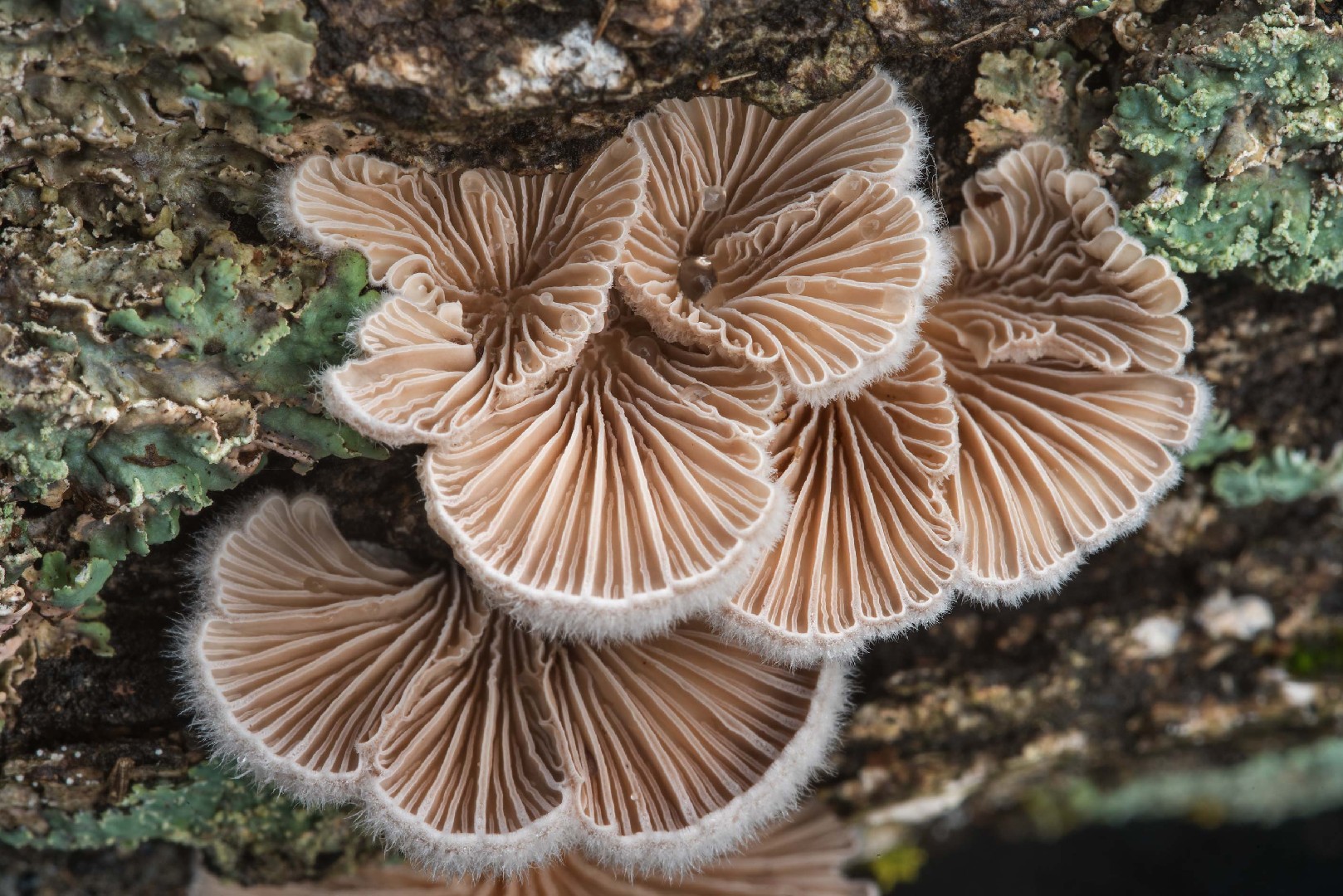
5. Split gill
Split gill(Schizophyllum commune) can be found across the globe. Uniquely, it is the only mushroom species known to display the capability to retract by movement. It is considered inedible, although not necessarily toxic. Furthermore, it is not recommended to smell this species, as the spores are capable of sprouting and growing in nasal passages.

6. Agaricus trisulphuratus







