




Top 20 Most Common Mushrooms in Cochrane

Most Common Mushrooms
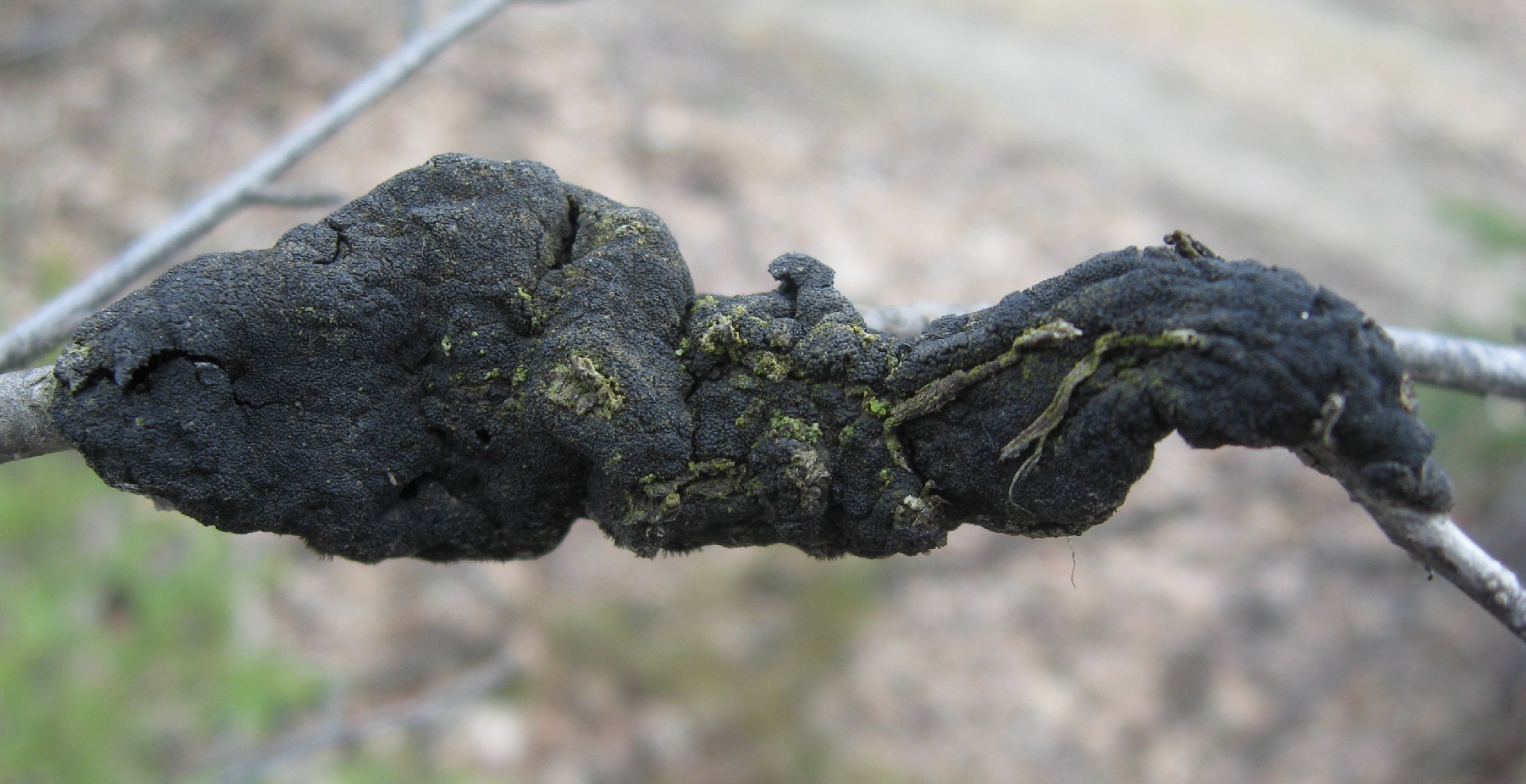
1. Black knot
The appearance of black knot (Apiosporina morbosa) is commonly found on various fruit-bearing trees and looks more like abnormally growing bark than it does a fungus. In youth, this bulbous growth is a lighter green but rapidly turns to dark brown and black. Black knot can kill trees and is not easily controllable using fungicides.

2. Shaggy mane
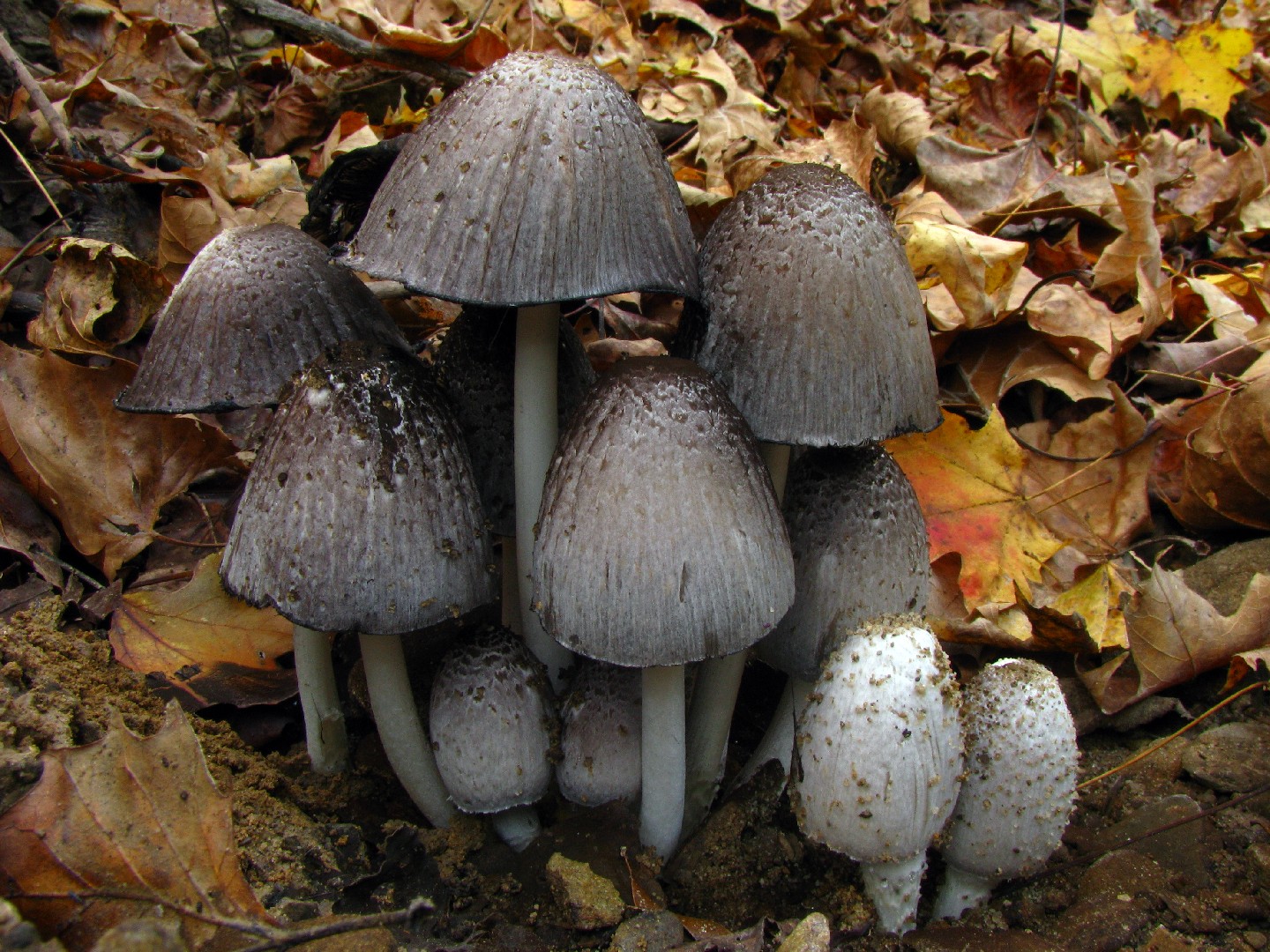
The shaggy mane mushroom is commonly found in North American and European grasslands. Some peoples foraged for its young egg-shaped caps, but it has more recently been found to be a bioaccumulator of heavy metals, meaning it pulls toxic metals up from the soil where it grows. As a result, shaggy manes should not be eaten. The mushrooms usually appear in clusters or “fairy rings.”
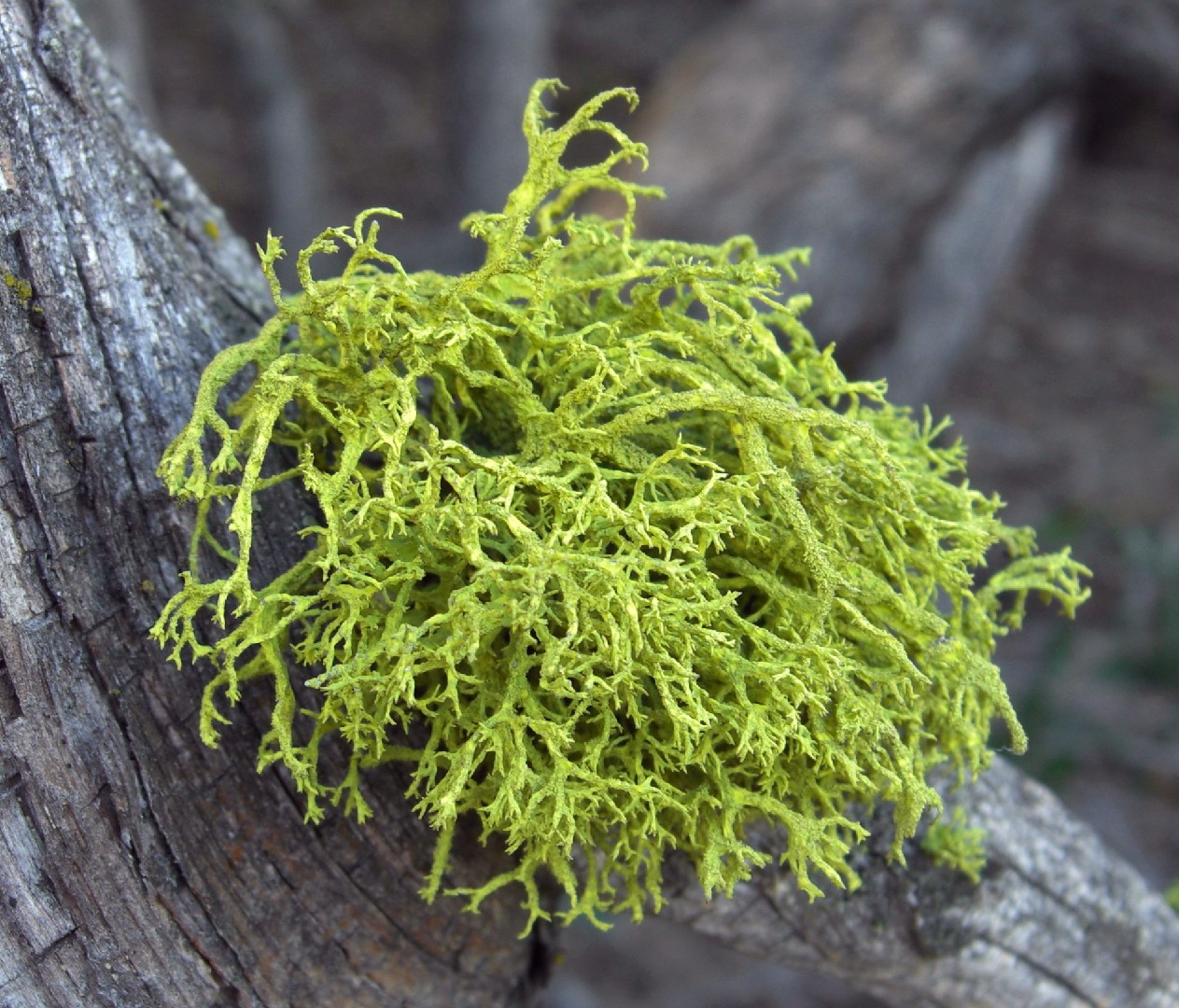
3. Wolf lichen
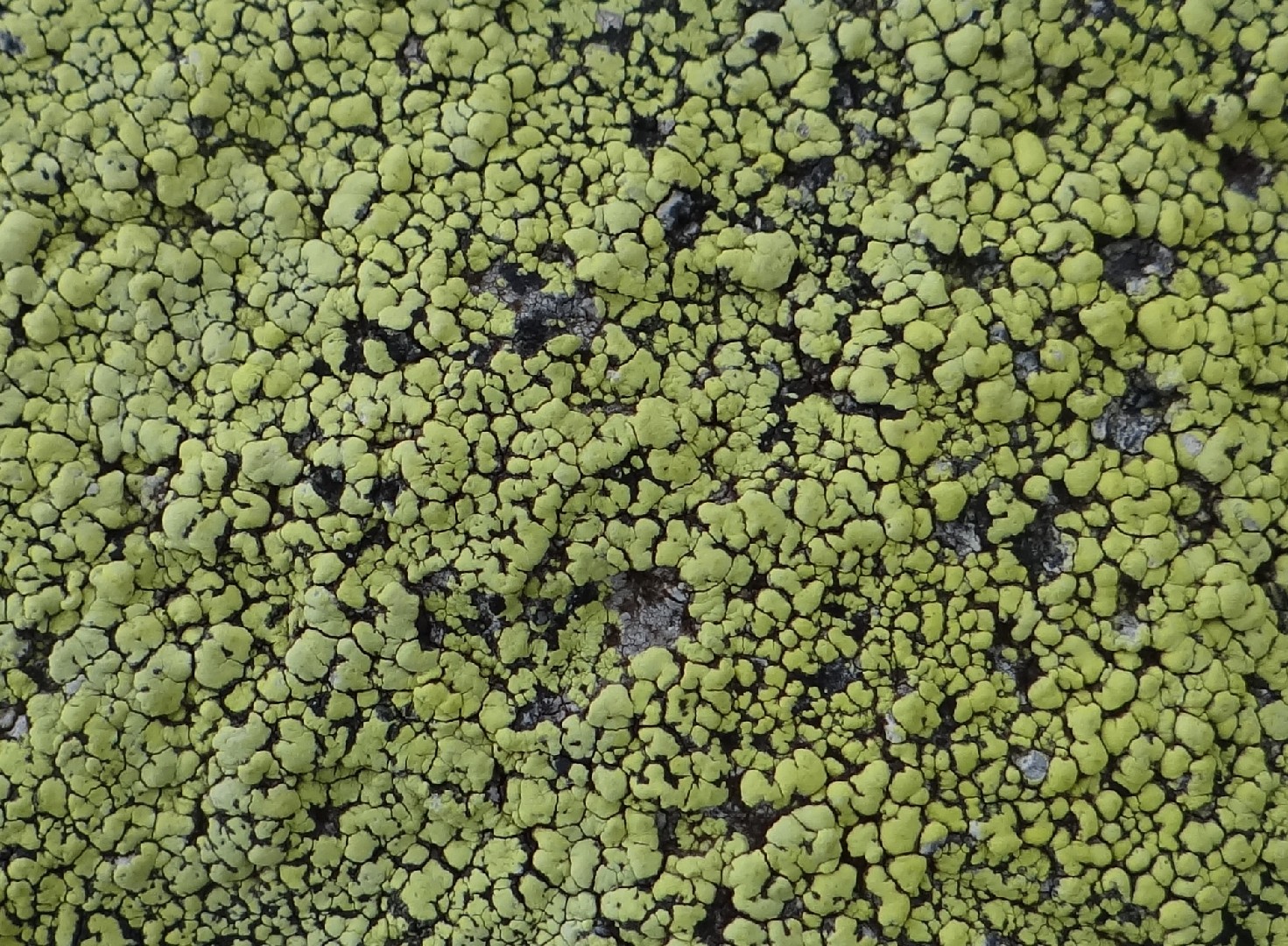
The thallus, or vegetative body, has a fructicose shape — that is, shrubby and densely branched — and a bright yellow to yellow-green, or chartreuse color, although the color will fade in drier specimens. Its dimensions are typically 2 to 7 cm (0.8 to 3 in) in diameter. The vegetative reproductive structures soredia and isidia are present on the surface of the thalli, often abundantly. 
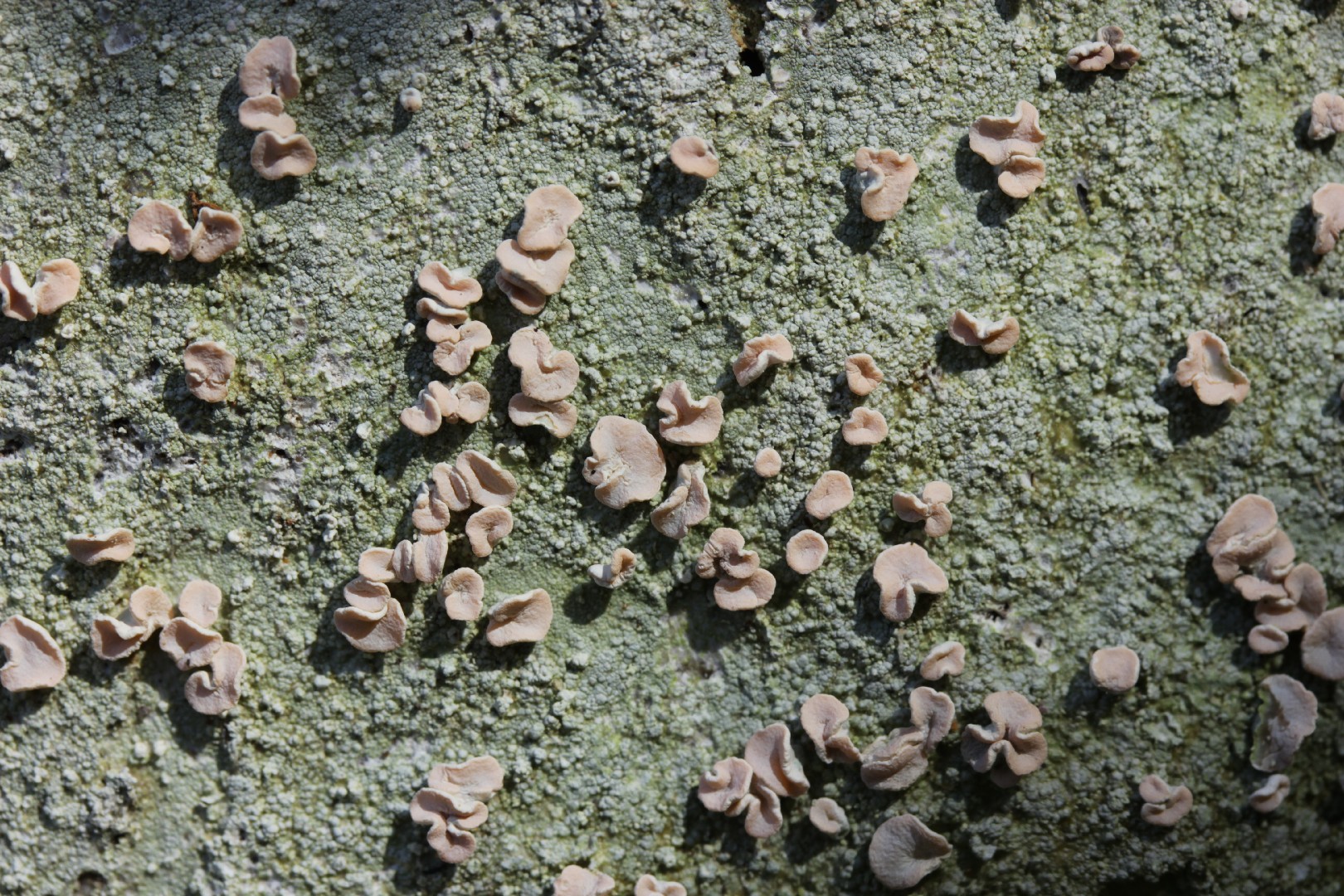
4. Candy lichen
The lichen camp is crusty, light gray to greenish and toxic green when wet. Striking are the pink-colored fruit bodies (Apothecia), which sit with a narrowed base or short-stalked. Likelihood of confusion exist in particular with the Rosa Kopfchenflechte (Dibaeis baeomyces, fruiting body also pink, but clearly stalked).
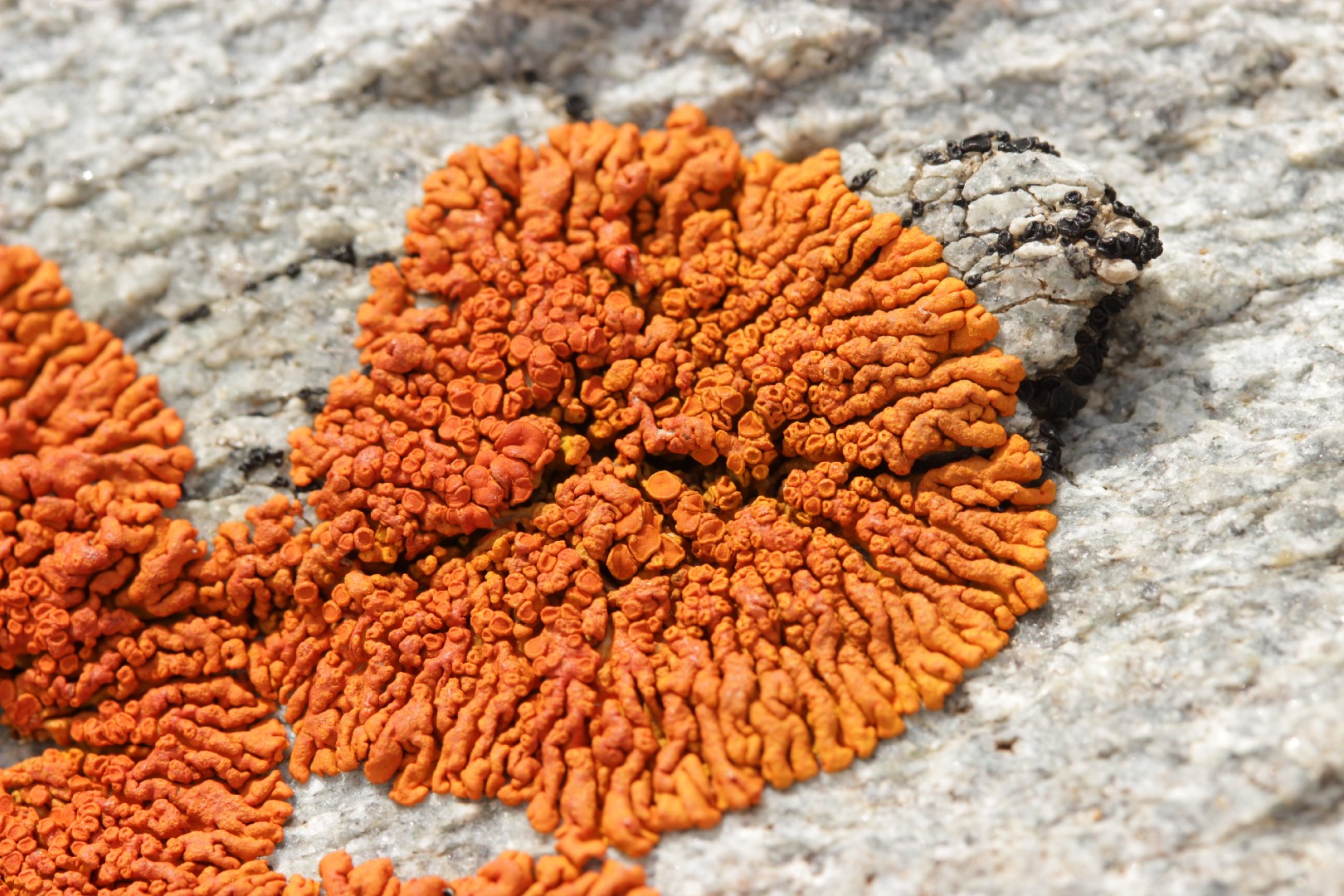
5. Elegant sunburst lichen
The thallus of this lichen is described as foliose, having the aspect of leaves, although the central portions of the thallus may appear nearly crustose. It is small, typically less than 5 cm (2 in) wide, with lobes less than 2 mm (0.08 in) broad, appressed to loosely appressed. The upper surface is some shade of orange while the lower surface is white, corticate, with short, sparse hapters (an attachment structure produced by some lichens). The vegetative propagules called soredia and isidia are absent, although apothecia are common. It has been described as possessing swollen, orange-yellow thalli (in streams), compact orange thalli (on boulders) or dark orange-red thalli on the driest rock faces. The variety X. elegans var. granulifera, characterized by having isidia-like vegetative propagules, has been reported from Greenland and Spitsbergen.
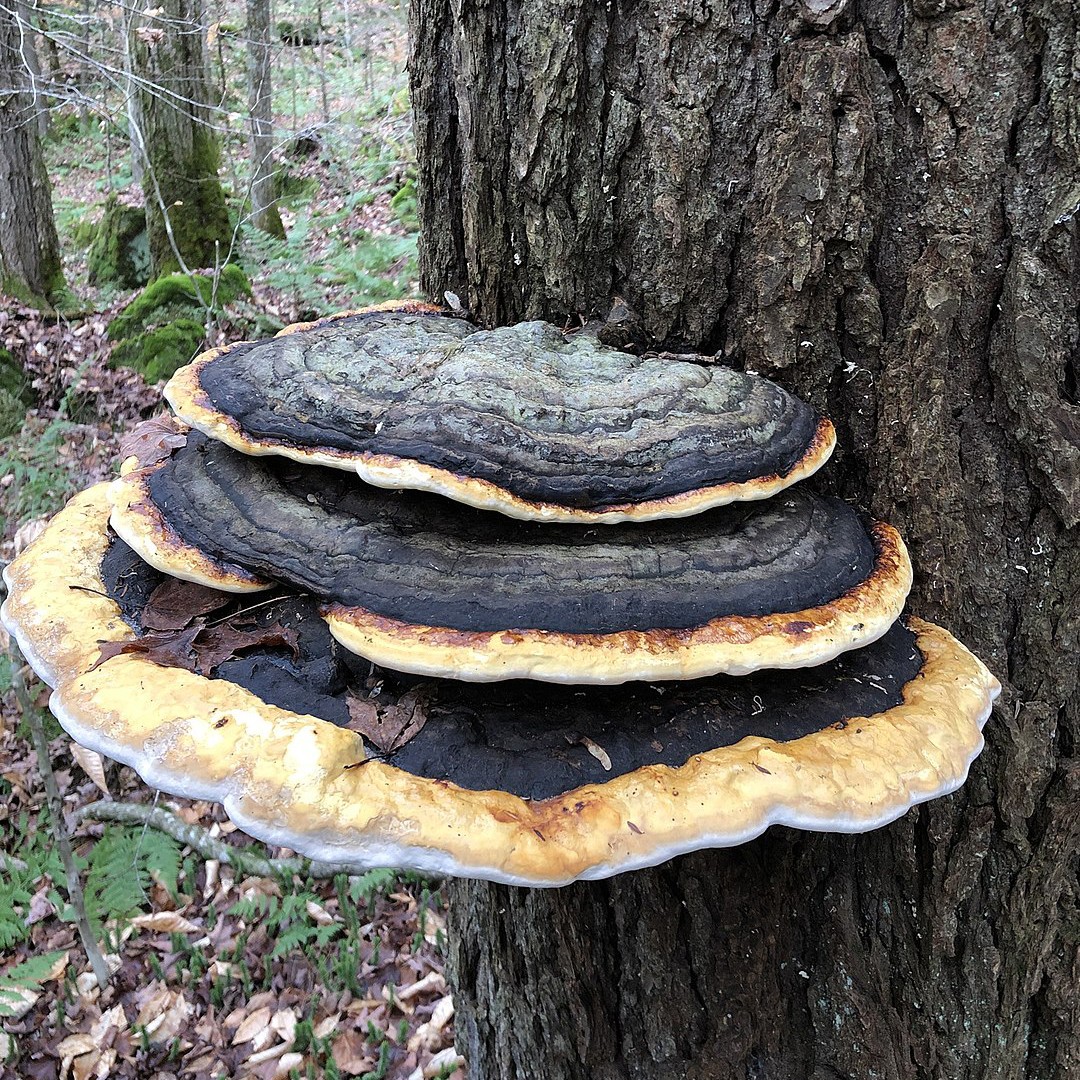
6. Red-belted polypore
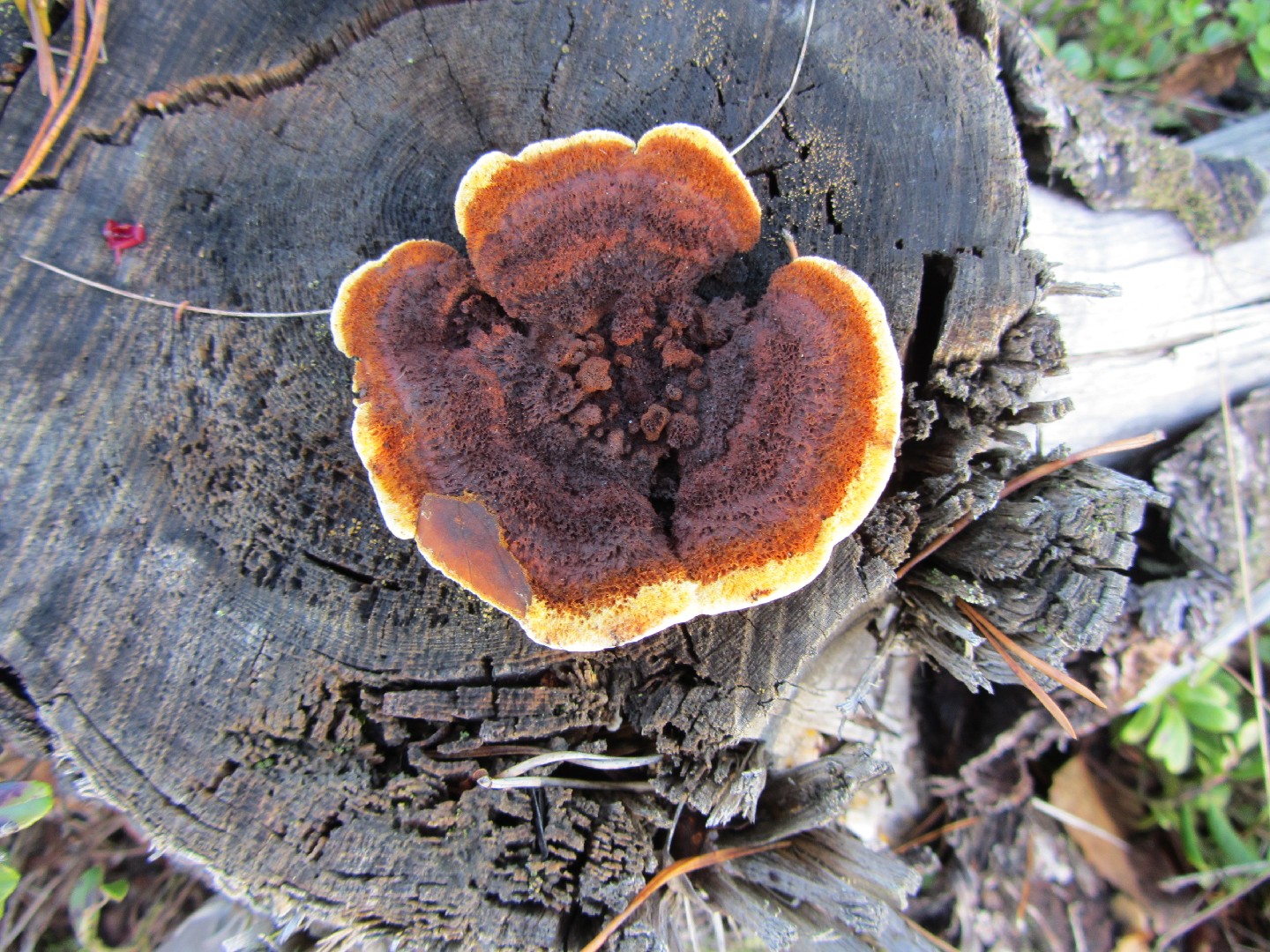
Red-belted polypore is a shelf fungus that's usually seen on aspen, birch, and various conifer trees. This perennial mushroom is known to cause the cubical brown rot in host trees. A species new to science, it was named in honor of Irene Mounce, a Canadian mycologist.
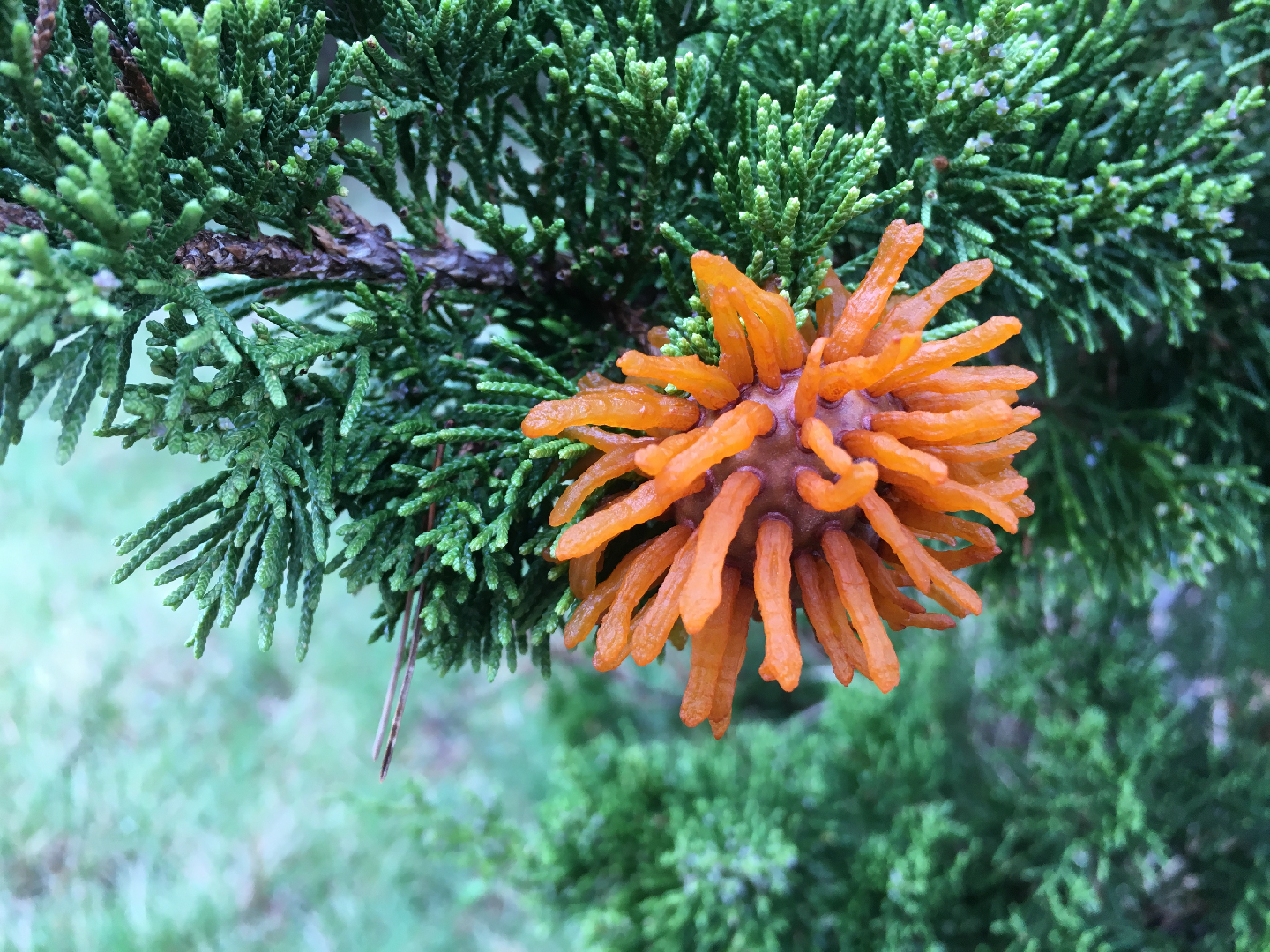
7. Cedar-apple rust
The vividly-colored fruitbodies of cedar-apple rust (Gymnosporangium juniperi-virginianae) might be mistaken for flowers, from a distance. Upon closer inspection they can be identified as fungal growths attacking the fruit of cedar trees. Their microscopic spores can travel up to an astounding 5 miles when carried on the wind and infect cedars quite far away, weakening the trees as they grow.
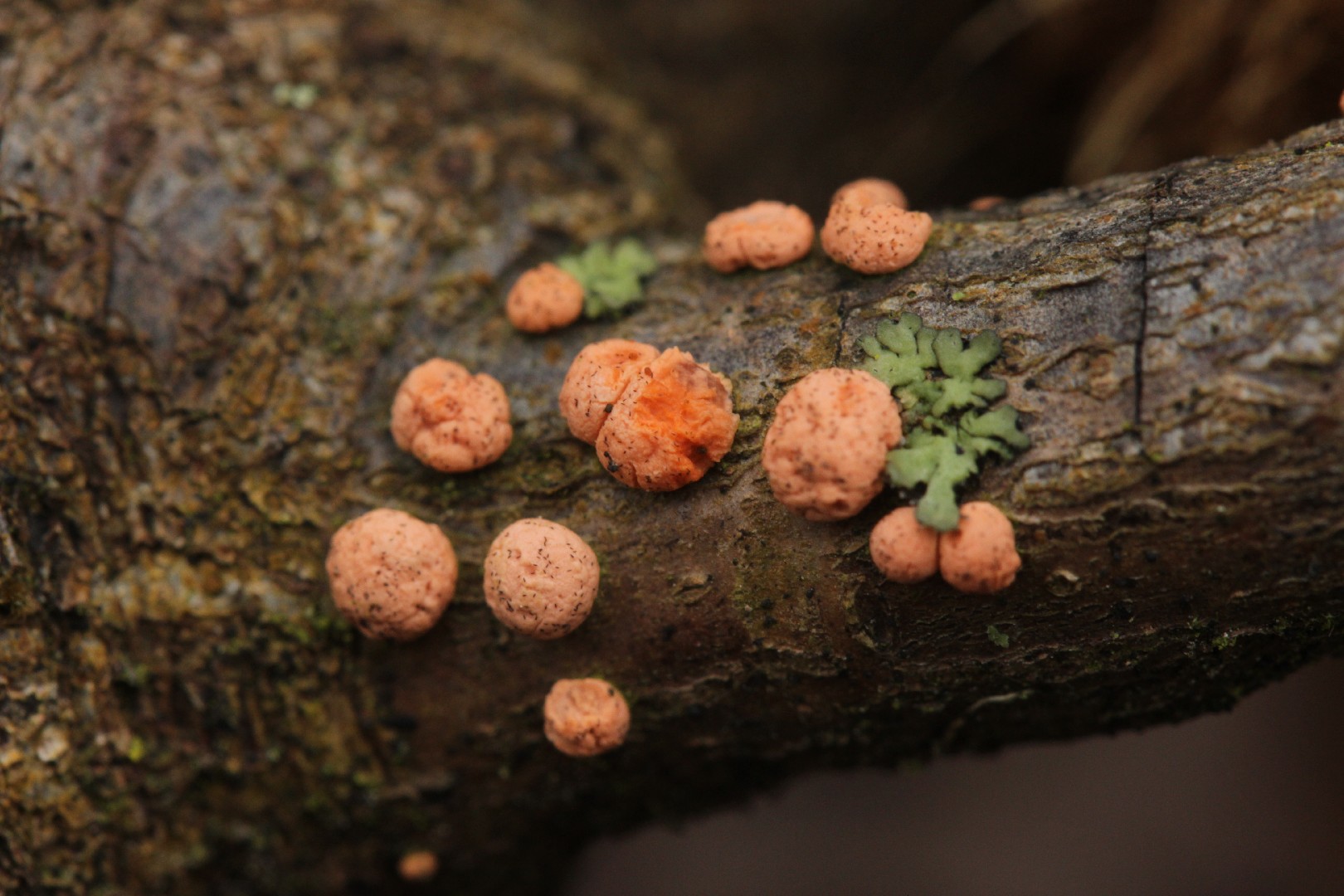
8. Coral spot
Coral spot(Nectria cinnabarina) is a mild pathogen of various broadleaf species that causes cankers, or spots of dead tissue, on its host. While it does not actively encourage rot, its presence may weaken the host's resistance to other, decay-causing pathogens. This species' bright fruiting spores tend to contrast with the subdued tones of the host's bark, accounting for its common name.
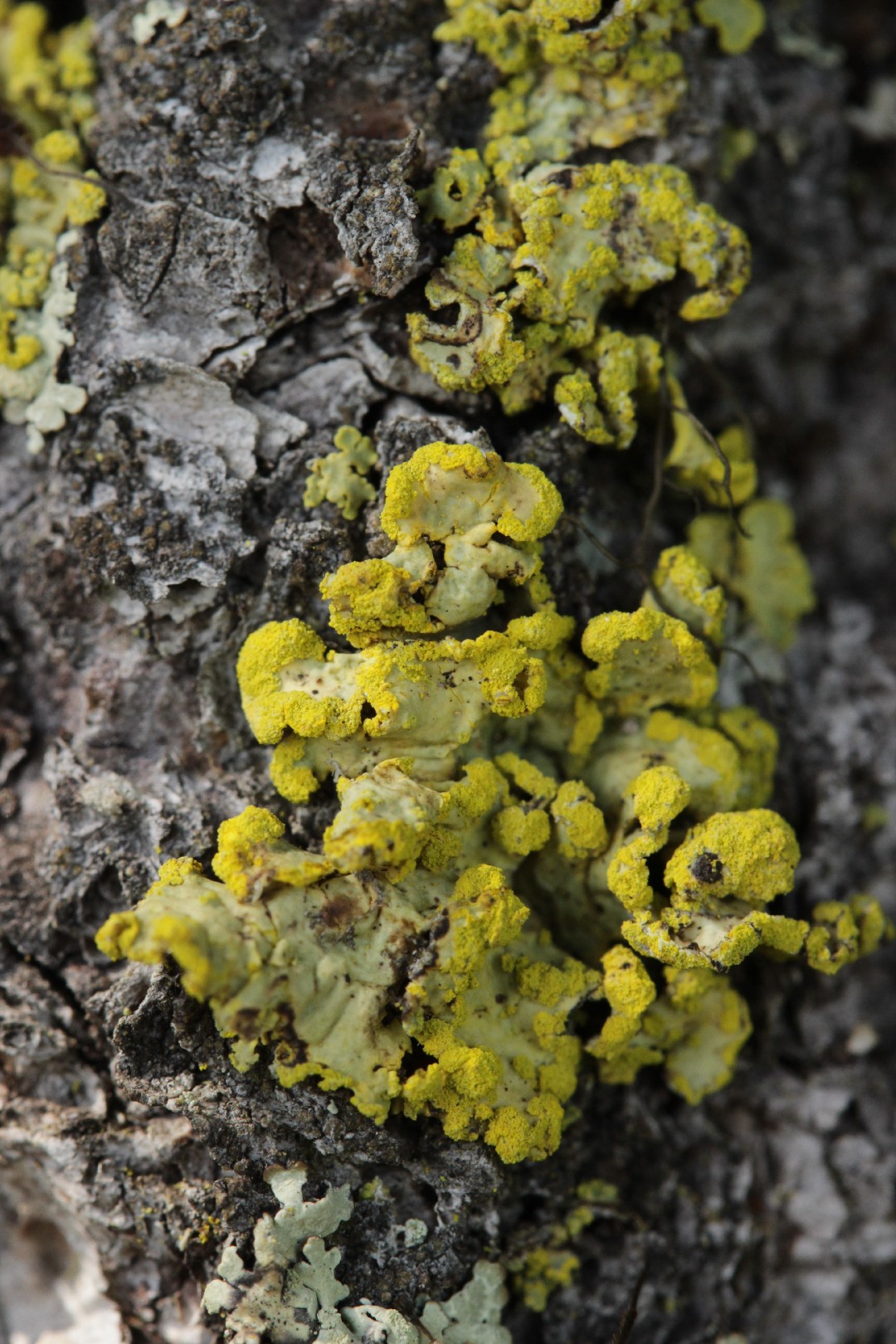
9. Powdered sunshine lichen
Vulpicida pinastri usually has few, broad, irregular lobes whose edges are lined with yellow Bortensoralen. On the underside, the lichen is pale yellowish with few rhizins. Fruit bodies (Apotheciens) are very rarely trained and then have a brown disc with bearing edge. The unicellular spores are ellipsoidal to almost spherical. The yellow color is caused by the highly toxic vulpinic acid in the marrow, which probably serves as a feeding protection against snails.
10. Aspen bracket
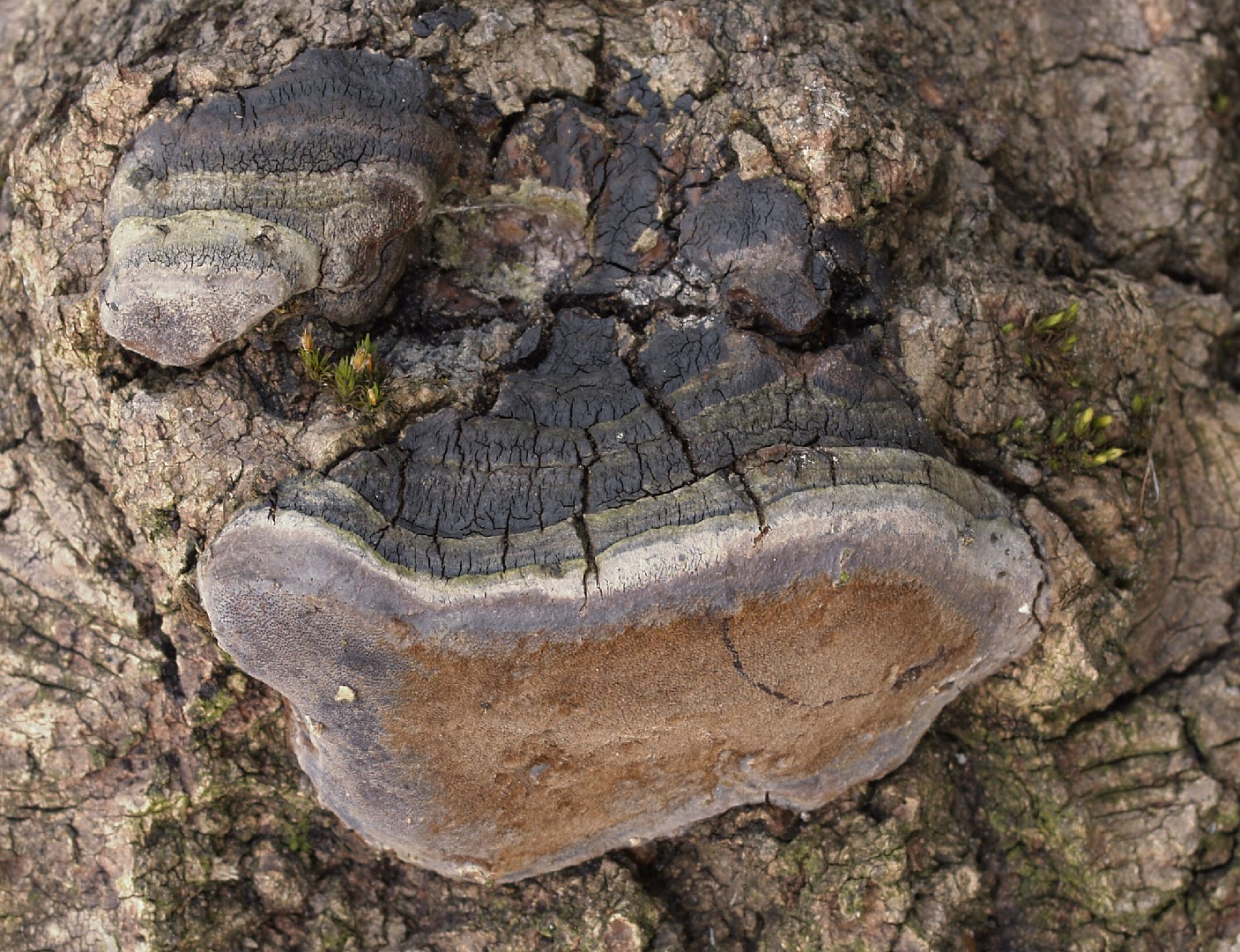
As hinted by its name, aspen bracket only grows on live aspen trees, causing trunk rot. Despite its negative reputation with aspen trees, this mushroom serves as nesting sites for some birds. The fruiting bodies of aspen bracket add on a new layer each growing season and can persist for several years.
More







